
TL;DR

Get backup power and energy gear delivered free — and shop member deals
- Fast, free delivery on millions of items
- Access to Prime Big Deal Days deals on October 6–7
- Prime Video, Amazon Music and more included
Search and media interest is surging around a report asserting that backup power systems at data centers contribute to health risks. Diesel backup generators emit pollutants long regulated for health effects, and data center construction has expanded sharply. The specific report, its findings, and any trigger event are unconfirmed.
Online search interest and news coverage are spiking around a report linking data center backup power systems to health risks. The phrase “data center backup power contributes to health risks: report” is circulating widely, but the underlying publication, its authors, its findings, and any specific incident that may have prompted the attention have not been independently confirmed. What is long-established is the factual backdrop: data centers rely on diesel backup generators, those generators produce exhaust pollutants with documented health effects, and data center construction has expanded rapidly in recent years.
The confirmed foundation of this story is well documented. Large data centers almost universally maintain diesel backup generators that activate during grid outages or voltage disruptions. These generators emit nitrogen oxides, fine particulate matter (PM2.5), and other combustion byproducts — pollutants that health authorities including the U.S. Environmental Protection Agency have linked for decades to respiratory and cardiovascular harm. Generators at data centers typically require air permits, and in the United States those permits are issued under federal and state clean air rules.
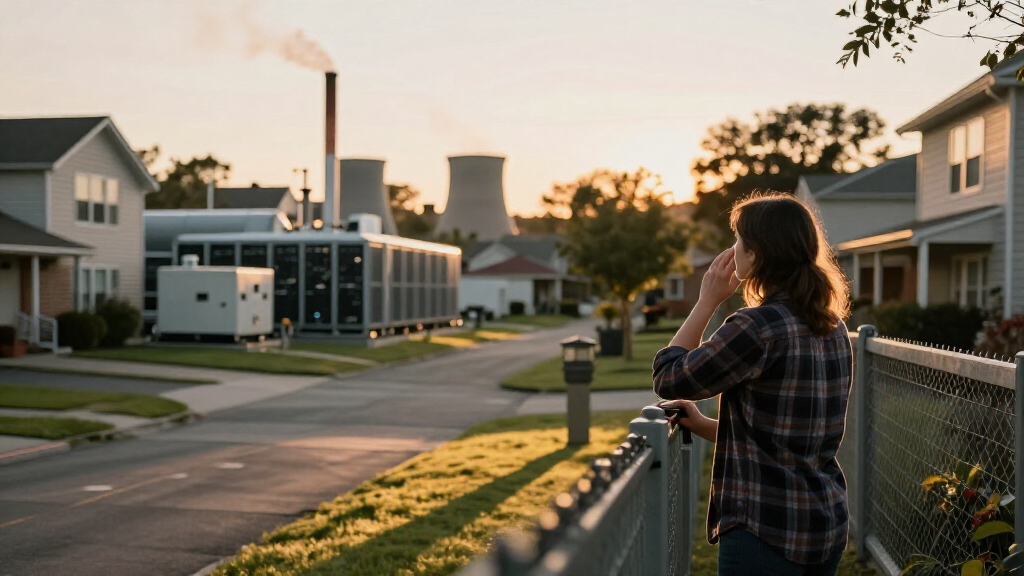
The report at the center of the current interest reportedly connects this infrastructure to health risks, but its scope is unclear. It is not yet known whether the report focuses on routine emissions, on emissions during emergency operation or testing runs, on cumulative pollution in communities near data center clusters, or on a specific facility or region. Reports in this subject area have historically examined neighborhoods near large data center campuses in states such as Virginia, Georgia, Ohio, and Texas, where residents and local groups have raised concerns about generator noise, exhaust, and permitting — but it cannot be assumed this particular report addresses any of those locations.
The timing of the interest spike also lacks a confirmed trigger. Plausible drivers include the release of a new study by a research organization or advocacy group, coverage of a permit dispute, or renewed scrutiny of data center expansion driven by artificial intelligence computing demand. Each of these explanations is plausible given the current news environment; none is verified as the cause of this wave of attention.
Why Backup Generators Draw Health Scrutiny
If a credible report does document health risks from backup power, it lands in the middle of an already intense debate over data center expansion. AI computing demand is driving construction of large facilities at a pace utilities and local governments have struggled to absorb, and communities near proposed and existing campuses have increasingly organized around power, water, noise, and air quality concerns. Backup generators sit at the intersection of those concerns because they are fossil-fuel infrastructure that is often permitted based on limited operating hours, typically for testing and emergencies.
The regulatory stakes are real. Air permits for generators can affect how quickly data centers are approved, how many generators a site may install, and whether cleaner alternatives — such as natural gas units, battery systems, or fuel cells — are required. A widely publicized health report could influence permit hearings, local moratoria, and state legislation. For residents near data center corridors, the practical questions are direct: how often generators run, what they emit during test cycles, and whether monitoring is independent. None of those questions can yet be answered for the report currently drawing attention, because its contents remain unverified.
Data Center Growth and Generator Regulation
Data centers have used diesel backup generation since long before the current AI buildout, a consequence of the industry’s requirement for near-continuous uptime — facilities often target 99.99 percent or better availability, which means on-site power for outages measured in seconds to days. Each large campus may hold dozens of multi-megawatt generators, and permitting for that equipment has periodically drawn public opposition in jurisdictions with heavy data center concentration.
Regulators have taken varying approaches. Some states and localities require emissions controls, restrictions on testing hours, or dispersion modeling before approving generator fleets. Manufacturers and operators have also begun deploying alternatives, including large-scale battery storage and lower-emitting generator technologies, though diesel remains the dominant backup standard across the industry. Community opposition to data centers on environmental grounds has grown in parallel with the construction boom, making health-related reports a recurring feature of local permitting fights.
What the Circulating Report Actually Says
The central unknown is the report itself. It has not been verified who published it, when, what methodology it used, what pollutants or health outcomes it examined, or which facilities and populations it studied. The claim that backup power “contributes to health risks” is consistent with long-standing evidence about diesel exhaust in general, but that is not the same as confirming this report’s specific findings.
Also unclear: whether any regulator, data center operator, or public health agency has responded to the report; whether it covers a single jurisdiction or the industry broadly; and whether the current spike in interest stems from the report’s release or from secondary coverage amplifying it. Readers should treat the report’s conclusions, severity estimates, and any cited health statistics as unconfirmed until a primary source is identified.
Watch for the Primary Source and Regulators
The most useful next development would be identification of the primary report — its publisher, methodology, and findings — which would allow its claims to be checked against peer-reviewed literature on diesel exhaust and against facility-level permit data. Watch for responses from state environmental agencies in major data center states, statements from industry groups, and any mention of the report in active permit proceedings. If the report gains traction, local governments weighing data center approvals may face renewed calls for emissions monitoring, generator operating restrictions, or requirements for cleaner backup technologies. Absent a confirmed primary source, coverage should be expected to remain speculative in the near term.
Key Questions
What is the report about data center backup power and health risks?
A report is circulating that reportedly links backup power systems at data centers to health risks. Its publisher, findings, and methodology have not been verified, so its specific claims cannot yet be confirmed.
Do data centers use diesel backup generators?
Yes. Nearly all large data centers maintain diesel generators to cover grid outages, alongside batteries or flywheels for the seconds before generators start. Diesel remains the industry’s dominant backup technology, though alternatives are emerging.
Are diesel generator emissions a known health concern?
Diesel exhaust pollutants, including fine particulate matter and nitrogen oxides, have well-documented associations with respiratory and cardiovascular harm according to agencies such as the EPA. What is unconfirmed is whether the current report adds new findings specific to data centers.
Are data center generators regulated?
Generally yes. In the U.S., backup generators typically require air permits under federal and state clean air rules, which may restrict testing hours and require emissions controls. Requirements vary by state and facility size.
Could this report affect data center construction?
It is too early to say. If the report is credible and draws regulatory or political attention, it could influence permit disputes and local approvals, but no such impact has been confirmed.
Source: rss
Fall Picks
fall essentials
As an affiliate, we earn on qualifying purchases.