Choosing between a whole house and an essential circuits generator depends on your home’s power needs and budget. A whole house system powers all circuits, offering maximum comfort but at a higher cost and complexity. An essential circuits generator focuses only on critical systems like refrigeration, heating, and medical devices, making it more affordable and easier to install. To make an informed decision that balances safety, cost, and convenience, explore the key planning factors involved.
Open a free Amazon Business account
Business pricing, bulk buying and tax-exempt orders.
As an affiliate, we earn on qualifying purchases.
Key Takeaways
- Whole house generators provide power to all circuits, ensuring maximum comfort, while essential circuits focus only on critical systems, simplifying load management.
- Whole house systems are larger, more expensive, and complex to install, whereas essential circuits setups are more affordable and easier to implement.
- Proper load analysis is crucial to prevent overloads and ensure efficiency in both systems, with whole house units handling peak loads.
- Essential circuits backup conserves resources by prioritizing critical needs, while whole house backup offers seamless power coverage.
- Choosing between options depends on balancing budget, desired comfort level, complexity, and specific backup power requirements.
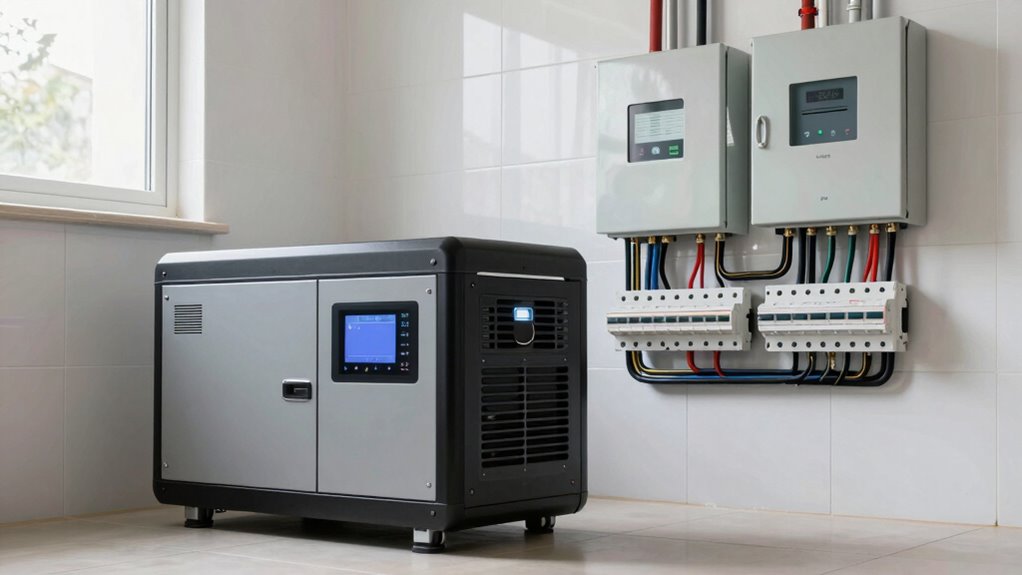
When planning for backup power, understanding the differences between whole house and essential circuits generator setups is critical. This is where load management becomes important. A whole house generator provides backup power to every circuit in your home, meaning everything from lights to appliances continues seamlessly. While this offers maximum comfort and convenience, it also demands a larger generator, which can be more expensive and complex to install. On the other hand, an essential circuits generator focuses only on powering select critical systems, like your refrigerator, heating system, medical devices, and basic lighting. This approach simplifies load management because you’re only supplying power to what truly matters during an outage, reducing the size and cost of the generator needed. Proper load management also involves understanding your home’s power requirements to ensure your generator can handle the total load during an outage. If you opt for a whole house system, you’re fundamentally creating a backup power solution that covers your entire home. This means you don’t have to decide what stays on or off during an outage; everything gets power. However, managing such a system requires you to understand your home’s load capacity to prevent overloading the generator. You’ll need a generator with enough capacity to handle your peak load, which involves calculating the total wattage of all appliances and systems you want to run simultaneously. Proper load management ensures the generator operates efficiently, prevents damage, and maximizes backup power availability. It also means you might need automatic transfer switches and sophisticated control systems to handle the load intelligently. Conversely, selecting an essential circuits generator means you’re intentionally limiting your backup power to basic needs, which simplifies load management. You focus on powering only vital electrical circuits, minimizing the generator capacity you need. This setup is easier to install, more affordable, and often more reliable because there’s less complexity in balancing loads. During outages, you can prioritize essential circuits, ensuring your critical systems stay online without risking overloads. This strategic approach helps you optimize backup power, conserving fuel and reducing wear on your generator while maintaining essential functions. Additionally, understanding load distribution is key to ensuring your chosen system functions effectively and safely. Proper planning, including load analysis, can help prevent unexpected system failures and extend the lifespan of your generator. Incorporating proper sizing ensures your system is neither underpowered nor excessively large for your needs, promoting efficiency and longevity. Being aware of generator maintenance requirements is also essential to keep your backup system reliable over time.
As an affiliate, we earn on qualifying purchases.
Frequently Asked Questions
How Much Does a Whole House Generator Typically Cost?
A whole house generator typically costs between $10,000 and $20,000, depending on its size and features. You’ll want to take into account fuel efficiency to save on running costs and noise levels for comfort during operation. Higher-capacity models with quieter operation tend to be more expensive. It’s essential to balance cost with your power needs, ensuring you get a reliable, efficient system that suits your household without breaking the bank.
Can Essential Circuit Generators Power an Entire Home?
They say, “Don’t put all your eggs in one basket,” but essential circuit generators can power your entire home if you’re strategic. While they’re designed for emergency backup, their power capacity often covers more than just essentials. However, their ability depends on your home’s size and energy needs. If your goal is full-home coverage, investing in a whole house generator might be the better move for peace of mind.
What Maintenance Is Required for Different Generator Types?
You’ll need to follow specific maintenance schedules for different generator types. For gas-powered models, check and replace the generator fuel regularly to prevent clogs and guarantee efficient operation. Maintain oil levels and change the oil as recommended. For diesel generators, monitor fuel quality and perform routine inspections. Always follow the manufacturer’s guidelines for maintenance, including filter replacements and system checks, to keep your generator running smoothly and reliably.
How Do I Choose Between a Portable and a Standby Generator?
Did you know 70% of homeowners prefer portable power for short outages? You should choose a portable generator if you need flexibility and easy setup for outdoor activities or small power needs. Opt for standby options if you want automatic backup for the entire house and uninterrupted power during outages. Consider your budget, power requirements, and convenience to decide which fits best, ensuring reliable energy when you need it most.
Are There Specific Permits Needed for Installing a Whole House Generator?
You’ll need to check local installation regulations and permit requirements before installing a whole house generator. Most areas require permits to guarantee safety and compliance with electrical codes. Contact your city or county building department to find out specific permit needs and any inspections needed. Failing to obtain the necessary permits can lead to fines or trouble when selling your home, so it’s best to handle this step early.
essential circuits backup generator
As an affiliate, we earn on qualifying purchases.
As an affiliate, we earn on qualifying purchases.
Conclusion
Whether you choose a whole house generator or essential circuits planning, understanding your needs is key. You want reliability, you want convenience, you want peace of mind. By evaluating your power demands, weighing your options, and making an informed decision, you guarantee your home stays powered, your comfort remains intact, and your worries fade away. Because, in the end, it’s about protecting what matters most—your home, your family, your peace of mind.
As an affiliate, we earn on qualifying purchases.
As an affiliate, we earn on qualifying purchases.
Fall Picks
fall essentials
As an affiliate, we earn on qualifying purchases.