
To keep your portable generator ready during long gaps, you should drain the fuel completely or add stabilizer to a full tank before storage. Perform a test run to distribute stabilized fuel, and regularly check for any issues like leaks or worn parts. Store it in a dry, protected area away from elements that cause rust. Keep the battery healthy and guarantee all components are in good condition. Continue inspecting and maintaining your generator for reliable operation whenever you need it.
Get ready for Prime Big Deal Days — try Prime free
Exclusive member deals on October 6–7, plus fast free delivery. Cancel anytime.
As an affiliate, we earn on qualifying purchases.
Key Takeaways
- Drain or stabilize fuel before storage, and run the engine briefly to distribute stabilizer.
- Perform regular test runs to ensure the generator operates smoothly without load.
- Store in a dry, protected environment, checking for corrosion and environmental damage regularly.
- Inspect and maintain the battery, ensuring terminals are clean and the battery is in good condition.
- Conduct routine component inspections, checking belts, hoses, and filters, replacing worn parts promptly.
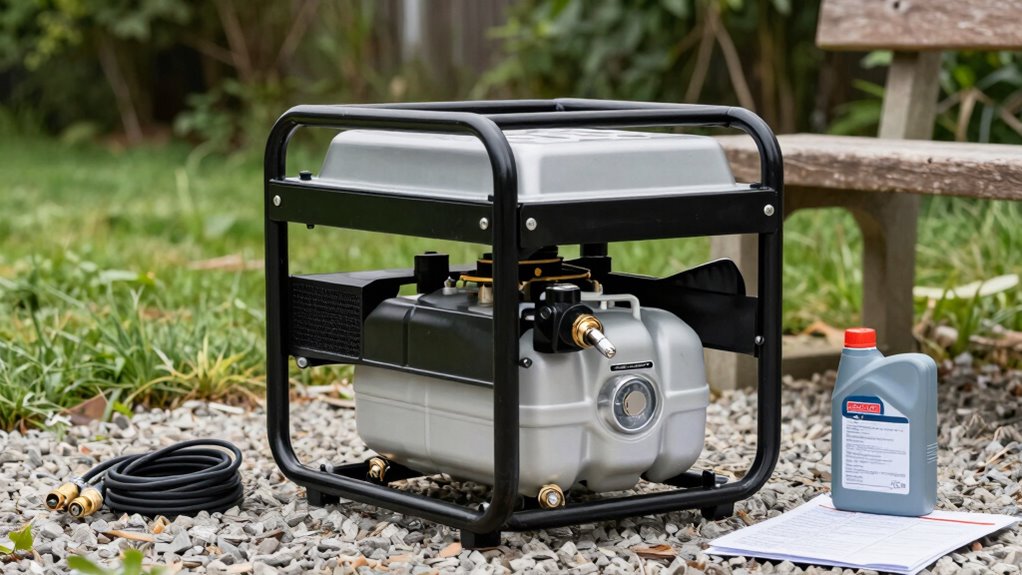
If you anticipate storing your generator for several months, it’s best to drain the fuel entirely or add stabilizer to the full tank before storage, then run the engine briefly to distribute the stabilized fuel. Regularly inspecting your generator’s components is also vital, especially fuel system maintenance, to ensure everything remains in optimal condition. Check for loose wires, worn belts, or cracked hoses, and replace parts as needed. Keeping the air filter clean and replacing it periodically ensures optimal airflow and engine performance. Conducting a test run every few months, even if you don’t need to power anything, helps confirm your generator’s readiness. During these tests, listen for unusual sounds, and observe for leaks or other signs of deterioration. Also, inspecting generator storage conditions can prevent moisture buildup and corrosion. Proper storage in a dry, protected area also helps prevent corrosion and prolongs the lifespan of your generator. Additionally, monitoring the storage environment can prevent issues caused by humidity and temperature fluctuations. Regularly checking the battery health can also ensure the generator starts easily when needed.
portable generator fuel stabilizer
As an affiliate, we earn on qualifying purchases.
As an affiliate, we earn on qualifying purchases.
Frequently Asked Questions
How Often Should I Perform Maintenance Checks on My Generator?
You should perform maintenance checks on your generator at least once every three months to guarantee fuel efficiency and noise reduction. Regularly inspect and clean the air filter, check the oil level, and run the generator under load for about 30 minutes. These checks help prevent rust, fuel degradation, and mechanical issues, keeping your generator reliable and quiet when needed. Consistent maintenance maximizes performance and extends its lifespan.
What Type of Fuel Stabilizer Is Best for Prolonged Storage?
For prolonged storage, you should use a fuel stabilizer that contains fuel additives designed to prevent fuel degradation. Look for stabilizers compatible with your generator’s fuel type, typically gasoline. Add the stabilizer according to the manufacturer’s instructions, then run the generator to circulate it through the system. Proper storage techniques also include draining the fuel or storing the generator in a cool, dry place to keep it ready for future use.
Can I Leave My Generator Outside During Long Storage Periods?
Yes, you can leave your generator outside during long storage periods, but it’s best to choose an outdoor placement that offers weather protection. Position it in a sheltered area away from direct sunlight, rain, and snow. Cover the generator with a breathable, weather-resistant cover to prevent moisture buildup and corrosion. Regularly check on it, ensuring it stays dry and clean, and start it periodically to keep it in good working condition.
How Do I Safely Dispose of Old Fuel From the Generator?
When it’s time to part ways with old fuel, start with careful fuel draining to avoid spills. Use a proper container and do this in a well-ventilated area, away from flames or sparks. Disposal safety is key—never pour old fuel down drains or onto the ground. Instead, take it to a local disposal site or recycling center that accepts hazardous materials. This keeps you safe and protects the environment.
Is It Necessary to Run the Generator Periodically if Stored Properly?
Yes, running your generator periodically is necessary, even if stored properly. It helps with fuel preservation by preventing stale fuel buildup and guarantees the engine stays lubricated. During these runs, check the battery for maintenance, keeping it charged and in good condition. Regular operation also helps identify potential issues early, guaranteeing your generator will work smoothly when you need it most.
As an affiliate, we earn on qualifying purchases.
Conclusion
So, there you have it—your foolproof, fail-safe plan to keep that portable generator alive and kicking during your epic hibernation. Just remember, neglect is the real enemy here, not the occasional spark or oil change. With these tips, you’ll be the proud owner of a generator that practically begs to be used—just don’t forget where you left it when the lights go out. Happy powering-up, and may your outages be rare and your maintenance even rarer!
As an affiliate, we earn on qualifying purchases.
As an affiliate, we earn on qualifying purchases.
Fall yard work Picks
leaf blowers
As an affiliate, we earn on qualifying purchases.