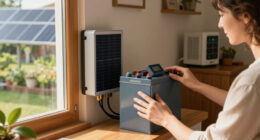
The Jackery HomePower 3600 Plus is my best overall pick for buyers who want substantial capacity and strong AC output in a portable format. For a more integrated home setup, the ECO-WORTHY 10 kW kit pairs a hybrid inverter with 10.24 kWh of battery storage, while the Anker SOLIX C1000 Gen 2 suits smaller backup needs in a more compact unit. The main tradeoff is between portable systems that are easier to place and integrated kits that offer more capacity but call for more planning and installation. Solar bundles add a charging option, though panel output and conditions affect how quickly batteries refill. Read on for my full comparison and guidance on which system fits your home.

Get backup power and energy gear delivered free — and shop member deals
- Fast, free delivery on millions of items
- Access to Prime Big Deal Days deals on October 6–7
- Prime Video, Amazon Music and more included
Complete the kit


Key Takeaways
- Jackery HomePower 3600 Plus leads the portable options with 3,584Wh capacity and 3,600W AC output, a useful combination for buyers balancing storage and power delivery.
- ECO-WORTHY’s 10 kW kit and PowerMega system offer a different path: larger, inverter-centered setups for buyers prepared to plan around installation and household loads.
- The two Jackery listings share the same power station; the version with two 200W solar panels adds a defined solar-charging bundle, not a higher-capacity battery.
- Anker SOLIX C1000 Gen 2 and the 2,010Wh SOLIX S2000 serve more limited backup plans than the 3,584Wh Jackery, so load selection matters more than headline brand appeal.
- ECO-WORTHY’s 5,000W inverter system and 10 kW offerings make output and system design central distinctions; buyers should match both continuous power and stored energy to their intended loads.
| Anker SOLIX S2000 Portable Power Station, 2,010Wh, 1,500W |  | Best Compact Backup | Battery capacity: 2,010Wh | Battery type: LFP | Continuous output: 1,500W | VIEW LATEST PRICE | See Our Full Breakdown |
| Jackery HomePower 3600 Plus Portable Power Station, 3584Wh, 3600W AC Output |  | Best Expandable Portable System | Capacity: 3,584Wh | AC output: 3,600W | Parallel output: 7,200W | VIEW LATEST PRICE | See Our Full Breakdown |
| ECO-WORTHY 10 kW Home Backup Power Kit with 10.24 kWh LiFePO4 Batteries |  | Best Modular Home Backup Kit | Battery chemistry: LiFePO4 | Total battery capacity: 10,240Wh | Peak output: 20,000W | VIEW LATEST PRICE | See Our Full Breakdown |
| Anker SOLIX C1000 Gen 2 Portable Power Station |  | Best for Short Outages | Capacity: 1,024Wh | Output: 2,000W continuous; 3,000W peak | Maximum AC recharge input: 1,600W | VIEW LATEST PRICE | See Our Full Breakdown |
| ECO-WORTHY PowerMega 48V 314Ah LiFePO4 Energy Storage System with 10kW Hybrid Inverter |  | Best High-Capacity Integrated System | Battery chemistry: LiFePO4 | Battery voltage and capacity: 51.2V, 314Ah | Usable energy: 16.1kWh | VIEW LATEST PRICE | See Our Full Breakdown |
| Jackery HomePower 3600 Plus Portable Power Station with Two 200W Solar Panels |  | Best Portable Expandable Backup | Capacity: 3,584Wh | AC output: 3,600W | Parallel output: Up to 7,200W | VIEW LATEST PRICE | See Our Full Breakdown |
| ECO-WORTHY 48V Home Backup Power System with 10,240Wh LiFePO4 Batteries and 5,000W Inverter |  | Best Modular Off-Grid System | Battery chemistry: LiFePO4 | Battery configuration: Two 51.2V 100Ah batteries | Total capacity: 10,240Wh | VIEW LATEST PRICE | See Our Full Breakdown |
More Details on Our Top Picks
Anker SOLIX S2000 Portable Power Station, 2,010Wh, 1,500W
The Anker SOLIX S2000 suits buyers who want meaningful outage coverage in a portable package. Its 2,010Wh LFP battery and eight outlets can support several household essentials, while UPS switchover under 10 ms helps keep compatible electronics powered through brief interruptions. Compared with the larger Jackery HomePower 3600 Plus, the S2000 stores less energy and delivers less output, but its 35.7-pound weight is easier to manage and its footprint is compact. Solar input tops out at 400W, so replenishing the battery from panels will take longer than with systems designed for higher solar input. The manufacturer’s refrigerator runtime claim varies with appliance and conditions. A missing 12V DC port also limits some vehicle and DC appliance setups.
Pros:- 2,010Wh LFP battery provides useful capacity for essential loads
- Eight outlets allow several devices to connect at once
- UPS switchover under 10 ms for compatible equipment
- 35.7-pound design is more portable than larger-capacity systems
Cons:- 400W maximum solar input can make panel recharging slow
- No 12V DC port for compatible vehicle and DC appliances
- 1,500W continuous output and 2,010Wh capacity trail the Jackery HomePower 3600 Plus
Best for: Households seeking portable backup for a refrigerator, networking gear, and other essentials, with occasional solar recharging.
Not ideal for: Buyers who need 240V support, high solar charging rates, or a dedicated 12V DC output.
- Battery capacity:2,010Wh
- Battery type:LFP
- Continuous output:1,500W
- Peak output:3,000W
- Maximum solar input:400W
- Outlets:8
- UPS switchover:Under 10 ms
- Weight:35.7 lbs
Our verdict“Choose the S2000 for portable, moderate-capacity household backup when manageable weight matters more than 240V output or extended runtime.”
Jackery HomePower 3600 Plus Portable Power Station, 3584Wh, 3600W AC Output
The Jackery HomePower 3600 Plus is the portable pick for households that want more stored energy and output than the Anker SOLIX S2000 provides. Its 3,584Wh capacity and 3,600W AC output can handle a broader mix of loads; paired units can supply 240V, which opens up larger household equipment. Expansion reaches 21kWh per unit or 43kWh with multiple units, giving buyers a path beyond a single portable station. That flexibility comes with setup limits: 240V requires units in parallel, and the wheeled, handled design helps with movement but does not make a large system effortless to position. Solar charging takes about four hours under the stated conditions, so buyers relying on panels should plan around recharge windows.
Pros:- 3,584Wh capacity and 3,600W output exceed the Anker SOLIX S2000
- Expandable storage supports larger backup needs
- AC, solar, generator, and hybrid charging options
- Wheels and telescoping handle ease movement
Cons:- 240V operation requires units in parallel
- Solar recharge takes about four hours under stated conditions
- High capacity makes it less convenient to lift or carry than smaller portable stations
Best for: Households that want a movable backup station with room to expand capacity and the option to reach 240V by pairing units.
Not ideal for: Buyers who need 240V from a single unit or want a lightweight station that is easy to lift and carry.
- Capacity:3,584Wh
- AC output:3,600W
- Parallel output:7,200W
- Voltage:120V; 240V in parallel
- Expandable capacity:Up to 21kWh per unit or 43kWh with multiple units
- Battery cycle life:6,000 cycles
- Charging options:Hybrid AC+DC, AC, solar, and gas generator
- Solar recharge time:About 4 hours
Our verdict“Pick the HomePower 3600 Plus if you want a high-output portable system that can grow and can be paired for 240V service.”
ECO-WORTHY 10 kW Home Backup Power Kit with 10.24 kWh LiFePO4 Batteries
The ECO-WORTHY 10 kW Home Backup Power Kit is aimed at buyers ready to assemble a larger, expandable home system. It combines two LiFePO4 batteries totaling 10.24kWh with a 10,000W inverter, a substantial step up from portable choices such as the Jackery HomePower 3600 Plus. Dual MPPT controllers support solar input from two sources, while CAN/RS485, Bluetooth, and Wi-Fi give owners several ways to monitor the batteries. The system can expand to six inverters and 32 batteries, which makes it a better fit for a planned installation than grab-and-go outage support. Split-phase 120/240V output requires multiple inverters, however, and the batteries and other items ship separately, adding coordination to setup.
Pros:- Includes two LiFePO4 batteries and a 10,000W inverter
- 10.24kWh total storage is well above portable options such as the Jackery HomePower 3600 Plus
- Dual independent MPPT controllers support two solar inputs
- Expansion supports up to six inverters and 32 batteries
Cons:- Split-phase 120/240V output requires multiple inverters
- Separate shipments can complicate delivery and installation planning
- A modular kit takes more setup planning than a portable power station
Best for: Homeowners planning a solar-capable backup installation who want modular battery and inverter expansion.
Not ideal for: People seeking a ready-to-use portable station or needing split-phase 120/240V output from one inverter.
- Battery chemistry:LiFePO4
- Total battery capacity:10,240Wh
- Peak output:20,000W
- Output waveform:Pure sine wave
- MPPT controllers:Two independent controllers
- Battery communication:CAN/RS485, Bluetooth, and Wi-Fi
- Expansion:Up to 6 inverters and 32 batteries in parallel
Our verdict“Choose this kit for a scalable home installation with substantial inverter output, provided you can plan around modular setup and separate shipments.”
Anker SOLIX C1000 Gen 2 Portable Power Station
The Anker SOLIX C1000 Gen 2 favors fast recharge and compact backup for shorter interruptions. Its 1,024Wh battery and 2,000W output give it more output power than the Anker SOLIX S2000, though the S2000 holds nearly twice the energy for longer coverage. Up to 1,600W AC charging and a stated 1.8-hour solar recharge can help the C1000 return to service sooner when power or sunlight is available. Its UPS mode switches in under 10 ms for compatible equipment. The product data lists nine outlets in the specifications but describes up to ten ports, so buyers should confirm the connection layout they need. With 600W maximum solar input and about 1kWh of storage, it is better suited to prioritized essentials than extended whole-home backup.
Pros:- 2,000W output exceeds the Anker SOLIX S2000’s continuous output
- Fast AC charging supports quicker turnaround when grid power returns
- UPS switchover under 10 ms for compatible equipment
- Designed to retain at least 80% capacity after 4,000 cycles
Cons:- 1,024Wh capacity offers less runtime than the Anker SOLIX S2000
- Port count is inconsistent between the specifications and description
- 600W maximum solar input limits panel charging
Best for: Apartment residents and homeowners who need a compact station for essential electronics and shorter outages, with fast recharging between interruptions.
Not ideal for: Households seeking overnight refrigerator coverage, extended outages, or a large expandable home battery system.
- Capacity:1,024Wh
- Output:2,000W continuous; 3,000W peak
- Maximum AC recharge input:1,600W
- Maximum solar input:600W
- Solar recharge time:1.8 hours
- UPS switchover:Under 10 ms
- Battery lifespan claim:At least 80% capacity after 4,000 cycles
- Weight:11.3 kg
Our verdict“Pick the C1000 Gen 2 for quick-recharging backup of a smaller set of essential loads, not long-duration household coverage.”
ECO-WORTHY PowerMega 48V 314Ah LiFePO4 Energy Storage System with 10kW Hybrid Inverter
For buyers who want substantial storage and household output in one integrated system, the ECO-WORTHY PowerMega combines a 48V battery with a 10kW hybrid inverter. Its stated 16.1kWh of usable energy exceeds the 10.24kWh included in the ECO-WORTHY 10 kW Home Backup Power Kit, while 120V single-phase and 240V split-phase output offer more flexibility for household circuits. Wi-Fi and Bluetooth monitoring, an active-balancing BMS, and built-in protection features add useful oversight to a system intended for fixed backup or off-grid use. At 293.2 pounds, it is far less portable than the Jackery HomePower 3600 Plus, and delivery requires truck freight. The inverter exterior version is shipped randomly, which may matter to buyers coordinating an installation around a particular enclosure.
Pros:- 16.1kWh usable energy exceeds the ECO-WORTHY 10 kW Home Backup Power Kit’s listed capacity
- 10,000W hybrid inverter supports high household loads
- 120V single-phase and 240V split-phase output
- Active-balancing BMS and built-in safety features
Cons:- 293.2-pound battery requires truck freight delivery
- Inverter exterior version is shipped randomly
- Fixed-system weight and size make it unsuitable as portable outage backup
Best for: Homeowners planning fixed backup or off-grid power who need high usable storage, 10kW output, and 240V capability.
Not ideal for: Renters, buyers who need portable emergency power, or anyone without a plan for a 293.2-pound system and freight delivery.
- Battery chemistry:LiFePO4
- Battery voltage and capacity:51.2V, 314Ah
- Usable energy:16.1kWh
- Inverter power:10,000W
- Output voltage:120V single-phase or 240V split-phase
- Cycle life:9,000+ cycles at 80% depth of discharge
- Communications:RS485, CAN, and RS232
- Weight:293.2 lbs
Our verdict“Choose the PowerMega for fixed home backup requiring substantial usable storage and 240V output, if its freight delivery and installation demands suit your home.”
Jackery HomePower 3600 Plus Portable Power Station with Two 200W Solar Panels
The Jackery HomePower 3600 Plus suits households that want substantial backup capacity without starting with a fixed off-grid installation. Its 3,584Wh battery and 3,600W AC output can support more demanding appliances than the Anker SOLIX S2000, whose listed capacity and output are lower. Four charging options—AC, solar, gas generator, or hybrid—give owners more ways to replenish it when the grid is down, while wheels and a telescoping handle make moving this large unit more manageable.
Its capacity can expand to 21kWh per unit, though 240V output requires a parallel setup, so buyers seeking a ready-made whole-home connection should compare it with the ECO-WORTHY 48V Home Backup Power System. The included panels total 400W, and the power station and panels may arrive separately. This is a flexible portable option, but it still calls for planning around installation and higher-voltage needs.
Pros:- 3,584Wh capacity and 3,600W AC output support more load than smaller portable options such as the Anker SOLIX S2000.
- AC, solar, gas generator, and hybrid charging offer flexibility during extended outages.
- Expandable to 21kWh per unit, with additional capacity possible across multiple units.
- Wheels and a telescoping handle ease movement around the home.
Cons:- 240V output requires a parallel setup rather than a single unit.
- The power station and solar panels may ship separately and arrive at different times.
- The two included 200W panels provide a limited solar input compared with the system’s large storage capacity.
Best for: Households wanting a movable, high-capacity backup station with multiple recharging options and room to expand.
Not ideal for: Buyers who need 240V output from a single unit or a fixed, integrated home backup installation.
- Capacity:3,584Wh
- AC output:3,600W
- Parallel output:Up to 7,200W
- Expandable capacity:Up to 21kWh per unit; up to 43kWh with multiple units
- Voltage:120V; 240V in parallel
- Battery cycle life:6,000 cycles
- Charging time:2 hours hybrid AC+DC; 2.5 hours AC or gas generator; 4 hours solar
- Included solar panels:Two 200W panels
- Portability:Wheels and telescoping handle
Our verdict“Choose this Jackery if you want substantial portable backup that can grow over time; skip it if you need single-unit 240V output or an integrated fixed system.”
ECO-WORTHY 48V Home Backup Power System with 10,240Wh LiFePO4 Batteries and 5,000W Inverter
The ECO-WORTHY 48V Home Backup Power System is aimed at buyers assembling a more permanent off-grid setup, rather than those who want a portable station they can roll into place. Its kit pairs 10,240Wh of LiFePO4 storage with a 5,000W pure sine wave inverter and built-in MPPT charging. That gives it a higher listed inverter output and much greater starting capacity than the Jackery HomePower 3600 Plus, while Bluetooth and Wi-Fi monitoring help owners keep track of battery status.
Expansion is a central advantage: the system can run with up to six inverters and 32 batteries in parallel. That flexibility comes with setup and compatibility work, though. The product is described as off-grid, so buyers should check whether it fits their intended wiring and other equipment before choosing it over a portable power station. Components ship separately, which can also affect when the full kit is ready to install.
Pros:- Includes 10,240Wh of LiFePO4 storage and a 5,000W rated inverter.
- Built-in 100A MPPT controller supports solar charging within the stated input range.
- Bluetooth and Wi-Fi app monitoring provide battery status access.
- Parallel expansion supports up to six inverters and 32 batteries.
Cons:- Off-grid configuration may require compatibility checks for the buyer’s intended setup.
- Batteries and inverter ship separately, so the complete kit may not arrive together.
- A 48V system with separate components calls for more installation planning than a portable station such as the Jackery HomePower 3600 Plus.
Best for: Off-grid homeowners or experienced installers who want a 48V battery-and-inverter kit with substantial storage and room to expand.
Not ideal for: Buyers seeking a plug-and-play portable backup station or a system they can assume will work with an existing grid-tied installation.
- Battery chemistry:LiFePO4
- Battery configuration:Two 51.2V 100Ah batteries
- Total capacity:10,240Wh
- Inverter output:5,000W rated; 10,000W peak
- Inverter type:Pure sine wave, off-grid
- MPPT controller:100A
- PV input voltage range:120–500V DC
- Battery communication:CAN/RS485
- Monitoring and expansion:Bluetooth and Wi-Fi via ECO-WORTHY app; up to 6 inverters and 32 batteries in parallel
Our verdict“Choose this ECO-WORTHY kit for expandable 48V off-grid storage and inverter capacity; choose a portable station if you need simpler placement and setup.”
How We Picked
I ranked these systems by how well their stated capacity, AC output, and setup style match common home backup needs. I gave the strongest position to a portable option with substantial storage and output, then weighed compact units against larger inverter-and-battery configurations that may serve more circuits but demand more planning. I also considered whether a listing includes solar panels and whether the system’s format makes sense for a renter, a homeowner backing up selected appliances, or someone planning a more integrated installation.
The order reflects fit and clarity from the listed specifications, not hands-on testing. Capacity tells me how much energy is stored; inverter output indicates what loads can run together, but neither figure alone guarantees compatibility with a home’s wiring or appliances. I treated the Jackery solar bundle as a distinct package rather than a different power station, and I placed the ECO-WORTHY systems according to their stated inverter output and system scale. Buyers should confirm circuit integration, installation requirements, expansion limits, and warranty terms with the manufacturer before choosing.
Factors to Consider When Choosing Best Home Battery Backup Systems
I would start with the outage you are trying to cover, then work from the appliances and circuits outward. A large battery can still disappoint if its inverter cannot start a pump or run several loads at once, while a high-output system may run out of stored energy sooner than expected. These checks help translate product specifications into a workable backup plan.
Separate stored energy from power output
Capacity, measured in watt-hours, estimates how much energy a battery stores; inverter output, measured in watts, limits how much equipment it can power at one time. A refrigerator may need a surge of power when its compressor starts, so checking only its usual running draw can lead to a poor match. List the devices you want online together, note both their running and startup demands, and compare those totals with the system’s specifications. Then estimate runtime by dividing usable battery energy by the combined load, allowing for conversion losses. This rough calculation is more useful than choosing by capacity alone, though the manufacturer’s usable capacity figure should guide the final estimate.
Decide whether portable backup is enough
Portable power stations can be moved between rooms and often suit renters or households backing up a few devices. They do not automatically power a home’s circuits through its existing wiring; connecting a system to a panel may require compatible equipment and a qualified electrician. If you only need internet, lights, and device charging, portability can simplify placement and use. If you want to run selected hardwired circuits, ask an installer how the proposed system connects and what transfer equipment it needs. Avoid assuming that a large plug-in battery will feed a whole house simply because its capacity looks substantial.
Match backup plans to essential loads
Start by separating must-run equipment from conveniences: heating controls, refrigeration, medical devices, sump pumps, and communications can have different priorities. Some loads, such as electric water heaters or central air conditioning, draw heavily and may dominate both output and runtime calculations. A smaller system can serve a carefully selected set of essentials more effectively than a larger battery attached to an unrealistic whole-home plan. Check whether critical appliances use standard plugs or need a dedicated circuit connection. This inventory also helps an installer size a system around your actual needs rather than a generic household estimate.
Treat solar panels as a recharge plan, not a guarantee
A solar bundle can replenish a battery during an extended outage, but the panel rating is not a promise of daily energy delivered. Sun angle, shade, weather, panel placement, and the station’s solar input limits all affect charging. Before selecting a bundled or separate panel, confirm connector compatibility, maximum input, and whether the panels can be placed safely in the available outdoor space. Think through how you will secure and reposition panels if conditions change. Buyers who expect backup mainly for short outages may value stored energy more than a panel bundle, while longer outages make a realistic recharge plan more relevant.
Check installation, expansion, and service details
Integrated battery and inverter kits can offer a more home-oriented setup, but they bring decisions about electrical work, wall or floor space, ventilation, and permitting. Ask whether the system supports the circuits you want, whether batteries can be expanded later, and whether expansion requires matching modules. Confirm who handles commissioning and service, since a system’s usefulness depends on support as well as its specifications. Review warranty coverage for both the battery and inverter, including cycle or throughput limits where stated. A lower-complexity portable unit may be a better fit if you do not want to coordinate installation or maintain a fixed system.
Frequently Asked Questions
Can a portable power station run my home’s hardwired circuits?
Sometimes, but a power station does not connect to a home’s electrical panel by default. You may need a compatible transfer switch or other approved equipment installed by a qualified electrician. Ask the manufacturer which connection methods are supported and have an electrician check local code and your panel. If you only need plug-in appliances, keeping the station separate from household wiring may be simpler. Confirm the planned loads fit the unit’s output and connector limits.
How do I know whether 3,584Wh will last through an overnight outage?
Add the energy use of the devices you expect to run over the hours you need them, using watt-hours when available. For a device rated in watts, multiply its typical draw by the number of hours it runs; cycling appliances may use less than their full rated draw continuously. Allow extra capacity for inverter losses and startup surges, and check the station’s stated usable capacity. The same battery can last overnight with lights and a router but run down much sooner with high-draw heating or cooking equipment. A short load inventory gives a more reliable answer than household size alone.
Should I choose the Jackery solar bundle or buy panels separately?
The bundle is convenient if its two 200W panels fit your charging plan and are compatible with the station’s solar input. Separate panels may give you more flexibility in placement or total panel capacity, but you need to verify connectors, voltage, and the station’s maximum solar input before buying. Panel ratings describe test conditions; shade, weather, and season affect actual charging. Consider whether you can place panels in direct sun during an outage and still protect them from theft or damage. If outages are brief, the panels may matter less than the power station’s stored energy.
When does an inverter-and-battery kit make more sense than a portable station?
A kit may make sense when you want a more fixed system, higher output, or backup connected to selected household circuits. That setup can better match planned home loads, but it usually requires more space, electrical planning, and professional installation. A portable station is easier to move and may suit a smaller set of plug-in essentials. Compare the cost of installation and any required transfer equipment as part of the full project, even though the battery listing alone does not show those needs. Choose based on how you want power delivered during an outage, not just on the largest capacity figure.
Can these systems run air conditioning or a well pump?
It depends on the appliance’s startup surge, running draw, and the backup system’s continuous and surge output. Central air conditioning and well pumps can demand more power than common electronics, and they may draw energy quickly enough to shorten runtime. Check the appliance label or manual and have an electrician measure or estimate the load if the figures are unclear. Then compare those requirements with the battery system’s output limits and connection method. A high-capacity battery alone does not prove that an inverter can start the equipment.
Conclusion
For most buyers seeking a balance of stored energy, output, and portability, I recommend the Jackery HomePower 3600 Plus as the best overall pick. The Anker SOLIX S2000 is my value-minded choice for a narrower set of essential loads, while the ECO-WORTHY PowerMega 48V system is the premium direction for buyers planning around a more integrated, high-output setup. Beginners who want a simpler portable format should look at the Anker SOLIX C1000 Gen 2 and keep their backup plan focused on smaller loads. For buyers who want solar included with a portable station, the Jackery bundle with two 200W panels is the specific fit; for planned home circuits, compare the ECO-WORTHY kits and confirm installation needs before deciding.
Fall Picks
fall essentials
As an affiliate, we earn on qualifying purchases.