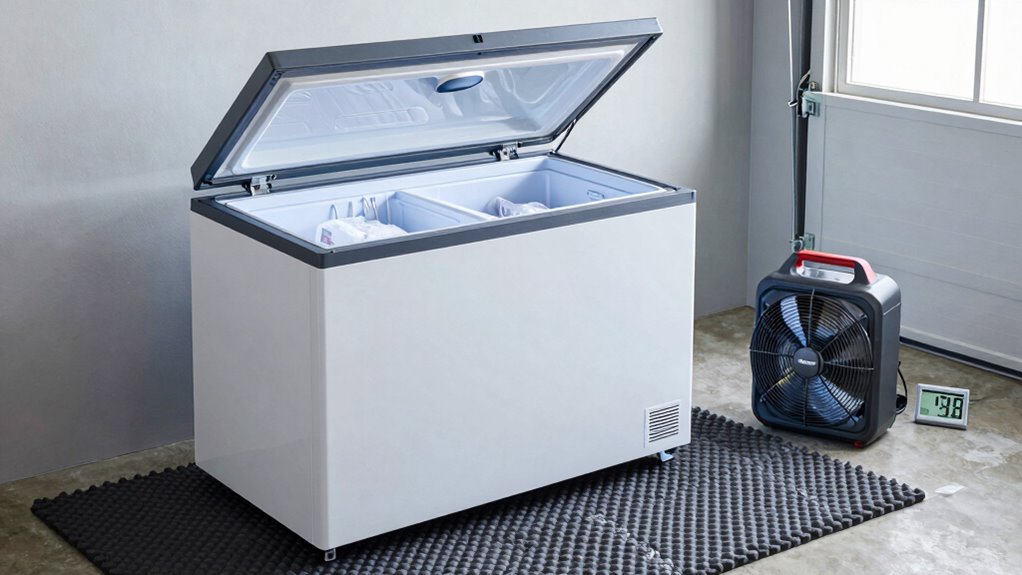

To keep your garage freezer safe longer during an outage, set it to the coldest setting beforehand and keep it full by packing in frozen water jugs or ice packs. Limit door openings and monitor the temperature regularly with a thermometer. Consider using dry ice carefully to extend coldness, and during extended power loss, keep doors sealed tightly. To discover more tips on maintaining safety and efficiency, continue exploring these proven strategies.
Key Takeaways
- Keep the freezer fully stocked and minimize door openings to retain cold temperatures longer during outages.
- Use dry ice safely on top or throughout the freezer to extend cold preservation in extended power failures.
- Regularly monitor the temperature with a thermometer and check for signs of thawing or spoilage.
- Seal gasket seals tightly, clean, and replace if damaged to maintain optimal insulation.
- After an outage, verify the freezer remains frozen, record temperatures, and discard any perishable foods above 40°F.
Preparing Your Garage Freezer Before an Outage

To make certain your garage freezer is ready for an outage, start by setting it to a colder temperature setting in advance. This extra chill helps keep foods frozen longer if power goes out. Regularly defrost your freezer to prevent frost buildup, which can hinder efficiency. Check and clean gasket seals to ensure an airtight fit, preventing warm air from entering. Vacuum vents to keep airflow unobstructed, maintaining ideal performance. Installing a freezer alarm can alert you to power issues or door openings. These proactive steps help your freezer stay cold longer during outages, reducing food spoilage. Additionally, filter maintenance is crucial to ensure your freezer operates efficiently and to prevent potential malfunctions. Ensuring proper outdoor kitchen setup and maintenance can further enhance your preparedness. Properly maintaining ventilation and ensuring adequate airflow can significantly improve the freezer’s ability to retain cold during an outage. Regularly inspecting your cooling system can help identify issues early before an outage occurs. Conducting routine system checks can help you catch problems ahead of time and avoid unexpected failures. Make sure to do this maintenance well before any predicted outage to give yourself ample time to prepare effectively.
Packing Strategies to Maximize Cold Retention

Effective packing is essential for maximizing cold retention during an outage. You want to fill all empty spaces with frozen water jugs, ice bags, or gel packs to slow temperature rise. Group similar foods together so they stay colder longer, and freeze perishables like leftovers, milk, and meat in advance. Keep the freezer fully stocked, as a full unit retains cold better than half-empty ones. Place a sealed bag with 2-3 ice cubes inside to monitor if the temperature rises above 32°F. Avoid opening the door unnecessarily to prevent warm air from entering. Use sturdy containers to prevent spills, and plan to transfer perishables to cooler or dry ice if the outage extends beyond a day. Proper packing creates a buffer, helping your freezer stay cold longer. Additionally, understanding your contrast ratio can help you evaluate how well your freezer or cooler maintains deep blacks and brightness, which is important for assessing performance during prolonged outages. Regularly checking the thermometer placement can ensure accurate temperature readings and better monitoring of your freezer’s condition. Incorporating electric bike knowledge, such as the use of efficient cooling methods, can inspire innovative solutions like portable electric cooling units powered by small generators during extended outages. Understanding your insulation quality can also significantly impact how long your frozen items stay cold, so ensure your freezer is well-insulated for optimal performance. Furthermore, being aware of power backup options can help you prepare a reliable plan to maintain cold storage during power failures.
Monitoring Temperature and Contents During the Outage

Monitoring the temperature and contents during a power outage helps you determine if your food remains safe. Keep an appliance thermometer visible through the freezer door to track temperature shifts. Check it regularly without opening the door too often, which lets warm air in. Use your freezer inventory to identify and prioritize perishable items like meat, dairy, and leftovers. If you have a cooler, transfer sensitive foods there if the freezer’s temperature rises. Note any signs of thawing, such as liquids or frost melt. Keep a log of temperature readings and food conditions to assess safety later. If the temperature rises above 40°F for more than a few hours, consider discarding perishable items to prevent foodborne illness. Incorporating smart home technology such as connected sensors can help automate temperature monitoring and alert you instantly if conditions become unsafe. Regularly inspecting your freezer’s contents and understanding food safety guidelines can further help you make informed decisions during outages. Familiarity with emergency preparedness and having a comprehensive response plan can improve your overall reaction during prolonged outages. Being familiar with food storage best practices can help maximize the safety and longevity of your frozen foods during unexpected power disruptions.
Using Dry Ice Safely to Extend Cold Preservation

To use dry ice safely, always wear gloves and handle it with care to prevent skin burns. Place it in well-ventilated areas, avoiding direct contact with food or glass shelves. Proper placement guarantees maximum cooling while minimizing risks to you and your freezer contents. Being aware of key traits of successful quality assurance engineers can help you better understand the importance of thorough safety procedures. Additionally, understanding Free Floating concepts can assist in managing unexpected situations effectively. Incorporating craftsmanship principles from haute couture can also inspire meticulous handling and attention to detail when managing delicate materials like dry ice. Recognizing the importance of safe handling practices can further ensure you maintain a secure environment during freezer outages. Applying cost-saving strategies from grocery shopping can also help optimize resource use during emergency situations.
Handling Dry Ice Safely
Handling dry ice safely is essential to prevent injuries and guarantee it works effectively during an outage. Always wear insulated gloves when handling dry ice to protect your skin from frostbite and burns. Never touch dry ice with bare hands, and avoid placing it directly on food, as extreme cold can cause freezer damage or contamination. Verify proper ventilation in the area; the sublimating gas can displace oxygen, creating a suffocation risk. Store dry ice in a well-ventilated container, but don’t seal it airtight, as gas buildup can cause pressure to build. Keep dry ice away from children, pets, and sensitive electronics. Proper storage techniques, including dry ice handling, can maximize safety and effectiveness during a power outage. Additionally, understanding refrigeration principles can help you better manage your frozen goods during extended outages. A good grasp of food safety guidelines can help prevent spoilage and ensure your food stays safe. Being aware of paint sprayer maintenance can also help you keep your equipment in optimal condition during emergencies. By following these precautions, you’ll safely extend your freezer’s cold life without risking injury or damage.
Proper Dry Ice Placement
Proper dry ice placement is crucial for maximizing its cold-preserving benefits without risking safety. Place dry ice on the top or around the perimeter of your freezer, avoiding direct contact with food to prevent freezing or damage. Use gloves when handling dry ice, and never touch it with bare hands. Ensure good ventilation in the freezer to allow gas vapors to escape safely. Keep the dry ice away from the freezer’s compressor or any moving parts, which could be damaged by extreme cold. Don’t block vents or airflow paths, as proper circulation maintains even temperatures. If using blocks or pellets, distribute them evenly, focusing on areas that tend to warm faster. This strategic placement extends cold retention and reduces the risk of freezer damage or injury. Additionally, understanding the benefits of European cloud servers can inspire more innovative and sustainable solutions for managing energy-efficient appliances like freezers.
Managing the Freezer During Extended Power Failures

During an extended power outage, the key to safeguarding your freezer’s contents is to keep the door tightly closed to maintain the cold. You should also handle dry ice carefully and use it safely to extend cooling, while regularly checking the thermometer to monitor temperature changes. Staying vigilant with these points helps prevent food spoilage and ensures safety throughout the outage.
Keep Door Closed Tight
Keeping the freezer door closed tightly is essential to maintaining the cold temperature during extended power outages. When you keep the door shut, you prevent warm air from entering and causing the internal temperature to rise. Resist the temptation to open it frequently, even if you’re curious or worried about the contents. Each time you open the door, cold air escapes, shortening the time your frozen items stay safe. Make sure the gasket seals tightly to prevent leaks. If you notice any gaps, clean or replace the seals promptly. Consider placing a note on the door reminding everyone to keep it closed. Remember, a well-sealed, closed freezer can hold its temperature longer, helping you preserve your food safely during a power outage.
Use Dry Ice Safely
When using dry ice to manage your freezer during extended power failures, safety must be your top priority. Handling dry ice improperly can cause serious injuries or health risks. Always wear insulated gloves to prevent frostbite, and never touch dry ice directly with bare hands. Make certain good ventilation in the area to avoid inhaling gas vapors, which can cause breathing problems. Keep dry ice away from children and pets. Do not place dry ice directly on food or inside the freezer’s operating unit, as it can damage surfaces. Use dry ice in well-ventilated containers or coolers, and follow instructions for the appropriate amount needed for your freezer size. Prioritize safety to keep your food cold and yourself safe during outages.
Monitor Temperatures Regularly
Monitoring the temperature of your freezer regularly is essential to guarantee your food stays safe during extended power outages. Use an appliance thermometer placed where you can easily see it through the door. Check the temperature at least once a day, especially if the power has been interrupted for a while. Aim to keep the freezer at 0°F or below. If the temperature rises above 40°F, perishable foods may no longer be safe. Record temperature readings to track changes and determine if you need to transfer items to a backup freezer or cooler. Keeping a close eye on the temperature helps you make timely decisions, preventing food spoilage and reducing waste. Stay vigilant, and act promptly if you notice unsafe temperature shifts.
Post-Outage Checks and Food Safety Measures

After the outage has ended, it’s essential to verify that your freezer and its contents are safe to use. Check the thermometer to ensure the temperature is at or below 40°F. Inspect each item for signs of thawing, such as ice crystals or abnormal odors. Discard any foods that have been above 40°F for more than two hours, especially perishable items like meat, dairy, and seafood. Confirm the freezer’s interior is still frozen solid, and reseal any damaged packages. Keep an eye on the overall condition of your freezer, noting any strange odors or defrosted compartments. Taking these steps helps prevent foodborne illnesses and guarantees your freezer remains a safe storage space.
After a power outage, verify your freezer’s temperature and discard any thawed or unsafe foods.
- Use a thermometer to verify temperature
- Discard thawed, unsafe foods
- Check for ice crystal formation
- Inspect packaging for damage
- Confirm freezer is still frozen solid
Tips for Restoring and Maintaining Freezer Efficiency

Maintaining your freezer’s efficiency requires regular attention and proper practices. Start by inspecting the gasket seals; clean and replace them if they’re cracked or loose to guarantee airtight closure. Defrost the freezer routinely to prevent frost buildup, which hampers cooling performance. Keep vents clear by vacuuming dust and avoiding obstructions that block airflow. Set the temperature to 0°F or lower, using a thermometer to monitor accuracy. Keep the freezer full; an adequately stocked unit retains cold better and uses less energy. Avoid opening the door unnecessarily, especially during outages or power fluctuations. Regularly check door seals and thermostat settings, adjusting as needed. These simple steps help your freezer operate efficiently, saving energy and extending its lifespan.
Frequently Asked Questions
How Can I Tell if My Frozen Food Is Still Safe After an Outage?
To determine if your frozen food is still safe after an outage, check the temperature with a thermometer. If it’s at or below 40°F, the food is safe to refreeze or cook. If it’s above 40°F for more than 2 hours, discard perishable items. Also, inspect for ice crystals or firmness; if foods are still icy and firm, they’re likely safe. Trust your thermometer and visual cues.
What Are the Signs of Freezer Gasket Failure Affecting Cold Retention?
Did you know that a worn gasket can reduce your freezer’s efficiency by up to 20%? If your gasket fails, you’ll notice warm air leaking in, causing your freezer to work harder. Signs include condensation buildup, frost on the door seal, or difficulty closing the door tightly. Regularly inspect the gasket for cracks or tears, and replace it promptly to maintain proper cold retention.
Can I Use Regular Ice Instead of Dry Ice for Prolonged Outages?
Yes, you can use regular ice instead of dry ice during prolonged outages. Fill your cooler with ice packs, frozen water bottles, or bags of ice to keep perishables cold. However, remember that regular ice melts faster and won’t stay cold as long as dry ice. Keep the cooler closed as much as possible to maintain the cold temperature, and monitor the contents regularly to prevent spoilage.
How Often Should I Check the Freezer Temperature During an Outage?
You should check your freezer temperature every 4 to 6 hours during an outage. This frequent monitoring confirms the freezer stays cold enough to keep food safe, aligning with the idea that constant vigilance prevents spoilage. Use an appliance thermometer, and if the temperature rises above 40°F, transfer perishables to a powered freezer or cooler with ice. Regular checks help you act swiftly and protect your food.
What Should I Do if My Freezer Doesn’T Return to Normal After Power Is Restored?
If your freezer doesn’t return to normal after power is restored, first check the thermometer to see if it’s at or below 40°F. If it’s still warm, keep the door closed to maintain whatever cold remains. Consider transferring perishable items to another freezer or cooler with ice. If the temperature remains high, discard any food that’s above 40°F to prevent foodborne illness and avoid refreezing.
Conclusion
Think of your garage freezer like a trusty ship steering stormy seas. With careful planning and quick action, you can keep your food safe and your freezer afloat through power outages. Just like a captain checks the weather before setting sail, prepare ahead and stay vigilant. When the storm passes, you’ll find your frozen treasures still intact, proving that a little foresight can turn a potential disaster into a smooth voyage.