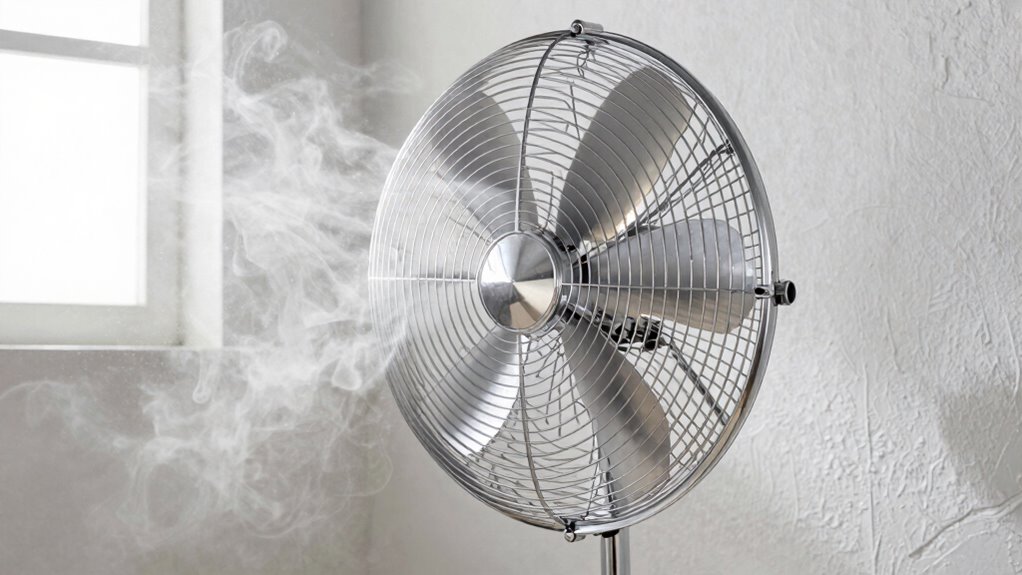
In humid heat, good airflow makes a surprising difference. Use fans at medium to high speeds to boost moisture evaporation and create breezes that feel cool. Combine natural ventilation during cooler parts of the day with exhaust fans to remove excess humidity. Adding dehumidification helps maintain comfortable humidity levels between 30-50%, reducing clamminess. For more tips on optimizing your airflow setup and achieving a invigorating indoor environment, keep exploring ways to improve your comfort.
Prime for Young Adults — start your free trial
Fast free delivery, streaming and member deals for eligible 18–24 year olds.
As an affiliate, we earn on qualifying purchases.
Key Takeaways
- Maximize airflow with oscillating or directional fans to increase moisture evaporation and enhance cooling comfort.
- Use natural ventilation during cooler parts of the day to replace humid indoor air with drier outside air.
- Incorporate exhaust fans in moisture-prone areas to actively remove excess humidity and prevent stagnation.
- Maintain indoor humidity between 30-50% with dehumidifiers, improving air quality and reducing clamminess.
- Combine radiant cooling with strategic airflow management to promote evaporation and create a surprisingly comfortable environment.
As an affiliate, we earn on qualifying purchases.
Understanding Humidity’s Effect on Cooling Comfort
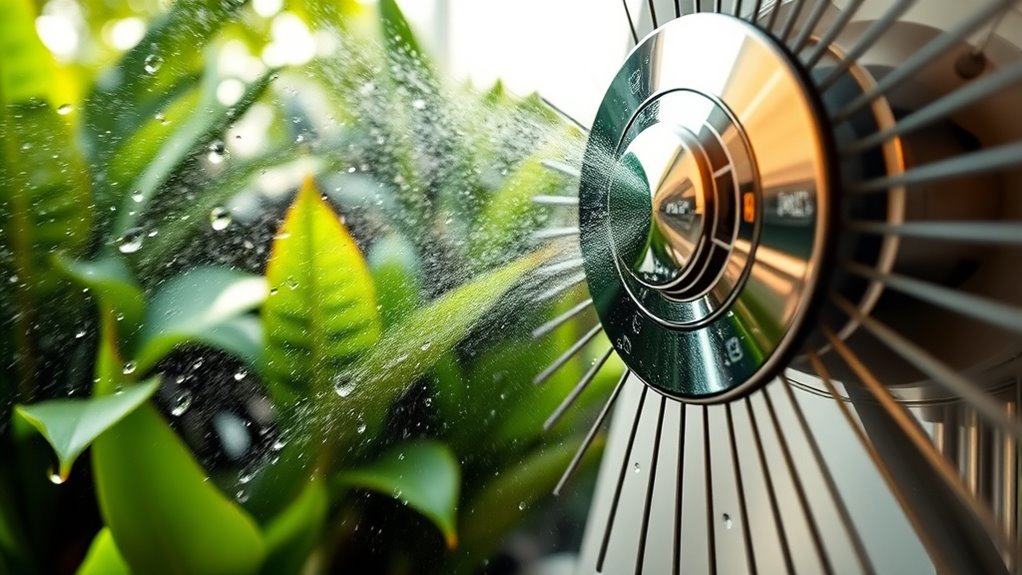
Humidity plays a crucial role in how comfortable your space feels when cooling. When humidity exceeds 40%, evaporative cooling becomes less effective because the air already holds a lot of moisture, making it harder for sweat to evaporate from your skin. As humidity hits 70%, performance drops sharply, and cooling systems struggle to remove heat efficiently. High humidity adds moisture indoors, leading to a clammy feeling that’s uncomfortable even if the temperature is lower. It can also promote mold growth and unpleasant odors on cooler pads and surfaces. For ideal comfort and efficiency, maintaining indoor relative humidity between 30-50% is essential. This balance prevents moisture buildup, reduces strain on cooling systems, and keeps your space feeling fresh and comfortable. Additionally, controlling humidity levels through proper ventilation and dehumidification can significantly improve cooling performance and indoor air quality. Implementing effective humidity control strategies can help maintain this optimal range and improve overall comfort. Proper ventilation systems are also key in managing indoor moisture and keeping the environment comfortable. Furthermore, using air circulation techniques can help distribute cooled air more evenly and reduce localized humidity pockets, enhancing overall cooling efficiency and indoor comfort.
dehumidifier for indoor humidity control
As an affiliate, we earn on qualifying purchases.
As an affiliate, we earn on qualifying purchases.
Why Traditional Air Conditioning Can Feel Clammy
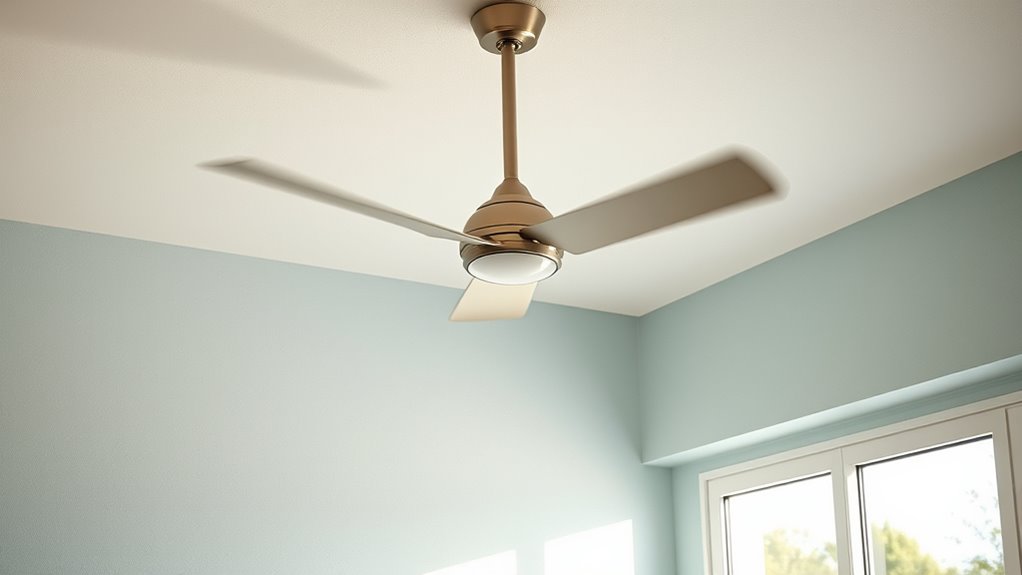
When indoor air contains high levels of moisture, traditional air conditioning can leave your space feeling clammy and uncomfortable, even if the temperature is cool. This happens because, while the AC cools the air, it doesn’t remove enough humidity, especially in humid climates. Instead of feeling crisp and invigorating, the moisture makes the air feel heavy and sticky. You might notice a dampness on your skin or surfaces, which can lead to discomfort and a feeling of being damp all over. The AC’s dehumidification capacity is limited when humidity exceeds 50-60%, causing the moisture to linger. As a result, the space feels more humid, and your body struggles to cool itself effectively, leaving you feeling clammy despite the cool temperature. Proper humidity control can significantly improve comfort and air quality in such conditions. Additionally, airflow setup that promotes better circulation can help distribute cooled, dehumidified air more evenly throughout the space. Using smart ventilation systems that adapt to humidity levels can further enhance comfort by actively managing moisture and airflow. Incorporating effective air circulation techniques can make a noticeable difference in how cool and comfortable the environment feels. Implementing humidity sensors can help monitor moisture levels and optimize dehumidification efforts for improved comfort.
As an affiliate, we earn on qualifying purchases.
The Role of Airflow in Enhancing Evaporative Cooling

Airflow plays a crucial role in enhancing evaporative cooling by increasing the rate of moisture evaporation from surfaces and your skin. When air moves across your body or cool surfaces, it carries away the moisture-laden air, allowing more sweat and moisture to evaporate. This process cools your skin more effectively than stagnant air. Proper airflow patterns ensure constant replacement of humid air with drier air, boosting evaporation rates. Fans and natural breezes help maintain this airflow, especially in moderate humidity levels. Without sufficient airflow, moisture remains trapped, reducing cooling efficiency. Additionally, airflow dynamics influence how well moisture is transported away, impacting overall cooling performance. By optimizing airflow, you activate the natural cooling process, making humid heat feel more tolerable. Good airflow setups are essential for maximizing evaporative cooling and improving your comfort in hot, humid environments. Optimizing air circulation can further enhance these effects by ensuring a steady movement of air around the cooled surfaces. Properly designed airflow can also prevent stale, humid air from lingering, which is vital for maintaining a comfortable environment. Understanding the importance of air movement can help you create more effective cooling strategies in humid conditions.
portable natural ventilation fan
As an affiliate, we earn on qualifying purchases.
As an affiliate, we earn on qualifying purchases.
Optimal Fan Settings for Hot and Humid Conditions
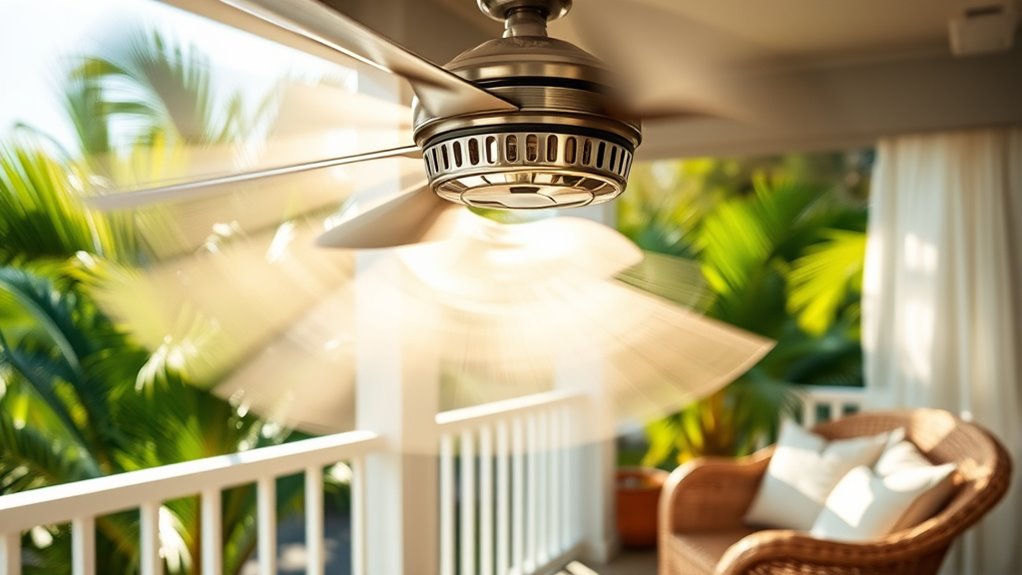
To optimize fan settings in hot and humid conditions, you should focus on balancing airflow and moisture removal to enhance cooling efficiency and comfort. Set fans to a medium or high speed to promote better air circulation, which helps evaporate sweat and cool your skin. Avoid running fans on the lowest setting, as it reduces airflow and limits moisture evaporation. If your fan has oscillation or directional controls, aim airflow toward occupied areas to maximize comfort. Use ceiling fans in conjunction with portable fans to create a breeze that improves evaporation. Keep windows open during cooler parts of the day to facilitate cross-ventilation, but close them during peak heat and humidity. The goal is to maintain a steady, gentle breeze that aids moisture removal without causing discomfort from excessive airflow. Additionally, understanding the importance of performance upgrades can help you optimize your overall cooling setup for better efficiency and comfort, especially when integrating ventilation strategies with your existing system. Employing airflow management techniques can further enhance the effectiveness of your cooling efforts by directing air precisely where it’s needed most. Incorporating smart airflow control devices can automate and fine-tune your ventilation for optimal comfort in varying conditions. Implementing adjustable fan settings allows you to customize airflow based on real-time indoor humidity and temperature levels, ensuring a more comfortable environment.
Combining Radiant Cooling With Proper Ventilation Strategies
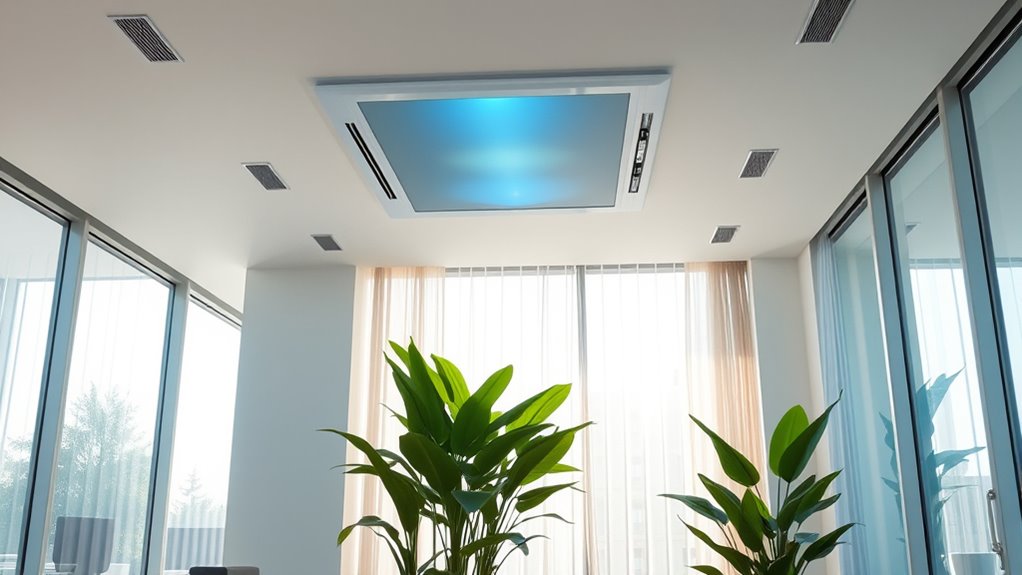
To keep your space comfortable in humid conditions, proper ventilation helps control moisture and enhances airflow. Combining radiant cooling with strategic ventilation reduces humidity buildup and improves indoor air quality. By balancing airflow and moisture removal, you can maximize comfort and energy efficiency. Incorporating airflow management techniques further optimizes the environment by preventing stagnant air and promoting consistent cooling. Regularly monitoring humidity levels ensures that your ventilation strategies remain effective and tailored to seasonal changes. Using ventilation patterns effectively can also help maintain a balanced indoor climate throughout the year. Additionally, understanding the heat distribution in your space can guide better placement of cooling and ventilation devices for optimal comfort.
Ventilation for Moisture Control
Effective moisture control in buildings requires integrating radiant cooling systems with proper ventilation strategies. You should prioritize ventilation that removes excess humidity without overcooling the space. Using exhaust fans in bathrooms, kitchens, and utility areas helps vent moist air directly outside, preventing indoor humidity buildup. Incorporating controlled mechanical ventilation, like heat recovery ventilators (HRVs) or energy recovery ventilators (ERVs), ensures fresh air enters while dehumidifying it. Proper airflow exchange reduces indoor moisture levels and maintains comfort. Avoid relying solely on passive ventilation in humid climates, as it may introduce more moisture. Instead, combine targeted ventilation with radiant cooling to keep humidity within ideal ranges. This approach minimizes mold risks, improves indoor air quality, and enhances overall comfort, especially when paired with humidity-sensitive cooling strategies. Additionally, selecting essential oils for respiratory health can promote better breathing and comfort in humid environments.
Enhancing Comfort With Airflow
Combining radiant cooling with proper airflow management can substantially enhance indoor comfort, especially in humid environments. You should prioritize strategic airflow to promote natural ventilation, which helps remove excess moisture and distribute cooled air evenly. Use ceiling fans or oscillating fans to create a gentle breeze that accelerates evaporation from your skin, making you feel cooler without lowering the temperature excessively. Verify airflow patterns direct fresh, drier air into living spaces while exhausting humid air outdoors. Proper ventilation not only improves comfort but also reduces reliance on mechanical cooling, saving energy. When combined with radiant cooling, this setup can maintain a balanced indoor humidity level and prevent clamminess, creating a pleasant environment even in high humidity.
How Dehumidification Improves Indoor Comfort
Dehumidification helps you control indoor moisture levels, making your space feel cooler and more comfortable. When humidity is kept in check, the air quality improves, reducing mold growth and odors. This not only boosts your comfort but also promotes a healthier indoor environment.
Enhanced Moisture Control
When indoor humidity levels rise above 50%, comfort quickly diminishes as excess moisture makes the air feel clammy and oppressive. By controlling humidity with dehumidification, you reduce that sticky, heavy feeling. Proper moisture management keeps the air feeling fresh and breathable, even during hot days. Dehumidifiers work alongside your air conditioning system to remove excess moisture efficiently, preventing mold growth and musty odors. When humidity stays within the ideal 30-50% range, your space feels cooler and more comfortable without overcooling. This enhanced moisture control also reduces the workload on your AC, saving energy and extending equipment life. Overall, maintaining suitable humidity levels creates a more pleasant indoor environment, making hot, humid days much more bearable.
Better Air Quality
Maintaining ideal indoor humidity levels not only enhances comfort but also markedly improves air quality. When humidity stays between 30-50%, you reduce airborne pollutants, dust mites, and mold growth, all of which thrive in damp environments. Dehumidification removes excess moisture, preventing mold spores and other allergens from circulating, which is especially important for allergy sufferers. It also minimizes odors caused by mold or bacteria. Cleaner air means you breathe easier, sleep better, and experience fewer respiratory issues. Proper humidity control also enhances the effectiveness of ventilation systems, ensuring fresh air circulates without bringing in excess moisture. Ultimately, dehumidification creates a healthier indoor environment, supporting your overall well-being while making your space feel fresher and more comfortable.
Balancing Temperature and Humidity for Better Results
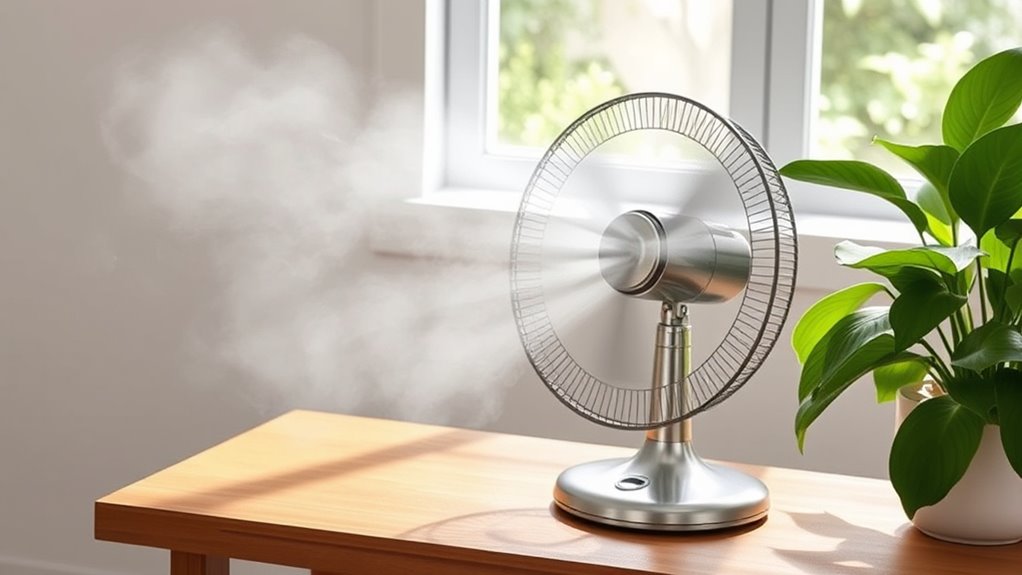
Achieving ideal comfort requires carefully balancing indoor temperature and humidity levels, since both markedly affect how you perceive heat and moisture. Too much humidity makes the air feel clammy, while too little can cause dryness and discomfort. Use a hygrometer to monitor humidity and adjust your cooling methods accordingly. For best comfort, aim for 30-50% relative humidity. Here’s a quick guide:
| Humidity Level | Effect on Comfort |
|---|---|
| 30-40% | Slightly dry, comfortable |
| 40-50% | Ideal balance, pleasant |
| 50-60% | Slightly humid, may feel damp |
| 60-70% | Noticeably humid, discomfort |
| Above 70% | Clammy, risk of mold |
Balance both for a cooler, more comfortable environment.
Natural Ventilation Techniques for Humid Climates
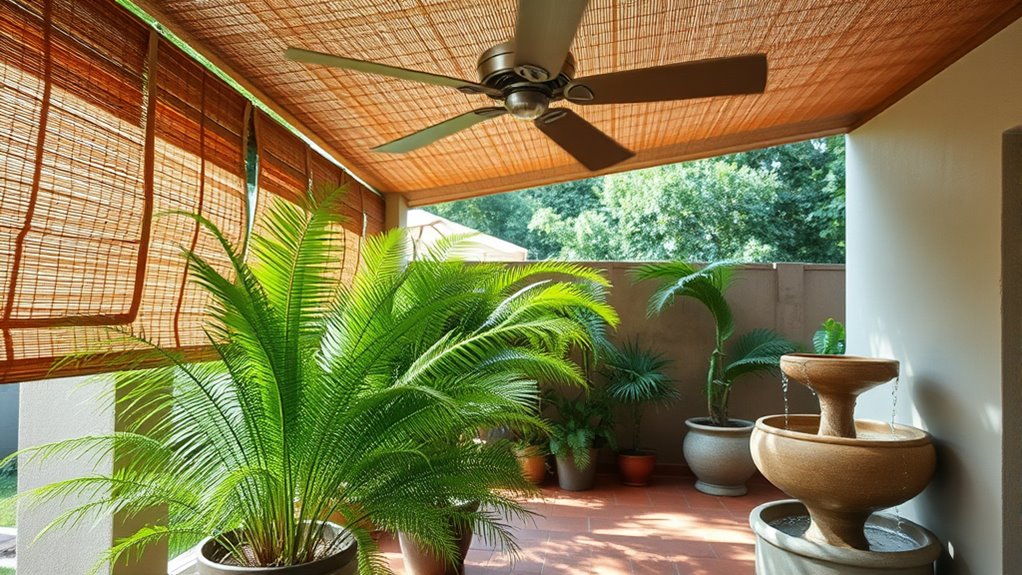
In humid climates, natural ventilation can be an effective way to improve indoor comfort without relying solely on mechanical cooling systems. To maximize airflow, open windows on opposite sides of your home to create cross-ventilation, encouraging cooler outdoor air to replace warm indoor air. Use strategically placed vents or vents near the ceiling to promote upward airflow, which helps remove heat and humidity. Shade windows with overhangs or curtains to reduce heat gain while still allowing air movement. Consider night flushing—opening windows at night when outdoor temperatures drop—to lower indoor humidity and temperature. Avoid sealed spaces or small openings that trap moisture. Proper ventilation methods can help maintain a balanced indoor environment, making it feel cooler and more comfortable in humid conditions.
Practical Tips for Achieving a Refreshing Indoor Environment
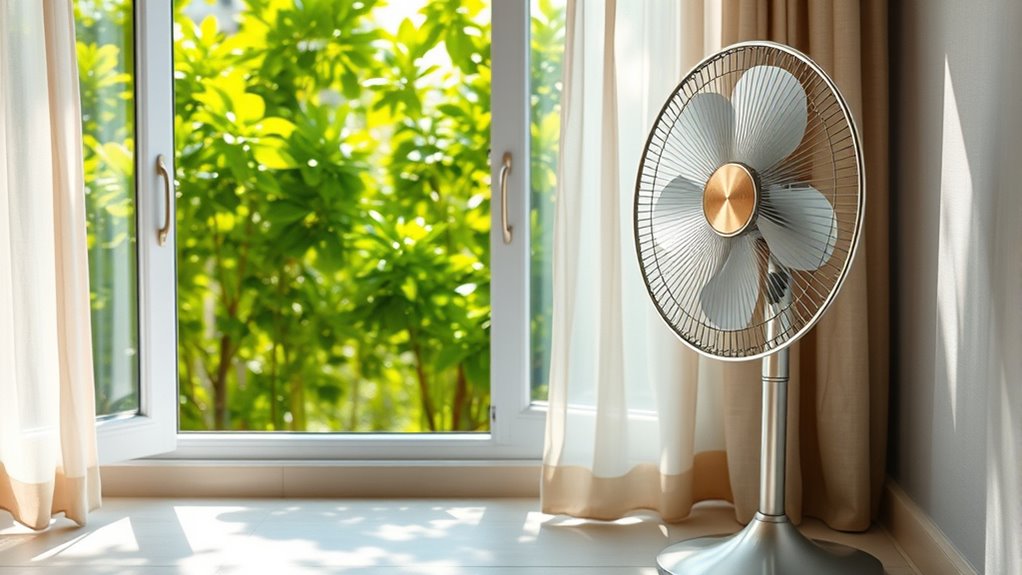
Creating a revitalizing indoor environment in humid conditions requires strategic approaches that balance temperature and humidity. Start by sealing leaks to prevent humidity ingress and installing dehumidifiers to maintain 30-50% RH. Use fans to promote air circulation, enhancing evaporation and cooling. Pair radiant cooling systems with DOAS to control humidity while saving energy. Keep blinds closed during the day to block heat gain. Regularly maintain your AC to ensure efficiency. Consider natural ventilation during cooler evenings. Here’s a quick visual guide:
| Strategy | Benefit |
|---|---|
| Seal leaks | Reduces humidity intrusion |
| Dehumidifiers | Maintains ideal RH |
| Fans and circulation | Enhances evaporation, improves comfort |
| Radiant cooling + DOAS | Saves energy, controls humidity |
Frequently Asked Questions
Can Fans Alone Cool a Room Effectively in High Humidity?
Fans alone can’t effectively cool a room in high humidity. They mainly enhance evaporation from your skin, which helps in moderate humidity and temperatures below 102.2°F (39°C). But in high humidity, the air is already saturated, so fans offer limited relief and can even make you feel clammy. To improve comfort, combine fans with dehumidifiers or air conditioning that controls moisture and temperature simultaneously.
How Does Airflow Influence Perceived Temperature Comfort?
Airflow directly affects how comfortable you feel by enhancing evaporation from your skin, which cools you down. When airflow is strong, it helps remove heat and moisture, making the environment seem cooler even if the temperature stays the same. You’ll perceive higher airflow as more invigorating and cooling, especially in humid conditions. Proper airflow setup can greatly improve your comfort, reducing the need for overcooling and making your space feel more pleasant.
Are Radiant Cooling Systems Suitable for Humid Environments?
Radiant cooling systems can work in humid environments, but you need to regulate humidity levels effectively. Pairing them with a dedicated dehumidification system or a ventilation approach like DOAS ensures moisture stays in check. When indoor humidity stays between 30-50%, you’ll find radiant cooling comfortable and energy-efficient. Just remember, in high humidity, radiant systems perform best with proper moisture management to prevent mold, odors, and discomfort.
What Humidity Levels Are Ideal for Energy-Efficient Cooling?
You should aim for indoor humidity levels between 30-50% for energy-efficient cooling. Maintaining this range helps reduce your cooling system’s workload, prevents mold growth, and keeps you comfortable. When humidity stays within these limits, your AC runs more efficiently, using less energy. Use dehumidifiers or proper ventilation to control moisture, and seal your home to keep humidity out, ensuring ideal comfort and savings.
How Can Natural Ventilation Reduce Reliance on Mechanical AC?
Imagine opening your windows just as the outside air whispers through. Natural ventilation reduces your reliance on mechanical AC by letting cool breezes flow through, flushing out hot indoor air. When you harness cross-ventilation and strategic window placement, you create a invigorating airflow that naturally cools your space. This simple, effective approach saves energy, cuts costs, and keeps your home comfortable even during humid days.
Conclusion
By understanding how humidity affects your comfort and using the right airflow strategies, you can make your space feel surprisingly cool and invigorating. Don’t settle for clammy, uncomfortable conditions—adjust your fan settings, improve ventilation, and dehumidify when needed. Isn’t it worth creating an environment where you can truly breathe easy, even on the hottest, most humid days? With a few simple tweaks, you can transform your space into a cool, comfortable retreat.
Fall yard work Picks
leaf blowers
As an affiliate, we earn on qualifying purchases.