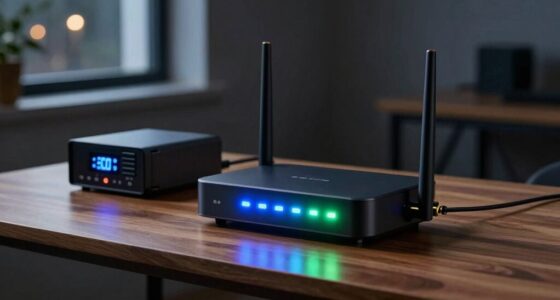
When a power surge strikes, unplug your sensitive electronics immediately to prevent damage, especially during thunderstorms or utility fluctuations. Use a multi-layered protection system, including surge protectors at the service entrance, panels, and outlets, for the best defense. Regularly inspect and replace worn protectors, and guarantee proper grounding. By following these steps, you can safeguard your devices effectively. Keep going to discover more essential tips to keep your electronics safe.

Get backup power and energy gear delivered free — and shop member deals
- Fast, free delivery on millions of items
- Access to Prime Big Deal Days deals on October 6–7
- Prime Video, Amazon Music and more included
Key Takeaways
- Unplug electronics during thunderstorms to prevent damage from power surges caused by lightning strikes.
- Surge protectors at multiple points (service entrance, panel, outlets) offer layered defense.
- Regularly inspect and replace surge protection devices to ensure ongoing safety.
- Use whole-home surge protection systems for comprehensive coverage of all connected devices.
- Avoid leaving sensitive electronics plugged in during storms, especially if surge protection is not present.
Understanding the Risks of Power Surges

Power surges pose a significant threat to your electronic devices, often occurring unexpectedly and causing immediate damage. A single lightning strike can generate over 100,000 volts, far exceeding the 120V design of your electronics. Even minor surges happen frequently; a typical building experiences up to 150 per month. These surges can degrade your devices over time, leading to costly failures or data loss. In 2016, insurance claims from surge-related damages reached $825 million, and this number has increased since 2007. Homes in the U.S. contain over $15,000 worth of equipment that’s vulnerable. Understanding these risks helps you realize that power surges aren’t just rare events—they’re common and can cause significant, often unnoticed, damage to your electronics if left unprotected. High-quality surge protectors can help shield your devices from these unpredictable events. Additionally, electrical system grounding plays a crucial role in safely directing excess voltage away from your equipment. Proper grounding techniques are essential for minimizing electrical hazards and protecting your electronics effectively. Recognizing that power surges are more frequent than many realize encourages proactive measures to safeguard your valuable devices. Being aware of surge frequency can help you make informed decisions about your electrical safety measures.
How Surge Protectors Shield Your Devices
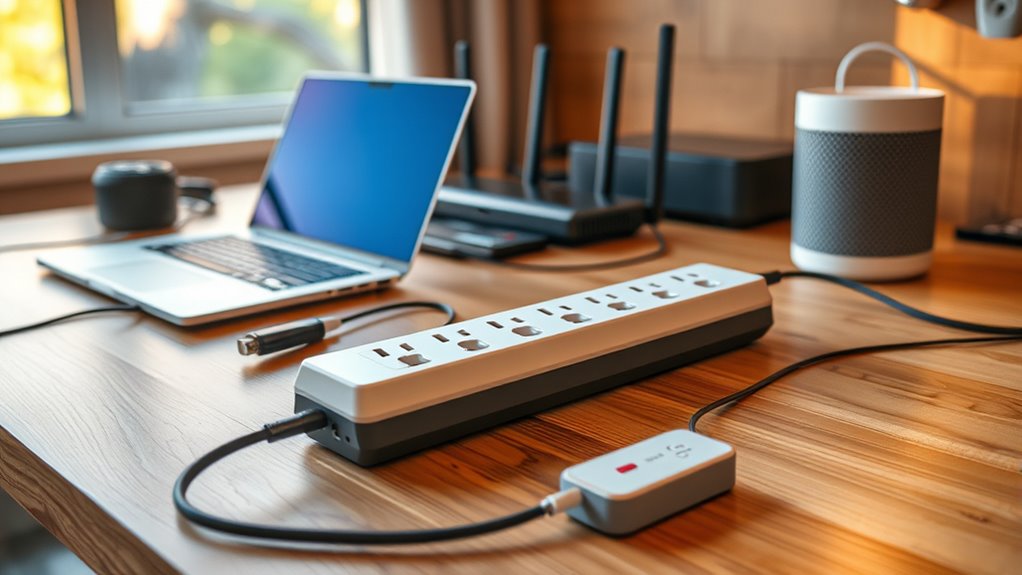
Surge protectors act as a vital barrier between your devices and unexpected voltage spikes. When a surge occurs, the protector detects the excess voltage and channels it safely to the ground, preventing it from reaching your electronics. This process involves components like metal-oxide varistors (MOVs) that absorb the surge’s energy. Understanding how surge protectors work can help you choose the best device for your needs. By doing so, surge protectors limit the current flowing into your devices, shielding delicate circuits from damage. They also help reduce electrical noise, which can interfere with device performance. Proper installation and maintenance are essential to ensure surge protectors function effectively over time. Regularly testing your surge protectors and replacing them when they no longer provide protection ensures ongoing safety. Electrical safety standards guide proper installation and design, further enhancing the protection they offer. Properly installed and maintained surge protectors provide a reliable defense, extending the lifespan of your electronics and avoiding costly repairs or replacements caused by voltage spikes.
The Multi-Layered Approach to Surge Protection
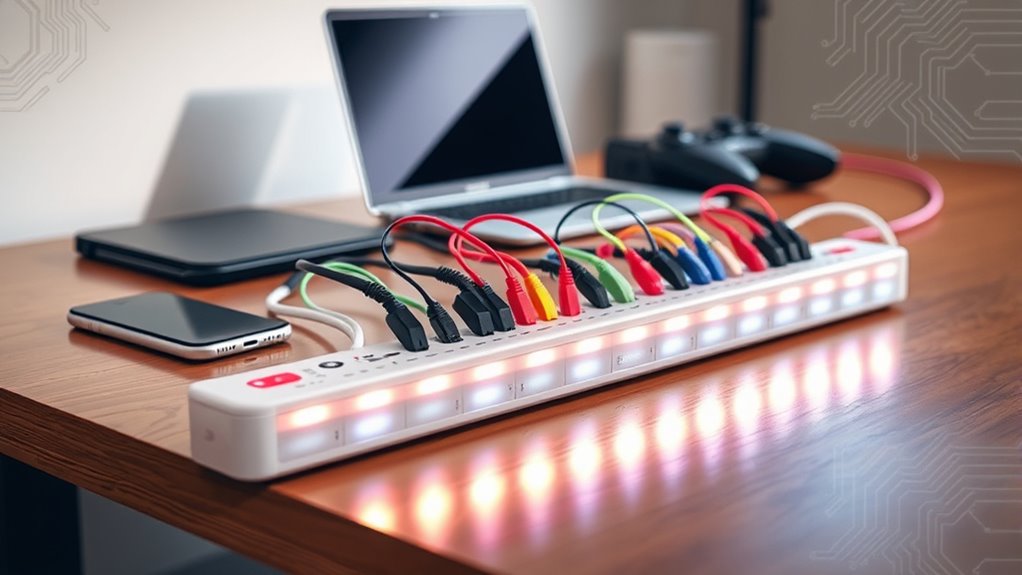
A multi-layered surge protection system guarantees your electronics are shielded at every vulnerability point. Proper coordination of devices, from service entrance to point-of-use, creates an effective barrier against voltage spikes. Strategic placement of these protectors maximizes performance and safeguards your valuable equipment. Incorporating electrical safety principles ensures comprehensive coverage and reliable protection across your home or shop. Understanding power quality concepts helps in selecting the most effective surge protection components and strategies. Additionally, awareness of grounding and bonding practices enhances the overall effectiveness of your surge protection setup. Considering wave and wind effects on power lines can further improve your surge protection strategy by accounting for environmental influences. For example, electric power generation with bike generators highlights the importance of managing fluctuations and ensuring stable energy flow, which parallels the need for proper surge protection in electrical systems.
Layered Defense System
Implementing a layered defense system is essential to effectively protect your electronics from the unpredictable nature of surges. By combining multiple protection methods, you create a robust barrier that minimizes damage risks. Each layer targets different surge sources, guaranteeing thorough safety. For example:
- Service entrance SPDs block large utility surges before they enter your home.
- Panel SPDs safeguard the distribution circuits from internal spikes.
- Point-of-use SPDs protect sensitive devices directly at outlets.
- Whole-home systems at the electrical panel defend against internal and external surges simultaneously.
- Understanding the impact of cookies helps you make informed decisions about your privacy and security while managing your surge protection setup.
- Incorporating essential safety features ensures comprehensive coverage against a variety of surge events.
- Regular maintenance and system testing are crucial to ensure all protection layers function correctly over time.
- Employing advanced surge protection technologies can further enhance your system’s resilience against complex surge scenarios.
A comprehensive surge protection plan incorporates all these layers to ensure maximum safety for your electronics.
This multi-layered approach ensures that if one layer fails or is overwhelmed, others still provide protection. Together, these defenses reduce the chance of equipment failure, extend your electronics’ lifespan, and save you money on repairs and replacements.
Coordination of Devices
To guarantee maximum protection, it’s essential to coordinate your surge protection devices so they work together seamlessly. This means installing devices at different points in your electrical system—such as the service entrance, main panel, and individual outlets—creating a multi-layered defense. Each device acts as a barrier, blocking or redirecting excess voltage before it reaches sensitive electronics. Proper coordination ensures that the first device activates during a surge, absorbing most of the energy, while subsequent devices handle any remaining voltage. This layered approach prevents overloads, reduces the risk of device failure, and extends your equipment’s lifespan. When your surge protectors work in harmony, they form a robust shield, offering reliable defense against the unpredictable power surges that threaten your electronics daily. Developing a systematic testing methodology ensures your surge protection system remains effective over time, especially as electrical systems evolve and new devices are added. Conducting regular performance checks can help identify any weak points in your system before a surge occurs. Implementing standardized surge protection procedures can further enhance your system’s resilience against unexpected voltage spikes.
Strategic Placement Importance
Strategic placement of surge protection devices maximizes their effectiveness by creating multiple defense layers throughout your electrical system. By positioning these devices thoughtfully, you guarantee that surges are absorbed at various points, reducing stress on your electronics. Proper placement helps prevent internal and external surges from reaching your sensitive devices. It also minimizes the risk of damage and extends equipment lifespan. To optimize protection, consider these key locations:
- Service entrance panels for incoming utility surges
- Main electrical panel for internal power fluctuations
- Individual outlets for sensitive electronics
- Whole-home systems at the electrical panel for all-encompassing coverage
Implementing protection at each stage forms a robust barrier, channeling excess voltage safely to ground. This layered approach provides peace of mind and maximizes your investment in electronics safety.
Recognizing When Your Surge Protection Needs an Upgrade
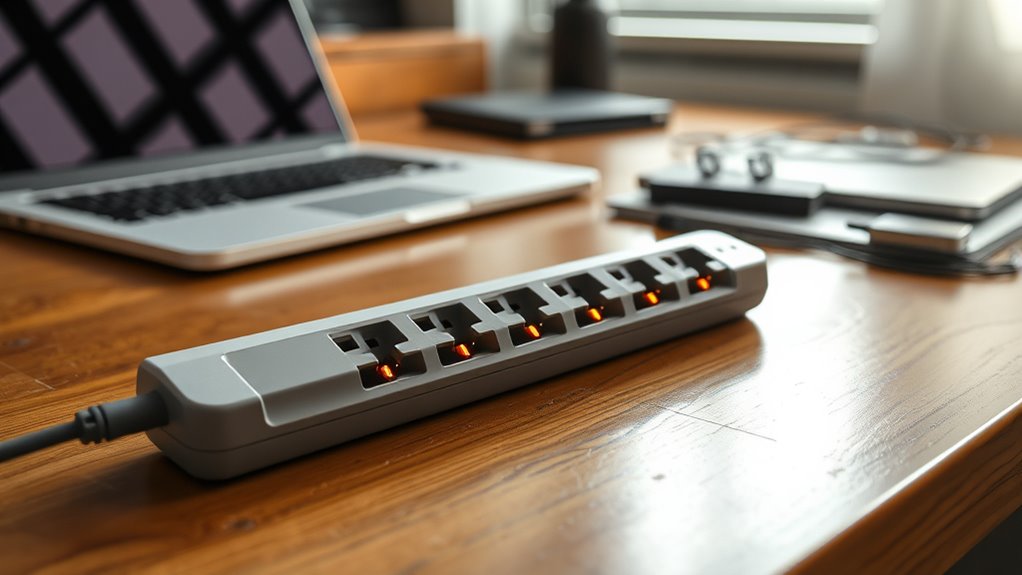
If your surge protection devices are aging or show visible damage, it’s time to contemplate an upgrade. Frequent power fluctuations or noise in your electronics can also signal that your current system isn’t providing enough protection. Staying alert to these signs helps prevent costly damage and ensures your devices stay safe.
Age of Existing Devices
As your electronic devices age, their ability to withstand power surges diminishes, making it crucial to assess your current surge protection setup regularly. Older devices may have outdated components that can’t handle modern surge levels, increasing the risk of damage. If you notice the following, it’s time to consider an upgrade:
- Devices frequently reboot or show erratic behavior
- Surge protectors lack indicator lights or show signs of wear
- The surge protection hardware is more than 5-10 years old
- You’ve experienced recent power surges or lightning strikes
Upgrading your surge protection ensures your electronics stay safe, especially as newer devices often have more sensitive circuitry. Regular evaluation keeps your system reliable and minimizes the risk of costly damage or data loss.
Visible Damage or Noise
Visible damage or noise from your surge protectors is a clear sign they may no longer be effective. Cracks, burn marks, or melted components indicate they’ve absorbed excessive surges and need replacing. Similarly, unusual buzzing, clicking, or blinking indicator lights signal internal issues or failure. Ignoring these signs risks damage to connected devices during future surges.
| Damage Type | What It Means | Recommended Action |
|---|---|---|
| Visible damage | Surge absorber compromised | Replace surge protector |
| Noisy operation | Internal component failure | Inspect or replace |
| Indicator lights | Faulty or worn out | Test or upgrade |
Stay vigilant. Regularly check your surge protectors for signs of wear, ensuring your electronics remain protected.
Frequent Power Fluctuations
Frequent power fluctuations are a clear sign that your current surge protection may no longer be sufficient. When voltage levels vary unexpectedly, it puts your electronics at risk of damage and reduces their lifespan. If you notice your devices flickering, lights dimming, or frequent resets, it’s time to evaluate your protection setup. These fluctuations can signal internal wiring issues or external grid instability, both of which demand stronger safeguards. Upgrading your surge protection can prevent costly repairs and data loss. Consider installing devices that monitor and respond to voltage irregularities promptly. Protecting your electronics with the right system means minimizing downtime and extending their longevity. Don’t ignore these signs—your equipment’s safety depends on proactive measures.
Best Practices for Safeguarding Your Electronics

To effectively safeguard your electronics from power surges, it is vital to implement a multi-layered protection strategy. Start by installing surge protection devices at your service entrance to block large external surges. Add panel surge protectors to shield your circuit distribution, and use point-of-use surge protectors on individual devices for final defense. Make certain all systems are properly grounded to allow safe dissipation of excess voltage. Regularly inspect your surge protection devices for signs of wear or damage, and replace them as recommended. Keep your wiring up to code and avoid overloading circuits. If you experience frequent surges, consider professional testing to verify your protection setup. These practices help guarantee your electronics stay safe, reliable, and free from damage caused by unexpected voltage spikes.
Cost Benefits of Installing Surge Protection Systems

Installing surge protection systems can lead to significant cost savings by preventing the extensive damages and equipment replacements caused by power surges. Without protection, you risk costly repairs and replacements—average household damages range from $3,000 to $15,000. Investing in surge protection minimizes these expenses and can even reduce insurance premiums by lowering claim risks. Plus, it helps avoid downtime that could cost critical facilities up to $130,000 per event.
Prevent costly repairs and downtime with surge protection—saving thousands and safeguarding your essential electronics.
- Protects expensive electronics from costly damage
- Extends the lifespan of your devices and appliances
- Cuts down on frequent replacement costs
- Saves money on insurance claims and premiums
Common Myths About Surge Protection Debunked
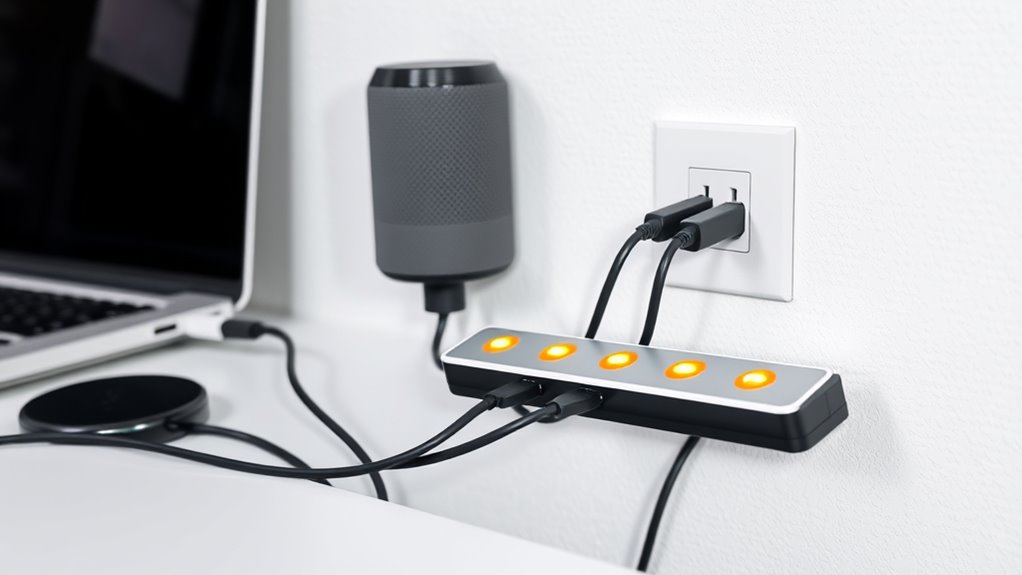
Many people believe that surge protection is unnecessary or overhyped, but these myths can leave your electronics vulnerable to costly damage. Some think that power strips with basic surge protection are enough, but they often lack the capacity to handle large surges or internal spikes. Others assume surges only happen during storms, ignoring that they occur up to 150 times per month from internal sources like appliances. Some also believe that surge protectors last forever, but they wear out over time and need testing or replacement. Additionally, many think that whole-house systems are too expensive or complicated, but they provide extensive, multi-layered defense when properly installed. Busting these myths helps you understand the true value of effective surge protection for your home and devices.
The Importance of Regular Maintenance and Testing
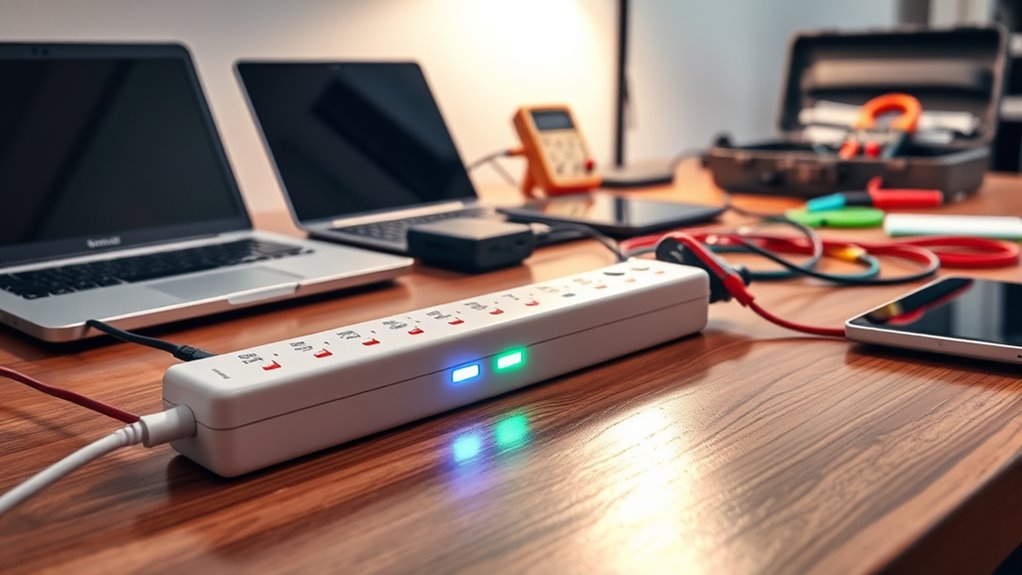
Regular maintenance and testing are essential to guarantee your surge protection system functions effectively when it’s needed most. Without regular checks, silent failures or grounding issues can compromise your system’s ability to absorb voltage spikes. To ensure peak performance, you should:
- Periodically inspect indicator lights for proper operation
- Test professionally at least once a year
- Confirm grounding connections are secure and corrosion-free
- Replace surge protectors that have absorbed maximum joules or show signs of damage
Frequently Asked Questions
How Do I Choose the Right Surge Protector for My Home?
To select the appropriate surge protector, first evaluate your home’s risk level and the value of your electronics. Opt for a multi-tiered protection system, including whole-home surge protection and point-of-use devices. Look for units rated at least 40,000 amps and rated by joules for energy absorption. Guarantee proper grounding and consider professional installation to maximize safety and performance, protecting your devices from damaging voltage spikes effectively.
Can Surge Protectors Prevent Damage From Internal Surges?
Yes, surge protectors can prevent damage from internal surges, but you need the right setup. Internal surges often come from appliances or wiring issues, so installing whole-home or panel surge protection devices is your best bet. These systems work by absorbing or redirecting excess voltage before it reaches your devices. Regular maintenance and proper grounding guarantee they function effectively, keeping your electronics safe during internal and external surges.
What Are the Signs My Surge Protection System Is Failing?
You’ll notice your surge protection system is failing if the indicator lights go out or turn red, signaling a problem. Also, if devices still get damaged during a surge or if you experience unexplained equipment resets, it’s a sign. Regular testing by a professional is vital, as some failures happen silently. Keep an eye on temperature and guarantee grounding remains proper for peak performance.
How Often Should I Have My Surge Protectors Professionally Tested?
You should have your surge protectors professionally tested at least once every 2 to 3 years. With building surges happening up to 150 times per month, regular testing is vital to guarantee protection remains effective. These systems can fail silently, and proper grounding is essential. Scheduling routine inspections helps catch issues early, preventing costly damage and extending the lifespan of your electronics.
Are There Specific Surge Protection Solutions for High-Risk Electronics?
Yes, for high-risk electronics, you should use dedicated surge protection solutions like whole-house systems, panel-mounted SPDs, and point-of-use protectors. These devices are designed to handle higher surge currents and provide extra layers of defense. Make sure they’re properly installed, grounded, and regularly tested, so they work effectively when a surge occurs. Investing in these specialized protections helps keep your valuable electronics safe from lightning strikes and internal surges.
Conclusion
By now, you understand why surge protection is essential and how it keeps your devices safe. Are you ready to unplug during storms and upgrade your system? Think of surge protectors as a financial and electronic shield—without them, you’re leaving yourself vulnerable. Taking simple steps now can save you money and hassle later. Don’t wait for a surge to strike—protect your electronics today and enjoy peace of mind.
Fall Picks
fall essentials
As an affiliate, we earn on qualifying purchases.