
To create a kid-friendly blackout routine that turns chaos into calm, start by preparing your home with safety supplies and soft lighting like dimmable lamps or headlamps with red filters. Establish a consistent, calming bedtime routine with visual charts, gentle stories, and calming sounds. Use sensory tools and familiar objects to foster security, and maintain a relaxed, positive approach during night wakings. Keep routines predictable and flexible to help your child feel safe and soothed—discover more ways to make this shift smooth and comforting.
Get ready for Prime Big Deal Days — try Prime free
Exclusive member deals on October 6–7, plus fast free delivery. Cancel anytime.
As an affiliate, we earn on qualifying purchases.
Key Takeaways
- Establish a consistent, calming bedtime routine with visual cues and praise to promote cooperation and reduce resistance during blackouts.
- Prepare a safe, dimly lit environment using red/amber night-lights and sensory tools to create a soothing atmosphere.
- Use soft, warm lighting and familiar sounds like lullabies or white noise to promote relaxation and mask unsettling noises.
- Minimize temperature fluctuations with layered bedding and monitor room comfort to help the child feel secure and settle easily.
- Offer reassurance, clear simple instructions, and familiar objects to ease anxiety and foster a sense of control during blackout conditions.
Preparing Your Home for a Blackout

Preparing your home for a blackout starts with ensuring your emergency kit is fully stocked and accessible. Check that it includes enough water—about a gallon per person daily for three days—and flashlights or headlamps with fresh batteries. Schedule device charging earlier in the day using battery packs or solar chargers to save power for when the lights go out. Identify a safe, familiar sleeping spot with minimal light sources and clear pathways to prevent nighttime falls. Prepare a calm, predictable pre‑sleep routine—like a bath, teeth brushing, and a story—to help your child shift smoothly into sleep. Keep clothing, diapers, loveys, and spare bedding within reach to make nighttime caregiving efficient and low‑stimulus. Incorporating modern kitchen technology such as smart lighting or automated appliances can also help create a more controlled environment during outages. Additionally, understanding projector features like contrast ratio and color accuracy can help you optimize your home setup for better visibility and comfort during emergencies. Using sauna heaters with remote controls can allow adjustments without leaving the safety of your home during a power outage. Employing smart home fitness technology can also enhance your overall preparedness by allowing remote control and automation of home systems, reducing stress during outages. Being aware of emergency power options, like portable generators, can also provide peace of mind during extended outages. These steps help you stay prepared and reduce chaos during a blackout.
Setting Up a Calm and Consistent Bedtime Routine
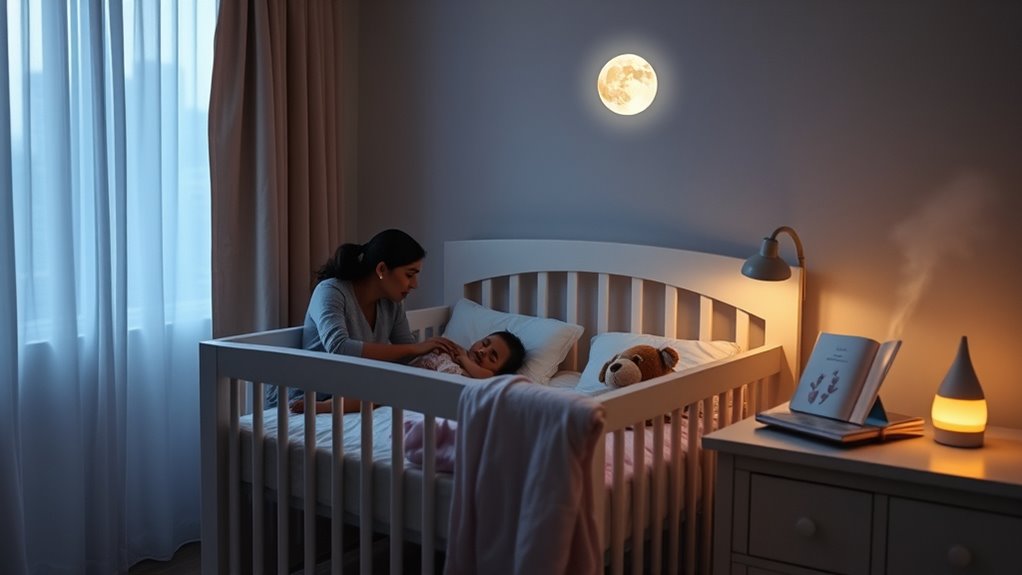
Establishing a calm and consistent bedtime routine helps your child shift smoothly into sleep and sets clear expectations. Start by choosing a fixed time each night or a consistent interval before bedtime to support their internal clock. Use low‑light, warm-colored lamps or dim headlamps during *transition* activities like washing up, brushing teeth, and reading. Keep the routine short—about 20 to 30 minutes—with calming activities such as listening to a quiet story or singing a gentle song. Replace screens with tactile or auditory options to prevent overstimulation. Incorporate a single, familiar sleep cue, like a specific song or phrase, to signal bedtime. Maintaining consistency helps your child associate these cues with sleep, reducing resistance and promoting longer, more restful nights. Supporting sleep cues can further enhance your child’s ability to settle down peacefully. Additionally, incorporating relaxation techniques like gentle breathing exercises or soft music can deepen the calming effect and prepare your child for restful sleep. Using sleep environment optimization, such as a comfortable mattress and cool room temperature, can also contribute to better sleep quality. Creating a consistent routine also fosters a sense of security that helps your child feel more relaxed as they prepare for sleep. Consistency in your routine helps reinforce these cues and creates a predictable experience that your child can rely on nightly.
Choosing the Right Lighting and Sensory Tools
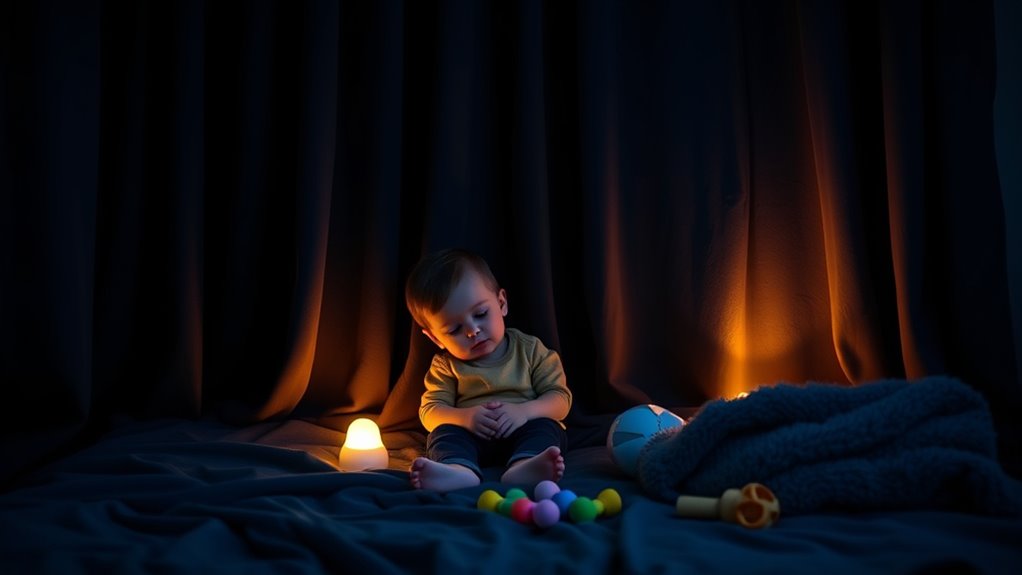
When selecting lighting and sensory tools, opt for soft, warm options like dimmable lamps or headlamps with red or amber modes to create a calming environment. Incorporate sensory engagement tools such as fabric books or quiet toys to help your child relax without bright screens. Be mindful to minimize light disruptors—avoid bright or blue-rich lights—and keep the room dark enough to promote restful sleep. Additionally, choosing multi-functional gear can help streamline your setup and ensure you have versatile tools on hand for various needs. Using energy-efficient lighting options can also contribute to a sustainable and eco-friendly environment in your child’s space. Understanding lighting design principles can further enhance the calming effect and support your child’s sensory needs. Proper lighting placement can prevent glare and shadows that might disturb your child’s comfort. Regularly maintaining air quality with appropriate air purifier maintenance can also promote a healthier, more comfortable environment conducive to relaxation.
Soft, Warm Lighting Options
Choosing the right lighting and sensory tools during a blackout is essential to create a calming environment that supports your child’s sleep. Soft, warm lighting options help reduce glare and prevent overstimulation, making the room feel cozy and safe. Use dimmable lamps or headlamps with red or amber filters, which emit gentle light that’s less likely to interfere with melatonin production. Avoid bright or blue-rich lights within an hour of sleep, as they can delay falling asleep. Night‑lights with a steady glow provide enough illumination for safety and orientation without disrupting rest. Incorporating these warm lighting choices into your routine can promote a peaceful atmosphere, easing your child’s transition into sleep and helping them feel secure even in darkness. Understanding luxury fashion and style insights can inspire you to select stylish, high-quality sensory tools that add a touch of elegance to your child’s bedtime routine. Additionally, selecting premium sensory tools can enhance the overall calming effect and make the experience feel more luxurious.
Sensory Engagement Tools
Selecting the right lighting and sensory tools during a blackout can make a significant difference in creating a calming environment for your child. Use battery-powered or crank-operated lights, such as red or amber LED headlamps, to provide gentle illumination without overstimulating their senses. Soft, warm-colored lamps or night‑lights help maintain orientation while promoting relaxation. Incorporate sensory items like fabric books, stuffed toys, or laminated picture cards to offer tactile and visual engagement without screens or bright lights. Play calming sounds through a battery or crank radio, such as gentle music or audiobooks, to soothe and distract. Keep these items organized in your blackout kit for quick access. These tools help your child feel secure, reduce anxiety, and support a smooth transition to sleep during power outages. Creating a calming environment can significantly ease your child’s discomfort during unexpected outages. Additionally, using appropriate sensory tools designed for little ones can further enhance their sense of security and comfort, especially when chosen with sensory engagement in mind. Incorporating well-designed sensory equipment can provide consistent comfort and familiarity in stressful situations. Engaging your child’s senses with thoughtfully selected sensory-rich items helps foster a sense of safety and stability during challenging times.
Minimize Light Disruptors
To prevent light from disrupting your child’s sleep during a blackout, it’s essential to use the right lighting tools that provide gentle, unobtrusive illumination. Opt for battery-powered or crank night-lights with warm, dimmable settings, avoiding bright or blue-rich lights within an hour of sleep. Use headlamps with red or amber modes for caregiver tasks, and keep these within easy reach. Limit the use of multiple light sources—fewer lights mean fewer sleep disruptions. Keep corridors and bedrooms free of trip hazards and consider adhesive glow markers on furniture edges for safe navigation. Employ white noise or soft music to mask ambient sounds, helping your child feel secure and reducing the chance of waking due to unfamiliar noises. These strategies help create a calm, light-minimized environment conducive to restful sleep. Incorporating trusted resources and reliable lighting options can further enhance your blackout routine, ensuring safety and comfort. Additionally, choosing appropriate lighting equipment designed for safe, low-impact illumination can make a significant difference in maintaining a soothing environment. Selecting dog-friendly lighting that minimizes disturbance can also contribute to a peaceful sleep setting for your child.
Creating a Kid-Friendly Blackout Kit
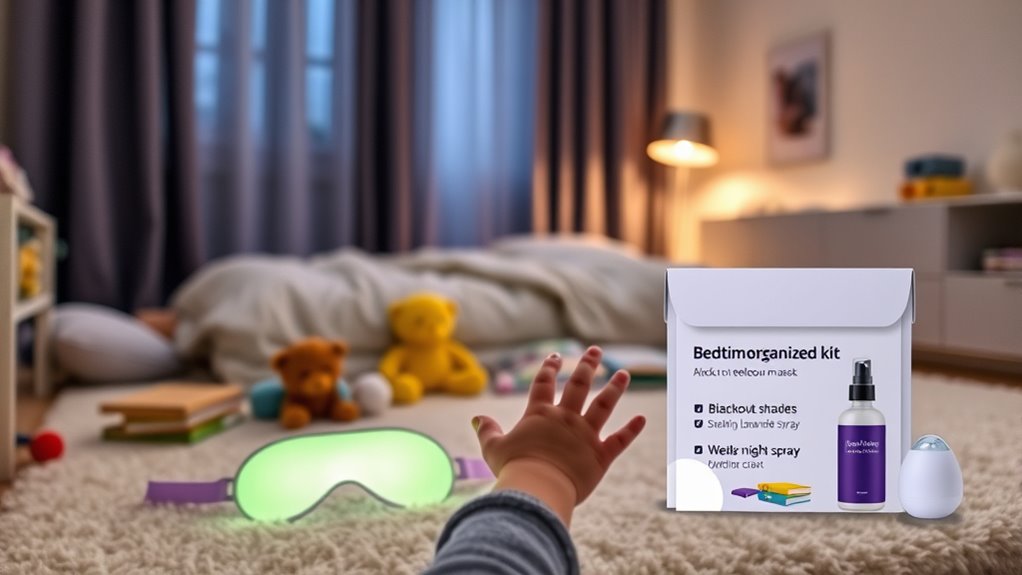
To create a kid-friendly blackout kit, focus on quiet activities that keep your child calm without bright lights. Include brightness-safe lighting tools like red or amber headlamps and soft, battery-powered lamps to maintain a soothing environment. Stock the kit with simple, engaging items such as fabric books and picture cards to help your child stay calm and comfortable during power outages.
Essential Quiet Activities
Creating a kid-friendly blackout kit involves gathering quiet activities that keep children calm and engaged without relying on electronic devices. Include soft fabric books, laminated picture cards, and a favorite stuffed toy to encourage tactile and visual stimulation. Add rechargeable LED headlamps with red or amber modes and spare batteries for hands-free lighting during nighttime tasks. A battery or crank radio preloaded with child-appropriate audiobooks or calming music provides soothing auditory cues. Pack a small hygiene kit with toothbrush, wipes, and spare clothing for quick nighttime care. Keep a portable power bank and a prioritized device list to manage limited charging capacity. These quiet activities and tools ensure your child stays relaxed and occupied, easing the changeover into sleep and reducing bedtime resistance during blackout conditions.
Brightness-Safe Lighting Tools
Bright, overhead lighting can disrupt your child’s ability to fall asleep during a blackout. To create a calming environment, use brightness-safe lighting tools like rechargeable LED headlamps with red or amber modes. These provide hands-free, gentle illumination without disturbing sleep. Keep spare batteries nearby for quick replacements. Portable, battery-powered nightlights with warm-colored, dimmable settings help orient your child without adding harsh light. Avoid blue-rich or bright white lights, which can delay sleep onset. Laminated picture cards, soft fabric books, and a favorite stuffed toy also serve as quiet, low-light engagement tools. Incorporate a small, dim glow from adhesive markers on furniture edges to help your child navigate safely. These tools support a soothing bedtime routine, reducing sleep disruptions and promoting a restful blackout experience.
Managing Sounds and Temperature in Darkness
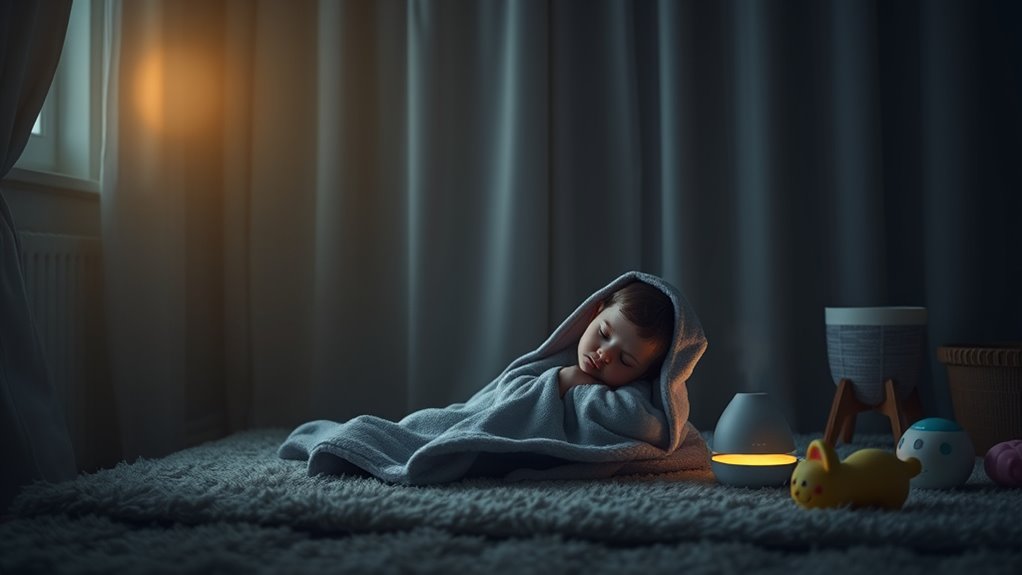
Managing sounds and temperature during a blackout is essential for helping your child stay calm and comfortable throughout the night. Use white noise machines or soft music to mask unfamiliar sounds that might wake or disturb your child. Keep the volume low and consistent to create a soothing environment. For temperature, layer bedding instead of relying on electric heaters, which can pose safety risks. Regularly monitor to prevent overheating or chilling, and dress your child appropriately for the season. Avoid sudden temperature changes that can disrupt sleep. Keep the room well-ventilated but cozy, ensuring your child remains comfortable and safe. Proper sound and temperature management reduce night wakings and help your child settle quickly in darkness.
Establishing Clear Expectations and Warnings
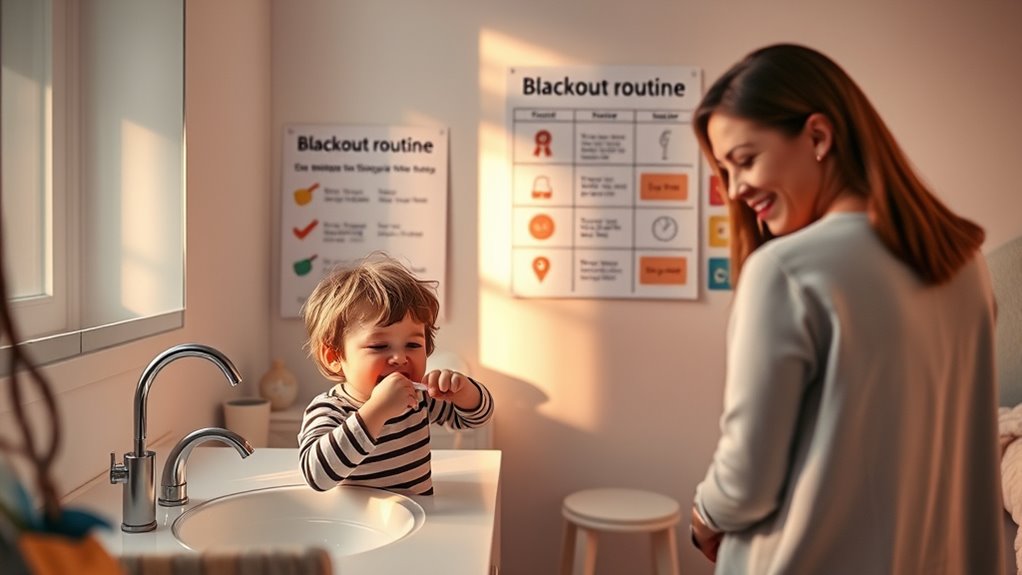
Establishing clear expectations and warnings before bedtime helps children understand what will happen and reduces resistance during the routine. You want to set simple, consistent phrases that signal upcoming transitions, like “two-minute wind-down” or “time to get cozy.” Use these warnings a few minutes before changes to prepare your child mentally, easing anxiety and avoiding surprises. Keep instructions brief and positive—avoid lengthy explanations that might increase resistance. Consistently reinforce routines by reminding your child what’s next, so they feel secure and in control. When you follow through reliably, your child learns what to expect, making bedtime smoother. Clear expectations help minimize tantrums and ensure everyone transitions calmly into sleep, especially during blackout conditions when visual cues are limited.
Using Positive Reinforcement for Routine Compliance
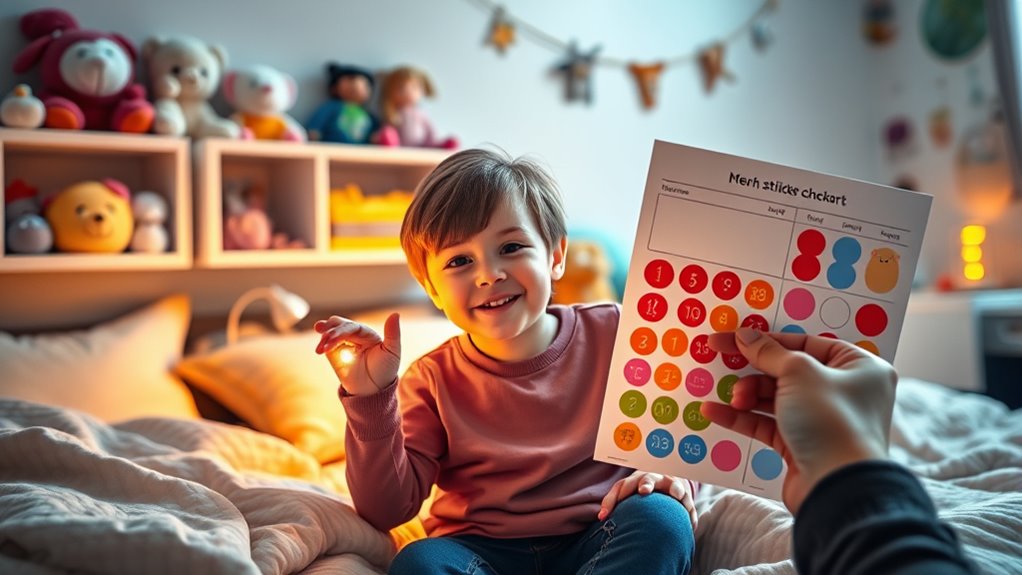
Using positive reinforcement helps your child stick to their blackout routine. Consistent rewards like stickers or praise reinforce good behavior, making it more likely to happen again. Visual charts can also motivate compliance by showing progress and encouraging independence.
Consistent Rewards Reinforce Behavior
Implementing consistent rewards during your child’s bedtime routine encourages desired behaviors by reinforcing positive actions. When your child earns a sticker or receives brief praise for staying in bed or completing each step, they learn that cooperation leads to positive outcomes. This consistency builds a clear connection between routine compliance and rewards, making it more likely they’ll follow the routine willingly. Use simple, immediate incentives like a sticker chart or a small token, and guarantee rewards are predictable and attainable. Over time, your child associates good bedtime behavior with positive reinforcement, reducing resistance and bedtime struggles. Keep rewards immediate and consistent to strengthen this link, helping your child feel successful and motivated to stick with the blackout routine.
Short, Immediate Praise Works
When it comes to encouraging your child’s cooperation during the bedtime routine, short and immediate praise can be highly effective. As soon as your child completes a step—like brushing teeth or putting on pajamas—offer specific, enthusiastic praise. For example, say, “Great job brushing your teeth!” or “You’re so good at staying in bed.” This quick reinforcement helps your child associate positive feelings with routine tasks, boosting motivation. Keep praise brief and genuine, so it feels sincere and immediate. Avoid waiting until the entire routine is finished; instead, reward each small step to maintain momentum. Consistent, timely praise builds confidence and encourages your child to follow the routine willingly, making bedtime smoother and more predictable for both of you.
Visual Charts Encourage Compliance
Visual charts serve as a clear and engaging way to encourage your child’s compliance with bedtime routines. By providing a visual schedule, your child can see what steps come next, reducing uncertainty and resistance. Use colorful pictures or simple icons for each activity—like brushing teeth, putting on pajamas, or reading a story. Place the chart at eye level where your child can easily see it. When your child completes each step, they can place a sticker or checkmark on the chart, creating a sense of accomplishment. This positive reinforcement motivates your child to stay on track and helps them develop independence. Consistent use of visual charts turns bedtime into a predictable, calming routine, making compliance easier and more enjoyable for both of you.
Handling Night Wakings and Separation Anxiety
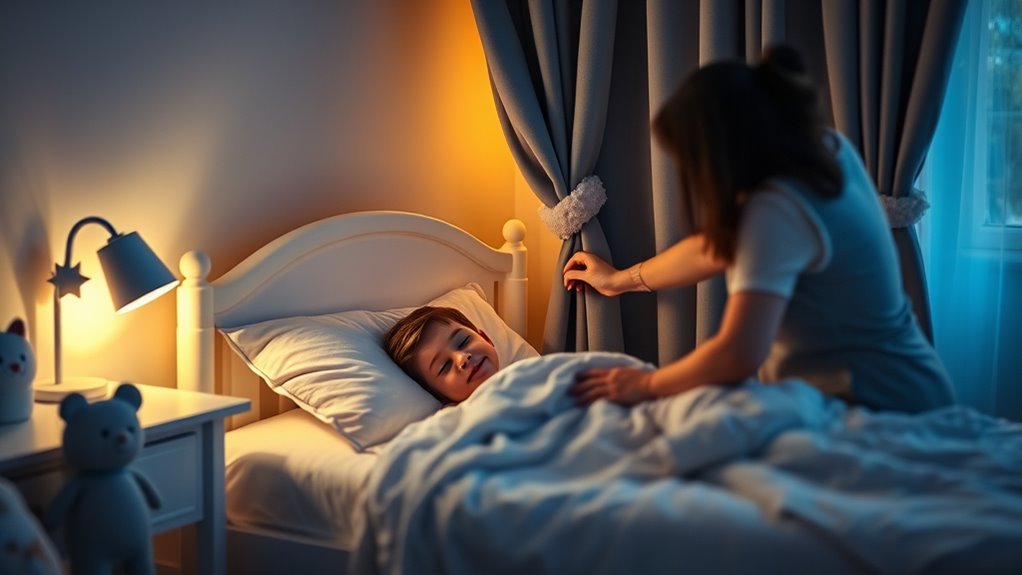
Night wakings and separation anxiety are common challenges during blackout routines, but addressing them proactively can help you make your child feel more secure and reduce disruptions. Start by establishing a consistent pre-sleep calm period, spending extra time cuddling or talking softly to ease anxiety. Keep interactions brief and neutral once your child is in bed to avoid reinforcing night wakings. Use familiar objects like a favorite stuffed toy or a comforting blanket to provide reassurance. If your child wakes during the night, respond calmly and briefly without engaging in stimulating activities. Consider gentle, graduated soothing techniques—sitting near then gradually increasing distance—to help your child feel safe without prolonging wakefulness. Consistency and gentle reassurance are key to easing night wakings and separation anxiety.
Incorporating Soothing Cues and Auditory Aids
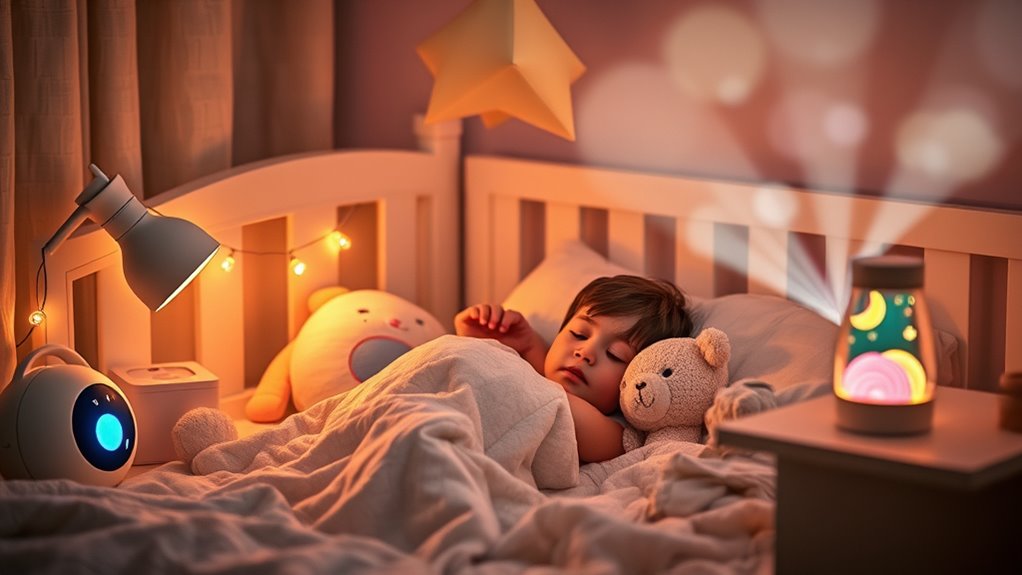
Incorporating soothing cues and auditory aids can markedly enhance your child’s ability to settle during blackout conditions. You can use these tools to create a calming environment that signals bedtime and reduces anxiety. Consider these strategies:
- Use a familiar lullaby or a specific phrase, like “goodnight,” played consistently to cue sleep onset.
- Play soft, white noise or gentle music to mask unfamiliar sounds and promote a sense of security.
- Offer quiet, tactile activities like a soft fabric book or a stuffed toy to keep your child calm without overstimulation.
- Preload audiobooks or calming stories onto a battery-powered device for distraction-free listening.
Maintaining Routine Flexibility and Safety Measures
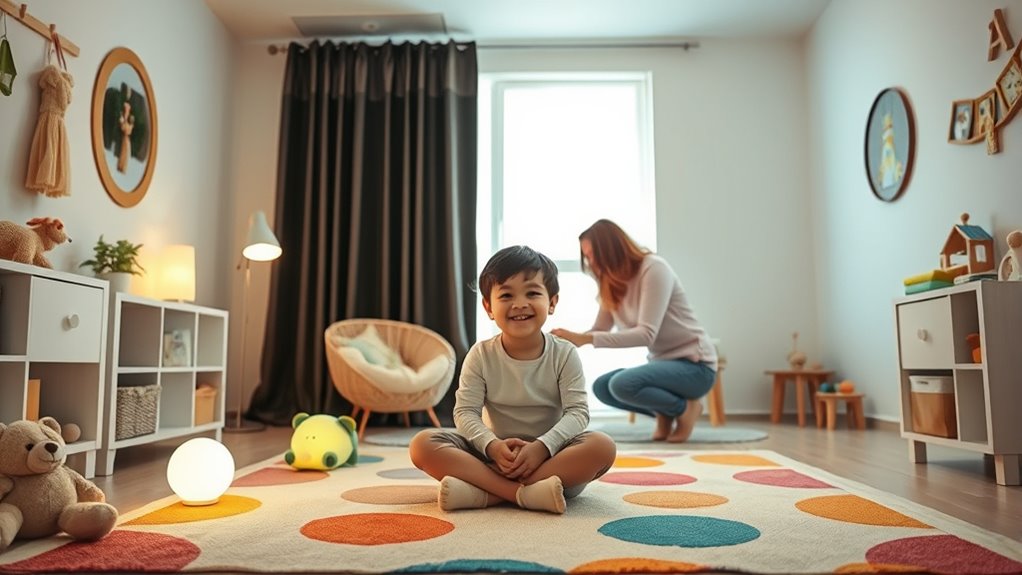
Flexibility in your child’s bedtime routine is essential, especially during blackout conditions when unexpected delays or disruptions can occur. You should adapt activities as needed, keeping core calming elements but staying responsive to your child’s cues. For safety, make certain the sleeping area is free of trip hazards and well-lit with a dim night-light or door-gap glow. Use battery-powered or crank alarms for smoke and carbon monoxide detection, and keep emergency supplies within reach. Limit temperature fluctuations with layered bedding instead of electric heaters, and store sharp objects or medications out of reach. Keep interactions calm and brief if your child wakes during the night to avoid reinforcing night-waking behaviors. Maintaining a flexible approach, combined with safety precautions, helps your child feel secure and promotes restful sleep despite blackout challenges.
Frequently Asked Questions
How Can I Keep My Child Engaged During Extended Power Outages?
During extended power outages, you can keep your child engaged by offering quiet activities like soft fabric books, laminated picture cards, or storytelling with a portable radio. Use rechargeable headlamps with red or amber modes to provide safe, hands-free light. Incorporate calming auditory cues, such as preloaded audiobooks or gentle music, and involve your child in simple, low-stimulation tasks. Staying calm and creating a predictable routine helps maintain their sense of security and focus.
What Are Safe Alternatives to Electronic Devices for Bedtime Calming?
Think of this as your modern-day bedtime troubadour. You can replace electronic devices with tactile or auditory activities like soft fabric books, laminated picture cards, or quiet songs and audiobooks. Use rechargeable headlamps with red or amber modes for safe, hands-free lighting. A simple, consistent pre-sleep story or song signals bedtime, helping your child relax and shift seamlessly into sleep, even in blackout conditions.
How Do I Adapt Routines for Children With Special Needs?
You adapt routines for children with special needs by maintaining consistency, using familiar cues, and incorporating calming activities tailored to their sensitivities. Keep shifts simple, offer extra comfort items, and predict changes to reduce anxiety. Use sensory-friendly tools like soft lighting or weighted blankets, and communicate clearly with visual supports if needed. Pre-emptively address potential triggers, and involve caregivers or specialists to customize routines that promote calmness and secure sleep.
What Steps Can I Take to Prevent Nighttime Accidents in Darkness?
Imagine guiding your child through a moonlit forest, where every step is safe and sure. To prevent nighttime accidents, keep floors clear of trip hazards, install glow-in-the-dark markers on furniture edges, and use a dim night-light for orientation. Keep medications and sharp objects out of reach, and guarantee pathways are well-lit enough for visibility without disturbing sleep. This creates a safe trail through darkness, turning night into a peaceful, accident-free landscape.
How Can I Ensure My Child’s Emotional Comfort During a Blackout?
You can guarantee your child’s emotional comfort during a blackout by maintaining a calm, reassuring presence. Use soft, warm lighting and speak in gentle tones to soothe them. Keep familiar objects nearby, like a favorite stuffed toy or blanket, to provide comfort. Incorporate quiet activities like reading a favorite story or singing a calming song, and stick to a consistent routine. This consistency helps your child feel secure and relaxed despite the darkness.
Conclusion
Did you know that consistent bedtime routines can reduce bedtime resistance by up to 50%? By preparing your home, choosing calming lighting, and using positive reinforcement, you create a safe, soothing environment for your kid during blackouts. Remember, flexibility is key—adapt routines as needed, and always prioritize safety. With these simple steps, you’ll turn blackout chaos into calm, helping your child feel secure and relaxed even when lights go out.
Fall yard work Picks
leaf blowers
As an affiliate, we earn on qualifying purchases.