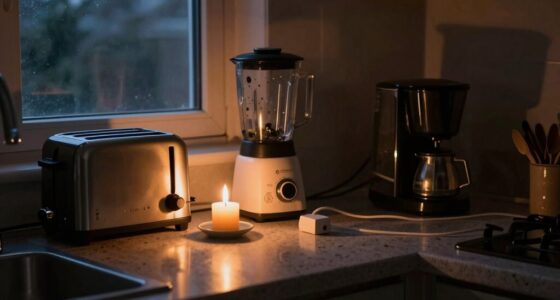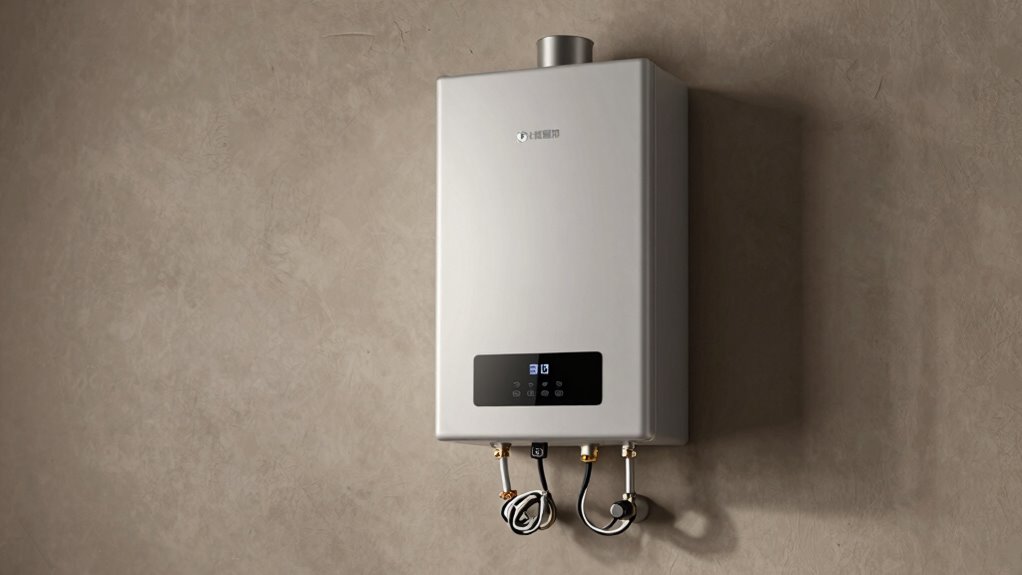

During outages, your electric tankless water heater can’t operate because it needs power for control panels, sensors, and ignition. If the power goes out, you won’t get hot water since it relies on continuous electricity to function properly. Gas units may still work if gas is available, but electric models are completely dependent on power supply. To find out how your setup can be protected or improved, keep exploring the details below.

Get backup power and energy gear delivered free with Prime
- Fast, free delivery on millions of items
- Prime Video, Amazon Music and more included
- Member-only deals all year
Key Takeaways
- Electric tankless water heaters require continuous power to operate and cannot function during outages.
- Gas tankless units with electronic ignition depend on electricity but can still produce hot water if gas is available.
- Safety features and sensors in electric models fail without power, halting hot water flow during outages.
- Upgrading electrical infrastructure may be necessary to support electric tankless units, especially during power failures.
- Backup options like batteries or solar power can help electric units provide hot water during outages.
The Role of Electricity in Gas Tankless Water Heater Operation
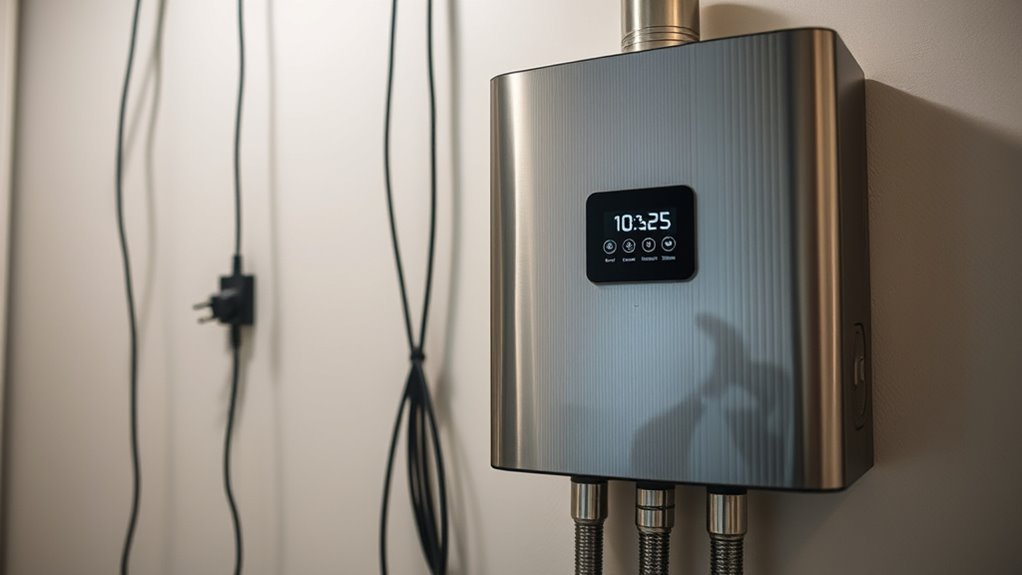
Although gas tankless water heaters primarily rely on natural gas or propane to heat water, they still depend heavily on electricity to operate essential controls and safety features. Electricity powers the control panel, sensors, and electronic ignition systems, which are critical for safe and efficient operation. Most models need a 120-volt circuit rated at 15-20 amperes, while high-end condensing units may require up to 150 amps. The electronic ignition system uses electricity to light the pilot and ignite the burner, ensuring a safe start-up. Without power, these units cannot operate safely or regulate water temperature properly. Even small amounts of electricity are indispensable for maintaining control over the heating process, making the unit inoperable during power outages. Vetted – wave and wind Additionally, some modern units incorporate smart technology that relies on continuous electrical power for remote monitoring and adjustments.
Power Requirements for Electric Tankless Systems
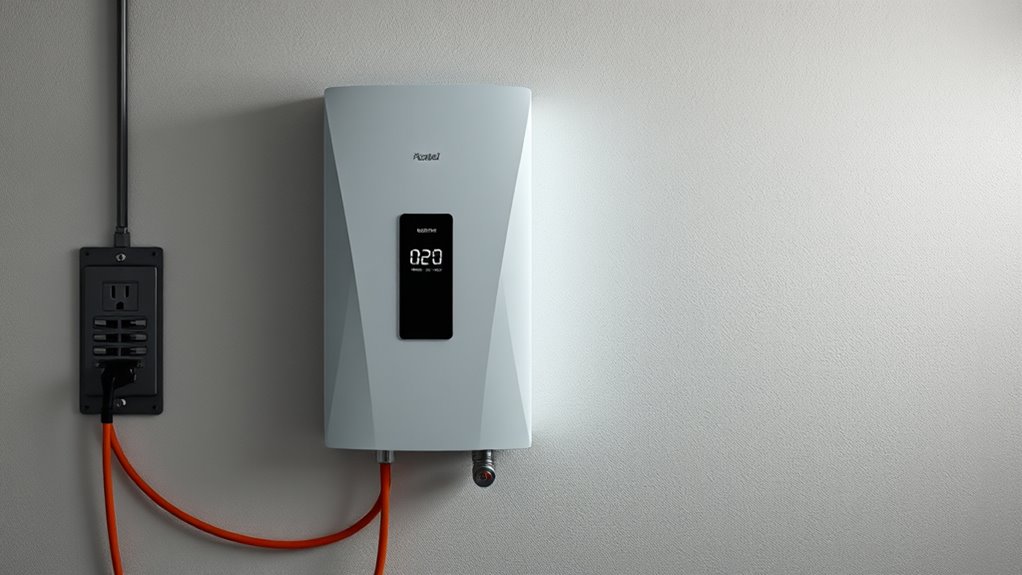
Electric tankless water heaters have substantial power demands that you need to carefully consider before installation. These units require significant electrical capacity to operate effectively. Here are four key points:
- Most models need a dedicated 240V circuit, often requiring 33 to 150 amps depending on size.
- Whole-house units like the ECO 36 demand 150 amps or more, with multiple 40-amp breakers.
- Smaller point-of-use models, such as the EP-2.4, need only around 20 amps on a 120V outlet.
- Upgrading your electrical panel may be necessary, especially if your home has a 100-amp service or less, to support these high demands safely. Properly sizing your electrical system is essential to ensure safe and reliable operation, especially since power capacity directly impacts the performance of high-demand electric tankless units. Additionally, understanding your home’s existing electrical infrastructure can help determine whether a panel upgrade will be required before installation. Ensuring your electrical system’s capacity matches the demands of your tankless heater can prevent potential outages or safety issues. Considering load calculations can further ensure your system is prepared for these appliances. Conducting a thorough electrical assessment can identify any deficiencies and help plan necessary upgrades more effectively.
Impact of Power Outages on Water Heating Functionality
Power outages directly impact the functionality of tankless water heaters, especially those that rely on electricity. Without power, electric models can’t operate because their electronic controls, sensors,, and safety features need constant electricity to function. You won’t get hot water during an outage, as the unit can’t heat or flow water without power. Even gas units with electronic ignition become inoperable because they depend on electricity for lighting and safety controls. Sensors that monitor temperature and flow also fail, preventing any hot water output. This means your water heater is effectively offline until power is restored. If you live in an area prone to outages, this can considerably disrupt your hot water supply, making it essential to consider backup options or alternative heating methods. European cloud innovation offers solutions for reliable and sustainable energy management that can help mitigate such disruptions.
Electrical Infrastructure Upgrades for Electric Models
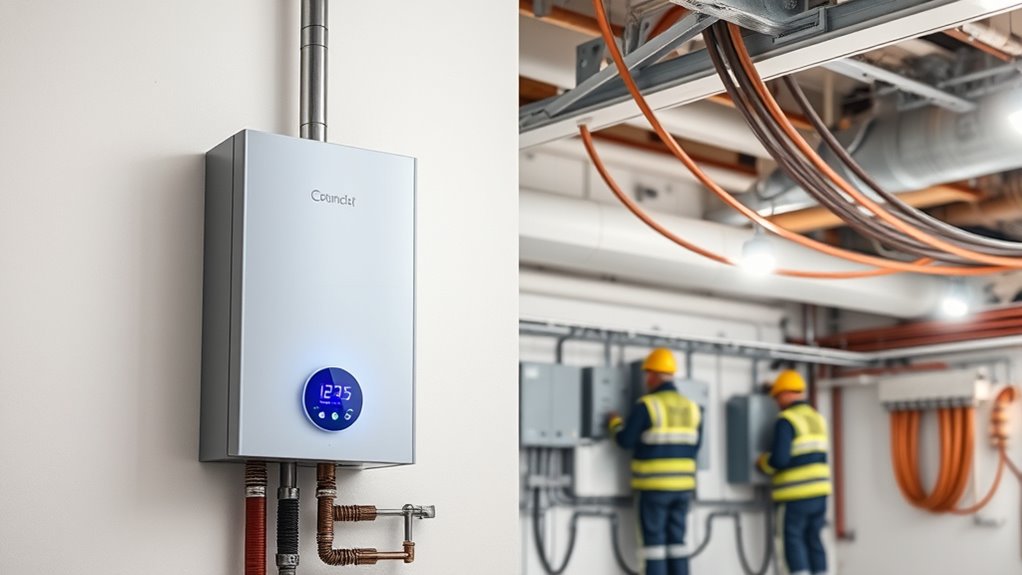
Upgrading your home’s electrical infrastructure is often necessary to support the high demands of electric tankless water heaters. To ensure safe and reliable operation, you might need to contemplate these upgrades:
Upgrading your electrical system ensures safe, efficient operation of high-demand tankless water heaters.
- Increase your electrical panel capacity from 100 amps to 200+ amps, especially for larger models.
- Install dedicated circuits—often 40 to 50 amps—specific to your water heater to prevent overloads.
- Upgrade wiring to appropriate gauges like #6 or #8 AWG depending on the model’s power requirements.
- Verify your household’s service capacity with a licensed electrician to handle the added load safely.
- Proper electrical infrastructure upgrades are essential to meet the high amperage needs and ensure efficient operation of electric tankless water heaters. Additionally, considering power distribution improvements can help accommodate future electrical loads and prevent potential issues. Planning for electrical safety measures during upgrades can further protect your home and appliances. Understanding electrical codes and standards is also crucial to ensure compliance and safety in these upgrades. Consulting with a qualified electrician ensures that your electrical system is properly upgraded to meet all safety and performance standards.
These steps help accommodate the high amperage needs of electric tankless units, ensuring they operate efficiently without tripping breakers or risking electrical issues.
Comparing Gas and Electric Tankless Water Heaters in Emergency Situations
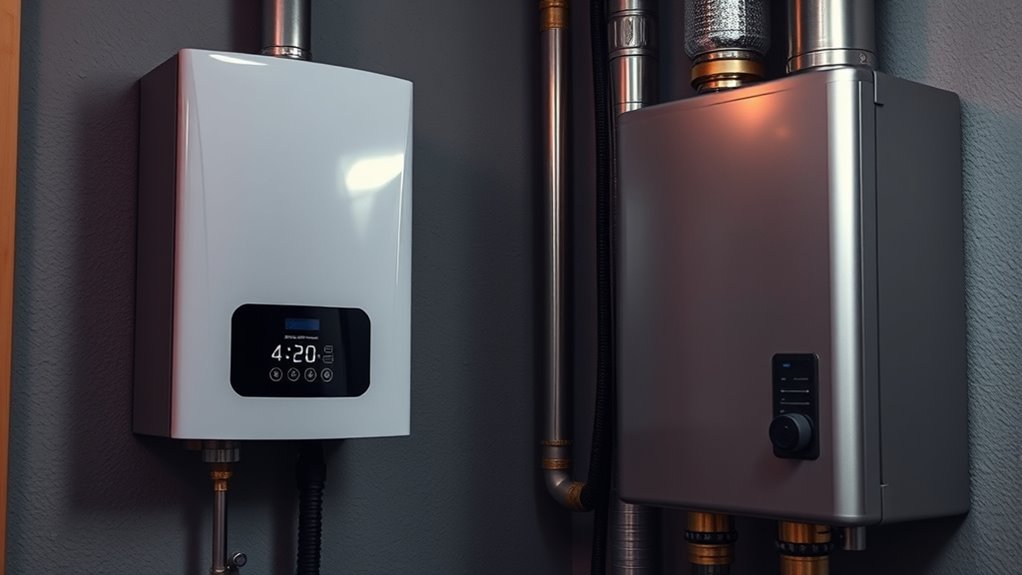
During outages, choosing between gas and electric tankless water heaters can substantially impact your access to hot water. Gas units rely on gas supply and venting, so they can operate without electricity, though electronic ignition still needs power. Without electricity, safety features and controls fail, but the gas burner can still heat water if gas is available. Gas supply is a critical factor for continued operation during outages. Electric models, however, require continuous power for operation, including high amperage circuits and control systems. During a blackout, electric heaters shut down entirely, leaving you without hot water. Gas units generally provide more reliable hot water during outages, especially if gas lines are intact. Yet, electric models are more suitable for small, point-of-use applications, where power outages are less frequent and electrical upgrades are manageable. Power requirements play a crucial role in determining how well each type functions during outages. Additionally, backup power systems can enhance the reliability of electric tankless water heaters during power outages. For example, integrating solar energy and battery storage can provide a sustainable backup solution. It’s also important to consider that electrical infrastructure quality can influence the effectiveness of electric units during emergency situations.
Frequently Asked Questions
Can Solar Power Support Electric Tankless Water Heaters During Outages?
Yes, solar power can support electric tankless water heaters during outages if your system includes enough solar panels, batteries, and an inverter capable of handling the high amperage demands. You’ll need a properly sized setup to supply the required 125 to 240 volts and 33 to 150 amps, depending on the model. Consult a professional to verify your solar and battery system can reliably power your electric tankless heater during power outages.
Are There Battery Backup Options for Electric Tankless Systems?
Yes, you can add battery backup options for electric tankless systems. You’ll need a high-capacity UPS or a specialized inverter system that can handle the unit’s heavy amperage demands, like 150 amps or more. These backup solutions store power from batteries and can keep your heater running during outages. However, installation can be complex, and it is crucial to consult a licensed electrician to guarantee safety and compatibility.
How Long Can Gas Tankless Heaters Operate Without Electricity?
Gas tankless heaters can’t operate without electricity because their electronic ignition, sensors, and controls need power. For example, during a blackout, your gas heater won’t light or regulate water temperature, leaving you without hot water. Even if the gas supply remains, the lack of electricity disables safety features and controls, stopping the heater entirely. So, without power, these units simply won’t run, regardless of gas availability.
Do Electric Tankless Units Have Alternative Power Sources?
Electric tankless units generally don’t have alternative power sources built-in. They rely entirely on electricity to operate their controls, sensors, and heating elements. During power outages, these units won’t function unless you install backup power solutions like generators or batteries. If you want hot water during outages, consider adding a generator or switching to a system that runs on gas, which doesn’t depend on electrical power.
What Safety Concerns Exist for Electric Water Heaters During Blackouts?
During blackouts, electric water heaters pose safety concerns because they rely entirely on electricity for operation. Without power, controls, sensors, and safety features like pressure relief valves and temperature regulation fail, increasing risks of overheating, leaks, or damage. Attempting to operate or repair them without power can be dangerous. Always turn off the breaker before inspecting or working on the unit during outages to prevent electrical shocks or accidents.
Conclusion
When outages strike, your choice between gas and electric tankless water heaters becomes clear. Electricity powers electric models like a heartbeat, making them vulnerable when the power’s gone. Think of it as a delicate dance—without the rhythm of electricity, they can’t perform. So, if reliability during outages matters, gas may be your steadfast partner. After all, in the symphony of home comfort, some instruments play better without electricity’s silence.
Halloween Picks
halloween
As an affiliate, we earn on qualifying purchases.