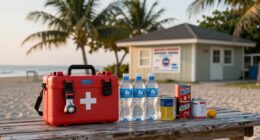
To prep for outages in small spaces, focus on compact, multi-purpose supplies like energy-efficient LED lights, foldable solar chargers, and small power banks. Choose stackable, sealed food and water containers you can rotate easily, and keep essential documents and communication devices organized in tiny, waterproof pouches. Planning space-saving evacuation routes and sharing resources with neighbors can boost safety. Continue exploring the best ways to stay prepared with limited storage.
Play games included with Prime
Start a Prime free trial and play with Amazon Luna on your devices.
As an affiliate, we earn on qualifying purchases.
Key Takeaways
- Use compact, multi-purpose tools and medical kits to maximize functionality in small storage spaces.
- Opt for stackable, vacuum-sealed, and Mylar-packaged nonperishable foods to save room.
- Choose foldable solar chargers and slim power banks for efficient, portable power solutions.
- Digitize essential documents and store them securely on encrypted USB drives or cloud services.
- Regularly inventory and rotate supplies to prevent expiration and ensure readiness in limited space.
compact power banks for emergencies
As an affiliate, we earn on qualifying purchases.
As an affiliate, we earn on qualifying purchases.
Prioritizing Compact Food and Water Supplies
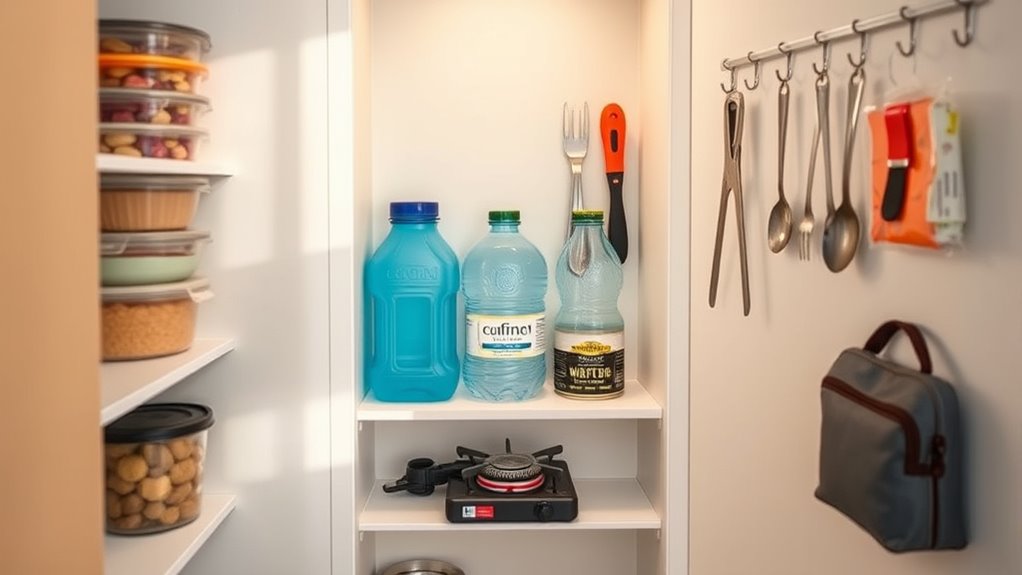
When space is limited, you need to focus on storing food and water that deliver maximum value in the smallest footprint. Choose calorie-dense, nonperishable foods like canned fish, dehydrated meals, and peanut butter, which provide energy without taking up much space. Store water in collapsible containers and small pouches (1–3 L) to save volume while meeting hydration needs. Maintain a minimum three-day supply per person, ideally extending to seven days if possible. Use vacuum-sealed packaging, Mylar bags with oxygen absorbers, and stackable containers to reduce bulk and extend shelf life. Rotate your stock with clear labeling and dates to prevent waste. Incorporating energy-efficient cloud solutions can help coordinate and monitor your supplies remotely, ensuring you stay prepared without sacrificing valuable space. Utilizing compact storage methods specifically designed for small areas can also help keep essentials organized and accessible. Additionally, selecting space-saving packing techniques can maximize your storage capacity and improve overall efficiency. Implementing smart organization systems can further streamline access and management of your supplies, making your limited space work smarter. Prioritizing these compact, long-lasting supplies guarantees you stay prepared without sacrificing valuable space.
foldable solar chargers portable
As an affiliate, we earn on qualifying purchases.
As an affiliate, we earn on qualifying purchases.
Choosing Efficient Power and Lighting Devices
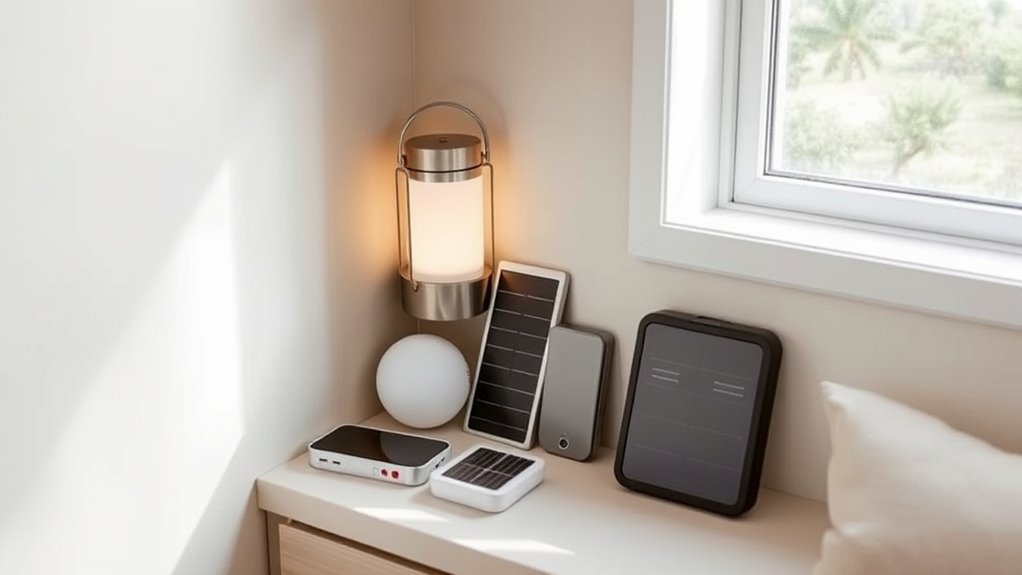
To prepare for power outages in small spaces, focus on compact, multi-use devices like small power banks and foldable solar chargers that can recharge your electronics quietly and efficiently. Choose energy-saving LED lighting options, such as headlamps and portable lanterns, to maximize battery life without taking up much space. Using versatile accessories allows you to adapt to different situations and extend your device usability during outages. Additionally, selecting devices with energy efficiency features can help conserve power and extend usage time. Incorporating power management strategies, such as scheduling device use and minimizing unnecessary energy consumption, further enhances your preparedness. Being mindful of space-saving techniques ensures your setup remains manageable and accessible during emergencies. Considering backup power solutions, like portable generators or solar generators, can provide reliable energy when needed most. By selecting the right combination of portable power and lighting, you can stay connected and illuminated with minimal clutter.
Compact Power Banks
A compact power bank is an essential tool for maintaining communication and lighting during outages, especially in small spaces where storage is limited. Choose a power bank with a capacity between 10,000 and 30,000 mAh to guarantee enough charge for multiple devices over several days. Look for models with multiple USB ports, so you can power your phone, radio, and LED lights simultaneously. Prioritize lightweight and slim designs that easily fit into a small bag or drawer. Consider models with fast-charging features to quickly restore power when sunlight or other sources are unavailable. Keep a few spare charging cables and a wall adapter nearby. By selecting an efficient power bank, you assure your essential devices stay powered without taking up excessive space, keeping your setup simple and reliable during outages. Incorporating nanotechnology-enhanced batteries can further improve energy density and charging speed, making your backup power even more dependable and compact for storage. Additionally, choosing a device with advanced battery technology can extend the overall lifespan and performance of your power bank.
Solar Charging Options
Opting for portable solar chargers and panels complements your power bank setup by providing renewable energy sources that save space and reduce dependency on batteries. A foldable solar panel, around 10–30 W, easily fits into a small pack and can recharge your power bank during sunny days. Look for models with multiple USB outputs to simultaneously charge phones, radios, and small devices. Choose lightweight, durable panels made from weather-resistant materials for portability and longevity. Keep in mind, solar charging is best when sunlight is abundant, so plan your device usage accordingly. Understanding solar efficiency can help you select the most effective solar solutions for your needs. Incorporating solar panel technology can further enhance your energy independence by maximizing conversion efficiency and durability in various weather conditions. Pair your solar panel with a reliable power bank to store energy for nighttime or overcast days. This setup ensures you stay powered up efficiently without bulky equipment, maximizing your limited space. Additionally, selecting compact and lightweight devices ensures your setup remains portable and easy to manage during emergencies. Recognizing Youngster Choice and other relevant concepts can also help tailor your preparedness strategy effectively. For example, understanding the weight of wind turbine blades illustrates how advanced materials can reduce size and improve portability for larger energy solutions.
Efficient Lighting Devices
Choosing efficient lighting devices is essential for small-space outage preparedness because they provide reliable illumination without taking up much space or draining batteries quickly. Opt for LED headlamps and small, rechargeable flashlights—they’re compact, long-lasting, and versatile. Keep a couple of spare rechargeable batteries on hand to extend usage. Consider foldable solar-powered lanterns or panels, which can recharge during the day and provide light at night without relying solely on batteries. Hand-crank flashlights or radios offer emergency light and communication options without needing power sources. Use multi-function devices that integrate lighting and radio features to save space. Avoid large, fuel-powered lanterns or bulky lamps, which aren’t practical in small dwellings. Prioritize compact, low-energy options that keep you illuminated and connected during outages. Additionally, waterproof devices like waterproof flashlights can be beneficial in case of flooding or water-related emergencies. Being aware of energy-efficient lighting options helps maximize your preparedness with minimal space and resource use.
water storage collapsible containers
As an affiliate, we earn on qualifying purchases.
As an affiliate, we earn on qualifying purchases.
Assembling Multi-Functional Emergency Tools and Medical Kits
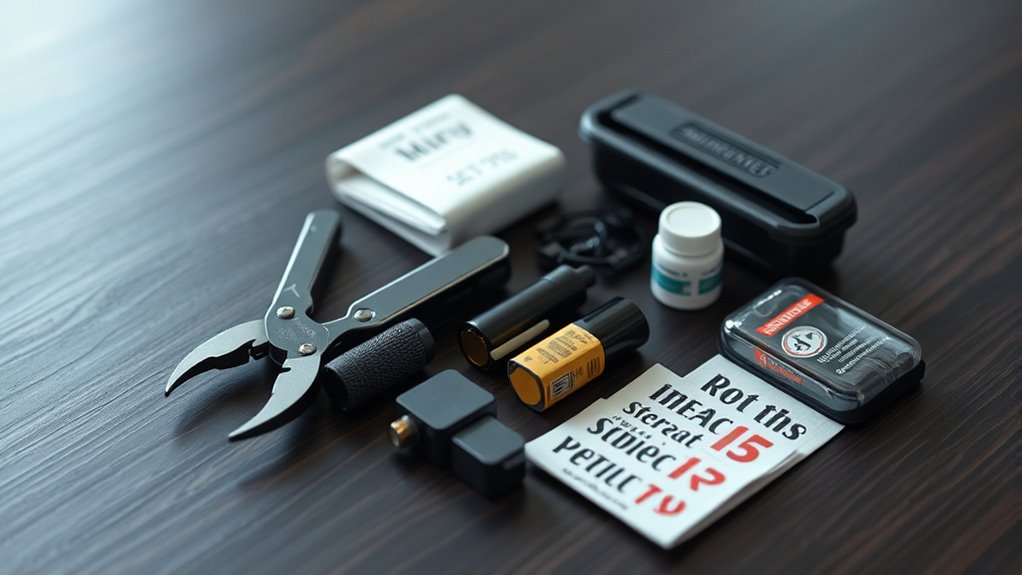
When assembling your emergency tools and medical kits, focus on selecting versatile items that serve multiple functions to save space. Use compact medical supplies and smart storage strategies to keep everything organized and accessible. This way, you’ll be prepared without sacrificing valuable room in your small space. Incorporating efficient sanitation methods can also help maintain hygiene and extend the usability of your kits in confined areas. Additionally, choosing multi-purpose tools that can handle various tasks reduces the need for multiple individual items, further conserving space and increasing your readiness. Being mindful of space-saving techniques can maximize the limited room available while ensuring you are well-prepared. Implementing compact storage solutions can significantly enhance organization and ease of access in tight spaces.
Choosing Versatile Tools
In small spaces, selecting versatile tools and compact medical kits is essential to maximize your emergency preparedness without cluttering your storage. Choose multi-use tools like a Swiss Army knife or a multi-tool with pliers, screwdrivers, and can openers to cover multiple needs with one item. Opt for a small, all-in-one medical kit that includes trauma supplies, basic medications, and blister care—keeping it lightweight and organized. Consider gear that combines functions, such as a flashlight with an emergency whistle or a thermometer with a compass. These multi-purpose items reduce clutter and make certain you’re prepared for various scenarios. Prioritize quality, durability, and compactness, so your gear is easy to store, access, and carry in your small space during an outage.
Compact Medical Supplies
To maximize space and efficiency, assemble multi-functional emergency tools and medical kits that combine several essential functions into compact items. Choose multi-tools with knives, screwdrivers, and pliers to cover multiple needs without extra bulk. Pack a small first-aid kit with trauma supplies, medication, and blister care—everything in a lightweight pouch. Include lightweight shelter items like a space blanket and a compact sleeping bag. Use a water purification straw or tablets instead of bulky bottles. Add a battery-operated CO detector and a small fire extinguisher suitable for apartments.
| Item | Purpose |
|---|---|
| Multi-tool | Combines knife, screwdriver, pliers |
| Compact first-aid kit | Treats injuries and medication |
| Space blanket | Insulation and warmth |
| Water purifier (straw/tablets) | Extend potable water options |
| CO detector and fire extinguisher | Safety in confined spaces |
Efficient Storage Strategies
Maximizing space with multi-functional emergency tools and medical kits requires thoughtful assembly and smart storage solutions. You want to combine versatility with compactness, making every item count. Start by choosing multi-tools that include knives, screwdrivers, and can openers to cover multiple needs in one device. Use small, sturdy containers for your first-aid supplies, fitting everything from bandages to medications in a single, organized kit. Invest in lightweight, collapsible shelter items like bivvies and space blankets that fold down to a fraction of their size. Finally, pack a compact water-purification kit, such as chemical tablets or a small filter straw, to maximize potable water options without taking up extra space. These strategies ensure you’re prepared without sacrificing valuable storage room.
vacuum sealed nonperishable food
As an affiliate, we earn on qualifying purchases.
As an affiliate, we earn on qualifying purchases.
Managing Essential Documents and Communication Resources
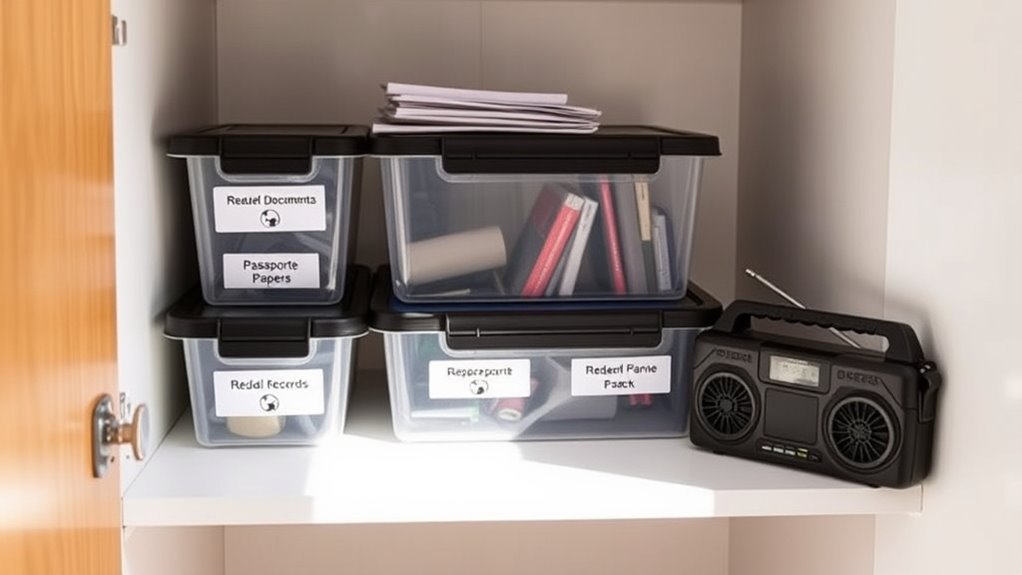
Ever wondered how to keep your critical documents accessible during an outage without cluttering limited space? The key is digital storage. Scan essential papers—IDs, insurance, medical records—and save them on an encrypted USB drive and a secure cloud account. Keep a laminated, compact contact card with your evacuation plans, utility shut-off steps, and neighborhood meeting points in your wallet or keychain. Store a small, fire-resistant pouch with emergency cash—small bills and coins—for quick transactions. Pair a portable, battery-powered radio with pre-programmed emergency channels and your phone with a short checklist for outages. Register for local alert systems to receive real-time updates. These strategies ensure crucial information stays within reach, without taking up valuable space or adding clutter during stressful situations.
Planning Space-Saving Evacuation Strategies
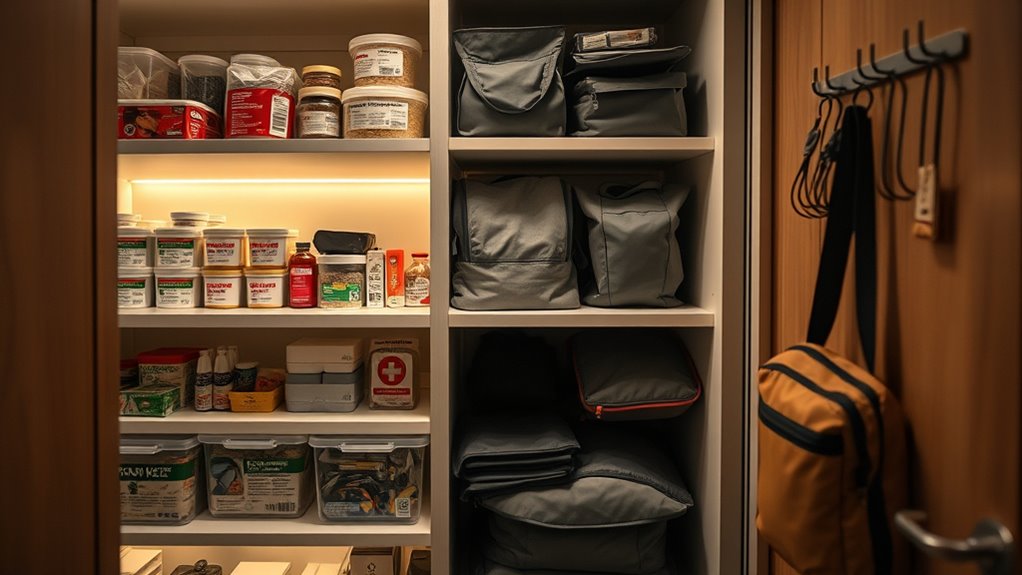
Effective space-saving evacuation planning starts with creating clear, concise routes that fit your small living environment. Knowing your exits and pathways helps you move quickly without clutter or confusion. Keep your plan simple and accessible by mapping out at least two routes from your unit to safe points outside. Use small, laminated cards to post these routes near your main exits for quick reference. To optimize your space and safety, consider these tips:
- Identify primary and secondary exits, noting obstacles and hazards.
- Keep a compact “go-bag” with essentials near your usual exit.
- Practice your routes regularly to ensure familiarity.
- Coordinate with neighbors or building management for shared evacuation plans.
Staying prepared means knowing your routes intimately and keeping them straightforward within your limited space.
Utilizing Shared Resources and Community Support
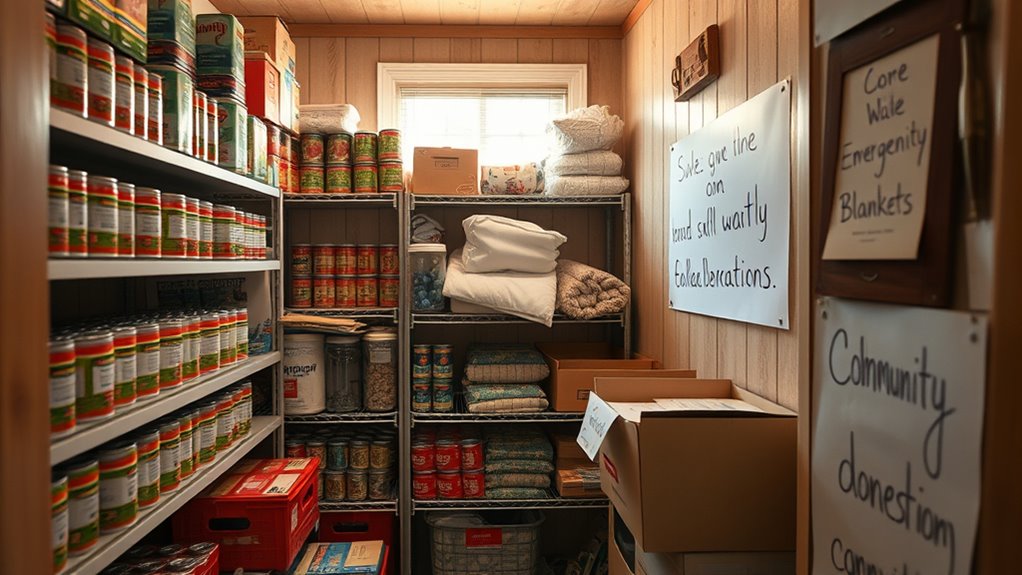
Sharing resources within your community can substantially enhance your disaster preparedness while conserving limited space. By collaborating with neighbors, you gain access to shared supplies like emergency caches, communal generators, and resilience hubs, reducing the need for individual storage. Organize neighborhood groups to swap items such as spare power banks or extra water, extending your supplies without taking up additional room. Establish mutual aid agreements to support vulnerable residents, ensuring everyone has access to essentials during outages. Participate in local programs that provide shared resources or grants for emergency gear, making preparedness more affordable. Building these connections also fosters trust, enabling coordinated responses and resource sharing when disaster strikes. Remember, community support amplifies your resilience, especially when space restrictions limit personal stockpiling.
Smart Investment in Low-Cost Resilience Measures
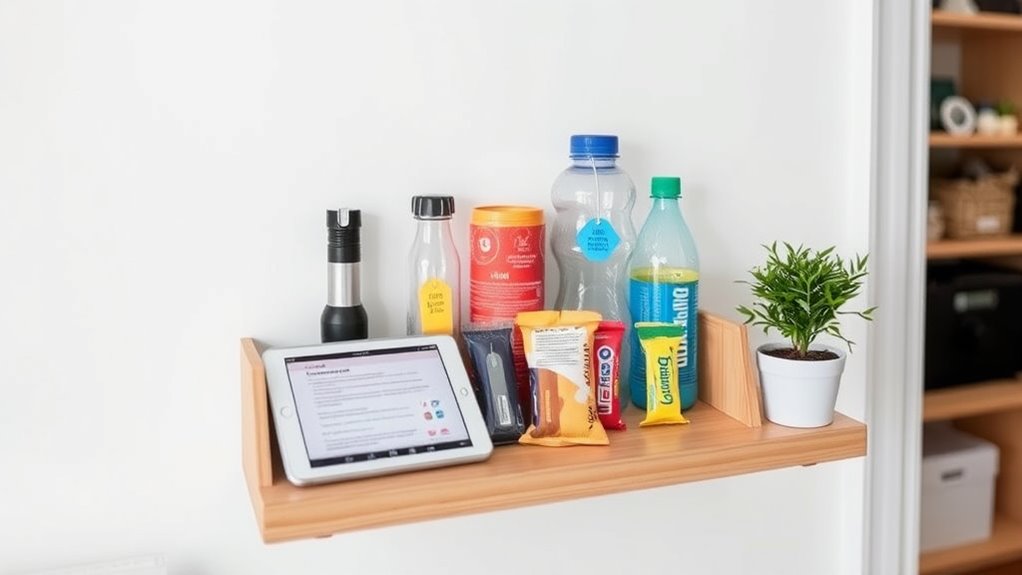
Investing in low-cost resilience measures offers a powerful way to prepare for emergencies without overburdening your limited space. You can maximize readiness by focusing on affordable, effective options.
- Prioritize calorie-dense, nonperishable foods like canned fish, dehydrated meals, or peanut butter to get the most nutrition per cubic foot.
- Use collapsible water containers and pouches to save space while ensuring hydration needs are met.
- Opt for multi-use tools and compact medical supplies—a Swiss Army knife, small first-aid kit, and lightweight shelter gear—to reduce clutter.
- Invest in small power banks and portable solar chargers to keep devices running without bulky generators.
These smart investments build resilience efficiently, making your small-space setup more prepared and adaptable.
Organizing Your Go-Bag for Quick Deployment
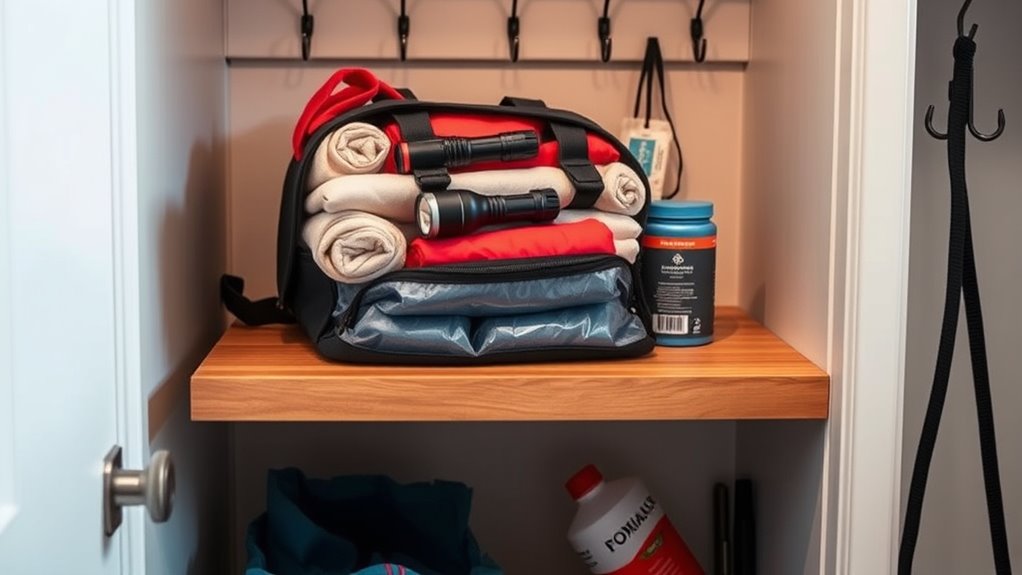
Organizing your go-bag for quick deployment means guaranteeing everything is in its place and easy to access when seconds count. Start by packing a lightweight, 10–15 L backpack with essentials: ID copies, medications, high-calorie snacks, a small first-aid kit, a flashlight, and a phone charger. Use compact, multi-purpose items like a Swiss Army knife, space blanket, and chemical water tablets to save space. Arrange items with designated compartments or small pouches to avoid digging and wasting time. Label supplies with clear dates and contents, and keep your bag near an exit or in a consistent, accessible spot. Regularly check and reorganize to replace expired items and ensure everything is ready to grab at a moment’s notice.
Regularly Updating and Rotating Your Preparedness Supplies
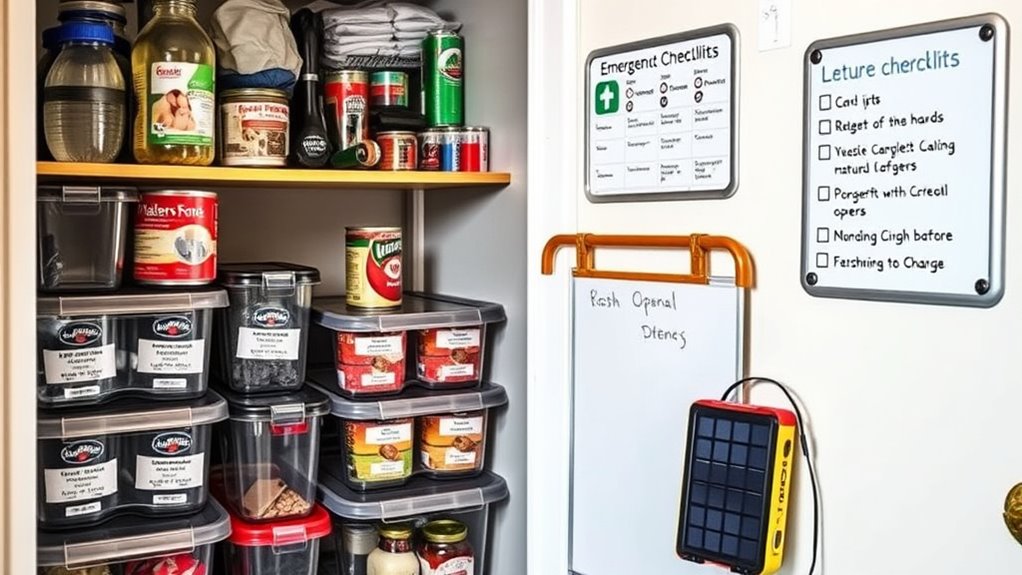
To guarantee your preparedness supplies remain reliable and effective, you need to regularly update and rotate them. This prevents expiration, spoilage, and assures you’re ready when needed.
- Check expiration dates monthly on food, water, medications, and batteries, replacing expired items promptly.
- Use the FIFO (first-in, first-out) method by organizing your stock with date tags to keep older supplies accessible first.
- Rotate water supplies by refilling stored containers and consuming older water before newer stock.
- Test and recharge electronics, solar chargers, and batteries periodically to confirm they work when required.
Consistent updates keep your supplies fresh, functional, and ready for any outage, all while maintaining a small storage footprint. Stay proactive to avoid last-minute shortages or ineffective gear.
Frequently Asked Questions
How Can I Efficiently Store Perishables in a Tiny Apartment Pantry?
To efficiently store perishables in your tiny apartment pantry, focus on long-lasting, space-saving options like vacuum-sealed bags and Mylar pouches with oxygen absorbers. Prioritize calorie-dense, non-perishable foods like canned fish, dehydrated meals, and peanut butter. Use stackable containers and rotate stock with FIFO labeling to keep everything fresh. Store smaller portions in airtight, space-efficient packaging, and keep only enough for a few days to maximize limited space.
What Are the Best Compact Devices for Reliable Emergency Lighting?
You should prioritize compact, reliable emergency lighting devices like LED headlamps, hand-crank flashlights, and small battery-powered lanterns. Headlamps keep your hands free, while hand-crank models eliminate the need for batteries. Slim, rechargeable LED lanterns provide bright, long-lasting light without bulky batteries. Pair these with a solar-powered or hand-crank charger to keep them powered during outages. These options maximize brightness, durability, and convenience in small spaces.
How Do I Choose Multi-Use Tools That Save Space and Serve Multiple Needs?
Choose multi-use tools that pack functions into compact designs, like a Swiss Army knife combining blades, screwdrivers, and scissors. These tools save space and eliminate the need for multiple items, while still serving various needs. Look for durable, high-quality options that prioritize versatility—like a multi-tool with a can opener or a flashlight with a built-in whistle. This way, you stay prepared without cluttering your limited storage.
What Are Quick Methods to Secure and Back up Important Digital Documents?
You should quickly back up your important digital documents by uploading them to a secure cloud service and copying them onto an encrypted USB drive. Use strong passwords and multi-factor authentication for added security. Keep the USB in a fire-resistant, waterproof safe or a small, portable pouch with your emergency supplies. Regularly update your backups to guarantee your files stay current and protected during outages or emergencies.
How Can I Create an Effective Evacuation Plan Within Limited Household Space?
Did you know that having a clear evacuation plan can reduce chaos and save lives during emergencies? To create one, identify at least two exit routes from your home and map them on a small card kept near your door. Assign roles to household members, establish a meeting point outside, and practice drills regularly. Keep a compact “go-bag” ready for each person, containing essentials like ID, meds, snacks, and a flashlight.
Conclusion
Remember, preparation is about making smart choices with limited space. Think of it like a well-tended garden—you plant what matters most, tend to it regularly, and adapt as needs change. The theory that small, consistent efforts lead to lasting resilience holds true; even in tight quarters, your foresight and organization can turn a potential crisis into an opportunity for strength. Stay proactive, and you’ll be ready for whatever comes your way.
Fall Picks
fall essentials
As an affiliate, we earn on qualifying purchases.