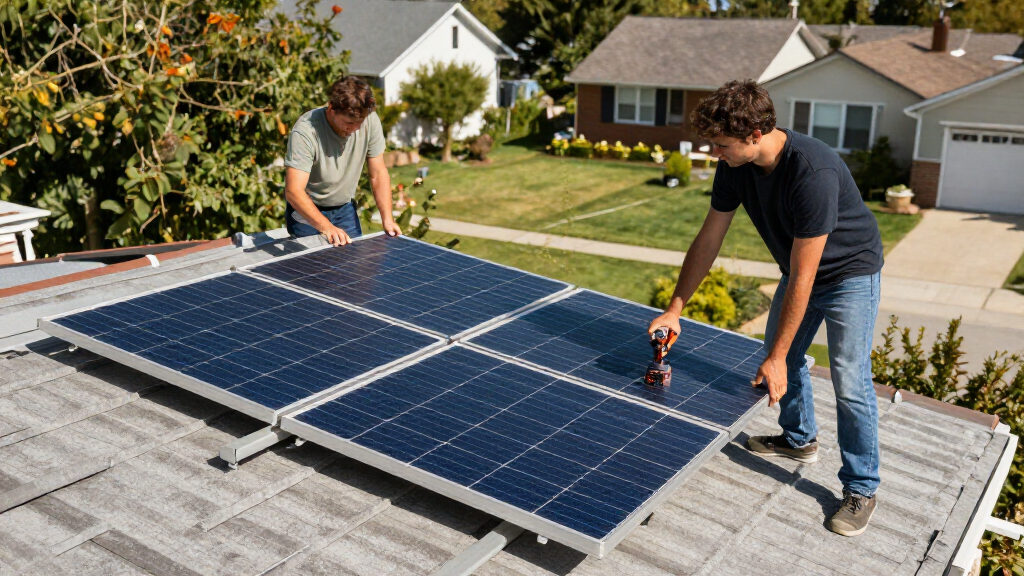

Among these solar panel kits for homes, my best overall pick is the ECO-WORTHY 48V Off-Grid Solar System Kit with 1,560W of panels and a 5kWh battery, which balances household-scale components with a more manageable footprint than the largest systems. The Renogy 400W Premium Kit stands out for buyers who want a smaller 12V setup with an MPPT controller, while ECO-WORTHY’s 10kW kit with 32.2kWh of storage targets homes that need longer backup or substantial off-grid capacity. The main tradeoff is between a compact, simpler kit and a larger system with more power and storage but greater installation, space, and compatibility demands. Panel wattage, battery capacity, inverter output, and your actual loads all matter; a kit’s headline power rating alone does not show how long it can run a home. Continue reading for my full comparison, buying criteria, and guidance on matching a kit to your household.

Get backup power and energy gear delivered free with Prime
- Fast, free delivery on millions of items
- Prime Video, Amazon Music and more included
- Member-only deals all year
Key Takeaways
- The 48V 1,560W kit with a 5kWh battery is my best overall balance in this lineup: it pairs household-oriented voltage and storage without jumping to the largest battery packages.
- Panel capacity and battery storage are separate decisions. The 10kW ECO-WORTHY options range from 10.24kWh to 32.2kWh of listed storage, so similar system labels can mean very different backup duration.
- Small 400W kits serve limited loads, not whole-home power. The Renogy and ECO-WORTHY 12V options suit modest or expandable setups, but their scale is far below the 48V systems.
- Controller type changes the value of a small kit. The 400W ECO-WORTHY kit with MPPT and Bluetooth offers more monitoring and charging capability than the 200W kit with a PWM controller.
- Verify the complete system and site requirements before buying. Inverter capacity, battery voltage, panel placement, wiring, and local electrical rules can limit an otherwise attractive kit.
| ECO-WORTHY 5 kW Off-Grid Solar System Kit with 2,340 W Panels, Inverter, and Battery |  | Best for Off-Grid Home Backup | Panel array: 12 × 195 W; 2,340 W total | Panel type: N-type monocrystalline | Inverter: 48 V, 5,000 W off-grid | VIEW LATEST PRICE | See Our Full Breakdown |
| ECO-WORTHY 200W 12V/24V Monocrystalline Solar Panel Kit with 30A PWM Charge Controller |  | Best for Small Off-Grid Setups | Panel configuration: 2 × 100 W; 200 W total | Panel type: Monocrystalline | System voltage: 12 V or 24 V | VIEW LATEST PRICE | See Our Full Breakdown |
| ECO-WORTHY Solar Panel and LiFePO4 Home Backup System |  | Best for High-Capacity Home Backup | Solar array: 6 × 590 W N-type monocrystalline panels | Battery capacity: 2 × 48 V, 314 Ah LiFePO4 | Usable energy: 30 kWh+ | VIEW LATEST PRICE | See Our Full Breakdown |
| ECO-WORTHY 48V Off-Grid Solar System Kit, 1560W Panels, 5kWh Battery |  | Best Balanced 48V Kit | Panel array: 8 × 195 W bifacial panels; 1,560 W total | Stated daily generation: Up to 6.24 kWh under 4 hours of full sunlight | Battery: 48 V, 100 Ah LiFePO4 | VIEW LATEST PRICE | See Our Full Breakdown |
| ECO-WORTHY 400W 12V Solar Panel Kit with MPPT Controller and Bluetooth |  | Best for Expandable Small Systems | Panel array: 4 × 100 W; 400 W total | Output voltage: 12 V DC | Charge controller: 40 A MPPT | VIEW LATEST PRICE | See Our Full Breakdown |
| Renogy 400W 12V Premium Solar Kit with 40A MPPT Charge Controller |  | Best for a Modular 12V Home Setup | Total panel power: 400W | System voltage: 12V | Panels: 4 × 100W monocrystalline | VIEW LATEST PRICE | See Our Full Breakdown |
| ECO-WORTHY 10 kW Off-Grid Solar System Kit with 2,340 W Panels and 10.24 kWh Batteries |  | Best for 120V/240V Off-Grid Capability | Total panel capacity: 2,340W (12 × 195W) | Battery capacity: 10.24 kWh (2 × 48V 100Ah) | Maximum continuous inverter output: 10,000W | VIEW LATEST PRICE | See Our Full Breakdown |
| ECO-WORTHY 400W 12V Complete Solar Panel Kit with Lithium Batteries and 2000W Inverter | 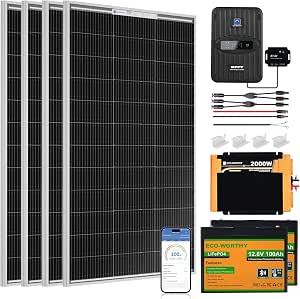 | Best Complete Kit for a Small 12V Setup | Panel power: 400W (4 × 100W) | Battery capacity: 2 × 12V 100Ah lithium batteries | Charge controller: 40A MPPT | VIEW LATEST PRICE | See Our Full Breakdown |
| ECO-WORTHY 10kW Off-Grid Solar Panel Kit with 32.2kWh Battery Storage |  | Best for Extended Whole-Home Backup | Solar panels: 18 × 590W | Total PV capacity: 10,620W | Maximum stated daily generation: Up to 39.36 kWh under optimal conditions | VIEW LATEST PRICE | See Our Full Breakdown |
| ECO-WORTHY 1170W Solar Panel Kit with 48V 3500W Off-Grid Inverter and 50Ah LiFePO4 Battery |  | Best for Mid-Size 48V Backup | Solar panel output: 1170W total (6 panels) | Panel type: N-type bifacial, 18 busbars | Inverter output: 3500W, 7000W surge | VIEW LATEST PRICE | See Our Full Breakdown |
| ECO-WORTHY 10kW Off-Grid Solar System Kit with 5,310W Panels and 20.48kWh Battery Storage |  | Best for Higher Solar Production | Inverter continuous output: 10,000W | Inverter peak output: 20,000W | Output voltage: 120V/240V split-phase | VIEW LATEST PRICE | See Our Full Breakdown |
| ECO-WORTHY 10 kW Off-Grid Solar Panel Kit with 16.1 kWh Battery |  | Best for Expandable Battery Storage | Inverter continuous output: 10,000W | Inverter peak output: 20,000W | Output voltage: 120V or 120V/240V split-phase | VIEW LATEST PRICE | See Our Full Breakdown |
| ECO-WORTHY 400W Solar Panel Kit with 12V 100Ah Lithium Battery |  | Best Compact Kit for Cabins and Sheds | Total solar panel power: 400W (4 × 100W) | Panel type: Monocrystalline silicon | Battery: 12V 100Ah lithium | VIEW LATEST PRICE | See Our Full Breakdown |
| solar panel kits for home | Panel dimensions |
|---|---|
| ECO-WORTHY 5 kW Off-Grid Solar | 58.86 × 26.18 × 1.18 in |
| ECO-WORTHY 200W 12V/24V Monocr | 35.2 × 23.1 × 1.3 in |
| ECO-WORTHY Solar Panel and LiF | 89.68 × 44.65 × 1.18 in |
| ECO-WORTHY 48V Off-Grid Solar | — |
| ECO-WORTHY 400W 12V Solar Pane | 35.2 × 23 × 1.37 in |
| Renogy 400W 12V Premium Solar | 41.8 × 20.9 × 1.38 in |
| ECO-WORTHY 10 kW Off-Grid Sola | 58.86 × 26.18 × 1.18 in |
| ECO-WORTHY 400W 12V Complete S | 35.63 × 23.03 × 1.18 in |
| ECO-WORTHY 10kW Off-Grid Solar | 89.68 × 44.65 × 1.18 in |
| ECO-WORTHY 1170W Solar Panel K | — |
| ECO-WORTHY 10kW Off-Grid Solar | 89.7 × 44.6 × 1.4 in |
| ECO-WORTHY 10 kW Off-Grid Sola | — |
| ECO-WORTHY 400W Solar Panel Ki | 35.63 × 23.03 × 1.18 in |
More Details on Our Top Picks
ECO-WORTHY 5 kW Off-Grid Solar System Kit with 2,340 W Panels, Inverter, and Battery
This kit suits a cabin or home that needs battery-backed solar without sourcing the core components separately. It combines 2,340 W of panels, a 5,000 W off-grid inverter, and a 51.2 V, 100 Ah LiFePO4 battery, so stored power can serve loads after sunset. Compared with the ECO-WORTHY 48V kit with 1,560 W of panels, this option has more panel capacity and a higher-rated inverter, though that does not make it a grid-tied system. The main tradeoff is the gap between the array and inverter ratings: the panels may not supply enough solar power to use the inverter’s full output continuously. Installation also involves mounting and electrical work, so this is a better fit for capable DIYers or professional installation than a plug-in setup.
Pros:- Includes panels, inverter, LiFePO4 battery, cables, and mounting brackets.
- Battery stores energy for use when sunlight is unavailable.
- 12 monocrystalline panels provide 2,340 W of stated array capacity.
- Panels can be mounted on a roof, ground, or shed.
Cons:- The 2,340 W array is smaller than the inverter’s 5,000 W rating.
- Installation requires electrical and mounting work.
- A 100 Ah battery limits how long larger household loads can run without recharging.
Best for: Cabin owners and off-grid households seeking a bundled inverter, battery, and panel system for household backup loads.
Not ideal for: Homeowners seeking a simple grid-connected kit or expecting 2,340 W of panels to sustain the inverter’s full 5,000 W output.
- Panel array:12 × 195 W; 2,340 W total
- Panel type:N-type monocrystalline
- Inverter:48 V, 5,000 W off-grid
- Battery:51.2 V, 100 Ah LiFePO4
- Output voltage:120 V
- Maximum voltage:48 V DC
- Panel dimensions:58.86 × 26.18 × 1.18 in
- Connector:MC4
Our verdict“Choose this bundled off-grid system if you need battery-backed power for a cabin or backup setup and can plan around its 2,340 W array.”
ECO-WORTHY 200W 12V/24V Monocrystalline Solar Panel Kit with 30A PWM Charge Controller
This is the simplest, smallest-scale choice here: two 100 W panels, a 30 A PWM controller, brackets, and cables. Its 12 V or 24 V wiring options give owners of small cabins, boats, or RVs some flexibility, but 200 W of solar is not a whole-home supply. Compared with the ECO-WORTHY 400W 12V kit, it has half the panel capacity and uses PWM rather than MPPT, so it makes more sense for modest charging needs than for maximizing generation from limited roof space. The stated 800 Wh daily output assumes four hours of full sun; cloudy weather, shading, and system losses reduce that figure. At 31.6 pounds, the pair also takes planning to mount securely, despite the corrosion-resistant frames and IP65-rated junction box.
Pros:- Includes two panels, a 30 A controller, mounting brackets, and cables.
- Can be wired for 12 V parallel or 24 V series use.
- Corrosion-resistant aluminum frames and an IP65-rated junction box.
- Panel specifications include wind and snow load ratings.
Cons:- At 200 W total, the array is suited to small off-grid loads rather than home-wide use.
- PWM control is a less capable match for maximizing harvest than the MPPT controller in the ECO-WORTHY 400W kit.
- The stated 800 Wh daily output relies on four hours of full sunlight.
Best for: RV, camper, boat, and small-cabin owners who need a basic 12 V or 24 V charging array for modest loads.
Not ideal for: Households aiming to run regular home appliances or buyers who want higher panel output and an MPPT controller in the kit.
- Panel configuration:2 × 100 W; 200 W total
- Panel type:Monocrystalline
- System voltage:12 V or 24 V
- Charge controller:30 A PWM
- Maximum voltage:27.4 V
- Stated daily output:800 Wh under 4 hours of full sunshine
- Panel dimensions:35.2 × 23.1 × 1.3 in
- Connector:MC4
Our verdict“Pick this kit for a compact RV, boat, or cabin charging setup, not as a standalone solar supply for a home.”
ECO-WORTHY Solar Panel and LiFePO4 Home Backup System
For buyers prioritizing substantial stored energy, this is the most capable system in this group: it pairs six 590 W panels with two 48 V, 314 Ah LiFePO4 batteries and a 10 kW hybrid inverter. More than 30 kWh of stated usable energy gives a home more room to cover extended outages or off-grid use than the 100 Ah battery in the ECO-WORTHY 5 kW kit. It also supports 120 V and 240 V output, plus app, WiFi, Bluetooth, and LCD monitoring. That scale brings real costs in planning: the large panels and batteries ship by pallet, and installation is a substantial electrical project. The inverter exterior version is selected randomly, too, so buyers should confirm compatibility and installation details before treating this as a straightforward home upgrade.
Pros:- Includes panels, two LiFePO4 batteries, inverter, and cables.
- More than 30 kWh of stated usable energy supports longer backup periods than the smaller-battery kits here.
- 10 kW hybrid inverter provides 120 V and 240 V output.
- Monitoring is available through Bluetooth, WiFi, and an LCD screen.
Cons:- Large, heavy components ship on a pallet and require space and handling plans.
- A high-capacity system calls for careful electrical design and installation.
- The inverter exterior version is selected randomly.
Best for: Homeowners planning substantial off-grid or outage backup who have space for large panels and professional installation support.
Not ideal for: Small homes, renters, or DIY buyers without room, transport access, and the electrical expertise needed for large battery and inverter equipment.
- Solar array:6 × 590 W N-type monocrystalline panels
- Battery capacity:2 × 48 V, 314 Ah LiFePO4
- Usable energy:30 kWh+
- Inverter:10 kW hybrid
- Output voltage:120 V and 240 V
- MPPT tracking efficiency:99.9%
- Battery cycle life:9,000+ cycles at 80% DoD
- Monitoring:Bluetooth, WiFi, and LCD screen
- Panel dimensions:89.68 × 44.65 × 1.18 in
Our verdict“Choose this system for high-capacity home backup or off-grid power if you can accommodate its scale and arrange a suitable installation.”
ECO-WORTHY 48V Off-Grid Solar System Kit, 1560W Panels, 5kWh Battery
This kit takes a more balanced approach than the ECO-WORTHY 5 kW system: it combines 1,560 W of bifacial panels with a 48 V, 100 Ah LiFePO4 battery and a 3,500 W inverter with built-in 80 A MPPT. The inverter is less powerful, but its rating sits closer to the panel array, making the overall scale easier to understand for buyers planning a modest off-grid system. The stated generation of up to 6.24 kWh per day depends on four hours of full sunlight, so it is not a guaranteed daily supply. WiFi, Bluetooth, and touchscreen monitoring help track system status; low-temperature charging down to -4°F is another useful feature for colder locations. This is still a multi-component installation, and shipments may arrive in multiple packages.
Pros:- Complete package includes panels, inverter, battery, and accessories.
- Bifacial panels provide 1,560 W of array capacity.
- Built-in 80 A MPPT controller and multiple monitoring options simplify system oversight.
- Battery supports charging at temperatures down to -4°F.
Cons:- The 1,560 W array and 100 Ah battery limit the scale of loads and backup duration.
- The stated daily generation depends on four hours of full sunlight.
- Components may arrive in multiple packages that need to be checked.
Best for: Cabin owners and small-household users who want a 48 V off-grid kit with a battery and monitoring features.
Not ideal for: Buyers needing a larger inverter or substantial whole-home backup capacity comparable to the 10 kW ECO-WORTHY system.
- Panel array:8 × 195 W bifacial panels; 1,560 W total
- Stated daily generation:Up to 6.24 kWh under 4 hours of full sunlight
- Battery:48 V, 100 Ah LiFePO4
- Inverter:3,500 W; 7,000 W peak
- Solar charge controller:80 A MPPT
- Output voltage:110/120 V AC
- Low-temperature charging:Down to -4°F
- Connectivity:WiFi and Bluetooth
Our verdict“Choose this 48 V kit for a modest off-grid setup where an integrated MPPT inverter and cold-weather charging matter more than high output.”
ECO-WORTHY 400W 12V Solar Panel Kit with MPPT Controller and Bluetooth
With four 100 W panels and a 40 A MPPT controller, this kit is a step up from the 200 W ECO-WORTHY kit without moving into a bundled battery-and-inverter system. That makes it a better starting point for a small off-grid home or cabin with a separate battery plan, though its 12 V DC output and 400 W array remain modest for household loads. The supplied Bluetooth module lets owners check system data from a phone within its stated range, while the controller includes charge protections. The listing gives an average daily generation of 1.6 kWh, but sunlight and installation conditions affect actual output. Compared with the 48 V ECO-WORTHY kit, this one is easier to place in a small 12 V setup but lacks a battery and inverter, leaving more design and purchasing work to the buyer.
Pros:- Includes four panels, a 40 A MPPT controller, Bluetooth module, and mounting brackets.
- Bluetooth monitoring offers mobile access to system data within the stated 82-foot range.
- Controller includes overcharge and overdischarge protection.
- Panels include bypass diodes and have stated wind and snow load ratings.
Cons:- No battery or inverter is included, so buyers must plan and source key system components.
- A 400 W array at 12 V is limited for typical whole-home power needs.
- Actual daily generation varies with sunlight, and warranty duration is not specified in the supplied product data.
Best for: Small-cabin owners and hands-on DIYers building a 12 V system who want MPPT charging and phone-based monitoring.
Not ideal for: Homeowners seeking a complete backup package, 120 V AC output, or a high-capacity array ready for household-scale loads.
- Panel array:4 × 100 W; 400 W total
- Output voltage:12 V DC
- Charge controller:40 A MPPT
- Panel efficiency:21%
- Stated daily generation:Average 1.6 kWh, depending on sunlight
- Bluetooth range:Up to 82 ft
- Panel dimensions:35.2 × 23 × 1.37 in
- Connector:MC4
Our verdict“Choose this kit as a 12 V solar-and-controller foundation for a small DIY system if you are prepared to add the battery and inverter yourself.”
Renogy 400W 12V Premium Solar Kit with 40A MPPT Charge Controller
I’d place this Renogy kit among the more manageable choices for a small off-grid home system: it pairs four 100W monocrystalline panels with a 40A MPPT controller, plus brackets, cables, an adapter kit, and Bluetooth monitoring. That bundled hardware can simplify assembling a 12V setup compared with the ECO-WORTHY 400W kit that includes batteries and an inverter, but it leaves those major components for you to choose separately. The Bluetooth module is useful for checking system status from a phone, while the 12V design suits modest loads or an existing 12V battery bank. The tradeoff is limited scale: this is not a ready-to-run household backup system, and its five-year panel warranty is a relatively short coverage period. I’d skip it if you want 48V output or a turnkey package.
Pros:- Four 100W monocrystalline panels provide 400W of rated solar capacity
- 40A MPPT controller is included for the 12V system
- Bluetooth module supports phone-based system monitoring
- Includes Z-brackets, cables, and an adapter kit
Cons:- Does not include batteries or an inverter
- 12V architecture is less suited to larger home systems than the 48V kits
- Panel material and workmanship warranty is five years
Best for: DIY homeowners building a modest 12V off-grid system around a battery and inverter they already own or plan to select separately
Not ideal for: Households seeking a complete home backup package, 120V/240V output, or a system that can readily serve large household loads
- Total panel power:400W
- System voltage:12V
- Panels:4 × 100W monocrystalline
- Charge controller:40A MPPT Rover
- Panel dimensions:41.8 × 20.9 × 1.38 in
- Item weight:56.4 lb
- Connectors:MC4
- Panel warranty:5 years for material and workmanship
Our verdict“Choose this kit for a component-by-component 12V build, but pick a bundled system if you want batteries and an inverter included.”
ECO-WORTHY 10 kW Off-Grid Solar System Kit with 2,340 W Panels and 10.24 kWh Batteries
This kit is a step toward a whole-home off-grid configuration, not simply a larger panel bundle. Its 10,000W inverter supplies both 120V and 240V AC, while two 48V lithium batteries provide 10.24 kWh of storage. That makes it more appropriate for mixed household circuits than the smaller ECO-WORTHY 1170W kit, which has a 3500W inverter and a single 48V 50Ah battery. The panel array, however, is only 2,340W, so the large inverter rating should not be mistaken for high solar production; the stated 9.36 kWh daily output assumes four hours of full sunlight. App monitoring and multiple charging modes add flexibility, but installation is recommended professionally. I’d favor it when 240V support matters, while buyers focused on longer backup runtime should compare it with the ECO-WORTHY 10kW kit offering 32.2 kWh of storage.
Pros:- 10,000W maximum continuous inverter output with 120V/240V AC
- Includes two 48V 100Ah lithium batteries totaling 10.24 kWh
- Bundled with twelve 195W bifacial panels and mounting accessories
- Bluetooth and Wi-Fi app monitoring with CAN/RS485 support
Cons:- The 2,340W array may not keep up with the large inverter under heavy use
- Professional installation is recommended
- Stated daily energy production depends on full-sun conditions
Best for: Homeowners planning an off-grid system who need 120V and 240V output and want a bundled inverter, panels, and battery bank
Not ideal for: Buyers needing extended backup runtime or substantial solar production relative to the inverter capacity, or those who cannot arrange professional installation
- Total panel capacity:2,340W (12 × 195W)
- Battery capacity:10.24 kWh (2 × 48V 100Ah)
- Maximum continuous inverter output:10,000W
- AC output:120V / 240V
- Stated daily production:9.36 kWh under 4 hours of full sunlight
- Panel dimensions:58.86 × 26.18 × 1.18 in
- Panel weight:21.9 lb each
- Monitoring:Bluetooth and Wi-Fi app; CAN/RS485
Our verdict“Pick this kit when split-phase 120V/240V output is a priority, but compare battery capacity and array size carefully against your household loads.”
ECO-WORTHY 400W 12V Complete Solar Panel Kit with Lithium Batteries and 2000W Inverter
Unlike the Renogy 400W kit, which supplies the panels and controller but leaves storage and inversion to the buyer, this ECO-WORTHY package includes the main components for a self-contained 12V system: four bifacial panels, a 40A MPPT controller, two lithium batteries, and a 2000W pure sine wave inverter. That makes it the more straightforward starting point for a cabin or small off-grid installation, though it is not a strong match for powering a typical home’s full load. The stated 1.6 kWh ideal daily output is tied to favorable sunlight, and the inverter’s 2000W ceiling limits the appliances that can run together. More than 3,000 rated deep cycles and a built-in battery management system support repeated use, but the 12V architecture and modest panel capacity leave less room for larger household demands than the 48V ECO-WORTHY systems.
Pros:- Includes panels, two lithium batteries, MPPT controller, and inverter
- 2000W pure sine wave inverter provides AC power for compatible appliances
- Battery management system is built into the lithium batteries
- Battery life is rated for more than 3,000 deep cycles
Cons:- 400W of panels and stated 1.6 kWh ideal daily output are limited for home-scale use
- 12V system and 2000W inverter cap the size of loads it can serve
- Daily generation depends on favorable sunlight conditions
Best for: Owners of a small cabin or compact off-grid space who want panels, batteries, controller, and inverter in one 12V package
Not ideal for: Households seeking whole-home backup, 240V output, or enough inverter capacity for multiple high-wattage appliances at once
- Panel power:400W (4 × 100W)
- Battery capacity:2 × 12V 100Ah lithium batteries
- Charge controller:40A MPPT
- Inverter:12V, 2000W pure sine wave
- Stated ideal daily output:1.6 kWh
- Battery cycle life:More than 3,000 deep cycles
- Panel dimensions:35.63 × 23.03 × 1.18 in
- Panel connector:MC4
Our verdict“Choose this all-in-one 12V kit for a small off-grid space, not as a substitute for a higher-capacity home system.”
ECO-WORTHY 10kW Off-Grid Solar Panel Kit with 32.2kWh Battery Storage
Among these five options, this is the one I’d shortlist for buyers prioritizing substantial storage alongside high output. It combines 10,620W of panels, a 10kW split-phase inverter, and 32.2 kWh of LiFePO₄ storage—far more battery capacity than the other ECO-WORTHY 10kW kit here, which includes 10.24 kWh. That extra reserve can support longer backup periods, although actual runtime still depends on household consumption and solar conditions. Dual MPPT controllers, Wi-Fi monitoring, and a 20,000W peak rating add system flexibility, but they do not make this a simple DIY purchase: professional installation is recommended. The 18 large 590W panels and pallet-sized shipment also require roof area, delivery access, and space to handle equipment. I’d skip it for a small property or modest backup needs.
Pros:- 32.2 kWh of LiFePO₄ storage provides much more capacity than the other 10kW kit in this batch
- 10,620W total PV capacity across eighteen 590W panels
- 10,000W continuous inverter supports 120V/240V split-phase output
- Includes dual MPPT controllers and Wi-Fi monitoring
Cons:- Professional installation is recommended
- Large panels and pallet delivery require significant space and suitable access
- Maximum daily generation figure depends on favorable conditions
Best for: Homeowners with substantial roof or ground-mount space who need high-capacity off-grid generation and long backup duration
Not ideal for: Small homes, buyers with limited installation space or delivery access, and anyone seeking a compact or straightforward DIY kit
- Solar panels:18 × 590W
- Total PV capacity:10,620W
- Maximum stated daily generation:Up to 39.36 kWh under optimal conditions
- Inverter continuous output:10,000W
- Inverter peak output:20,000W
- AC output:120V or 120V/240V split phase
- Battery storage:32.2 kWh total, LiFePO₄
- Panel dimensions:89.68 × 44.65 × 1.18 in
Our verdict“Choose this system for large-scale off-grid use and long backup needs if your site can accommodate professional installation and eighteen full-size panels.”
ECO-WORTHY 1170W Solar Panel Kit with 48V 3500W Off-Grid Inverter and 50Ah LiFePO4 Battery
This kit occupies a practical middle ground between the 400W 12V packages and the much larger 10kW systems. Its 1170W bifacial array, 48V inverter, and 50Ah LiFePO₄ battery give a small off-grid home or backup circuit more system headroom than the ECO-WORTHY 400W kit, without requiring the footprint of eighteen full-size panels. The inverter’s 3500W output and 7000W surge rating can handle some brief startup demands, while its 80A MPPT controller and Wi-Fi monitoring bring useful controls into the package. Still, the battery stores only 2560Wh of usable energy, so it is better suited to selected loads than extended whole-home backup. The stated 4.68 kWh daily generation assumes four hours of full sunlight, and the six panels need ample mounting area. I’d choose a larger-storage system if overnight runtime is the priority.
Pros:- Complete package includes panels, inverter, battery, cables, and mounts
- 3500W inverter provides 7000W surge power for brief startup loads
- 80A MPPT controller and Wi-Fi monitoring are included
- LiFePO₄ battery is rated for more than 4,000 cycles
Cons:- Usable battery energy is limited to 2560Wh for extended backup
- Daily generation estimate assumes four hours of full sunlight
- Six panels require more installation area than the 400W kits
Best for: Owners of a small home, workshop, or backup circuit who want a 48V system with a bundled inverter and LiFePO₄ battery
Not ideal for: Households needing multi-day backup or broad whole-home coverage from a large battery reserve
- Solar panel output:1170W total (6 panels)
- Panel type:N-type bifacial, 18 busbars
- Inverter output:3500W, 7000W surge
- AC output:110/120V
- Battery:48V 50Ah LiFePO₄
- Usable battery energy:2560Wh
- MPPT controller:80A
- Stated daily generation:About 4.68 kWh under 4 hours of full sunlight
Our verdict“Pick this 48V kit for moderate loads and a compact system footprint, but choose a larger battery package for long backup runtime.”
ECO-WORTHY 10kW Off-Grid Solar System Kit with 5,310W Panels and 20.48kWh Battery Storage
For a home that needs a substantial off-grid system, this kit pairs a 10kW split-phase inverter with the largest solar array in this group: nine 590W bifacial panels totaling 5,310W. That larger array gives it a clearer production advantage over the ECO-WORTHY 10 kW Off-Grid Solar Panel Kit with 16.1 kWh Battery, which has only 2,950W of panels. Its 20.48kWh of LiFePO₄ storage also provides a sizeable reserve for overnight use, though it trails the separate 32.2kWh ECO-WORTHY kit for stored energy. The tradeoff is scale: panels nearly 90 inches long ship by pallet, and professional installation is recommended. I’d shortlist it for a property seeking a complete high-output package, not a small household looking for a simple backup setup.
Pros:- Complete package includes panels, inverter, batteries, and cables
- 5,310W panel array is larger than the 2,950W array in the ECO-WORTHY 10 kW kit with 16.1 kWh battery
- 10kW inverter provides 120V/240V split-phase output
- Four LiFePO₄ batteries provide 20.48kWh of storage
Cons:- Large panels require pallet delivery by truck and substantial installation space
- Professional installation is recommended, adding project complexity
- Its 20.48kWh storage is lower than the separate 32.2kWh ECO-WORTHY kit
Best for: Homeowners planning a professionally installed off-grid system who want a relatively large panel array, 120V/240V output, and substantial battery storage.
Not ideal for: Small homes or DIY buyers who cannot accommodate pallet-delivered panels, major installation work, or a system sized well beyond modest backup needs.
- Inverter continuous output:10,000W
- Inverter peak output:20,000W
- Output voltage:120V/240V split-phase
- Solar panels:9 × 590W bifacial panels
- Total PV capacity:5,310W
- Panel efficiency:23.23%
- Battery storage:4 × 48V 100Ah LiFePO₄ batteries; 20.48kWh total
- Panel dimensions:89.7 × 44.6 × 1.4 in
Our verdict“Choose this kit if you want the lineup’s larger 5,310W array paired with substantial storage and can manage a professionally installed off-grid system.”
ECO-WORTHY 10 kW Off-Grid Solar Panel Kit with 16.1 kWh Battery
This kit is built around a large 16.076kWh LiFePO₄ battery and a 10kW split-phase inverter, with monitoring available through its display, Bluetooth, and Wi-Fi. Its battery can be expanded by paralleling up to 15 units, giving it a growth path that the 20.48kWh ECO-WORTHY kit’s listed battery configuration does not spell out in the same way. But the solar side is the limiting factor: five 590W panels total just 2,950W, far below the inverter’s 10kW output rating and well behind that other kit’s 5,310W array. The inverter’s rating describes what it can supply, not how much the included panels can generate. I’d favor this option when storage expansion and monitoring matter more than starting with a large panel field; buyers focused on solar production should compare the larger-array kit instead.
Pros:- Includes a 48V 314Ah LiFePO₄ battery with 16.076kWh capacity
- Battery monitoring is available through display, Bluetooth, and Wi-Fi
- Battery supports expansion with up to 15 parallel units
- 10kW split-phase inverter includes dual MPPT controllers
Cons:- Included 2,950W array is much smaller than the inverter’s 10kW output rating
- Panel capacity is substantially below the 5,310W array in the other ECO-WORTHY 10kW kit
- Large panels and system components call for truck delivery and professional installation
Best for: Off-grid homeowners who value a large included battery, remote monitoring, and the ability to expand storage as their needs grow.
Not ideal for: Buyers who want a high-output solar array out of the box; its included 2,950W of panels is modest beside its 10kW inverter and the 5,310W array in the other ECO-WORTHY 10kW kit.
- Inverter continuous output:10,000W
- Inverter peak output:20,000W
- Output voltage:120V or 120V/240V split-phase
- Solar panels:5 × 590W
- Total solar capacity:2,950W
- Battery:48V 314Ah LiFePO₄; 16.076kWh
- Battery management system:PACE 200A BMS
- Maximum battery parallel units:15
- Maximum inverter parallel units:6
Our verdict“Pick this kit if expandable, monitorable battery storage matters more to you than having a large solar array included from the start.”
ECO-WORTHY 400W Solar Panel Kit with 12V 100Ah Lithium Battery
Unlike the two 10kW ECO-WORTHY systems, this 400W, 12V kit is aimed at modest off-grid loads rather than whole-home power. Four 100W panels, a 100Ah lithium battery, a 40A MPPT controller, and an 1100W pure sine wave inverter make it a more contained package for a cabin, shed, RV, or limited backup use. The maker’s 1.6kWh ideal daily output assumes four hours of sunlight, so actual production will vary with weather, season, shading, and installation. That scale is easier to fit than the large panels in the 5,310W kit, but it cannot provide the same 120V/240V home-power capability or energy reserve. I’d choose it for basic 110V loads and a compact setup; homeowners seeking broad household coverage should look at a larger system.
Pros:- All-in-one package includes panels, battery, MPPT controller, inverter, and Bluetooth module
- 1100W pure sine wave inverter supplies 110V AC
- Lithium battery includes a built-in battery management system
- 40A MPPT controller is rated for up to 99% tracking efficiency
Cons:- 400W of panels and 12V battery are suited to modest loads, not broad household power
- Advertised 1.6kWh daily output depends on ideal sunlight conditions
- Warranty process and coverage details are not specified in the product information
Best for: RV owners, cabin users, and shed owners who need a compact 12V system for modest 110V loads rather than whole-home power.
Not ideal for: Households seeking 120V/240V split-phase service, high daily energy production, or the battery reserve of the ECO-WORTHY 10kW systems.
- Total solar panel power:400W (4 × 100W)
- Panel type:Monocrystalline silicon
- Battery:12V 100Ah lithium
- Charge controller:40A MPPT
- Inverter:1100W, 12V to 110V pure sine wave
- Advertised ideal daily output:1.6kWh under four hours of sunlight
- Panel dimensions:35.63 × 23.03 × 1.18 in
- Battery cycle life:More than 3,000 deep cycles
- Warranty:1 year
Our verdict“Choose this compact kit for modest 12V off-grid use in an RV, cabin, or shed, not as a substitute for a whole-home solar system.”
How We Picked
I compared the 13 kits by how well their stated components match distinct home-use needs: modest backup, a starter solar setup, or higher-capacity off-grid power. The main criteria were panel wattage, battery capacity and chemistry where specified, system voltage, inverter and charge-controller inclusion, and whether the listed components form a more complete package or leave buyers to plan around missing details. I also weighed usability signals such as Bluetooth monitoring and the practical implications of 12V versus 48V architecture.
The ranking favors kits with a clearer balance of generation, storage, and household-oriented system design, then assigns smaller or more specialized options to buyers whose loads match their scale. A larger advertised system rating does not automatically place a kit higher: storage, panel capacity, and inverter details must make sense together. Product titles alone do not establish compatibility, expected daily production, installation requirements, or suitability for grid connection, so buyers should confirm those details with the manufacturer and a qualified installer before purchase.
Factors to Consider When Choosing Solar Panel Kits For Homes
Before choosing a kit, treat it as a system-design decision rather than a panel-shopping decision. The right match depends on what you want to run, for how long, where the equipment will sit, and whether you are building an off-grid system or backup for a grid-connected home.
Size the system around real household loads
List the appliances you want to power and record both their running watts and how many hours they operate. Motors, pumps, refrigerators, and some tools can draw a short startup surge that exceeds their normal consumption, so inverter capacity must account for that moment as well as steady use. A 400W kit may support a small, carefully selected load, but it is not equivalent to a whole-home system. Avoid sizing from monthly utility consumption alone; daily energy use and peak simultaneous demand answer different questions. If you are uncertain, measure key circuits or ask an electrician to help build a load list before choosing panels or batteries.
Match battery storage to the backup period you need
Battery capacity indicates how much energy may be stored, not how much is always available to your appliances. Usable capacity depends on battery chemistry, allowed depth of discharge, system settings, temperature, and conversion losses. Decide whether you need a few hours of essential-circuit backup, overnight coverage, or several low-sun days; those goals can require very different storage. A large battery paired with limited panels may take longer to recharge, while ample panels cannot provide nighttime power without storage. Ask for usable capacity and recommended operating limits rather than comparing battery numbers in isolation.
Choose system voltage with expansion and wiring in mind
Small 12V systems can suit compact installations and modest loads, but current rises as power demand increases, which can call for thicker wiring and careful installation. Higher-voltage setups such as 48V are often a better fit for larger inverters and household-scale systems because they can reduce current on parts of the DC side. That does not make every 48V kit interchangeable: battery voltage, inverter input, charge controller limits, and panel wiring all need to match. If you plan to add equipment later, ask whether the batteries and controller support the intended expansion. A mismatch can turn an apparently flexible kit into a costly redesign.
Check inverter output and appliance compatibility
The inverter converts battery power into the AC electricity used by many household devices, so its continuous output and surge rating deserve close attention. Add the running watts of appliances you might use at the same time, then check the startup demand of equipment with compressors or motors. Confirm whether the kit includes an inverter and whether its output voltage, waveform, and protection features suit your appliances and local electrical setup. A 2,000W inverter, for example, does not mean the panels can continuously supply that much power or that the battery can sustain it for long. Keep panel production, battery limits, and inverter output as separate checks.
Plan for roof space, shade, and seasonal sunlight
Panel wattage is a laboratory rating, not a promise of daily energy at your home. Roof direction, pitch, shading, weather, temperature, and shorter winter days all affect production. Check usable roof area and structural suitability, and consider whether ground mounting would provide better access or fewer shade problems. Even partial shade on a panel string can reduce output depending on the wiring and equipment, so map trees, chimneys, and nearby buildings before ordering. Ask for a site-specific production estimate based on your location rather than assuming the panel nameplate total will meet household demand.
Confirm installation, permits, and grid connection needs
A kit described as off-grid is not automatically ready for connection to a home’s existing electrical panel or the utility grid. Grid-connected systems can require approved interconnection equipment, permits, inspections, and utility authorization, while backup systems may need a transfer switch or dedicated critical-load circuits. Local rules and equipment certifications vary, so check them before buying rather than after delivery. Also confirm what the package actually includes: mounting hardware, cables, breakers, fuses, and installation documentation may be separate. Paying for professional design and installation can make sense when the system will serve household circuits or when electrical compliance is uncertain.
Frequently Asked Questions
Can one of these kits power an entire home?
Some of the larger 48V and 10kW-labeled kits are aimed at higher-demand off-grid use, but those labels alone do not prove a system can run every circuit in a particular home. The answer depends on your peak load, daily energy use, panel production at your location, battery capacity, and inverter output. Many households will need to prioritize essential circuits such as refrigeration, lighting, communications, and selected outlets. Ask for a load-based design and a production estimate before treating any kit as whole-home coverage. A qualified installer can also check whether the equipment can connect safely to your home wiring.
How much battery storage do I need for overnight backup?
Start by estimating the energy used overnight by the appliances you actually plan to keep running, then add a margin for inverter losses and battery operating limits. A refrigerator, lights, and communications equipment require a different capacity than electric heating, cooking, or air conditioning. Compare usable battery energy rather than relying only on the headline capacity, and check whether the system can recharge the battery during the next day under local sunlight conditions. If cloudy-day coverage matters, plan for more storage and sufficient panel capacity to replenish it. A simple load worksheet is more useful than choosing a battery size based on home size alone.
Should I choose a 12V kit or a 48V kit for home use?
A 12V kit can make sense for small loads, compact installations, or a limited backup setup, while 48V systems are generally more suited to larger inverters and higher household demand. At the same power level, a lower-voltage system carries more current, which can affect wire size, connection design, and losses. Voltage is only one part of compatibility: the battery, inverter, controller, and panel configuration must all be designed to work together. Consider future expansion before choosing, since moving from a small 12V setup to a larger home system may mean replacing core components. Have an installer review the plan if it will connect to household circuits.
Can I connect an off-grid kit to my utility-connected house?
Possibly, but an off-grid label does not confirm that a kit is approved for grid interconnection or ready to feed a home panel. Safe integration may require compatible inverters, a transfer switch, approved protection equipment, permits, inspections, and utility approval. Some homeowners use an off-grid kit for isolated loads or a separate backup circuit rather than connecting it to the main panel. Check local electrical requirements and the product’s documentation before purchase, and do not connect equipment in a way that could send power onto utility lines. A licensed electrician or solar installer can verify the appropriate configuration.
Is a larger battery always a better choice than more panels?
No. More battery capacity can extend backup time, but it will not help much if the panels cannot recharge it after use. More panel capacity can improve daytime generation, yet it cannot provide power after sunset without storage. The right balance depends on when your household uses electricity, the amount of sunlight available, and whether you need backup for brief outages or prolonged low-sun periods. Compare panel wattage, usable battery capacity, controller limits, and inverter capability as one system. A site-specific energy plan can reveal which component is the limiting factor.
Conclusion
For a balanced household-oriented off-grid package, I recommend the ECO-WORTHY 48V kit with 1,560W of panels and a 5kWh battery as best overall, provided its capacity matches your loads. Buyers who want a smaller system can look at the Renogy 400W Premium Kit for its MPPT controller, while the ECO-WORTHY 200W kit is the lower-scale choice for a limited starter setup rather than broad home backup. My best value pick for buyers seeking an all-in-one small system is the ECO-WORTHY 400W kit with lithium batteries and a 2,000W inverter; confirm battery capacity and compatibility before committing. For high-demand off-grid plans, the ECO-WORTHY 10kW kit with 32.2kWh of storage is the premium-capacity option in this lineup, but it calls for careful site and load planning. If your priority is monitoring, favor the 400W ECO-WORTHY MPPT kit with Bluetooth; if you need more than modest backup, start by comparing 48V system capacity and get a professional design before buying.