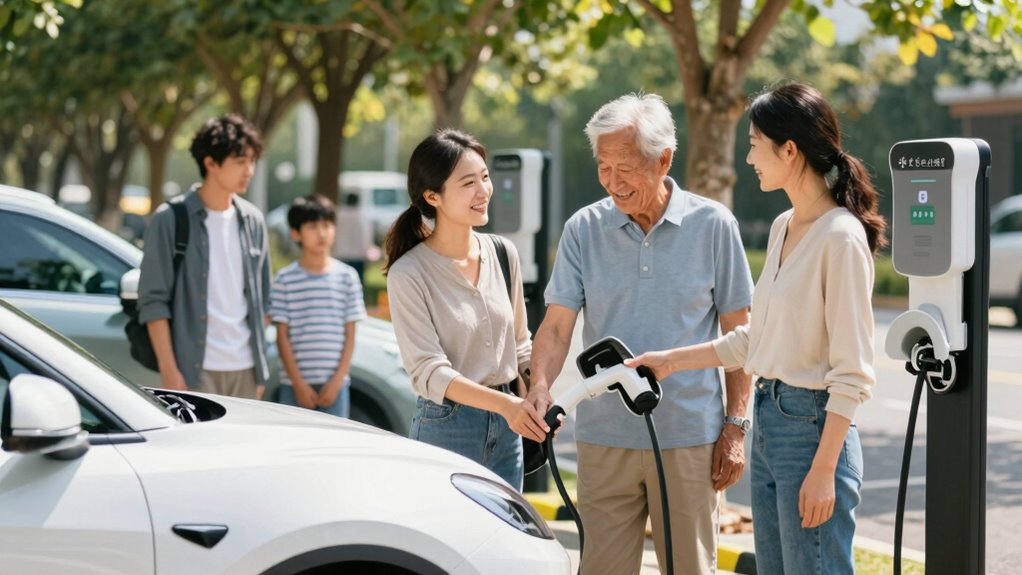

To share community charging stations without resentment, respect the infrastructure by only occupying chargers while actively charging and avoiding overstaying. Communicate politely with others, share estimated departure times, and coordinate if needed. Keep chargers and parking spots accessible, and follow posted time limits, especially during peak hours. Staying mindful of others’ needs and practicing patience can foster a cooperative environment. Want to learn more ways to build a harmonious charging community? Keep exploring.
Prime for Young Adults — start your free trial
Fast free delivery, streaming and member deals for eligible 18–24 year olds.
As an affiliate, we earn on qualifying purchases.
Key Takeaways
- Follow posted time limits and only occupy chargers during active charging to prevent congestion.
- Communicate politely with fellow users about charging status and estimated departure times.
- Stay with your vehicle during fast charging and disconnect cables promptly after charging completes.
- Report malfunctioning stations and promote community awareness of proper usage and etiquette.
- Practice patience and respect others’ charging needs to foster a cooperative and fair environment.
Understanding Public Charging Infrastructure and Its Limitations
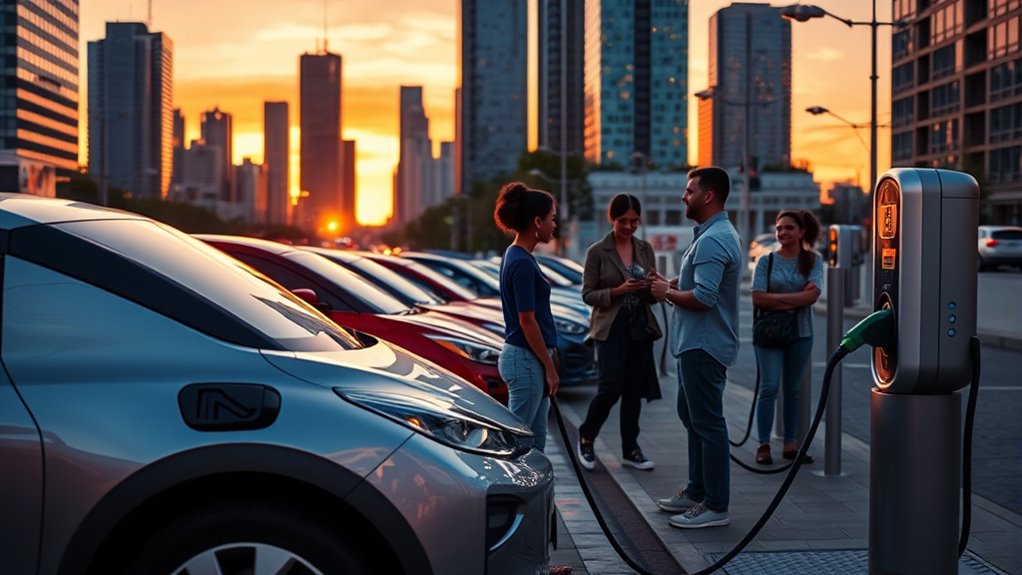
Public charging infrastructure is expanding but still faces significant limitations that affect everyday use. As more people buy electric vehicles, the demand for public chargers grows faster than the available stations. You’ll find that public chargers are essential for supporting the EV community, especially in busy areas. However, high traffic and limited resources mean congestion is common, and stations often fill up quickly. Many locations lack enough chargers to meet demand, so sharing becomes necessary. Finite resources require responsible use and consideration for others. You should plan ahead and be aware that some stations may be busy or have time restrictions. Understanding these limitations helps you use public chargers respectfully, ensuring everyone has fair access and the community continues to grow sustainably. Additionally, charger maintenance and proper handling can extend the lifespan of shared stations and improve availability for all users. Proper resource management and awareness of charger technology are key to maintaining a reliable and equitable charging network for everyone. Maintaining awareness of charger availability can help prevent frustration and ensure smoother sharing experiences for all users. Recognizing the importance of European cloud infrastructure can also support more sustainable and resilient charging networks nationwide.
Best Practices for Parking and Charging Respectfully
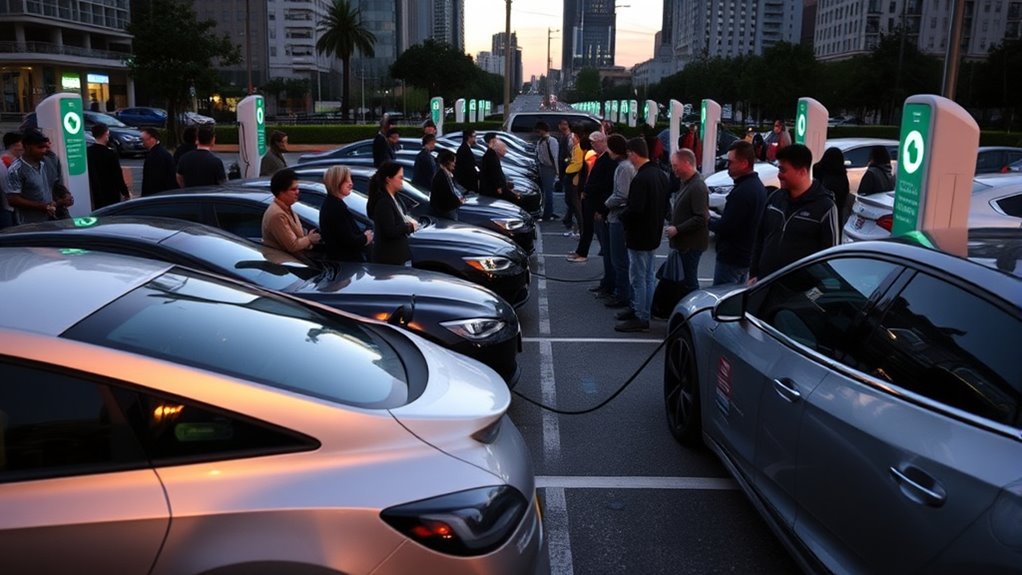
To guarantee everyone can use charging stations efficiently, it’s important to park and charge your vehicle responsibly. Only occupy EV spots when actively charging, and avoid blocking other chargers or ports. Position your vehicle so dual ports remain accessible, and leave contact info visible if you plan to be away. Treat chargers like gas pumps—neatly replace cables after use. Use the appropriate charger type for your vehicle, and only charge as much as needed. For example, avoid charging to 100% on fast chargers unless necessary, and limit charging to around 80%. Stay with your vehicle at DC fast chargers when possible, and don’t unplug others. Respect shared resources by being mindful of time limits and moving your car promptly once charged. Proper safety practices help prevent accidents and ensure the longevity of the equipment. Being aware of charger compatibility can prevent damage to your vehicle’s charging port and battery. Additionally, understanding the importance of nanotechnology can lead to innovative solutions that improve charging efficiency and infrastructure. Incorporating smart charging management can further optimize resource sharing and reduce wait times, making the community’s charging infrastructure fair and accessible. For example, utilizing load-balancing systems can help distribute power more evenly across multiple chargers, improving overall reliability.
Effective Time Management to Maximize Access
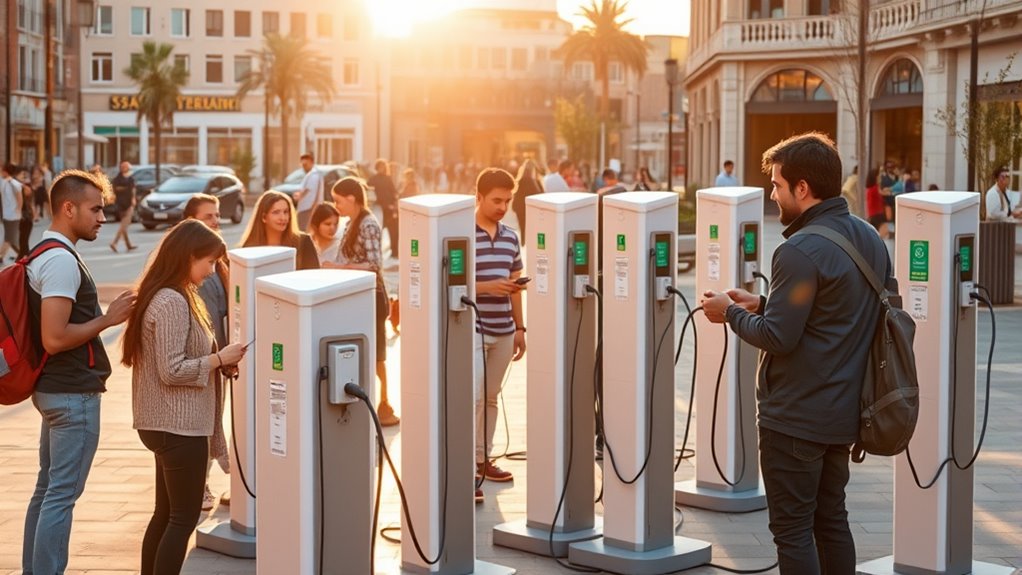
Managing your charging time effectively guarantees everyone gets fair access to shared stations. Stick to posted time limits and move your vehicle promptly once charging is complete. Avoid leaving your car plugged in longer than necessary, especially on fast chargers, unless you genuinely need the full charge. Limit charging sessions to the amount required—typically under 80%—to free up stations for others. Be mindful of idle fees at some locations, which discourage overstaying. If your vehicle isn’t charging, don’t occupy a spot; relocate to allow others to use the station. Planning your charging sessions around your schedule helps prevent congestion and reduces wait times. Simple systems that help you set clear routines can make managing charging time easier. Additionally, practicing community charging etiquette fosters a respectful environment where everyone’s needs are considered. Using charging station management tools can assist you in monitoring your session and avoiding unnecessary overuse. Keeping track of your charging habits can help you develop more efficient routines and minimize your impact on the community. For example, implementing time management strategies can further optimize your charging experience and promote fairness. By managing your time wisely, you contribute to a more equitable and efficient charging community.
Communicating and Coordinating With Fellow EV Drivers

Effective communication and coordination among EV drivers are essential for ensuring everyone has fair access to charging stations. When you arrive, quickly assess the situation: is someone charging, waiting, or finished? If a station is occupied, consider leaving a polite note with your contact info if you plan to return soon. Use respectful gestures or brief conversations to confirm if the driver is finished or needs more time. If you see someone waiting, be transparent about your charging time and intentions. Sharing information about your estimated departure helps avoid conflicts. When possible, coordinate with others to share chargers or alternate spots, especially in high-demand areas. Clear, courteous communication fosters trust and cooperation, making the charging experience smoother for everyone. Understanding charging etiquette can further promote respectful and efficient use of shared stations. Additionally, being aware of auditory processing challenges can help in interpreting spoken communications more effectively in noisy charging environments. Practicing patience and empathy is crucial, as many drivers may be unfamiliar with proper sharing practices. Recognizing the importance of effective communication can lead to a more harmonious charging environment for all users. Developing skills in non-verbal cues can also improve interactions when verbal communication is difficult or hindered.
Promoting Awareness and Education for a Harmonious Charging Community
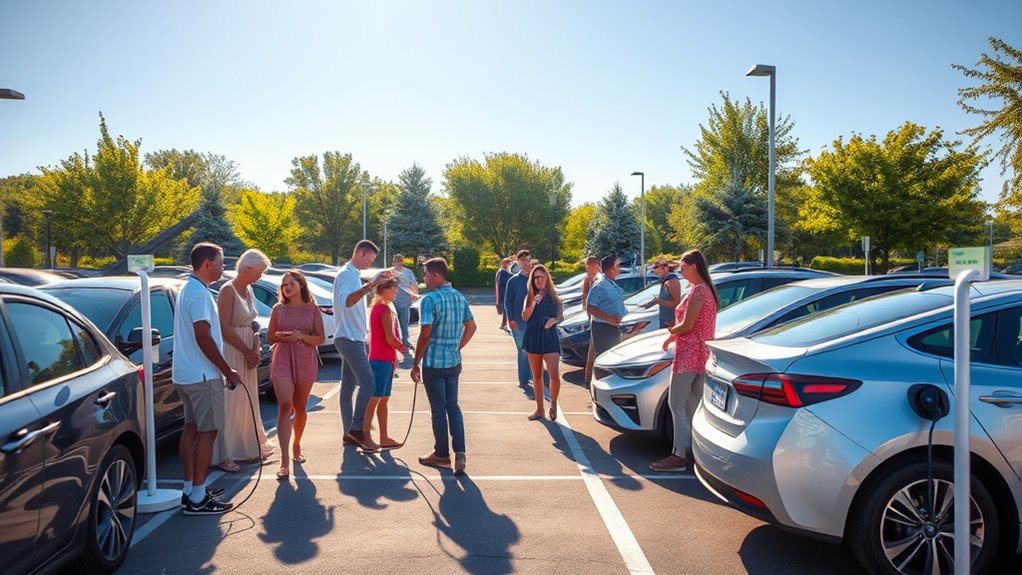
Raising awareness and providing education about proper charging etiquette are essential steps toward building a respectful and sustainable EV community. You can help by sharing knowledge about time limits, appropriate charging durations, and the importance of moving your vehicle promptly after charging. Educate fellow drivers on parking only in EV spaces while actively charging and avoiding blocking other stations. Promote understanding of proper cable handling, choosing the right charger type, and charging only as much as needed. Encourage clear signage and leave notes for clueless parkers to prevent confusion. By fostering open communication and distributing information, you create a culture of courtesy and shared responsibility. When everyone understands the rules and expectations, the community becomes more harmonious, accessible, and efficient for all users. Implementing community education programs can further enhance this process by providing ongoing guidance and support. Additionally, emphasizing the importance of proper charging station usage helps prevent frustration and ensures equitable access for everyone.
Frequently Asked Questions
How Can I Handle Conflicts When Chargers Are Fully Occupied?
When chargers are fully occupied, stay calm and patient. Respect others’ time by avoiding confrontations; instead, consider politely asking if they’re nearly finished. If no one’s around, you can leave a note with your contact info and be ready to move as soon as a spot opens. Practice flexibility by planning ahead and using apps to monitor charger availability, ensuring everyone shares the resources fairly and peacefully.
What Should I Do if Someone Unplugs My Vehicle Without Permission?
If someone unplugs your vehicle without permission, calmly approach them and politely explain that you’re still charging and need your car. Show your contact info on the dash if available. If they’re unresponsive or uncooperative, consider notifying station staff or security. Remember, maintaining a respectful tone helps resolve the situation smoothly and fosters a community of courtesy and understanding among EV users.
Are There Guidelines for Charging in Shared or Multi-Unit Parking Areas?
In shared or multi-unit parking areas, you should follow specific guidelines to guarantee fairness. Always park only while actively charging, avoid occupying spaces unnecessarily, and adhere to posted time limits. Leave contact info if you’re away, and don’t unplug others without permission. Be considerate by charging only what you need, respecting the community rules, and communicating politely if conflicts arise. Your goal is to share resources harmoniously.
How Can I Encourage Others to Follow Proper Charging Etiquette?
You can encourage others to follow proper charging etiquette by leading by example, being courteous, and communicating openly. Share tips on respecting time limits, avoiding blockages, and unplugging only when finished. If you see someone misusing a station, politely remind them of the rules or leave a friendly note. Promoting awareness and fostering a respectful attitude helps create a cooperative charging community everyone benefits from.
What Steps Should I Take if I Notice Unsafe or Damaged Charging Stations?
If you spot unsafe or damaged charging stations, don’t just stand there like a deer in headlights—take action. Report the issue immediately to station management or the relevant authority, providing details about the problem. If possible, warn other users to stay away. Your quick response helps prevent accidents and keeps the community safe, ensuring everyone can charge their EV without worry.
Conclusion
By following these community charging etiquette tips, you help create a respectful and efficient environment for all EV drivers. Remember, over 70% of public chargers are underutilized or misused, causing frustration. When you park considerately, communicate clearly, and manage your charging time, you contribute to a more harmonious experience. Together, we can guarantee everyone gets fair access to charging stations and keeps our shared spaces positive for all.
Fall yard work Picks
leaf blowers
As an affiliate, we earn on qualifying purchases.