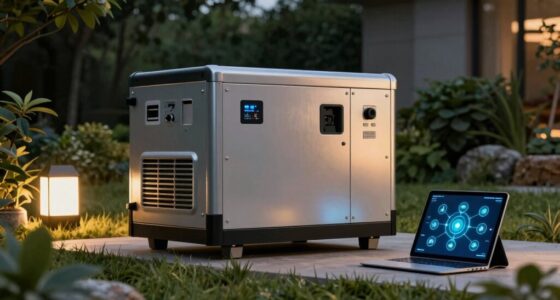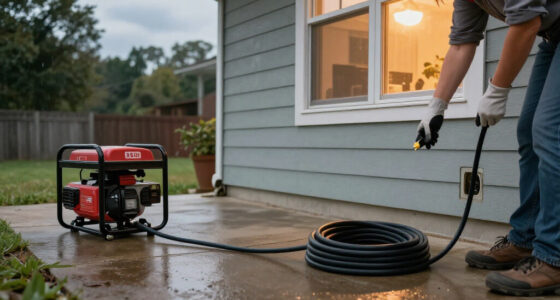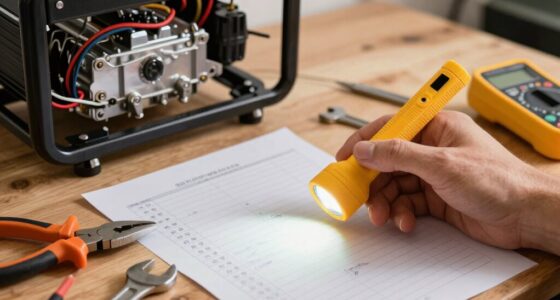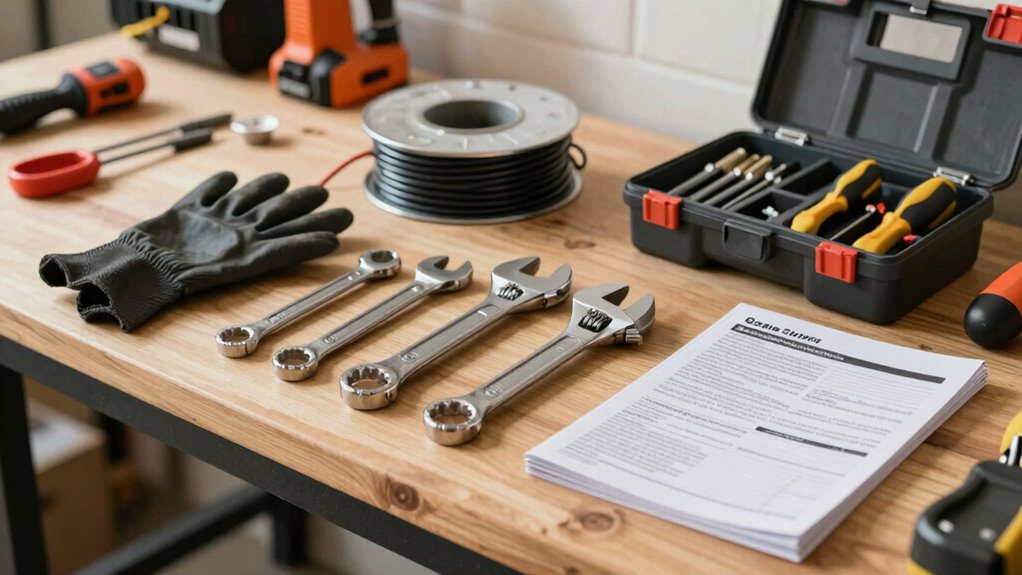

To build a generator support kit, gather safety gear like fire extinguishers, gloves, and a carbon monoxide detector, ensuring all equipment is clearly labeled and you’re trained in safety procedures. Include basic tools like wrenches and screwdrivers for maintenance, along with fuel stabilizer, extra fuel, and proper storage containers. Add electrical safety items such as extension cords and power strips, and keep a manual handy. Continuing will help you understand how to assemble everything effectively and stay prepared.

Get backup power and energy gear delivered free with Prime
- Fast, free delivery on millions of items
- Prime Video, Amazon Music and more included
- Member-only deals all year
Key Takeaways
- Include essential safety gear such as fire extinguishers, gloves, eye protection, and a carbon monoxide detector.
- Assemble basic maintenance tools like wrenches, screwdrivers, and spark plug sockets for routine checks.
- Store fuel safely in approved containers with stabilizers and rotate supplies regularly to prevent stale fuel.
- Pack electrical safety items such as extension cords, power strips, and inspect cords for damage.
- Keep a quick-start guide, safety procedures, and troubleshooting resources accessible for quick reference.

If you rely on a generator for backup power, building a support kit can guarantee you’re prepared for emergencies. A well-rounded kit isn’t just about storing extra fuel or tools; it’s also about guaranteeing generator safety and maintaining your equipment properly. When you’re faced with a power outage, having the right supplies on hand can prevent accidents, extend your generator’s lifespan, and keep your household safe. Proper generator maintenance is essential to ensure your equipment functions reliably when needed. Start by gathering essential safety gear. Include fire extinguishers rated for electrical fires, as these are essential in case sparks or overheating occur. Gloves and eye protection are crucial when handling fuel, performing maintenance, or troubleshooting. Keep a carbon monoxide detector nearby, since running a generator indoors or in enclosed spaces can be deadly. Label all safety equipment clearly and guarantee everyone in your household knows how to use it properly. Regular safety training can help ensure everyone remains prepared for emergencies. Maintenance essentials are equally important. Make sure to store a basic toolkit that includes wrenches, screwdrivers, pliers, and a spark plug socket. These tools help you perform routine checks, tighten loose parts, or replace worn components. Always have fresh oil, fuel stabilizer, and a funnel on hand to keep your generator running smoothly during extended outages. Regular maintenance is key to generator safety, preventing breakdowns when you need power most. Additionally, familiarize yourself with generator operation and troubleshooting techniques to respond effectively in emergencies. Fuel management is another critical aspect. Store fuel in approved containers, and keep extra supplies in a cool, well-ventilated area away from your home. Use fuel stabilizer to prolong the shelf life of stored gasoline, and rotate your supplies regularly to prevent stale fuel from clogging your generator. These steps help maintain your generator’s performance and avoid dangerous situations caused by improperly stored fuel. Consider including a portable power strip or extension cords in your kit. These allow you to safely distribute power to multiple appliances or devices. Label your cords clearly and inspect them for damage before use, as frayed or worn cords can pose fire or electrocution risks. Having these accessories ready ensures you can connect your generator safely without overloading circuits. Proper electrical safety measures are vital to prevent accidents during power distribution. Additionally, staying informed about air quality and proper ventilation techniques can help minimize health risks associated with generator exhaust, especially in enclosed spaces. Finally, keep a manual or quick-start guide accessible. Familiarize yourself with your generator’s operation and maintenance schedule. Regularly review safety procedures, so you’re prepared during emergencies. A comprehensive support kit that emphasizes generator safety and maintenance essentials will give you peace of mind, knowing you’re ready for anything. Proper preparation minimizes risks, extends your generator’s lifespan, and guarantees your family’s safety when power is most critical.
Products Worth Considering

Shark PowerDetect Corded Stick Vacuum with HEPA Filtration, Purple (HZ4001AMZ)

Ring Alarm 8-Piece Kit (2nd Gen) Home Security System

Arlo Pro Wireless Security Camera, 2K HDR, 6th Generation, 4-Camera Kit
As an affiliate, we earn on qualifying purchases.
Frequently Asked Questions
What Safety Precautions Should I Consider When Assembling the Kit?
When assembling your generator support kit, prioritize electrical safety by disconnecting power sources and avoiding contact with live wires. Always wear personal protective equipment, like gloves and safety glasses, to prevent injuries. Keep tools insulated and handle electrical components carefully. Double-check connections before use, and make certain your workspace is dry and well-lit. These precautions help protect you from shocks, burns, and other hazards during assembly and operation.
How Often Should I Update or Replace Kit Components?
You should update or replace kit components based on your maintenance schedule and component lifespan. Regularly check batteries, filters, and tools for wear or damage, and replace them promptly to guarantee reliability. Typically, batteries last 3-5 years, while filters need changing annually. Keep a record of inspections and replacements, and adjust your schedule as needed, especially if your generator experiences heavy use or harsh conditions.
Can the Kit Be Customized for Different Generator Sizes?
Yes, you can customize your generator support kit for different generator sizes. For example, a homeowner with a smaller 5kW generator might need lighter, compact tools, while a business with a 20kW system requires more robust, heavy-duty components. Customization options include adjusting the size of fuel containers, adding specific adapters, or including extra maintenance tools. Tailoring your kit guarantees you’re prepared for your generator’s unique size and power needs.
What Are the Best Storage Options for the Support Kit?
You should choose durable, stackable storage containers or a sturdy toolbox to keep your support kit organized. Include fuel storage options like sealed jerry cans for safe fuel transport and storage, and pack tools for battery maintenance, such as terminals and chargers. Label everything clearly to find items quickly during emergencies. Proper storage guarantees your support kit stays intact, ready, and easy to access when you need it most.
Are There Specific Brands Recommended for Quality Components?
Think of your generator support kit as a vintage car — you want reliable brands for excellent component quality. Brands like Briggs & Stratton, Honda, and Generac are highly recommended for their durability and performance. They guarantee your kit contains dependable parts that won’t let you down when you need them most. Prioritize these trusted names to secure your support kit’s longevity and effectiveness in any emergency situation.
Conclusion
By assembling your own generator support kit, you’re not just preparing for power outages — you’re creating a safety net woven with confidence and readiness. Think of it as your secret weapon, quietly powerful and always reliable, ready to spring into action when needed most. So, take charge, gather your supplies, and build your kit today. Because in the unpredictable dance of life, being prepared isn’t just smart — it’s your strongest safeguard against the unexpected.