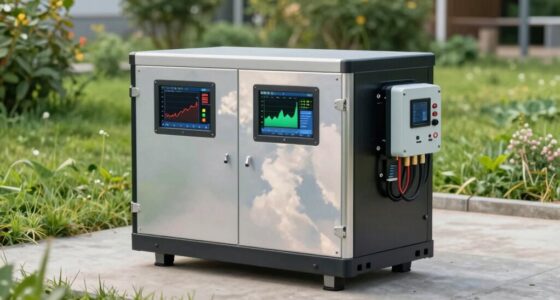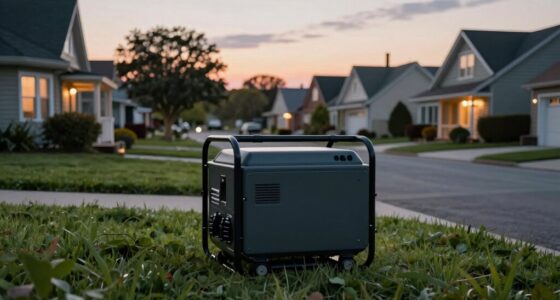

A better generator rain setup features a well-fitted, weather-resistant cover that shields your unit from moisture, dirt, and debris, while allowing proper ventilation to prevent overheating and condensation. Make sure the cover is secure but not too tight, so it can handle expansion or contraction. Elevate the generator off the ground to avoid water pooling and ensure vents stay clear. Keep everything well-maintained for peak performance. Keep exploring to discover how to set it up perfectly.

Get backup power and energy gear delivered free with Prime
- Fast, free delivery on millions of items
- Prime Video, Amazon Music and more included
- Member-only deals all year
Key Takeaways
- A snug, well-ventilated cover that fits the generator precisely to prevent moisture entry and allow airflow.
- Elevated placement on a sturdy, dry platform to avoid water pooling and flooding.
- Secure fastening to withstand wind and storms without restricting expansion or ventilation.
- Use of sound-absorbing and moisture-resistant materials to reduce noise and prevent condensation.
- Regular inspection and maintenance to ensure vents are clear and the cover remains in good condition.

Setting up your generator rain cover correctly can make all the difference in protecting your equipment from the elements. A well-designed rain setup not only shields your generator from moisture but also enhances its overall performance. When you choose the right cover, you help maintain ideal fuel efficiency, ensuring your generator runs smoothly without wasting fuel. A dry, protected environment prevents corrosion and mechanical issues that often arise from exposure to rain and humidity, ultimately extending your generator’s lifespan.
A better rain setup involves more than just draping a cover over your generator. You want a cover that fits snugly, with proper ventilation to avoid heat buildup. Overheating can cause your generator to work harder, leading to increased fuel consumption and reduced fuel efficiency. Good airflow prevents this, allowing your generator to operate at peak performance while conserving fuel. Additionally, a cover that’s breathable prevents condensation from forming inside, keeping electrical components dry and reducing the risk of short circuits or corrosion. Ensuring proper ventilation is essential for maintaining safe and efficient operation.
Noise reduction is another key aspect of an effective rain setup. While a protective cover alone can’t eliminate all noise, it can notably dampen the sound emitted by your generator, especially in quiet neighborhoods or during night-time use. Look for covers made from sound-absorbing materials or those with insulation properties. When the noise is muffled, your neighbors stay happier, and you enjoy a less disruptive experience while your generator runs. Proper placement and a snug fit also help minimize vibrations that can amplify noise, creating a quieter operation overall. Regularly inspecting your setup helps identify any issues that could compromise noise reduction or ventilation.
Setting up your rain cover properly also involves strategic positioning. Elevate your generator slightly off the ground to prevent water pooling underneath and to improve airflow. Make sure the cover is secured tightly but not overly tight, allowing for expansion and contraction as temperatures fluctuate. Keep all vents clear of debris so fresh air can circulate freely, which helps maintain fuel efficiency and keeps noise levels manageable. Regularly inspect your setup to ensure the cover remains intact and properly positioned, especially after storms or high winds. Ensuring your setup includes proper ventilation is crucial for optimal generator performance and longevity.
In essence, a better generator rain setup combines protective design with smart placement. It shields your equipment from moisture, reduces noise, and promotes efficient fuel consumption. Investing in a high-quality, well-fitting cover and ensuring proper ventilation will maximize your generator’s durability and performance, making your backup power system more reliable and less intrusive during outages.
As an affiliate, we earn on qualifying purchases.
Frequently Asked Questions
How Do I Prevent Water Damage to My Generator During Heavy Rain?
To prevent water damage during heavy rain, you should carefully consider generator placement, keeping it on higher ground or a well-ventilated, elevated platform. Use proper drainage solutions like gravel or a waterproof pad to direct water away from your generator. Additionally, cover it with a weather-resistant canopy or enclosure that still allows airflow. Regularly inspect and maintain these protective measures to make certain your generator stays dry and functional during storms.
What Materials Are Best for a Rain-Resistant Generator Cover?
Did you know that a well-designed generator cover can extend your unit’s lifespan by up to 30%? For rain-resistant protection, choose materials like heavy-duty polyester or vinyl, known for their durability against water and weather. Make sure your cover has adequate ventilation to prevent moisture buildup, which can cause rust. These materials and features work together to keep your generator dry, functional, and protected during heavy rains.
Can I Install a Rain Setup Myself or Hire a Professional?
You can definitely install a rain setup yourself if you’re comfortable with basic handyman tasks, but hiring a professional guarantees ideal generator placement and rain protection. Proper installation involves selecting a suitable location, sealing gaps, and ensuring proper drainage. A professional will have the expertise to maximize rain resistance and prevent water damage. If you’re unsure about your skills, it’s wise to hire someone for safe, effective results.
How Often Should I Inspect My Rain Protection System?
You should inspect your rain protection system regularly—monthly, after storms, and before heavy use—to guarantee safety and efficiency. Follow maintenance tips like checking for leaks, tightening fittings, and clearing debris, while observing safety precautions such as turning off power sources. Frequent inspections help catch issues early, prevent damage, and keep your setup running smoothly. Consistent care guarantees your system’s longevity and safe operation, giving you peace of mind.
Are There Any Legal Regulations for Outdoor Generator Rain Setups?
Yes, there are legal regulations for outdoor generator rain setups. You need to guarantee legal compliance with local building codes and safety standards, which often include specific requirements for weather protection. Check if permit requirements apply in your area; some locations mandate permits for outdoor setups to ensure safety and compliance. Always consult your local authorities or a professional installer to verify that your rain protection system meets all legal and safety guidelines.
As an affiliate, we earn on qualifying purchases.
Conclusion
With a better generator rain setup, you enjoy peace of mind, protection from the elements, and reliable power whenever you need it. You prevent damage, guarantee safety, and maintain productivity—all with a simple, effective solution. You keep your generator dry, your family safe, and your appliances running smoothly. In every rainstorm, you’re prepared, confident, and in control. Embrace these improvements, and turn unpredictable weather into a reliable, worry-free experience.
As an affiliate, we earn on qualifying purchases.
As an affiliate, we earn on qualifying purchases.
Halloween Picks
halloween
As an affiliate, we earn on qualifying purchases.