
TL;DR

Get backup power and energy gear delivered free with Prime
- Fast, free delivery on millions of items
- Prime Video, Amazon Music and more included
- Member-only deals all year
A heavy duty 50 amp generator cord 50 ft long can connect a compatible generator outlet to an approved inlet or transfer switch while giving you more room to place the generator outdoors. Before buying, match both connectors and the voltage, then verify the complete cord’s conductor gauge, material, length rating, and outdoor-use instructions. A longer cord can help with safe placement, but it also adds voltage drop and never replaces proper transfer equipment.
A generator can sit in the right outdoor spot and still be useless if its cord will not reach the inlet. A 50 ft generator cord gives you more placement options, but the extra distance makes the cord’s construction and ratings matter. Fifty amps is a serious electrical load, and a product title that says “heavy duty” does not answer every practical question.
This guide helps you check the details that decide whether a replacement cord fits your setup: connector shape, voltage, conductor gauge, and outdoor rating. You’ll also see how to compare similar 50 amp RV and generator cords, what a longer run changes, and which safety steps protect your home and the people working around the equipment.
The name Nilight 50 Amp 50FT Generator Extension Cord appears in product information, but its current status may vary. Treat it as a reference point, not a guarantee of availability. The goal is to find a cord with documented specifications that match your generator and approved transfer equipment, then use and store it according to the manufacturer’s instructions.
Match the cord’s exact connector models to the generator receptacle and inlet; “50 amp” alone does not identify the ends.
For a common 14-50 setup, verify 120/240 V and four conductors, then confirm the manufacturer’s full 50 ft rating and wire details.
A longer cord can create useful space for outdoor generator placement, while also increasing voltage drop as length and current rise.
Use an approved inlet and transfer switch or other approved transfer equipment; never backfeed a house through a wall outlet.
Inspect for cuts, crushing, exposed wire, heat damage, and damaged connectors before each use, and replace a damaged cord.
Know What a 50 Amp, 50 ft Cord Actually Connects
A 50 amp generator cord connects a compatible generator’s 50 amp receptacle to an approved inlet or transfer switch, carrying power through a flexible cable. The cord is a link in a system; it does not create more power or make a mismatched outlet safe. A 50 ft model adds reach, much like a longer garden hose adds reach but also gives you more length to manage.
A common connection uses a NEMA 14-50 plug at one end and a twist-locking CS-style connector at the other. Many 14-50 arrangements carry 120/240 V through four conductors: two hot wires, a neutral, and a ground. The two hot wires allow 240 V between them, while either hot and the neutral can supply 120 V circuits. But “50 amp” describes current capacity, not the exact shape or wiring of the connectors. Check the labels and manuals for both the generator and inlet before shopping.
For example, imagine your generator has a 14-50 receptacle but the inlet uses a different locking connector. A cord can be labeled 50 A and still fail to fit. Even if an adapter seems to bridge the gap, compatibility and circuit protection need to be addressed correctly; a physical connection does not establish that the wiring or ratings match. Never force connectors or improvise a power path.
The phrase amp generator cord can appear in listings alongside RV extension cords. That overlap makes sense: some RV cords use the same connector families, but an RV cord is not automatically right for a home standby connection. The intended use and protection of the receiving circuit matter just as much as the ends. Match both ends, voltage, and intended use. The cord should connect a generator to an inlet box or transfer switch that a qualified professional installed as required by local rules.
50 ft heavy duty generator extension cord
As an affiliate, we earn on qualifying purchases.
As an affiliate, we earn on qualifying purchases.
Check These Five Specs Before You Buy a Replacement
A replacement cord is a good match only when its connectors, voltage, current rating, wire construction, and length suit the equipment you own. Start with the generator manual and inlet label, then compare those details with the cord manufacturer’s documentation. Each specification answers a different question: connector type establishes whether the ends mate, voltage and conductor count establish whether the circuit arrangement is supported, and the cord rating establishes whether that cable is intended to carry the load over its full length. A product photo may show the right shape, but the printed model number and specifications give you a firmer answer.
- Match both connector ends. Record the generator receptacle and inlet connector model. A 14-50P plug and an SS2-50R locking connector are common, but other arrangements exist. Matching both ends avoids relying on an adapter whose compatibility and protection you have not verified.
- Confirm voltage and wiring. Check whether your system needs 125/250 V service and four conductors. Don’t infer wiring from a “50 A” badge; a different conductor arrangement can fail to supply the circuits your transfer equipment is designed to serve.
- Read the cord’s complete rating. Look for the manufacturer’s amp and voltage ratings at the full 50 ft length, plus outdoor-use and temperature information. A rating for a shorter cable or a different product variant may not apply to the one you are buying.
- Verify conductor material and gauge. Listings may state copper and a wire gauge, or leave those details unclear. Conductor size and material affect resistance and heating under load, so ask the manufacturer or choose a clearly documented cord.
- Inspect jacket and connector details. Check for weather resistance, abrasion protection, strain relief, and instructions for protecting connections. These details affect how well the cord handles outdoor routing and repeated use, but they do not compensate for a missing electrical rating.
Say your old cord reads 14-50P to SS2-50R, 125/250 V, four conductors. A replacement listing that only says “50 amp RV cord” leaves key questions unanswered. The key facts for a sound comparison are the specs above, not a familiar brand name or a reassuring product title. Keep a photo of the generator outlet label and inlet label on your phone while you compare listings; it makes it easier to spot a mismatch before the box arrives.
As an affiliate, we earn on qualifying purchases.
Understand What 50 Feet Changes in Daily Use
A 50 ft cord gives you more distance between a generator and the building, which can help you place the machine outdoors and away from doors and windows. That extra reach can matter when the inlet sits on the far side of a house or a driveway separates the generator pad from the wall. But every added foot of conductor also adds electrical resistance, so voltage drop rises with longer runs and heavier current. If voltage at a connected appliance falls too far, a motor may struggle to start or equipment may not operate as expected; the actual result depends on the load and the cord.
You can think of voltage drop like pressure loss in a long, narrow hose. It does not mean every 50 ft cord will cause a problem, but it explains why wire gauge and construction matter, particularly when a load draws heavily. Six AWG copper is common for 50 amp cords, yet the right choice depends on the whole cord’s design, insulation rating, and published use limits. A manufacturer’s stated rating for the complete 50 ft cable is more useful than a gauge claim in isolation because connectors, insulation, and the intended conditions are also part of the finished product.
Picture a winter outage: your generator runs a few selected household circuits, and a refrigerator compressor starts while a well pump is running. Those loads can demand more current than a quiet, steady lamp. A brief startup surge can make a marginal long run more noticeable, even when the average load seems modest. The cord needs to be suitable for the intended load and generator output, and an electrician can assess a demanding or uncertain setup.
Choose only the length you need to put the generator in a safe outdoor location. A shorter cord may reduce voltage drop and leave less cable to coil, while a 50 ft run may solve a real placement problem. Follow the generator manual for location and ventilation, and keep exhaust away from building openings. More distance helps placement; it does not make indoor or enclosed operation safe.
outdoor generator power cord 50 ft
As an affiliate, we earn on qualifying purchases.
As an affiliate, we earn on qualifying purchases.
Compare Similar 50 Amp, 50 ft Cord Options by Their Specs
Several cords can share a 50 A rating and 50 ft length while differing in connector details and how fully their listings describe the wire. Compare each model with your equipment labels and the manufacturer’s full documentation. The table below summarizes the supplied product details; an unspecified field means the information was not provided here, not that the cord lacks that feature.
| Option | Length and voltage | Connector details | Other stated specs |
|---|---|---|---|
| TUFFIOM 50-Amp RV Extension Cord | 50 ft; 125/250 V | 14-50P male to SS2-50R female | Four conductors; described as waterproof |
| CircleCord 50 Amp, 50-Foot RV and Generator Cord | 50 ft; 250 V | 14-50P male; SS2-50R twist-locking female | 12,500 W maximum stated at 250 V; water resistant |
| Deeklify 50 ft 50 Amp Generator Cord | 50 ft; 250 V | 14-50P to SS2-50R; also listed as CS6375 | Four conductors stated; waterproof |
| Kohree 50-Amp RV Power Extension Cord | 50 ft; 125/250 V | Not specified in the supplied details | Water resistant; conductor details not specified |
| Nilight 50 Amp 50FT Generator Extension Cord | 50 ft; 125/250 V | 14-50P to SS2-50R/CS6364 | Three 6 AWG and one 8 AWG copper conductors; 16.78 kg stated |
The Nilight specification lists 12,500 W at 250 V and 6,250 W at 125 V, alongside a four-conductor description. Those wattage figures follow the simple voltage-times-current calculation at 50 A; they do not show that every generator can supply that output continuously. A similar rating on another cord does not make the products interchangeable; verify the exact connector and complete cord rating. Product status can change, so treat the Nilight listing as a reference rather than a promise that you can buy it today.
For a practical comparison, suppose your inlet needs SS2-50R and your generator has 14-50. TUFFIOM, CircleCord, or Deeklify may appear to match those ends in the supplied details, while Kohree’s connector is not stated here. That narrows the options, but it does not settle whether the cord is suitable: check the exact model’s wiring, full-length rating, and outdoor instructions. Compare published specs field by field, especially where a listing says “waterproof” or “heavy duty” without explaining conditions or wire construction.
generator transfer switch inlet cord
As an affiliate, we earn on qualifying purchases.
As an affiliate, we earn on qualifying purchases.
Treat “Heavy Duty” as a Claim to Verify
“Heavy duty” is a marketing phrase, not a complete electrical specification. A useful listing should tell you the cord’s amp and voltage ratings, conductor material and gauge, connector models, approved use, and any temperature limits. If those details are missing, you cannot judge the cord from its title alone: the phrase may describe a thick-looking jacket or rugged connector housing without establishing how the conductor performs at the stated length and load.
Product pages vary in how clearly they describe wire construction. One might state four copper conductors and list each gauge; another may show a thick black jacket but omit conductor material. A thick jacket can help resist abrasion, but it does not prove that the conductors inside are suitable for the full length and load. Jacket toughness and electrical capacity address different stresses, so neither should be used as a substitute for the other. Ask the seller or manufacturer for documentation when a key detail is missing.
For example, two cords can look nearly identical in a photo, with molded ends and a dark, flexible-looking jacket. One listing may specify its full 50 ft rating and outdoor use; the other may only say “50 A extension cord.” The more complete listing reduces uncertainty about whether the cable suits the intended run, though you still need to compare it with your equipment labels. A clear rating beats a broad label, especially when your cord will carry power to household circuits during an outage.
Check weather language carefully, too. “Water resistant” and “waterproof” are not interchangeable promises for every condition, and even outdoor-rated equipment should not sit in standing water. A rating describes limits and test conditions; it is not a promise that an exposed connection will remain safe in any storm. Read instructions for the cable and connectors, and protect connections as directed. If you cannot verify a cord’s ratings or intended use, pause the purchase and get the specification from the manufacturer. That small check can prevent a costly mismatch when the power goes out and you need the equipment to work.
Connect the Generator Through Approved Transfer Equipment
A generator should feed home circuits through a properly installed inlet and approved transfer equipment. Do not plug a generator into a regular household wall outlet to energize wiring. That practice can send power back onto utility lines and create a serious shock or fire hazard for utility workers, neighbors, and people in your home.
A safe setup begins with equipment selected for the generator and the circuits it will serve. A licensed electrician can install or inspect the inlet and transfer switch, confirm compatibility, and address local permit and code requirements. That matters even if you already own a cord: the cord cannot correct an improperly wired inlet or make the wrong connector safe.
Imagine a storm knocks out power and you connect a 50 amp cord to an inlet that was designed for a different configuration. If you discover the problem in the dark, with rain hitting the driveway, the temptation to improvise can be strong. Avoid that situation by testing fit and reviewing the setup ahead of time with the generator off, then following the manuals when you operate it.
Never use a wall outlet as a generator inlet. Have a licensed electrician install suitable transfer equipment, and follow the generator and cord manuals every time you connect them.
Electrical installation and repair call for appropriate training, permits, and safeguards. If any part of the circuit is uncertain, keep the generator off and ask a licensed professional. During any permitted work, the circuit must be de-energized and verified, and workers need suitable PPE. The simple user task is checking labeled connectors and operating an approved setup as instructed; wiring work belongs to a qualified professional.
Use and Store the Cord So It Stays Ready
A cord stays safer and more dependable when you inspect it before use, route it carefully, and store it dry. Before connecting anything, look along the full length for cuts, crushed sections, exposed wire, heat damage, or a jacket that has split. Check the plug blades and locking connector for looseness, bending, corrosion, or debris. If you find damage, stop using the cord and replace it; tape does not restore the cable’s original electrical rating.
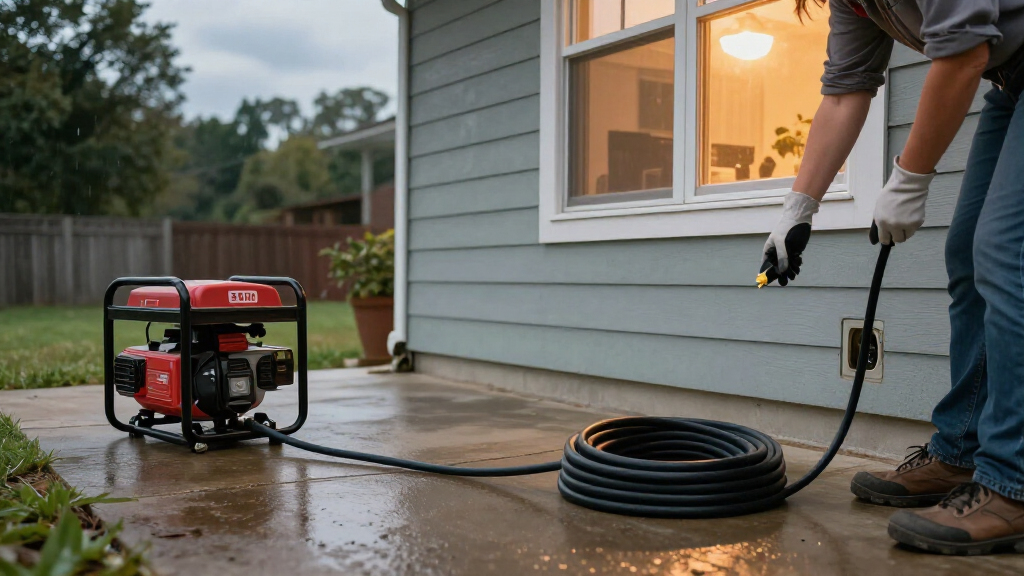
Route the cable away from hot exhaust parts, sharp corners, standing water, and vehicle tires. Don’t run it where a car can crush it or where people will trip over it. If you need to cross a walkway, use a suitable protective method described by the cord maker, and keep the connector ends protected as instructed. A puddle can turn a tidy-looking connection area into a muddy, wet patch in minutes.
Suppose the cord has been stored in a cold garage all winter. Uncoil it carefully and check for stiff, cracked insulation before putting it under load; follow the manufacturer’s temperature and handling instructions. Some products require you to uncoil the cord during use. A neatly coiled cable can trap heat under some conditions, so do not assume that leaving it bundled is safe.
After use, disconnect it as directed, let it dry if it got damp, and store it out of direct sun and away from chemicals, sharp tools, and pests. Keep the manual with the cord or save a copy on your phone so the storage limits and cleaning instructions are easy to find. A quick inspection takes less time than untangling a damaged cable during an outage.
Choose the Shortest Cord That Still Lets You Place the Generator Safely
The best cord length is the shortest length that reaches the inlet while letting you follow safe generator placement guidance. A 50 ft cord can help when the inlet sits far from a suitable outdoor operating location. A shorter cord can reduce cable to handle and may reduce voltage drop, but a short reach should never push you to put the generator close to a door, window, or other opening.
Measure the route the cord will actually follow, not just the straight line between the generator and wall. Allow room to route around corners without stretching the cable or bending the ends sharply. For example, a 35 ft straight-line gap might require more cable once you route around a deck, keep clear of a driveway, and avoid a downspout. A 50 ft cord may fit that route better, if its rating suits the setup.
Every cord has some voltage drop. It increases with current and length, and decreases with larger conductors. That makes a heavy load on a long run a reason to check the complete cord rating and ask an electrician when needed. A bigger generator does not automatically make a particular cord appropriate; the generator’s actual output, connected load, and cord specifications all matter.
Placement comes first. Operate the generator outside and follow its manual and local safety guidance to keep exhaust away from the home and openings. Carbon monoxide is odorless, so you cannot use smell as a safety check. A longer cord can help you put distance between the engine and the building, but it never makes indoor, garage, or enclosed operation safe.
Know When a 50 Amp Cord Can Serve a Different Rated Setup
A 50 amp cord does not increase a generator’s capacity, and it does not automatically fit a 30 amp inlet or transfer switch. The cord is one component; the generator, plug, inlet, breaker, transfer equipment, and connected loads all have ratings and connector requirements. The system must be compatible and used within the limits of its lowest-rated parts. In practice, that means a higher cord rating is only a capacity ceiling for the cord; the generator and protective equipment still determine what the system can safely supply.
For instance, a 30 amp generator may have a different receptacle from a 50 amp cord’s plug. Even if an adapter is sold for some combinations, you need to verify the connector arrangement, circuit protection, and manufacturer instructions for every component. An adapter changes how parts physically connect; it does not upgrade a generator outlet, breaker, or wire. A hardware-store adapter that physically fits may not establish that a particular generator and inlet combination is safe or approved.
Likewise, a 50 amp cord should not be connected to a lower-rated inlet just because the cord can carry more current. The protective equipment and wiring still need to match the installation. Ask a licensed electrician to evaluate an adapter or mixed-rating setup, especially if you are connecting to household circuits. Physical fit is not proof of electrical compatibility.
Consider a cabin owner with a 30 amp portable generator and a 50 amp inlet installed for a larger generator. The safest next step is to check the equipment manuals and have a qualified electrician determine whether an approved configuration exists. The cord itself will not bridge differences in voltage, wiring, or overcurrent protection. Match ratings as a system, and do not energize an uncertain connection during an emergency.
Frequently Asked Questions
What plug does a 50 amp generator cord use?
Many use a NEMA 14-50 plug, but connector combinations vary. Read the generator receptacle and inlet labels or manuals, then match both ends of the cord before buying.
Is 6 AWG enough for a 50 ft, 50 amp cord?
Six AWG copper is common, but gauge alone does not establish that a cord is suitable. Check the manufacturer’s rating for the complete 50 ft cord, including its construction and intended use. Ask a licensed electrician if the load or installation is uncertain.
Can I plug a 50 amp cord into a regular household outlet?
No. A generator must connect to home circuits through a suitable inlet and approved transfer equipment. Never use a wall outlet to feed household wiring from a generator; that can energize utility lines and create a serious hazard.
Will a 50 ft cord cause voltage drop?
Every cord has some voltage drop, which rises with length and current and falls with larger conductors. Check the cord’s full-length specifications, especially for demanding loads, and have an electrician assess an uncertain setup.
Can I leave a generator cord outside in the rain?
Use only equipment rated for the expected conditions, and follow the manufacturer’s instructions for protecting the connections. Outdoor use does not mean submerged use; keep plugs and connectors out of standing or pooled water.
What should I inspect before each use?
Look for cuts, crushed sections, exposed conductors, heat damage, cracked insulation, and bent or loose connector parts. If you find damage, stop using the cord and replace it; tape cannot restore its electrical rating.
Conclusion
Choose a 50 ft cord only after you confirm the connector pair, voltage, conductor details, and full-length rating against your generator and transfer equipment. Ask a licensed electrician to handle uncertain connections or installation, and follow the manuals for outdoor placement and cord use.
When the lights go out, the right cord should give you room to run the generator outdoors and connect it through the right inlet. Check the labels now, while the house is bright.
Fall Picks
fall essentials
As an affiliate, we earn on qualifying purchases.