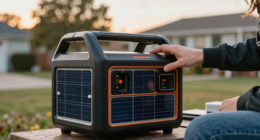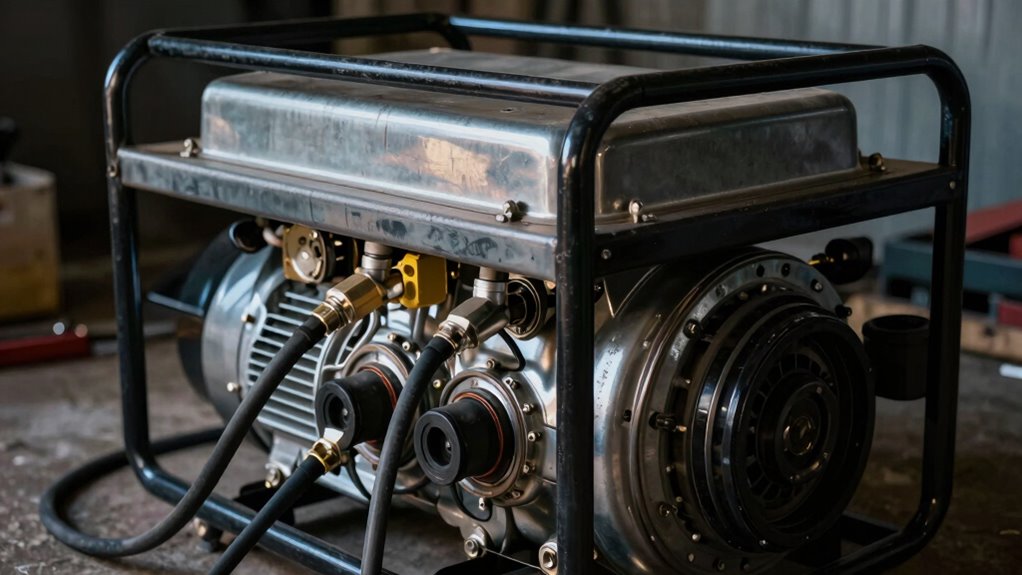

When your generator stalls under load, start by checking if you’re exceeding its rated capacity, as overloads cause shutdowns. Next, make certain proper ventilation to prevent overheating, and inspect the fuel system for blockages or old fuel that can cause power loss. Review your spark plug and ignition system for faults, and verify the governor’s settings to maintain stable speed. For more details on troubleshooting steps, you’ll discover how these issues can be fixed effectively.
Key Takeaways
- Overloading the generator beyond its rated capacity causes stalls; always check load demands against maximum ratings.
- Fuel system issues like contaminated fuel, clogged filters, or improper mixture can impair engine performance under load.
- Mechanical faults such as worn spark plugs or overheating due to poor ventilation lead to stalls during high demand.
- Ignition problems, including weak spark or faulty wiring, disrupt engine firing when under load.
- Governor misadjustment or excessive droop can prevent stable speed control, causing the generator to stall.

Chazcool Circuit Protection Overload, AC 125/250V Circuit Breaker, 20 Amp Breaker Generator Thermal Circuit Protector
Generator Breaker Operating Voltage: 125/250VAC; Power Rating: 20A
As an affiliate, we earn on qualifying purchases.
As an affiliate, we earn on qualifying purchases.
Checking the Load Capacity and Overload Conditions
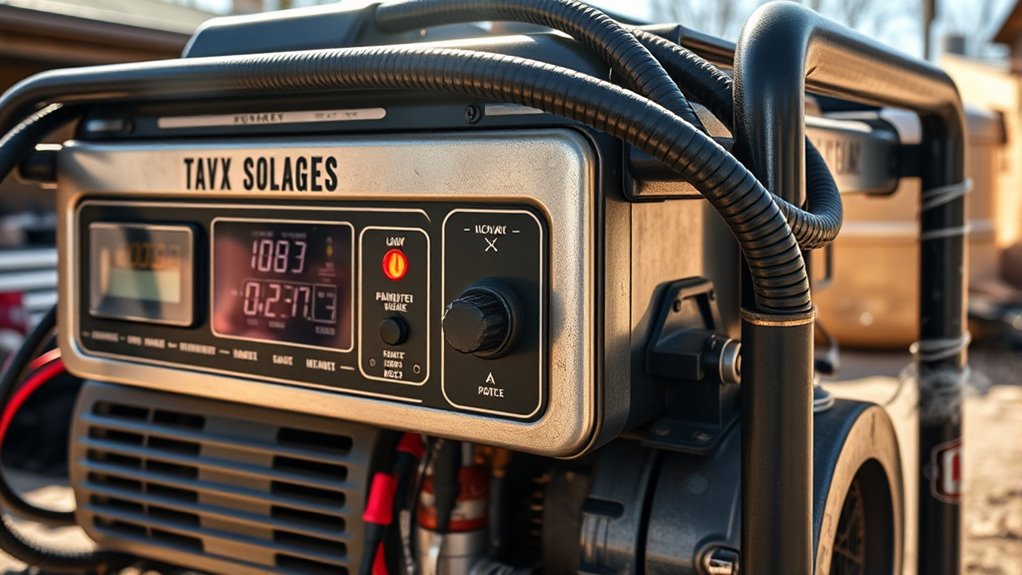
To guarantee your generator operates reliably under load, start by verifying its specified load capacity. Check the manufacturer’s label or user manual to find the maximum wattage or amperage rating. Avoid exceeding this limit, as doing so can trigger automatic shutdowns to protect the engine and electrical components. Heavy appliances like air conditioners or water heaters often draw more power, causing the generator to bog down or shut off if the load is too high. Light bulbs or smaller devices usually handle normal loads without issue. Be mindful of surge loads from appliances like refrigerators or coffee makers, which can cause momentary bogging. Ensuring your load stays within the generator’s capacity prevents overload conditions and keeps your power supply stable and reliable. Additionally, understanding the load capacity of your generator helps in selecting compatible appliances and prevents potential damage. Knowing how to manage overloads effectively can further safeguard your equipment and maintain steady power delivery. Regularly monitoring your system’s performance and preventing overloads is key to avoiding stalls and ensuring continuous operation. Being aware of the generator’s protective features can also help in troubleshooting overload-related issues quickly. Recognizing the importance of proper maintenance can extend your generator’s lifespan and improve its load-handling capabilities.
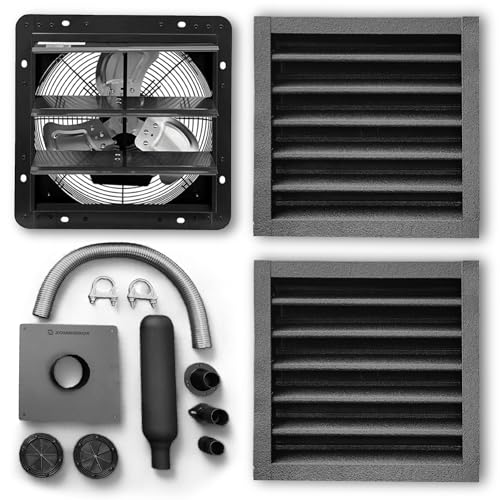
DIY Generator Shed Ventilation & Exhaust Kit With Cooling System. Includes High-Flow Shutter Fan, Flexible Exhaust Extension, Weatherproof Louvered Vents, And Cable Grommets For Outdoor Enclosures
COMPLETE CLIMATE CONTROL SYSTEM: The ultimate all-in-one solution for building or upgrading your DIY generator enclosure. This comprehensive…
As an affiliate, we earn on qualifying purchases.
As an affiliate, we earn on qualifying purchases.
Inspecting for Overheating and Ventilation Issues
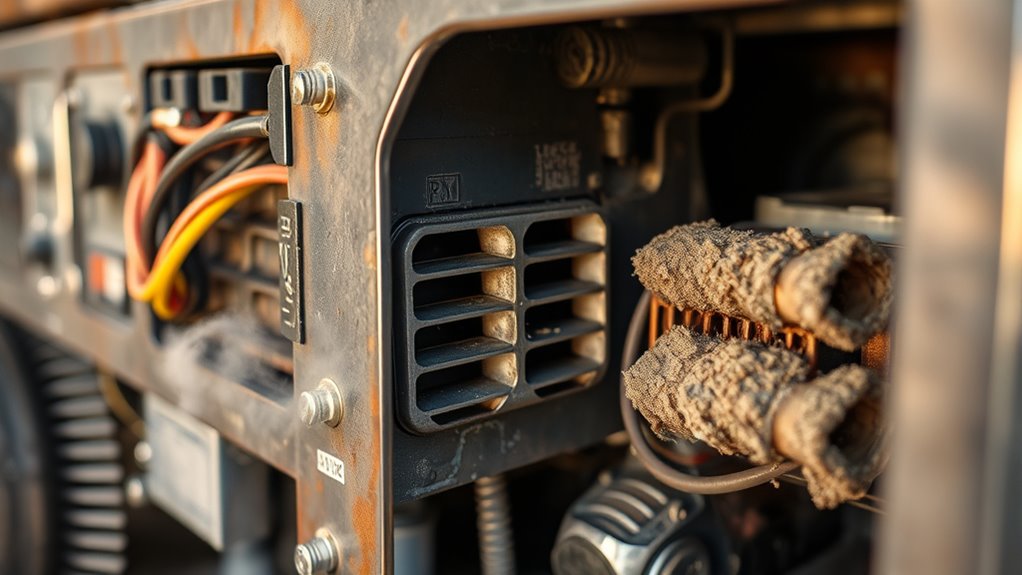
Overheating is a common cause of generator stalls under load, often stemming from inadequate ventilation. When your generator’s cooling system can’t dissipate heat effectively, it risks overheating and shutting down. To troubleshoot, check these areas:
Overheating due to poor ventilation often causes generator stalls under load.
- Ensure vents and cooling fins aren’t blocked by debris or dust.
- Confirm airflow around the generator is unobstructed.
- Inspect the fan and cooling system for damage or malfunction.
- Avoid operating in high-temperature environments without proper cooling measures.
- Proper ventilation is essential to prevent heat buildup and ensure the generator operates smoothly.
If the generator feels hot to the touch or shuts down unexpectedly, overheating is likely the culprit. Improving ventilation, cleaning cooling components, or relocating the generator to a cooler area can help prevent stalls caused by heat buildup.

394358 AM38708 298090 Lawn Mower 1/4" Inline Gas Fuel Filter for B & S BS 394358S 5098K 7-6572 1/4" Inline Gas 75 Micron Assembly (2/Pack)
(2/Pack)298090 394358 Lawn Mower 1/4" Inline Gas Fuel Filter
As an affiliate, we earn on qualifying purchases.
As an affiliate, we earn on qualifying purchases.
Examining Fuel Supply and Delivery Problems
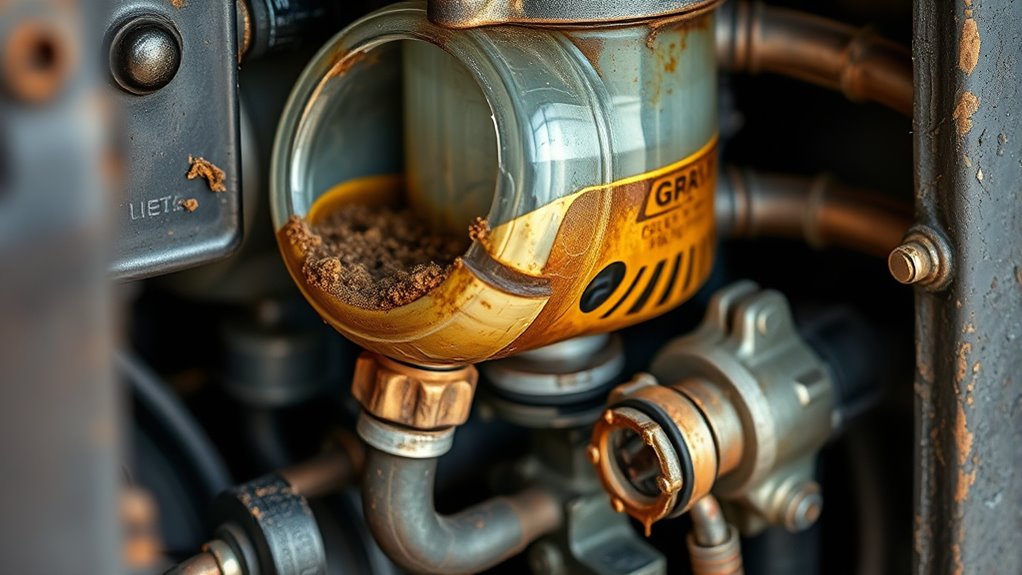
Is your generator stalling under load despite appearing to run fine at idle? The issue might be with your fuel supply or delivery system. Check the fuel level in the tank—low fuel prevents the engine from maintaining power under load. If the tank is full, inspect the fuel lines for blockages, leaks, or cracks that could disrupt flow. Old or contaminated fuel can cause clogging and poor combustion, so consider draining and replacing it. Also, verify that the fuel filter isn’t clogged; a dirty filter restricts flow. If your generator needs to choke to start or runs rough under load, suspect carburetor issues. Cleaning or replacing the carburetor often resolves fuel delivery problems and restores stable operation under load. Proper fuel delivery is essential for consistent generator performance under varying loads. Regular maintenance of fuel systems can prevent many of these issues and ensure reliable operation. Additionally, ensuring that air filters are clean can improve combustion efficiency and help prevent fuel-related issues. Maintaining clean fuel lines is crucial to prevent blockages that impair fuel flow and cause performance issues.

NGK 6578 Spark Plugs (BPR4ES) – Pack of 2, Copper
Trivalent metal plating provides superior anti-corrosion and anti-seizing properties
As an affiliate, we earn on qualifying purchases.
As an affiliate, we earn on qualifying purchases.
Diagnosing Mechanical Faults and Component Glitches
Mechanical faults and component glitches are common causes of generator stalls under load, often stemming from worn or faulty parts that can’t handle increased demands. To diagnose these issues, start by inspecting spark plugs for fouling or wear, which can cause misfires under load. Check sensors and wiring connections for loose or damaged components that may glitch when stressed. Examine the governor mechanism—if it’s sticking or misadjusted, it can cause engine speed droop or instability. Proper maintenance procedures, including regular inspections, are essential to prevent such faults from occurring in the first place. Additionally, ensuring that electrical connections are secure can help prevent intermittent issues during operation. Ensuring that cooling systems are functioning properly can also prevent overheating-related stalls. Regularly inspecting the fuel delivery system can identify clogs or leaks that might contribute to stalls under load. Finally, evaluate mechanical linkages like throttle and idle screws to ensure they’re properly set and functioning smoothly.
Assessing Governor Settings and Responsiveness
Evaluating governor settings and responsiveness is essential for ensuring your generator maintains stable engine speed under varying loads. First, check the governor’s mechanical linkages and springs for proper tension and alignment. If the droop exceeds 4-5 Hz from no load to full load, the governor isn’t responding correctly, causing speed fluctuations. Adjust the spring tension or idle screw to improve responsiveness; tightening the spring inward increases sensitivity but risks oscillations. If the governor fails to increase RPMs under load, it could be set too loose or have worn components. Test the responsiveness by applying a small load and observing if the engine speed adjusts quickly and smoothly. Properly calibrated governor settings help keep voltage stable and prevent stalls caused by engine speed fluctuations during load changes. Understanding the governor’s response mechanism is crucial for effective troubleshooting and maintaining optimal generator performance. Regular inspection and maintenance of the governor system can prevent many common issues related to load response. Additionally, ensuring that the governor’s control components are free of dirt and corrosion can significantly improve its responsiveness. Incorporating advanced control mechanisms can also enhance overall governor performance and stability.
Evaluating Carburetor Performance and Fuel Mixture
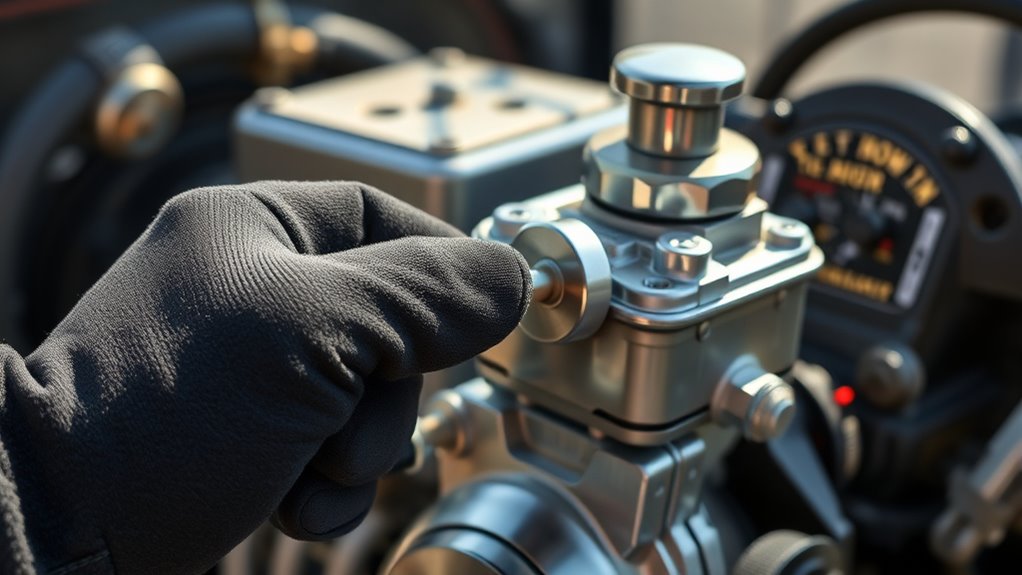
To prevent your generator from stalling under load, you need to focus on proper carburetor performance and fuel mixture balance. Adjusting the carburetor correctly guarantees the engine receives the right fuel-to-air ratio, improving stability. Start with simple tuning tips and check the fuel mixture to keep your generator running smoothly when it counts. Additionally, ensuring your generator has the appropriate fuel mixture can help optimize performance and prevent stalling issues. Proper maintenance of the carburetor and regular cleaning can further enhance fuel delivery and combustion efficiency, contributing to overall engine reliability. Regularly inspecting and replacing filters ensures clean fuel flow and reduces the risk of clogs that can cause stalls. Incorporating visual and auditory cues during adjustments can assist in achieving more precise tuning results.
Fuel Mixture Balance
Have you checked whether your carburetor’s fuel mixture is properly balanced? An improper mixture can cause your generator to stall under load. If the mixture is too rich, excess fuel floods the engine, leading to rough running or stalling. Conversely, a lean mixture won’t supply enough fuel, causing hesitation or shutdown. To diagnose, consider these points:
- Ensure the carburetor’s mixture screws are set according to the manufacturer’s specs.
- Look for signs of dirt or varnish buildup that could affect fuel flow.
- Check for a clogged or dirty air filter, which can disrupt the fuel-air ratio.
- Confirm that the choke is functioning correctly; sticking chokes can cause overly rich or lean conditions.
- Understanding fuel mixtures can help you better diagnose and prevent these issues.
Proper mixture balance is key to smooth operation when your generator is under load.
Carburetor Adjustment Tips
Proper carburetor adjustment is essential for guaranteeing your generator runs smoothly under load. First, check the idle speed and set it according to your manufacturer’s instructions, usually around 1200-1500 RPM. Next, adjust the mixture screw to achieve the highest, steady engine RPM; turn it slowly clockwise until it starts to drop, then counterclockwise until it peaks. Repeat this process for a fine-tuned balance. If your generator stalls under load, consider cleaning or replacing the carburetor, as dirt or clogging can disrupt fuel flow. Ensure the choke is functioning properly, especially when starting or running under heavy loads. Regular maintenance and precise adjustment help prevent bogging and improve overall load performance.
Monitoring Voltage and Frequency Stability
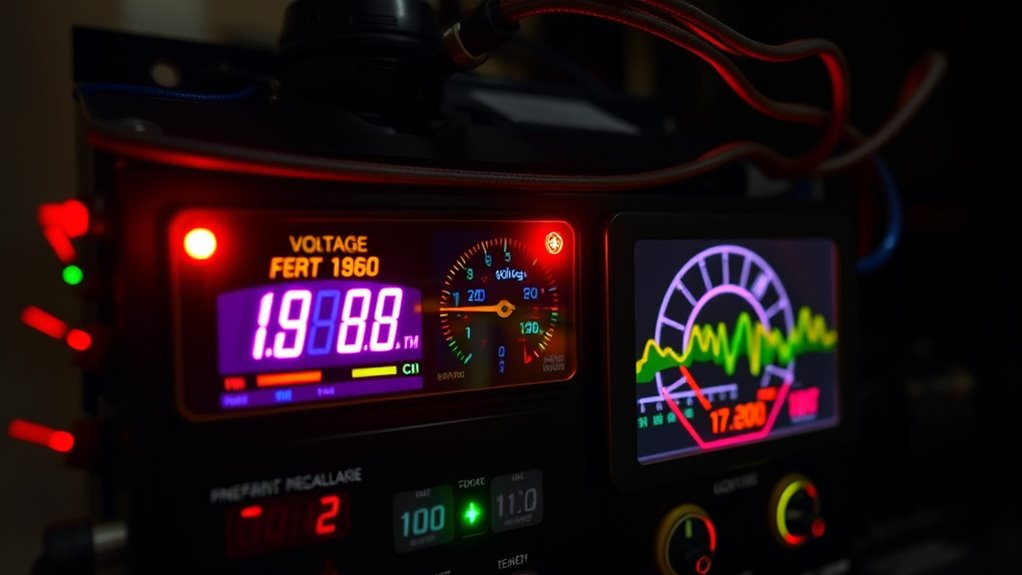
Monitoring voltage and frequency stability is essential for ensuring your generator operates reliably under load. Fluctuations can signal underlying issues, causing stalls or damage. To keep things steady, regularly check your voltage with a multimeter to identify drops or surges. Observe the frequency meter; a stable 60Hz (or 50Hz) indicates proper operation. Look out for sudden dips when starting appliances, which suggest overload or fuel problems. Keep an eye on load patterns—large, sudden surges can affect stability. Adjust governor settings if you notice inconsistent RPMs. Consider these tips:
Regularly check voltage and frequency to ensure your generator runs smoothly under load.
- Use a multimeter to track voltage and frequency
- Monitor for sudden dips during load changes
- Check for consistent RPMs and avoid overloads
- Adjust governor or fueling to stabilize performance
Identifying Signs of Spark and Ignition Problems

Spark and ignition problems often manifest through difficulty starting or inconsistent engine performance under load. If your generator struggles to start or stalls shortly after running, check the spark plug. A fouled or worn spark plug produces weak or no sparks, causing misfires under load. Look for signs like black carbon deposits, corrosion, or a worn electrode. Also, test the spark by removing the plug and grounding it against the engine while cranking; a bright, blue spark indicates good ignition. If the spark is weak or absent, inspect the ignition coil, wiring, and switch. Ignition issues can cause hesitation, rough running, or abrupt shutdowns when a load is applied. Addressing these problems promptly guarantees reliable startup and consistent engine performance under load conditions.
Testing for Excessive Droop and Speed Control Issues

To diagnose speed control issues, start by measuring how much the frequency drops under load. If you see excessive droop, try adjusting the governor spring to improve stability. Watch for signs of oscillation, which can indicate your governor settings need fine-tuning for better load response.
Measuring Frequency Drop
How can you accurately measure frequency drop when testing a generator’s load response? First, connect a reliable frequency meter or multimeter with frequency measurement capability across the generator’s output. Then, run the generator at no load and note the baseline frequency—usually around 60 Hz. Apply a known load gradually, watching for real-time frequency changes. Keep these points in mind:
- Ensure your meter is calibrated for accurate readings.
- Record the frequency before and during load application.
- Watch for a drop exceeding the normal 4-5 Hz, which indicates excessive droop.
- Note how quickly the frequency recovers after load removal to assess governor responsiveness.
This method helps you identify if your generator’s speed control system is functioning properly or needs adjustment.
Adjusting Governor Spring
Adjusting the governor spring is a key step in managing excessive droop and improving a generator’s speed control under load. First, locate the governor spring and check its tension. If your generator experiences significant frequency drops or unstable speed, you can tighten the spring slightly to increase engine responsiveness. Be cautious—over-tightening can cause oscillations or overspeeding. Conversely, if the engine bogs under load with minimal response, loosen the spring to reduce sensitivity. Make small adjustments incrementally, then run the generator under load to observe changes. Proper spring tension helps maintain stable RPMs with minimal droop. Remember, adjusting the governor spring affects how quickly the engine responds, so fine-tune carefully to balance speed stability and load handling.
Recognizing Oscillation Signs
Recognizing oscillation signs is essential for diagnosing speed control issues in your generator. Excessive droop or sudden RPM fluctuations indicate potential problems with the governor or load response. Look for these signs:
- Large Hz drops (e.g., from 60 to 57 Hz) when applying a small load
- RPMs that surge or fluctuate erratically during load changes
- Inconsistent frequency recovery after load is removed
- Rapid oscillations or “hunting” around the target RPM
If you notice these patterns, it suggests your governor isn’t maintaining stable speed under load. This can be caused by mechanical issues, improper spring tension, or sensitivity settings. Addressing these signs early helps prevent generator stalls and ensures reliable power delivery.
Implementing Preventive Maintenance and Regular Checks
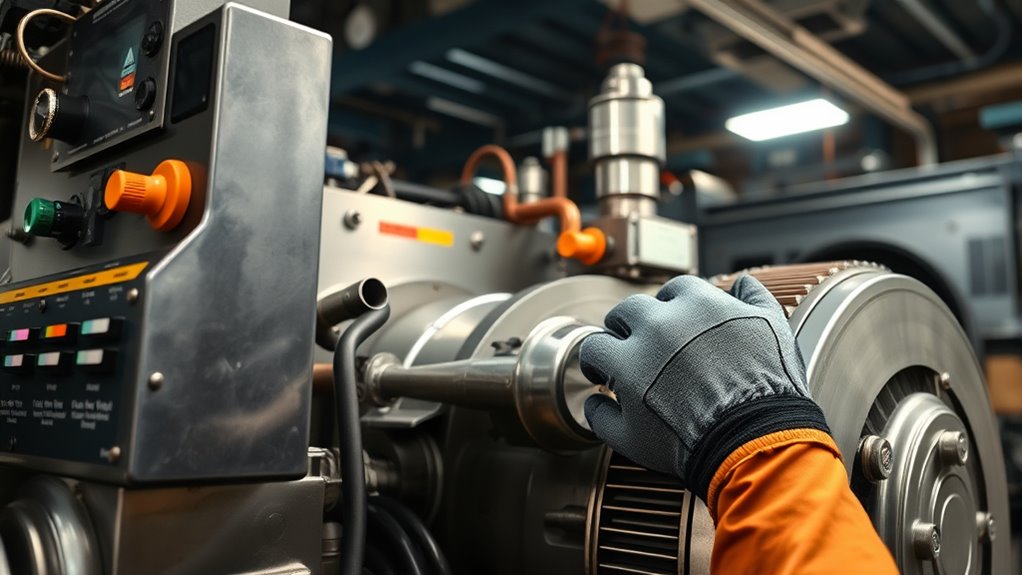
Implementing preventive maintenance and regular checks is essential to keep generators running reliably under load. You must routinely inspect crucial components to catch issues early before they cause stalls. Regularly check fuel quality, ensuring no old or contaminated gas remains. Clean and replace spark plugs, filters, and carburetors as needed. Monitor cooling systems to prevent overheating, especially during heavy loads. Keep an eye on mechanical parts, adjusting governor springs and idle screws for peak response. Use this table to understand the emotional impact of neglect:
| Neglect Consequence | Emotional Impact |
|---|---|
| Sudden shutdowns | Frustration and stress |
| Unexpected stalls | Anxiety about power reliability |
| Costly repairs | Fear of unexpected expenses |
Stay proactive to maintain peace of mind and dependable power.
Frequently Asked Questions
How Can I Prevent My Generator From Overloading and Shutting Down Unexpectedly?
To prevent your generator from overloading and shutting down unexpectedly, always match the load to its capacity. Avoid plugging in heavy appliances simultaneously, and distribute electrical devices evenly. Regularly check fuel levels, guarantee proper ventilation, and maintain mechanical parts like spark plugs and the carburetor. Adjust the governor to stabilize engine speed, and use a choke for heavy loads. Proper maintenance and load management keep your generator running smoothly.
What Are Signs of Poor Ventilation Causing Generator Overheating?
You’ll notice your generator is overheating if it feels unusually hot to touch or emits a burning smell. It may shut down unexpectedly or run sluggishly. Signs also include reduced power output, engine bogging down during load, or fans not operating properly. Poor ventilation causes heat buildup, so make certain the generator is in a well-ventilated area, free from obstructions, and that cooling components like fans are functioning correctly.
How Do I Identify Fuel Delivery Issues Affecting Generator Performance?
You can identify fuel delivery issues by checking the fuel level in the tank—low levels can cause power drops. Notice if the engine struggles to start or stalls under load, even after adding fresh fuel. If it needs a choke to run smoothly or if RPMs drop during heavy appliances, suspect carburetor problems or inadequate fuel flow. Regularly inspect fuel lines and replace old fuel to maintain consistent performance.
What Mechanical Components Commonly Cause Generator Bogging Under Load?
Imagine your generator stalls when powering a heavy appliance. Common mechanical causes include worn spark plugs that misfire under load, reducing combustion efficiency. Faulty sensors or a malfunctioning governor can also cause irregular engine speed and bogging. Additionally, a loose or misadjusted idle screw affects RPM stability. Regularly inspecting and maintaining these components guarantees smoother operation under load, preventing stalls and extending your generator’s lifespan.
How Can I Adjust the Governor to Improve Load Response Stability?
You can improve load response stability by adjusting the governor. Move the governor spring inward to increase sensitivity, which helps the engine respond more quickly to load changes. Be cautious—over-adjusting may cause oscillations. Fine-tune the idle screw and spring tension gradually while monitoring RPMs. If needed, replace worn components or consider installing a new governor spring to achieve a smoother, more stable response under load.
Conclusion
By following these troubleshooting steps, you’ll keep your generator humming smoothly, like a well-tuned engine purring on a quiet morning. Picture each component working in harmony, preventing stalls and ensuring reliable power when you need it most. Regular checks are your shield against unexpected hiccups, turning troubleshooting into a simple dance rather than a stressful chore. With a little care, your generator will stay steady, ready to power through whatever comes your way.