
To transport your generator without fuel smells, first drain the tank completely, run it until minimal fuel remains, then remove any leftover fuel and open the vent cap daily, especially in hot weather. Securely strap the generator upright with durable straps, add padding to absorb shocks, and wrap it tightly in waterproof barriers like shrink wrap or sealed covers. Guarantee good vehicle ventilation and store fuel cans separately. For more detailed tips, keep exploring this guide.

Get backup power and energy gear delivered free with Prime
- Fast, free delivery on millions of items
- Prime Video, Amazon Music and more included
- Member-only deals all year
Key Takeaways
- Drain the generator’s fuel tank completely and run it until it stops to burn residual fuel before transport.
- Secure the generator tightly with straps and place foam padding to prevent shifting and absorb shocks during transit.
- Wrap the generator in waterproof materials and seal vents and caps with waterproof tape or shrink wrap to contain fumes and odors.
- Store fuel in separate, upright, secured containers outside the vehicle, not inside, to prevent leaks and fumes.
- Keep vehicle windows slightly open and ensure good ventilation to prevent fume buildup and odor during transport.
As an affiliate, we earn on qualifying purchases.
Preparing Your Generator Before Transport
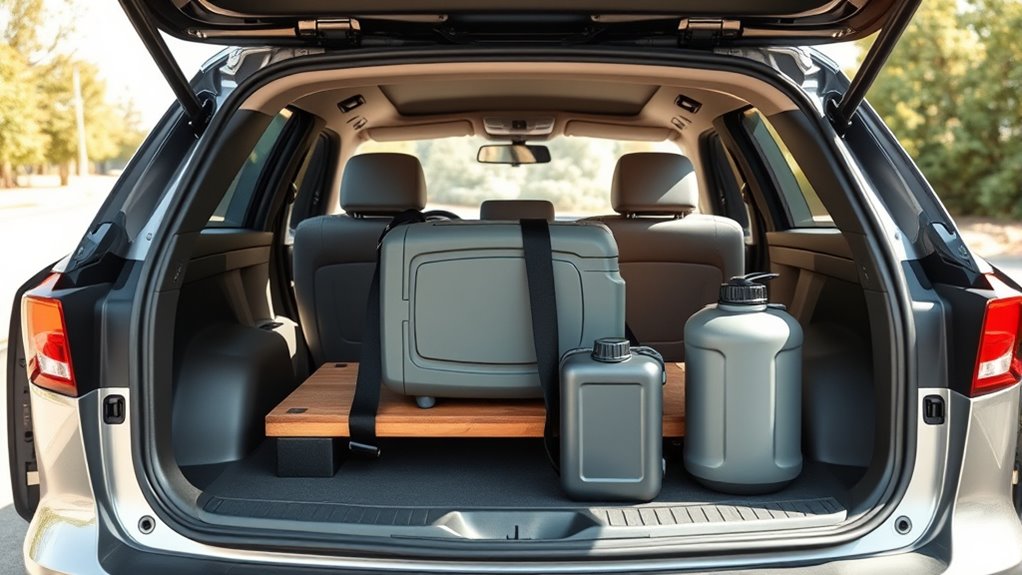
Before transporting your generator, you need to properly prepare it to prevent leaks and spills. Start by closing the fuel valve to stop fuel flow. Empty the tank completely to avoid any leaks during transit. Run the generator until it stops, ensuring the remaining fuel in the carburetor is burned off. Check and open the cap vent daily, especially in hot weather, to prevent pressure buildup. Keep the built-in dike empty to avoid overflow. Always transport your generator upright; laying it on its side can cause oil and fuel leaks. Use handles designed for carrying and secure the generator against vibrations. Wrapping it in a trash bag and applying shrink wrap can help contain smells. These steps ensure safe, spill-free transport. Proper navigation and mapping also help in planning the safest route to prevent accidents during transit. Additionally, inspecting the fuel system for leaks before and after transit can help identify potential issues early. Incorporating a proper storage environment can further prevent fuel odors and leaks during transportation. Ensuring the generator is stored in a well-ventilated area reduces the buildup of fuel vapors during transportation. A thorough pre-transport check can further minimize the risk of leaks and odors.
As an affiliate, we earn on qualifying purchases.
Securing the Generator During Transit

You need to secure your generator properly using strong straps to prevent movement during transit. Make sure the straps are tight and positioned to prevent vibration damage to sensitive components. Properly securing the generator keeps it safe and guarantees a smooth, worry-free trip. Additionally, ensure that the generator is properly anchored to avoid shifting that could cause damage or safety hazards during transportation. Using quality tie-downs can further enhance stability and reduce the risk of accidents on the road. Incorporating safe transportation practices can help protect both your vehicle and the generator during transit. Incorporating secure fastening methods can also help maintain stability and prevent potential hazards. To achieve optimal safety, consider inspecting the load distribution before starting your journey to ensure balanced weight and minimize movement.
Use Proper Straps
Securing a generator properly with straps is essential to prevent movement and guarantee safe transit. You need to guarantee it stays stable throughout the trip. Here’s how:
- Use heavy-duty ratchet straps or tie-downs rated for your generator’s weight.
- Attach straps to solid mounting points or handles designed for securing.
- Tighten straps firmly, but avoid over-tightening to prevent damage to the generator or straps.
- Remember to check proper securing techniques periodically during the trip to account for any shifting or loosening. Maintaining secure transportation practices helps ensure safety and stability.
- Always verify that your fuel safety precautions are followed to prevent leaks or spills during transit.
- Be mindful of twin flame connection signs that can indicate energy shifts, which may affect your focus during transit. Additionally, ensuring proper ventilation is crucial to avoid buildup of fumes inside your vehicle.
Make sure the generator is positioned upright, and double-check that all straps are secure before driving. Avoid loose connections or slack that could allow shifting. Properly secured, your generator won’t bounce, tip, or slide during transit, reducing risks of damage or fuel leaks. Taking these steps guarantees safe, stable transportation and peace of mind.
Prevent Vibration Damage
Vibrations during transport can cause damage to your generator’s internal components or lead to fuel leaks if it’s not properly stabilized. To prevent this, secure the generator tightly using straps or bungee cords, making sure it doesn’t shift or bounce. Place foam padding or rubber mats underneath to absorb shocks and reduce movement. Attach the generator to stable anchor points in your vehicle, avoiding loose connections. Check that handles or mounting points are used correctly for added stability. Keep the generator upright at all times to prevent fuel and oil leaks. Regularly inspect the securing mechanisms during transit to ensure they stay tight. Properly preventing vibrations minimizes internal damage and keeps your generator safe during the entire journey. Understanding fuel leak prevention is essential for safe transportation. Additionally, being aware of vibration control techniques can further protect your equipment from damage during transit. Incorporating shock absorption methods can greatly enhance the safety of your load, especially over uneven roads or rough terrain. Using properly secured mounting points can also help distribute vibrations evenly and reduce stress on critical parts. Properly distributing load weight across the vehicle can further minimize vibrations and improve overall safety during transport.
As an affiliate, we earn on qualifying purchases.
Choosing the Right Containment Methods
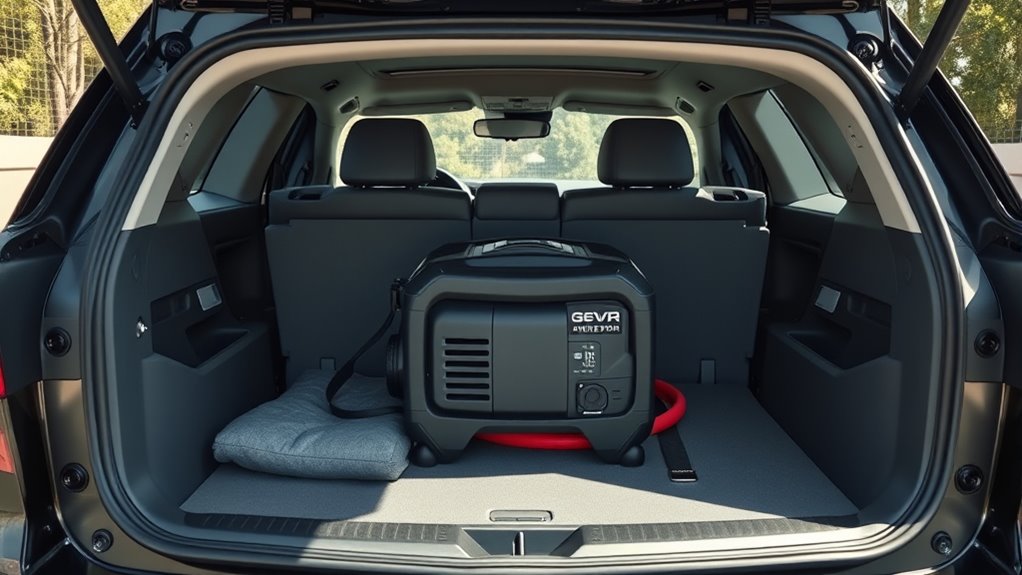
Choosing the right containment methods is vital to prevent leaks and odors during transport. You’ll want to evaluate wrapping techniques that maximize effectiveness, as well as sealant materials that provide a secure barrier. Sometimes, designing a custom enclosure offers the best protection, especially for unique generator sizes or shapes. Additionally, selecting containment solutions that are easy to handle and secure can help ensure safe transportation and prevent accidental spills. Incorporating proper containment materials can further enhance odor control and leak prevention, ensuring a cleaner and safer transport process. Using appropriate storage containers designed for fuel storage can also reduce the risk of spills and odors during movement. Utilizing quality sealants can also improve the overall effectiveness of your containment strategy by providing a more reliable barrier against fuel smells. Properly choosing and applying these materials aligns with best practices for safer riding habits and maintaining a clean environment during transportation.
Wrapping Techniques Effectiveness
Selecting the right wrapping techniques is crucial to guarantee your generator stays protected during transport. Proper wrapping minimizes fuel smells and prevents leaks. First, make sure you wrap the generator in a heavy-duty trash bag or waterproof material to contain vapors. Second, apply shrink wrap tightly around the entire unit, especially around the petrol filler area, to block vent smells effectively. Third, consider adding a secondary barrier like a waterproof dry bag or custom sealed container for extra protection. These methods work best when combined, creating a secure barrier against fumes. Keep in mind that tight, waterproof wrapping reduces the risk of leaks and odors escaping during transit. Proper wrapping techniques are essential for safe, smell-free transportation of your generator.
Sealant Material Options
When it comes to containment, using the right sealant materials guarantees your generator stays secure and odor-free during transport. You can choose sealants like waterproof tape or heavy-duty adhesive films to block vents and filler caps effectively. Shrink wrap is a popular option, providing a tight barrier around the generator, especially when combined with additional layers. For more durable solutions, consider custom-sealed steel or aluminum enclosures, which can be welded or bolted securely. Applying a shower cap-style cover or a specialized vent sealant can also help trap odors. Make sure the sealant you select is compatible with the generator’s materials and resistant to temperature changes. Proper sealing minimizes fuel vapor escape, preventing smells and ensuring safe, odor-free transport.
Custom Enclosure Design
Designing a custom enclosure for your generator involves carefully considering materials and construction methods that guarantee secure containment while preventing fuel vapor leaks. First, select durable, airtight materials like steel or aluminum to block fumes effectively. Second, incorporate sealants around joints and vents to create a tight, leak-proof enclosure. Third, add proper ventilation with activated carbon filters or venting ports to allow airflow without releasing odors. Additionally, consider the following:
- Use gasketed access panels for maintenance without compromising the seal.
- Incorporate a removable drip tray to contain minor spills.
- Ensure the enclosure is vented away from the vehicle interior to prevent fumes from accumulating.
generator padding and shock absorption
As an affiliate, we earn on qualifying purchases.
As an affiliate, we earn on qualifying purchases.
Proper Fuel Management and Storage

Proper fuel management and storage are critical to ensuring your generator operates safely and reliably during transport and use. Before moving, close the fuel valve to prevent leaks into the crankcase and run the generator until it stops, ensuring the tank is empty. Remove any remaining fuel, and open the cap vent daily, especially in hot weather, to prevent pressure buildup. Always keep the built-in dike empty to avoid overflow. Transport the generator upright in a secure vehicle, using handles and straps to prevent movement and vibrations. Wrap the generator in a trash bag or shrink wrap to block vent smells. Store fuel cans separately in the truck bed or trunk, upright and secure, and remove them promptly after use. Never store fuel containers inside the passenger compartment.
Ensuring Safety and Ventilation in Your Vehicle
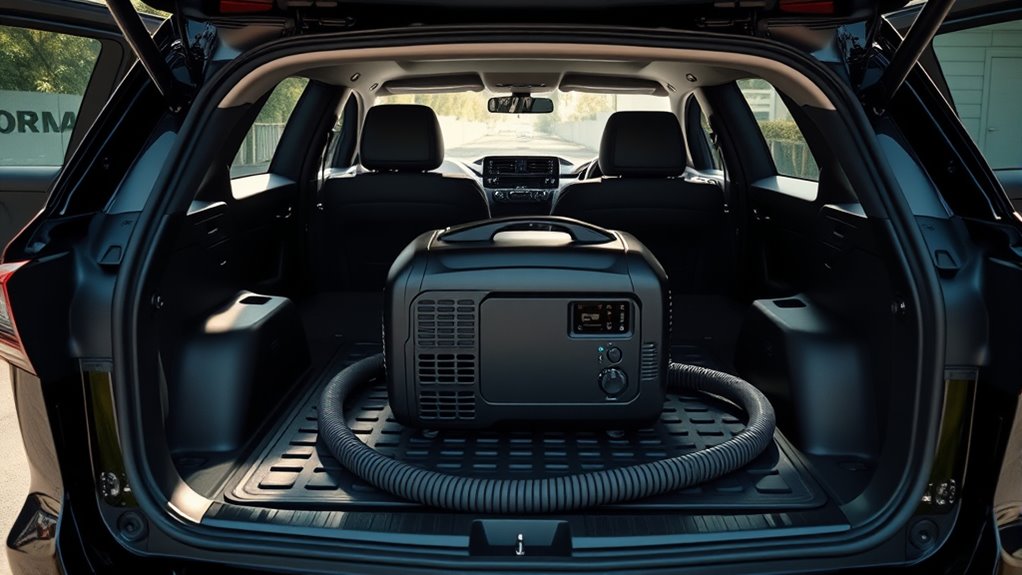
To keep yourself safe during transportation, maintaining proper ventilation and avoiding fume buildup inside your vehicle is vital. First, keep your vehicle windows open slightly to allow fresh air circulation. Second, avoid placing the generator in enclosed spaces or areas with poor airflow. Third, check for any leaks or fumes before starting your trip; if you notice a smell, stop immediately and ventilate the vehicle. Additionally, secure the generator firmly to prevent movement that could damage components or cause fumes to escape. Using a fan or vent fan can help circulate air effectively. Remember, your safety depends on preventing fume accumulation, so stay vigilant and guarantee constant airflow throughout the transport process.
Post-Transport Steps to Prevent Fuel Smells
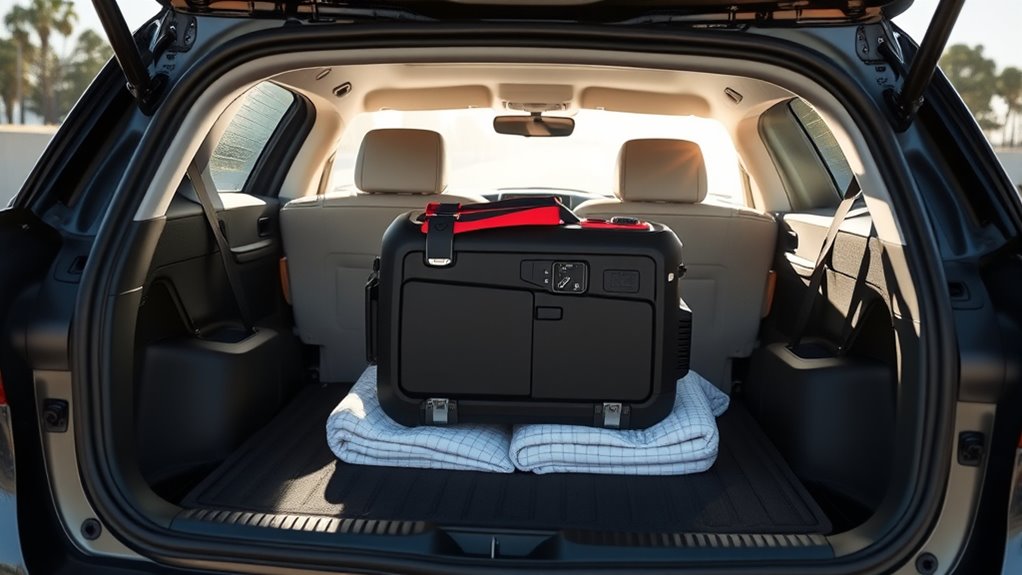
After transporting your generator, it’s vital to address any fuel smells promptly to guarantee safety and prevent odors from lingering. First, open the generator’s fuel cap vent daily, especially in hot weather, to release built-up vapors. Check the fuel valve to ensure it’s fully closed, preventing leaks or fumes from escaping. Wipe down the exterior with a damp cloth to remove any residual fuel or oil spills. If you notice persistent smells, wrap the generator in a trash bag or shrink wrap to contain odors. Consider using a sealed steel or aluminum box for added protection. Always ventilate the area around your storage space. Finally, regularly inspect the generator for leaks or fuel residue, and remove any fuel containers from the vehicle as soon as possible.
Frequently Asked Questions
Can I Transport a Generator Inside a Passenger Vehicle Safely?
You shouldn’t transport a generator inside your passenger vehicle due to safety risks and fuel fumes. Instead, keep it in the truck bed or on a trailer, upright and secured tightly to prevent movement. If you must carry it inside, verify the fuel valve is closed, the tank is empty, vents are open, and the generator is well-contained in waterproof or sealed bags. Always ventilate the vehicle and avoid prolonged storage inside.
What Are the Best DIY Methods to Seal Fuel Vents?
Think of sealing your fuel vent like locking a treasure chest—tight and secure. You can use shrink wrap around the vent cap or a shower cap to create a snug seal. Applying weatherproof tape or silicone around the vent opening also works well. For a DIY approach, fashion a custom plug with rubber or foam, then secure it firmly. This keeps fumes in check and prevents leaks during transport.
How Long Can a Generator Be Stored During Transit Without Smells?
You can store your generator during transit for up to 24-48 hours without smells if you follow proper precautions. Make certain the fuel valve is closed tightly, the tank is emptied, and vents are sealed with shrink wrap or a shower cap. Keep the generator upright, secure it firmly, and maintain good ventilation in your vehicle. Check periodically for any leaks or odors, and remove the generator promptly once the trip is complete.
Are There Commercial Sealed Covers Available for Generators?
Sealed covers for generators are rare, like finding a needle in a haystack. Mostly, you’ll need custom solutions or DIY methods, such as shrink wrapping or fabricating sealed enclosures. Commercial options are limited due to safety and liability concerns. You might find specialized cases, but they often require modifications. So, your best bet is to create a tight, vented seal yourself, ensuring minimal fuel smell during transport.
How Do I Prevent Fuel Leaks When Transporting in a Trailer?
To prevent fuel leaks when transporting in a trailer, always make certain your generator’s fuel valve is closed before loading. Secure the generator upright using straps or tie-downs to prevent movement, which can cause leaks. Wrap the generator in trash bags or shrink wrap to contain any fumes. Keep the fuel can separate in a secure container, and double-check all lids and caps are tight. Ventilate the trailer during transport.
Conclusion
Transporting a generator without fuel smells in your car might seem tricky, but with proper preparation, it’s simple. Think of it as balancing safety and convenience: securing the generator keeps your vehicle clean, while managing fuel prevents odors. It’s a careful dance between protection and practicality. When you follow these steps, you’ll enjoy a smooth, odor-free ride—proving that safety and efficiency can go hand in hand, even on the road.
Halloween Picks
halloween
As an affiliate, we earn on qualifying purchases.