
A transfer switch automatically or manually switches power between your utility supply and backup generator, ensuring safe, reliable energy during outages. It prevents backfeeding, protects utility workers, and maintains continuous power to essential systems. These switches detect outages quickly and isolate sources to avoid hazards. They come in various types, with automatic models being perfect for critical needs. If you continue exploring, you’ll discover how these devices keep your power safe and dependable.

Get backup power and energy gear delivered free — and shop member deals
- Fast, free delivery on millions of items
- Access to Prime Big Deal Days deals on October 6–7
- Prime Video, Amazon Music and more included
Key Takeaways
- Transfer switches safely switch power sources between utility and backup generator during outages.
- They prevent backfeeding, protecting utility workers and electrical systems from hazards.
- Automatic transfer switches detect power loss and switch seamlessly without human intervention.
- They isolate the utility from the generator to avoid electrical shocks and equipment damage.
- Transfer switches enhance safety, reliability, and continuous power for critical systems.
What Is a Transfer Switch and Why Is It Important?
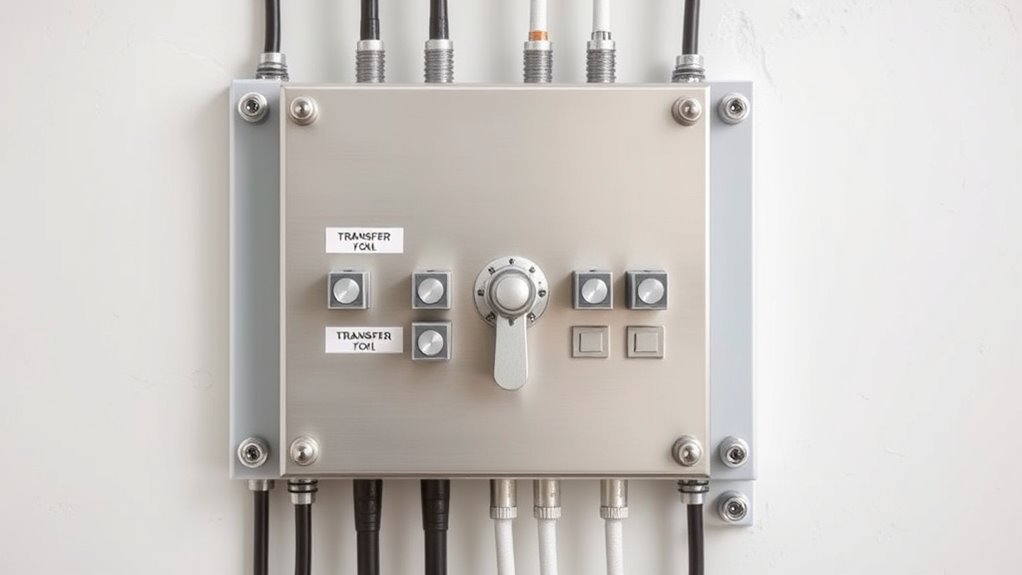
Have you ever wondered how your home stays powered during an outage? A transfer switch is a critical device that makes this possible. It switches your load between the utility power and a backup generator, ensuring your home remains energized without risking damage or safety hazards. The transfer switch connects your generator to your home’s service panel, isolating it from the utility grid to prevent backfeeding. This device is essential because it manages power flow safely, preventing dangerous situations for utility workers and household members. It also automates the process, especially in automatic transfer switches, so you don’t have to manually switch power sources during an outage. Without a transfer switch, safely using a generator could be risky and complicated, making it an indispensable component of backup power systems. Additionally, power management is a key benefit provided by transfer switches, optimizing energy distribution during outages. Properly installed, transfer switches also help ensure compliance with electrical safety standards, reducing the risk of accidents. Understanding the different types of transfer switches can help homeowners select the best option for their needs. Furthermore, advancements in energy-efficient technologies have improved the performance and reliability of modern transfer switches, making them an even more vital part of sustainable backup power solutions. Incorporating innovative safety features in newer models further enhances user protection and system durability.
Different Types of Transfer Switches and Their Uses
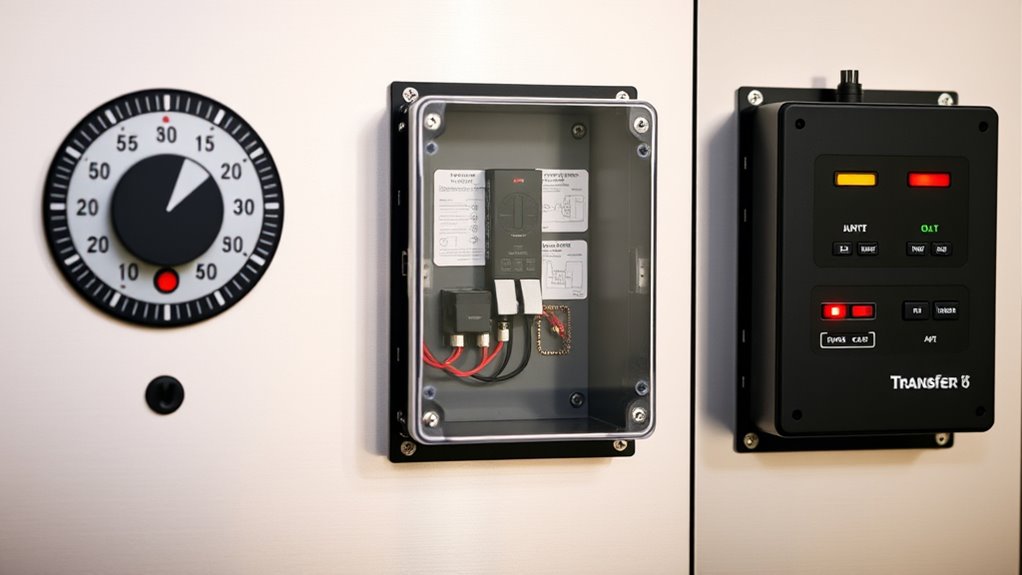
There are several types of transfer switches to contemplate, each suited for different needs. Manual switches require you to operate them physically, while automatic ones sense outages and switch power seamlessly. Understanding the differences between open and closed transition switches helps you choose the right option for safe, reliable backup power. Additionally, proper wiring basics are essential to ensure the transfer switch functions correctly and safely during operation. Correct wiring practices are crucial for system safety and reliable performance. Regular maintenance and adherence to manufacturer guidelines can prevent potential faults and ensure consistent performance, especially when dealing with Glycolic Acid benefits and application areas. It is also important to consider transfer switch specifications to match your power system requirements effectively. Proper selection and installation of these switches can significantly enhance your system’s reliability and safety.
Manual vs. Automatic Switches
Manual and automatic transfer switches serve different needs in backup power systems, each offering distinct advantages. Manual switches require you to physically operate them during an outage, giving you control but needing prompt action. Automatic switches sense power loss and switch seamlessly without human intervention, ensuring continuous power without delay. Consider these differences:
- Manual switches are simple, cost-effective, and reliable but need your quick response during outages.
- Automatic switches provide hands-free operation, ideal for critical systems where continuous power matters.
- Manual units are suitable for infrequent use or budget-conscious setups.
- Automatic switches are best for homes or facilities that require immediate, uninterrupted power without manual effort.
- Understanding security measures is crucial to protect your backup power system from cyber threats and ensure data safety.
- Additionally, proper maintenance of these switches is essential to guarantee optimal performance over time.
- Regular testing and inspection of switch functionality help prevent failures and ensure reliable operation when needed.
- Ensuring system compatibility is also important to match the switch type with your generator and electrical setup.
Choosing between them depends on your need for convenience, budget, and how critical continuous power is for your situation.
Open vs. Closed Transition
Open and closed shift transfer switches differ in how they connect and disconnect power sources during a transfer. Open transition switches break one connection before establishing another, creating a brief outage. Closed transition switches connect both sources momentarily, allowing a seamless transfer without power interruption. This makes closed transition ideal for sensitive equipment needing continuous power. Additionally, selecting the right type depends on your specific power reliability needs, as each offers distinct advantages and potential drawbacks. Proper installation practices are crucial to ensure safe and efficient operation of these switches. Understanding the transfer switch operation can help you choose the best solution for your system. When evaluating options, consider the cost and complexity of installation and maintenance. For example, closed transition switches typically require more complex wiring and careful synchronization to prevent faults. Here’s a comparison:
| Feature | Open Transition | Closed Transition |
|---|---|---|
| Power interruption | Brief outage during transfer | No outage, seamless transfer |
| Connection method | Breaks existing connection first | Connects both sources briefly |
| Use case | Basic backup needs, less critical | Critical systems requiring no gap |
This helps you choose based on your power reliability needs.
How Transfer Switches Detect Power Outages
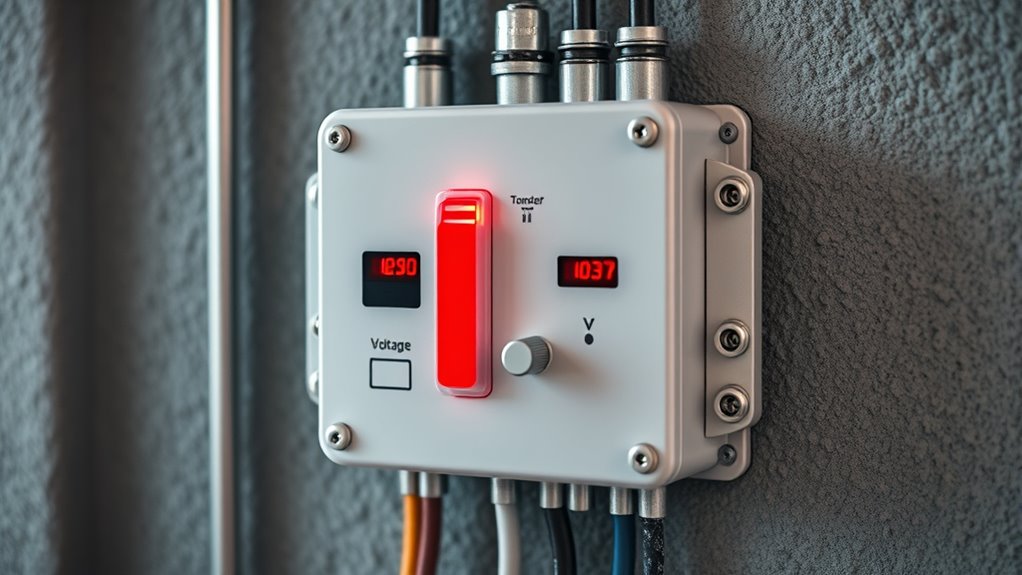
Transfer switches detect power outages by continuously monitoring the voltage and frequency of the primary power source. They keep an eye on electrical signals to identify any irregularities indicating a problem. When the switch senses a drop in voltage or a change in frequency outside preset thresholds, it recognizes a power outage. This triggers the transfer process, either manually or automatically, to switch to backup power. The switch’s sensors are highly sensitive, ensuring quick response times. They also track the stability of the primary source to avoid false alarms. The system’s reliability depends on precise detection of these parameters. Accurate detection of voltage and frequency changes is essential for the transfer switch to operate correctly. By constantly checking these signals, transfer switches effectively determine when the main power has failed, so your backup system kicks in without delay. Additionally, some advanced transfer switches incorporate predictive algorithms that help anticipate potential outages before they happen, increasing overall reliability. These algorithms analyze historical data to improve detection accuracy and reduce false alarms. This continuous monitoring minimizes downtime, ensuring seamless power transfer during outages. Furthermore, advancements in sensor technology enhance the ability of transfer switches to identify subtle anomalies, further boosting their reliability.
The Role of Transfer Switches in Backup Power Systems
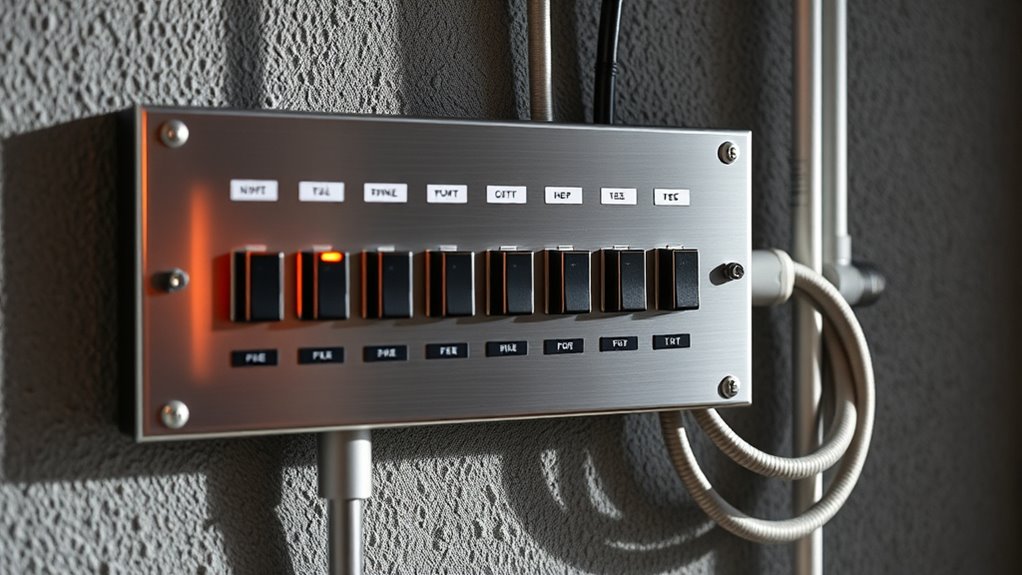
Transfer switches play a vital role in ensuring safe power transfer during outages by isolating your generator from the utility grid. They also automate the switching process, so you don’t have to manually switch sources when the power goes out. This makes your backup power system more reliable, efficient, and safe for your home. Deep-sky imaging techniques demonstrate the importance of reliable power systems in maintaining equipment performance and data integrity.
Ensuring Safe Power Transfer
Ensuring safe power transfer is a critical function of transfer switches in backup power systems. They prevent dangerous situations by managing how power moves between your utility and backup source. To do this effectively, transfer switches:
- Avoid simultaneous connection of utility and generator power, preventing backfeeding.
- Detect power outages quickly and switch seamlessly to backup power.
- Isolate the generator from the grid during operation to protect utility workers.
- Reconnect safely to utility power once it’s stable, avoiding electrical hazards.
Automating Power Switching
Have you ever wondered how backup systems switch power automatically without your intervention? That’s the role of an automatic transfer switch (ATS). It constantly monitors your utility power’s voltage and frequency. When it detects an outage or instability, it signals your generator to start. Once the generator stabilizes, the ATS smoothly transfers the load from utility to backup power, ensuring your home stays powered without delay. When utility power is restored and stable, the switch reverts your system back seamlessly. This automatic process prevents power interruptions and avoids the need for manual operation. The ATS also isolates your generator during normal operation, protecting both your equipment and utility workers. It’s a critical component that enables reliable, hands-free backup power, keeping your home running smoothly during outages.
Safety Features Embedded in Transfer Switches
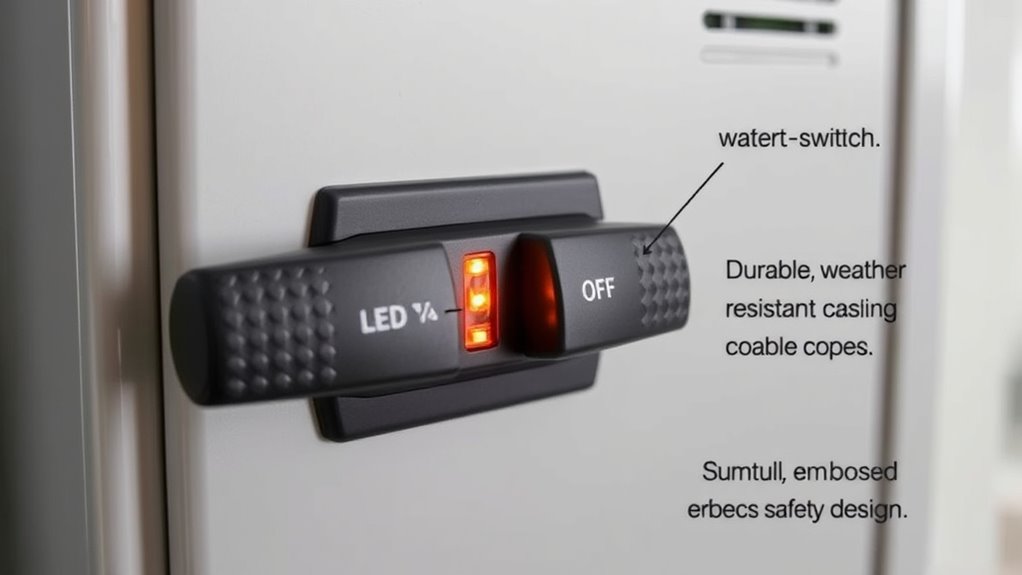
Safety features in transfer switches are essential for protecting both users and electrical systems during power shifts. These features prevent dangerous conditions and guarantee safe operation. For example, they prevent backfeeding, which could harm utility workers, by isolating the generator from the grid. They also protect your household from electrical hazards, such as overloads or short circuits, by incorporating automatic shutdown mechanisms. Additionally, transfer switches ensure code compliance, reducing legal and safety risks. Lastly, many include safety interlocks that prevent both sources from energizing simultaneously, avoiding dangerous cross-connections. These embedded safety features work together to keep you, your family, and your electrical system safe during every power transfer.
Benefits of Using a Transfer Switch for Your Home
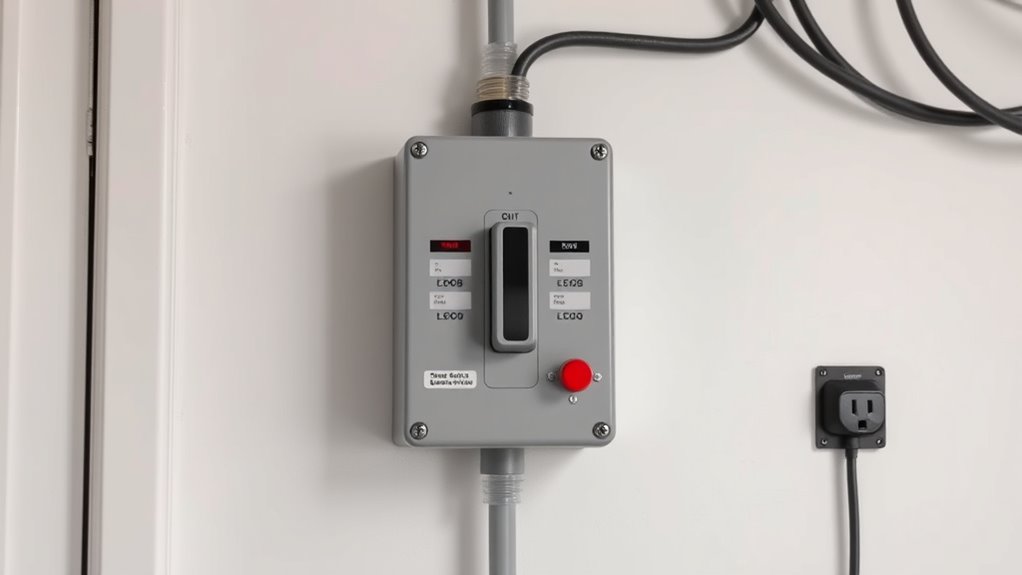
Using a transfer switch enhances your safety by preventing dangerous backfeeding and electrical hazards. It also guarantees a smooth power transfer during outages, so you’re never left in the dark. Plus, it helps protect your home’s electrical system from overloads and fluctuations.
Enhanced Safety Measures
A transfer switch substantially enhances the safety of your home during power outages by preventing dangerous electrical hazards. It isolates your home’s wiring from the utility grid and backup generator, eliminating the risk of backfeeding that can harm utility workers or damage equipment. This device guarantees your generator only energizes the circuits you select, reducing the chance of electrical shock or fire. Additionally, it automatically or manually disconnects your home from the grid before connecting to the generator, maintaining safe operation.
- Prevents backfeeding to utility workers
- Isolates generator from the grid
- Eliminates risk of electrical shocks
- Ensures compliance with safety codes
Seamless Power Transition
When a power outage occurs, a transfer switch guarantees your home shifts seamlessly from utility to backup power without interruption. It automatically detects the outage and switches your electrical load to the backup generator, ensuring your essential devices stay powered. As soon as utility power is restored, the transfer switch switches back smoothly, avoiding any blackout. This process happens instantly, so you won’t notice any flickers or delays. Without a transfer switch, you’d need manual intervention, risking delays and unsafe connections. The transfer switch coordinates the handover, preventing power gaps that could damage appliances or disrupt daily routines. Whether you’re working from home, cooking, or resting, this seamless transition keeps your household functioning normally during outages. It’s a reliable way to maintain comfort and safety effortlessly.
Protects Electrical System
A transfer switch helps protect your home’s electrical system from potential damage during power fluctuations or outages. It guarantees that your electrical components aren’t exposed to risky voltage spikes or surges that could cause harm. By automatically isolating your home from the utility grid during an outage, it prevents backfeeding, which can be dangerous for utility workers and your equipment. The switch also safeguards your generator from overloads and ensures safe operation.
- Prevents backfeeding to utility workers
- Isolates your generator during operation
- Shields appliances from power surges
- Ensures safe, code-compliant installation
When and Why to Choose an Automatic Transfer Switch
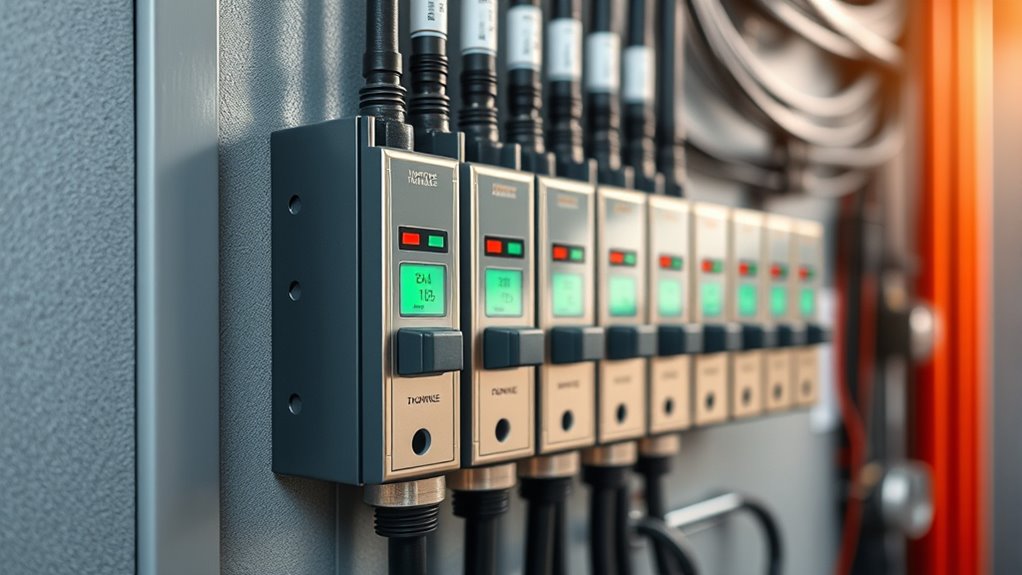
Choosing an automatic transfer switch is essential if you want a reliable, hands-free solution that quickly responds to power outages. It’s ideal if you prioritize convenience, as it detects power loss and switches to backup power without your intervention. Automatic switches are perfect for critical systems like medical equipment, home security, or essential appliances that need uninterrupted power. They minimize downtime and prevent the risk of manual operation errors. Additionally, automatic transfer switches help protect utility workers by isolating the generator from the grid during operation. If you value safety, convenience, and continuous power, an automatic transfer switch ensures your backup system activates instantly, keeping your home or business running smoothly without any manual effort.
How Transfer Switches Help Protect Utility Workers and Equipment
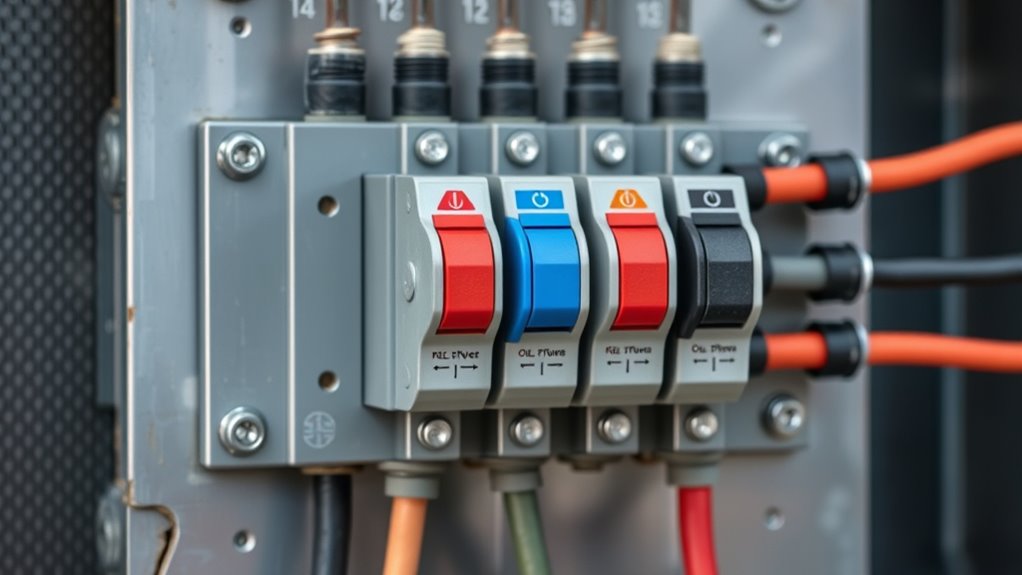
Ever wondered how transfer switches help keep utility workers safe during power outages? They prevent dangerous backfeeding, which can send electricity into the grid and pose serious risks. By isolating the generator from the utility, they eliminate the chance of live power flowing into lines being worked on. This reduces the risk of electrical shock for workers. Transfer switches also:
- Disconnect the utility line before connecting to a generator
- Prevent simultaneous power sources, avoiding overloads
- Ensure only one power source energizes the system at a time
- Keep repair crews safe from unpredictable voltage spikes
These safety features protect both workers and maintenance crews, reducing accidents and injuries. They also safeguard equipment by preventing power surges or backfeeds that could damage sensitive systems.
Common Applications of Transfer Switches in Various Settings
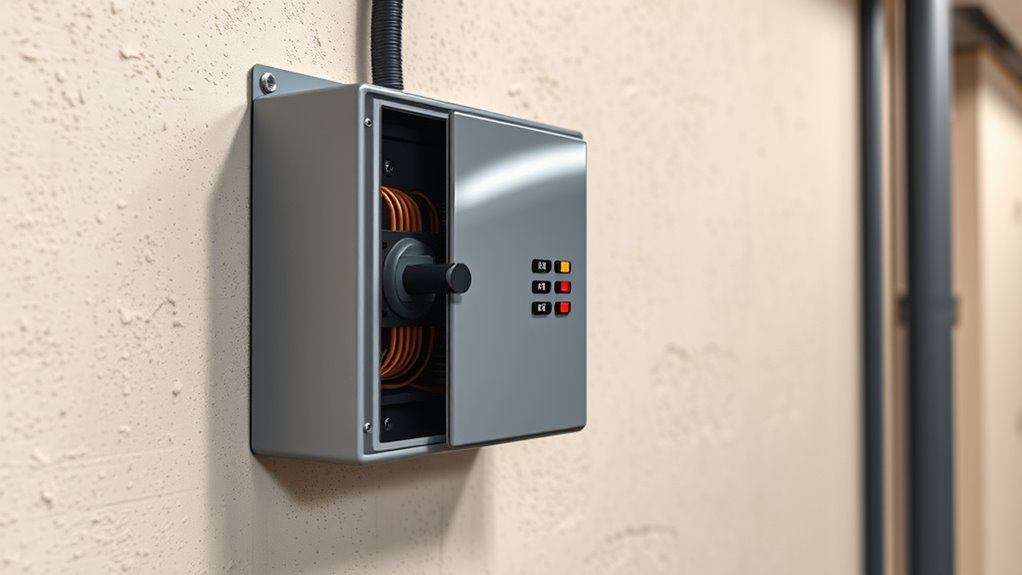
Transfer switches are widely used across various settings to guarantee reliable power supply during outages. In homes, they connect backup generators to essential circuits like heating, refrigeration, or lighting, ensuring comfort and safety. In commercial buildings, transfer switches support critical systems such as security, communication, and emergency lighting. Industrial facilities rely on them to maintain manufacturing processes and safety systems without interruption. The table below highlights common applications:
| Setting | Application |
|---|---|
| Residential Homes | Backup power for essential appliances |
| Commercial Buildings | Emergency lighting and security systems |
| Industrial Sites | Uninterrupted manufacturing operations |
| Data Centers | Maintaining server operation during outages |
This widespread use underscores their importance in maintaining safety and operational continuity.
Key Considerations When Selecting a Transfer Switch
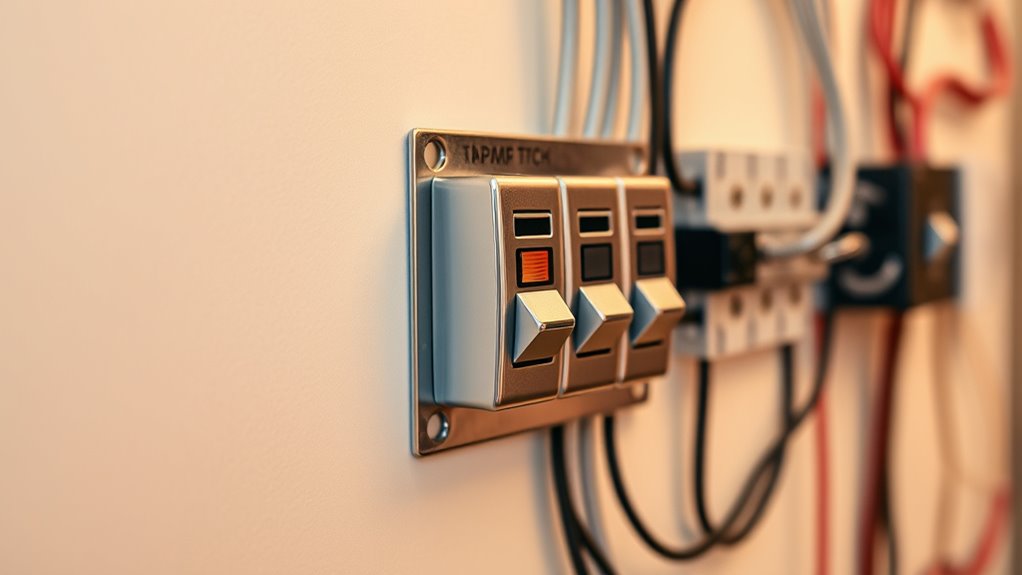
Selecting the right transfer switch involves evaluating several key factors to guarantee it meets your specific power needs and safety standards. First, determine whether a manual or automatic switch suits your situation, based on convenience and budget. Next, consider the amperage rating to match your home’s load requirements. Think about the changeover type—whether open or closed—to guarantee smooth switching without power interruptions. Also, verify that the switch complies with local electrical codes for safety and legality. Keep these points in mind:
Choosing the right transfer switch ensures safety, compatibility, and reliable power during outages.
- Compatibility with your generator’s power output
- Number of circuits or loads it can handle
- Ease of installation and maintenance
- Features like bypass or redundancy options
Frequently Asked Questions
Can a Transfer Switch Be Used With Solar Power Systems?
Yes, you can use a transfer switch with your solar power system. It allows you to safely switch between grid power and solar-generated electricity, ensuring seamless operation during power outages or when switching sources. By isolating your solar system from the utility grid, the transfer switch prevents backfeeding, protects utility workers, and keeps your system compliant with safety standards. It’s a essential component for integrating solar with backup power solutions.
What Is the Typical Lifespan of a Transfer Switch?
A transfer switch typically lasts between 10 to 20 years, depending on usage and maintenance. You can extend its lifespan by regularly inspecting it, keeping it clean, and addressing any signs of wear or corrosion promptly. Proper installation and avoiding overloads also help. If you notice frequent tripping or electrical issues, it might be time to replace the switch to guarantee safe, reliable operation during outages.
Are Transfer Switches Compatible With All Generator Brands?
Think of transfer switches like universal adapters—they’re generally compatible with most generator brands. You don’t need to worry about brand mismatch because they’re designed to connect safely and effectively with a variety of generators. Just make certain the switch matches your generator’s power specifications and type. Always check the manufacturer’s guidelines or consult a professional to confirm compatibility, so your backup power works seamlessly when you need it most.
Do Transfer Switches Require Regular Maintenance or Testing?
Yes, transfer switches need regular maintenance and testing to guarantee they work properly when needed. You should inspect them periodically for signs of wear, corrosion, or damage. Testing the switch by simulating a power outage helps confirm it transfers power correctly and safely. Doing these checks every few months keeps your system reliable, prevents issues, and ensures your backup power operates smoothly during emergencies.
Can a Transfer Switch Be Installed Outside the Home?
Yes, you can install a transfer switch outside your home, and it’s like giving your backup power system a weatherproof shield. Picture a rugged box, designed to withstand rain, snow, and sun, protecting vital connections. You’ll want to make certain it’s properly rated for outdoor use and installed in a sheltered spot. This way, your backup power remains reliable and safe, no matter what the weather throws at you.
Conclusion
In choosing the right transfer switch, prioritize protection, precision, and peace of mind. By understanding its purpose and power, you prevent problems, promote safety, and prepare for potential problems. Remember, a well-wielded transfer switch isn’t just a device—it’s your dependable defender against darkness, diligently disconnecting and directing power with purpose. Make your decision wisely, and you’ll worry less, work safer, and stay securely supplied. Power peace of mind with a purpose-driven transfer switch.
Fall Picks
fall essentials
As an affiliate, we earn on qualifying purchases.





![[Fact Check] Lee’s Claim Blaming Oh For Seoul Home Prices? - 최보식의언론](https://wattreserve.com/wp-content/uploads/2026/09/fact-check-lee-s-claim-blaming-oh-for-seoul-home-prices-featured-260x140.jpg)