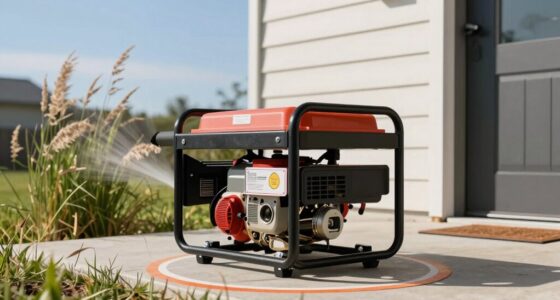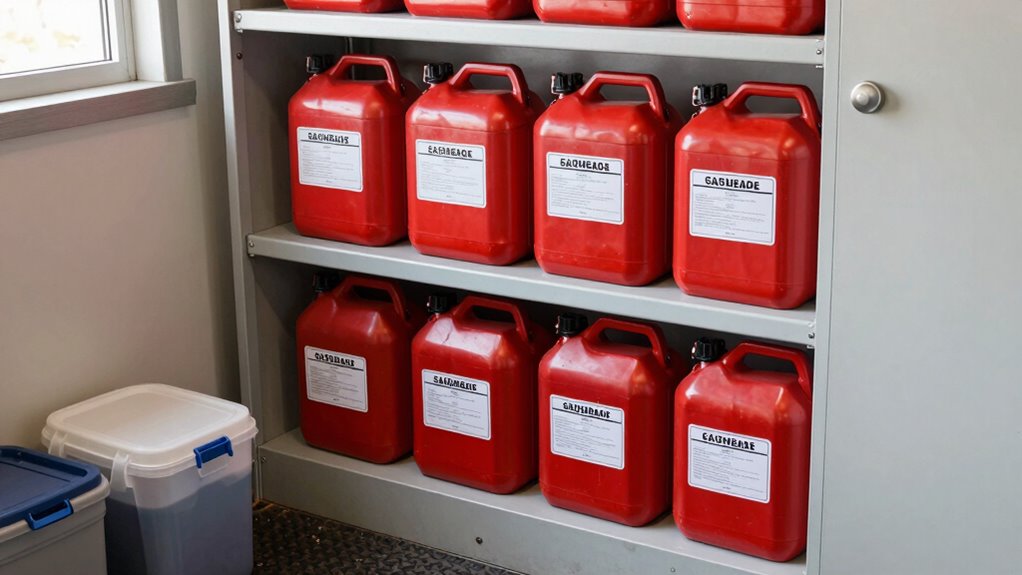

To store gasoline safely for outage season, use approved, durable containers labeled for fuel, and keep them in a cool, well-ventilated area away from heat or flames. Inspect containers regularly for leaks or damage, add stabilizers to maintain fuel quality, and secure them properly with straps or brackets. Limit storage to necessary amounts and avoid stockpiling. Proper precautions like these help keep you safe—if you continue, you’ll learn even more essential tips.
Key Takeaways
- Use approved, labeled containers made from fire-resistant materials, and ensure they have proper venting and child-proof caps.
- Store gasoline in a cool, well-ventilated, shaded area away from heat, sparks, and static electricity.
- Add fuel stabilizer to maintain freshness, and replace stored gasoline every 6 to 12 months.
- Secure containers with straps or brackets to prevent tipping, and regularly inspect for leaks, corrosion, or damage.
- Limit storage quantity to necessary amounts, keep containers properly labeled, and dispose of outdated fuel safely.
Choosing the Right Containers for Gasoline Storage
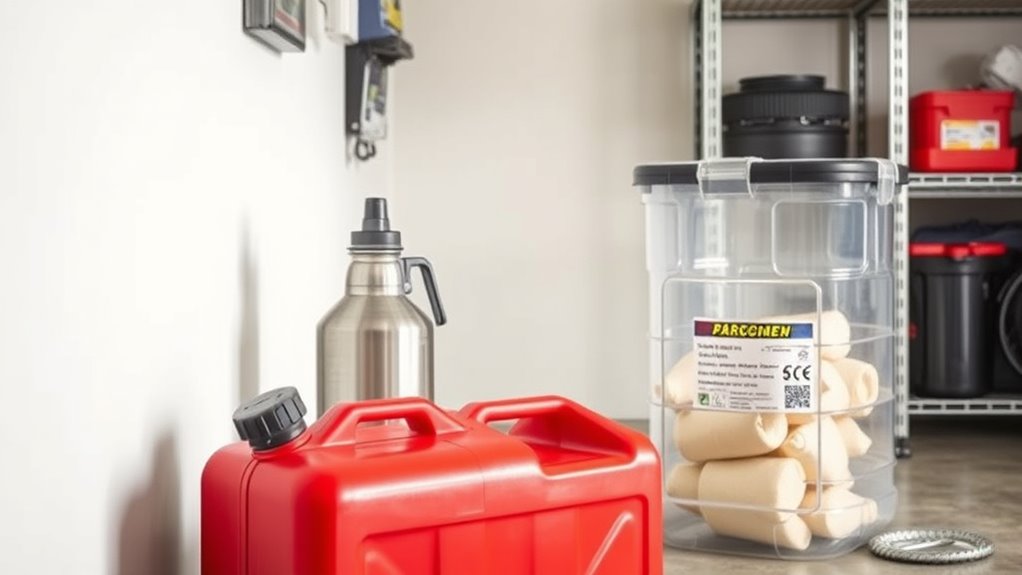
When storing gasoline, selecting the appropriate containers is essential for safety and effectiveness. You should use fuel container types specifically designed for gasoline, such as approved plastic or metal containers, to prevent leaks and spills. Look for containers that meet safety standards like OSHA or DOT approval to ensure durability and proper venting. Avoid using old, damaged, or homemade containers, which can pose fire hazards. Additionally, consider how gasoline additives might affect storage; some additives can extend shelf life or improve stability, but always choose containers that won’t react negatively with these chemicals. Properly chosen containers help prevent evaporation, spills, and dangerous fumes, making your storage safer and more reliable during outages or emergencies. Using certified fuel containers can also help ensure compliance with safety regulations and reduce risks associated with improper storage. Selecting containers made from fire-resistant materials provides an extra layer of protection against accidents. Ensuring containers have appropriate venting mechanisms is also crucial to prevent pressure buildup and potential ruptures. Moreover, storing gasoline in properly labeled containers helps prevent accidental misuse or confusion with other liquids.
Properly Preparing Gasoline for Storage

To properly prepare gasoline for storage, start by selecting the right containers designed for fuel. Add a fuel stabilizer to keep the gasoline fresh and prevent it from degrading over time. Make sure to store it in a cool, well-ventilated area to minimize the risk of hazards. Ensuring proper storage conditions is essential for maintaining fuel quality and safety during outage season. Additionally, consider ventilation to prevent the buildup of fumes and reduce the risk of fire or explosion. Proper container sealing can further prevent spills and evaporation, enhancing overall safety. Incorporating regular inspection of stored fuel can help identify potential issues early and ensure safety over extended periods. Understanding electric power generation with bike generators can also be useful in situations where traditional electricity sources are unavailable.
Choose Appropriate Containers
Selecting the right containers is essential for safely storing gasoline. Choose containers specifically labeled for fuel storage, made of durable materials like metal or approved plastic. Avoid glass or thin plastic, which can crack or degrade. Proper container maintenance is key—clean them thoroughly before use and check for leaks or damage regularly. Use containers with secure, child-proof caps to prevent spills and fumes. Store gasoline containers in a cool, well-ventilated area away from heat sources or flames. Vapor buildup can occur if containers are not properly sealed or stored, increasing the risk of hazardous fumes. Proper container maintenance includes inspecting for corrosion and ensuring that caps remain tight to prevent vapor escape. Additionally, understanding the regulations governing fuel storage can help ensure compliance and safety. Proper ventilation during storage reduces vapors accumulation and minimizes fire hazards. Here’s a quick guide:
| Material | Best Choice |
|---|---|
| Metal | Durable, flame-resistant |
| Approved Plastic | Safe if designed for fuel storage |
| Glass | Not recommended |
| Thin Plastic | Avoid, prone to cracking |
| Container Maintenance | Regularly inspect and clean |
Add Fuel Stabilizer
Adding a fuel stabilizer is an essential step to guarantee gasoline remains fresh and effective during storage. Fuel additives help prevent the oxidation and degradation that cause gasoline to spoil over time. When using gasoline blends, especially those with ethanol, stabilizers are even more important, as ethanol can absorb moisture and lead to phase separation. To properly prepare your gasoline, pour the stabilizer into your container according to the manufacturer’s instructions before filling it. Shake or mix the container to evenly distribute the additive throughout the fuel. This process helps extend the shelf life of your gasoline, ensuring it remains reliable for future use. Properly stabilized gasoline minimizes issues like engine hesitation and fuel system problems during outage season. Understanding fuel stability can help you choose the right additives and storage practices for your needs, and paying attention to storage conditions can further enhance fuel longevity. Ensuring proper storage practices is crucial for maintaining fuel quality over extended periods, which is supported by knowledge about fuel stability science.
Store in Cool, Ventilated Area
Storing gasoline in a cool, well-ventilated area helps maintain its quality and prevents safety hazards. High temperatures accelerate fuel degradation, reducing its effectiveness and increasing the risk of vapor buildup. A cool environment slows this process, preserving fuel quality over time. Proper ventilation is equally important; it disperses any fumes, lowering the chance of dangerous vapor accumulation and potential fires. Choose containers made from durable, approved materials that can withstand temperature changes and resist corrosion. Avoid plastic or weak containers that may crack or leak. Keep your gasoline storage in a shaded, dry spot away from heat sources, sparks, or open flames. Ensuring proper storage conditions minimizes the risk of accidents and keeps your fuel safe and effective. Incorporating smart monitoring devices can also help track temperature and vapor levels, providing added safety and peace of mind when storing fuel.
Storing Gasoline in a Well-Ventilated Area

Gasoline releases flammable vapors that can quickly accumulate and pose serious fire hazards if not properly ventilated. To guarantee safety, store gasoline in an area that meets ventilation requirements, allowing vapors to dissipate quickly. Good airflow reduces the risk of vapor buildup and helps with odor control, preventing the smell from becoming overwhelming or indicating unsafe conditions. Keep storage containers away from enclosed spaces like basements or confined closets. If you’re storing gasoline outdoors, choose a well-ventilated shed or covered area with open sides. Regularly check that vents are unobstructed and functioning properly. Proper ventilation not only minimizes fire risk but also helps maintain a safer environment by controlling odors and preventing vapor accumulation. Proper ventilation is essential for reducing fire hazards and ensuring safe storage practices. Additionally, understanding ventilation requirements can further enhance safety during storage, especially considering that airflow plays a critical role in dispersing flammable vapors effectively. Ensuring adequate air circulation around your storage area further reduces the likelihood of dangerous vapor build-up. Maintaining adequate ventilation is a key component of safe gasoline storage, especially in areas prone to outages or where ventilation might be compromised.
Keeping Gasoline Away From Heat and Ignition Sources
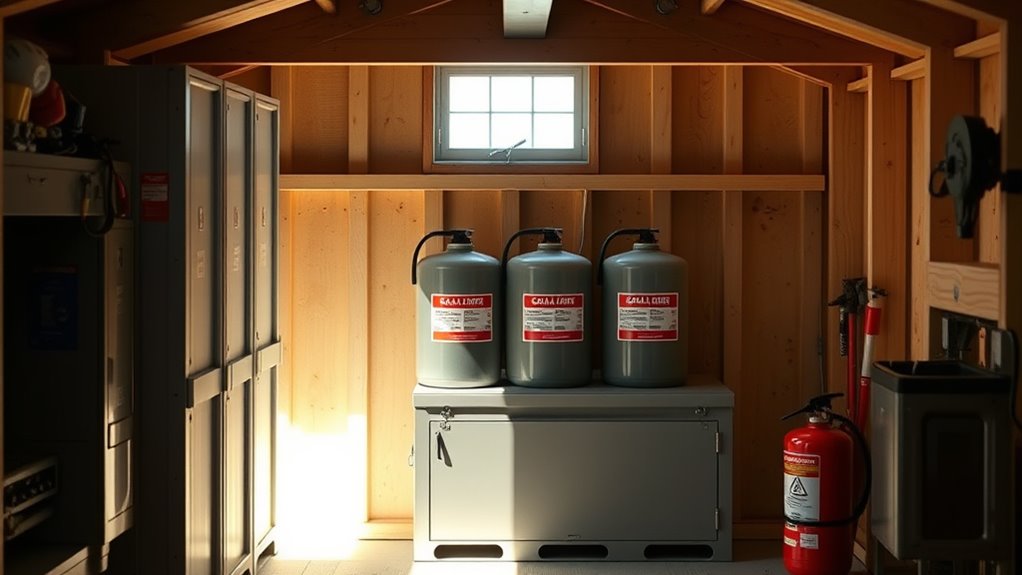
To keep your gasoline safe, store it in a cool, dry place away from any heat sources. Avoid areas where flames, sparks, or static electricity could ignite vapors. Staying vigilant about these precautions helps prevent accidents and guarantees safe storage. Additionally, using proper safety devices such as flammable liquid storage cabinets can further reduce risks. Proper storage practices are essential to minimize the chance of leaks or spills that could lead to hazardous situations.
Store in Cool, Dry Area
Keeping gasoline in a cool, dry area is essential for safety. Heat accelerates fuel degradation and increases the risk of vapor buildup, which can lead to dangerous leaks or explosions. Store your gasoline away from direct sunlight and moisture to prevent container corrosion and deterioration. Use containers made from approved materials, such as high-density polyethylene or metal designed for fuel storage, to avoid leaks or chemical reactions. Adding fuel stabilizers or fuel additives can help maintain gasoline quality over time, especially if storage lasts several months. Ensure containers are tightly sealed and stored upright to prevent spills. By keeping gasoline in a cool, dry location, you minimize the risk of fire and chemical degradation, creating a safer environment during outage season.
Keep Away From Flames
Since gasoline is highly flammable, it’s essential to keep it away from flames, sparks, and other heat sources. Different fuel types can ignite easily, so avoiding any ignition risk is critical. Always store gasoline in approved containers made from materials like metal or sturdy plastic designed to contain fumes safely. Never use containers that aren’t rated for fuel storage, as they could crack or leak. Keep your gasoline storage away from open flames, heaters, electrical appliances, or any source of heat. Ensure your containers are tightly sealed to prevent vapors from escaping and creating a fire hazard. Remember, even static electricity can ignite gasoline fumes, so handle and store fuel with caution. Your safety depends on maintaining a safe distance from all ignition sources.
Labeling and Securing Gasoline Containers

Proper labeling and securing of gasoline containers are essential steps to guarantee accidents and ensure safety. Clear labeling ensures you recognize gasoline easily, preventing misuse or dangerous mixing. Securing containers prevents spills, tip-overs, or unauthorized access. To maximize safety, consider these tips:
- Use waterproof labels that clearly state “Gasoline” and include the date of purchase.
- Store containers in a well-ventilated, cool, and dry area away from heat sources.
- Secure containers with straps or brackets to prevent tipping or accidental dislodging.
Limiting the Quantity of Stored Gasoline
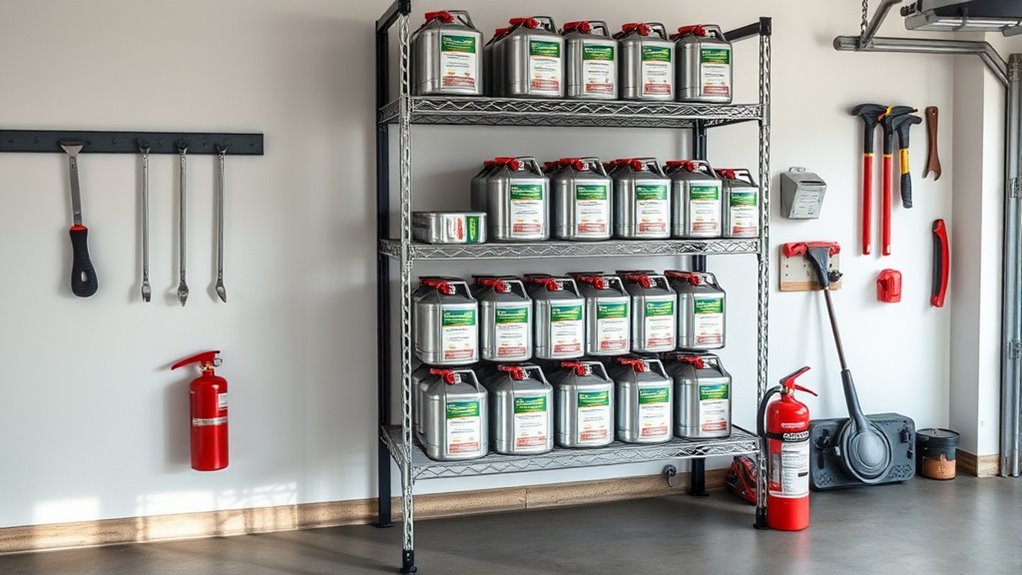
Limiting the amount of gasoline you store helps minimize the risk of fires and accidents. Keep your stored supply small—enough for your needs during outages, but not excessive. Using fuel additives can help stabilize gasoline, reducing gasoline evaporation and spoilage over time. This prevents fumes from building up and minimizes the risk of leaks or fires. Store only what you’ll use within a few months, and avoid stockpiling large quantities. Properly labeled containers help ensure safe handling, but restricting your overall storage reduces hazards further. Remember, the less gasoline you have stored, the lower the chance of accidents. Regularly check your supply, and dispose of any outdated fuel properly. Staying conservative with your storage is the safest way to prepare for outage season.
Regularly Inspecting and Replacing Stored Gasoline

Regularly inspecting your stored gasoline is essential to guarantee safety and maintain fuel quality. Over time, fuel can degrade, harming engine performance and increasing safety risks. To assure your storage remains safe and effective, check these key aspects:
- Fuel quality: Look for any signs of contamination, such as discoloration or sediment. If the gasoline smells sour or has a strange appearance, replace it.
- Container durability: Examine your containers for cracks, leaks, or corrosion. Damaged containers can compromise safety and fuel quality.
- Replacement schedule: Rotate your gasoline every 6 to 12 months, depending on storage conditions. Fresh fuel guarantees excellent engine performance and safety.
Regular inspections help you catch issues early, ensuring your stored gasoline stays safe and effective during outage season.
Safe Transportation and Handling of Gasoline
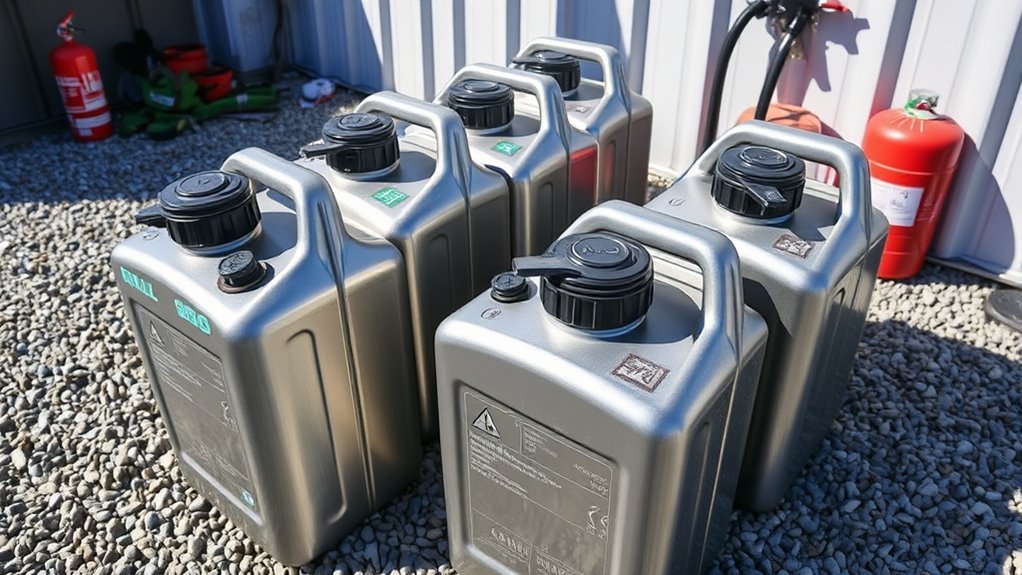
When transporting gasoline, safety should always be your top priority to prevent accidents and spills. Different fuel types, such as regular, premium, or additives, require proper containers designed for gasoline storage. Use approved, tightly sealed containers made of safety-rated materials to avoid leaks. Follow transportation regulations, including local and federal laws, which specify container types, labeling, and proper handling procedures. Never transport gasoline in your vehicle’s passenger compartment or in unapproved containers. Keep containers upright and secure them to prevent tipping or shifting during transit. Avoid smoking or open flames nearby. Always handle gasoline in well-ventilated areas, and clean up any spills immediately. Adhering to these safety practices minimizes risks and ensures secure transportation of gasoline.
Emergency Procedures in Case of Gasoline Spill or Fire
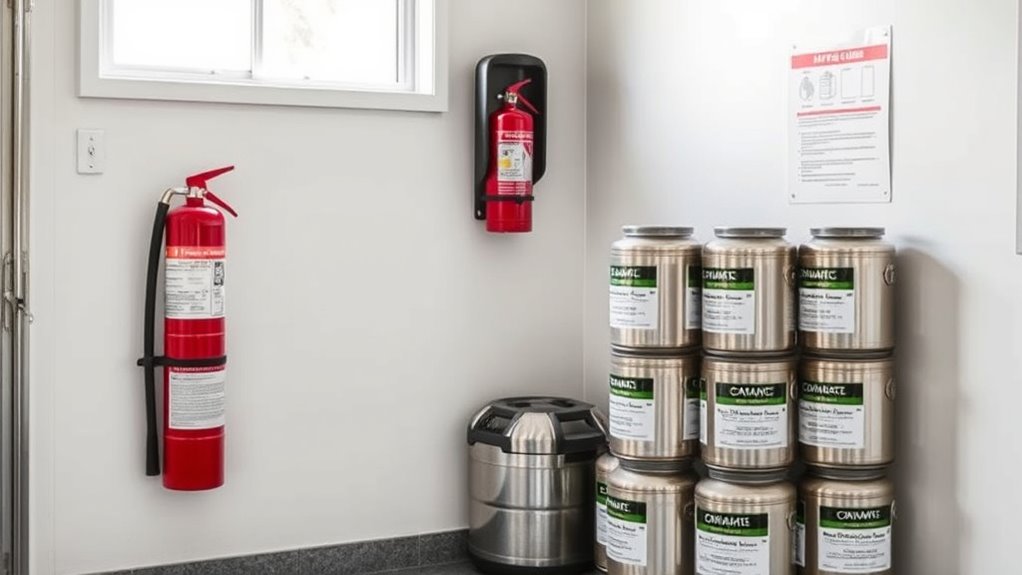
In the event of a gasoline spill or fire, acting quickly and calmly can prevent injuries and contain the hazard effectively. Your first priority is fire prevention: turn off any heat sources and avoid creating sparks. Follow these steps:
- Evacuate immediately: Alert everyone nearby and move to a safe distance, prioritizing emergency evacuation protocols.
- Notify authorities: Call emergency services to report the spill or fire, providing clear details about the location.
- Contain the spill: If safe, use absorbent materials to limit gasoline spread, but don’t attempt to put out fires yourself—wait for trained responders.
Staying calm, acting swiftly, and prioritizing safety help minimize damage and protect everyone involved.
Frequently Asked Questions
How Long Can Gasoline Be Safely Stored Before It Degrades?
You can safely store gasoline for about 3 to 6 months if you use fuel stabilizers and proper storage containers. Fuel stabilizers help prevent degradation, while airtight, approved containers keep contaminants out. To maximize shelf life, keep the gasoline in a cool, dark place and avoid exposure to sunlight and heat. Regularly check and top off your stored fuel to maintain quality and ensure safety during outage season.
Are There Specific Safety Regulations for Storing Gasoline at Home?
A stitch in time saves nine, so you should follow safety guidelines when storing gasoline at home. Check local regulations, as they often specify approved storage containers like approved plastic or metal tanks. Keep containers tightly sealed, away from heat sources, and in well-ventilated areas. Following these safety regulations helps prevent accidents, fires, and health hazards, ensuring your gasoline storage remains safe and compliant with local laws.
Can I Mix Gasoline With Additives to Extend Shelf Life?
Yes, you can mix gasoline with fuel stabilizers to extend its shelf life. Just add the stabilizer according to the instructions before storing it in proper, approved storage containers. These containers should be specifically designed for fuel storage to prevent leaks and fumes. Using stabilizers helps prevent fuel degradation and gumming, ensuring your gasoline stays fresh longer, especially during outage season when you might need it most.
What Are the Signs of Contaminated or Degraded Gasoline?
You’ll notice contaminated or degraded gasoline if it smells sour or has a strange odor. Fuel testing can reveal if it’s lost potency, indicated by poor engine performance. Look for discoloration or the presence of varnish or gum. Always store gasoline in proper storage containers, and check periodically for signs of contamination. If you suspect degradation, safely dispose of the fuel and replace it to keep your equipment running smoothly.
How Should I Dispose of Old or Unusable Gasoline Safely?
When you have old or unusable gasoline, don’t pour it down drains or onto the ground. Instead, look for local fuel recycling programs or hazardous waste disposal sites that accept gasoline. Use proper disposal methods to prevent environmental harm. Contact your local waste management authority for guidance on gasoline recycling options. Always handle the gasoline carefully, wearing gloves and eye protection, to avoid spills and accidents during disposal.
Conclusion
By following these safety tips, you can confidently store gasoline during outage season without risking accidents. Some believe that storing large amounts of gasoline is dangerous, but with proper containers, ventilation, and precautions, it’s surprisingly safe. Just remember to limit how much you keep, stay vigilant with inspections, and have emergency plans ready. When handled responsibly, your stored gasoline becomes a reliable backup, proving that safety and preparedness truly go hand in hand.