To keep your home safe from carbon monoxide, always place your generator upwind of doors, windows, and vents, so exhaust blows away from your home. Be mindful of wind speed and direction, avoiding recirculation zones where fumes can linger and re-enter. Pay attention to local structures and terrain that influence airflow. Proper placement guarantees exhaust disperses quickly and safely. If you’re curious about how to identify ideal spots, there’s more to weigh for optimal safety.

Get backup power and energy gear delivered free — and shop member deals
- Fast, free delivery on millions of items
- Access to Prime Big Deal Days deals on October 6–7
- Prime Video, Amazon Music and more included
Key Takeaways
- Position the generator upwind of home openings, such as doors and vents, to direct exhaust away from indoor air intake points.
- Avoid placing the generator in recirculation zones where airflow traps exhaust near the house.
- Use wind indicators like flags or smoke tests to identify prevailing wind directions before placement.
- Consider local topography and nearby structures, which can alter wind patterns and create hazardous recirculation zones.
- Regularly monitor wind shifts to adapt generator positioning, ensuring exhaust is always directed away from home openings.
The Impact of Wind Direction on Exhaust Dispersal
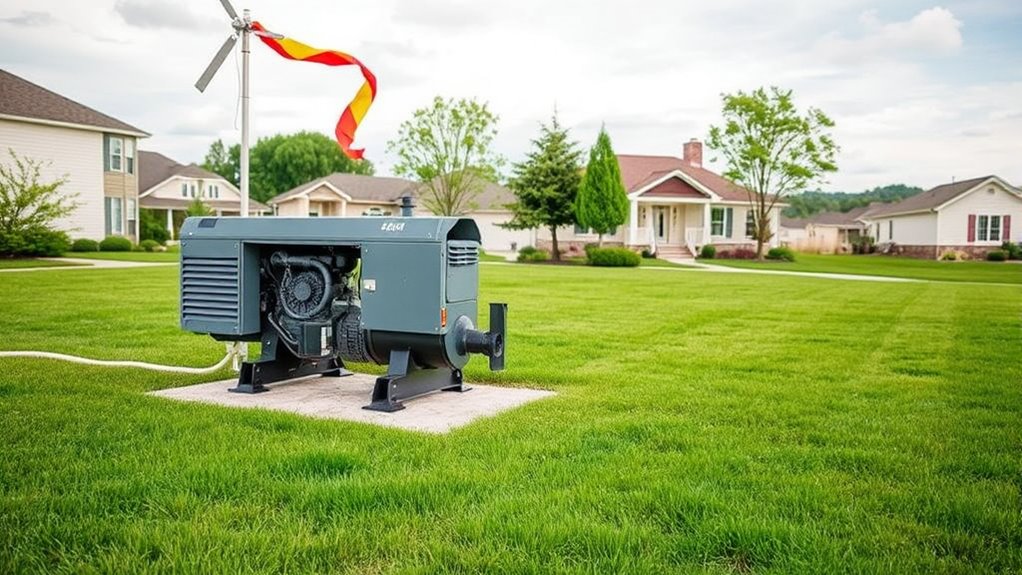
Wind direction plays a crucial role in how generator exhaust disperses and affects indoor carbon monoxide levels. If the wind blows directly toward your open windows or vents, exhaust fumes are more likely to enter your home, increasing CO risk. When the wind is perpendicular or oblique, exhaust disperses away from openings, reducing indoor contamination. Low wind speeds cause exhaust to linger near openings, raising the danger of infiltration. Additionally, recirculation zones created by wind around structures can trap exhaust, especially in downwind areas, making placement tricky. Understanding wind direction helps you position your generator to minimize indoor CO risks effectively. Proper exhaust dispersal is essential for safe generator operation and preventing dangerous buildup of fumes indoors. Being aware of local wind patterns can further improve your generator placement choices. Recognizing how wind behavior influences exhaust movement allows for better planning and safer operation, especially in areas prone to recirculation zones.
How Wind Speed Alters CO Concentration Risks
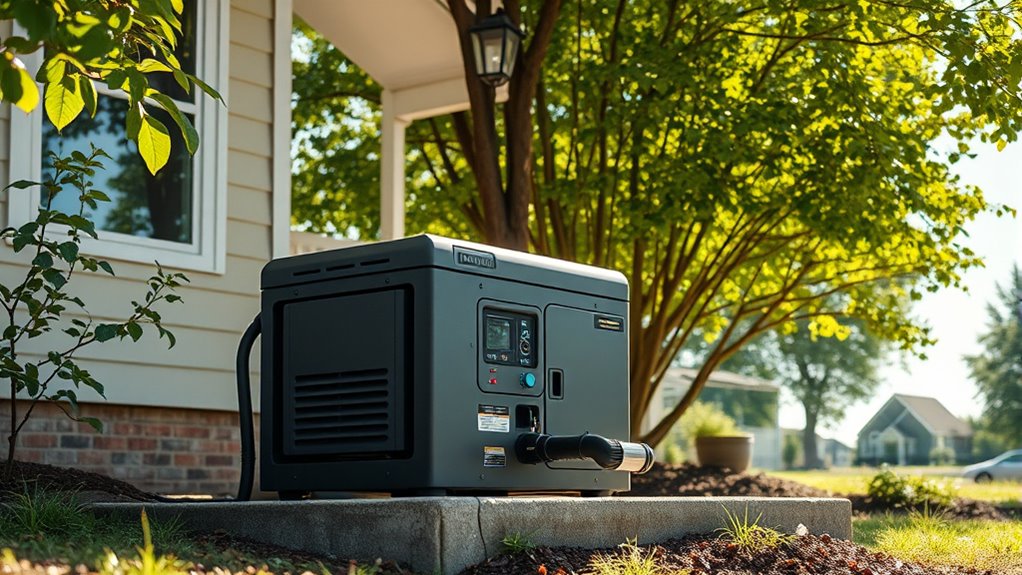
As wind speed varies, so does the behavior of generator exhaust and its potential to infiltrate indoor spaces. Low wind speeds allow exhaust to linger near open windows, increasing indoor CO risks. Stagnant air traps fumes close to the house, making infiltration more likely. Conversely, higher wind speeds disperse exhaust quickly, reducing concentration buildup outdoors and lowering infiltration chances. However, strong winds can also create recirculation zones around structures, trapping exhaust in certain areas and raising risks if generators are placed improperly. Wind speed impacts not just how far exhaust travels but also how well it mixes with the air. You need to take into account local airflow patterns and wind conditions when placing a generator, as these factors markedly influence indoor CO safety. Understanding airflow patterns is crucial for optimal placement and ensuring safe indoor environments. Additionally, environmental factors such as nearby obstructions or terrain can significantly alter airflow, further affecting exhaust dispersion and infiltration risks. Recognizing these airflow dynamics can help in selecting the safest generator placement to minimize CO exposure indoors. Moreover, ventilation strategies can be employed to mitigate risks associated with varying wind conditions. Being aware of wind variability allows homeowners to adjust placement and ventilation accordingly, further enhancing safety measures.
Identifying and Avoiding Recirculation Zones Around Homes
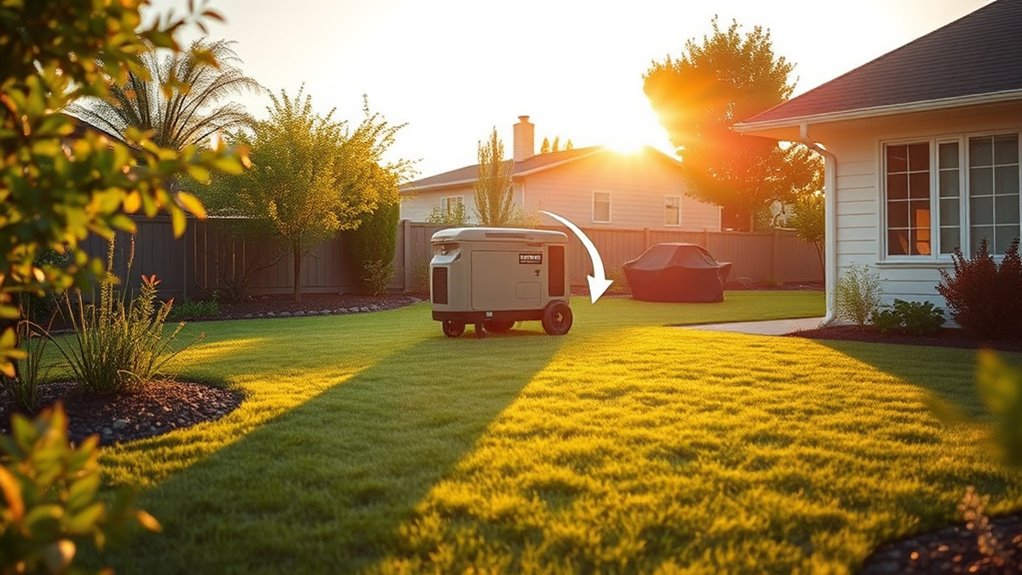
To keep CO risks low, you need to recognize how airflow moves around your home. Building shapes and nearby structures can create recirculation zones that trap exhaust, increasing danger. By understanding these patterns, you can better position your generator to avoid hazardous airflows. Incorporating energy-efficient principles in your placement can further improve safety and reduce emissions. Recognizing airflow patterns helps ensure your generator is placed in a way that minimizes recirculation zones and enhances overall safety. Additionally, being aware of ventilation design can help you select optimal locations that promote safe dispersal of exhaust gases. Understanding wind direction is crucial for predicting how exhaust gases will move and ensuring proper clearance. Moreover, studying local airflow dynamics can provide insights into how surrounding structures influence exhaust dispersal, further aiding in safe placement decisions.
Recognizing Airflow Patterns
Recognizing airflow patterns around your home is essential for safe generator placement. You need to observe how wind moves around your property, paying attention to areas where air tends to recirculate or stagnate. Use wind direction indicators, such as flags or smoke tests, to identify prevailing winds and how they interact with your house and nearby structures. Look for zones where airflow slows or turns back on itself—these are recirculation zones that can trap exhaust and increase CO risks. Be aware that local features like trees, fences, or neighboring buildings alter wind flow, creating unpredictable recirculation areas. By understanding these patterns, you can position your generator outside these zones, ensuring exhaust disperses freely and minimizes indoor CO entry.
Impact of Building Shapes
How does the shape of your house influence airflow and the formation of recirculation zones? Your home’s architecture determines how wind flows around it, creating areas where air circulates slowly or stagnates. Single-story, flat-roof homes may have larger recirculation zones near open windows, trapping exhaust. Two-story structures can redirect airflow, forming downwind pockets of stagnant air. Gabled or complex rooflines generate turbulence, altering exhaust dispersion paths. Attached garages and porches create enclosed spaces that hinder ventilation and increase recirculation risks. Gaps around doors, vents, or windows can channel exhaust into living areas, especially if airflow patterns direct recirculation zones toward openings. Recognizing these shapes helps you identify hazardous zones and position your generator away from recirculation hotspots, reducing indoor CO infiltration.
Strategies to Minimize Recirculation
Understanding how your house’s shape influences airflow is key to reducing recirculation zones that trap exhaust gases. To do this, observe how wind flows around your property, especially near open windows and vents. Use wind charts or conduct simple tests by watching smoke or lightweight debris to identify areas where air circulates back toward your home—these are recirculation zones. Avoid placing your generator downwind of these areas or near structures that create eddies and stagnant air pockets. Elevate or relocate the generator to open, unobstructed spaces where wind can disperse exhaust safely. Regularly assess airflow patterns, especially during different weather conditions, to make certain your placement minimizes recirculation and keeps exhaust gases away from all entry points. Recognizing security measures in payment processing can also help protect your home from cyber threats related to online systems.
Strategies for Optimal Generator Placement Relative to Wind Flow
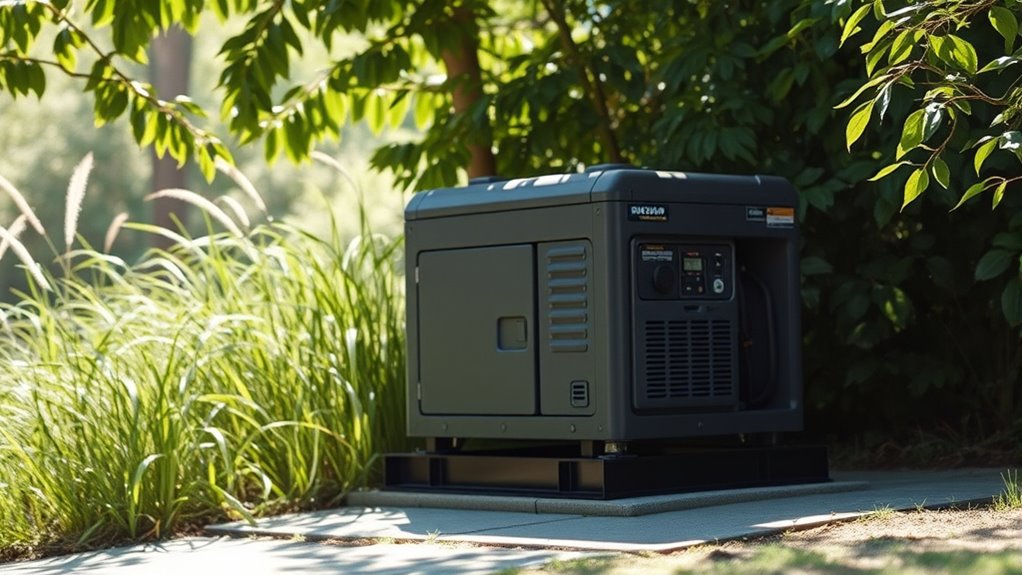
Ideal generator placement relative to wind flow involves carefully positioning the generator so that its exhaust is directed away from your home’s openings, taking prevailing wind patterns into account. You should place the generator upwind of doors, windows, and vents, reducing the chance of CO entry. Be aware that wind shifts can change hazard zones quickly, so observe local patterns. Considering proper placement can significantly enhance safety and ventilation efficiency. Additionally, understanding wind behavior can help anticipate changes in wind direction, further improving placement decisions. Regularly monitoring local wind patterns can provide valuable insights for optimal positioning, especially since wind direction variability can impact safety measures. Being familiar with weather patterns can also aid in planning for long-term safety and effective generator operation.
The Role of Local Topography and Structures in Wind Patterns
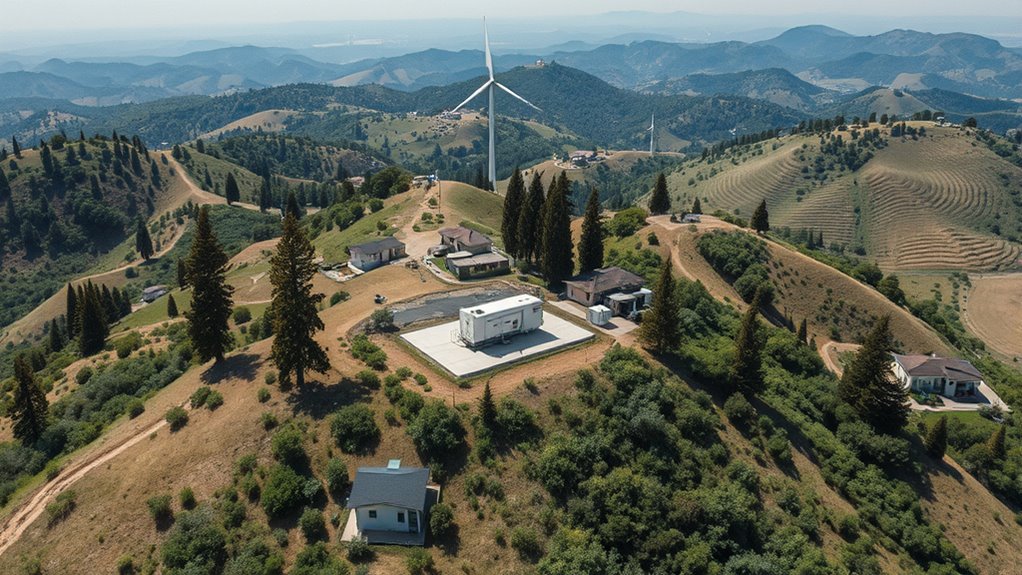
Local topography and surrounding structures considerably influence wind flow patterns around your home, affecting how generator exhaust disperses. Hills, valleys, and slopes can channel or block wind, creating areas of stagnant air or recirculation zones where exhaust may linger. Nearby buildings, garages, fences, and dense vegetation alter airflow directions, sometimes trapping exhaust near openings or redirecting it toward vulnerable spots. These features can intensify or reduce wind speeds, changing how quickly and effectively exhaust disperses outdoors. Understanding your property’s landscape helps you identify safe generator placement zones—areas where wind naturally carries exhaust away from windows, doors, and vents. Ignoring topography and structures risks placing your generator in recirculation zones, increasing indoor CO exposure and compromising safety.
Practical Guidelines for Safe Generator Positioning Based on Wind Conditions
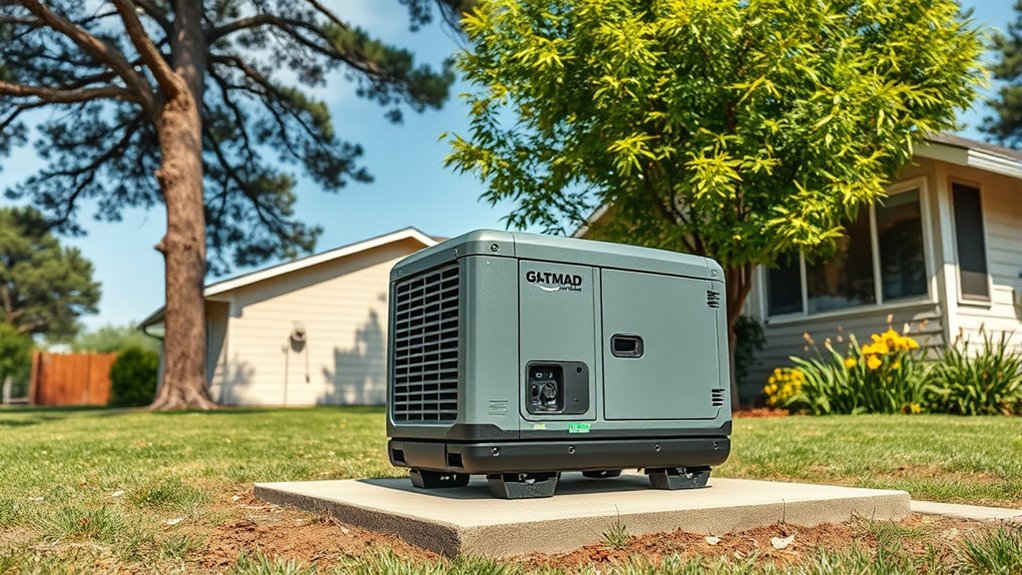
To minimize carbon monoxide risks, you should base your generator placement on current wind conditions and patterns. Check the wind direction before setting up your generator; place it so exhaust points away from your home’s openings. Position the generator upwind of doors, windows, and vents, especially if wind is blowing toward them, to prevent CO infiltration. Avoid placing it in recirculation zones or downwind areas where exhaust can linger or re-enter your home. Use local airflow data, topography, and nearby structures to identify safe spots. Elevate or orient the exhaust away from living spaces, and secure the generator on a stable surface. Regularly monitor wind shifts, and adjust placement if wind direction changes to keep CO levels low and your home safe. Understanding airflow helps ensure you position your generator in the safest location possible. Additionally, being aware of airflow patterns can help you anticipate changes in wind direction and adapt your setup accordingly for ongoing safety. Recognizing airflow dynamics enhances your ability to respond effectively to changing conditions, especially considering how AI-generated data can improve the accuracy of wind predictions and safety measures.
Frequently Asked Questions
How Does Changing Wind Direction Throughout the Day Affect Generator Safety?
Changing wind direction throughout the day impacts generator safety greatly. As wind shifts, exhaust that was once directed away from your home can blow toward openings, increasing CO risk. You should monitor weather patterns and adjust generator placement if possible, ensuring exhaust points away from vents, windows, and doors. Always stay alert to shifting winds, and avoid operating generators in areas where wind changes could direct fumes toward your home.
Can Weather Forecasts Reliably Predict Safe Generator Placement Days in Advance?
Weather forecasts are like crystal balls, giving you a glimpse of future conditions but not a perfect prediction. They can help you plan generator placement days in advance, especially when high winds or changing wind directions are forecasted. However, local terrain, structures, and atmospheric variations can alter actual airflow, so it’s best to stay flexible and check real-time conditions before operating your generator to keep your home safe.
How Do Nearby Trees or Buildings Influence Local Wind Patterns Around My Home?
Nearby trees and buildings substantially influence local wind patterns around your home by creating turbulence, recirculation zones, and altered airflow paths. They can block, redirect, or slow wind, causing exhaust from generators to linger or recirculate, especially in sheltered areas. This can increase CO infiltration risks. To minimize danger, consider how these structures affect airflow and position your generator where wind disperses exhaust effectively, avoiding sheltered zones and recirculation areas.
What Tools or Devices Can Help Monitor Wind Conditions for Safe Generator Use?
Think of a weather vane from your childhood, spinning to show wind direction. You can use portable anemometers or smart weather stations to monitor wind speed and direction. These tools give real-time data, helping you decide where to place your generator to avoid CO buildup. Always check wind conditions before operating your generator, especially if nearby structures or trees influence airflow, ensuring safer use and reducing risk.
Are There Specific Signs Indicating Hazardous Wind Shifts During Generator Operation?
You should watch for sudden changes in wind direction, which can carry CO exhaust toward your home. Signs include a noticeable shift in wind speed or a change in smell or air quality around your generator. If the air feels stale, smells like exhaust, or you notice drifting debris, it’s a warning of hazardous wind shifts. Always stay alert to environmental cues and use wind meters or alarms to help detect dangerous changes.
Conclusion
By understanding wind direction, you protect your home and your loved ones. You monitor wind speed, you avoid recirculation zones, and you consider local topography. You position your generator safely, you plan your setup wisely, and you stay informed about changing conditions. By doing so, you guarantee safety, reduce risks, and create peace of mind. Keep these strategies in mind, stay vigilant, and always prioritize safety—you’ll keep your home secure no matter which way the wind blows.
Fall Picks
fall essentials
As an affiliate, we earn on qualifying purchases.