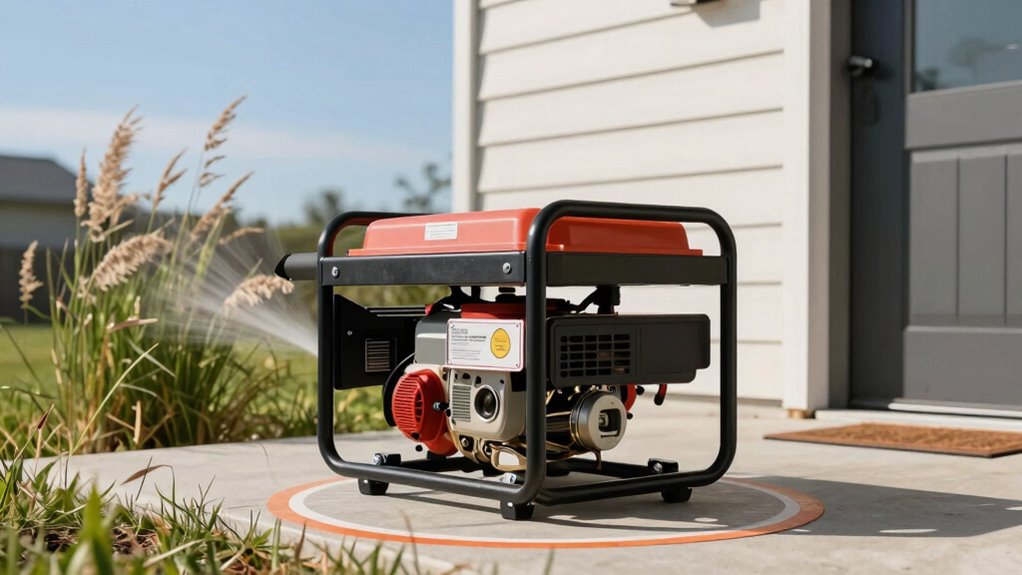

To guarantee safe generator placement, keep it at least 20 feet away from your home and structures to prevent carbon monoxide buildup and fire hazards. Position it downwind from your house so exhaust fumes drift away, and use barriers or windbreaks to improve airflow and reduce wind impact. Make sure the exhaust outlets are directed away from windows and vents. For more detailed tips on optimizing your setup, continue exploring these safety basics.
Key Takeaways
- Place the generator at least 20 feet away from your home and combustible materials to prevent fire hazards and carbon monoxide buildup.
- Position the exhaust outlet away from vents, windows, and occupied areas to ensure safe dispersal of fumes.
- Use barriers and consider wind direction to prevent exhaust fumes from drifting toward people or structures.
- Regularly monitor wind patterns and environmental conditions, adjusting the generator’s placement accordingly.
- Keep the area free of obstacles, debris, leaves, and fuel cans within a 10-foot radius for safe operation and ventilation.

Generator Exhaust Extension Silencer Kit with Three Universal Adapters Compatible ALL Portable Generators with ALL-IN-ONE KIT,Insulated Through-Wall Mounting Plate Safely Vent Exhaust Reduce Noise 55%
- Universal Compatibility: Fits most portable generators with adapters
- Complete Installation Kit: Includes sealing tape and safety gloves
- Effective Noise Reduction: Reduces exhaust noise by over 55%
As an affiliate, we earn on qualifying purchases.
As an affiliate, we earn on qualifying purchases.
Recommended Distance Between Generator and Your Home
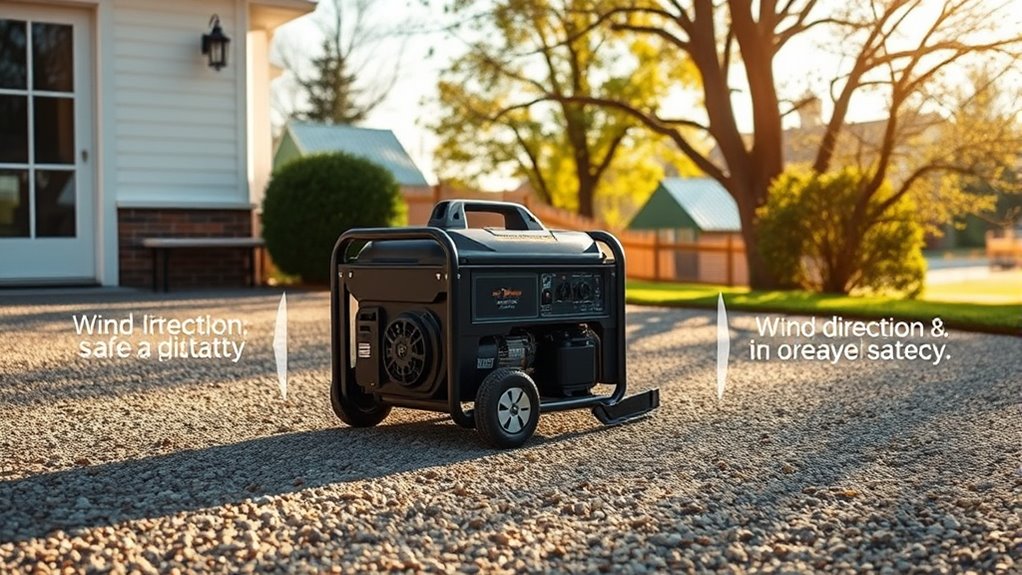
To guarantee safety and prevent dangerous carbon monoxide buildup, you should keep your generator at least 20 feet away from your home. Proper generator placement is essential for safety considerations, as it minimizes the risk of exhaust fumes entering your living space. Position your generator in a well-ventilated area, ideally on a flat, stable surface, away from windows, doors, and vents. Avoid placing it too close to your home’s walls or under eaves, which can trap fumes. Make certain there’s an open path for exhaust to disperse safely into the air. Additionally, choosing the right generator size and placement helps ensure proper airflow and safe operation. Proper outdoor generator placement reduces the risk of carbon monoxide poisoning and protects your household during power outages. Ensuring proper ventilation and considering wind direction can further improve exhaust dispersal and safety. Regularly checking exhaust dispersal patterns can help confirm that fumes are not accumulating near your home. Being mindful of airflow patterns around your generator can significantly enhance safety and reduce risks. By following these safety considerations, you reduce the risk of carbon monoxide poisoning and protect your household during power outages. Proper generator placement is a simple but critical step in safeguarding your home and loved ones.

RELIANCER 3-Panel Safety Barricade,5.8FT Foldable Security Sign Barrier Gate,Safety Warning Barricade Fence,Traffic Barricades,Outdoor Crowd Control Barriers,Hazardous Area Driveway Isolation Gate
- Durable PVC Frame: Impact and weather resistant 1" PVC pipes
- Weatherproof Fabric: 600D waterproof Oxford cloth for durability
- Adjustable Length: Extends up to 70 inches with interlocking panels
As an affiliate, we earn on qualifying purchases.
As an affiliate, we earn on qualifying purchases.
Factors That Influence Safe Placement Distance
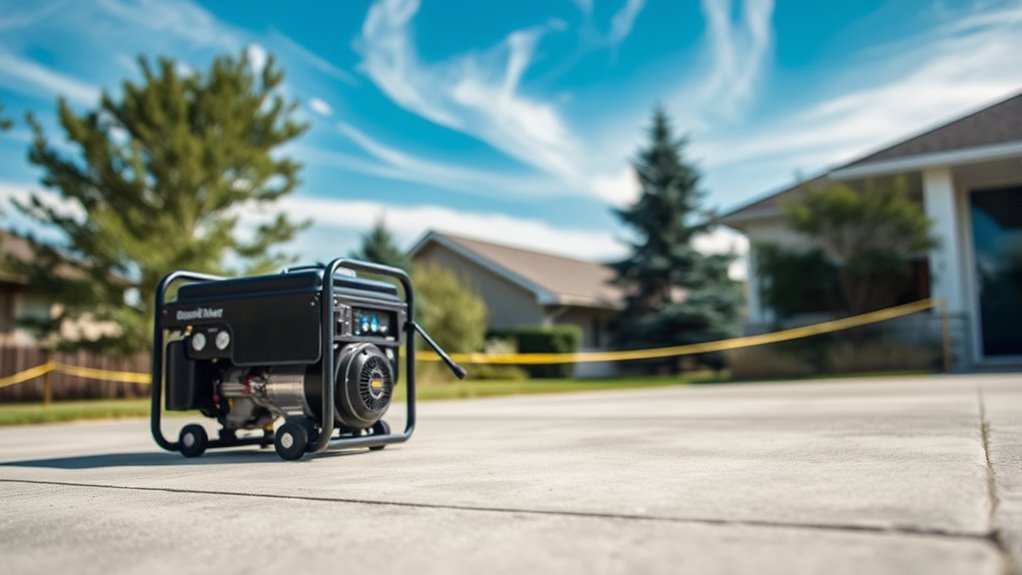
Several factors can influence how far you should place your generator from your home to guarantee safety. First, noise reduction is key; placing the generator farther away minimizes disturbance. Second, fuel efficiency benefits from proper placement, as it reduces strain on the engine caused by poor ventilation. Third, exhaust fumes pose health risks, so distance must be enough to prevent fumes from entering living spaces. Fourth, the generator’s size and power output matter—larger models require more space to disperse fumes safely. Additionally, consider your outdoor environment, such as nearby structures or wind patterns, which can impact how fumes and noise travel. Proper placement also involves understanding ventilation and airflow to ensure fumes do not accumulate or drift toward your home. Ensuring optimal airflow management can significantly improve safety and efficiency. Moreover, understanding local regulations regarding generator placement can help you stay compliant with safety standards. Being aware of weather conditions can also influence placement decisions, ensuring the generator operates safely regardless of environmental changes. Properly assessing wind direction can help prevent fumes from blowing toward your home or neighboring areas. By accounting for these factors, you can optimize your generator’s placement for safety, efficiency, and comfort.
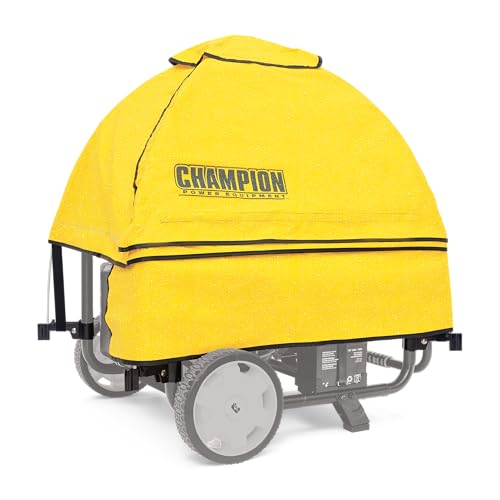
Champion Power Equipment 100376 Storm Shield Severe Weather Portable Generator Cover by GenTent for 4000 to 12,500-Starting Watt Generators
- Easy Installation: Self-attaching design with 3 simple steps
- Convenient Maintenance Access: Large refueling door and electrical panel apron
- Safe Generator Operation: Designed for safe use during operation
As an affiliate, we earn on qualifying purchases.
As an affiliate, we earn on qualifying purchases.
How Wind Direction Affects Generator Positioning
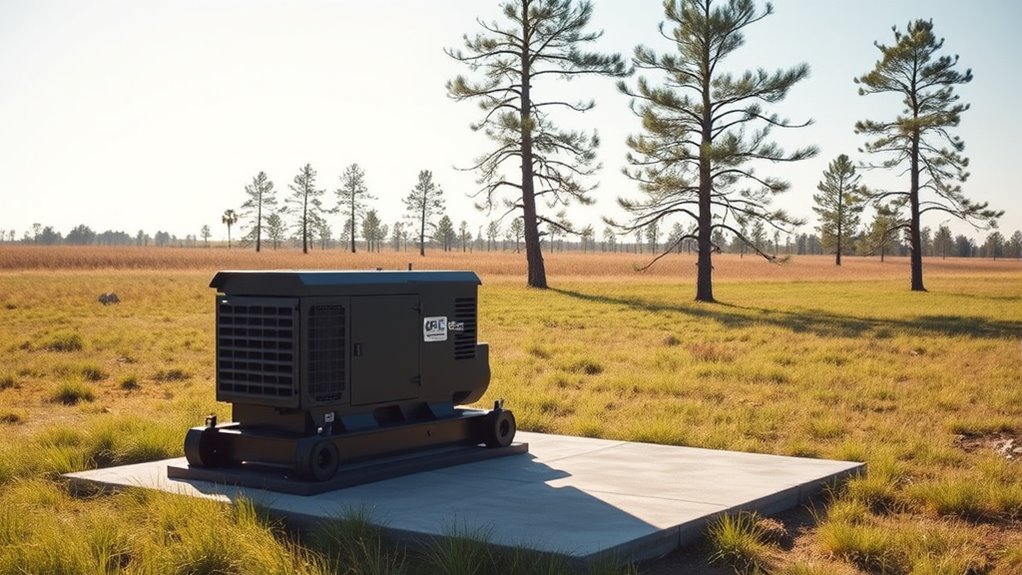
Wind direction plays a crucial role in determining the safest position for your generator. You need to take into account how wind flows across your property to prevent exhaust fumes from drifting toward your home, neighbors, or outdoor living spaces. If the wind mainly blows from the generator toward occupied areas, it’s wise to reposition it to avoid dangerous exposure. Placement considerations include positioning the generator downwind from the house and other structures, ensuring fumes are carried away rather than toward you. Regularly check local wind patterns and adjust your setup accordingly. By understanding wind direction, you minimize health risks and reduce the likelihood of exhaust fumes infiltrating indoor spaces. Proper placement aligned with prevailing winds enhances safety and keeps your generator operation secure. Understanding wind patterns can help you optimize placement and ensure ongoing safety.

POWGRN 20FT 30 Amp Generator Extension Cord L14-30P/L14-30R, STW ETL Listed
- Versatile Usage Options: Multiple lengths up to 100 feet for various needs
- Weatherproof and Durable: ETL certified, IP65 waterproof, weather-resistant
- Heavy Duty Construction: 30 amp, 4-prong, flame and corrosion resistant
As an affiliate, we earn on qualifying purchases.
As an affiliate, we earn on qualifying purchases.
The Role of Barriers and Windbreaks in Safe Placement
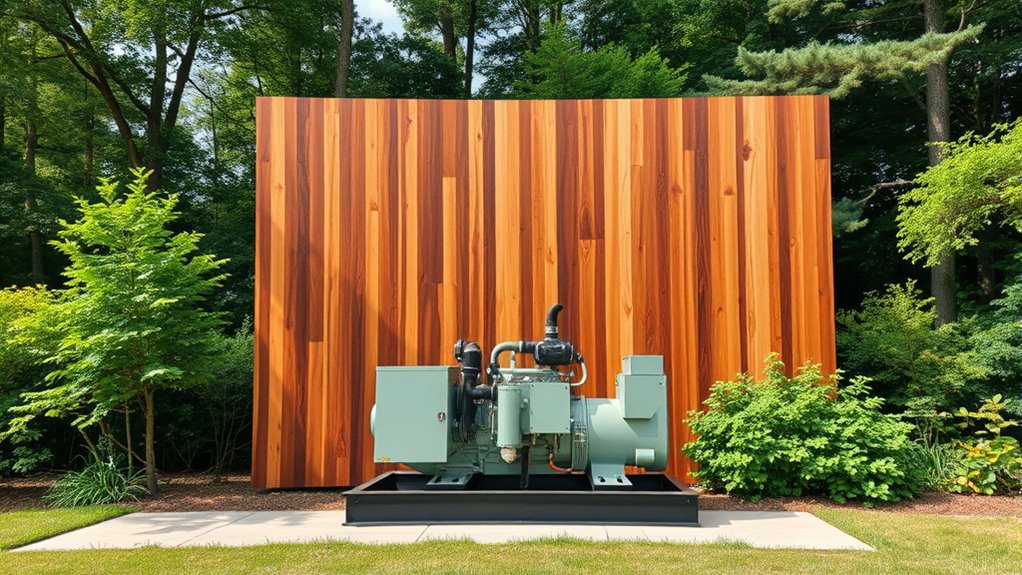
Barriers and windbreaks can substantially improve safety by reducing wind impact on your generator. Proper placement enhances their effectiveness, shielding your equipment from strong gusts. You’ll want to contemplate the best locations for windbreaks to maximize protection and stability. Additionally, understanding how wind dynamics affect your setup can help you choose the most effective barrier placement strategies. Recognizing water resistance features in your equipment can also influence optimal placement, especially in regions prone to heavy rainfall. Incorporating ventilation considerations ensures your generator remains cool and operates safely under various weather conditions. Being aware of free floating elements in your backyard landscape can also help prevent unexpected shifts or damage during storms, further safeguarding your setup. Considering ground stability can prevent your barriers from shifting or collapsing during high winds, enhancing overall safety.
Barrier Effectiveness in Wind
When considering safe generator placement, understanding how barriers and windbreaks influence airflow is essential. Barrier effectiveness depends on several factors that improve wind shielding and reduce turbulence.
- Barrier height: Taller barriers provide better wind shielding by blocking more airflow.
- Distance from the generator: Placing barriers at an ideal distance ensures maximum wind disruption.
- Barrier material: Dense, solid materials enhance barrier effectiveness compared to open or permeable options.
- Orientation: Positioning barriers perpendicular to prevailing winds optimizes wind shielding.
Optimal Windbreak Placement
Have you considered how the strategic placement of barriers and windbreaks can maximize safety around your generator? Properly positioned windbreaks can shield the unit from prevailing winds, reducing the risk of wind-related hazards. They also help direct airflow, preventing exhaust gases from drifting toward your home or other structures. Besides safety, windbreaks enhance landscape aesthetics, blending functionality with visual appeal. Additionally, they contribute to noise reduction, minimizing sound pollution and making your outdoor space more comfortable. To optimize these benefits, place windbreaks at a suitable distance—close enough to block wind effectively, but not so close as to interfere with airflow or access. Thoughtful placement guarantees your generator operates safely, quietly, and harmoniously within your landscape. Proper barrier placement not only improves safety but also enhances overall landscape design. Moreover, choosing the right windbreak materials can further improve durability and effectiveness in your specific environment. Selecting appropriate materials can also help reduce maintenance needs and extend the lifespan of your barriers. Incorporating environmentally friendly options can additionally promote sustainability and reduce ecological impact. For example, selecting native plant barriers can create a natural windbreak that integrates seamlessly into your landscape while providing environmental benefits.
Proper Exhaust Management to Minimize Risks

Proper exhaust management is essential to guarantee safety when operating a generator. Poor exhaust practices can lead to dangerous carbon monoxide buildup, posing health risks. To guarantee safe operation, focus on these key points:
- Position the exhaust outlet away from windows and vents to prevent fumes from entering enclosed spaces.
- Regularly perform generator maintenance to keep exhaust systems clean and functioning efficiently.
- Use noise reduction accessories to minimize sound pollution and improve safety by reducing noise-related distractions.
- Ensure proper ventilation by placing the generator in an open area with unobstructed airflow to disperse exhaust gases effectively. Proper ventilation is crucial for dispersing harmful gases and maintaining safe air quality. Additionally, understanding generator placement best practices can further enhance safety and efficiency. Proper exhaust management techniques also help prevent the buildup of dangerous gases and reduce environmental impact. Regularly monitoring air quality around the generator site can help detect dangerous gas concentrations early. Implementing these steps helps mitigate risks, promotes noise reduction, and maintains safe generator operation.
Avoiding Obstructions and Flammable Materials Near Your Generator
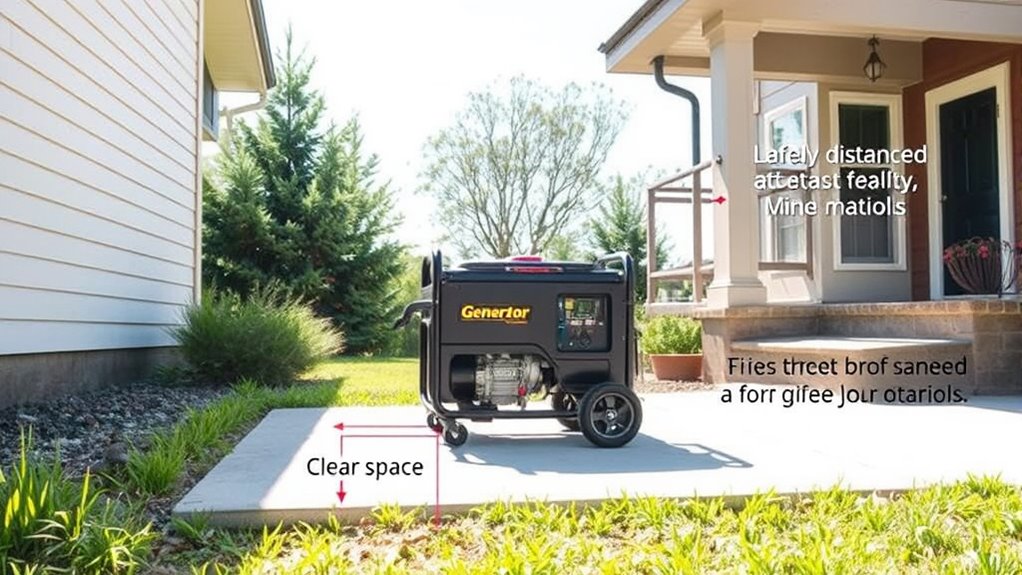
Make sure the area around your generator is clear of obstacles to guarantee proper ventilation and easy access. Keep flammable materials, like leaves, paper, and fuel cans, well away from the unit. Staying vigilant about these precautions helps prevent accidents and keeps your setup safe. Being aware of potential manipulation tactics can also help you recognize and avoid unsafe situations around your equipment. Additionally, ensuring your generator is positioned in a well-ventilated area helps prevent dangerous buildup of exhaust gases. Proper placement also involves considering wind direction to reduce the risk of debris and flames reaching the generator during adverse weather.
Clear Surrounding Area
Why is maintaining a clear surrounding area essential when placing your generator? A clutter-free space ensures safety and ideal operation. Avoid obstructions and flammable materials that could ignite or block airflow. Consider these key points:
- Keep the area free of landscaping considerations like shrubs or overgrown plants that might interfere with vents.
- Use noise reduction techniques by placing barriers away from windows and outdoor living spaces.
- Maintain at least a 3-foot clearance around the generator to prevent overheating.
- Clear debris, leaves, or other combustible materials that could pose fire hazards.
A tidy, unobstructed space not only enhances safety but also improves ventilation, reduces noise impact, and helps your generator run efficiently. Always prioritize a safe, open setup for peace of mind.
Keep Flammable Items Away
Keeping the area around your generator free of flammable items prevents fire hazards and guarantees safe operation. Flammable hazards, like leaves, paper, or gasoline containers, must be kept at a safe distance. Follow placement guidelines to ensure proper clearance and reduce risk. Avoid placing the generator near combustible materials or obstructions that could ignite or block airflow.
| Flammable Hazards | Placement Guidelines |
|---|---|
| Leaves, paper, gasoline | Keep at least 10 feet away |
| Clothing, rags | Clear surrounding area |
| Fuel cans, debris | Maintain proper clearance |
Staying vigilant about flammable hazards and adhering to placement guidelines keeps everyone safe and prevents potential fires. Regularly inspect the area to maintain a hazard-free zone around your generator.
Best Practices for Ventilation and Airflow
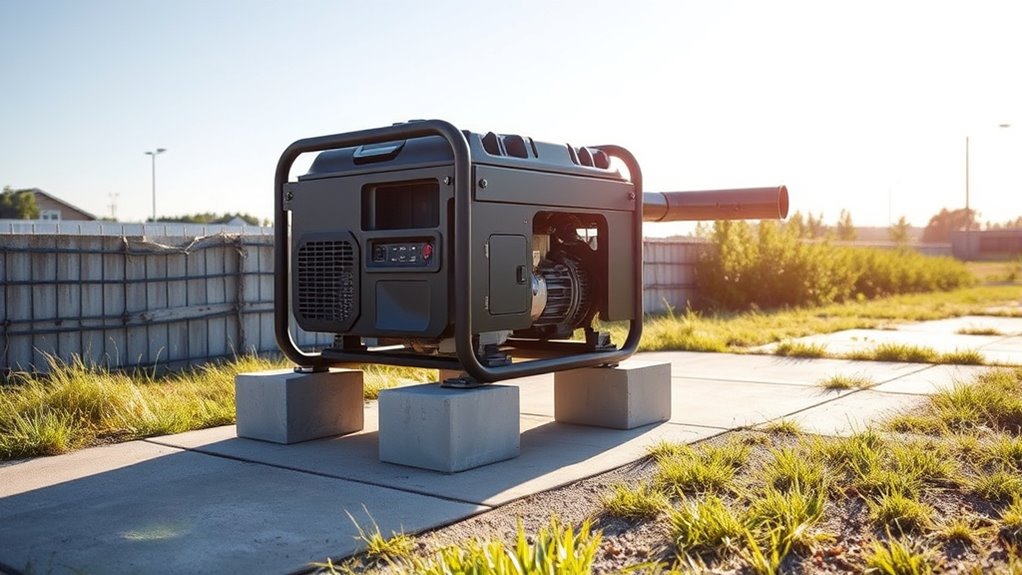
Proper ventilation and airflow are essential to guarantee safe generator operation. Poor airflow can increase generator noise, cause overheating, and create dangerous exhaust buildup. To optimize ventilation and airflow, consider these best practices:
- Maintain clear, unobstructed pathways around your generator to prevent heat and exhaust accumulation.
- Position your generator in a well-ventilated outdoor area, away from windows and doors, to disperse noise and fumes effectively.
- Store fuel safely, far from the generator, to minimize fire risk and avoid fumes that could hinder airflow.
- Ensure exhaust pipes are directed away from living spaces and airflow paths to prevent fumes from recirculating.
Following these practices helps manage noise levels, improves airflow, and keeps your fuel storage safe.
Securing Your Generator in a Stable and Safe Location
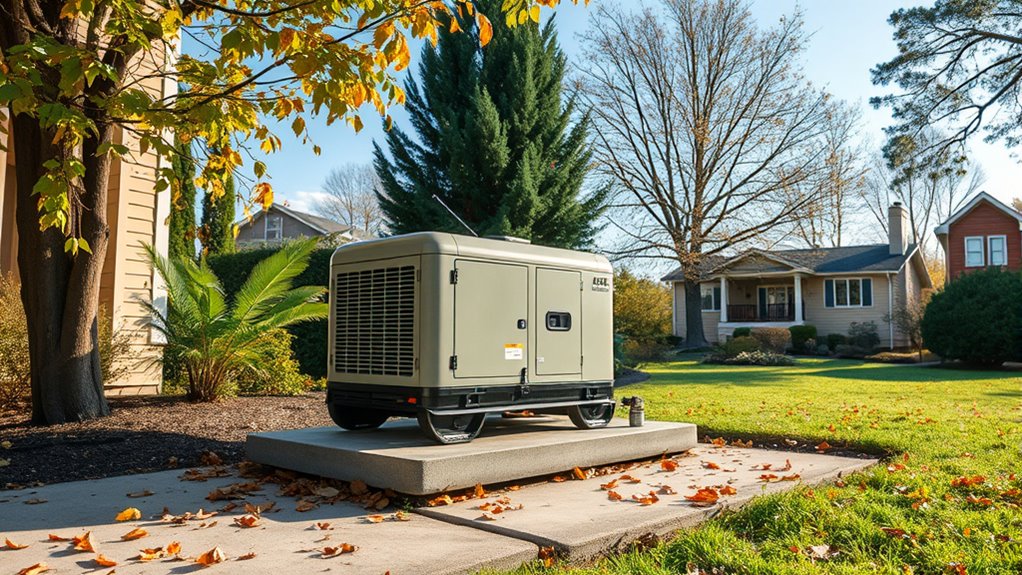
To keep your generator safe, you need to place it on level ground to prevent tipping or movement. Protect it from strong winds by choosing a sheltered location, and make sure to safeguard a safe distance for exhaust fumes. Proper placement ensures stability and minimizes risks during operation.
Choose Level Ground
Have you considered how uneven or unstable ground can compromise your generator’s safety? Choosing level ground is essential for stability and proper operation. A flat terrain assures your generator stays secure and reduces the risk of tipping or shifting. To find the best spot, focus on these key points:
- Select a spot with a gentle slope or no slope at all.
- Avoid soft, muddy, or loose soil that could sink or shift.
- Ensure the ground is free of debris, rocks, and uneven patches.
- Pick a location where water runoff won’t pool and cause instability.
Protect From Wind
Wind can pose a serious threat to your generator’s stability, especially during storms or gusty days. To protect it, focus on wind shielding by placing the generator in a sheltered location or constructing a barrier around it. Barrier construction involves using sturdy materials like plywood, fencing, or even natural features such as bushes and trees to block gusts. Guarantee the barrier is positioned upwind of the generator to deflect incoming wind effectively. Proper wind protection prevents the generator from tipping over or shifting unexpectedly, which can cause damage or safety hazards. Remember, a well-shielded generator remains stable during strong winds, assuring safe operation and longevity. Always assess prevailing wind directions and reinforce your setup with solid barriers for maximum wind protection.
Maintain Safe Exhaust Distance
Ensuring your generator is placed at a safe distance from enclosed or breathable spaces is essential for safe operation. Proper placement minimizes generator noise and prevents dangerous carbon monoxide buildup. To maintain a safe exhaust distance, consider these key points:
- Keep the generator at least 20 feet away from your home or shelter to reduce noise and exhaust exposure.
- Avoid placing it near fuel storage to prevent fire hazards.
- Position the exhaust outlet away from windows and vents to disperse fumes safely.
- Elevate the generator on stable ground to prevent accidental tipping and ensure proper airflow.
Following these steps helps protect your health, safety, and property, ensuring your generator runs efficiently without risking fuel or exhaust-related dangers.
Monitoring Environmental Conditions for Safe Operation
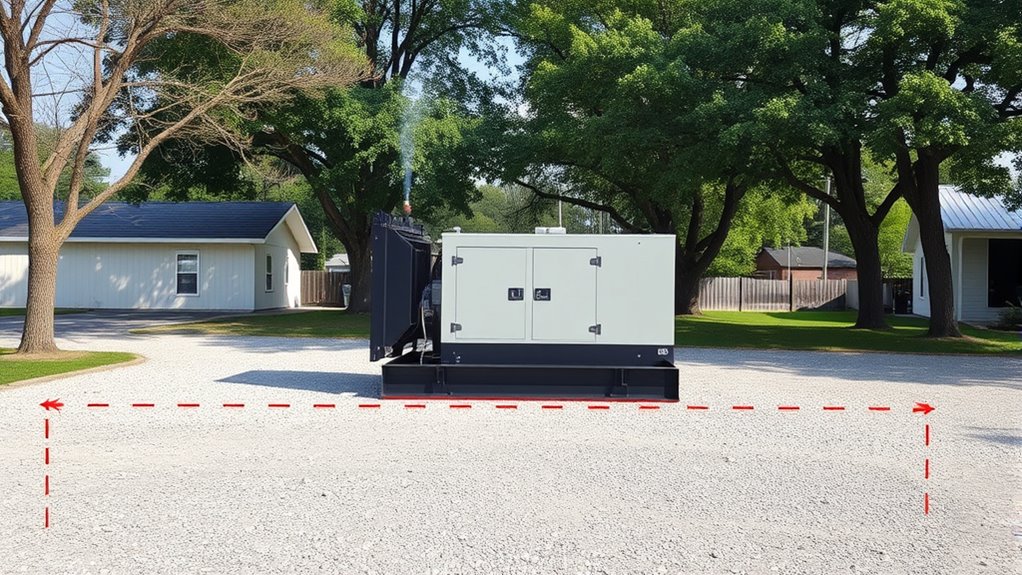
Monitoring environmental conditions is essential to maintaining safe generator operation, especially since factors like temperature, humidity, and wind can considerably impact performance and safety. You should regularly check noise levels around the generator to verify they stay within acceptable limits and don’t disturb nearby occupants or violate local regulations. Additionally, keep a close eye on electrical grounding to prevent electrical hazards caused by moisture or temperature fluctuations. Proper grounding maintains safe operation and reduces the risk of electrical faults. Wind speed and direction also influence safe placement, so monitor weather conditions consistently. By staying vigilant about environmental factors, you help guarantee your generator runs efficiently, safely, and within legal boundaries. This proactive approach minimizes risks and supports ideal generator performance over time.
Regular Inspection and Adjustment of Generator Placement
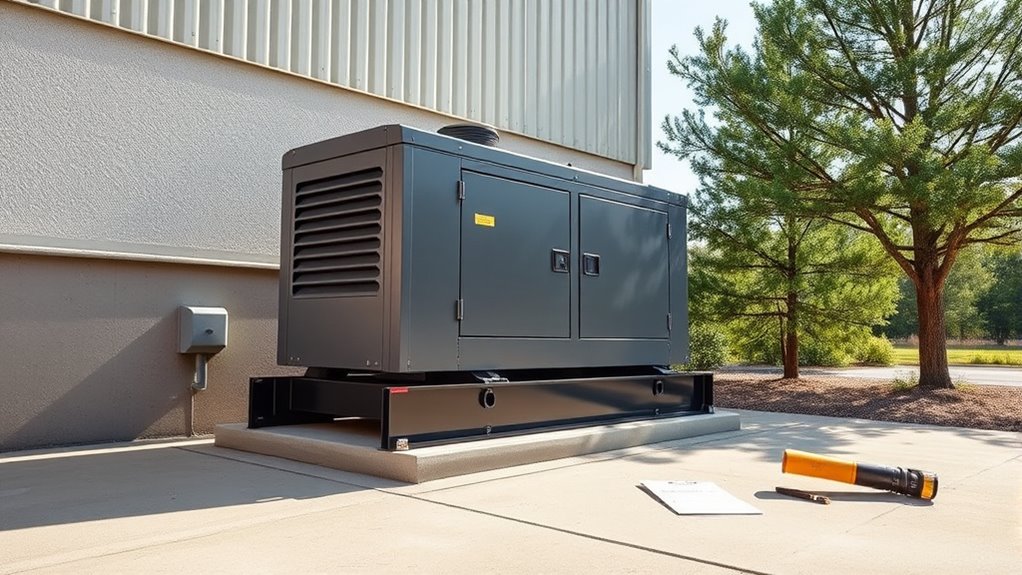
Regular inspection and adjustment of your generator’s placement are essential for maintaining safety and ideal performance. Over time, environmental changes or minor shifts can affect safety and efficiency. To guarantee proper generator maintenance, follow these placement guidelines:
- Check for debris or obstructions around the unit regularly.
- Confirm the exhaust is directed away from vents and windows.
- Ensure the generator remains at the recommended distance from structures.
- Adjust positioning if wind patterns or nearby obstacles change.
Frequently Asked Questions
How Often Should I Reassess My Generator’s Placement?
You should reassess your generator’s placement at least once a year or whenever you notice changes in your environment, like new structures or increased wind. Follow installation guidelines and safety checklists to guarantee proper distance from windows, vents, and combustible materials. Regular reviews help identify potential hazards, ensure ideal ventilation, and maintain safe operation, especially before storm seasons or after significant weather events. Staying proactive keeps your setup safe and compliant.
What Tools Help Measure Safe Distance From My Home?
You can use a tape measure or laser distance meter to accurately gauge the safe distance from your home. Make certain you consider safety barriers like fences or shields to block noise and prevent debris. Check noise levels with a decibel meter to keep them within safe limits, especially if neighbors are nearby. Regularly reassess your setup, especially after weather changes, to maintain safe placement and minimize risks.
How Do Nearby Trees Impact Generator Safety?
Nearby trees can influence your generator’s safety by affecting tree proximity and foliage clearance. If trees are too close, falling branches or debris can damage your generator or cause hazards. Dense foliage can also block airflow, reducing ventilation and increasing risks of overheating. Always keep a safe distance from trees and regularly trim branches to ensure clear space around your generator, maintaining both safety and proper operation.
Are There Specific Local Regulations for Generator Placement?
Think of local regulations as the blueprint for your generator’s dance floor. You need to follow placement guidelines to keep everyone safe. Check with your city or county codes, as they set rules on distance, exhaust, and noise levels. Ignoring these can lead to fines or hazards. So, before setting up, verify your local regulations to make sure your generator’s dance stays safe and compliant with the law.
How Can I Tell if Wind Conditions Have Changed Dangerously?
You can tell if wind conditions have become dangerously high by monitoring wind speed regularly with a weather app or an anemometer. If you receive weather alerts warning of strong gusts or high wind speeds, take those seriously. When wind speeds exceed safe thresholds, consider moving your generator to a more sheltered location or shutting it down temporarily to prevent hazards. Always stay informed with local weather updates for safety.
Conclusion
By following these safety tips, you guarantee your generator operates efficiently and safely. Keep it well-placed, mind the wind and exhaust, and regularly inspect its position—think of it as akin to tending your own personal, modern-day alchemist’s workshop. With careful attention, you’ll prevent hazards and keep your home protected, even amidst the chaos of a storm or power outage. Remember, a well-positioned generator is your best defense—like a trusty steed guarding your castle.