To turn on wireless emergency alerts that truly help, start by opening your device’s Settings and find the alerts or notifications section. Enable the Wireless Emergency Alerts (WEA) toggle, then customize alert types like Presidential, Imminent Threat, or AMBER alerts to suit your needs. Confirm your device is up to date and review your settings regularly. Managing these alerts responsibly makes sure you get crucial information when it matters most—keep going to learn more about optimizing your setup.
Key Takeaways
- Access your device’s Settings app and locate the “Notifications” or “Emergency Alerts” section.
- Enable Wireless Emergency Alerts (WEA) by toggling the relevant switch to turn on alerts.
- Customize alert categories such as Presidential, Imminent Threat, or AMBER alerts for relevance.
- Regularly review and update your alert settings after software or carrier updates.
- Ensure alert tones and vibrations are set to notice critical messages promptly.
Understanding the Importance of WEA Settings
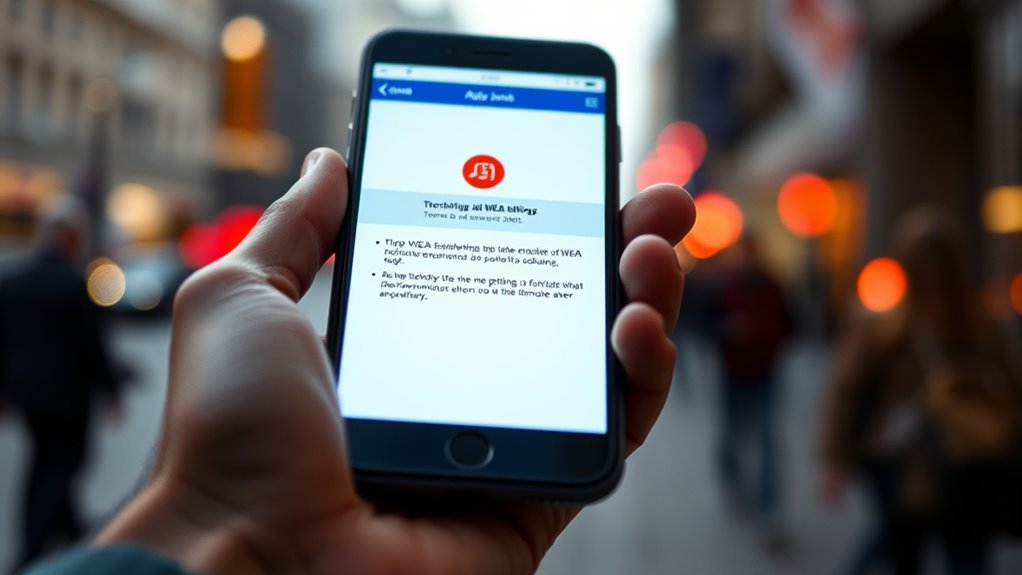
Understanding the importance of WEA settings helps guarantee you receive critical alerts when it matters most. By making certain your device’s WEA notifications are enabled, you won’t miss emergency messages like severe weather, child abductions, or national threats. These alerts are designed to deliver life-saving information quickly and reliably, even if your phone is on silent. Adjusting your WEA settings allows you to control which alerts you receive, helping you stay informed without unnecessary interruptions. Without proper setup, you risk missing essential updates during emergencies. Confirm that your device’s notifications are turned on and that WEA alerts are enabled in settings. Ensuring your device’s emergency communication capabilities are properly configured can make all the difference in times of crisis. Regularly reviewing and updating these alert preferences helps maintain your readiness, especially as your communication needs or device settings change. Staying proactive in managing these settings ensures you’re prepared and informed when emergencies strike, and understanding the role of contrast ratio in display technology can also help you optimize your viewing experience during critical moments. Additionally, being aware of local alert systems can enhance your preparedness by providing region-specific updates.
How to Enable WEA Alerts on Your Device
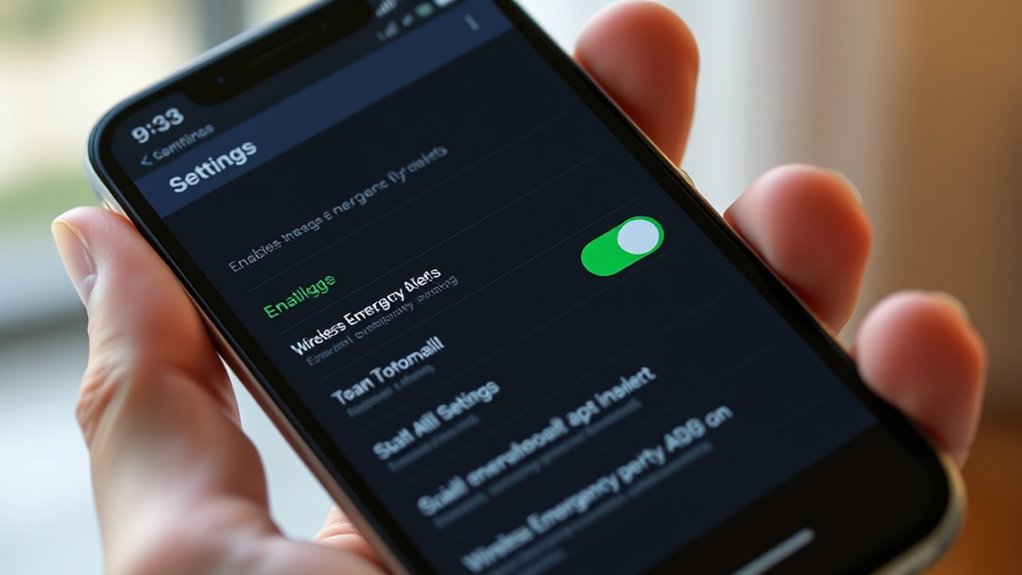
Enabling WEA alerts on your device guarantees you receive essential emergency notifications when it matters most. To do this, start by opening your phone’s Settings app. Look for options labeled “Notifications,” “Alerts,” or “Emergency Alerts.” On most smartphones, you’ll find a dedicated section for Wireless Emergency Alerts. Make sure the toggle for WEA alerts is turned on or enabled. Some devices let you customize which alerts you receive, such as Presidential, Imminent Threat, or AMBER alerts—choose your preferences accordingly. If you don’t see these options, check your device’s user manual or contact your wireless provider. Ensuring these alerts are activated guarantees you won’t miss important messages during emergencies, keeping you informed and safe. Additionally, reviewing your device’s alert settings configuration can help ensure you’re receiving the full range of critical notifications, including updates about emergency preparedness. Being aware of alert customization options can further improve your responsiveness to different types of alerts. Staying aware of sector performance metrics and market research can further enhance your overall readiness for unexpected situations. Regularly updating your device software can also improve the reliability of emergency alerts and system performance.
Types of Alerts You Should Never Miss
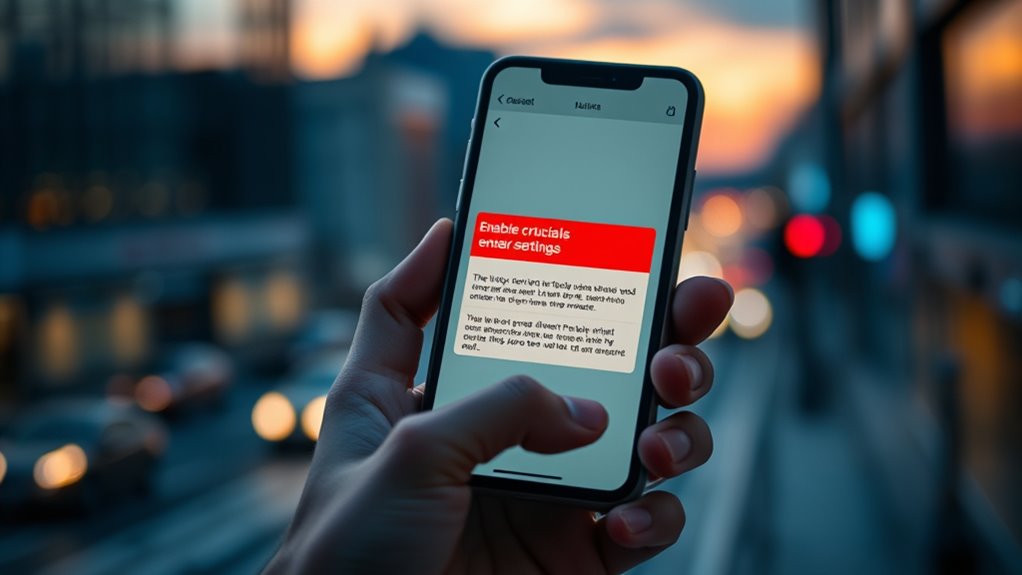
To stay safe during emergencies, you should never miss critical alerts like Presidential, Imminent Threat, and AMBER alerts. Presidential Alerts are the highest priority; they’re issued by the President or FEMA and can provide essential information during national emergencies. Imminent Threat alerts warn you about immediate dangers like severe weather or hazardous conditions, giving you time to take protective actions. AMBER alerts focus on child abduction cases, helping locate missing children quickly. These alerts are designed to reach you instantly, even if your phone is on silent. Ignoring them could mean missing vital information that could save your life or help others. Make sure your device is set to receive all these necessary alerts without delay. Emergency alert systems are crucial tools for public safety, ensuring you get timely information when it matters most, especially through reliable notification channels. Ensuring your phone settings allow urgent alerts can make a significant difference in emergency situations. Properly configuring your alert preferences ensures you won’t miss vital broadcasts during critical moments. Additionally, understanding the types of alerts and their importance can help you prioritize which notifications to act on first.
Customizing Your Alert Preferences for Maximum Safety

Adjusting your alert settings guarantees you receive critical emergency messages without unnecessary interruptions. Start by reviewing your device’s alert preferences to make certain alerts are enabled for all relevant categories, like severe weather or child safety. Many phones let you customize which alerts to receive, so select the most essential ones, such as Imminent Threat or Presidential Alerts, to stay informed during emergencies. Disable less urgent notifications if they distract you, but keep life-saving alerts active. Check your device’s settings regularly, especially after updates, to confirm alerts remain enabled. If your carrier offers options for alert tones or vibrations, customize them to ensure you notice alerts immediately. Properly managing these preferences guarantees you’re prepared and protected when it matters most. Staying informed about industry trends can also help you stay updated on new alert features and updates. Additionally, reviewing emergency communication protocols can ensure you’re aware of the most effective ways to respond during crises, including understanding the importance of Piercing Care and Hygiene and how it relates to safety and well-being. Being aware of herbal teas for health benefits can also support your overall well-being during stressful situations.
Staying Informed: Tips for Responsible Alert Management

Staying informed during emergencies requires responsible alert management to guarantee you receive critical messages without becoming overwhelmed. First, ensure your phone’s alert settings are activated for all WEA categories relevant to your area, including imminent threats, Amber alerts, and public safety warnings. Regularly review and adjust your alert preferences to prevent unnecessary notifications, especially during non-emergency times. Keep your device’s software up to date to ensure compatibility with the latest alert features. When you receive an alert, read it carefully and follow the instructions promptly. Avoid dismissing alerts without understanding them, as they’re designed to keep you safe. Remember, responsible management means staying aware without overloading yourself, so you can respond quickly and effectively when it matters most. Modern technology has made it easier to stay connected and informed during emergencies, but managing these tools responsibly is key. Additionally, familiarize yourself with alert settings on your device to customize notifications and ensure you’re only receiving the most relevant information. Being aware of emergency procedures can also enhance your preparedness and response, especially considering that electric bikes and other devices can be part of emergency preparedness kits. Understanding alert customization options can help you tailor alerts to your specific needs and reduce false alarms.
Frequently Asked Questions
Can WEA Alerts Be Disabled Permanently on My Device?
No, you can’t permanently disable Wireless Emergency Alerts (WEA) on your device. These alerts are built into your phone’s system to guarantee public safety during emergencies. While you can turn off certain alert types like AMBER or public safety warnings, Presidential and Imminent Threat Alerts generally stay enabled to provide critical information. Disabling all WEA alerts isn’t recommended, as it could prevent you from receiving essential emergency messages.
Do All Wireless Carriers Participate in WEA Alert Delivery?
Not all wireless carriers participate in WEA alert delivery. While most major providers do, some smaller or regional carriers might not support the system. You should check with your specific carrier to confirm if they participate. If your carrier supports WEA, your device will automatically receive alerts without any extra setup. If not, you may miss out on important emergency notifications. Contact your carrier for detailed information about their participation.
How Accurate Are Polygon-Based Alerts Compared to Traditional Alerts?
Think of polygon-based alerts as modern cartographers drawing precise danger zones, much like a skilled archer hitting the bullseye. They’re markedly more accurate than traditional alerts, which are like casting a wide net. You’ll receive alerts tailored to actual threat areas, reducing false alarms. This precision helps you act swiftly and appropriately, especially during severe weather or emergencies, making your response more targeted and effective.
Will WEA Alerts Affect My Device’s Battery Life Significantly?
WEA alerts won’t substantially drain your device’s battery. Since they use cell broadcast technology, your phone only receives alerts when in range of a cell tower, which doesn’t require continuous power. The alerts are brief and delivered efficiently, so they won’t cause noticeable battery loss. Keep your device’s software updated and confirm notifications are enabled, but don’t worry—receiving WEA alerts won’t impact your battery life much.
Are There Any Privacy Concerns With Receiving WEA Alerts?
You might wonder about privacy concerns with WEA alerts, but you’re actually quite safe. Less than 1% of people worry about their privacy when receiving alerts, and these messages don’t track your location or collect personal data. They’re broadcasted from cell towers to all compatible devices in the area, so your privacy remains protected. Rest assured, WEA alerts prioritize your safety without compromising your personal information.
Conclusion
By mastering your mobile’s WEA settings, you guarantee you’re swiftly and securely informed during emergencies. Take the time to toggle the timely alerts, tweak your preferences, and stay vigilant. Vigilance, value, and vigilance again—making sure you never miss an essential message. Remember, responsible alert management means staying safe, secure, and smart. So, set your settings today, and stay one step ahead with alerts that truly matter. Your safety is just a few clicks away.