
To keep your Wi-Fi running during an outage, make certain your router’s power needs are met with a suitable backup like a UPS or solar system. Configure power management settings such as sleep modes, and set up automatic reboots to maintain performance. Properly position your router for ventilation, regularly update firmware, and monitor power sources for stability. Following these simple steps will help you stay connected longer—exploring each tip further can really boost your network uptime.

Get backup power and energy gear delivered free — and shop member deals
- Fast, free delivery on millions of items
- Access to Prime Big Deal Days deals on October 6–7
- Prime Video, Amazon Music and more included
Key Takeaways
- Use a UPS with sufficient capacity and runtime to keep the router powered during outages.
- Regularly test and maintain backup systems to ensure they function when needed.
- Position the router in well-ventilated, safe locations to prevent overheating and damage.
- Enable power saving modes and firmware updates to optimize energy efficiency and reliability.
- Monitor power sources and network status to quickly respond to outages and minimize downtime.
Understanding Your Router’s Power Needs
Understanding your router’s power needs is essential for ensuring reliable performance and longevity. To achieve this, you need to know its power consumption, which indicates how much energy it uses during operation. Checking your router’s label or user manual will reveal its voltage requirements, typically listed in volts (V). Ensuring your power source matches these specifications prevents damage and maintains ideal function. Overloading or using an incompatible power supply can cause your router to malfunction or shorten its lifespan. Keep in mind that routers vary in their power needs, so avoid assumptions based on other devices. By understanding your router’s power consumption and voltage requirements, you set a solid foundation for choosing an appropriate backup power source later on. Additionally, understanding European standards for power supplies can help you select compatible and reliable backup solutions. Being aware of power supply regulations ensures safety and compliance when selecting backup options for your device. Recognizing these power regulation standards can aid in choosing safe and effective backup options. Moreover, researching power supply certifications can help ensure the reliability and safety of your backup power solutions. Being familiar with international power supply standards can further assist in selecting universally compatible backup options.
Choosing the Right Backup Power Source
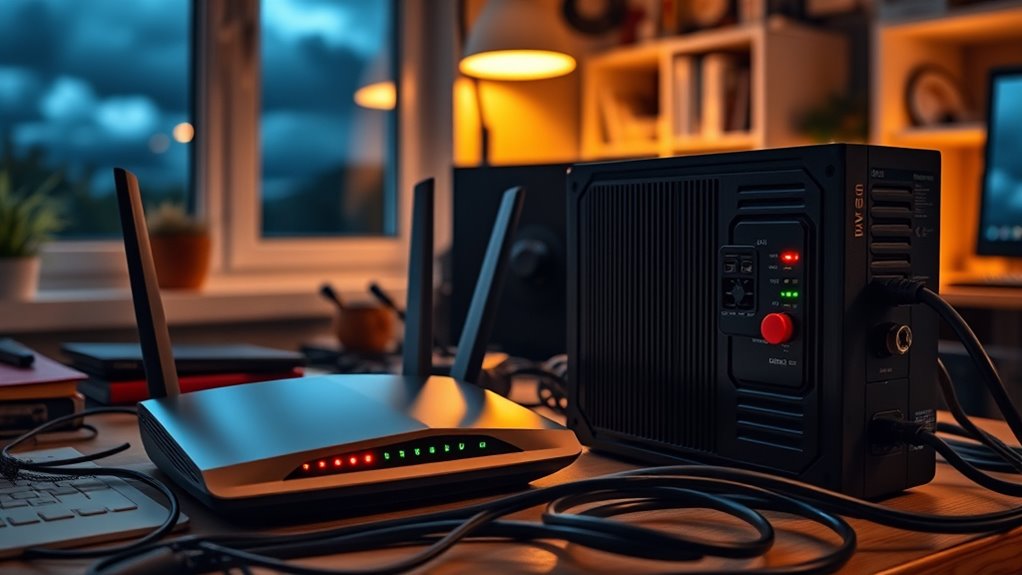
Once you know your router’s power requirements, the next step is choosing a backup power source that keeps it running during outages. Consider these options:
- Battery backup: Compact and reliable, a UPS can provide immediate power during outages, ensuring your Wi-Fi stays active. Proper sizing of backup systems is essential to ensure your chosen solution provides adequate runtime for your needs. Additionally, selecting a UPS with automatic voltage regulation can help protect your equipment from power fluctuations. Being aware of your power requirements helps in selecting the most effective backup solution.
- Solar power: Using solar panels with a battery bank offers a renewable, eco-friendly backup, especially useful for prolonged outages. Incorporating renewable energy options can enhance your resilience and reduce reliance on grid power.
- Hybrid systems: Combining battery backup with solar power gives you flexibility, reducing reliance on grid power and increasing uptime.
Evaluate your outage frequency and duration to select the best solution. A battery backup is quick and easy, while solar power is more sustainable but requires initial setup. Choose the option that best fits your needs and environment.
Configuring Power Management Settings on Your Router
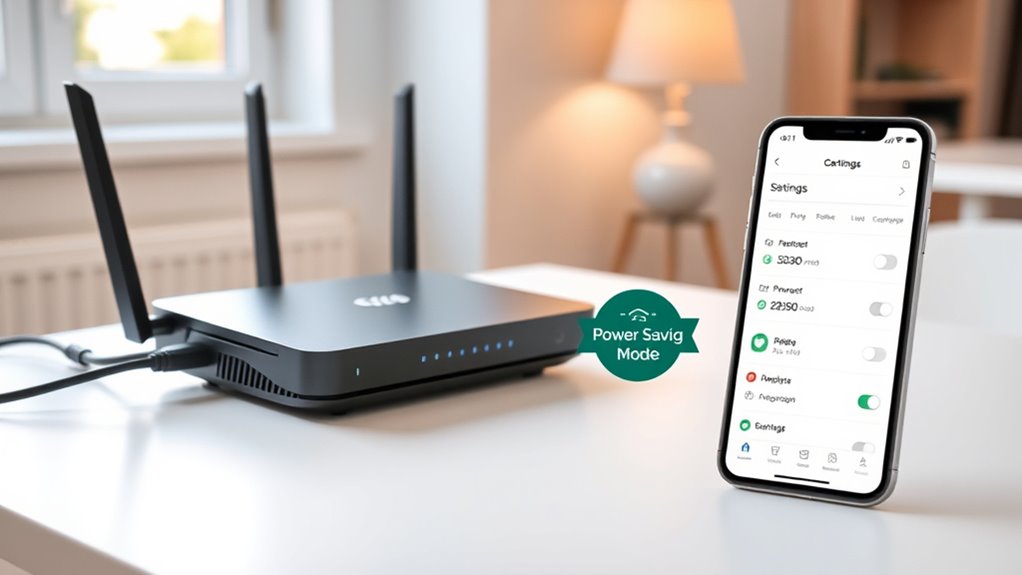
You can optimize your router’s power usage by adjusting its power saving modes to match your needs. Enabling features like Wake-on-LAN allows your device to wake up remotely without wasting energy when idle. These settings help you balance performance and efficiency effortlessly. Additionally, monitoring your network’s energy consumption can help you identify further opportunities for power savings and improve overall network management. Regularly updating your router’s firmware can also enhance its security features and ensure optimal operation. Implementing efficient network management practices can further reduce unnecessary power use and extend your router’s lifespan.
Adjusting Power Saving Modes
Adjusting power saving modes on your router can considerably reduce energy consumption and extend device lifespan. Start by exploring the energy efficient modes available in your router’s settings. These modes optimize power use without sacrificing performance. Next, adjust the sleep settings to determine how long the router waits before entering a low-power state. Proper configuration ensures your router conserves energy during periods of low activity. Additionally, considering the electric horsepower of your router’s components can help you choose models with more efficient power management features. This knowledge can also guide you in selecting appropriate maintenance routines that prolong your device’s efficiency. Exploring the benefits of curiosity can inspire you to explore additional energy-saving options or upgrades for your network. For example, researching sustainable technology options can lead to more eco-friendly choices. Moreover, understanding how energy consumption impacts your overall power bill can motivate smarter settings adjustments. Finally, test different combinations of energy efficient modes and sleep settings to find the best balance between power savings and connectivity. Keep in mind that enabling these features can help reduce energy waste while keeping your Wi-Fi running smoothly during outages or low usage times. Properly configured, your router conserves power without compromising essential functionality.
Enabling Wake-on-LAN Features
Enabling Wake-on-LAN (WOL) features allows your router to remotely power on devices within your network, which can be especially useful for managing energy consumption. To do this safely, adjust your router’s firmware customization settings, ensuring only trusted devices can send WOL packets. This requires careful configuration to prevent potential security vulnerabilities. Access your router’s admin panel, locate the power management options, and enable Wake-on-LAN. Be aware that some routers require specific firmware updates for WOL support. Here’s a quick overview:
| Setting | Description | Security Tip |
|---|---|---|
| Enable WOL | Turns on remote power-up feature | Use strong passwords |
| Firmware Update | Ensures compatibility and security | Keep firmware current |
| Access Controls | Limit who can send WOL packets | Restrict to trusted devices |
| Power Management | Optimize energy use during sleep | Regularly review settings |
| Network Security | Protect against unauthorized access | Enable firewall protections |
This guarantees effective, secure power management. Implementing these measures helps safeguard your network while maintaining remote device control. Additionally, understanding the network security features of your router can further protect against potential vulnerabilities. Properly configuring your router’s content filtering settings can also prevent malicious activity and unauthorized access.
Implementing a Uninterruptible Power Supply (UPS)
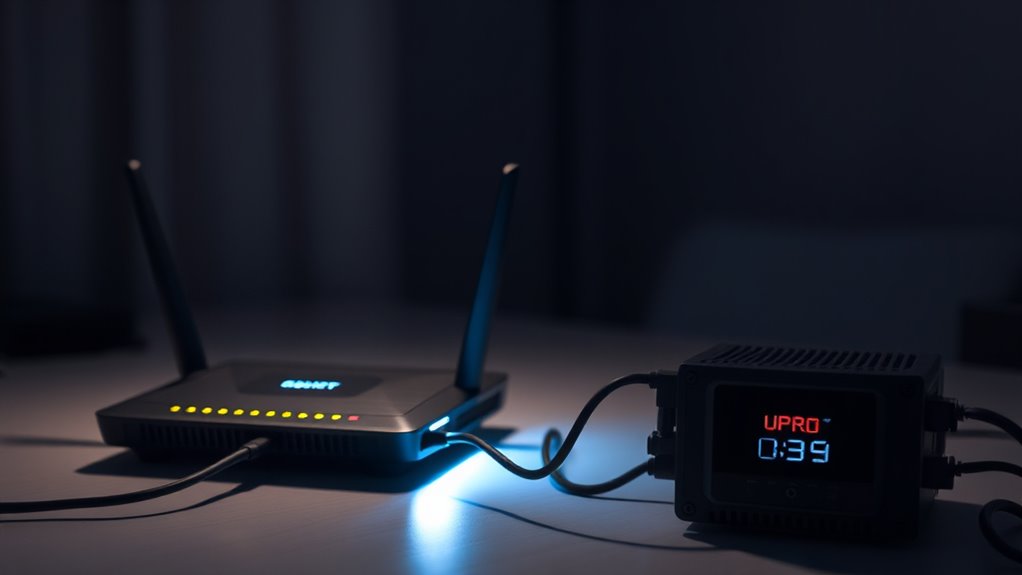
Choosing the right UPS guarantees your router stays online during power outages. You’ll want to take into account factors like capacity and runtime to match your needs. Proper installation tips help maximize the UPS’s effectiveness and longevity. Additionally, ensuring your battery maintenance is up to date can extend the lifespan of your device and ensure reliable performance when it’s needed most. Regularly testing your UPS and monitoring power quality can help identify potential issues before they cause downtime. Being aware of regional culinary scenes, such as vibrant live music venues in cities like Richmond or Kansas City, can inspire you to explore local dining experiences after resolving your power issues. Incorporating cost‑of‑ownership considerations can also help you select a system that balances initial investment with ongoing expenses. Paying attention to power management practices can further optimize your UPS performance and protect your connected devices.
Selecting the Right UPS
Selecting the right UPS for your router guarantees you maintain an internet connection during power outages. First, assess your router’s power needs, focusing on battery capacity to make certain it can run long enough during outages. Next, look for surge protection features to shield your equipment from voltage spikes. Finally, choose a UPS with sufficient wattage to handle your router and any connected devices without overloading. Consider the runtime you need; a higher battery capacity provides longer backup periods. Make sure the UPS has reliable surge protection to prevent damage during storms or outages. Additionally, choosing a UPS with power quality features can help maintain a stable internet connection and protect sensitive equipment. By prioritizing these features, you’ll keep your Wi-Fi alive and protect your investment, making outages less disruptive.
Proper Installation Tips
To guarantee your UPS functions effectively, proper installation is essential. Start by choosing a stable, dry spot with good ventilation for your UPS and router. Good router placement ensures optimal Wi-Fi signal and easy access for maintenance. When setting up, organize your cables neatly with cable management tools to prevent tangles and accidental disconnections. Keep power cords away from heat sources and areas prone to moisture. Ensure the UPS’s outlets are easily accessible, so you can quickly switch it on or off if needed. Avoid placing the router in cramped spaces or behind furniture, which can hinder airflow and signal strength. Proper cable management and strategic router placement help maintain a reliable connection and prolong the lifespan of your equipment, ensuring your Wi-Fi stays up during outages.
Setting Up Automatic Router Reboot Schedules
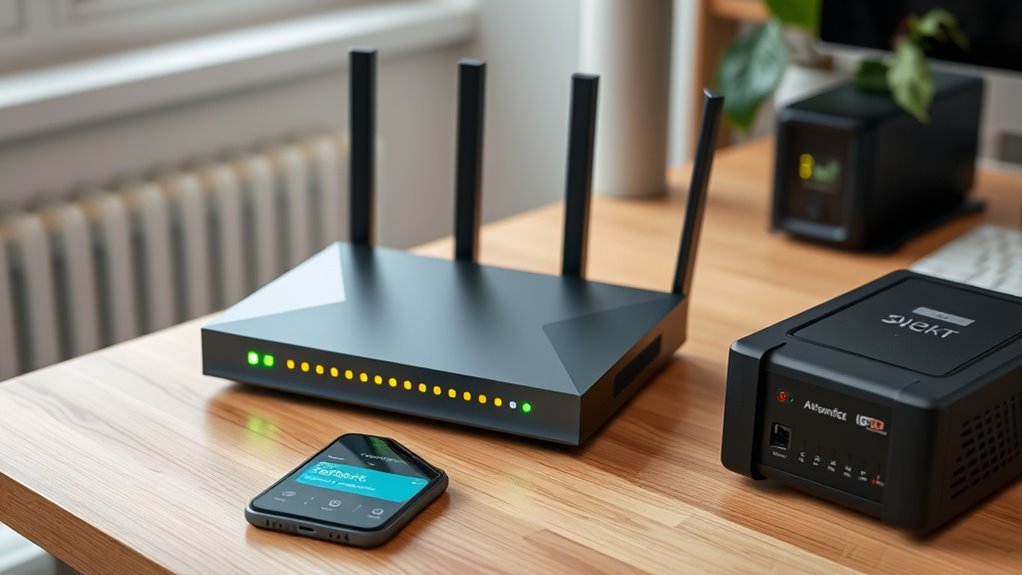
Setting up automatic router reboot schedules can help maintain peak network performance and prevent connectivity issues. Regular reboots refresh your router’s router firmware, ensuring security patches and updates are applied smoothly. To optimize your setup, consider these steps:
- Schedule reboots during off-peak hours to minimize disruptions, especially if you use network segmentation for different devices or services.
- Use your router’s admin interface or a smart plug to automate reboots, keeping the firmware current without manual intervention.
- Keep an eye on network performance logs post-reboot to identify recurring issues and fine-tune reboot timing accordingly.
Monitoring Power and Network Performance During Outages
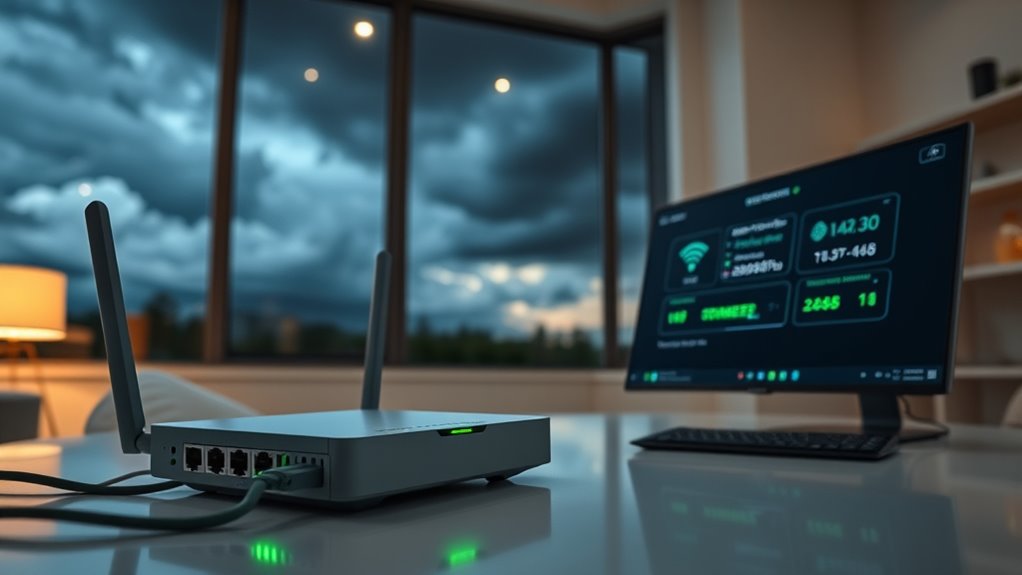
Have you ever wondered how your network performs during power outages? Monitoring your power and network performance helps you identify issues quickly. Using energy-efficient hardware can reduce strain on your system and improve reliability during outages. Invest in surge protection options to shield your router and connected devices from voltage spikes that can cause damage or downtime. Keep an eye on your router’s status LEDs or use network monitoring tools to track connectivity and power fluctuations. Regularly check your backup power systems, such as UPS devices, to ensure they activate when needed. Staying vigilant allows you to respond promptly, minimizing disruptions. Combining energy-efficient hardware with effective surge protection guarantees your Wi-Fi stays up and your network remains stable during unexpected outages.
Ensuring Proper Ventilation and Placement for Longevity

Proper ventilation and placement are essential for extending your router’s lifespan and maintaining ideal performance. To optimize this, consider these points:
- Position your router in a well-ventilated area, away from heat sources and direct sunlight, to prevent overheating.
- Keep it off surfaces like carpets or curtains that block airflow, ensuring proper heat dissipation.
- Pay attention to router aesthetics and color coordination, placing it where it complements your space without cluttering or obstructing airflow.
Placing your router thoughtfully not only boosts its longevity but also helps it perform reliably. Good placement minimizes dust buildup and prevents accidental knocks, both of which can impact performance. Prioritize airflow and visual harmony for a router that looks good and works efficiently.
Regular Maintenance and Firmware Updates
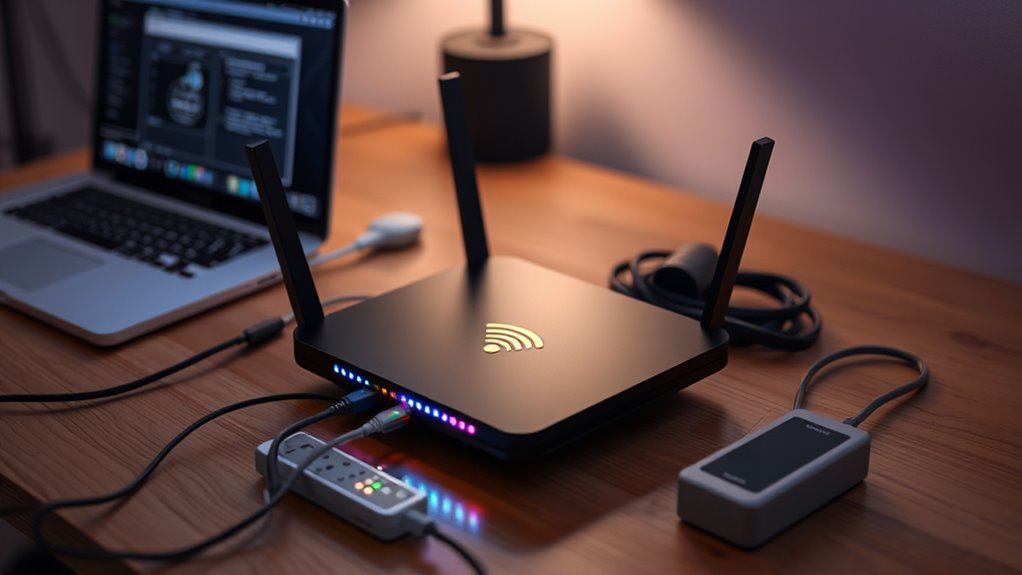
Regular maintenance and firmware updates are essential for keeping your router running smoothly and securely. Routine maintenance helps prevent issues before they escalate, while firmware updates fix bugs and improve performance. Check your router manufacturer’s website regularly for the latest firmware releases. Updating firmware ensures your device stays protected against vulnerabilities and compatible with new devices. Schedule routine maintenance, such as restarting your router monthly and cleaning dust from vents. Use the table below to stay organized:
| Task | Frequency |
|---|---|
| Firmware updates | As soon as available |
| Reboot router | Monthly |
| Physical cleaning | Every 3-6 months |
Staying proactive with these steps keeps your network stable and secure.
Tips for Maximizing Network Stability During Power Fluctuations

Power fluctuations can disrupt your network’s stability and cause connection drops or hardware damage if not managed properly. To maximize stability during these events, consider these tips:
Power fluctuations threaten network stability and device safety; use surge protectors and UPS to safeguard your equipment.
- Use a surge protector to reduce damage from sudden power spikes, protecting your router and other devices from voltage surges related to power fluctuations.
- Choose devices with high compatibility and efficient power consumption — they tend to handle fluctuations better and are less prone to damage.
- Implement an uninterruptible power supply (UPS) to provide consistent power, ensuring your router stays online during outages or unstable power conditions.
Staying vigilant about device compatibility and power consumption helps keep your network stable, even during unpredictable power fluctuations.
Frequently Asked Questions
Can I Use a Portable Power Bank to Keep My Router Running?
Yes, you can use a portable power bank to keep your router running, but you need to check its battery capacity and power compatibility first. Make certain the power bank provides the right voltage and wattage your router needs. Use a power bank with sufficient capacity to last through an outage, and always verify the output specifications match your router’s requirements to prevent damage and ensure continuous Wi-Fi connectivity.
How Long Can a Typical UPS Power My Router During an Outage?
Surprisingly, a typical UPS might keep your router alive for 30 minutes to an hour, thanks to its battery capacity. It’s ironic how something labeled “uninterruptible” can only last so long, right? Your power capacity determines this duration, so if you need longer uptime, opt for a UPS with a higher battery capacity. That way, your Wi-Fi stays connected just a bit longer during outages.
Are There Specific Routers Better Suited for Backup Power Solutions?
Yes, some routers are better suited for backup power solutions due to their compatibility and backup power features. Look for models with built-in UPS compatibility or those that support external uninterruptible power supplies (UPS). These routers typically have lower power consumption and offer features like battery backup or automatic shutdown to protect your network during outages. Research models that specify backup power options to guarantee seamless connectivity when the power’s out.
What Safety Precautions Should I Take When Installing Backup Power Systems?
When installing backup power systems, prioritize electrical safety by turning off power before wiring and using proper insulation. Follow manufacturer instructions carefully. Regularly check and maintain batteries to prevent leaks or failures. Keep backup systems in well-ventilated areas to avoid overheating. If unsure, consult a professional. Always wear protective gear, and avoid working alone to ensure safety during installation and maintenance.
How Does Power Fluctuation Affect My Router’s Lifespan and Performance?
Power fluctuations, like voltage instability and power surges, can shorten your router’s lifespan and reduce performance. When voltage stability drops, your router may experience inconsistent operation or damage components. Power surges can cause immediate harm, leading to hardware failures. Using surge protectors and uninterruptible power supplies helps maintain voltage stability, preventing damage from surges and extending your router’s life while ensuring reliable performance during outages.
Conclusion
By taking these simple steps, you turn your router into a steadfast lighthouse in a storm, guiding your Wi-Fi safely through outages. With the right power plan in place, your connection stays steady as a mountain peak, even when the world around it flickers and fades. Keep your network resilient and shining bright, so you can surf, stream, and stay connected no matter what power disruptions come your way. Your digital fortress is just a few smart choices away.
Fall Picks
fall essentials
As an affiliate, we earn on qualifying purchases.