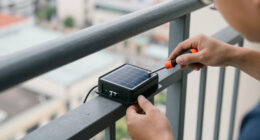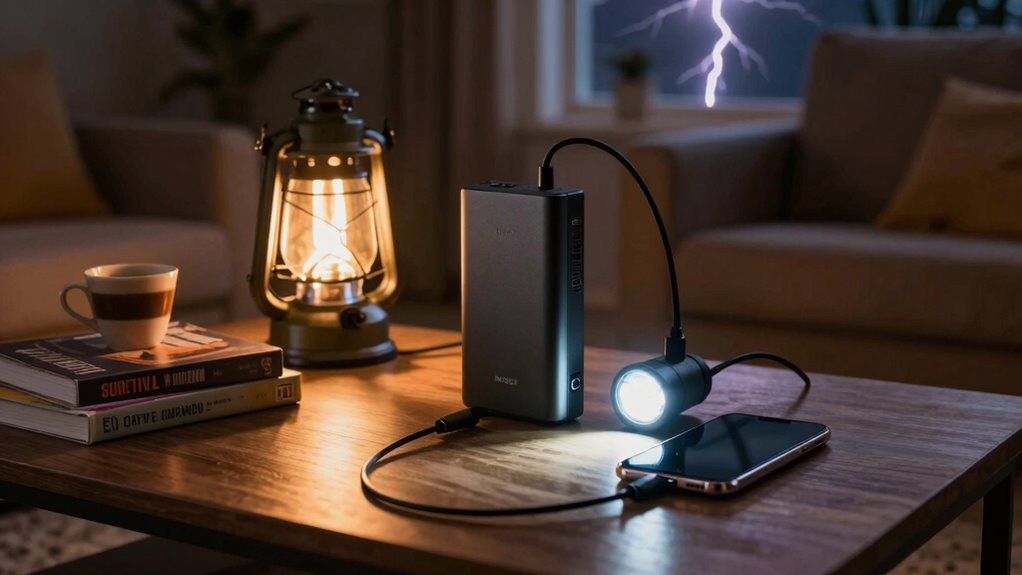
During a blackout, your top priority is ensuring medical devices like ventilators or oxygen supplies stay powered. Next, keep communication lines open with charged phones, radios, and modems. Then, preserve perishables by maintaining refrigerator and freezer power. Illuminate essential areas with energy-efficient lighting, and use your vehicle or portable chargers wisely for critical device recharging. Managing your power sources effectively can make all the difference—if you continue, you’ll discover how to maximize your backup systems efficiently.
Key Takeaways
- Prioritize powering critical medical devices like ventilators and oxygen concentrators to ensure safety.
- Keep essential communication devices charged to stay connected with emergency services and loved ones.
- Maintain refrigeration for perishable foods and medicines by powering freezers and refrigerators with backup power.
- Use vehicle chargers and portable power stations strategically to conserve fuel and extend device runtime.
- Reserve power for emergency radios and lighting to ensure safety and awareness during prolonged outages.

Jackery Explorer 300 Portable Power Station,292Wh
- Lightweight Design: Only 7.5 lbs with 292Wh capacity
- Portable Handle: Integrated handle for easy carrying
- Multiple Device Charging: 2 AC outlets, USB-C, USB-A, car port
As an affiliate, we earn on qualifying purchases.
Prioritize Power for Life‑Saving Medical Devices
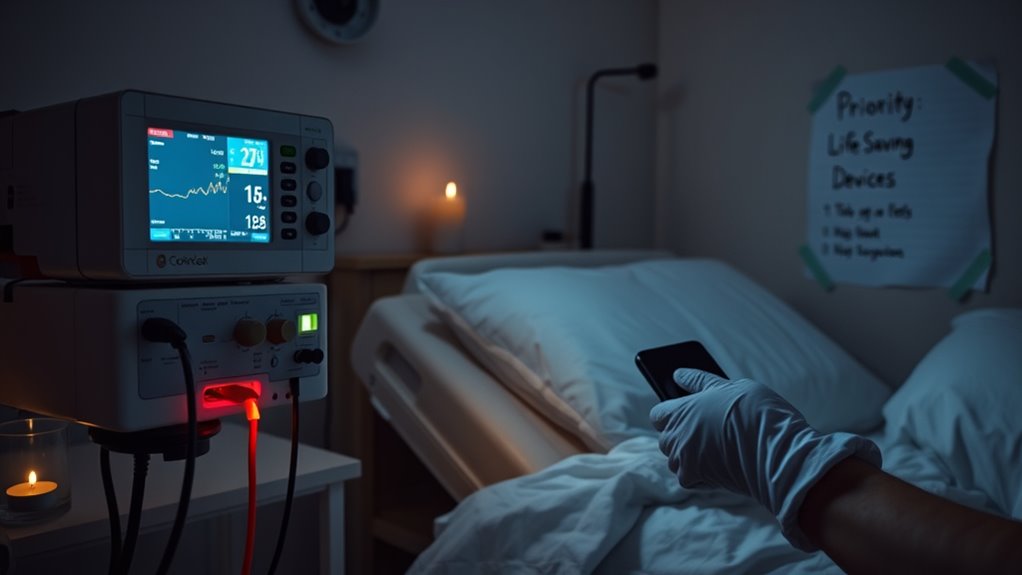
During a blackout, your top priority should be powering life-saving medical devices such as CPAPs, oxygen concentrators, and ventilators because their operation is critical to your health and safety. Without backup power, these devices can stop working, risking immediate harm. Make sure you have charged external batteries and spare packs specifically designed for these devices. Use uninterruptible power supplies (UPS) or systems with rapid switchover (≤10 ms) to prevent therapy disruptions. Record each device’s wattage and runtime to determine your total battery capacity needs. Aim to have at least 72 hours of backup power for essential medical equipment. Enroll household members in utility Priority Services to get additional support during outages, and keep these devices ready to operate at all times. Incorporating high contrast ratios in your backup power plan can help ensure clear visibility of indicator lights and displays during power loss. Additionally, understanding the performance ratings of your backup systems can be useful for long-term financial planning during emergencies. Considering backup power options that align with your household’s needs can further enhance your preparedness and response. Being aware of net worth and financial independence can also help you plan for emergency supplies and backup systems effectively.

Takki Solar Generator 120W Peak Portable Power Station with 21W Solar Panel 88.8Wh Battery Power Bank with 110V AC Outlet for Camping RV Tent Home Outages Emergency
- Lightweight and Compact: Weighs only 2.29 lbs, fits in backpack
- Fast Charging: Charges from 0% to 80% in 2 hours
- Includes Solar Panel: Foldable 21W high-efficiency solar panel
As an affiliate, we earn on qualifying purchases.
Maintain Communication Channels for Emergency Access
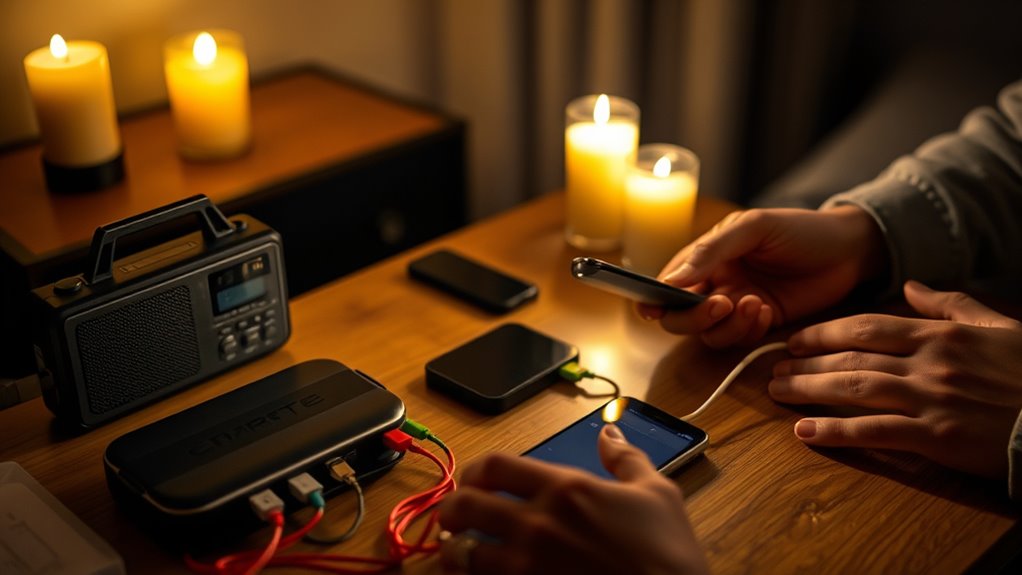
You need to keep your phone charged so you can stay connected to emergency alerts and loved ones. Power your internet modem and a laptop to access essential information and communicate more effectively. Also, keep an emergency radio with batteries or a crank to receive broadcasts if cellular networks go down. To ensure continuous communication, consider backup power options that can keep your devices running during extended outages, and familiarize yourself with emergency preparedness strategies to respond effectively during a blackout. Incorporating smart-home energy management devices can also help optimize your energy use and maintain access to essential devices, especially when managing home electrical systems during power disruptions.
Prioritize Phone Charging
Maintaining charged phones is crucial for staying connected to emergency alerts, family members, and official instructions during a blackout. To do this, prioritize charging your mobile devices early, especially if you rely on them for communication. Use portable power banks or spare batteries to extend runtime, and keep car chargers handy as backup sources. Limit nonessential app use, reduce screen brightness, and activate airplane mode to conserve battery life. Remember, a fully charged phone can be your lifeline for updates and coordination. Avoid unnecessary calls or texts that drain power quickly. Store a NOAA radio or battery-powered device for emergency broadcasts if cellular networks fail. By keeping your phones charged, you ensure vital communication channels remain open when you need them most.
Power Internet Equipment
Keeping your internet equipment powered guarantees continuous access to critical information and communication channels during a blackout. Start by charging your modem and router to ensure your home network stays online. These devices typically draw modest power, but their connection is essential for receiving alerts, updates, and staying in touch with loved ones. Connect your modem and router to a reliable power source, such as a portable power bank or an uninterruptible power supply (UPS), to prevent interruptions. Powering a single laptop alongside your internet equipment can also help you access web-based resources and emergency services. Keep spare batteries or car chargers handy for quick recharges. Conserve power by limiting device usage and disabling nonessential features, making certain your internet stays active when you need it most. Understanding thermal behavior of your devices can help optimize power usage and prevent overheating during extended outages, especially since overheating can impair device performance and longevity. Additionally, being aware of water-related risks such as leaks or spills can prevent damage to your equipment during power outages caused by weather events. Being mindful of device placement can also help maintain optimal functioning and prevent overheating or water damage during emergencies.
Use Emergency Radio
An emergency radio is an essential tool for staying informed when cellular networks and internet services fail during a blackout. It allows you to receive vital weather updates, emergency alerts, and official instructions without relying on cell towers. Keep a battery-powered or hand-crank NOAA radio accessible in a central location. Regularly check and replace batteries to ensure continuous operation. If possible, connect a portable power bank or use solar chargers to extend its runtime. Limit the use of other devices to conserve battery life for your radio. Store spare batteries in a waterproof container. Remember, a reliable emergency radio can be a lifeline, providing critical information when all other communication channels are down. Prioritize its power and accessibility to stay safe and informed. Understanding power management techniques can help maximize your radio’s operational time during extended outages. Additionally, familiarize yourself with battery conservation strategies to further prolong your device’s usability when power sources are limited. Properly maintaining your emergency radio and understanding power efficiency methods can significantly enhance its effectiveness in crisis situations. Incorporating knowledge of energy optimization can ensure your device remains functional for as long as possible during prolonged emergencies. Being aware of efficient charging options can also help keep your radio ready for use whenever needed.

Solar Powered Generator 100W, Portable Power Station with Solar Panels 40W
- Solar Powered with Included Panels: 40W monocrystalline solar panels with high efficiency
- Large Capacity Portable Power Station: 146Wh/39600mAh for multiple device charging
- Lightweight and Compact Design: Weighs only 3.3lb, fits in backpack
As an affiliate, we earn on qualifying purchases.
Preserve Food and Medical Supplies With Refrigeration
When power is disrupted, prioritizing refrigeration for food and temperature-sensitive medicines becomes crucial to prevent spoilage and guarantee medical efficacy. Focus on keeping your fridge and freezer powered, especially if you store vaccines, insulin, or other critical medications. Know your refrigerator’s wattage and how long it can hold items during an outage—use portable batteries if available. Minimize door openings to maintain internal temperatures, and group perishables together. For short-term storage, transfer items to coolers with ice. If your battery capacity is limited, prioritize medicines over food. Additionally, understanding home safety & accessibility can help prevent accidents during power disruptions. Ensuring proper power management can extend the life of your backup supplies and reduce waste. Planning ahead with load‑planning tools can help you optimize your backup power use and keep essential items cold longer. Being aware of emergency preparedness strategies can make a significant difference in managing your supplies effectively. Regularly reviewing your backup power system ensures it functions properly when needed, preventing unexpected failures. This approach ensures your perishables and essential medicines stay safe and effective until power is restored.

DARAN Portable Power Station 89.6Wh LiFePO4 Battery 100W(200W Peak) Solar Power Bank, Portable Charger Small Generator with AC Outlets & PD Fast Charging for Home/Laptop/Camping(Solar Panel Optional)
- Compact and Lightweight: Fits in pocket, weighs 2.54 lbs
- Multiple Output Ports: 7 ports including AC, USB-C, USB-A, DC
- High Capacity Battery: 89.6Wh LiFePO4 for reliable power
As an affiliate, we earn on qualifying purchases.
Illuminate Critical Areas With Efficient Lighting
In a blackout, providing reliable lighting in critical areas is essential for safety and effective response. Focus on powering LED lights and headlamps first, as they consume minimal energy and offer bright illumination. Prioritize lighting in hallways, stairs, and rooms where movement, first aid, or hazard avoidance is needed. Keep flashlights and lanterns accessible in key locations, ensuring each major room has at least one light source. Avoid running high-wattage lamps or decorative lighting, which drain batteries quickly. Use rechargeable or battery-powered lights to extend runtime. Limit unnecessary lighting to conserve power, and switch off any nonessential devices that may turn on automatically. Properly illuminated spaces help prevent accidents and support emergency tasks during an outage. Energy-efficient lighting can significantly extend your available power during blackouts.
Use Vehicles and Portable Power for Essential Charging

You should prioritize vehicle charging only for essential needs like evacuation or medical transport to conserve fuel. Use your car’s USB outlets or 12V adapters to power small devices without draining your home batteries. Smartly manage portable power stations by focusing on critical loads and combining solar or AC recharging to extend runtime.
Vehicle Charging for Essentials
Vehicles can serve as essential backup power sources during a blackout, especially for charging vital devices and maintaining communication. Your vehicle’s 12V outlet or USB port can recharge phones, tablets, and small radios, helping you stay connected. However, using your vehicle for extended charging can drain fuel and reduce availability for emergencies or transportation. Prioritize charging only what’s necessary to avoid unnecessary fuel consumption. Consider keeping a full tank reserved for emergencies and limit engine idling to conserve fuel. If your vehicle supports vehicle-to-load (V2L) or vehicle-to-home (V2H) capabilities, use them strategically for critical devices. Remember, your vehicle is a valuable resource, but overuse can deplete it quickly, so plan charging sessions carefully.
| Priority | Device/Use | Power Source |
|---|---|---|
| 1 | Emergency communication | Vehicle USB/12V outlet |
| 2 | Medical devices | Vehicle V2L (if available) |
| 3 | Light and safety signals | Vehicle 12V or portable power |
| 4 | Non-essential charging | Minimize to conserve fuel |
Portable Power Station Strategies
Harnessing portable power stations and vehicle-based energy sources can considerably extend your blackout resilience. Start by sizing your portable power station to meet your essential needs—medical devices, communication gear, and refrigeration. Use smart features to prioritize high-value loads, preventing lower-priority devices from draining your battery. Combine solar recharging during the day with AC charging when available to maximize runtime and preserve fuel for backup generators. Keep in mind that high-surge appliances, like ovens or large pumps, aren’t suitable for small stations; instead, rely on gasoline or propane generators rated for those loads. Use your vehicle’s 12V outlets or V2L capabilities to charge phones or small devices without depleting your main power reserves. Regularly monitor capacity and unplug nonessential items to ensure your critical devices stay powered longer.
Manage Portable Power Stations and Generator Output
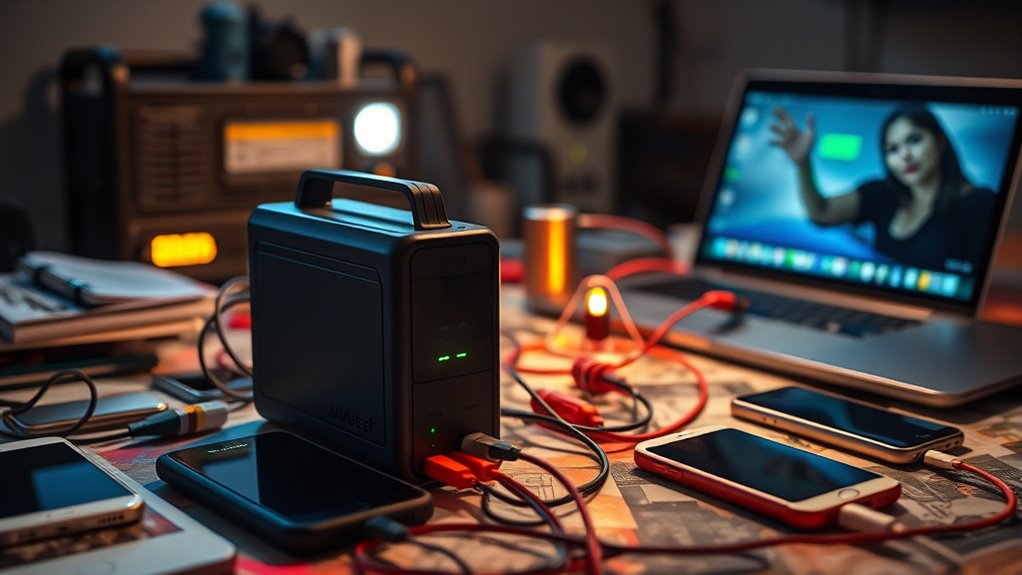
To effectively manage portable power stations and generator output during a blackout, it’s essential to prioritize critical loads and monitor capacity continuously. Start by identifying essential devices like medical equipment, communication gear, and refrigeration, and ensure they’re connected first. Use built-in smart features to assign priority to these loads, preventing lower-priority devices from draining your reserves. Regularly check remaining capacity and runtime; unplug non-essential devices as needed to extend power. When recharging, combine solar, AC, or fuel-powered sources to optimize efficiency and conserve fuel. Avoid overloading the system with high-surge appliances like ovens or large HVAC units. Instead, run these from a high-capacity generator rated for peak loads. Staying vigilant guarantees your critical devices stay powered, and your resources last through extended outages.
Implement a Strategic Charging and Recharging Plan
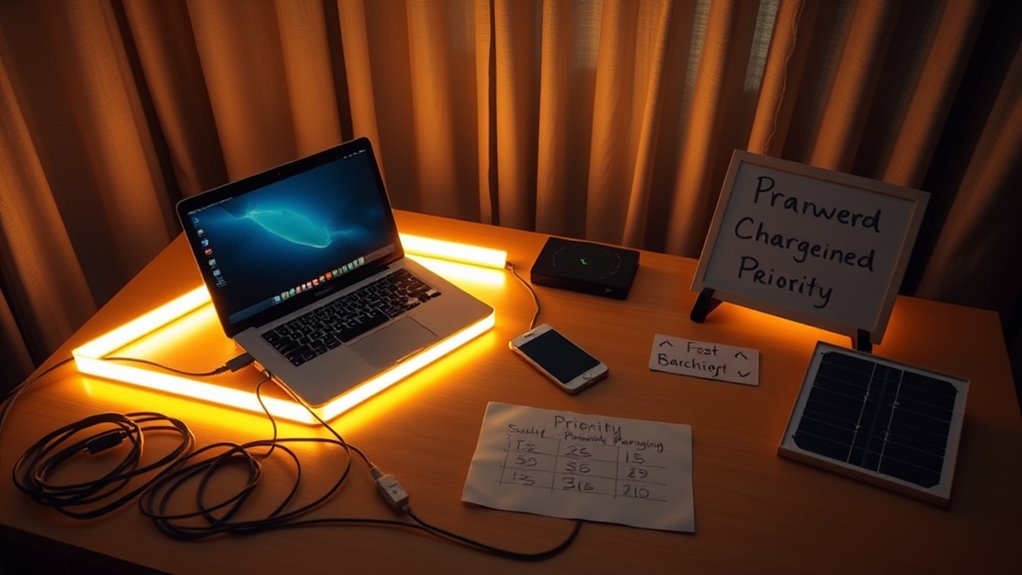
Developing a strategic charging and recharging plan guarantees your backup power resources last through extended outages. First, identify your essential loads—medical devices, communication tools, and refrigeration—and prioritize their power needs. Calculate the wattage and runtime for each device to determine required battery capacity. Use solar panels during the day to recharge portable stations and batteries, conserving fuel for generators. When grid power is available, recharge batteries and portable power stations to ensure readiness. Rotate usage based on priority, unplugging lower-priority devices as capacity diminishes. Keep track of remaining runtime and adjust usage accordingly, focusing on critical needs first. Maintain a schedule that balances recharging with consumption, ensuring your most crucial devices stay operational throughout the blackout.
Frequently Asked Questions
How Can I Safely Connect Medical Devices to Backup Power Sources?
You should connect your medical devices to backup power sources using uninterruptible power supplies (UPS) or instant switchover systems that switch in ≤10 ms to prevent disruptions. Make sure to record each device’s wattage and runtime, then size your batteries accordingly. Keep spare batteries and external power packs charged and ready. Enroll in utility Priority Services for extra support, and always follow manufacturer instructions for safe connections.
What’s the Best Way to Conserve Phone Battery During an Outage?
You hold the key to lasting connectivity. To conserve your phone battery, turn on airplane mode to block unnecessary signals, reduce screen brightness, and close nonessential apps. Limit usage to essential communication only, and keep a portable power bank ready for emergency top-ups. Use text messages instead of calls, and avoid streaming or gaming. By acting swiftly and smartly, you guarantee your phone stays alive when you need it most.
How Long Can a Typical Refrigerator Run on Portable Batteries?
A typical refrigerator can run on portable batteries for about 4 to 24 hours, depending on the battery’s capacity, the fridge’s wattage, and how often you open the door. To maximize runtime, keep the door closed as much as possible, avoid overloading the battery, and consider using an inverter or portable power station designed for appliances. Check your refrigerator’s wattage and plan accordingly for the best results.
Which Lighting Options Are Most Energy-Efficient for Emergency Use?
Think of LED lights as tiny energy-saving superheroes in your blackout arsenal. They’re the most efficient, using minimal power while illuminating your path and ensuring safety. Use LED headlamps, lanterns, or string lights for emergency lighting. Keep spare batteries handy and limit unnecessary lighting to stretch your power. These small but mighty lights will keep the dark at bay without draining your backup resources, making sure you stay safe and visible.
When Is the Optimal Time to Charge Electric Vehicles During a Blackout?
You should charge your electric vehicle during daylight hours when solar power is available to maximize renewable energy use and conserve backup resources. Avoid charging during peak evening hours unless necessary, as it can deplete your stored backup power. Prioritize EV charging only if it’s essential for evacuation or medical needs. Keep a close eye on your power capacity and balance vehicle charging with other critical device needs.
Conclusion
In a blackout, think of yourself as a modern knight guarding your castle’s essentials. Prioritize life-saving devices, keep communication flowing, and protect your supplies. Use portable power like a trusty steed to reach safety and stay connected. Remember, a clear plan is your map through the darkness—just like an old compass guiding a sailor home. Stay calm, stay strategic, and you’ll weather the storm with resilience and purpose.