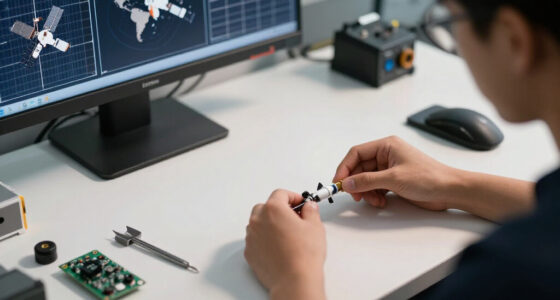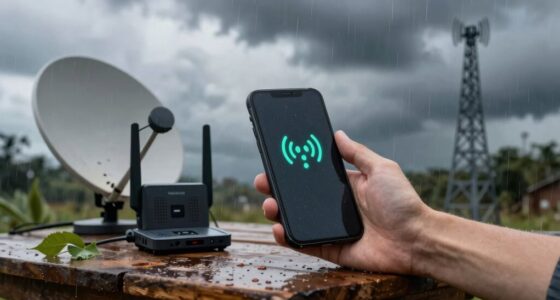
Two-way radios outperform texting and apps in critical situations by providing instant, reliable communication over dedicated frequencies, even in remote or infrastructure-poor areas. They guarantee continuous connectivity during outages, support group coordination, and feature rugged designs for harsh environments. With fast push-to-talk calls and enhanced security, they keep teams synchronized and safe. If you want to discover how radios can boost your operations even further, explore the full details ahead.
Open a free Amazon Business account
Business pricing, bulk buying and tax-exempt orders.
As an affiliate, we earn on qualifying purchases.
Key Takeaways
- Two-way radios operate on dedicated frequencies, ensuring reliable communication even without cellular or internet coverage.
- They provide instant, push-to-talk group communication, reducing delays compared to texting or app-based messaging.
- Rugged and durable design allows reliable use in harsh environments, unlike fragile smartphones or apps.
- They maintain connectivity during outages, congestion, or disasters, offering superior reliability over mobile networks.
- No data plans or internet needed, making them cost-effective and secure for critical communications.
Coverage and Reliability Advantages of Two-Way Radios
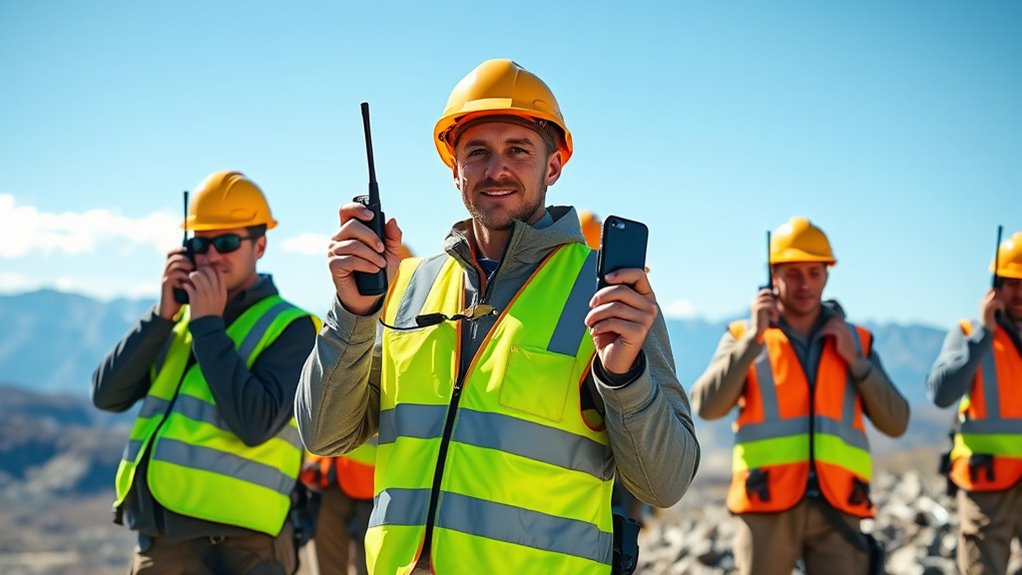
Two-way radios provide superior coverage and reliability, especially in areas where cellular signals are weak or nonexistent. By operating on dedicated frequencies and utilizing repeaters, they maintain communication even in remote locations or infrastructure-poor environments. Unlike cellular networks, radios don’t rely on public carriers, so they stay connected during outages, congestion, or mass events. Push-to-talk (PTT) offers instant, one-to-many communication with no delays or busy signals, ensuring quick information exchange. These radios deliver clear audio under high-noise conditions thanks to rugged microphones and noise-cancellation features. Engineered with predictable coverage through site planning and repeater placement, two-way radios provide consistent, dependable communication that cellular signals often can’t guarantee. This makes them ideal for critical operations in challenging environments. Understanding radio frequency principles helps optimize their effectiveness in various settings, including the importance of antenna placement for maximizing signal reach. Proper frequency management is essential to prevent interference and ensure reliable communication in busy or complex environments.
Speed and Group Coordination Capabilities
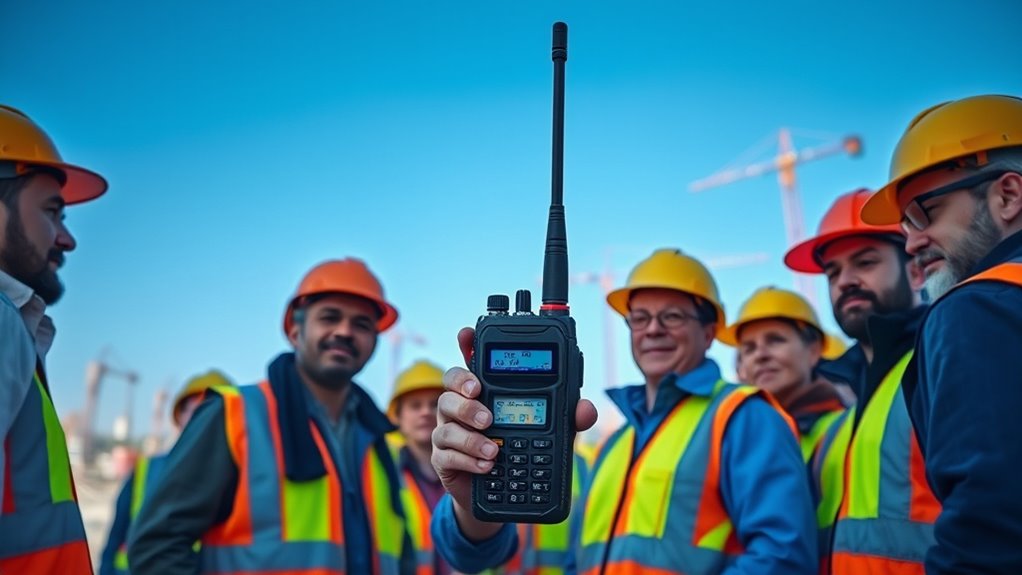
Push-to-talk (PTT) technology enables instant, one-to-many voice broadcasts with the press of a button, allowing your team to communicate quickly without delays. When urgent updates happen, you can broadcast to everyone immediately, reducing miscommunication. Group channels let multiple users listen and respond simultaneously, streamlining coordination in fast-paced situations. Unlike texting or apps, there’s no need to dial or navigate menus—just press and speak. Integrated channel scanning keeps you aware of multiple teams without switching apps, enhancing situational awareness. This real-time, direct communication keeps everyone on the same page, boosting efficiency and safety. Additionally, features like channel management can help organize conversations, preventing confusion during critical moments. The durability and long-range capabilities of two-way radios also ensure reliable communication even in challenging environments. Moreover, the reliability of radio signals ensures communication remains consistent where cellular networks may fail. The immediacy of radio communication is especially crucial in emergency situations where every second counts, and the quick response capability can be lifesaving.
Durability and Battery Efficiency
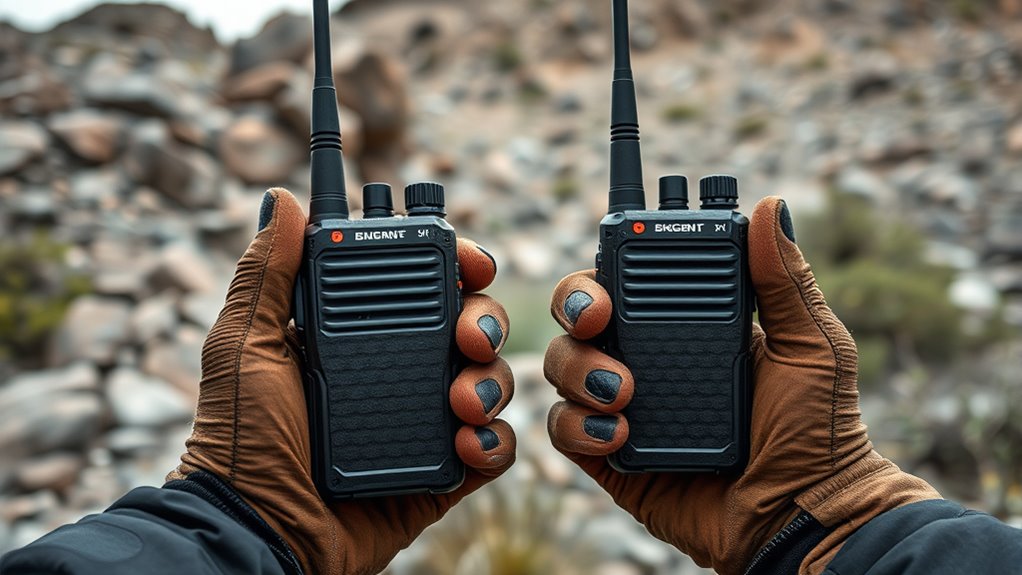
Durability and battery efficiency are essential for reliable communication in demanding environments. You need radios that withstand drops, shocks, dust, and water, which consumer smartphones rarely handle. Purpose-built radios meet military standards like MIL-STD, ensuring they endure tough conditions. Their batteries are designed for shift-long use, often lasting 14 to 24 hours, unlike smartphones with variable battery life under heavy use. Removable batteries and spare options keep operations continuous across multiple shifts or emergencies. The rugged form factor tolerates gloves, dirt, and impacts better than fragile touchscreens. Plus, with fewer background processes like GPS or app updates draining power, these radios deliver consistent runtime during extended use. This resilience and efficiency ensure your team stays connected, no matter how tough the environment. Safety and reliability standards are critical considerations in choosing the right two-way radios for demanding situations. Additionally, selecting radios with proper filter maintenance capabilities can help ensure ongoing optimal performance in challenging conditions.
Cost Effectiveness and Total Cost of Ownership
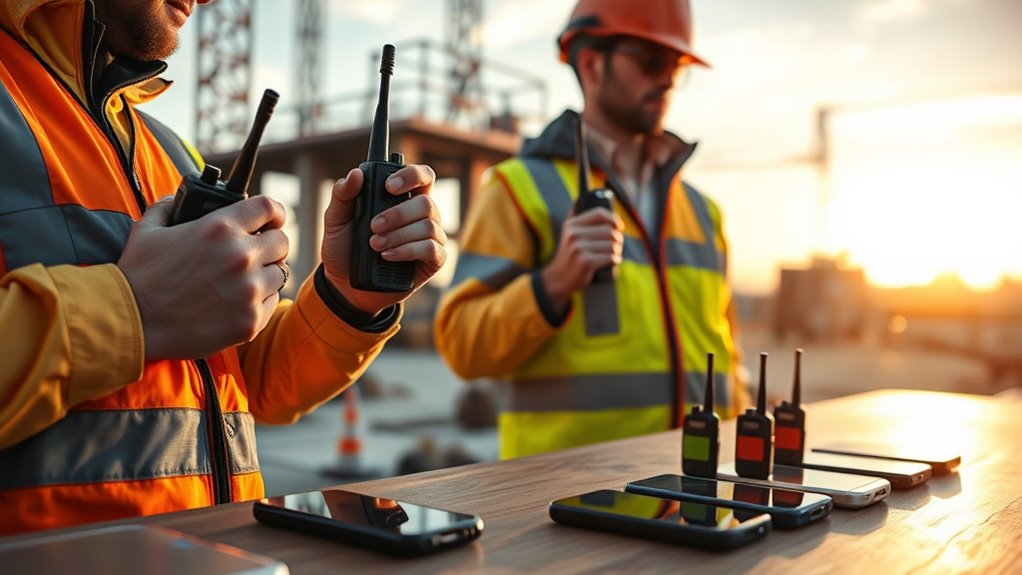
Investing in purpose-built radios can substantially lower your long-term communication costs. Unlike smartphones, these radios don’t require monthly service plans or data subscriptions, saving you ongoing expenses. Their durable construction reduces replacement and repair costs over time, unlike fragile consumer devices that need frequent updates. Scaling your system is straightforward—adding units or channels doesn’t incur proportional carrier fees like cellular plans do. Rental options offer flexible, budget-friendly solutions for temporary needs, such as events or short-term projects. Plus, faster response times and reliable communication improve operational efficiency, reducing labor costs and minimizing downtime during critical tasks. Overall, the lower maintenance, absence of recurring charges, and increased reliability make two-way radios a cost-effective investment with a clear, predictable total cost of ownership. Additionally, free floating designs allow for adaptable configurations that can be customized to specific environments or operational needs, enhancing overall system effectiveness.
Security and Control Features
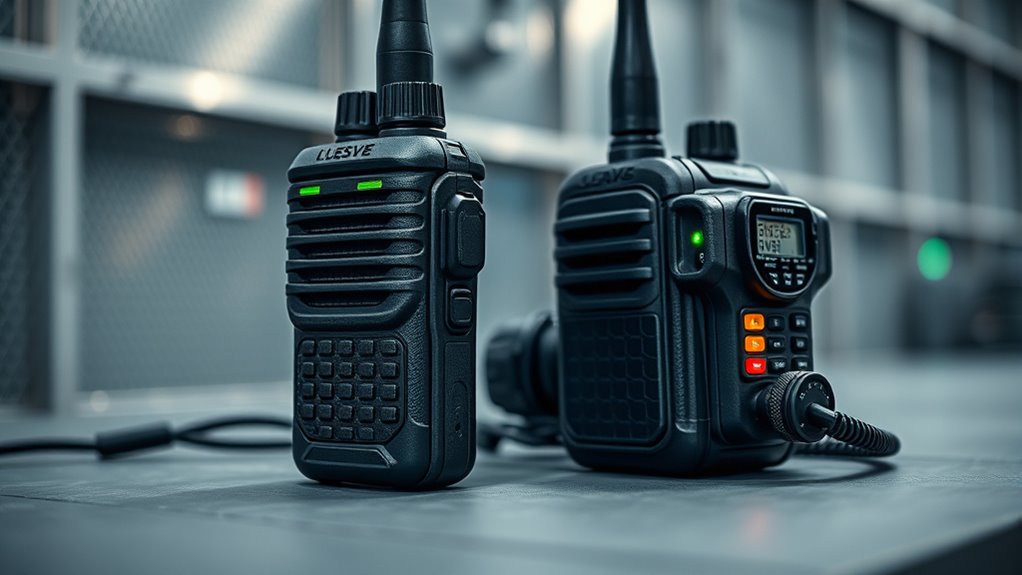
Security and control are critical advantages of two-way radios, as they enable organizations to safeguard their communications from unauthorized access and eavesdropping. With the right features, you can guarantee your team’s sensitive information stays protected.
Two-way radios ensure secure, private communication, protecting sensitive information from unauthorized access and eavesdropping.
- Encrypted voice transmissions prevent interception by outsiders.
- Centralized channel management controls who can access specific frequencies or talk groups.
- Private networks and local infrastructure keep communications within your organization, not on third-party servers.
- Fewer vulnerabilities exist because radios lack app-layer entry points, reducing malware risks.
- Implementing secure communication protocols further enhances protection against cyber threats and unauthorized listening.
- Using comprehensive security measures ensures your communication system remains resilient against potential breaches and maintains confidentiality. Additionally, employing user authentication mechanisms can restrict access to authorized personnel only. Moreover, leveraging real-time monitoring can help detect and respond to suspicious activity promptly, thereby strengthening system security overall.
These features help maintain operational security, ensuring your team communicates confidently, without fear of leaks or breaches. You retain full control over who can listen and transmit, boosting overall safety and privacy.
Practical Use Cases and Operational Scenarios
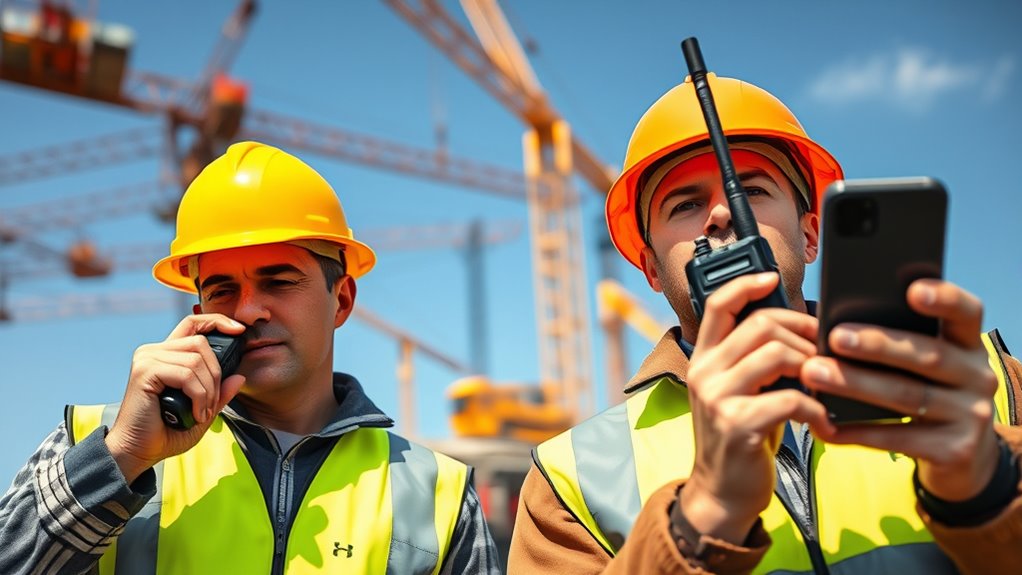
Two-way radios excel in emergency response situations where instant communication can save lives and delays are unacceptable. They perform reliably in harsh environments, with rugged construction built to withstand dust, water, and impacts. These features make them essential tools for teams operating in demanding conditions or urgent scenarios. Proper maintenance and sanitation are also crucial to ensure consistent performance and longevity of the radios, with routine checks helping to prevent failures caused by environmental stressors regular maintenance checks. Regularly inspecting weatherproofing features helps maintain radio durability in extreme conditions. Additionally, understanding the water resistance ratings can help users select the appropriate device for their specific operational environment. Recognizing the importance of performance durability ensures that radios remain functional when it matters most.
Emergency Response Efficiency
During emergency responses, rapid and dependable communication is crucial for coordinating teams and ensuring safety. Two-way radios excel in these moments by providing instant, direct voice communication. Here’s how they boost emergency response efficiency:
- Immediate Broadcasts: Push-to-talk allows instant communication with entire teams, reducing delays.
- Clear Situational Awareness: Group channels enable multiple responders to listen and respond in real-time.
- Reliable Connectivity: Dedicated frequencies and repeaters maintain contact even in remote or infrastructure-poor areas.
- Robust Audio Quality: Noise-cancellation and rugged microphones ensure instructions aren’t missed in high-noise environments.
- Energy-Efficient Operation: Their low power consumption aligns with sustainable cloud solutions, ensuring long-lasting operation during extended emergencies. Additionally, their ability to operate independently of existing network infrastructure makes them indispensable in disaster scenarios.
These features enable faster decision-making, better coordination, and increased safety during critical incidents. Radios’ dependability and speed make them essential tools in emergency response scenarios.
Harsh Environment Durability
In harsh environments like construction sites, manufacturing floors, or forestry operations, rugged radios are built to withstand extreme conditions that would easily damage consumer smartphones. These radios endure drops, shocks, dust, and water, ensuring reliable communication in demanding settings. Their rugged construction and MIL-STD ratings make them suitable for challenging scenarios, reducing downtime and maintenance costs. Battery life is optimized for long shifts, and replaceable batteries keep operations running smoothly. Additionally, their environmental resistance capabilities ensure continued performance despite exposure to harsh elements. Use cases include emergency response, outdoor construction, and industrial maintenance, where failure isn’t an option. The table below highlights key durability features: Essential Elements of Farmhouse Decor
Comparing Performance in Critical Environments
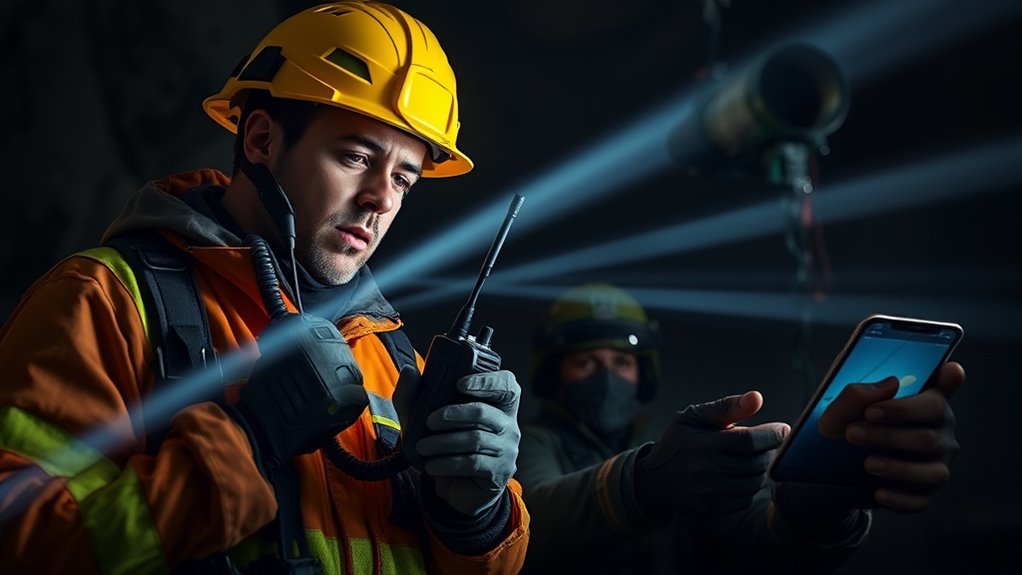
When you need reliable communication in critical environments, two-way radios excel where cellular networks fall short. They provide consistent signal coverage in remote areas, even without infrastructure, and are built to resist high noise levels. Their independence from commercial networks guarantees you stay connected during outages or infrastructure failures.
Signal Reliability in Remote Areas
Two-way radios are designed to provide consistent and dependable signal reliability in remote and critical environments where cellular networks often fall short. They use dedicated frequencies, infrastructure, and repeaters to maintain communication where cellular signals are weak or nonexistent. This guarantees your team stays connected during emergencies and in isolated locations. Consider these key advantages:
- Dedicated frequencies and repeaters extend coverage into remote areas, avoiding cellular dead zones.
- Independence from cellular networks prevents disruptions during outages or congestion.
- Engineered site planning ensures predictable coverage, tailored to specific environments.
- Reliable audio quality remains intact despite challenging conditions, reducing missed messages.
This combination guarantees your team’s communication remains steady, clear, and secure, no matter how remote or demanding the environment.
Noise Immunity in High-Noise Settings
Reliable signal coverage is essential in high-noise environments where clear communication can mean the difference between safety and danger. In these settings, your voice needs to cut through loud machinery, alarms, or crowd noise without distortion or missed words. Two-way radios excel here with rugged microphones equipped with noise-cancellation technology, filtering out background sounds so your message remains clear. Unlike smartphones or apps, radios transmit audio in real-time, reducing miscommunication risks. Digital systems like DMR further improve noise immunity through advanced encoding, ensuring your voice remains intelligible even in the loudest conditions. This robust noise immunity allows teams to maintain precise coordination, respond quickly, and operate safely, even when ambient noise levels are extreme.
Infrastructure Independence During Outages
During critical outages, maintaining communication can be a challenge if your infrastructure depends on cellular networks. Two-way radios operate independently of commercial cellular systems, ensuring reliable connectivity when cell towers fail or become congested. This independence is essential in emergencies, disaster zones, or remote locations. Here’s how radios provide infrastructure resilience:
- They use dedicated frequencies and repeaters that don’t rely on internet or cellular providers.
- They maintain communication even during carrier outages or network overloads.
- Push-to-talk features offer instant group communication without delays or busy signals.
- Rugged hardware sustains reliable audio under harsh conditions, unaffected by power outages or infrastructure damage.
This setup guarantees your team stays connected, no matter the situation, delivering dependable communication when it’s needed most.
Frequently Asked Questions
How Do Two-Way Radios Integrate With Modern Digital Communication Systems?
You can integrate two-way radios with modern digital communication systems through digital trunking, IP-based networks, and gateway devices. These solutions connect radios to VoIP systems, dispatch centers, and enterprise networks, enabling seamless voice and data exchange. This integration enhances interoperability, allowing you to coordinate across different platforms, extend coverage areas, and improve overall communication efficiency while maintaining the reliability, security, and immediacy that radios provide.
What Training Is Required for Effective Two-Way Radio Operation?
You need basic training on radio protocols, proper microphone use, and emergency procedures. Focus on clear speech, concise messages, and using designated channels. Practice push-to-talk operation and familiarize yourself with controls and signal codes. Understanding when to speak, listen, and respond helps guarantee effective communication. Regular drills and refreshers improve confidence, minimize misunderstandings, and keep everyone prepared to use radios efficiently during daily operations or emergencies.
Can Two-Way Radios Support Encryption for Sensitive Communications?
Yes, two-way radios support encryption for sensitive communications. You can implement over-the-air encryption to protect your voice transmissions from eavesdropping and interception. Many digital radio systems, like DMR, offer built-in encryption options, ensuring only authorized users can access the conversation. By choosing radios with encryption capabilities, you maintain control over your secure channels, providing peace of mind and safeguarding your organization’s critical information during operations.
How Scalable Are Two-Way Radio Systems for Large Organizations?
You can scale two-way radio systems easily for large organizations by adding more units, channels, and repeaters. This flexible setup grows with your needs without significant increases in costs or complexity. You avoid monthly carrier fees, and expanding coverage is straightforward with additional infrastructure. Plus, centralized management makes overseeing large teams simple, ensuring reliable communication across multiple sites, making radios an efficient, cost-effective solution for big organizations.
What Maintenance and Troubleshooting Are Typical for Two-Way Radio Networks?
You should regularly check antenna connections, battery contacts, and radio casing for damage. Keep firmware updated to prevent glitches, and test repeaters and channels to guarantee clear communication. Troubleshoot by resetting devices, verifying power sources, and inspecting for interference or obstructions. Schedule routine maintenance to clean contacts and replace worn parts. Staying proactive helps avoid unexpected failures and keeps your radio network reliable during critical operations.
Conclusion
Two-way radios are like a steadfast lighthouse, guiding your team through the stormiest conditions with unwavering reliability. They outperform texting and apps by offering instant communication, durability, and security, no matter the environment. When every second counts, these radios shine as your trusted beacon, ensuring your operations stay on course. Embrace their power, and you’ll navigate challenges with confidence, knowing you have a resilient partner lighting the way through any situation.
NFL season / tailgating Picks
team gear
As an affiliate, we earn on qualifying purchases.