

Daily backups are routine and automatically saved frequently, keeping your current data safe and quickly recoverable for recent changes or files. Emergency backups are more extensive, stored offline or in separate locations, and used only during critical failures or disasters. They take longer to create but are your safety net when primary backups or systems get compromised. Understanding these differences helps you protect your data effectively—exploring further reveals how to optimize both for your needs.

Get backup power and energy gear delivered free — and shop member deals
- Fast, free delivery on millions of items
- Access to Prime Big Deal Days deals on October 6–7
- Prime Video, Amazon Music and more included
Key Takeaways
- Daily backups are routine, automated, and focus on recent data, while emergency backups are infrequent, comprehensive, and used during disasters.
- Daily backups are stored online for easy access; emergency backups are kept offline or in separate locations for security.
- Encryption is essential for both, but emergency backups often include complete system images for full recovery.
- Daily backups minimize data loss from recent changes; emergency backups serve as a last resort during critical failures.
- Both backups are vital for data protection, but they serve different purposes in maintaining operational continuity.
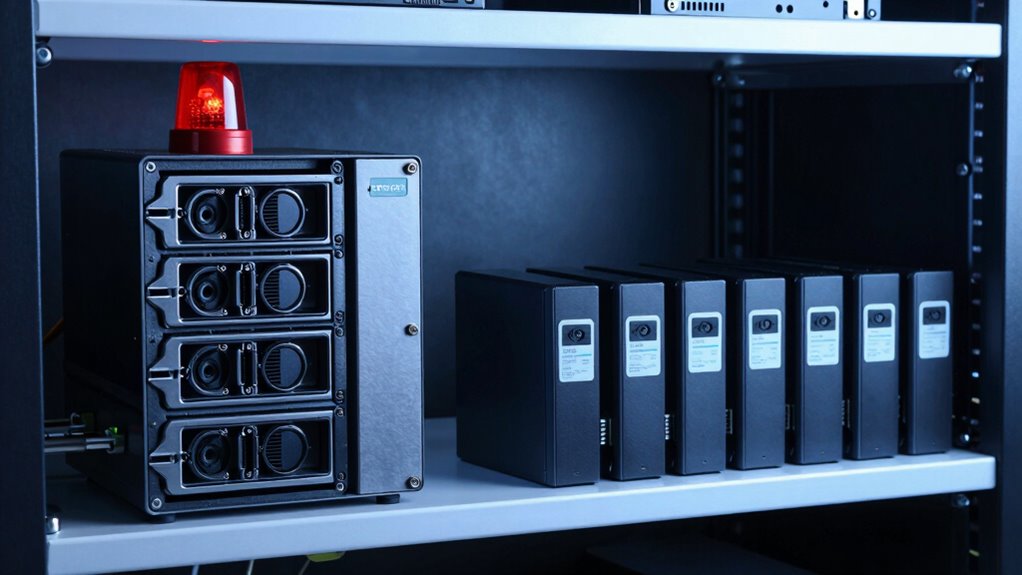
Understanding the difference between emergency backup and daily backup use is essential for effective data management. When you’re handling critical information, knowing how and when to deploy different backup strategies can save you from significant data loss and downtime. Daily backups are your routine safeguard, designed to keep your data current and accessible. You might automate these backups using cloud storage solutions, which allow you to upload your files securely to remote servers. Cloud storage makes it easy to access your data from anywhere and provides reliable storage that scales with your needs. To guarantee your daily backups are safe from unauthorized access, data encryption becomes necessary. Encryption transforms your data into a coded format, making it unreadable without the proper decryption key. This added layer of security protects sensitive information from cyber threats, especially when stored in the cloud.
While daily backups help you recover lost or corrupted files quickly, emergency backups are your last line of defense during critical incidents. These are designed to be used only when your primary backups or systems fail or are compromised. Suppose you experience a ransomware attack, hardware failure, or natural disaster that corrupts or destroys your data. In that case, emergency backups, often stored offline or in physically separate locations, enable you to restore operations swiftly. Because these backups are intended for urgent recovery, they tend to be less frequent but more thorough. Ensuring their integrity and security is essential, which is why data encryption plays a key role here as well. By encrypting emergency backups, you protect your most sensitive data against theft or unauthorized access, especially since these backups often contain complete system images or extensive data sets. Additionally, understanding backup security best practices is crucial to safeguarding your stored data from evolving cyber threats.
Understanding when and how to use each backup type helps you maintain a balanced data protection strategy. Daily backups keep your data current and reduce the risk of losing recent changes, while emergency backups act as a safety net in catastrophic situations. Both rely heavily on cloud storage for convenience and scalability, but security measures like data encryption ensure your data remains protected regardless of where it’s stored. By implementing a clear backup plan that distinguishes between routine and emergency use, you gain peace of mind knowing your critical information is safeguarded and recoverable when needed most. This approach minimizes downtime, preserves your operational continuity, and keeps your data secure from evolving cyber threats.
cloud backup service for data security
As an affiliate, we earn on qualifying purchases.
As an affiliate, we earn on qualifying purchases.
Frequently Asked Questions
How Often Should Emergency Backups Be Tested for Reliability?
You should test emergency backups at least quarterly to guarantee disaster recovery plans are effective. Regular backup validation is vital because it confirms your backup data remains intact and usable when needed. Testing more frequently, such as monthly, offers added assurance, especially after system updates or changes. Consistent testing helps identify issues early, making sure your emergency backups will reliably restore your system during an actual disaster.
What Are the Best Storage Options for Daily Backups?
Think of your backups as your safety net—choose wisely. For daily backups, cloud storage offers accessibility and off-site security, making it easy to access files from anywhere. External drives provide fast, local backups and are great for quick recovery. Combining both guarantees your data is protected from various threats, like a well-armed fortress guarding your digital valuables. Use these options to keep your backups reliable and ready when you need them most.
Can an Emergency Backup Be Used for Regular Data Access?
Emergency backups are primarily designed for disaster recovery, so using them for regular data access isn’t ideal. They’re part of your emergency readiness and backup planning, meant to restore data after failures or breaches. If you access emergency backups regularly, you risk jeopardizing their integrity and slowing recovery during crises. Instead, maintain separate daily backups for routine use, reserving emergency backups strictly for critical situations to guarantee your data’s safety.
How Do Backup Strategies Differ Across Industries?
In your industry, backup strategies can seem like a battlefield, with each sector fighting for the ultimate data safety. You rely on cloud storage to keep your critical information safe and accessible, while data encryption acts as an impenetrable shield against cyber threats. Healthcare needs rapid recovery plans, finance demands strict compliance, and tech firms prioritize real-time backups. These differences shape your approach, ensuring your data’s security tailored to your industry’s unique risks.
What Security Measures Are Essential for Backup Data?
You need to implement strong security measures for your backup data, including encryption protocols to protect sensitive information both during transmission and storage. Additionally, access controls are essential; restrict backup access to authorized personnel only, using multi-factor authentication and regular audits. These steps help prevent unauthorized access or data breaches, ensuring your backup data remains confidential and secure, regardless of whether it’s for emergency or daily use.
external hard drive for emergency backups
As an affiliate, we earn on qualifying purchases.
As an affiliate, we earn on qualifying purchases.
Conclusion
So, next time you’re saving files, remember—your emergency backup is like a secret stash for when chaos hits, while your daily backup is just your routine coffee. Ironically, it’s the daily backup you trust most, yet it’s the emergency backup that truly saves you from disaster. Think of it as keeping a fire extinguisher in the closet for a small spark, while your daily backups are the fireproof safe—sometimes, the most overlooked tools save the day.
full system image backup software
As an affiliate, we earn on qualifying purchases.
As an affiliate, we earn on qualifying purchases.
encrypted cloud storage solutions
As an affiliate, we earn on qualifying purchases.
As an affiliate, we earn on qualifying purchases.
Evergreen bestsellers Picks
bestsellers
As an affiliate, we earn on qualifying purchases.