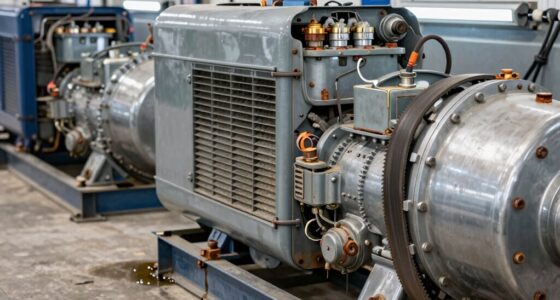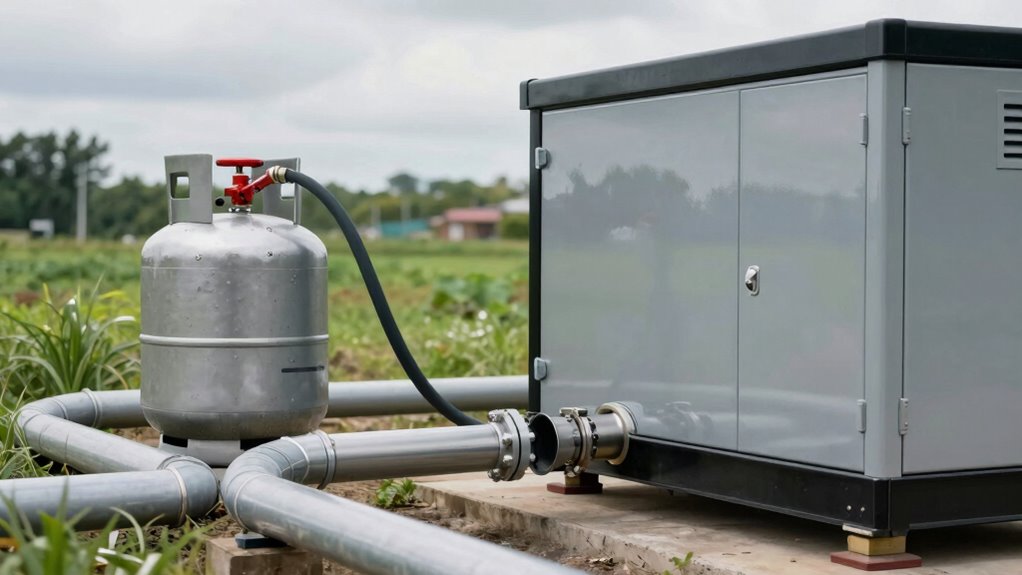

When planning a standby generator, choosing between natural gas and propane affects your setup’s reliability, cost, and eco-friendliness. Natural gas offers a continuous, low-maintenance supply via pipelines, but outages can disrupt power. Propane tanks give you portability and independence, yet they need regular refills and safety measures. Your decision will depend on local infrastructure and environmental preferences. Continue exploring to understand how each option fits your specific needs and long-term goals.

Get backup power and energy gear delivered free — and shop member deals
- Fast, free delivery on millions of items
- Access to Prime Big Deal Days deals on October 6–7
- Prime Video, Amazon Music and more included
Key Takeaways
- Natural gas offers continuous, utility-managed supply, reducing refueling needs; propane requires scheduled tank refills.
- Propane tanks are portable, providing flexibility during outages, unlike natural gas reliant on pipeline infrastructure.
- Natural gas burns cleaner, making it more environmentally friendly than propane, aligning with sustainability goals.
- Infrastructure quality influences reliability; pipeline issues can disrupt natural gas, whereas propane tanks can be relocated or replaced easily.
- Cost considerations include fuel expenses and maintenance; natural gas benefits from stable utility pricing, while propane involves refill costs.
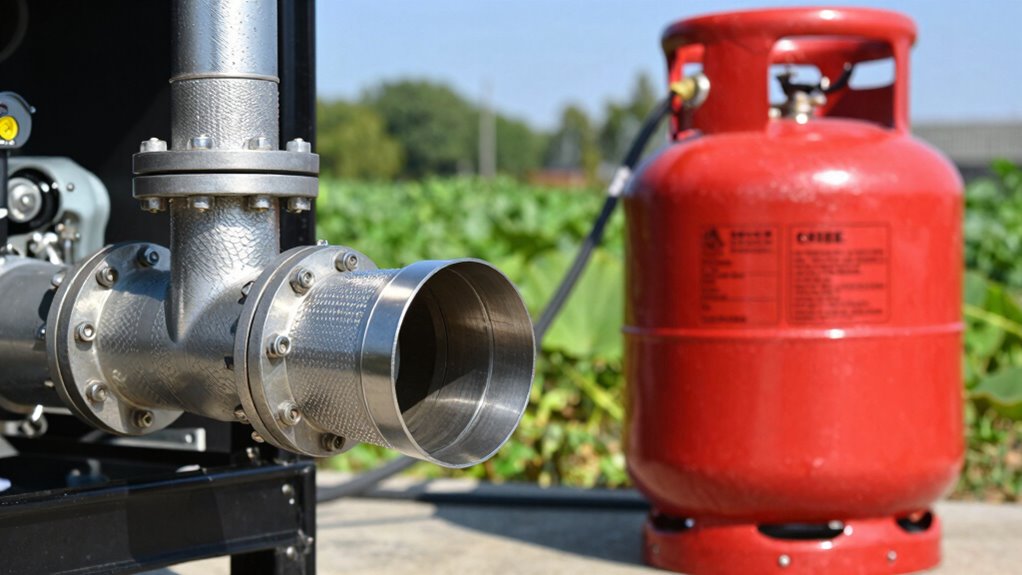
When choosing a standby generator, understanding the differences between natural gas and propane is essential to making an informed decision. Your choice impacts not just how the generator operates but also how you handle fuel storage and the environmental impact of your setup. Natural gas is supplied through underground pipelines, which means you don’t have to worry about storing fuel on your property. This can be a significant advantage if you prefer a low-maintenance setup since the utility company manages fuel delivery. However, if your area experiences pipeline issues or outages, your generator’s reliability could be compromised. Propane, on the other hand, requires you to store fuel in tanks, typically mounted above or below ground. While this means you’re responsible for refilling the tank, it also provides independence from utility supply disruptions. With proper tank sizing, propane can give you a steady fuel source during extended outages, but you’ll need to plan for regular refills and ensure safe storage practices.
Fuel storage plays a crucial role in your planning process. Natural gas’s advantage lies in its continuous supply — as long as the pipeline is functional, you don’t need to worry about running out of fuel. Propane tanks, however, have a limited capacity and require scheduled refills, which means you need to keep an eye on your fuel levels and arrange for delivery ahead of storms or outages. This makes propane more suitable for areas where the pipeline infrastructure isn’t reliable or where you want a portable fuel source. When considering environmental impact, natural gas generally burns cleaner than propane, releasing fewer pollutants and greenhouse gases. It’s often regarded as a more environmentally friendly option, especially if the natural gas is sourced from cleaner extraction methods. Additionally, understanding fuel availability and supply reliability in your area can influence which option is best for your setup. Properly assessing the cost differences between natural gas and propane over the long term is also essential for making a sustainable choice. It’s also important to consider the environmental footprint of each fuel can help align your choice with your sustainability values.
Considering the infrastructure in your area can also help determine the most reliable fuel source for your needs. Ultimately, your decision depends on your location, budget, and environmental values. Natural gas offers convenience and continuous supply, but you’re tied to infrastructure and less control over fuel availability. Propane provides flexibility and independence, yet requires planning for storage and refills. Weighing these factors will help you determine which fuel type best fits your needs, ensuring your standby generator is reliable, efficient, and aligned with your sustainability goals.
As an affiliate, we earn on qualifying purchases.
Frequently Asked Questions
How Does Fuel Cost Fluctuate Between Natural Gas and Propane?
Fuel costs for natural gas and propane fluctuate based on market conditions, availability, and seasonal demand. Natural gas usually offers more stable pricing due to its constant supply through pipelines, while propane prices can spike with storage needs and seasonal shortages. You’ll find natural gas more convenient with minimal storage requirements, but propane might require you to budget for storage tanks, which can influence overall costs and fluctuate with supply and demand.
What Are the Environmental Impacts of Natural Gas Versus Propane?
Natural gas typically produces lower environmental emissions than propane, emitting less carbon dioxide and fewer pollutants. However, propane burns cleaner regarding particulate matter and smog formation. While natural gas has limited renewable potential, propane can be sourced from renewable feedstocks, making it somewhat more sustainable. Your choice impacts environmental impact, so consider emissions and renewable options to align with your sustainability goals.
Can Propane Generators Operate in Colder Climates Better Than Natural Gas?
Think of propane as your warm wool sweater, perfect for cold days. Propane generators handle colder climates better because they don’t rely on underground pipes like natural gas, which can freeze. With fuel storage in tanks, you avoid installation challenges like pipe freezing or supply interruptions. This makes propane more reliable in winter, ensuring your generator keeps running smoothly when temperatures plummet, just like your cozy sweater keeps you warm.
What Is the Typical Lifespan of Natural Gas Versus Propane Standby Generators?
You can expect natural gas generators to last around 20 years, while propane units often last about 15-20 years. Fuel storage affects lifespan; natural gas is supplied via pipelines, reducing storage concerns, whereas propane needs tanks, which require regular maintenance. Installation requirements differ too—natural gas systems are usually built into existing infrastructure, but propane generators need proper tank placement and ventilation, influencing their durability and longevity.
Are There Safety Concerns Unique to Each Fuel Type?
Imagine a silent guardian, ready to protect your home—safety concerns differ for each fuel. With natural gas, you worry about pipeline leaks and ensuring proper storage safety, since it’s delivered through the utility lines. For propane, stored in tanks, leak detection is essential to prevent dangerous buildups. Both require vigilant maintenance and proper installation to keep your standby generator safe, reliable, and ready when you need it most.
As an affiliate, we earn on qualifying purchases.
Conclusion
Ultimately, choosing between natural gas and propane for your standby generator is like selecting a trusted companion — each has its strengths. Think of natural gas as the steady heartbeat of your home, always flowing seamlessly, while propane offers the flexibility of a trusty sidekick ready to step in during outages. Whichever you choose, remember, it’s about ensuring your fortress remains resilient, much like the timeless tales where preparedness turns potential chaos into calm.
portable propane tank for generator
As an affiliate, we earn on qualifying purchases.
As an affiliate, we earn on qualifying purchases.
As an affiliate, we earn on qualifying purchases.
Fall Picks
fall essentials
As an affiliate, we earn on qualifying purchases.