
To find out if your router has a battery option, start by checking its model number on the device label or manufacturer’s website. Look for battery indicators or backup symbols on the device’s front or top panel. Review the specs or user manual for mention of built-in batteries or backup power. You can also log into your provider’s tools to see device details. If you keep exploring, you’ll discover more ways to confirm your router’s power features.

Get backup power and energy gear delivered free with Prime
- Fast, free delivery on millions of items
- Prime Video, Amazon Music and more included
- Member-only deals all year
Key Takeaways
- Check your router model number on the device label or manufacturer’s support site.
- Look for built-in battery indicators or LED icons labeled “Battery” or “Backup.”
- Review the user manual or technical specifications for mentions of internal batteries or backup features.
- Log into your router’s admin interface to see if backup or battery status options are available.
- Inspect the physical device for removable compartments or labels indicating battery support.
router with built-in battery backup
As an affiliate, we earn on qualifying purchases.
As an affiliate, we earn on qualifying purchases.
Check Your Router Model Number

How can you quickly determine if your router has a built-in battery backup? The easiest way is to check the model number. Look on the bottom or back of your device for a label or sticker that displays the model name or number. Once you have it, visit the manufacturer’s website or your internet provider’s support page. They often list features for each model, including whether it includes a built-in battery. Some models, like the 844 GigaCenter or U6x/U6xw, are known to have integrated batteries if purchased before August 2023. If your model isn’t listed or you’re unsure, contact customer support with your model number. This simple step helps you quickly identify if your router might have a battery backup built-in, which can be vital during power outages. Understanding your router’s features can help you better plan for outages and ensure uninterrupted connectivity. Additionally, knowing whether your device has a built-in backup can influence your backup power planning and preparedness strategies.
As an affiliate, we earn on qualifying purchases.
Look for Built-in Battery Indicators
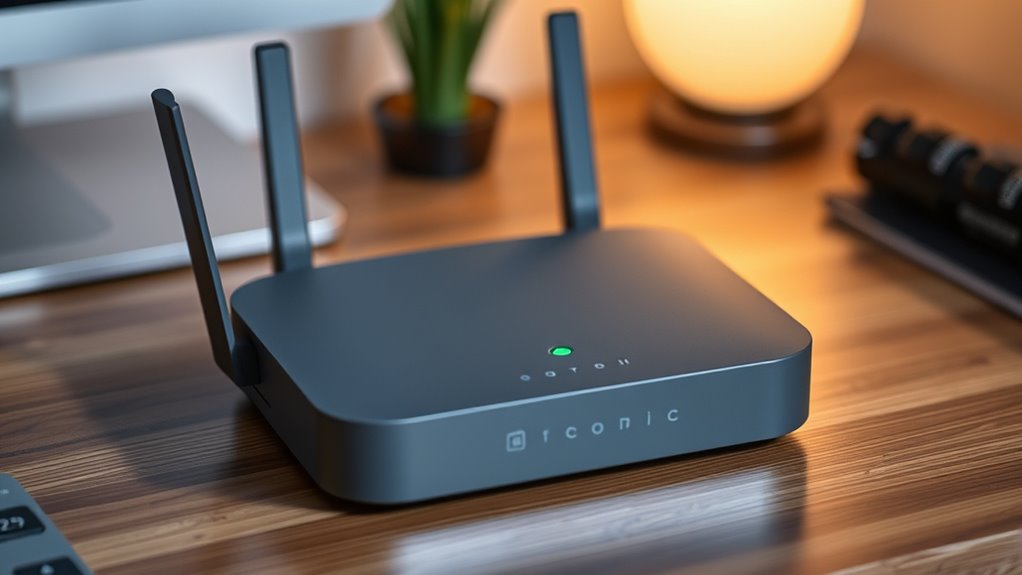
To identify if your router has a built-in battery, look for specific indicators on the device itself. Many models with batteries will have LED icons or symbols that represent power status or battery charge levels. Check the front or top panel for battery icons, a small battery graphic, or LED lights labeled “Battery” or “Backup.” Some routers display blinking or steady lights when the battery is active or charging. Refer to your router’s manual or quick start guide for symbols specific to your model. Additionally, manufacturer labels or markings may highlight battery features. If you see any of these indicators, it’s a good sign your router includes a built-in battery. Understanding backup power can help you determine if your device is equipped for outages, as some models may also have a dedicated battery management system to monitor battery health and performance. Moreover, checking for power indicator lights on your device can also provide quick confirmation of battery presence. This can be especially useful to ensure your network remains operational during power interruptions, reducing connectivity issues, and keeping your devices online. Otherwise, it likely depends on external UPS units for backup power. Additionally, some routers may have removable batteries, allowing for easy replacement or upgrade.
As an affiliate, we earn on qualifying purchases.
Review Manufacturer Specifications
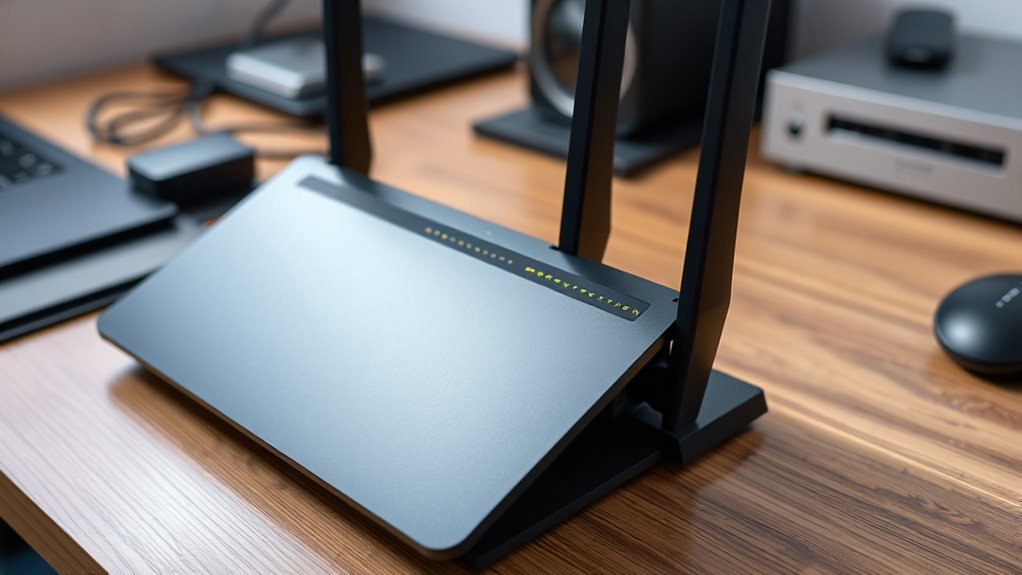
Reviewing manufacturer specifications is essential to determine if your router includes a built-in battery or requires external backup solutions. Start by checking the model details, often listed on the device label or manufacturer’s website. Look for references to “battery backup,” “uninterruptible power supply,” or “internal battery.” Some routers, like certain GigaCenter and U6 models released before August 2023, specify an integrated battery that lasts around two hours. Others clearly state they lack this feature. Pay attention to technical documents or datasheets, which provide information about battery capacity, runtime, and supported backup features. If specifications are unclear, contacting customer support or consulting user manuals can clarify whether your router has a built-in battery or if you need an external UPS for power backup.
uninterruptible power supply for router
As an affiliate, we earn on qualifying purchases.
As an affiliate, we earn on qualifying purchases.
Use Provider Tools for Device Details
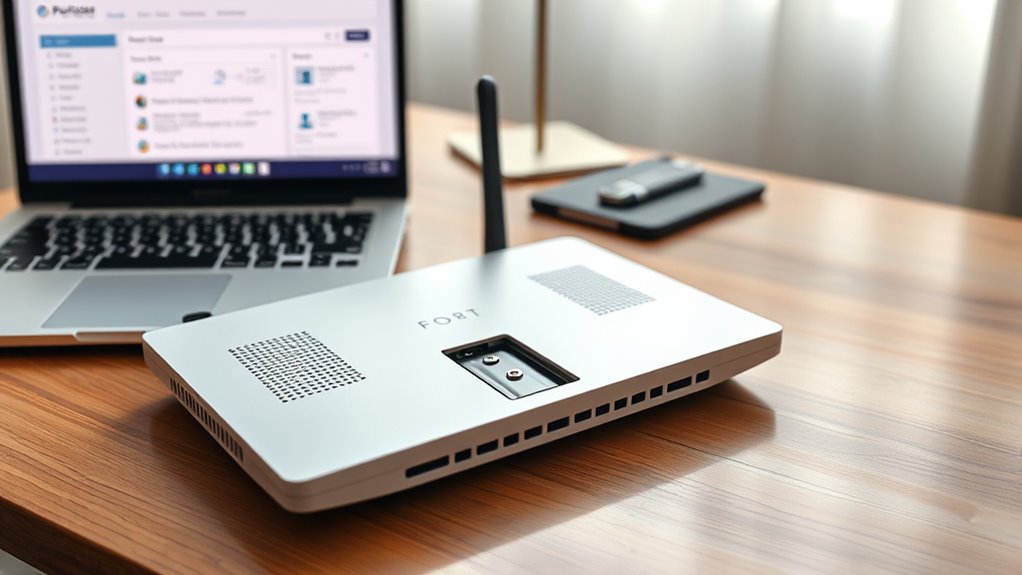
You should use provider tools to quickly access your router’s model information. These tools help you verify if your device supports built-in batteries or external UPS options. Confirming these details guarantees you choose the right backup solution for your setup. Understanding your device specifications ensures compatibility with additional power sources. Additionally, knowing whether your router has a battery option can help you plan for power outages more effectively. Being aware of your privacy preferences can also influence the way you manage device data and security settings. Checking the product features can provide further insights into your device’s capabilities and limitations. Moreover, verifying your wave and wind conditions can help you optimize your router’s placement and performance in different environments.
Access Router Model Info
Using provider tools is the most straightforward way to identify your router model quickly. Log into your account on your internet provider’s website or app, then navigate to your device management section. There, you’ll find detailed information about your connected hardware. Alternatively, check your router’s admin interface by entering its IP address into a web browser—usually something like 192.168.1.1 or 192.168.0.1. Once logged in, locate the device info or status page, which displays model numbers and firmware details. If you prefer, look at the physical label on your router’s bottom or back; most models list the exact model number there. Knowing your specific model helps you determine if it supports a built-in battery or other features. Firmware details can also provide clues about your device’s capabilities and updates.
Verify Battery Support
To confirm if your router supports a built-in battery backup, start by accessing your provider’s device management tools. Log in through your account portal or dedicated app, then locate your device details. Look for specific mentions of battery support or backup features. Additionally, consulting device specifications can provide detailed information about the hardware capabilities and compatibility with battery backups. You can also check:
- Model number and firmware version for compatibility
- Manufacturer’s specifications or user manual online
- Settings or options related to power management
- Alerts or notifications about battery health
- Firmware updates that may add or enhance battery features
Furthermore, reviewing insulation features in the device documentation can help determine if a built-in battery option is available or supported. It is also helpful to explore whether your device supports power management settings, which can influence battery functionality.
Identify Router Series and Release Date
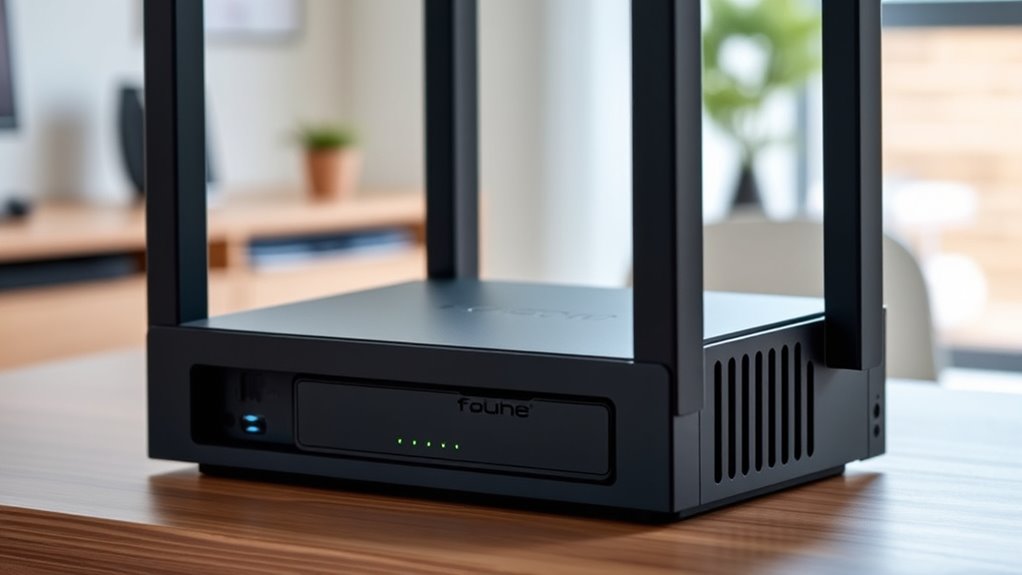
Ever wonder how to identify your router’s series and its release date? First, check the label or sticker usually found on the bottom or back of your device. It lists the model name or number, such as U6, U12, or 844 GigaCenter. Once you have this info, visit your internet provider’s website or the manufacturer’s support page. Enter your model number to find detailed specifications, including the release date. You can also search online using your model number for reviews or official announcements. Knowing your router’s series and release date helps determine if it includes a built-in battery backup or if you might need an upgrade. Being aware of product lifecycle and updates can help you plan for future compatibility. Keep this info handy for troubleshooting or when considering battery options. Additionally, understanding the battery options available for your model can help you plan for reliable backup power during outages. Recognizing whether your device supports a battery backup feature can be crucial during power outages or disruptions. Some routers even have replaceable batteries, which can extend their lifespan and improve backup reliability. Regularly checking for firmware updates related to battery support can also enhance performance and safety during power interruptions.
Inspect the Router Physically for Battery Compartments
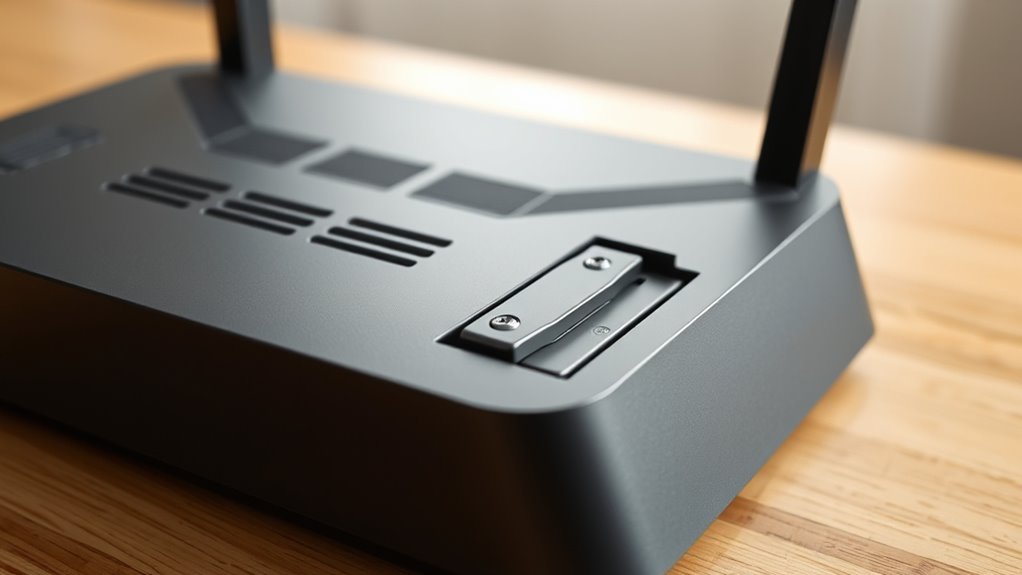
Inspecting your router physically is the most straightforward way to determine if it has a built-in battery compartment. Look for a removable panel or cover on the back or bottom of the device, which often conceals the battery. Check for small latches, screws, or sliding covers that might hide the battery inside. Examine the label or markings near the compartment for any mention of a battery or backup power. Some models feature a dedicated slot or drawer for easy battery access. Keep an eye out for indicators like a battery icon or labels stating “backup power.” Remember, not all routers have these, so a visual check is your first step in confirming whether your router includes a built-in battery. Additionally, understanding battery compartments can help you identify other devices with similar features.
Determine Power Backup Capabilities via Settings
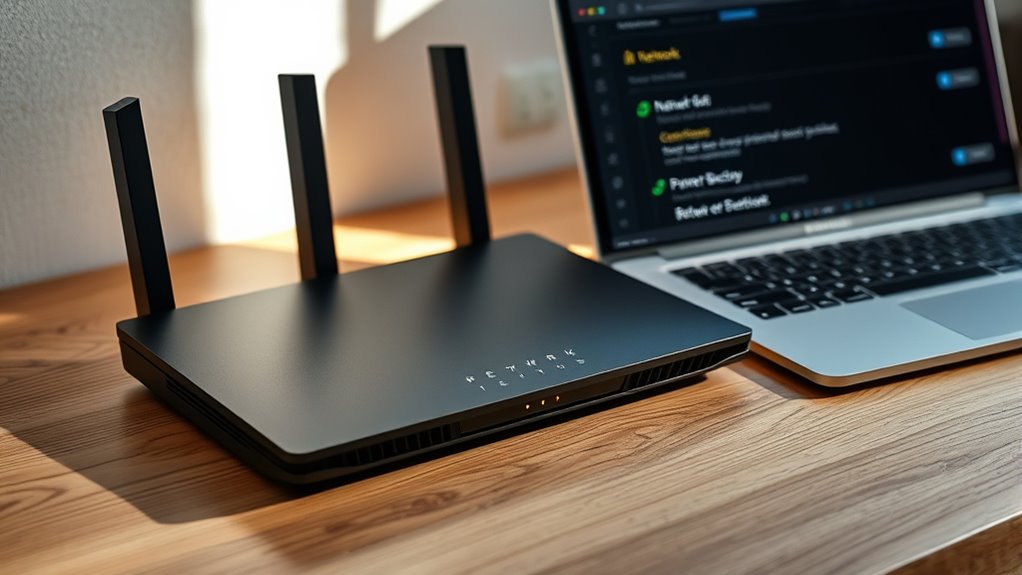
Checking your router’s settings can quickly reveal if it has power backup capabilities. Start by logging into the router’s admin interface through your web browser or app. Look for sections labeled “Power,” “Battery,” or “Backup” in the menu. Some routers display battery status, remaining runtime, or backup mode options directly on the dashboard. If you see an option to enable or configure a battery or backup feature, your router supports power backup. Conversely, if no such options exist or the settings only relate to regular power management, your device likely lacks built-in backup. Review the model specifications or user manual if needed. This method provides a quick, straightforward way to determine whether your router can handle power interruptions without external devices.
Consider External Battery Backup Options

When exploring external battery backup options, you need to consider if they’re compatible with your router model and how much power they provide. Runtime depends on the battery’s capacity and your device’s power draw, so choosing the right size is vital. Also, think about how easy it is to install and maintain these backups to guarantee reliable performance when you need it most.
Compatibility With Routers
If your router doesn’t have a built-in battery backup, external battery options can help guarantee continuous connectivity during power outages. To ascertain compatibility, check your router’s model and manufacturer specifications. Some routers are designed to work seamlessly with external UPS units, while others may require adapters or specific voltage ratings. Confirm that the UPS or external battery supplies the correct power output and connectors compatible with your device. Also, verify if your router supports automatic shutdown or power management features when connected to an external power source. Compatibility often depends on voltage, wattage, and port types. Be sure to read your router’s user manual or consult the manufacturer’s website for detailed compatibility info. Proper matching ensures reliable backup performance without risking damage to your equipment.
- Check voltage and wattage ratings of both router and UPS
- Confirm port compatibility (Ethernet, USB, power input)
- Verify supported power management features
- Ensure external battery supports your router’s model
- Review manufacturer guidelines for external backup use
Power Capacity and Runtime
Selecting an external battery backup for your router hinges on understanding its power capacity and expected runtime. Battery capacity, measured in watt-hours (Wh) or milliamp-hours (mAh), directly impacts how long your router stays online during outages. For example, a 300Wh battery can power a typical router for roughly 10-14 hours, depending on usage. Higher capacity batteries support longer runtimes but usually come with increased size and cost. Consider your needs—if you require prolonged backup, look for models with larger capacities. Also, check the power draw of your router to ensure the battery can handle it. Keep in mind that as the battery ages, runtime decreases. Choosing the right capacity balances your desired uptime with practicality and budget.
Installation and Maintenance
Installing and maintaining external battery backups for your router involves careful planning to guarantee reliable power during outages. First, choose a UPS that matches your router’s power needs and features, like surge protection or automatic voltage regulation. Position the UPS in a dry, ventilated area, away from heat sources. Regularly check battery health through manufacturer software or indicator lights, replacing batteries as recommended. Keep cables organized to prevent damage and ensure quick access during emergencies. Periodically perform test runs to confirm backup functionality. Maintain firmware updates on your UPS and router to maximize performance. Additionally, monitor power usage to avoid overloads, and keep spare batteries on hand for quick replacements. Proper installation and maintenance ensure your network stays operational, even when the power goes out.
- Select a UPS with appropriate capacity and features
- Place the UPS in a suitable, protected location
- Regularly test and replace batteries
- Keep cables organized and accessible
- Update firmware for maximum performance
Frequently Asked Questions
Can I Add a Battery Backup to My Non-Battery Router Model?
Yes, you can add a battery backup to your non-battery router model by connecting it to an uninterruptible power supply (UPS). Choose a UPS with enough capacity to support your router and other devices, like modems or switches. This way, when power goes out, the UPS provides backup power, keeping your network running. Make sure to select a UPS with surge protection and appropriate runtime for your needs.
How Often Should I Replace the Built-In Router Batteries?
You should replace your router’s built-in batteries every 2 to 3 years to guarantee maximum backup performance. As batteries age, their capacity decreases, reducing runtime during outages. Keep an eye on battery health indicators if your router offers them, and replace the battery sooner if you notice shorter backup times or if the manufacturer recommends renewal. Regular replacement helps maintain reliable power during outages and prolongs your router’s overall lifespan.
Do All UPS Devices Support Routers With Built-In Batteries?
Did you know that about 844 GigaCenter routers have built-in batteries lasting roughly two hours? Not all UPS devices support routers with built-in batteries. Most standard UPS units are designed for devices without these batteries, so check the compatibility before purchasing. Look for models with sufficient power capacity and features like surge protection and automatic voltage regulation to make certain your router stays online during outages.
What Signs Indicate My Router’s Battery Needs Replacement?
You’ll know your router’s battery needs replacing if it frequently loses power during outages or the battery life drops markedly below two hours. If your router isn’t holding a charge or shows warning lights, it’s a clear sign. Also, if your router’s performance drops or it shuts down unexpectedly, consider replacing the battery. Regularly check the manufacturer’s guidelines for battery lifespan to stay ahead of potential issues.
Are External Batteries Compatible With All Router Types?
External batteries aren’t compatible with all router types. Think of your router as a delicate dancer—only certain models are designed to gracefully partner with external power sources. If your router is a newer model or lacks specific ports, it probably won’t support external batteries. Always check your router’s specifications or consult your manufacturer’s guidelines to see if external power options will work without causing a tech disaster.
Conclusion
Now that you know how to check if your router has a battery option, aren’t you curious about how much peace of mind it could provide you? By exploring these steps, you can make certain your connection stays alive during outages. Remember, understanding your device’s power backup options isn’t just about technology—it’s about staying connected when it matters most. So, why not take a few minutes now to secure your network’s reliability?
Halloween Picks
halloween
As an affiliate, we earn on qualifying purchases.