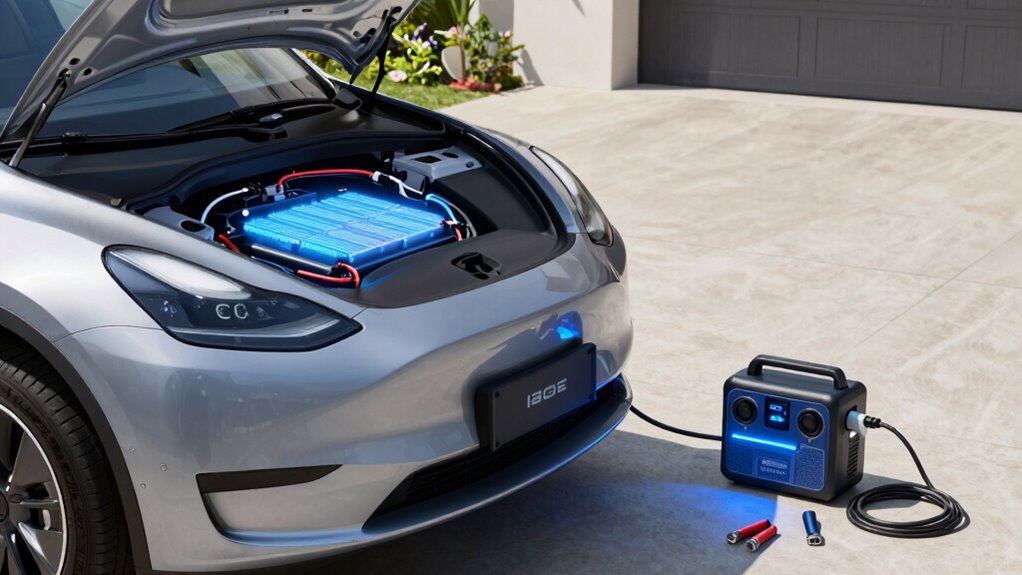

Using your car as a power source can be useful, but it comes with risks. Your vehicle’s electrical system is designed to power the car’s essentials, not high-demand devices, and improper use can drain the battery or damage wiring. Serious safety and legal concerns also come into play, like voiding warranties or risking electrical hazards. To do it safely and smartly, you need the right equipment and precautions. Stay with me to discover how to do it right.

Get backup power and energy gear delivered free — and shop member deals
- Fast, free delivery on millions of items
- Access to Prime Big Deal Days deals on October 6–7
- Prime Video, Amazon Music and more included
Key Takeaways
- Using your car as a power source can drain the battery and potentially damage the electrical system if improperly managed.
- Proper wiring, fuses, and safety precautions are essential to prevent shorts, overloads, and electrical hazards.
- Inverters convert DC to AC power, but selecting the right type and capacity is critical to avoid system stress.
- Modifying your vehicle to power devices may void warranties and could violate legal or insurance regulations.
- Portable power stations and solar batteries offer safer, eco-friendly alternatives to using your car as a power source.
How Your Car’s Electrical System Works

Your car’s electrical system is the backbone that powers everything from your lights to your dashboard. It relies on vehicle wiring, which connects various components and guarantees smooth power flow. The alternator capacity determines how much electricity your system can generate while the engine runs. When the engine starts, the alternator kicks in, converting mechanical energy into electrical energy to recharge the battery and supply power to your vehicle’s electronics. Proper wiring is essential; it guarantees reliable connections and prevents shorts or electrical failures. Knowing your alternator’s capacity helps you understand how much power your system can handle, especially if you plan to add accessories or use your car’s electrical system for external devices. Additionally, color accuracy in your electrical components can impact the overall performance and safety of your vehicle’s electrical system. A well-maintained system keeps everything running efficiently and safely, and understanding electrical load management is key to avoiding overloads or damage. Regular inspections and understanding the power distribution within your system can further enhance reliability and safety. Being aware of your vehicle’s battery capacity can also help prevent unexpected power issues, especially when considering modern vehicle electronics and their increasing power demands.
Common Methods of Powering Devices From a Vehicle
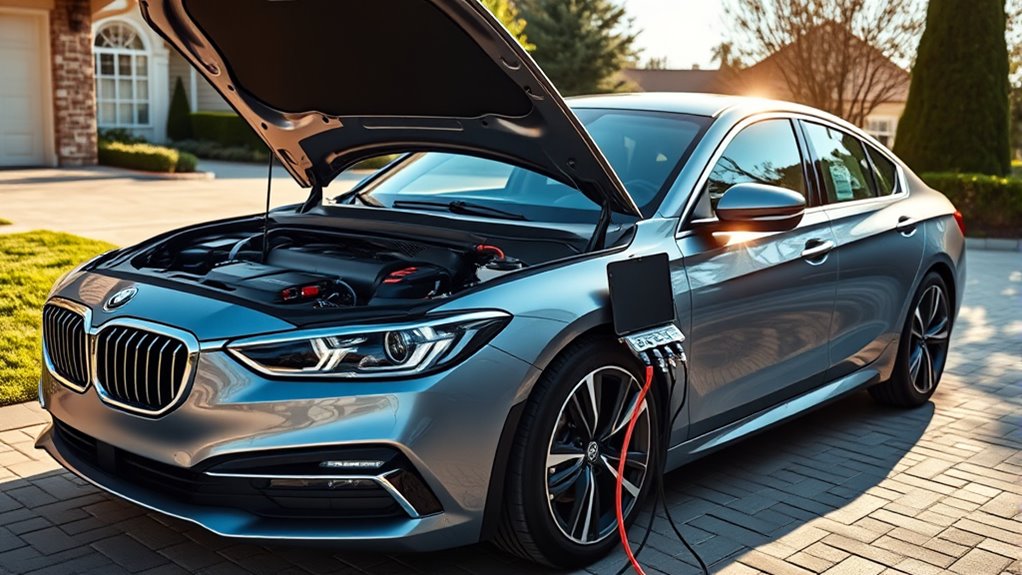
There are several common methods to power devices from a vehicle’s electrical system, each suited for different needs and levels of power draw. One popular approach involves vehicle modifications, such as installing dedicated power outlets or auxiliary batteries, to increase capacity and safety. Another key method is using inverter types, which convert your car’s DC power into AC, allowing you to run household appliances. Pure sine wave inverters provide cleaner power suitable for sensitive electronics, while modified sine wave inverters are more affordable but less precise. Choosing the right method depends on your power requirements, device compatibility, and how often you plan to use them. Properly integrating these systems guarantees reliable power without overloading your vehicle’s electrical system. Additionally, understanding free floating electrical systems can help optimize your setup for efficiency and safety, especially when considering power management strategies to prevent electrical issues. Implementing power regulation techniques is also crucial to maintain stable operation and protect your devices from surges, and being aware of electrical system capacity can help prevent unintended overloads. Considering the Suprem fabric properties can also inspire innovative solutions for durable and eco-friendly power equipment enclosures.
Risks and Potential Damage to Your Vehicle
Using your car as a power source can put your vehicle at risk if you’re not careful. You might drain your battery or cause damage to your electrical system without realizing it. Plus, using accessories improperly could void your warranty, leaving you responsible for repairs. To avoid these issues, it’s important to understand the electrical system and how power demands can impact your vehicle’s safety and performance. Being aware of wiring basics can help prevent short circuits and other electrical problems caused by improper connections. Additionally, understanding vetted wave and wind concepts can assist in assessing the stability and reliability of your power setup to prevent unexpected failures. Knowing the power capacity of your vehicle can also help you determine what devices are safe to connect without overloading the system. Familiarizing yourself with electrical load management can further safeguard your vehicle from potential damage caused by excessive power draw.
Battery Drain Risks
While turning your car into a power source can be convenient, it also poses significant risks of draining the battery unexpectedly. Overuse can reduce battery longevity, forcing you to replace it sooner. Additionally, a drained battery hampers power efficiency, making it harder to start your vehicle or run other systems. To avoid these issues, monitor your power consumption carefully. Being aware of heat distribution and how it affects your vehicle’s electrical components can help prevent unintended damage. Understanding the performance fundamentals of your vehicle’s electrical system can further aid in maintaining optimal operation and avoiding costly repairs. Recognizing the importance of proper maintenance can also extend your vehicle’s electrical system lifespan and ensure safety. Moreover, being familiar with modern electrical systems can help you better manage power use and prevent unnecessary strain on your vehicle. Regular inspections and staying updated on technological advancements are essential for efficient and safe electrical system management.
Electrical System Damage
Overloading your vehicle’s electrical system by drawing too much power from the battery can cause significant damage. When you push beyond the system’s capacity, voltage regulation can falter, leading to inconsistent power delivery that stresses components. Without proper circuit protection, surges or short circuits may occur, risking damage to sensitive electronics and the vehicle’s wiring. Continuous overloads can overheat wires, degrade connectors, and damage the alternator or other essential parts. To prevent this, it’s essential to use appropriate fuses and circuit protection devices, ensuring the system can handle the extra load safely. Proper electrical management is crucial to avoid costly repairs and extend your vehicle’s lifespan. Regular monitoring with electrical system diagnostics can help identify potential issues early before they cause serious damage. Neglecting these measures increases the risk of costly repairs and shortens your vehicle’s lifespan, making proper electrical management indispensable whenever using your car as a power source. Additionally, understanding your vehicle’s power capacity limits can help prevent accidental overloads and ensure safe operation. Being aware of these limits can also help you select the right electrical appliances to connect safely without compromising your vehicle’s integrity.
Warranty Void Concerns
Modifying your vehicle to use it as a power source can void your warranty, leaving you responsible for repairs that the manufacturer might otherwise cover. Warranty concerns are a key consideration because many automakers include restrictions on aftermarket modifications, especially those involving the electrical system. If you bypass or alter factory components, you risk violating manufacturer restrictions, which could invalidate your warranty. This means that even minor adjustments might lead to denied coverage for certain repairs, making you pay out of pocket. Before proceeding, review your vehicle’s warranty terms carefully. Keep in mind, some modifications could be reversible, but others might permanently affect your coverage. Additionally, understanding manufacturer restrictions can help you avoid unintended warranty voidance. Being aware of warranty policies and how they relate to modifications can help you make informed decisions. It’s also important to consider the potential for damage to your vehicle that could occur if the modifications are not properly implemented, which might lead to costly repairs. Understanding these risks helps you avoid unexpected expenses and keeps your vehicle protected under the original warranty.
Legal and Safety Considerations
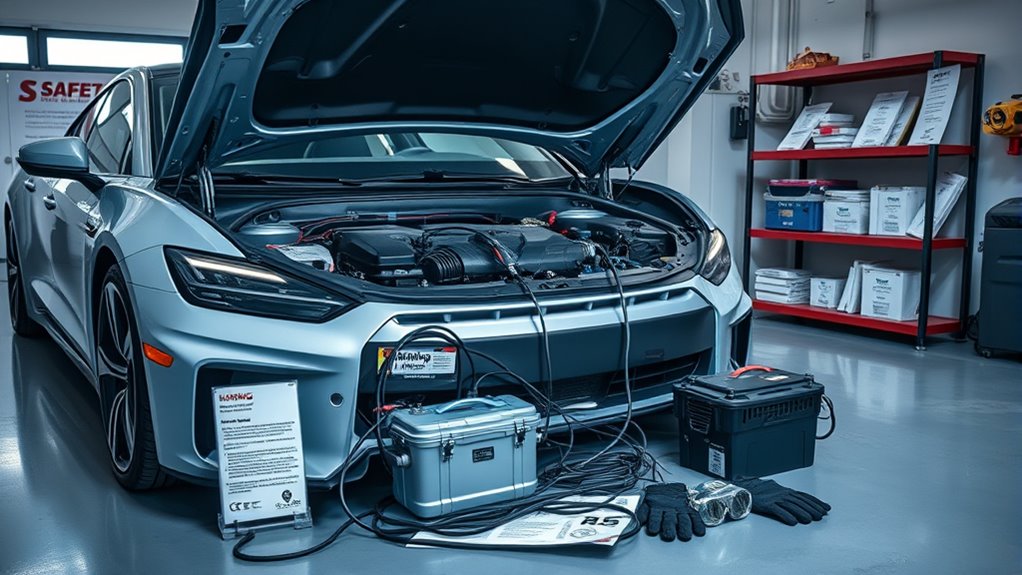
Before you start using your car as a power source, it is vital to understand the legal and safety considerations involved. Ensuring legal compliance means checking local regulations, as some areas may prohibit or restrict vehicle-based power systems. Failing to do so could result in fines or legal trouble. Additionally, consider insurance implications; using your car as a power source might affect your coverage if damages occur or if it’s deemed an unauthorized modification. You should review your policy and consult with your insurer to avoid potential claim denials. Safety is equally important—improper setup can lead to electrical hazards, fires, or injury. Always prioritize proper installation and avoid shortcuts that could compromise your safety or the safety of others.
Appropriate Equipment and Safety Precautions
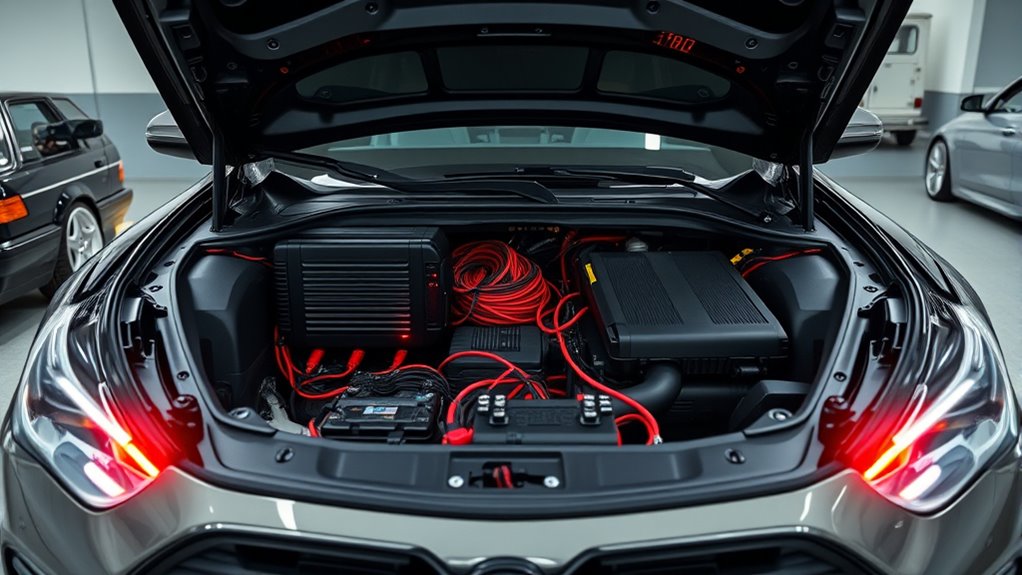
To safely use your car as a power source, you need to select the right equipment and follow essential safety precautions. Start with high-quality charging adapters compatible with your devices to prevent damage and ensure efficient charging. Use a reliable inverter that matches your power needs and always follow inverter safety guidelines to avoid overheating or electrical hazards. Never overload your inverter, and keep it in a well-ventilated area to prevent overheating. Check connections carefully before turning on your system, and avoid using damaged cables or adapters. Always disconnect your equipment when not in use, and stay alert for any unusual smells, sounds, or heat. Following these safety measures helps protect both your devices and your vehicle.
Alternatives to Using Your Car as a Power Source
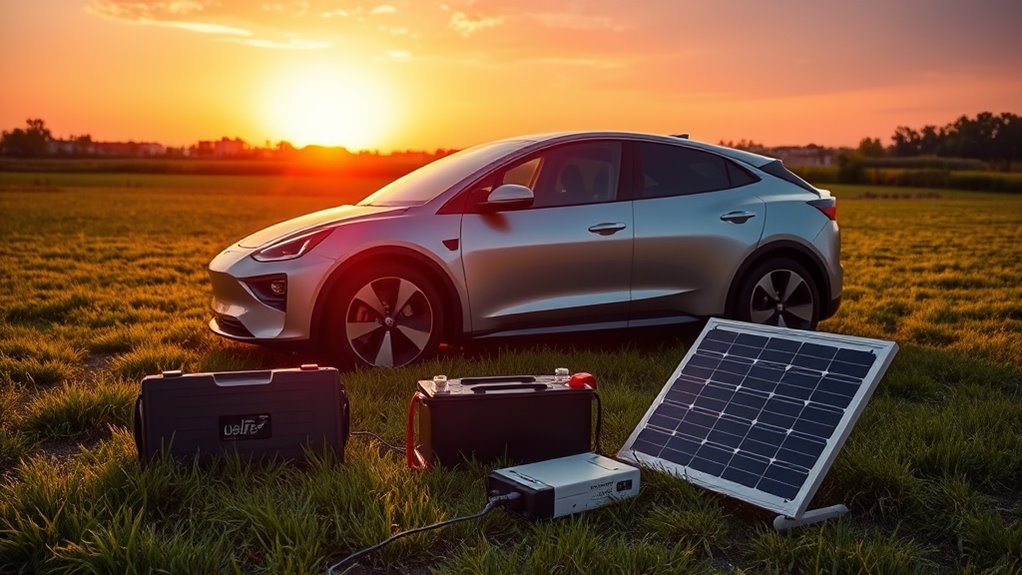
If you’re looking for other ways to power your devices, portable power stations are a great option. Solar battery options offer a clean, renewable energy source that can be used anywhere. Both alternatives provide flexibility without relying on your vehicle.
Portable Power Stations
Portable power stations offer a convenient and versatile alternative to using your car’s battery when you need reliable electricity on the go. They eliminate the need for extensive vehicle modifications, making setup quick and simple. With advanced power management features, these stations efficiently distribute energy to multiple devices, preventing overloads and conserving battery life. They’re compact, lightweight, and charge via wall outlets or solar panels, providing flexibility in various situations. Unlike relying solely on your vehicle, portable power stations ensure you’re not draining your car battery unnecessarily. They’re perfect for camping, emergencies, or outdoor projects, giving you control over your power needs without risking vehicle performance. Overall, they’re a smart solution for reliable, on-demand energy that complements your mobility.
Solar Battery Options
Solar battery options provide a sustainable and independent way to power your devices without relying on your vehicle’s energy. By using a solar battery, you can store energy generated from portable panels, making it ideal for off-grid situations or emergencies. Portable panels are lightweight and easy to set up, allowing you to harness sunlight directly wherever you are. Once charged, the solar battery can supply power to your gadgets, tools, or small appliances without needing a connection to your car or grid. This setup offers flexibility and eco-friendliness, reducing your carbon footprint. Plus, solar batteries provide reliable energy storage, so you can use them even when the sun isn’t shining. It’s a smart, efficient alternative to using your car as a power source.
Practical Tips for Safe and Effective Use

To make certain of safe and effective use of your car as a power source, it’s essential to follow proper connection procedures and prioritize safety. Start with vehicle modifications that are appropriate and approved, avoiding risky DIY installations that could compromise your vehicle’s integrity. Use high-quality connectors and cables designed for power transfer to prevent shorts or fires. Always disconnect the power source before making adjustments or inspecting connections. Keep your setup well-ventilated and avoid overloading circuits. Regularly inspect your system for wear or damage, and follow manufacturer instructions carefully. Remember, safety gear like gloves and eye protection can prevent accidents. By adhering to these practical tips, you ensure a reliable and safe experience using your car as a power source.
Frequently Asked Questions
Can I Use My Car to Power Sensitive Electronic Devices?
Yes, you can power sensitive electronic devices with your car, but you should use a proper inverter designed for delicate electronics. Keep in mind that frequent use can impact your car battery lifespan, so avoid draining it too much. Also, guarantee inverter safety features are in place to prevent damage or electrical hazards. Use the right size inverter and avoid long, continuous draws to protect both your devices and your vehicle.
How Long Can I Run Devices off My Car’s Battery?
You can run devices off your car’s battery for a limited time, depending on battery capacity and power consumption. Generally, small electronics can operate for a few hours, while larger devices drain power faster. To prolong usage, monitor your battery’s voltage and avoid draining it completely, as deep discharges can damage it. Keep an eye on power demands and conserve energy to maximize the time you can run your devices safely.
Will Using My Car as a Power Source Drain the Battery Quickly?
Yes, using your car as a power source can drain the car battery quickly. When you connect devices, they draw power, leading to a significant power drain that reduces the battery’s charge. If you run devices for an extended period, it can even prevent your engine from starting. To avoid this, monitor your car battery’s charge and limit device use, especially when the engine isn’t running.
Are There Any Special Maintenance Tips for Inverters Used in Vehicles?
Don’t wait for the wheels to come off—regular maintenance keeps your inverter running smoothly. To protect battery health, make sure it’s properly cooled, as inverter cooling prevents overheating and prolongs lifespan. Check connections regularly, keep vents clear, and avoid overloading the system. By staying on top of these tips, you’ll keep your inverter in tip-top shape and avoid costly repairs down the road.
How Does Ambient Temperature Affect Vehicle Power Output?
Ambient temperature critically impacts your vehicle’s power output by affecting its thermal efficiency. When temperatures fluctuate, your engine struggles to maintain ideal performance, often leading to reduced power and efficiency. In hot weather, parts can overheat, while cold conditions slow chemical reactions. To maximize power, make sure your cooling system is effective and consider using temperature-resistant components. Staying aware of temperature fluctuations helps you fine-tune your vehicle’s performance and longevity.
Conclusion
Using your car as a power source offers convenience, but it comes with risks and limitations. While it can be useful in emergencies or remote locations, neglecting safety precautions can cause damage or danger. Balance your desire for quick power with caution and proper equipment. Remember, the thrill of instant energy shouldn’t overshadow the importance of responsible, safe practices. Stay informed, stay safe, and choose the right method for your needs—your vehicle and your safety depend on it.
Fall Picks
fall essentials
As an affiliate, we earn on qualifying purchases.