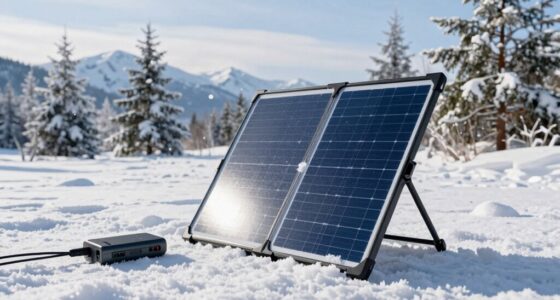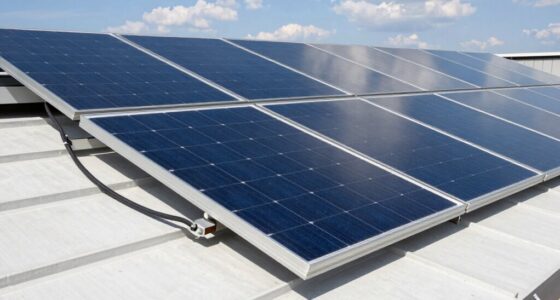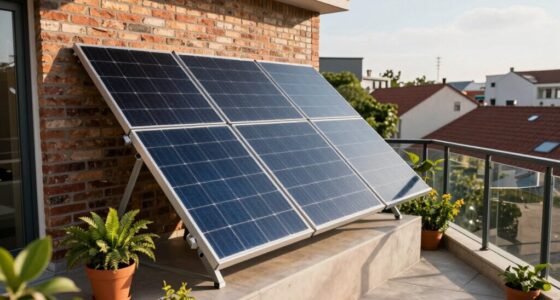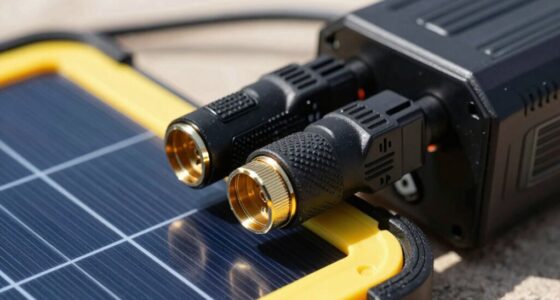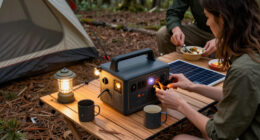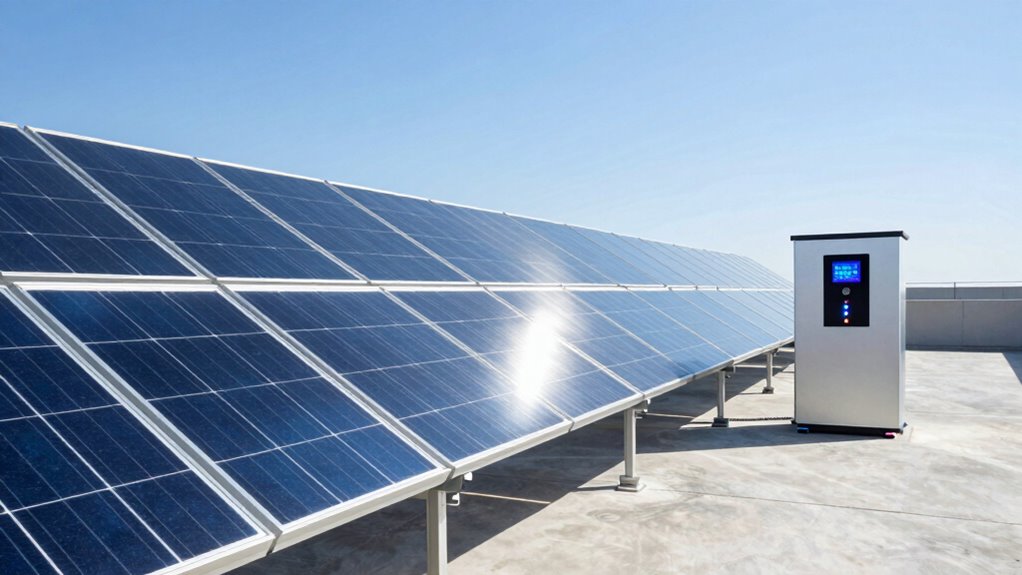
To match solar panels to a power station efficiently, focus on aligning electrical characteristics like voltage and capacity, ensuring compatibility with your inverter and battery bank. Consider environmental factors such as shading, panel orientation, and local climate to choose panels that perform well under your conditions. Avoid mismatches by selecting components based on system requirements, not just cost or wattage. Following these steps helps prevent waste and maximizes long-term reliability—keep going to discover how to optimize your setup even further.

Get backup power and energy gear delivered free — and shop member deals
- Fast, free delivery on millions of items
- Access to Prime Big Deal Days deals on October 6–7
- Prime Video, Amazon Music and more included
Key Takeaways
- Assess the power station’s voltage and capacity requirements before selecting panels.
- Match solar panel electrical characteristics, such as voltage and current, to the power station’s specifications.
- Consider environmental factors and panel orientation to optimize energy capture and system performance.
- Ensure component compatibility, including batteries and inverters, to prevent mismatches and inefficiencies.
- Prioritize system integration and proper component matching to maximize long-term reliability and reduce troubleshooting.
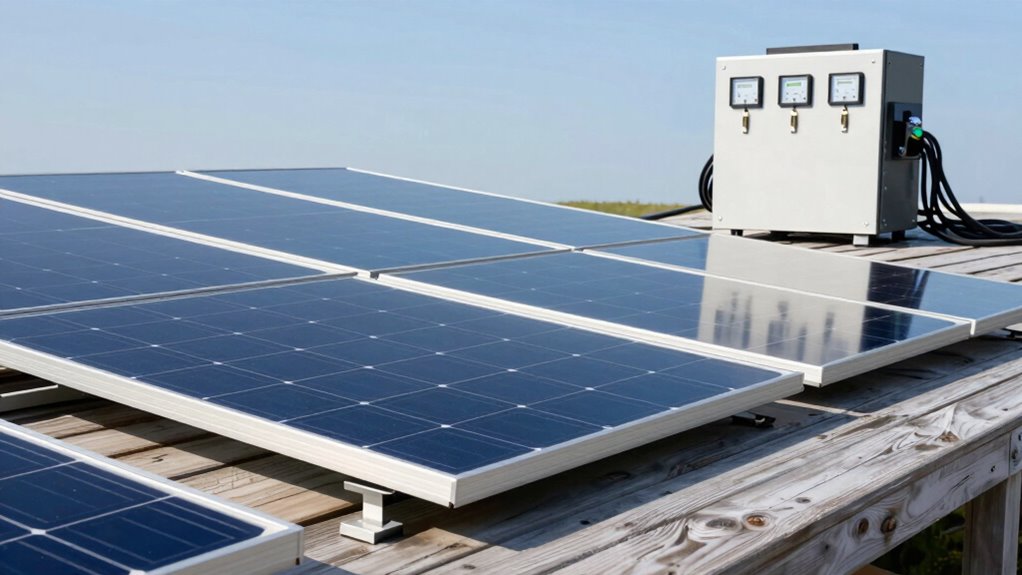
Additionally, consider the overall system design. The combined factors of battery compatibility and inverter efficiency influence how quickly and reliably your power station can operate. Properly matched components allow for smoother operation and less troubleshooting down the line. It’s also important to understand the power output of your panels to ensure they meet your energy needs efficiently. Be mindful of environmental factors as well—shading, orientation, and tilt can impact the panels’ performance, so choose panels that perform well under your specific conditions. Understanding system integration is crucial for optimizing your setup and avoiding potential mismatches that could reduce efficiency.
In short, selecting the right solar panels involves more than just picking the highest wattage or most affordable option. It requires aligning the panels’ electrical characteristics with your battery bank and inverter capabilities. By understanding your system’s voltage, capacity, and efficiency needs, you guarantee your power station operates at maximum efficiency without wasting time or money. Taking these steps will help you create a reliable, long-lasting solar setup that meets your energy demands with minimal hassle.
As an affiliate, we earn on qualifying purchases.
Frequently Asked Questions
Can I Mix Different Brands of Solar Panels With One Power Station?
Yes, you can mix different brands of solar panels with one power station, but you need to take into account panel compatibility and brand diversity. Make sure the panels have similar voltage and current ratings to prevent issues. Mixing brands can work if their specifications align closely; otherwise, it might reduce efficiency or damage your system. Always check your power station’s compatibility guidelines and aim for balanced performance when combining multiple brands.
How Does Temperature Affect Solar Panel Efficiency?
Did you know that for every 1°C increase in temperature, solar panel efficiency drops by about 0.5%? Temperature effects notably impact your panels’ performance. When it gets hot, the efficiency of your panels decreases because excess heat hampers their ability to convert sunlight into electricity efficiently. To optimize energy production, keep panels cool and ensure proper ventilation, especially in hot climates.
What Is the Impact of Shading on Panel Performance?
Shade impact considerably reduces a solar panel’s performance, as even partial shading causes efficiency loss. When part of your panel is shaded, it disrupts the flow of electrons, decreasing power output across the entire system. To minimize efficiency loss, position panels where shading is minimal and consider using bypass diodes. Managing shade impact ensures you maximize energy production and get the most out of your solar investment.
Are There Specific Certifications to Look for in Panels?
You should look for solar panels with certifications like IEC or UL, which guarantee they meet strict safety and performance standards. These certification standards also indicate panel longevity, helping you choose reliable products that last longer and perform efficiently over time. Certified panels are less likely to have defects, giving you peace of mind and maximizing your investment. Always verify the certifications before purchasing to ensure you’re getting quality and durability.
How Often Should I Upgrade My Solar Equipment?
You should consider upgrading your solar equipment every 10-15 years, depending on battery lifespan and inverter compatibility. As technology advances, newer solar panels become more efficient, and inverters may need updates to handle increased power or better compatibility. Regularly check your system’s performance, and if you notice drops in efficiency or compatibility issues, it’s a good time to upgrade to guarantee maximum energy production and longevity of your setup.
solar inverter compatible panels
As an affiliate, we earn on qualifying purchases.
As an affiliate, we earn on qualifying purchases.
Conclusion
By balancing the basics, blending the right panels, and bridging the gap between capacity and compatibility, you’ll breeze through building a brilliant, budget-friendly solar setup. Remember, deliberate decisions during the design and data collection stages deliver dependable, durable power. Don’t delay—diligently explore into details and discover the delightful dance of matching solar panels to your power station, ensuring energy efficiency and enjoyment for years to come.
solar panel voltage current tester
As an affiliate, we earn on qualifying purchases.
As an affiliate, we earn on qualifying purchases.
solar panel tilt and orientation
As an affiliate, we earn on qualifying purchases.
As an affiliate, we earn on qualifying purchases.
Fall Picks
fall essentials
As an affiliate, we earn on qualifying purchases.