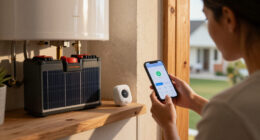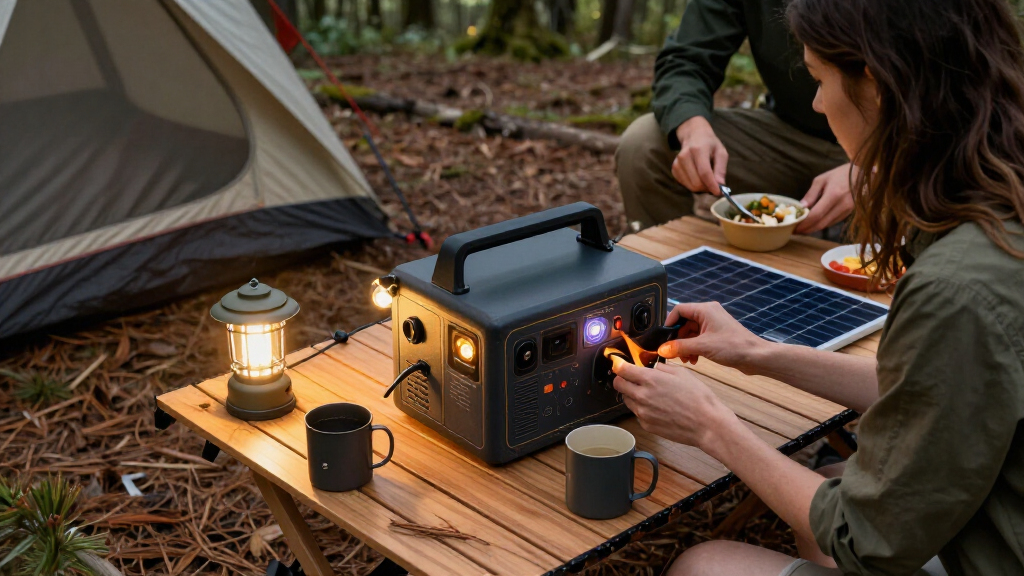
When selecting portable power stations for camping, the key considerations are size, capacity, and versatility. The Core 300W stands out as the best overall choice for its balance of capacity and portability, while the Jackery Explorer 1000 v2 offers more power for larger setups. The Anker SOLIX C300 provides a solid mid-range option with great features. The main tradeoffs involve balancing weight against capacity and whether you need rapid recharging or multiple outlets. Continue reading for a detailed breakdown of each option and what makes them suitable for different camping needs.

Get backup power and energy gear delivered free — and shop member deals
- Fast, free delivery on millions of items
- Access to Prime Big Deal Days deals on October 6–7
- Prime Video, Amazon Music and more included
Complete the kit


Key Takeaways
- Top picks are distinguished by their balance of capacity and portability, with the Core 300W leading as the most versatile overall.
- Higher-capacity models like the Jackery Explorer 1000 are better suited for extended trips or powering larger devices, but tend to be heavier and bulkier.
- Battery chemistry impacts longevity; LiFePO4 models generally last longer and are safer for frequent use.
- Portability is often limited by size and weight, so compact options are ideal for backpackers, while larger units suit car camping.
- Fast recharging options and multiple output ports add significant convenience, especially for multi-device setups.
| Core 300W Portable Power Station, 192Wh LiFePO4 Solar Generator with 600W Surge |  | Best Value LiFePO4 Pick | Capacity: 192Wh | Output: 300W rated, 600W surge | Battery Type: LiFePO4, 4000+ cycles | VIEW LATEST PRICE | See Our Full Breakdown |
| ZeroKor Portable Power Station 120W, 110V Battery Generator with AC/DC Outlets |  | Best Ultra-Light Backup | Capacity: 97.6Wh / 26,400mAh | Output: 120W | Ports: 2 AC, 1 DC, USB-A, QC USB, USB-C | VIEW LATEST PRICE | See Our Full Breakdown |
| MARBERO M82 Portable Power Station, 88Wh, 120W Surge, 24,000mAh |  | Best Stocking-Stuffer Price Point | Capacity: 88Wh / 24,000mAh | Running Power: 80W (120W surge) | Ports: 8 (AC, USB, USB-C PD, car DC) | VIEW LATEST PRICE | See Our Full Breakdown |
| HOWEASY Portable Power Station 120W (240W Peak) Solar Generator |  | Best Beginner Kit | Capacity: 88Wh | Output: 120W continuous, 240W peak | Ports: 8: 2 AC, 1 USB-C (18W), 2 QC 3.0 USB, 1 USB (5V 2.4A), 2 DC | VIEW LATEST PRICE | See Our Full Breakdown |
| Anker SOLIX C300 DC Portable Power Station, 288Wh, 300W |  | Best for USB-C Laptop Campers | Capacity: 288Wh | Output: 300W | Battery Type: LiFePO4 | VIEW LATEST PRICE | See Our Full Breakdown |
| DaranEner 300W Portable Power Station, 192Wh LiFePO4 Solar Generator |  | Best Ultralight Pick | Capacity: 192Wh | Output: 300W (600W surge) pure sine wave | Battery Chemistry: LiFePO4 | VIEW LATEST PRICE | See Our Full Breakdown |
| Anker SOLIX C300 Portable Power Station, 288Wh Solar Generator for Camping |  | Best Small-Capacity Overall | Capacity: 288Wh | Output Power: 300W (600W surge) | Ports: 3 AC, 1 car socket (120W), 2 USB-C (140W each), 1 USB-C (15W), 1 USB-A | VIEW LATEST PRICE | See Our Full Breakdown |
| ALLWEI Portable Power Station 300W, 256Wh Solar Generator LiFePO4 Battery |  | Best Value Pick | Capacity: 256Wh | Continuous Power: 300W (600W surge) | Battery Type: LiFePO4 | VIEW LATEST PRICE | See Our Full Breakdown |
| VTOMAN FlashSpeed 300 Portable Power Station, 300W 230Wh LiFePO4 Battery |  | Best for Multi-Device Charging | Battery Capacity: 230Wh | Output Wattage: 300W (600W peak) | Battery Type: LiFePO4 | VIEW LATEST PRICE | See Our Full Breakdown |
| Jackery Explorer 1000 v2 Portable Power Station |  | Best Premium / Base Camp Pick | Battery Capacity: 1,070Wh LFP | AC Output: 1,500W (3,000W surge peak) | Charging Time: 1.7 hours default; 1 hour with emergency mode | VIEW LATEST PRICE | See Our Full Breakdown |
| Westinghouse iGen400s 400W Portable Power Station, 183Wh |  | Best Ultra-Light Option | Capacity: 183Wh | Running power: 200W | Peak power: 400W | VIEW LATEST PRICE | See Our Full Breakdown |
| Jackery Explorer 300 Portable Power Station, 292 Wh |  | Best for Long-Term Reliability | Capacity: 292 Wh | Peak output: 600 W | Weight: 7.1 pounds | VIEW LATEST PRICE | See Our Full Breakdown |
| BLUETTI Elite 30 V2 Portable Power Station, 288Wh 600W LFP Solar Generator |  | Best Fast-Charging Pick | Capacity: 288Wh | Continuous output: 600W | Surge power: 1500W (Power Lifting Mode) | VIEW LATEST PRICE | See Our Full Breakdown |
| GRECELL Portable Power Station 330W, 230.88Wh Solar Generator |  | Best Value for Weekend Campers | Capacity: 230.88Wh | Output power: 330W (600W surge) | AC outlets: 1 | VIEW LATEST PRICE | See Our Full Breakdown |
| ZeroKor 300W Portable Power Station with 60W Foldable Solar Panel | 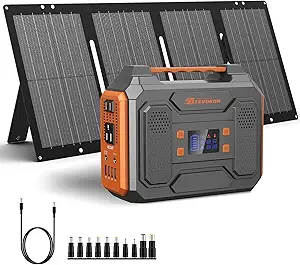 | Best Complete Solar Starter Kit | Output power: 300W max | AC outlets: 2 x 300W max | USB ports: 3 x 5V/3A, 1 x quick charge | VIEW LATEST PRICE | See Our Full Breakdown |
| portable power stations for camping | Capacity | Weight | Ports |
|---|---|---|---|
| Core 300W Portable Power Stati | 192Wh | 8.8 lbs | 2 AC, 1x 65W USB-C PD, 2 USB-A, 1 car outlet |
| ZeroKor Portable Power Station | 97.6Wh / 26,400mAh | 2.2 lbs | 2 AC, 1 DC, USB-A, QC USB, USB-C |
| MARBERO M82 Portable Power Sta | 88Wh / 24,000mAh | 3.2 lbs | 8 (AC, USB, USB-C PD, car DC) |
| HOWEASY Portable Power Station | 88Wh | 2.3 lbs | 8: 2 AC, 1 USB-C (18W), 2 QC 3.0 USB, 1 USB (5V 2.4A), 2 DC |
| Anker SOLIX C300 DC Portable P | 288Wh | — | 7: 120W car socket, 2x 140W USB-C, 1x 100W USB-C, 1x 15W USB-C, 2x USB-A |
| DaranEner 300W Portable Power | 192Wh | 5.73 lbs | 2 AC, 1 USB-C PD 60W, 2 USB-A 18W, 1 DC 120W |
| Anker SOLIX C300 Portable Powe | 288Wh | Compact, 15% smaller than similar designs | 3 AC, 1 car socket (120W), 2 USB-C (140W each), 1 USB-C (15W), 1 USB-A |
| ALLWEI Portable Power Station | 256Wh | 6.4 lbs | — |
| VTOMAN FlashSpeed 300 Portable | — | 7.4 lbs | — |
| Jackery Explorer 1000 v2 Porta | — | 23.8 lbs | 3 AC pure sine wave, 2 USB-C (100W PD), 1 USB-A, 1 car port |
| Westinghouse iGen400s 400W Por | 183Wh | — | — |
| Jackery Explorer 300 Portable | 292 Wh | 7.1 pounds | — |
| BLUETTI Elite 30 V2 Portable P | 288Wh | 9.4 lbs | — |
| GRECELL Portable Power Station | 230.88Wh | — | — |
| ZeroKor 300W Portable Power St | — | — | — |
More Details on Our Top Picks
Core 300W Portable Power Station, 192Wh LiFePO4 Solar Generator with 600W Surge
Of the budget-tier options here, this Core unit stands out for pairing a LiFePO4 battery rated for 4000+ cycles with true 300W pure sine wave output — a combination you usually pay more for. Compared with the Anker SOLIX C300 DC, you get AC outlets instead of USB-only charging, which matters if you want to run a small fan or a CPAP on a weekend trip. The 0-80% recharge in about an hour is quick for this price class, and the ≤10ms UPS switchover is a genuine bonus for home backup duty between camping seasons. The tradeoff is capacity: 192Wh fills up fast when you’re charging laptops and phones for a family, so multi-day campers off-grid will drain it quickly. Solar and car charging also require buying accessories separately, which adds to the real cost.
Pros:- LiFePO4 battery rated for 4000+ cycles for years of reliable use
- Fast 0-80% AC recharge in about an hour
- Built-in UPS function with ≤10ms switchover for sensitive devices
- Six output ports including 2 AC and 65W USB-C PD in an 8.8 lb package
Cons:- 192Wh capacity is limiting for multi-day trips or group charging
- Solar panel and car charger sold separately
- Requires a recharge every 1-2 months during storage to maintain performance
Best for: Solo campers and couples who want durable battery chemistry and true AC outlets for weekend trips without spending big
Not ideal for: Families or off-grid campers needing multi-day capacity — 192Wh runs out quickly with several devices drawing power
- Capacity:192Wh
- Output:300W rated, 600W surge
- Battery Type:LiFePO4, 4000+ cycles
- Ports:2 AC, 1x 65W USB-C PD, 2 USB-A, 1 car outlet
- Recharge Time:0-80% in ~1 hour (AC)
- UPS Switch Time:≤10ms
- Weight:8.8 lbs
Our verdict“The smartest budget pick for campers who prioritize battery longevity and true AC power over sheer capacity.”
ZeroKor Portable Power Station 120W, 110V Battery Generator with AC/DC Outlets
At 2.2 lbs with a built-in handle, the ZeroKor is the featherweight of this lineup — nearly four pounds lighter than the Core 300W while still offering two AC outlets. That makes it a fit for backpackers and car campers who mostly need to top off phones, a headlamp, or a camera battery and want a small emergency light thrown in. Compared with the similar-capacity HOWEASY, the ZeroKor edges ahead on capacity (97.6Wh vs 88Wh) but its 120W ceiling with no meaningful surge headroom makes it less forgiving of anything with a motor — the listing itself flags devices with built-in air compressors as potentially incompatible. The display screen is a nice touch at this size, since guessing remaining runtime is a real annoyance on cheaper mini stations. Think of it as an emergency kit item first, a camping luxury second.
Pros:- Featherweight 2.2 lb build with built-in carry handle
- Six ports including two AC outlets plus USB-C
- BMS safety protections with an automatic cooling fan
- Three recharge methods including solar compatibility
Cons:- 120W output cannot handle high-draw appliances
- Solar panel not included
- Some devices with built-in air compressors may not work at all
Best for: Backpackers and minimalist car campers who want emergency phone and small-device power at the lowest possible weight
Not ideal for: Anyone running laptops for work or appliances with motors — the 120W limit and compressor incompatibility rule those out
- Capacity:97.6Wh / 26,400mAh
- Output:120W
- Ports:2 AC, 1 DC, USB-A, QC USB, USB-C
- Weight:2.2 lbs
- Charging Methods:Solar (not included), USB-C wall adapter, car USB
- Safety Features:BMS: short circuit, over-current, over-voltage, overload, overheating protection
- Warranty:12 months
Our verdict“A pocketable emergency-power option for weight-obsessed campers, as long as expectations stay at phone-and-headlamp level.”
MARBERO M82 Portable Power Station, 88Wh, 120W Surge, 24,000mAh
The MARBERO M82 competes directly with the HOWEASY on specs — same 88Wh capacity class, similar port counts — but its 80W continuous output is the number to watch, since that’s lower than the HOWEASY’s 120W rating. What it does well is simplicity: eight simultaneously usable ports, a three-level LED with SOS mode, and a recharge to 80% in two hours with the included adapter, which not every budget brand provides. Compared with the ZeroKor, it trades a little weight for a more appliance-friendly port layout, though neither will run anything beyond a small fan or light. This pick makes the most sense for first-time campers or as a glovebox emergency unit where the goal is charging phones and running a lantern, not powering a camp kitchen.
Pros:- Compact 3.2 lb size with eight simultaneously usable ports
- Three-level LED light with SOS mode built in
- AC adapter included with 0-80% recharge in 2 hours
- BMS with short-circuit and overload protection
Cons:- 80W running output is the weakest in the roundup
- Solar panels not included and compatibility is limited to 30W/60W models
Best for: First-time campers and emergency-prep shoppers who want a cheap, simple unit for phones, lights, and small gadgets
Not ideal for: Laptop users or anyone expecting real appliance power — 80W running output is the lowest in this lineup
- Capacity:88Wh / 24,000mAh
- Running Power:80W (120W surge)
- Ports:8 (AC, USB, USB-C PD, car DC)
- Recharge Time:0-80% in 2 hours (included adapter)
- Charging:AC, battery, compatible 30W/60W solar panel
- Weight:3.2 lbs
- Safety:BMS with short-circuit and overload protection
Our verdict“A low-commitment starter station for gadget charging and emergencies — just don’t expect it to run appliances.”
HOWEASY Portable Power Station 120W (240W Peak) Solar Generator
Where the HOWEASY pulls ahead of the MARBERO M82 is included accessories: you get the AC adapter and a car charger in the box, plus a 24-month warranty — double the ZeroKor’s coverage. For someone assembling their first camping power kit, that means fewer surprise purchases before the first trip. The 240W peak surge also gives it more headroom than the MARBERO’s 120W rating when a device kicks on, though the 120W continuous ceiling still rules out anything that heats or blows air. Its space-saving hidden handle and 2.3 lb weight make it easy to toss in a pack, and with eight ports spread across AC, QC 3.0 USB, and DC, two people can charge at once. The honest limitation is the same one shared by every 88Wh unit here: it’s a one-night, two-phone-plus-a-laptop kind of battery.
Pros:- AC adapter and car charger included in the box
- 24-month warranty — double many budget competitors
- Eight ports including QC 3.0 and dual AC sockets
- Three recharge options: AC, solar, and 12V/24V car socket
Cons:- 88Wh capacity limits trips to roughly one night of moderate use
- 120W output cannot power high-wattage appliances
- Solar panel not included
Best for: Camping beginners who want a complete out-of-the-box kit with included chargers and longer warranty coverage
Not ideal for: Multi-day campers or anyone powering drones, mini-fridges, or other capacity-hungry gear — 88Wh runs dry fast
- Capacity:88Wh
- Output:120W continuous, 240W peak
- Ports:8: 2 AC, 1 USB-C (18W), 2 QC 3.0 USB, 1 USB (5V 2.4A), 2 DC
- Cycle Life:>1500 cycles
- Charging:AC adapter, solar panel (15V-24V, not included), car socket 12V/24V
- Weight:2.3 lbs
- Warranty:24 months
Our verdict“The most complete starter package in the budget tier — buy it, charge it, go camping, no extra purchases needed.”
Anker SOLIX C300 DC Portable Power Station, 288Wh, 300W
The C300 DC takes a different bet than every AC-outlet model here: it ditches wall plugs entirely for a USB-C-first design with dual 140W two-way ports. For photographers, remote workers, and drone pilots whose gear already charges over USB-C, that’s actually an advantage — more usable ports for modern devices, and a recharge to 80% in about an hour from a single high-watt charger. Its 288Wh capacity outlasts the Core 300W’s 192Wh by half again, and the LiFePO4 chemistry with a 3-year guarantee reflects Anker’s stronger warranty posture. The tradeoffs are real though: no AC outlets means no fan, no small appliance, no CPAP with a wall plug, and Anker doesn’t include a wall charger — plus the PS30/PS200/PS400 solar panels won’t work with it. If your camp kit is entirely USB-C, this is the best-matched station in the lineup; if it isn’t, skip it.
Pros:- Dual 140W two-way USB-C ports with 80% recharge in about an hour
- 288Wh LiFePO4 battery with 3-year limited guarantee
- Seven ports including a 120W car socket
- Compact design, 30% smaller than comparable stations
Cons:- No AC outlets at all — incompatible with anything requiring a wall plug
- No wall charger included and needs an 18W+ USB-C charger for first activation
- Not compatible with several Anker solar panels (PS30, PS200, PS400)
Best for: Remote workers and photographers whose entire kit charges over USB-C and who don’t need AC outlets
Not ideal for: Campers who need any AC-powered device — fans, CPAP machines, or small appliances won’t plug in at all
- Capacity:288Wh
- Output:300W
- Battery Type:LiFePO4
- Ports:7: 120W car socket, 2x 140W USB-C, 1x 100W USB-C, 1x 15W USB-C, 2x USB-A
- Recharge Time:80% in ~1 hour (dual PD 3.1 USB-C)
- Power Sources:Battery, solar, car
- Warranty:3-year limited guarantee
Our verdict“The right pick only if your devices all speak USB-C — otherwise an AC-equipped model like the Core 300W serves you better.”
DaranEner 300W Portable Power Station, 192Wh LiFePO4 Solar Generator
At 5.73 lbs, the DaranEner 300W is the lightest full-featured option in this lineup, and that weight advantage is the whole story here. Compared with the VTOMAN FlashSpeed 300, which holds a similar 230Wh but weighs 7.4 lbs, the DaranEner shaves nearly two pounds while keeping the same LiFePO4 chemistry and 3,500+ cycle rating — the best longevity figure in this batch. A full AC recharge in 2 hours also beats the ALLWEI’s 3.5-4 hour wall charge, which matters when you’re topping up between trips. The tradeoff is capacity: 192Wh is the smallest battery among the 300W models here, so it’s a weekend-of-phones-and-a-laptop machine, not a mini-fridge runner. CPAP users should also note the short runtime window.
Pros:- Lightest 300W-class unit here at 5.73 lbs, roughly 30% smaller than traditional designs
- 3,500+ battery cycles — best longevity rating in this group
- Fast 2-hour full AC recharge with MPPT solar support
- Pure sine wave output safely powers sensitive electronics
Cons:- 192Wh is the smallest capacity among the 300W models in this roundup
- Only 2-4 hours of CPAP backup — not built for medical-grade runtime
Best for: Weight-conscious backpackers and moto-campers who need phone, laptop, and camera charges without hauling bulk
Not ideal for: CPAP users needing overnight backup or anyone running appliances — the 192Wh capacity runs dry quickly under sustained loads
- Capacity:192Wh
- Output:300W (600W surge) pure sine wave
- Battery Chemistry:LiFePO4
- Life Cycles:3,500+
- AC Recharge Time:2 hours (0-100%)
- Solar Recharge Time:3.5 hours (with 60W panel)
- Ports:2 AC, 1 USB-C PD 60W, 2 USB-A 18W, 1 DC 120W
- Weight:5.73 lbs
Our verdict“Buy this if pack weight is your top priority; skip it if runtime matters more than ounces.”
Anker SOLIX C300 Portable Power Station, 288Wh Solar Generator for Camping
The Anker SOLIX C300 is the most polished small unit in this roundup, and it earns that through charging speed and refinement rather than raw specs. Hitting 80% in about 50 minutes from a wall outlet makes every other 300W model here look slow — the DaranEner needs a full 2 hours just to reach 100%, and the ALLWEI takes up to 4. The 140W two-way USB-C ports let you recharge from a laptop-style charger or dump power into devices at speeds most rivals can’t touch. At 25dB it’s the quietest option in the batch, a real difference when you’re sleeping next to it in a tent. Frustrations: the shoulder strap costs extra, and Anker locks solar compatibility to specific panels, so third-party setups may not work.
Pros:- Fastest wall recharge in this group: 80% in about 50 minutes
- 140W two-way USB-C charging across 8 total output ports
- 25dB operation — quietest here, genuinely tent-friendly
- 5-year warranty with LiFePO4 cells rated for 3,000 cycles
Cons:- Shoulder strap sold separately despite the portable design
- Incompatible with several Anker SOLIX solar panel models, limiting solar options
Best for: Campers who want a refined, quiet, fast-charging unit for weekend trips with phones, drones, and laptops
Not ideal for: Budget builders assembling a solar setup — panel compatibility restrictions and the separately sold strap add hidden cost
- Capacity:288Wh
- Output Power:300W (600W surge)
- Ports:3 AC, 1 car socket (120W), 2 USB-C (140W each), 1 USB-C (15W), 1 USB-A
- Recharge Time:80% in 50 minutes (wall outlet)
- Battery Type:LiFePO4, 3,000 cycles (~10 years)
- Noise Level:25dB at 3.3 ft
- Warranty:5 years
- Weight:Compact, 15% smaller than similar designs
Our verdict“The best small power station for campers who value speed, quiet, and warranty coverage over maximum capacity.”
ALLWEI Portable Power Station 300W, 256Wh Solar Generator LiFePO4 Battery
The ALLWEI 300W sits in the sensible middle of this lineup: more capacity than the DaranEner’s 192Wh, cheaper-feeling build than the Anker SOLIX C300, but a straightforward package that covers the camping basics. Its standout trick is dual charging, which combines AC and solar to cut refill time to 2-2.5 hours — faster than solar alone on the Anker, which lacks that pairing flexibility. The 3,000-cycle LiFePO4 battery matches what Anker and VTOMAN offer at this size. Where it gives ground is polish: AC-only charging drags to 3.5-4 hours, solar stretches to 5, and the lightweight shell feels less rugged than the VTOMAN FlashSpeed 300’s housing. If your priority is capacity per dollar with flexible recharging, this is the pick; if you want refinement, pay up for the Anker.
Pros:- 256Wh capacity — more than the DaranEner and VTOMAN in this batch
- Dual AC + solar charging cuts refill to 2-2.5 hours
- LiFePO4 battery rated for 3,000 cycles
- Multiple recharging methods including car outlet
Cons:- Slow AC-only charging at 3.5-4 hours
- Lightweight build may not hold up to rough camp use
Best for: Budget-minded car campers who want mid-tier capacity and dual AC-plus-solar recharging without paying premium-brand prices
Not ideal for: Rough-handling adventurers — the lightweight construction is less robust than sturdier rivals like the VTOMAN
- Capacity:256Wh
- Continuous Power:300W (600W surge)
- Battery Type:LiFePO4
- Charge Cycles:3,000
- AC Charging Time:3.5-4 hours
- Solar Charging Time:4-5 hours with 100W panel
- Dual Charging Time:2-2.5 hours
- Weight:6.4 lbs
- Dimensions:9.25 x 5 x 6.81 in
Our verdict“The smart middle-ground buy for campers who want solid capacity and charging flexibility at a lower price than big-brand rivals.”
VTOMAN FlashSpeed 300 Portable Power Station, 300W 230Wh LiFePO4 Battery
Where the VTOMAN FlashSpeed 300 separates itself is port count and input flexibility: 7 outlets running 7 devices at once, plus 4 different recharge methods — wall, solar, car, and 100W USB-C PD. That USB-C input is the practical highlight, letting you refill to 80% in about 2 hours from a power brick you might already own, something the ALLWEI can’t match. Compared with the Anker SOLIX C300, the VTOMAN offers more physical ports but gives up the Anker’s blazing 50-minute wall charging and quieter operation. At 7.4 lbs it’s the heaviest of the compact 300W units here, which undercuts its portability pitch a bit. Capacity is also the middling 230Wh — enough for a weekend of small devices, short for anything ambitious.
Pros:- 7 simultaneous outlets — most in the 300W class here
- 4 recharge methods including 100W USB-C PD input
- Reaches 80% charge in about 2 hours via USB-C
- LiFePO4 battery rated for 3,000+ cycles
Cons:- Heaviest compact option at 7.4 lbs
- 230Wh capacity limits extended off-grid use
Best for: Group and family campers juggling multiple phones, cameras, lights, and tablets who need everything charging at once
Not ideal for: Ultralight backpackers — at 7.4 lbs it’s heavier than every other 300W unit in this roundup
- Battery Capacity:230Wh
- Output Wattage:300W (600W peak)
- Battery Type:LiFePO4
- Battery Life Cycles:3,000+
- Outlets:7 (2 AC, 100W PD USB-C, 3 USB-A, 1 DC)
- Wall Recharge Time:2.5 hours
- PD Input:100W USB-C
- Weight:7.4 lbs
- Dimensions:10.24 x 4.72 x 7.87 in
Our verdict“The pick for campers charging a crowd of devices who value input flexibility over minimal weight.”
Jackery Explorer 1000 v2 Portable Power Station
The Jackery Explorer 1000 v2 plays a different sport than everything else in this batch. With 1,070Wh of capacity and 1,500W of AC output, it holds roughly four times the energy of the Anker SOLIX C300 and can actually run appliances — electric kettles, portable coolers, rice cookers — that every 300W unit here would refuse. A 1.7-hour default full charge is remarkable at this size, and the LFP cells are rated past 4,000 cycles, outlasting everything else in the roundup. The catches are real, though: 23.8 lbs means this is car-camping gear, not trail gear, the one-hour emergency charge must be toggled in the app, and solar charging is locked to Jackery’s own panels, sold separately. Compared with the ALLWEI, you’re trading portability and price for genuine appliance power.
Pros:- 1,070Wh capacity and 1,500W output — the only appliance-class option in this batch
- LFP battery rated past 4,000 charge cycles, best-in-roundup lifespan
- 1.7-hour default full recharge, or 1 hour with app-enabled emergency mode
- App-controlled charging modes including quiet and efficiency settings
Cons:- 23.8 lbs — more than three times the weight of compact 300W rivals
- Solar charging compatible only with separately sold Jackery panels
Best for: Car campers and base-camp groups who want to run coolers, kettles, and multiple appliances for days without grid power
Not ideal for: Backpackers and minimalists — at 23.8 lbs with a mandatory first-party solar ecosystem, it’s overkill for phone-and-laptop trips
- Battery Capacity:1,070Wh LFP
- AC Output:1,500W (3,000W surge peak)
- Charging Time:1.7 hours default; 1 hour with emergency mode
- Ports:3 AC pure sine wave, 2 USB-C (100W PD), 1 USB-A, 1 car port
- Battery Lifespan:Over 70% capacity after 4,000 cycles
- Weight:23.8 lbs
- Solar Panel:Not included; Jackery panels only
Our verdict“Spend up for this only if you need real appliance power at base camp; everyone staying under 300W loads should stick with the lighter picks.”
Westinghouse iGen400s 400W Portable Power Station, 183Wh
The Westinghouse iGen400s stands out as the lightest-feeling pick in this lineup thanks to its small 183Wh capacity, which makes it a natural companion for backpacking-adjacent camping and car trips where every pound counts. Compared with the Jackery Explorer 300, it gives up roughly 100Wh of storage but compensates with an unusually generous port selection: nine outlets, including four USB-C ports, one of which delivers 100W — enough to fast-charge a power-hungry laptop. The tri-mode flashlight is a nice touch for tent-side use. The real tradeoff here is hidden cost: neither the AC adapter nor a solar panel is included, so factor those purchases into the total. It’s best understood as a device-charging station, not an appliance runner — the 200W running power rules out anything beyond small electronics.
Pros:- Very light and compact for easy carrying
- Nine outlets, including a 100W USB-C port
- Quiet, fume-free operation safe for indoor and tent use
- Built-in tri-mode flashlight adds campsite utility
Cons:- AC power adapter is not included — an extra purchase
- No solar panel included, so off-grid recharging costs more
Best for: Weight-conscious campers and day-trippers who mainly need to keep phones, cameras, and a laptop alive
Not ideal for: Anyone planning multi-day off-grid trips — 183Wh drains quickly, and you’ll need to buy the charger separately
- Capacity:183Wh
- Running power:200W
- Peak power:400W
- Outlets:9: 2 AC, 4 USB-C, 2 USB-A, 1 DC
- USB-C output:Three 30W ports and one 100W port
- Charging:Up to 80% in 2 hours from a 120V outlet
- Included accessories:USB-C cable and car charger adapter
- Warranty:2-year limited
Our verdict“A sensible pick for light packers who prioritize portability and port variety over raw capacity.”
Jackery Explorer 300 Portable Power Station, 292 Wh
The Jackery Explorer 300 earns its place through battery chemistry rather than raw specs. Its LiFePO4 battery is rated for over 4,000 charge cycles to 70% capacity, meaning it will still be performing well after competitors with standard lithium cells have faded — a meaningful advantage if you camp several times a year and want one purchase to last a decade. Compared with the BLUETTI Elite 30 V2, its 293Wh capacity is nearly identical, but it charges far slower (4 hours vs. BLUETTI’s 45 minutes to 80%) and its 300W rated output is half of BLUETTI’s 600W. The integrated handle and 7.1-pound weight make it genuinely easy to move between car and campsite. Just know the limits: this is a phone, laptop, and small-appliance station, not something that will run a portable fridge overnight.
Pros:- LiFePO4 chemistry rated for 4,000+ cycles for years of service
- Integrated handle and 7.1 lb weight make it easy to carry
- Six ports cover phones, laptops, and 12V gear
- Solar-ready with 80% recharge in roughly 2.8 hours via a 100W panel
Cons:- Solar panel sold separately
- 300W output ceiling limits which devices it can run
Best for: Regular campers who want a durable, cycle-tested battery that won’t degrade after a few seasons
Not ideal for: Buyers who need to power anything above 300W — a blender, kettle, or large fan will trip its limits
- Capacity:292 Wh
- Peak output:600 W
- Weight:7.1 pounds
- Battery chemistry:LiFePO4
- Charge cycles:Over 4,000 cycles to 70% capacity
- Battery charge time:4 hours
- Dimensions:9.1 × 5.2 × 7.8 inches
- Included items:AC adapter, car charger cable, user guide
Our verdict“The pick for campers who value battery longevity and balanced capacity over maximum output.”
BLUETTI Elite 30 V2 Portable Power Station, 288Wh 600W LFP Solar Generator
The BLUETTI Elite 30 V2 wins on speed and output flexibility. Its 380W wall charging takes it from empty to 80% in 45 minutes — dramatically faster than the Jackery Explorer 300‘s 4-hour full charge — which matters when you’re topping up between trips or grabbing a quick charge at a campsite power pole. Its 600W continuous output doubles most competitors in this capacity class, and Power Lifting Mode handles 1500W surges, so it can briefly run higher-draw appliances others simply refuse. The 10ms UPS switchover also makes it a home backup for CPAP machines in the off-season. The tradeoffs: at 9.4 pounds it’s the heaviest of the sub-300Wh group here, its 288Wh capacity drains fast under that 600W load, and the solar panel is a separate purchase — the included bundle covers only AC and car cables.
Pros:- 0-80% recharge in just 45 minutes via 380W wall charging
- 600W continuous output with 1500W Power Lifting surge
- 10ms UPS switchover protects CPAP and critical devices
- LFP battery chemistry for long cycle life
Cons:- 288Wh capacity limits extended off-grid use
- Solar panel sold separately
- Heaviest unit in its capacity class at 9.4 lbs
Best for: Campers who want rapid top-ups between outings and enough output to run a small blender, fan, or heated device
Not ideal for: Extended off-grid expeditions — 288Wh won’t last multiple days without a solar panel, which costs extra
- Capacity:288Wh
- Continuous output:600W
- Surge power:1500W (Power Lifting Mode)
- Battery type:LFP (LiFePO4)
- Weight:9.4 lbs
- Charge time:0-80% in 45 min, 0-100% in 70 min
- UPS switch time:10ms
- Charging modes:8 (AC wall, solar, car, etc.)
- Included:Power station, AC charging cable, car charging cable
Our verdict“The strongest all-around performer here for campers who prioritize charging speed and output headroom.”
GRECELL Portable Power Station 330W, 230.88Wh Solar Generator
The GRECELL 330W lands the sweet spot between price-conscious design and genuine camping capability. Its pure sine wave output is the standout feature at this tier — it delivers clean power that’s safe for CPAP machines, laptops, and other sensitive electronics, something cheaper modified-sine units can’t claim. The built-in MPPT controller is another differentiator versus the ZeroKor 300W bundle: pair it with any compatible panel and it extracts noticeably more solar energy per hour. Compared with the BLUETTI Elite 30 V2, it trades nearly half the output (330W vs. 600W) and all of the fast-charging speed for a lower overall cost of entry. Capacity is honest rather than generous — 230.88Wh will run a mini-fridge for a few hours or keep devices charged across a weekend, but not beyond that. The single AC outlet is also worth noting if you typically plug in two appliances at once.
Pros:- Pure sine wave output safe for CPAP devices and laptops
- Built-in MPPT controller maximizes solar charging efficiency
- Fast 60W USB-C PD charging for laptops
- Three recharge methods: AC, solar, and car outlet
Cons:- 330W output cannot run higher-wattage appliances
- 230.88Wh capacity falls short for multi-day off-grid use
Best for: Budget-minded weekend campers and CPAP users who need clean sine-wave power without paying for premium features
Not ideal for: Multi-day off-grid trips or anyone needing to run appliances above 330W
- Capacity:230.88Wh
- Output power:330W (600W surge)
- AC outlets:1
- USB-C ports:1x PD 60W, 1x PD 18W
- Waveform:Pure sine wave
- Recharge methods:AC outlet, solar panel, car outlet
- Solar controller:Built-in MPPT
- Cooling:Dual built-in silent cooling fans
Our verdict“The smart budget choice for weekend trips where clean power and solar-readiness matter more than big output numbers.”
ZeroKor 300W Portable Power Station with 60W Foldable Solar Panel
The ZeroKor 300W is the only pick in this batch that arrives as a true solar generator kit, pairing the power station with a 60W foldable monocrystalline panel at 20.5% conversion efficiency. That matters because every other option here — from the Jackery Explorer 300 to the GRECELL 330W — requires a separate panel purchase that often costs as much as a small station itself. For a first-time camper, this is the simplest path to genuinely off-grid power: unfold the panel by day, charge devices at night, repeat. The tradeoffs are real, though. The solar panel’s junction box is not waterproof, so it needs careful placement in bad weather, and the station requires regular charge/discharge cycling (stored at 60-80%) to maintain battery health — a maintenance habit most casual users won’t keep. Output tops out at 300W, ruling out kettles and hair dryers.
Pros:- 60W foldable solar panel included — a complete off-grid kit out of the box
- Multiple output options: AC, DC, USB, and quick charge
- Built-in BMS with over-current, over-voltage, and overheating protection
- Three recharge methods: wall, solar, and car charging
Cons:- Solar panel junction box is not waterproof
- Requires regular charge/discharge cycling to maintain performance
- 300W output cannot run high-draw devices
Best for: First-time solar campers who want everything in one box and a lower total cost of entry
Not ideal for: Fair-weather skeptics and forgetful owners — the non-waterproof junction box and battery maintenance requirements demand attention
- Output power:300W max
- AC outlets:2 x 300W max
- USB ports:3 x 5V/3A, 1 x quick charge
- Solar panel:60W monocrystalline, 20.5% conversion efficiency
- Solar panel outputs:USB-A, USB-C, DC 18V/3.3A 60W max
- Recharge methods:AC outlet, solar (MPPT), 12V carport
- Safety:Built-in BMS with short circuit, over-current, and overheating protection
Our verdict“The easiest one-purchase entry into solar camping, provided you’ll actually maintain the battery and shelter the panel.”

How We Picked
I evaluated each portable power station based on several key criteria: overall performance, capacity relative to size, build quality, ease of use, and value for money. Priority was given to models that strike a good balance between weight and power output, as well as those with durable batteries and reliable charging options. I also considered versatility, such as the number of outlets and compatibility with solar panels. Products are ranked to highlight those best suited for a range of camping scenarios, from lightweight backpacking to extended outdoor stays.Factors to Consider When Choosing Portable Power Stations For Camping
Choosing the right portable power station for camping involves understanding your specific power needs and the tradeoffs involved. It’s tempting to prioritize capacity alone, but portability, charging speed, and battery chemistry can make or break your experience. By considering these factors, you can select a model that complements your camping style without adding unnecessary weight or complexity.Capacity and Power Output
Capacity determines how much energy your power station can store, directly affecting how long it can power your devices. For camping, consider your essential appliances — a small fridge, lights, or charging multiple devices — and choose a model that can handle their combined wattage. Higher wattage output is necessary if you plan to run larger appliances or multiple devices simultaneously, but it often adds weight and size. Striking a balance here is key for most outdoor enthusiasts.
Size, Weight, and Portability
Portability is critical for camping, especially if you’ll be hiking or backpacking. Larger capacity units tend to be heavier and bulkier, making them better suited for car camping or setups where weight isn’t a concern. Conversely, compact models are easier to carry but may have limited runtime or fewer outlets. Think about your primary mode of camping and choose a size that won’t hinder your mobility or comfort.
Battery Chemistry and Longevity
Battery chemistry impacts lifespan, safety, and charging cycles. LiFePO4 batteries, common in premium models, last longer and are more stable, making them a worthwhile investment for frequent use. Standard lithium-ion batteries are less durable but usually cheaper upfront. Consider how often you’ll use the power station and whether longevity justifies a higher initial cost.
Charging Options and Speed
Fast charging can significantly reduce downtime between uses, especially if you’re relying on solar panels or AC outlets. Solar compatibility is also vital for off-grid camping, but not all units support rapid solar input. Look for models with multiple charging methods and high input wattage to maximize flexibility and convenience during your trip.
Number and Type of Outlets
Assess your device lineup to determine how many outlets you need. USB ports are standard, but AC and DC outlets are essential for larger appliances. If you plan to run a small fridge or a laptop, ensure the power station can handle their wattage simultaneously. More outlets bring greater versatility but may add to weight and size, so match your needs carefully.
Additional Considerations
Durability and weather resistance are important for outdoor use. Check for rugged casing and protection against dust or moisture. Also, consider the ease of recharging — solar panels, car adapters, or wall outlets — and whether the station supports daisy-chaining with other units for increased capacity. These factors can enhance reliability and convenience during extended camping trips.
Frequently Asked Questions
How much capacity do I need for a weekend camping trip?
For a typical weekend camping trip, a power station with around 200-300Wh of capacity generally suffices to charge phones, run small lights, and power a small device or two. If you plan to run a mini fridge or other larger appliances, consider models offering 400Wh or more. Always account for the total wattage of your devices and how many you’ll need to use simultaneously to avoid running out of power mid-trip.
Can I recharge a portable power station with solar panels during camping?
Yes, many portable stations are compatible with solar panels, making them ideal for off-grid camping. Look for models with solar input ports and high input wattage ratings to maximize charging speed. Keep in mind that solar recharging depends on sunlight conditions; a larger or more efficient solar panel will reduce recharge time significantly. Always verify compatibility before purchasing solar accessories.
Are LiFePO4 batteries worth the extra cost for camping?
LiFePO4 batteries tend to cost more initially but offer longer lifespan and enhanced safety, which can be valuable if you camp frequently or over extended periods. They also handle more charge-discharge cycles without degrading, providing more reliable power over time. If you prioritize durability and long-term value, choosing a LiFePO4-based model can be a wise investment.
What features should I prioritize if I’m new to portable power stations?
If you’re new to portable power stations, focus on models with straightforward operation, multiple charging options, and enough outlets for your essential devices. A lightweight, compact design simplifies transport, and a clear display helps monitor charge levels easily. Consider starting with a mid-range capacity station that balances ease of use with enough power for common devices, making your first experience smooth and less overwhelming.
Is it better to buy a larger capacity station or a smaller one for camping?
The choice depends on your typical camping style and power needs. Larger capacity stations provide extended runtime and can power larger devices but are heavier and bulkier, making them less portable. Smaller stations are easier to carry but may require frequent recharging or limit the number of devices you can run simultaneously. For lightweight camping or backpacking, smaller units are preferable; for car camping or longer stays, larger models may be worth the extra weight.
Conclusion
For most campers, the Core 300W strikes an excellent balance of power, portability, and price, making it the best overall choice. Those seeking the most value should consider models like the Jackery Explorer 300 or ALLWEI 256Wh, which offer reliable performance at a lower cost. If you need maximum capacity for extended trips or larger devices, the Jackery Explorer 1000 or BLUETTI Elite 30 V2 are strong premium picks. Beginners will benefit from simple, lightweight units like the MARBERO M82 or ZeroKor 120W, while experienced campers demanding durability and fast recharging should look toward LiFePO4 models like the ANKEr SOLIX C300 or Westinghouse iGen400s. Matching your camping style and power needs with these options will ensure you stay charged and connected outdoors.
As an affiliate, we earn on qualifying purchases.Halloween Picks
halloween