
To keep portable solar practical during winter, you should use batteries designed for cold climates and insulate them to improve performance. Clear snow from your panels gently and install them at steeper angles to help snow slide off or melt easily. Position your system where it gets maximum sunlight and avoid shaded areas. Regularly monitor your system’s temperature and battery charge, and stay proactive with maintenance. Keep exploring these tips for more ways to make winter solar use efficient.
Get ready for Prime Big Deal Days — try Prime free
Exclusive member deals on October 6–7, plus fast free delivery. Cancel anytime.
As an affiliate, we earn on qualifying purchases.
Key Takeaways
- Use batteries designed for cold climates and insulate them to maintain efficiency.
- Regularly monitor voltage and state of charge, especially during snowy or overcast days.
- Clear snow from solar panels promptly with a soft brush to maximize sunlight exposure.
- Install panels at steeper angles to facilitate snow sliding and natural melting.
- Store batteries indoors or in heated enclosures to prevent cold-related capacity loss.

Have you ever wondered how to make your portable solar setup work effectively during winter? Cold temperatures and snow can seriously impact your system’s performance, but with some planning, you can keep it running smoothly. One of the most important factors to take into account is battery efficiency. Cold weather tends to reduce a battery’s ability to store and deliver power. When temperatures drop, chemical reactions inside the battery slow down, leading to decreased capacity and shorter run times. To combat this, you should invest in batteries designed for cold climates, such as lithium-ion or deep-cycle lead-acid batteries with built-in thermal management. Keep your batteries insulated and, if possible, store them indoors or in a heated enclosure when not in use. This way, you’ll maintain higher efficiency and extend their lifespan. Regularly monitor your battery voltage and state of charge, especially during prolonged cloudy or snowy days, to avoid deep discharges that could damage the battery or diminish its capacity. Ensuring your batteries are optimized for cold weather can significantly improve their performance during winter months. Additionally, using a battery temperature sensor can help you better manage and protect your batteries in cold conditions. Proper insulation and monitoring can help prevent thermal loss, which is crucial in maintaining battery performance. Being aware of the chemical reactions within batteries can help you understand how temperature influences their capacity and longevity. Recognizing the importance of battery maintenance during winter can also extend the lifespan of your system and enhance overall efficiency.
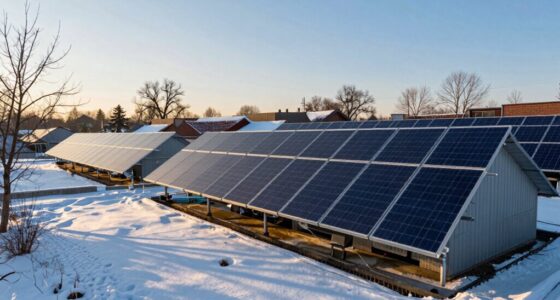
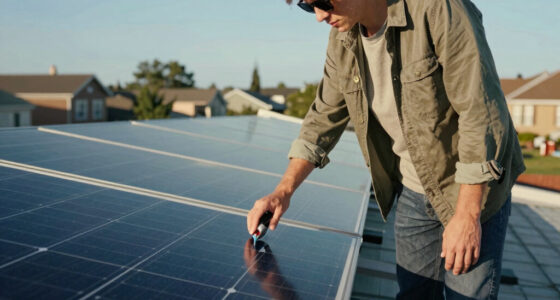
Snow accumulation on your solar panels is another challenge during winter. Snow can block sunlight and drastically reduce energy production, so you’ll need to clear it promptly. Use a soft brush or broom to gently sweep off snow from your panels, being careful not to scratch the surface. Avoid using harsh tools or excessive force that could damage the glass or frame. If snow tends to stick, consider installing panels at a steeper angle to facilitate natural sliding or melting of snow. Adding a tilt or adjusting your panel angle can help snow slide off more easily, especially when combined with the sun’s angle during winter months. Another trick is to use a snow-melting coating or anti-icing spray designed for solar panels, which can help reduce snow buildup and improve efficiency. Also, placing your setup in a location with minimal shading and maximum sunlight exposure will help improve melting and energy collection.
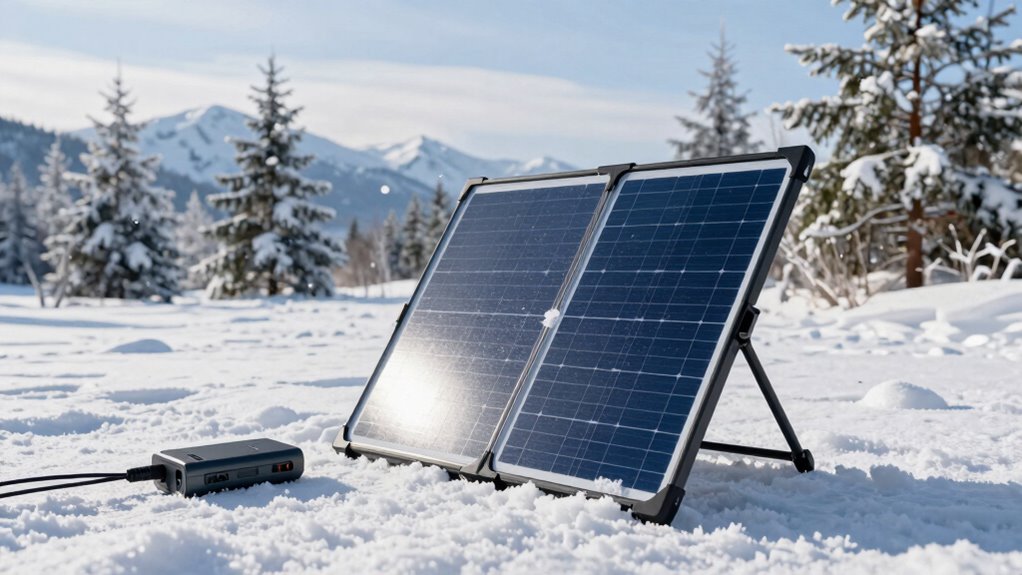
Additionally, position your portable solar setup in a location that maximizes sun exposure and minimizes shade from nearby objects or trees. If you’re in a snowy area, find a spot with a clear view of the sky and avoid shadowed areas where snow might accumulate longer. Keep an eye on weather forecasts and plan your panel maintenance accordingly, especially after storms. Remember, winter conditions can change rapidly, so staying proactive with panel cleaning and battery management will ensure your portable solar system remains as efficient as possible. By focusing on maintaining battery efficiency and managing snow accumulation, you’ll get the most out of your solar setup even during the coldest months.
portable lithium-ion battery for cold weather
As an affiliate, we earn on qualifying purchases.
As an affiliate, we earn on qualifying purchases.
Frequently Asked Questions
Can Portable Solar Panels Work Efficiently in Extremely Cold Temperatures?
Yes, portable solar panels can work efficiently in extremely cold temperatures, but you need to take precautions. Cold weather can boost battery cold weather issues, so insulate your batteries to maintain performance. Also, make certain your solar panels have proper insulation to prevent efficiency loss. Keep panels clean and angled correctly to maximize sunlight exposure. With these steps, you’ll enhance your solar panel’s efficiency despite the cold.
How Do Snow and Ice Affect Solar Panel Performance?
Snow and ice can gently diminish your solar panel’s performance, as ice formation and snow accumulation block sunlight. However, using solar panel coatings designed for winter conditions helps shed snow and ice more easily, maintaining efficiency. Regularly clearing snow and ice ensures your panels stay productive. Keep in mind, even a thin layer of snow can substantially reduce energy output, so proactive maintenance preserves your system’s practicality during cold months.
What Safety Precautions Are Needed When Handling Frozen Solar Equipment?
When handling frozen solar equipment, you should handle frost carefully to prevent damage and avoid slipping. Wear insulated gloves to protect against cold and potential electrical hazards. Make certain electrical insulation is intact before working on the panels to prevent shocks. Turn off the system before handling, and avoid using metal tools that could cause short circuits. Taking these precautions keeps you safe and maintains your equipment’s performance during winter.
Are There Specific Storage Tips for Portable Solar Gear in Winter?
A stitch in time saves nine, so store your portable solar gear properly this winter. Use insulated storage containers to protect batteries from extreme cold, which can cause capacity loss. Regularly check and maintain your batteries, ensuring they’re charged but not overcharged. Keep your gear in a dry, temperature-controlled environment when not in use. Proper storage extends your equipment’s lifespan and keeps it ready when you need it most.
How Can I Prevent Snow Buildup on My Portable Solar Panels?
To prevent snow buildup on your portable solar panels, regularly perform snow removal using a soft brush or squeegee to avoid damaging the surface. Keep up with panel maintenance by inspecting for snow accumulation after storms and promptly clearing it. This proactive approach guarantees your panels stay clear, maximizing sunlight absorption, and maintaining efficiency throughout winter. Remember, gentle removal prevents scratches and keeps your solar gear functioning at its best.
As an affiliate, we earn on qualifying purchases.
Conclusion
By embracing a few clever tricks, you can keep your portable solar setup humming even when winter’s grip tightens. With a little planning and mindful adjustments, you’ll find that those chilly months don’t have to dim your energy hopes. Think of it as a seasonal dance—adapting your steps to the changing rhythm. Stay optimistic, stay prepared, and let your solar power shine through even the frostiest days. After all, brighter days are just around the corner.
solar panel tilt mount for winter
As an affiliate, we earn on qualifying purchases.
As an affiliate, we earn on qualifying purchases.
battery thermal management enclosure
As an affiliate, we earn on qualifying purchases.
As an affiliate, we earn on qualifying purchases.
Fall yard work Picks
leaf blowers
As an affiliate, we earn on qualifying purchases.