

A well-designed 3-layer outdoor lighting plan uses ambient, task, and accent lighting to create a safe, inviting space. By layering these lights and including controls like dimmers or smart systems, you can prevent darkness from ruining your night if a battery dies. Proper planning, quality fixtures, and backup options guarantee seamless illumination. Want tips on maintaining your outdoor glow dependable and hassle-free? Keep exploring for expert advice.
Key Takeaways
- Incorporate battery backups or solar-powered fixtures to ensure consistent lighting even if batteries fail.
- Use rechargeable or high-quality batteries and replace them regularly to prevent outages.
- Distribute lighting layers (ambient, task, accent) evenly to avoid reliance on a single power source.
- Install smart controls and timers to automate lighting and reduce dependence on manual battery operation.
- Regularly maintain and test batteries and backup systems to ensure reliable outdoor illumination.

Jackery Portable Power Station Explorer 300, 293Wh Backup Lithium Battery, Solar Generator for Outdoors Camping Travel Hunting Blackout (Solar Panel Optional)
SPEED UP YOUR RECHARGEABILITY: It takes only 2 hours to recharge 80% battery of the power station through...
As an affiliate, we earn on qualifying purchases.
Understanding the Three Layers of Outdoor Lighting

To create effective outdoor lighting, it’s essential to understand the three layers that work together to enhance both functionality and aesthetics. The first layer, ambient lighting, provides general illumination that sets the overall tone and ensures visibility after dark. Think of overhead fixtures like wall-mounted lights, string lights, or post lanterns that create a soft, even glow. This foundation balances safety and ambiance without overwhelming the space. Properly lighting controls allow you to adjust brightness levels as needed for different activities or moods. Additionally, integrating automatic timers can help optimize energy use and ensure your lighting functions seamlessly. This setup often incorporates smart lighting technology, enabling remote control and automation for convenience. Using essential oils in outdoor spaces can also promote a welcoming atmosphere, especially when paired with outdoor scent diffusers. Finally, accent lighting highlights key features like trees, walls, or sculptures, adding depth and visual interest. Combining these three layers creates a versatile, inviting outdoor environment that’s both practical and attractive.

Anker SOLIX C1000 Gen 2 Portable Power Station, 2,000W (Peak 3,000W) Solar Generator, Full Charge in 49 Min, 1,024Wh LiFePO4 Battery for Home Backup, Power Outages, and Camping (Optional Solar Panel)
49 Min UltraFast Recharging: With upgraded HyperFlash tech, fully recharge at 1,600W—for outage prepping, camping trips, or tailgating...
As an affiliate, we earn on qualifying purchases.
Why a Layered Approach Enhances Safety and Atmosphere
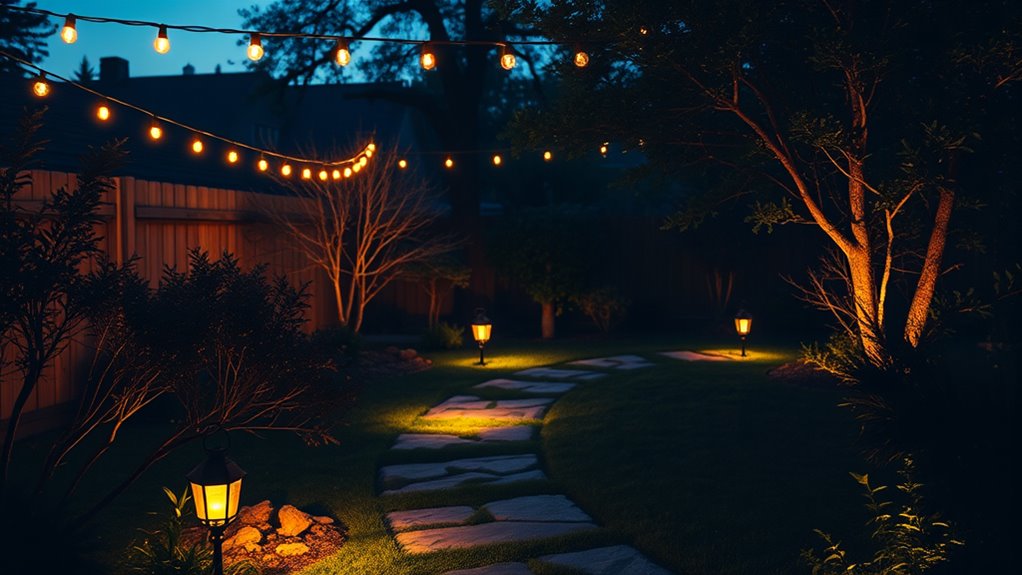
Using a layered lighting approach guarantees you see clearly and prevent accidents, even after dark. It balances safety with a welcoming vibe, making your outdoor space both functional and inviting. When you combine different types of light, you create an environment that’s safe to navigate and pleasant to enjoy. Incorporating Free Floating lighting options, such as lanterns or string lights, adds flexibility and charm to your setup. Additionally, integrating lighting layers ensures consistent illumination across your entire truck bed, reducing shadows and blind spots for added safety. Employing a variety of lighting sources also minimizes the risk of relying on a single power source, which can prevent dead batteries from ruining your night. The use of energy-efficient lighting technologies can further optimize power consumption and sustainability. By understanding the importance of contrast ratio in projectors, you can further enhance your outdoor lighting design to improve visibility and ambiance during nighttime gatherings.
Ensures Adequate Visibility
Have you ever experienced difficulty maneuvering your outdoor space after dark? A layered lighting plan guarantees you have enough light to see clearly and safely. Ambient lighting provides a soft glow, illuminating the overall area without blinding. Task lighting adds focused brightness to pathways, steps, or seating areas, making navigation easier and preventing accidents. Accent lighting highlights key features, creating depth and visual interest while guiding your eye through the space. Combining these layers prevents dark spots and shadows that could cause trips or falls. Properly integrated lighting layers ensure comprehensive coverage and enhance outdoor safety. Additionally, understanding lighting design principles helps in creating a balanced and effective outdoor illumination plan. Incorporating lighting control systems allows you to customize brightness levels and set timers for energy efficiency. Using layered lighting techniques can also reduce the likelihood of dead batteries by distributing power more evenly across your fixtures. A well-planned layout also considers power management to prevent unexpected power issues during crucial moments. With a well-designed plan, you get consistent, even visibility across your entire outdoor area. This balance keeps your space safe and functional, so you can enjoy evenings outdoors without worrying about lost footing or missed details.
Prevents Accidental Hazards
A layered lighting plan plays a vital role in preventing accidents by guaranteeing every part of your outdoor space is clearly visible. When each area is properly lit, you reduce the risk of trips, falls, or collisions, especially at night. Path lights illuminate walkways and steps, guiding you safely through the space. Task lighting brightens areas where you perform activities like cooking or reading, preventing you from misjudging distances or obstacles. Accent lighting highlights features and vertical surfaces, so you notice potential hazards like uneven terrain or protruding objects. By layering these lights, you create an all-encompassing safety net that minimizes accidental injuries. Additionally, lighting controls allow you to adjust brightness levels and set timers, ensuring your lighting remains effective and energy-efficient. Incorporating layered lighting techniques helps you customize your outdoor environment, making it safer and more inviting. Properly designed lighting not only enhances safety but also assures you and your guests move confidently and securely after dark. Incorporating a comprehensive lighting plan ensures that all potential hazards are addressed effectively.
Creates Inviting Atmosphere
Ever wondered how layered lighting transforms an outdoor space from merely functional to warmly inviting? When you combine ambient, task, and accent lighting, you create a welcoming atmosphere that encourages relaxation and socializing. Ambient lighting sets a soft, consistent glow, making the space feel cozy without overpowering. Task lighting ensures safety and clarity for activities like dining or reading, adding practicality. Accent lighting highlights features like trees, walls, or artwork, adding depth and visual interest. Together, these layers craft a balanced environment that feels both comfortable and lively. You can easily adjust the mood by dimming or changing fixtures, making your outdoor area perfect for any occasion. A layered approach makes your outdoor space more than just usable—it becomes an inviting retreat. Understanding lighting design allows you to optimize each layer for both safety and aesthetic appeal. Incorporating lighting layers thoughtfully helps you achieve a harmonious balance between safety and ambiance, enhancing your overall outdoor experience. Additionally, understanding the benefits of layered lighting can inspire creative ways to enhance your space’s functionality and charm, especially by leveraging smart lighting controls to fine-tune your setup. Recognizing how lighting placement impacts both safety and mood can help you create a versatile outdoor environment.

OUPES Mega 1 Portable Power Station 2000W (Surge 4500W), 1024Wh LiFePO4 Battery Solar Generator, Expandable to 5kWh, UPS, for Home Backup Power, Camping & Road Trips (Solar Panel Optional)
REVOLUTIONARY FAST-CHARGING TECHNOLOGY: Experience industry-leading recharge speeds with 0-80% capacity in just 36 minutes via AC, or an...
As an affiliate, we earn on qualifying purchases.
Selecting the Right Fixtures for Ambient, Task, and Accent Layers

Choosing the right fixtures for each lighting layer is essential to creating a functional and visually appealing outdoor or indoor space. For ambient lighting, select fixtures that provide a soft, even glow, such as recessed lights, wall sconces, or string lights. These set the overall mood without overpowering other layers. For task lighting, opt for adjustable spotlights, pendants, or table lamps that focus light precisely where it’s needed—dining tables, pathways, or work areas. Accent fixtures like uplights, spotlights, or wall washers highlight features and add depth. Use focused beams and shielded designs to prevent glare. Matching fixture styles and finishes guarantees cohesion. Consider dimmers and smart controls to adjust brightness easily across layers, enhancing flexibility and ambiance. Proper fixture placement and lighting layers are key to avoiding dead zones and ensuring a balanced, inviting environment. Incorporating lighting control systems can further enhance the flexibility and ease of managing multiple layers for different occasions. Additionally, understanding lighting safety practices is crucial to prevent electrical hazards and ensure a secure setup.

BLUETTI Elite 100 V2 Portable Power Station, 1024Wh LFP Battery Backup w/ 4 1800W AC Ports (3600W Surge), 35% Smaller, Fast Charge and UPS Solar Generator for Camping, Road Trip, Outages, Home Backup
[Power 11 Devices] - With a 1024Wh capacity, Elite 100 V2 portable power station delivers 1800W AC output...
As an affiliate, we earn on qualifying purchases.
Planning Your Outdoor Spaces for Optimal Light Distribution
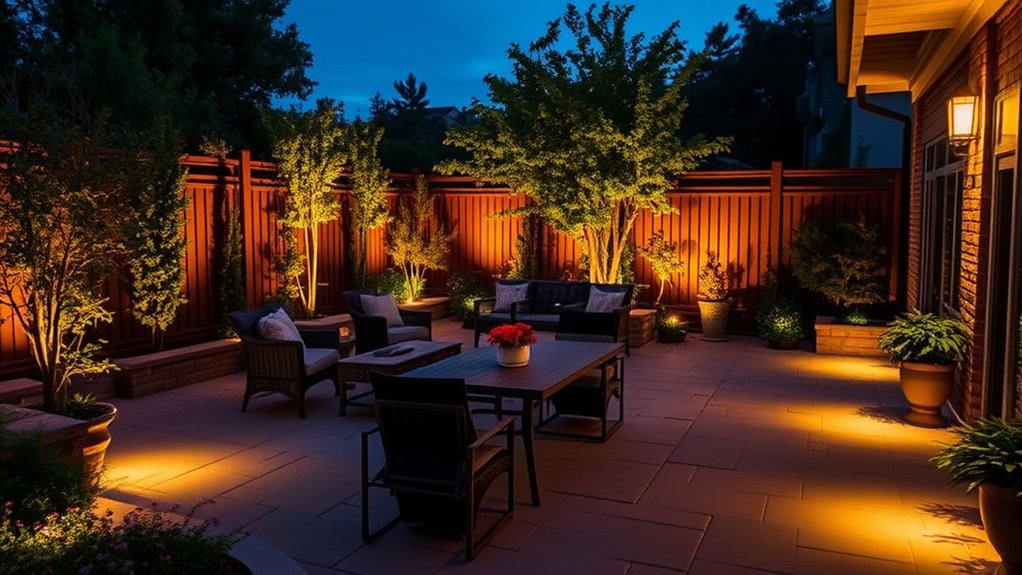
Effective outdoor lighting begins with strategic planning to guarantee even and functional light distribution across your space. Start by dividing your yard into zones based on usage—dining areas, pathways, garden features, and seating spots. Map out where each layer—ambient, task, and accent—will go, ensuring they complement each other. Place ambient lights centrally to create a soft glow, then add task lighting along pathways, steps, and work zones for safety and practicality. Use accent lights to highlight trees, walls, or focal points, adding depth and visual interest. Consider the natural layout and existing features to determine the best fixture placement. Proper planning guarantees balanced illumination, prevents dark spots, and creates a welcoming, functional outdoor environment.
Using Dimmers and Smart Controls to Manage Multiple Layers
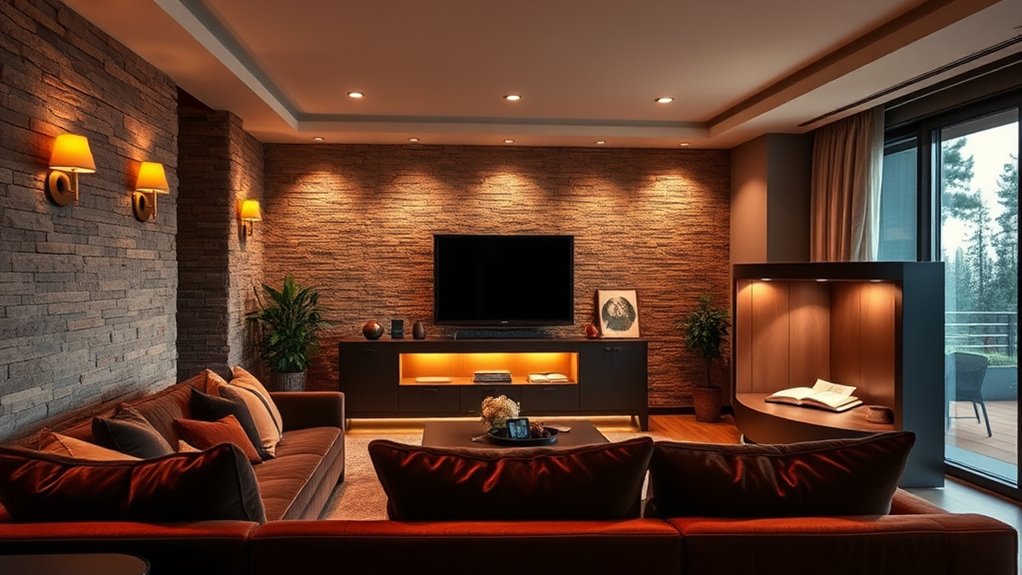
Using dimmers and smart controls makes managing your layered lighting easier and more intuitive. You can automate scenes to set the perfect mood or adjust brightness quickly for different activities. With these tools, balancing ambient, task, and accent layers becomes seamless and personalized.
Simplify With Dimmers
Managing multiple lighting layers can become complex, but installing dimmers and smart controls simplifies the process. With dimmers, you can easily adjust brightness levels for ambient, task, and accent lights, creating the perfect mood without flipping multiple switches. Smart controls take this further by allowing you to manage all your lighting from a single app or voice command. You can set scenes for different activities, like relaxing or entertaining, and switch between them instantly. This reduces clutter and confusion, especially when you have several fixtures. Plus, dimmers help save energy by reducing unnecessary brightness. Overall, integrating dimmers and smart controls streamlines your lighting management, making it more intuitive and flexible, so you can focus on enjoying your space without hassle.
Automate Lighting Scenes
Automating your lighting scenes with dimmers and smart controls takes convenience to the next level by coordinating multiple layers effortlessly. With automation, you set scenes for different occasions—like relaxing, entertaining, or working—without manual adjustments. Using apps or voice commands, you can activate a cozy warm glow or bright task lighting instantly. These systems sync ambient, task, and accent layers, ensuring smooth progression and balanced illumination.
| Scene Type | Lighting Focus | Suggested Controls |
|---|---|---|
| Relaxation | Soft ambient + dimmed accent | Dimmers + smart presets |
| Dinner | Bright ambient + focused task | App control + timers |
| Entertainment | Dimmed ambient + accent highlights | Voice control + scenes |
| Work | Bright task + minimal ambient | App scheduling |
Balance Multiple Layers
Balancing multiple lighting layers becomes straightforward when you leverage dimmers and smart controls to fine-tune each aspect of your outdoor or indoor space. These tools give you precise control over ambiance, safety, and focus. To achieve harmony, consider these steps:
- Adjust ambient lighting to set the overall mood without overpowering other layers.
- Use dimmers on task lights to modify brightness based on activity needs.
- Program smart controls for easy scene changes, balancing layers with a tap.
- Regularly fine-tune fixtures to prevent glare and ensure each layer complements the others.
Ensuring Power Efficiency and Battery Backup for Each Layer

To guarantee your outdoor lighting layers remain energy-efficient and reliable during power outages, selecting the right fixtures and power sources is essential. Opt for LED fixtures, which use less energy and last longer, reducing overall power consumption. Incorporate solar-powered options for ambient and accent lighting; they charge during the day and operate automatically at night. For task lighting, consider low-voltage LED systems connected to a backup power source like a battery or generator. Use timers and dimmers to optimize energy use, adjusting brightness based on needs. Installing a dedicated battery backup or uninterruptible power supply (UPS) for critical layers ensures your lighting stays functional during outages. Regularly maintain and test your backup systems to confirm they activate when needed, keeping your outdoor space safe and inviting at all times.
Common Mistakes That Lead to Dead Batteries and How to Avoid Them
One common mistake is overusing high-drain devices, which quickly deplete batteries and leave your lights dead. Forgetting to turn off your fixtures when not in use also drains power unnecessarily. Additionally, using incompatible batteries can cause poor performance or damage, so always match the right type to your lighting system.
Overusing High-Drain Devices
Overusing high-drain devices can quickly deplete your batteries, leading to frequent replacements or failures when you need them most. To avoid this, consider these strategies:
- Use high-drain devices only during critical moments, like parties or emergencies.
- Switch to lower-power alternatives when possible, such as LED flashlights instead of traditional bulbs.
- Limit the duration of high-drain usage to conserve energy.
- Regularly check and replace batteries before they fail, preventing unexpected outages.
Forgetting to Turn Off
Forgetting to turn off outdoor lights or devices is a common mistake that can drain batteries quickly and cause unnecessary replacements. When you leave lights on overnight or forget to power down equipment, you risk depleting batteries faster than expected. To avoid this, develop a routine to turn off or disable lights when not needed, especially at the end of the evening. Use timers, dimmers, or smart controls to automate this process, reducing the chance of human error. Regularly check your lighting setup to ensure everything is turned off after use. Label switches or install reminder notes if necessary. These simple steps help conserve battery life, save money, and ensure your outdoor lighting system remains ready when you need it.
Using Incompatible Batteries
Using incompatible batteries is a common mistake that can quickly lead to dead batteries and system malfunctions. To avoid this, pay attention to the following:
- Match voltage requirements—using batteries with the wrong voltage can damage your fixtures or cause insufficient power.
- Check size and type—ensure batteries fit properly and are compatible with your fixtures’ specifications.
- Use the same brand and model—mixing different brands or models may lead to uneven power distribution or premature failure.
- Avoid mixing old and new batteries—doing so can cause leakage or reduced performance, risking damage to your system.
Tips for Maintaining and Troubleshooting Your Lighting System
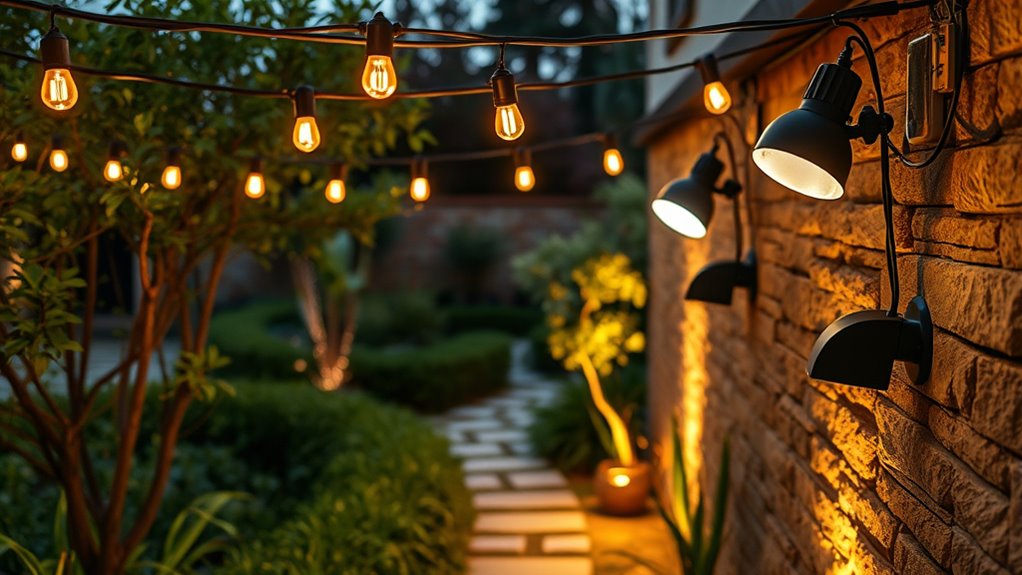
Maintaining your lighting system guarantees it remains functional and visually appealing over time. Regularly inspect fixtures for dirt, debris, or corrosion, and clean them gently to ensure maximum brightness. Check connections and wiring for signs of wear or damage, replacing any frayed or loose components immediately. Test switches, dimmers, and smart controls periodically to confirm they’re operating correctly. Replace batteries in remote controls or sensor units as needed, and keep spare bulbs on hand to avoid delays. If lights aren’t working as expected, verify power sources and reset circuit breakers or timers. Troubleshoot common issues like flickering or dimming by adjusting connections or replacing faulty parts. Staying proactive helps catch problems early, saving you time and maintaining a consistent, inviting atmosphere.
Innovative Technologies to Keep Your Lights Running Smoothly

Innovative technologies are revolutionizing the way you keep your lighting system running smoothly by offering smarter, more reliable solutions. These advancements guarantee your lights stay on when you need them most. Here are four key innovations:
- Smart controls: App-based systems let you automate, schedule, and adjust lighting effortlessly, preventing outages caused by forgotten switches.
- Battery backup systems: Uninterruptible power supplies keep essential layers like task lighting operational during outages.
- LED advancements: Long-lasting, energy-efficient LEDs reduce maintenance and prevent flickering or dimming issues.
- Sensors and automation: Motion sensors and adaptive controls detect activity and ambient light, optimizing performance and reducing failures.
These technologies boost reliability, simplify management, and assure your layered lighting stays seamless and functional.
Creating a Seamless Lighting Experience Without Ruining Your Night

Creating a seamless lighting experience involves carefully balancing your layered lights so they work together without overpowering the night. Start with your ambient lighting to set a soft, even glow that provides overall visibility without glare. Add task lighting only where needed, like pathways or dining areas, ensuring these focused lights don’t compete with ambient sources. Incorporate accent lighting selectively to highlight features without creating harsh contrasts or overly bright spots. Use dimmers, smart controls, or preset scenes to adjust layers smoothly, enabling you to switch moods effortlessly. Match color temperatures to maintain a cohesive look—warm tones for relaxation, cooler for tasks. Shield fixtures and angle lights downward to prevent glare. The goal: a harmonious, inviting environment that enhances your outdoor space without ruining the night’s ambiance.
Frequently Asked Questions
How Long Should My Outdoor Lighting Batteries Last per Night?
Your outdoor lighting batteries should last about 4 to 8 hours per night, depending on the type of batteries and fixtures you use. To guarantee consistent illumination, choose high-quality, rechargeable batteries and consider using solar-powered options for eco-friendly, long-lasting power. Regularly check and replace batteries as needed, especially before busy evenings, so your layers of ambient, task, and accent lighting stay reliable throughout the night.
Can I Use Solar-Powered Lights for All Three Layers Effectively?
Yes, you can use solar-powered lights for all three layers, but they work best with careful planning. Think of solar lights as the sun’s gift—reliable during sunny days but dimmer at night or on cloudy days. For ambient and accent layers, choose high-quality, well-positioned solar fixtures. Task lighting may need supplemental power or more efficient solar options to guarantee your space stays illuminated and safe.
What Are the Best Battery Types for Long-Lasting Outdoor Lighting?
You should opt for lithium-ion batteries for long-lasting outdoor lighting. They offer high energy density, quick charging, and better durability compared to traditional lead-acid or NiMH batteries. Lithium-ion batteries handle temperature fluctuations well and can be recharged many times without significant capacity loss. Using them guarantees your ambient, task, and accent lights stay bright and reliable longer, reducing the need for frequent replacements and maintenance, especially in outdoor environments.
How Often Should I Replace Batteries in My Outdoor Fixtures?
You should replace batteries in your outdoor fixtures about once a year or when you notice they aren’t working properly. Regularly check the batteries during seasonal maintenance to guarantee they’re still providing power. If your lights start dimming or flickering sooner than expected, swap them out sooner. Using high-quality batteries can extend their life, but routine replacement helps prevent unexpected outages and keeps your outdoor lighting consistently functional.
Are There Smart Systems That Automatically Prevent Battery Drain?
Think of smart lighting systems as vigilant guardians that never sleep. They automatically monitor your outdoor fixtures, detecting low batteries or issues before you notice. These systems adjust, alert, or even switch to backup power, ensuring your night remains uninterrupted. With app control, you can customize scenes and get real-time updates, giving you peace of mind that your lighting stays alive, bright, and ready—so your evenings stay trouble-free.
Conclusion
By understanding the three-layer approach, you guarantee your outdoor lighting remains reliable and enchanting, even if one battery fails—think of it as your modern equivalent of a well-placed torch in a moonlit forest. Plan thoughtfully, choose the right fixtures, and incorporate smart controls to keep your space inviting and safe. With these tips, your outdoor ambiance will shine seamlessly, proving that good design and a touch of old-world wisdom can truly illuminate your nights.