
Creating an Outage Binder with the 12 key documents guarantees you can quickly access essential health, legal, and financial info during emergencies. It includes emergency contacts, family medical history, insurance policies, legal papers, IDs, and financial details. Keeping these documents organized and ready helps reduce stress and speeds up response times. If you want to be fully prepared and keep your family safe, the details ahead will guide you through every step.
Key Takeaways
- The Outage Binder should include essential documents like medical info, insurance policies, legal papers, and financial records for quick access during emergencies.
- Printing physical copies of critical documents ensures they are accessible even if digital systems fail or are unavailable.
- Organizing documents into clearly labeled sections facilitates rapid retrieval during power outages, natural disasters, or medical emergencies.
- Key documents to print include medical histories, insurance cards, legal directives, property titles, and emergency contacts.
- Maintaining a well-prepared Outage Binder minimizes stress and delays by providing immediate access to vital information during crises.
outage binder printable templates
As an affiliate, we earn on qualifying purchases.
As an affiliate, we earn on qualifying purchases.
Medical Emergency Contacts and Critical Health Information
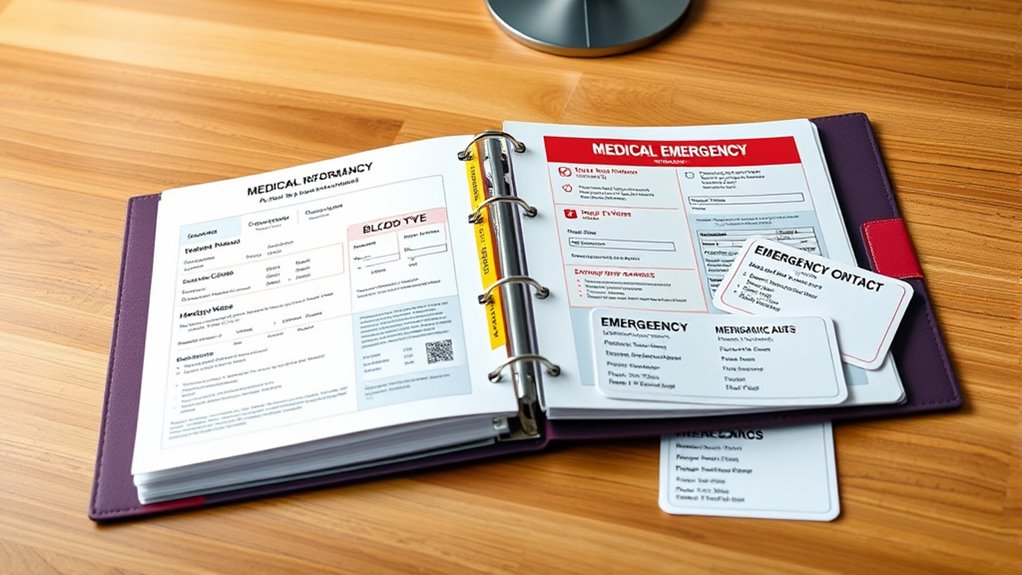
Having quick access to your family’s medical emergency contacts and critical health information can be lifesaving in urgent situations. You should include at-a-glance summaries for each family member, listing blood type, allergies, conditions, medications, and reactions. Make sure to note your preferred hospital, primary and secondary health insurance details, and two emergency contacts. Keep a list of medical providers, such as your primary doctor, dentist, specialists, and pharmacy, so responders know who to contact. Include current prescriptions, immunization records, and any serious illness history. This information should be stored in your Outage Binder in a clearly labeled section, so first responders or family members can access it instantly when every second counts. Having this essential info ready can make a critical difference during emergencies. Medical history is an important aspect to document for comprehensive preparedness. Additionally, security zone info emphasizes the importance of safeguarding sensitive information, especially during emergencies, to prevent unauthorized access and ensure privacy. To further enhance safety, consider using secure storage methods to protect your most confidential details from unauthorized viewing. Incorporating up-to-date contact info can also ensure that emergency responders reach the right individuals without delay. Regularly reviewing and updating this information ensures its accuracy in critical moments.
emergency document organizer folder
As an affiliate, we earn on qualifying purchases.
As an affiliate, we earn on qualifying purchases.
Family Medical History and Vaccination Records
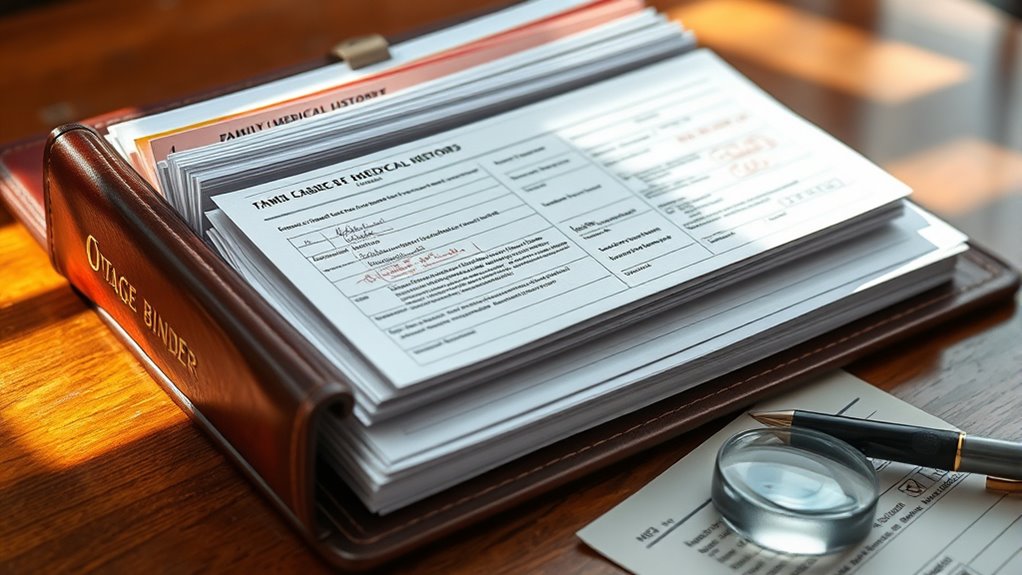
Understanding your family medical history helps identify genetic disease patterns and guides preventive care. Keeping vaccination records current guarantees you’re prepared for updates and booster schedules. Organizing these archives makes it easier to access vital health information during emergencies or medical visits. Additionally, maintaining accurate records of vaccination schedules can help ensure timely immunizations and prevent missed doses. Utilizing digital record-keeping methods can also streamline access and reduce the risk of losing important documents. Incorporating health record organization techniques can further improve your ability to manage and recall critical health information more effectively.
Genetic Disease Patterns
Are you aware of how your family’s medical history and vaccination records can reveal patterns of genetic diseases? Keeping these documents organized helps you spot inherited health risks early. For example, if multiple relatives have diabetes, heart conditions, or certain cancers, you’ll know to monitor those issues more closely. Vaccination records also show if your family has a history of vaccine-preventable diseases, which can inform your future health decisions. By maintaining a detailed record, you can share accurate information with healthcare providers, enabling personalized screening and preventive care. Understanding family medical history and vaccination patterns can also assist in identifying potential hereditary health concerns that may require genetic counseling. Knowing these patterns allows you to take proactive steps, potentially reducing risks or managing conditions more effectively. Additionally, understanding electric dirt bike horsepower and other technical details can help you make informed choices about personal safety and suitable models. Organized family medical history and vaccination records are essential tools for understanding your genetic health landscape.
Vaccine Schedules and Updates
Keeping your family’s vaccination records and schedules organized guarantees you stay up-to-date with recommended immunizations and can quickly identify any gaps. Regularly update each family member’s immunization history, including vaccines received, dates, and lot numbers. Carry copies of immunization records for school, travel, or healthcare visits. Review recommended schedules from health authorities, noting upcoming vaccines or booster shots. Maintaining track of updates ensures you won’t miss important immunizations, especially during outbreaks or new vaccine recommendations. Staying free-floating in your documentation helps prevent missed doses. Additionally, proper record-keeping supports immunization schedules adherence and can facilitate quicker responses during health crises. Using a dedicated outage binder for these documents ensures easy access and organization. Store these records securely in your outage binder, making them accessible when needed. Having current vaccination information helps you make informed decisions about your family’s health and provides peace of mind during emergencies or medical consultations. Proper documentation and immunization tracking ensure you have all necessary information readily available for medical professionals and emergencies.
Family Medical History Archives
Maintaining a thorough archive of your family’s medical history and vaccination records is crucial for informed healthcare decisions and emergency situations. Knowing your family’s health background helps doctors spot patterns, diagnose early, and personalize treatments. It also provides critical info during emergencies when quick access to medical history is indispensable. Ensuring this information is accurate and up-to-date can be especially important if your family has a history of medical conditions, which may influence your health management strategies. Additionally, having comprehensive records readily available can facilitate smoother communication with healthcare providers and improve the overall quality of care you receive. Keeping an organized medical history archive can streamline medical visits and ensure vital information isn’t overlooked, especially as reliance on cloud services increases.

Emergency Medical Information Kit for Fridge – “File of Life” Style Magnet Packet with In Case of Emergency Forms, Medication List & Contact Cards – For Seniors, Elderly, EMTs & First Responders
- Placed on Refrigerator for Easy Access: EMT expects to find it on fridge
- Provides Vital Medical Details Quickly: Clear info on medications, conditions, contacts
- Holds All Critical Documents: Magnetized pouch stores forms, IDs, DNR, POA
As an affiliate, we earn on qualifying purchases.
As an affiliate, we earn on qualifying purchases.
Insurance Policies and Card Copies
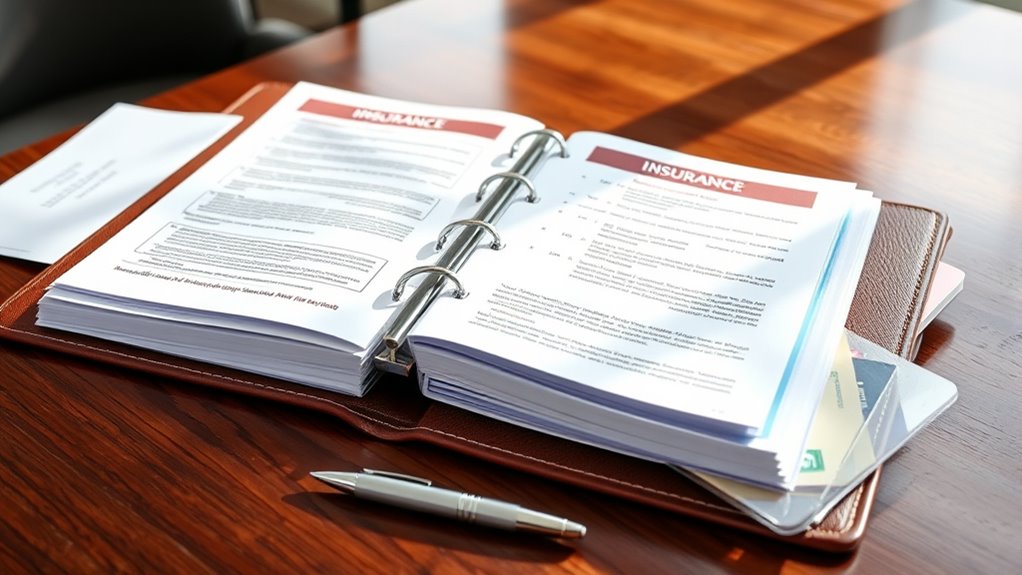
You should keep your insurance policies’ numbers and contact info in a safe, accessible place. Make sure to have physical copies of your insurance cards for quick reference during emergencies. Having these details organized helps you respond swiftly when it matters most. Consider including home safety resources and information about your water filtration system to ensure comprehensive preparedness. Additionally, storing privacy information securely can prevent potential misuse of personal data. It’s also helpful to keep a power outage plan that includes documentation of essential contacts and procedures.
Policy Numbers and Contact Info
Having all your insurance policy numbers and contact information organized guarantees quick access during emergencies or claims. Keep a dedicated section in your Outage Binder with copies of policy documents, including policy numbers, company names, and agent contacts. Include customer service numbers and claims phone lines for each insurer. Label each policy clearly so you can find the right information fast. Store contact info for your insurance agents, brokers, and any representatives who handle claims or updates. Having these details handy ensures you won’t waste time searching or calling around when an incident occurs. Regularly update this section to reflect any policy changes or new contacts. This organization minimizes stress and helps you navigate claims smoothly during stressful situations.
Physical Copies of Cards
Storing physical copies of insurance cards and policy documents guarantees quick access when you need to verify coverage or file a claim. Keep these in a designated, easily accessible location, like your Outage Binder, for emergency situations. Make copies of your cards for each family member, including health, auto, home, and life insurance. Label folders clearly so you can find what you need fast.
| Card Type | Important Details |
|---|---|
| Health Insurance | Policy number, provider, primary/secondary info |
| Auto Insurance | Company, policy number, coverage limits |
| Home/Renters | Policy details, contact info |
| Life Insurance | Policy, beneficiary, agent contact |
| Medical Cards | Member info, allergies, emergency contacts |
disaster preparedness document storage
As an affiliate, we earn on qualifying purchases.
As an affiliate, we earn on qualifying purchases.
Vehicle and Property Titles and Deeds
Are your vehicle and property titles and deeds organized and easily accessible? Keep physical copies of these essential documents in your Outage Binder, stored in a waterproof, fireproof container. Include titles for all vehicles, boats, RVs, and any property you own. Make sure each document is current and legible, with clear details like serial numbers, purchase dates, and legal descriptions. If you’ve recently transferred ownership or made updates, replace outdated copies. Having these documents on hand speeds up the process for selling, transferring, or proving ownership during emergencies or legal matters. Avoid relying solely on digital versions; physical copies are more dependable in outages or disasters. Regularly review and update your collection to ensure everything remains accurate and complete.
Legal Documents and Powers of Attorney
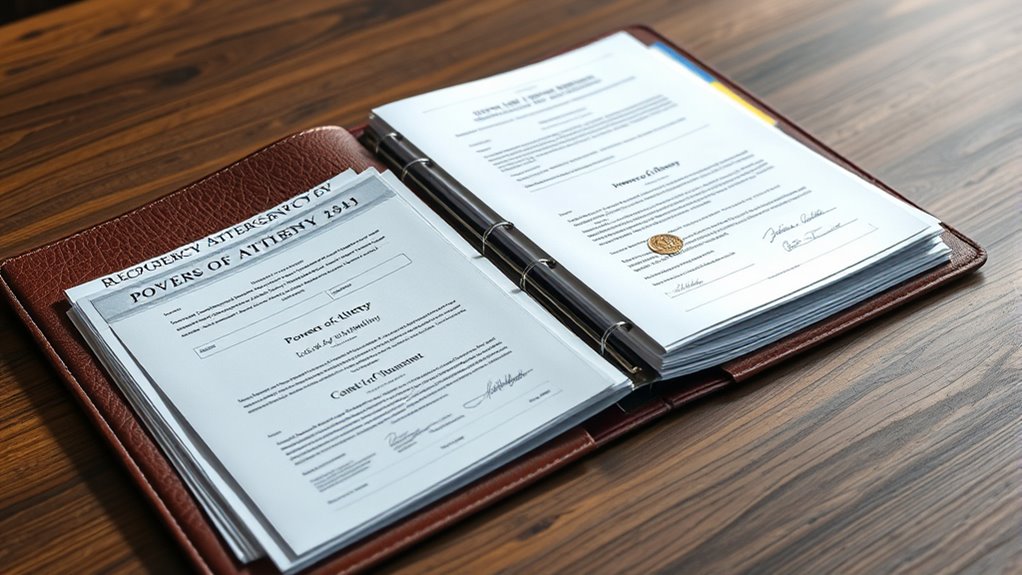
Legal documents and powers of attorney serve as essential tools to guarantee your wishes are honored and your affairs are managed if you’re unable to do so yourself. By having these documents printed and stored in your Outage Binder, you ensure your healthcare choices, financial decisions, and legal matters are clear. A medical power of attorney designates someone to make healthcare decisions on your behalf, while a general power of attorney covers financial transactions. Your will details how your assets are distributed, preventing confusion later. Keep copies of these documents, along with any advanced directives, in your binder. Make sure your trusted contacts know their roles. Having these papers readily accessible reduces stress and ensures your intentions are respected during emergencies or incapacitation.
Financial Account Information and Bank Details

Having quick access to your financial account information and bank details is essential during emergencies or when managing your finances. Keep a printed list of your bank names, phone numbers, and account numbers in your outage binder. Include debit card information, PINs, and online login details such as URLs, usernames, and passwords. This allows you to rapidly freeze accounts if needed or verify transactions. Also, record details for your credit cards—issuer, account number, due date, and online access. Maintain a recent copy of your checking and savings account statements, along with contact info for your banks or credit unions. Staying organized ensures you can handle unexpected events smoothly, protect your assets, and avoid delays when access to funds is critical.
Investment and Retirement Account Statements

Keeping your investment and retirement account statements organized in your outage binder guarantees you can quickly access your financial holdings during emergencies or financial planning. These statements provide a clear overview of your account balances, recent transactions, and performance, which is essential when making quick decisions. Include copies of your latest statements, along with account numbers, contact info for your brokerage or retirement providers, and login details. This ensures you can verify balances, report unauthorized activity, or transfer funds if needed. Regularly update these documents to reflect current information. Having everything in one place saves time and reduces stress during crises, allowing you to focus on resolving issues rather than hunting down critical financial details.
Important Contact Lists and Service Providers
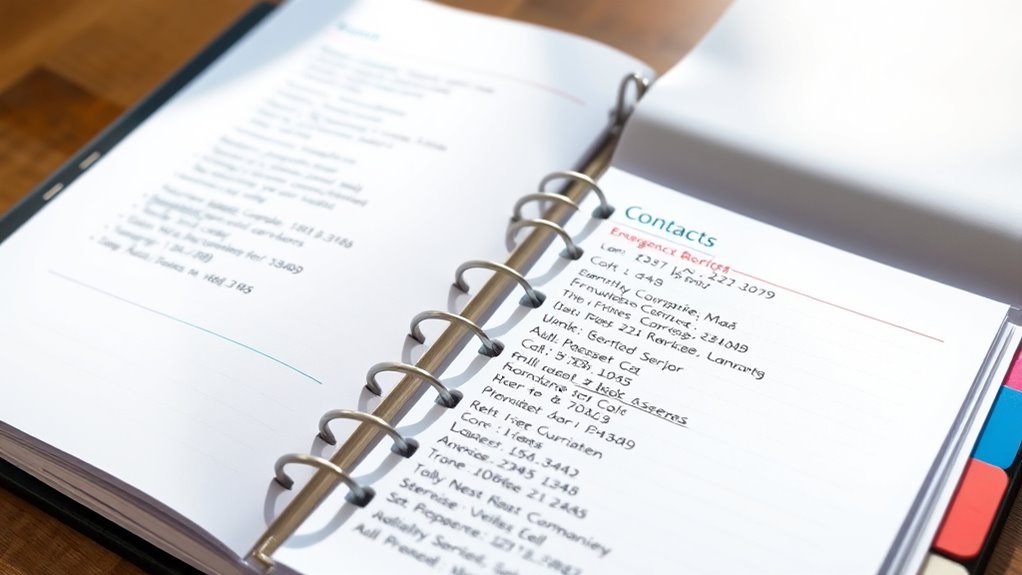
Creating a thorough list of important contacts and service providers guarantees you can quickly reach the right people in an emergency or for routine needs. Keep a printed directory of key phone numbers, including family members, neighbors, and emergency services. List utility companies, internet providers, and service technicians with account details. Include insurance agents, medical providers, and local clinics. Write down contacts for locksmiths, plumbers, electricians, and appliance repair services. Don’t forget local non-emergency police, fire departments, and city offices. Add contacts for your child’s school or daycare, pet veterinarians, and nearby pharmacies. Keep this list in your Outage Binder, so you can access it easily if your phone or internet go down. Regularly update these contacts to ensure accuracy.
Identification Documents for Each Family Member
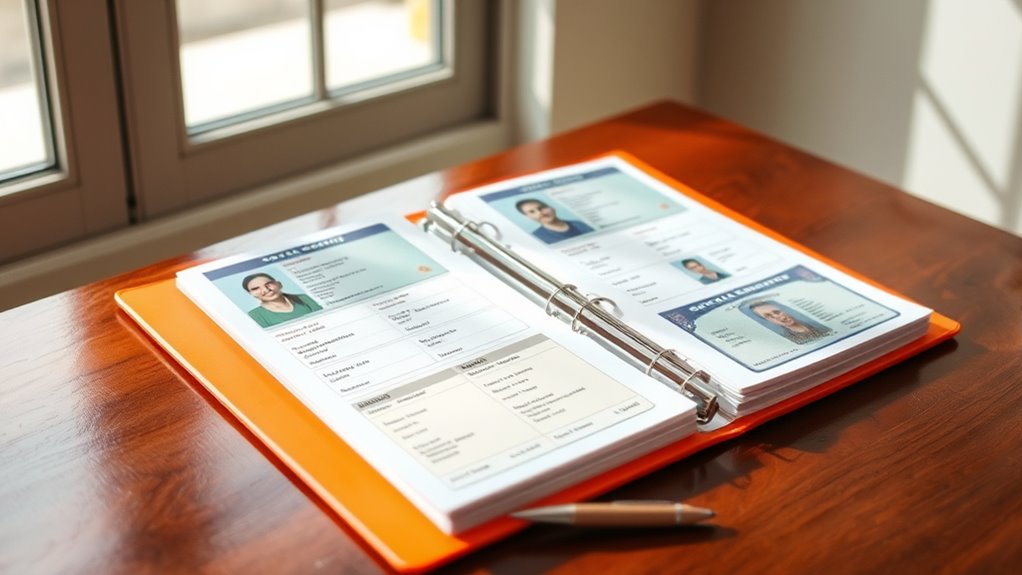
Having all the necessary identification documents for each family member is essential in an outage situation. These legal proofs of identity, like birth certificates and driver’s licenses, guarantee you can access services and verify who you are. Keep them organized and easily accessible to avoid delays when every minute counts.
Legal Proofs for Identity
Are you sure you have all the necessary legal proofs of identity for each family member readily accessible? These documents verify who they are and are essential in emergencies or when handling official matters. Gather birth certificates, driver’s licenses, and passports for everyone. Keep copies of social security cards, adoption decrees, and marriage licenses. Ensure these documents are current and stored securely, yet easy to find when needed. If a family member has a special status, like a naturalization record or military ID, include those as well. Having these legal proofs organized and accessible prevents delays and confusion during crises. Regularly review and update them to reflect any changes. This way, you’re prepared to quickly prove your family’s identities when it matters most.
Essential Personal Documents
Do you have all the essential personal identification documents for each family member easily accessible? These papers are crucial during emergencies, travel, or legal matters. Organize copies of birth certificates, driver’s licenses, passports, and social security cards for everyone. Keep them in a dedicated section of your outage binder for quick retrieval. To stay organized, consider the following:
| Document Type | Details |
|---|---|
| Birth Certificates | Official copies for each person |
| Identification Cards | Driver’s licenses, passports |
| Social Security Cards | For tax and employment purposes |
Having these documents ready saves time and reduces stress during unpredictable situations. Make sure files are up-to-date and stored securely, yet accessible when needed.
Emergency Cash and Secure Payment Methods
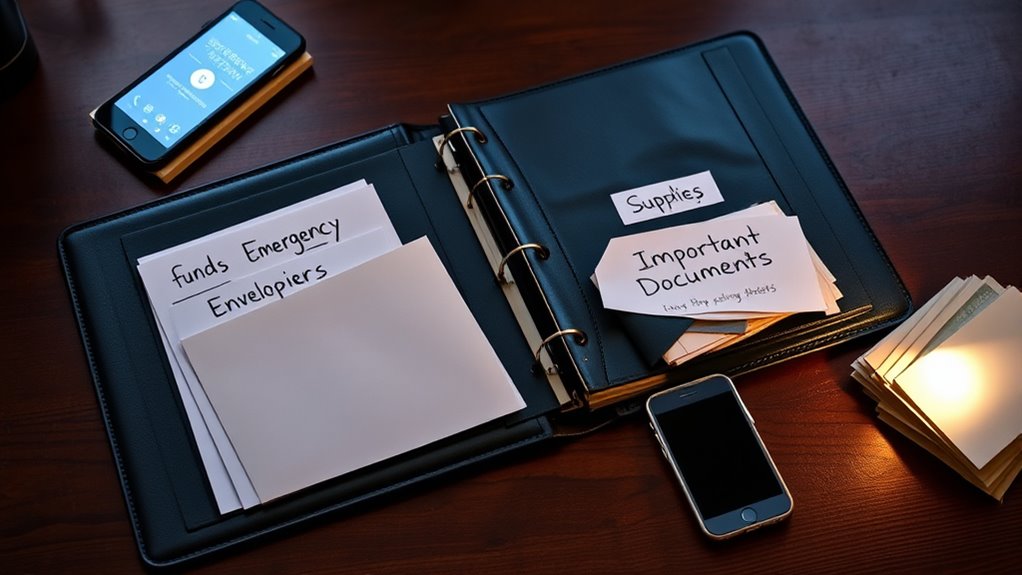
Ever wonder how you’ll access funds quickly during an emergency? It’s essential to have a plan for emergency cash and secure payment methods. Keep small amounts of cash in a safe, easily accessible location, like your Outage Binder, for immediate needs. Consider storing prepaid debit cards or gift cards to avoid reliance on bank accounts. Guarantee your mobile devices have digital versions of important payment info, such as account numbers or QR codes, securely stored with encryption. Set up trusted contacts or family members with authorization to access your emergency funds if needed. Avoid relying solely on cash or digital payments; having a mix ensures flexibility. Regularly review and update these resources to confirm they’re ready when disaster strikes.
Household Inventory and Asset Documentation
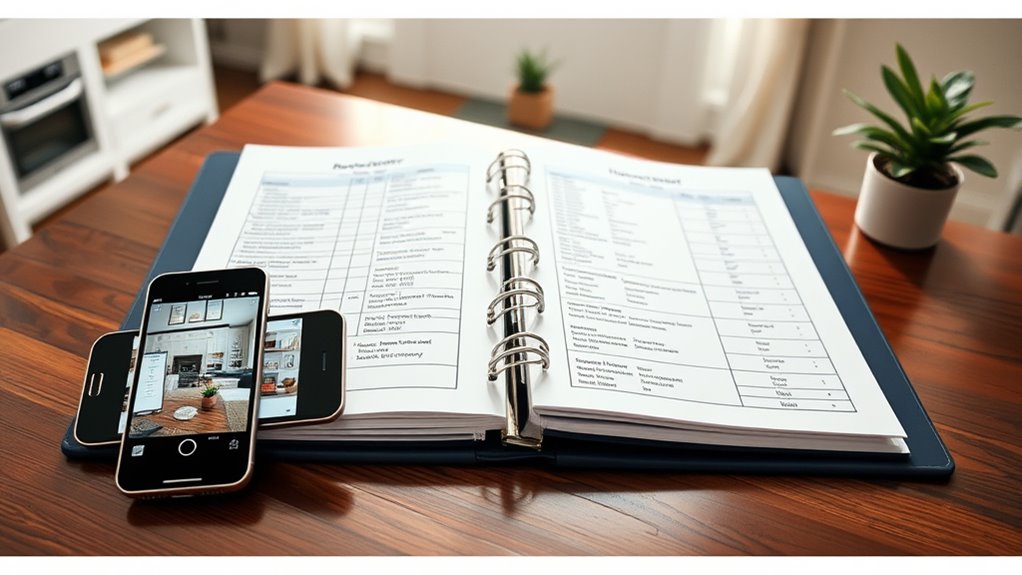
Creating a thorough household inventory and asset documentation guarantees you can quickly account for your belongings and simplify insurance claims or estate planning. List each item with details like purchase date, price, serial numbers, and current location. Take photos of valuable items and store digital copies securely. This organized record helps verify ownership and value during emergencies. Use the table below to keep track of key assets:
| Item | Description/Details | Location |
|---|---|---|
| Electronics | Laptop, Model, Serial Number | Office |
| Jewelry | Rings, Watches, Estimated Value | Safe |
| Appliances | Refrigerator, Purchase Date | Kitchen |
| Furniture | Sofa, Upholstery, Condition | Living Room |
| Artwork | Painting, Artist, Appraised Value | Dining Room |
Regular updates guarantee your inventory remains current and useful.
Trusted Contacts and Emergency Response Plans
Having a clear list of trusted contacts and well-defined emergency response plans guarantees someone can quickly assist or make decisions if you’re unable to act. Keep an updated list of family, friends, and neighbors who can help during emergencies. Include their names, phone numbers, and relationships. Designate specific roles, like someone to notify authorities or handle medical decisions. Create a step-by-step plan for various scenarios—medical emergencies, power outages, or evacuations—so everyone knows their responsibilities. Share these details with trusted contacts and keep a printed copy in your Outage Binder. Regularly review and update your contacts and plans to assure accuracy. Clear communication and preparation minimize chaos, helping your loved ones respond swiftly and effectively during crises.
Frequently Asked Questions
How Often Should I Update My Outage Binder Documents?
You should update your outage binder documents at least once a year or whenever there’s a significant change, like new insurance policies, updated medical info, or revised legal documents. Regular updates ensure all information stays current and accurate, which is essential during emergencies. Review your entire binder periodically, especially before peak disaster seasons, so you’re always prepared with the latest details.
What Is the Best Way to Securely Store Printed Copies?
You should store printed copies of your outage binder in a fireproof, waterproof safe to keep them secure from disasters. It might seem inconvenient, but safeguarding your essential documents gives you peace of mind during emergencies. Keep the safe in a discreet, accessible location, and consider sharing the location with a trusted family member. Regularly check and update the safe’s contents to guarantee everything stays current and protected.
Should I Include Digital Backups of All Documents?
Yes, you should include digital backups of all your documents. Digital copies provide an extra layer of security and easy access if physical copies are lost or damaged. Store these backups securely online with strong passwords or encrypted cloud services, and keep offline copies on encrypted drives or USBs. This way, you’re prepared for any situation, ensuring your important information is always accessible and protected.
How Can I Organize the Binder for Quick Access During Emergencies?
Think of your binder as a lighthouse guiding you through stormy moments. Organize it with clear, labeled sections—medical, insurance, legal, contact info, and personal IDs—using dividers or tabs. Keep the most critical pages at the front for quick access. Use color coding or icons to distinguish sections. Regularly update and practice retrieving documents so, during emergencies, you can find what you need swiftly, like a beacon in the dark.
Who Should I Designate as an Emergency Contact for the Binder?
You should designate someone reliable and easily reachable as an emergency contact for your binder. Choose a close family member, trusted friend, or neighbor who knows your health details and can access the binder quickly. Make certain they’re aware of their role, have a copy of key documents if needed, and understand how to contact emergency services. This way, in a crisis, they can act swiftly and coordinate necessary actions.
Conclusion
Having these documents printed and ready is like building a safety net before the fall—you’ll catch yourself when chaos strikes. It may seem like a lot now, but in an emergency, you’ll be grateful for the peace of mind and swift access they provide. Think of your outage binder as your personal backup plan, a reliable shield that helps you stay calm and in control when it matters most.