
TL;DR

Get backup power and energy gear delivered free with Prime
- Fast, free delivery on millions of items
- Prime Video, Amazon Music and more included
- Member-only deals all year
Researchers have developed the most efficient solar panels to date, reaching 34.4% efficiency. Simultaneously, a new technology can convert ocean water into drinking water without waste, promising sustainable solutions for energy and water scarcity.
Researchers have announced the development of the most efficient solar photovoltaic (PV) module to date, achieving a record 34.4% efficiency, alongside a new method for converting ocean water into drinking water without waste, both announced in June 2026.
The new solar panels, based on advanced III-V germanium PV technology, set a world efficiency record of 34.4%, according to Fraunhofer ISE. This surpasses previous records and could significantly improve solar energy harvesting. Concurrently, an innovative process has been demonstrated that turns ocean water into potable drinking water without generating waste, utilizing a novel desalination technique supported by recent research. These developments were announced by research institutions and industry experts, emphasizing their potential impact on renewable energy and water sustainability.
The solar efficiency record was achieved under laboratory conditions, with researchers noting that commercial application may require further scaling and testing. The ocean water-to-drinking water technology claims to operate without producing brine waste, a common issue in traditional desalination methods, though full operational details are still emerging. Both advancements are seen as promising for addressing global energy and water challenges, especially in arid and coastal regions.
Potential Impact on Global Energy and Water Security
The record-breaking solar panel efficiency could lead to more cost-effective solar power generation, accelerating the adoption of renewable energy worldwide. The ocean water-to-drinking water technology offers a sustainable solution for water-scarce regions, reducing reliance on freshwater sources and minimizing environmental waste. Together, these innovations could transform how societies harness natural resources, supporting climate resilience and sustainable development goals.
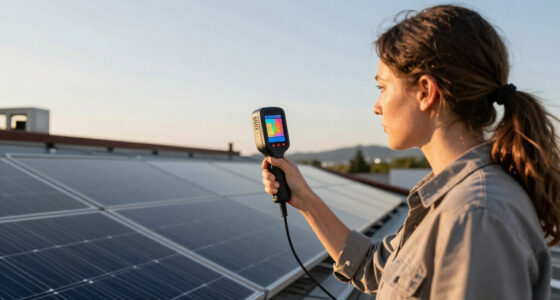
high efficiency solar panels 34.4%
As an affiliate, we earn on qualifying purchases.
As an affiliate, we earn on qualifying purchases.
Recent Advances in Solar and Desalination Technologies
Solar panel efficiencies have steadily increased over the past decade, with recent breakthroughs reaching over 30%. The new record from Fraunhofer ISE represents a significant leap, driven by improvements in III-V semiconductor materials. Meanwhile, desalination methods have historically relied on energy-intensive processes that produce waste brine. The new ocean water-to-drinking water approach claims to eliminate waste, building on prior research into low-energy desalination techniques. These developments are part of a broader trend toward integrating renewable energy with sustainable water management, especially in regions vulnerable to climate change impacts.
“The 34.4% efficiency milestone marks a new era for solar technology, with potential to drastically reduce the cost of solar energy.”
— an anonymous researcher
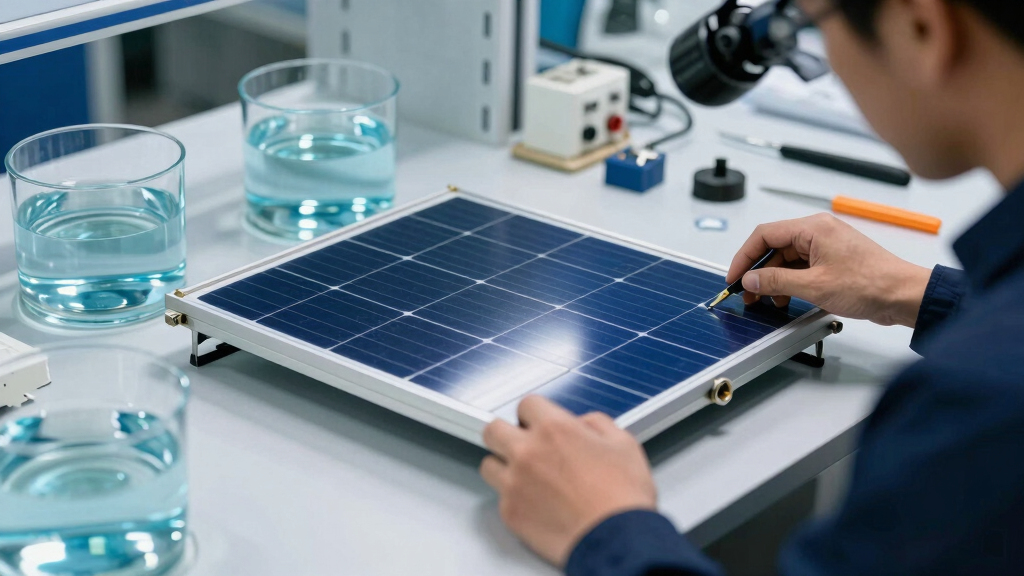
advanced III-V germanium solar panels
As an affiliate, we earn on qualifying purchases.
As an affiliate, we earn on qualifying purchases.
Remaining Questions About Commercial Readiness and Scalability
It is not yet clear how quickly these technologies can be scaled for commercial use. The solar panel efficiency has been demonstrated in laboratory conditions, and further testing is needed to assess real-world performance and manufacturing costs. Similarly, the ocean water-to-drinking water process is still in early stages, with full operational details and energy requirements not yet publicly confirmed. Ongoing research and pilot projects will determine how these innovations can be integrated into existing infrastructure.
As an affiliate, we earn on qualifying purchases.
Next Steps for Development and Deployment
Researchers and industry stakeholders plan to conduct field tests of the new solar panels to evaluate performance in diverse environments. Simultaneously, pilot projects are expected to demonstrate the ocean water-to-drinking water technology at larger scales, assessing efficiency, energy consumption, and environmental impact. Regulatory approvals and investments will be critical for transitioning these innovations from laboratory to market, with broader deployment anticipated over the next 1-3 years.
solar energy harvesting technology
As an affiliate, we earn on qualifying purchases.
As an affiliate, we earn on qualifying purchases.
Key Questions
How much more efficient are these new solar panels compared to previous models?
The new solar panels achieve a record efficiency of 34.4%, surpassing previous records and representing a significant improvement in energy conversion rates.
Can the ocean water-to-drinking water technology be used in large-scale applications?
While promising, this technology is still in early development stages. Pilot projects will determine its scalability and practicality for large-scale use.
What are the environmental benefits of the new desalination method?
It claims to produce drinking water without generating waste brine, reducing environmental impact compared to traditional desalination processes.
When might these technologies become commercially available?
If pilot projects are successful, commercial deployment could occur within the next 1-3 years, depending on regulatory approval and scaling efforts.
What regions stand to benefit most from these innovations?
Coastal and arid regions facing water scarcity and high energy costs could benefit most, gaining access to sustainable water and energy solutions.
Source: CleanTechnica
Fall Picks
fall essentials
As an affiliate, we earn on qualifying purchases.