
TL;DR
Open a free Amazon Business account
Business pricing, bulk buying and tax-exempt orders.
As an affiliate, we earn on qualifying purchases.
A new solar-based desalination technology developed at the University of Rochester can produce drinking water directly from seawater without generating waste brine. The system uses laser-etched black metal panels that self-clean and recover salts and minerals, including lithium. This innovation could address global water shortages and mineral extraction challenges.
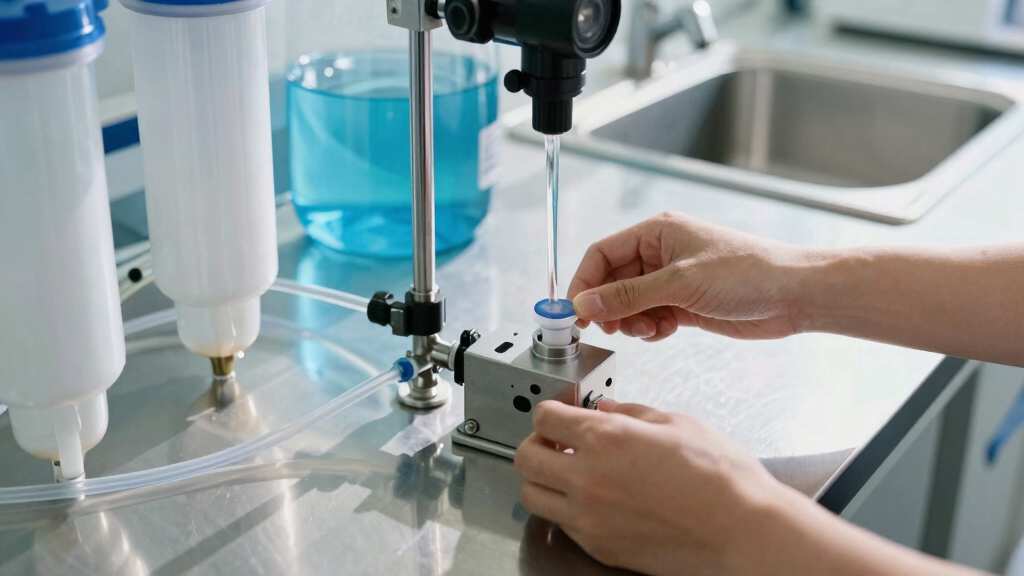
Researchers at the University of Rochester have unveiled a solar-powered desalination system that produces clean drinking water directly from ocean water without generating harmful brine waste. The innovation, which uses laser-etched black metal panels, offers a more sustainable and resource-efficient approach to addressing global water shortages and mineral extraction needs.
The new desalination method employs specially engineered black metal panels that absorb sunlight efficiently. These panels are laser-etched with grooves that allow water to be pulled across their surface, evaporate, and then deposit salts into passive regions, preventing clogging and enabling continuous operation. Unlike traditional systems, it produces no chemical additives and leaves behind solid salts, including lithium, which can be extracted for industrial use.
Field tests using seawater from the Pacific, Atlantic, and Indian Oceans confirmed the system’s ability to generate fresh water while maintaining self-cleaning capabilities. The process leverages the ‘coffee ring’ effect to direct salts away from the active surface, avoiding buildup and clogging. Researchers also demonstrated the potential to extract lithium by embedding nanoparticles in the panels to isolate this valuable mineral from seawater salts.
Potential Impact on Water and Mineral Resources
This technology could revolutionize water desalination by providing a sustainable, energy-efficient method that eliminates harmful brine disposal. It also offers a new way to harvest critical minerals like lithium directly from seawater, reducing environmental impacts associated with traditional mining. If scalable, it could significantly improve water access for millions and support the growing demand for battery materials.
solar seawater desalination system
As an affiliate, we earn on qualifying purchases.
As an affiliate, we earn on qualifying purchases.
Advances in Solar Desalination and Mineral Extraction
Current desalination techniques, such as reverse osmosis, are energy-intensive and produce brine waste that harms marine ecosystems. The new system, developed at the University of Rochester, builds on prior research into solar-thermal desalination but overcomes key limitations by preventing salt buildup and enabling mineral recovery. The approach aligns with global efforts to develop sustainable water solutions amid increasing shortages and mineral demands.
“Our system uses laser-etched black metal to create a self-cleaning surface that continuously produces fresh water from seawater without clogging or waste.”
— Professor Chunlei Guo
self-cleaning black metal solar panels
As an affiliate, we earn on qualifying purchases.
As an affiliate, we earn on qualifying purchases.
Unanswered Questions About Scalability and Cost
It is not yet clear how easily the technology can be scaled for commercial use or what the production costs will be. Long-term durability, maintenance requirements, and performance in diverse ocean conditions remain to be tested in real-world applications.
lithium extraction from seawater kit
As an affiliate, we earn on qualifying purchases.
As an affiliate, we earn on qualifying purchases.
Next Steps: Pilot Projects and Commercial Development
Researchers plan to conduct larger-scale pilot projects to evaluate the system’s performance in different environments and to assess economic viability. Industry partners and governments may explore funding opportunities to develop commercial prototypes, aiming for broader deployment within the next few years.
portable water purification device
As an affiliate, we earn on qualifying purchases.
As an affiliate, we earn on qualifying purchases.
Key Questions
How does this new desalination method differ from existing technologies?
It uses laser-etched black metal panels that absorb sunlight and prevent salt buildup, producing no waste brine and allowing for mineral extraction, unlike traditional methods that generate harmful saltwater byproducts.
Can this system produce enough freshwater for large communities?
While initial tests are promising, scalability for large-scale municipal use is still under evaluation. Further research is needed to determine its capacity and efficiency at larger sizes.
What minerals can be recovered besides salt?
The system can extract valuable minerals such as lithium, which is critical for battery manufacturing, by embedding nanoparticles that isolate lithium from other salts.
What are the environmental benefits of this technology?
It reduces the environmental impact by eliminating harmful brine disposal and enables mineral recovery, potentially reducing the need for environmentally taxing mining operations.
When might this technology be available for widespread use?
Researchers aim to conduct pilot projects in the near future, with commercial deployment possibly within the next few years, depending on further testing and development.
Source: CleanTechnica
Fall yard work Picks
leaf blowers
As an affiliate, we earn on qualifying purchases.