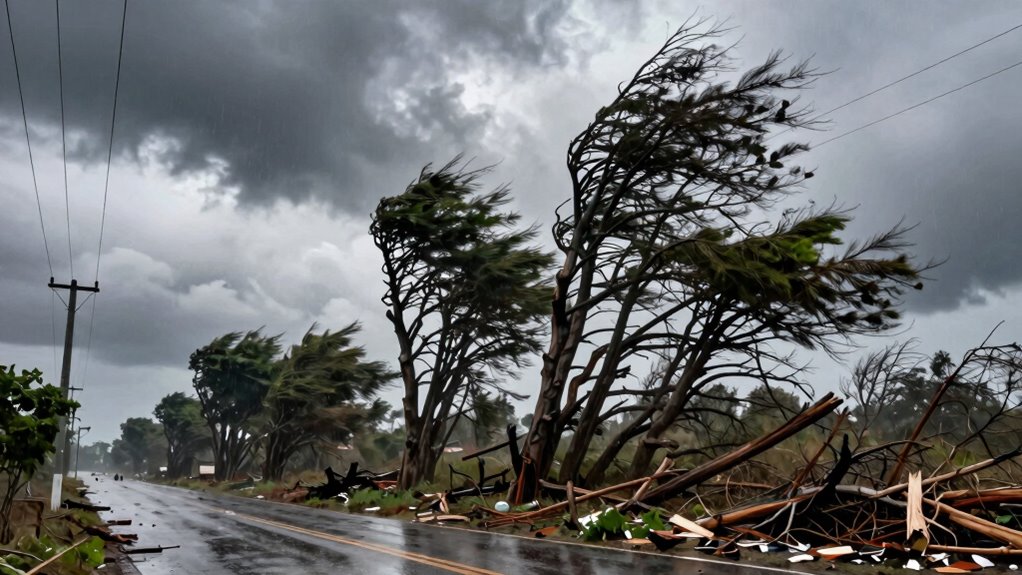

High-wind outages are tougher than thunderstorms because strong winds cause widespread damage by knocking down trees, snapping power poles, and scattering debris. This results in extensive and long-lasting outages, often in hard-to-reach areas. Unlike thunderstorms, which cause shorter, localized issues, high winds weaken infrastructure over a broad area, making repairs slower and more complex. If you want to understand how infrastructure responds and how to stay safe, there’s more to learn ahead.
Key Takeaways
- High winds cause widespread, long-lasting damage by uprooting trees, snapping poles, and damaging infrastructure, leading to prolonged outages.
- Wind thresholds (>40 mph) result in extensive, rapid damage, unlike thunderstorms which usually cause localized, short-term outages.
- Uprooted trees and falling branches from high winds can cause immediate and extensive line damage, complicating repairs.
- Infrastructure often weakens over time under sustained high winds, increasing failure risk and repair complexity.
- Recovery from high-wind outages requires extensive repairs and vegetation management, making them more challenging than thunderstorm-related outages.

Qu River Prep Emergency Kit – Winter Storm & Ice Storm Survival Kit, Power Outage Preparedness with 15 Essential Items, COB Light, Rain Poncho, Blanket, Emergency Water & First Aid
UPDATED FOR WINTER: Contains 15 essential winter storm survival items, over 30 pieces total. Curated by disaster housing…
As an affiliate, we earn on qualifying purchases.
As an affiliate, we earn on qualifying purchases.
Understanding Wind Speed Thresholds and Their Effects
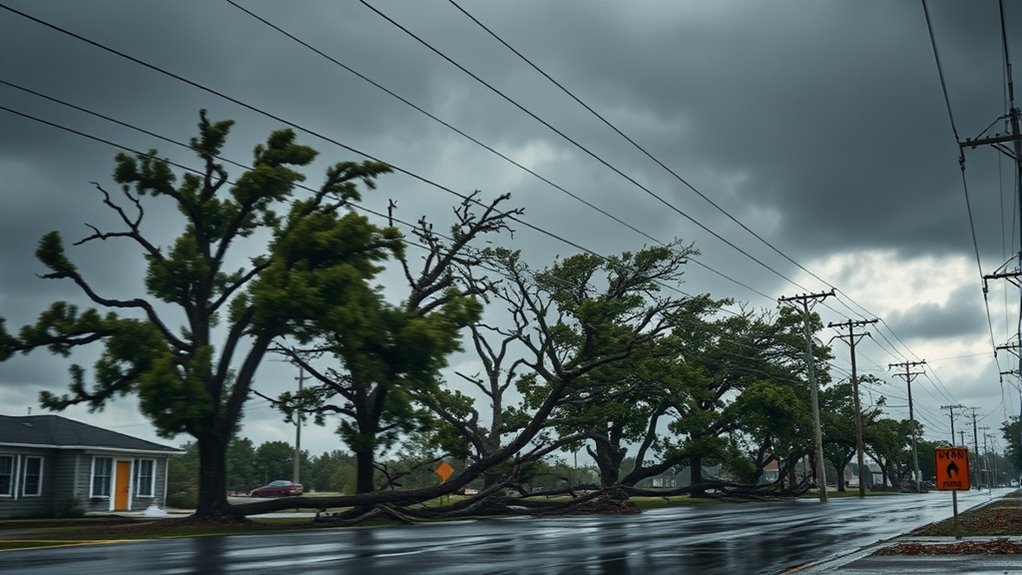
Understanding wind speed thresholds is essential for recognizing how different wind intensities impact power infrastructure. When winds exceed 40 mph, they start causing issues, especially near trees that can fall onto power lines. At 30-40 mph, power lines sway, leading to minor outages caused by debris or branches. Once winds reach 40-50 mph, the risk of outages increases markedly, particularly in areas with many trees or weak infrastructure. Between 50-60 mph, outages become widespread, especially in older systems not designed to withstand strong winds. When winds surpass 60 mph, they can uproot trees and snap power poles, resulting in extensive blackouts. Strong wind events can also overwhelm power grid systems, leading to prolonged outages. Recognizing wind thresholds is crucial for understanding how different wind speeds can threaten your power supply and prepare accordingly, especially during extreme wind events. Additionally, implementing preventative measures can help reduce the impact of high winds on electrical infrastructure.

MARBERO Portable Power Station 88Wh Camping Lithium Battery Solar Generator Fast Charging with AC Outlet 120W Peak Power Bank(Solar Panel Optional) for Home Backup Outdoor Emergency RV Van Hunting
EFFICIENT CHARGING: Use the adapter included in the package to charge the power station from 0 to 80%…
As an affiliate, we earn on qualifying purchases.
As an affiliate, we earn on qualifying purchases.
The Power of High Winds vs. Thunderstorms in Outage Events

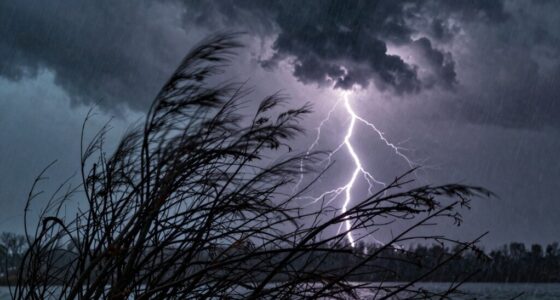
High winds and thunderstorms both play significant roles in causing power outages, but they do so through different mechanisms. High winds, especially sustained above 40 mph or gusts over 58 mph, steadily topple trees, snap poles, and damage lines. These events often lead to widespread, prolonged outages because the damage accumulates over a broad area. Thunderstorms, on the other hand, involve intense, short bursts of wind—often exceeding 58 mph—accompanied by lightning and hail. They can cause rapid, localized outages by striking power lines or causing immediate structural damage. While thunderstorms may clear quickly, the damage they leave behind can still be severe. Both weather types threaten the grid, but high winds tend to cause more extensive, longer-lasting outages due to their persistent and widespread force. Proper planning can help mitigate the impact of these outages and ensure reliable backup power during such events. Additionally, understanding the weather patterns that lead to these conditions can improve preparedness and resilience efforts, especially since high wind events are often associated with larger-scale atmospheric systems. Moreover, sustained wind events can weaken infrastructure over time, increasing vulnerability to future outages. Recognizing the role of machine learning in predicting these weather events can further enhance early warning systems and response strategies.
Pvirbravoo Sapling Puller Tool – Heavy Duty Tree Root Puller for ¼ to 1-3/8" Woody Stems | Fully Uproots Trees & Shrubs | Ergonomic Garden Tool for Landscaping, Farming, Forestry
Fully Uproots Woody Stems – The Tree Puller Tool Efficiently Uproots Trees, Shrubs, Vines, And Thorns With Large…
As an affiliate, we earn on qualifying purchases.
As an affiliate, we earn on qualifying purchases.
How Wind Gusts and Sustained Winds Damage Infrastructure

When wind gusts and sustained winds hit, they exert force that can weaken or break infrastructure over time. Faster or stronger winds increase stress on power lines, poles, and buildings, making them more vulnerable to failure. As the wind persists or intensifies, it accelerates structural damage, leading to outages and costly repairs. Additionally, extreme weather conditions can push existing systems beyond their capacity limits, increasing the likelihood of failure and extended outages. The design and robustness of infrastructure, such as electric bikes and other equipment, play a crucial role in how well systems withstand these forces. Understanding structural resilience is essential for improving infrastructure durability against high-wind events, especially considering how weather patterns are changing globally. Incorporating wind-resistant materials in construction can help mitigate some of these impacts and improve overall system longevity.
Wind Force and Damage
Wind gusts and sustained winds exert force on power infrastructure, often leading to damage or failure. When winds reach 40 mph or higher, they apply pressure that can sway poles, bend wires, and loosen fittings. Gusts over 58 mph create sudden, intense forces that can snap lines or topple trees onto lines. Sustained winds above 50 mph gradually weaken structures, causing joints and supports to fatigue. As wind speed increases, the risk of damage intensifies: 60 mph+ winds uproot trees and snap poles, causing widespread outages. Power lines become taut, and infrastructure not designed for high winds buckles under pressure. This force weakens the physical integrity of the system, making outages more likely and more severe during high-wind events. Additionally, structural vulnerabilities can exacerbate damage, especially when maintenance is neglected or when aging infrastructure is exposed to severe weather conditions. Proper design standards and regular inspections are crucial to minimize structural weakness and improve resilience against such destructive forces. Recognizing the importance of energetic alignment in infrastructure resilience highlights the need for proactive measures and community preparedness to mitigate storm impacts. Implementing preventive maintenance can significantly reduce the likelihood of catastrophic failures during these events. Regular upgrades to aging components also help address infrastructure aging, ensuring systems remain robust against high-wind scenarios.
Structural Weakening Effects
Gusts and sustained winds exert continuous pressure on power infrastructure, gradually weakening critical components. Over time, this stress causes metal poles to bend, joints to loosen, and insulators to crack. High winds also cause vibrations that fatigue materials, making them more susceptible to failure. Tree branches and debris repeatedly strike lines, causing microfractures that weaken cables and hardware. Older infrastructure, with already corroded or brittle parts, becomes especially vulnerable. As these components weaken, they lose their ability to withstand future gusts, increasing the risk of snapping or toppling. This progressive deterioration often leads to outages that last days or weeks, especially in areas with aging systems. The cumulative effect of wind-induced weakening makes high-wind events particularly damaging and challenging to repair. Additionally, outdoor equipment exposed to prolonged stress can develop hidden structural flaws that compromise safety and functionality during subsequent storms. Implementing preventive maintenance can help identify and address vulnerabilities before severe weather occurs. Recognizing the importance of vulnerability assessment can lead to better preventive measures and upgrades. Incorporating advanced materials designed for durability can further enhance resilience against wind-related damage.

Orion Motor Tech Master Quick Disconnect & Fuel Line Pliers Tool Set, 31pc Fuel Line Disconnect Tool Set with Fuel and AC Disconnect Pliers, Heavy-Duty Fuel Pipe Repair Set for Auto A/C Fuel Line
2-in-1 Solution: Orion Motor Tech's 31 pc. tool set combines 26 pc. master quick disconnect tool set for…
As an affiliate, we earn on qualifying purchases.
As an affiliate, we earn on qualifying purchases.
The Role of Tree and Branch Uprooting During High-Wind Events
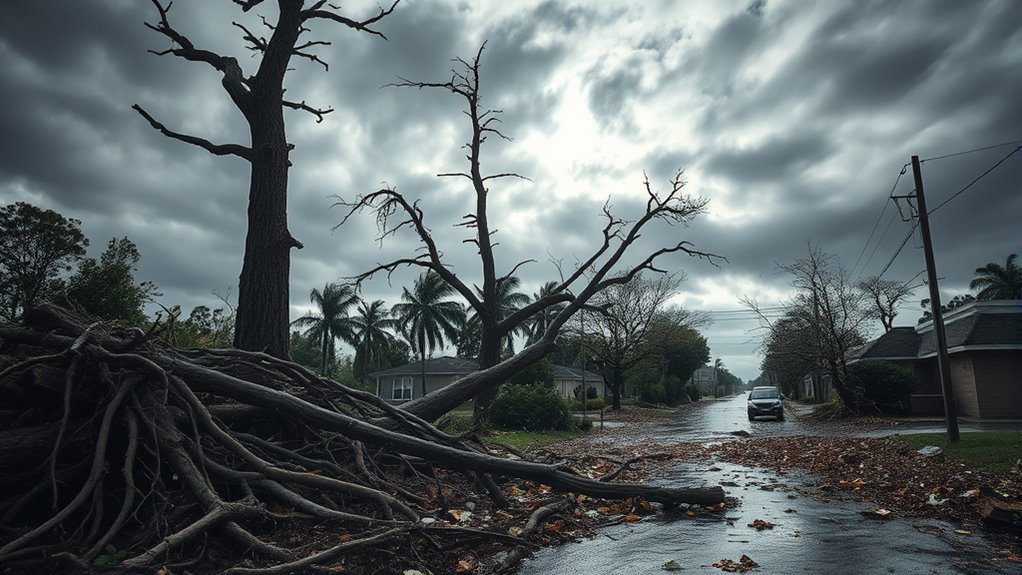
During high-wind events, trees and their branches are often uprooted or broken, directly leading to power outages. When winds exceed 40 mph, the force weakens roots and trunk stability, causing trees to fall. Uprooted trees can crush power lines, damage transformers, and block roads, delaying repairs. Branches breaking off can snatch wires, causing short circuits or outages even if the tree stays upright. Proper filtration and pump protection in maintenance routines can help prevent some of the damage caused by debris and falling branches.
Comparing Outage Duration: High Winds Versus Thunderstorms

While the physical damage caused by high winds often leads to immediate outages, the duration of these outages can vary substantially depending on the event type. High wind events, especially those exceeding 50 mph, tend to cause widespread damage quickly, snapping poles and uprooting trees. Restoration can take days to weeks, especially if infrastructure is severely damaged or if multiple areas are affected simultaneously. Thunderstorms, even with winds over 58 mph, often produce localized outages that are shorter-lived—usually a few hours to a day—since damage is typically limited to downed lines or minor infrastructure issues. However, severe thunderstorms with lightning and heavy rain can prolong outages if they cause flooding or extensive line repairs. Overall, high winds generally result in longer outage durations than thunderstorms.
Regional Vulnerabilities to Wind-Related Power Disruptions
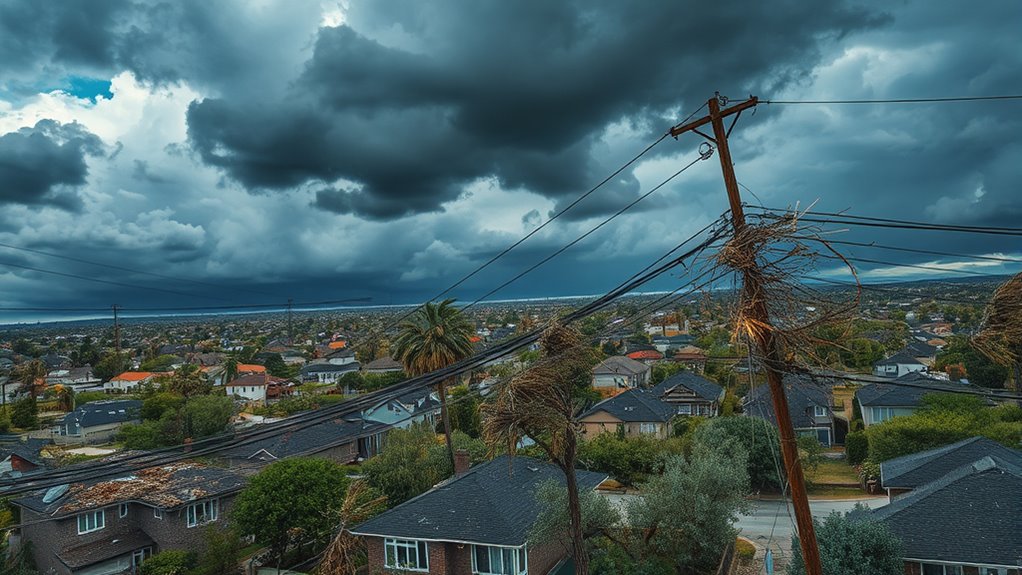
Your region’s infrastructure faces unique challenges when high winds strike, especially along coastlines where storm surges and salt corrosion weaken structures. Rural areas often lack the resources to quickly repair damaged power lines, making outages more frequent and prolonged. Understanding these vulnerabilities helps you better prepare for wind-related disruptions in your community.
Coastal Infrastructure Challenges
Coastal infrastructure faces unique vulnerabilities to wind-related power disruptions due to its exposure to high wind speeds and storm surges. These areas often have older, less resilient power lines and equipment, making them more prone to failure during storms. As winds increase, trees and debris are more likely to topple or damage poles, causing outages. Storm surges can erode or flood substations and underground cables, compounding disruptions. Coastal regions also tend to have dense populations, increasing demand and strain on damaged infrastructure.
- Vulnerability of older infrastructure to high wind speeds
- Increased risk of flooding damaging underground cables
- Dense populations amplifying outage impacts
Rural Outage Vulnerabilities
Rural areas are especially vulnerable to wind-related power outages because they often have aging infrastructure that isn’t built to withstand high wind speeds. Many power lines run through open fields or forested regions, where tall trees pose a constant threat. When high winds—above 40 mph—hit, these trees can topple onto lines or poles, causing immediate outages. Older poles may snap easily under pressure, leaving large sections without power. Limited maintenance and sparse crews mean repairs take longer. Moreover, fewer backup options or underground lines increase vulnerability. During severe wind events, rural communities face extended outages, sometimes lasting days or weeks. Without rapid response or upgraded infrastructure, rural residents bear the brunt of wind-induced disruptions, making resilience efforts critical.
Infrastructure Resilience and Its Impact on Outage Recovery
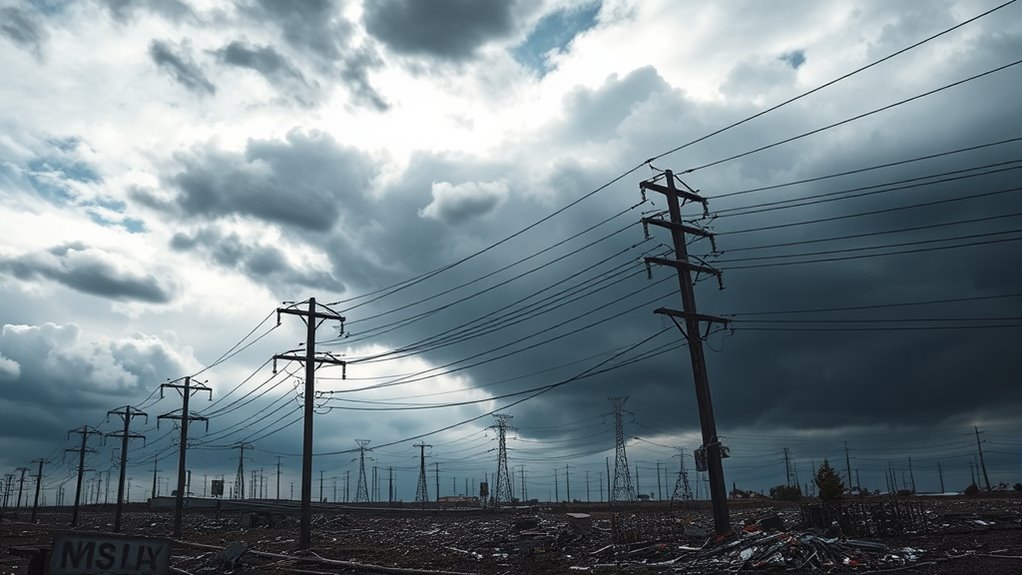
Infrastructure resilience plays a crucial role in determining how quickly communities can recover from high-wind outages. When your power grid is built with durable materials and modern designs, it can withstand strong winds better and restore service faster. Conversely, aging or poorly maintained infrastructure can prolong outages and increase repair costs. Factors influencing resilience include the strength of power poles, undergrounding lines, and vegetation management strategies.
- Reinforced infrastructure reduces damage and speeds up repairs
- Underground cables are less vulnerable to wind and falling debris
- Regular maintenance minimizes vulnerabilities and improves response times
Case Studies of Major High-Wind Outages

Have you ever wondered how powerful high-wind events can cause massive outages? Take Hurricane Sandy in 2012, which generated winds over 80 mph, knocking out power for over 8 million people across 21 states. The storm’s high winds uprooted trees and snapped power poles, overwhelming the aging infrastructure. Similarly, the 2017 derecho swept through the Midwest with wind speeds over 100 mph, causing widespread power failures and leaving thousands in the dark for days. In 2019, a severe windstorm in California toppled trees onto power lines, resulting in large-scale outages that lasted weeks. These cases highlight how sustained high winds can severely damage infrastructure and disrupt millions of lives, especially in areas with weaker or outdated systems.
Preparedness and Safety Tips for Wind-Related Power Failures

When high winds threaten your area, preparing in advance can make a significant difference in staying safe and minimizing power disruptions. Start by assembling an emergency kit with flashlights, batteries, bottled water, and non-perishable food. Keep your phone charged and have backup power sources ready, like portable chargers. Trim trees and secure outdoor items to reduce debris that can damage power lines. During wind events, stay indoors and avoid downed lines or damaged infrastructure. Stay informed through weather alerts and updates from local authorities. If power goes out, use flashlights instead of candles to prevent fires. Remember, safety first—if conditions worsen, evacuate if advised. Proper preparation helps you stay safe and reduces the impact of outages.
- Stock emergency supplies and keep devices charged
- Trim trees and secure outdoor objects
- Follow weather alerts and evacuation orders
Advancements in Wind-Resistant Power Infrastructure
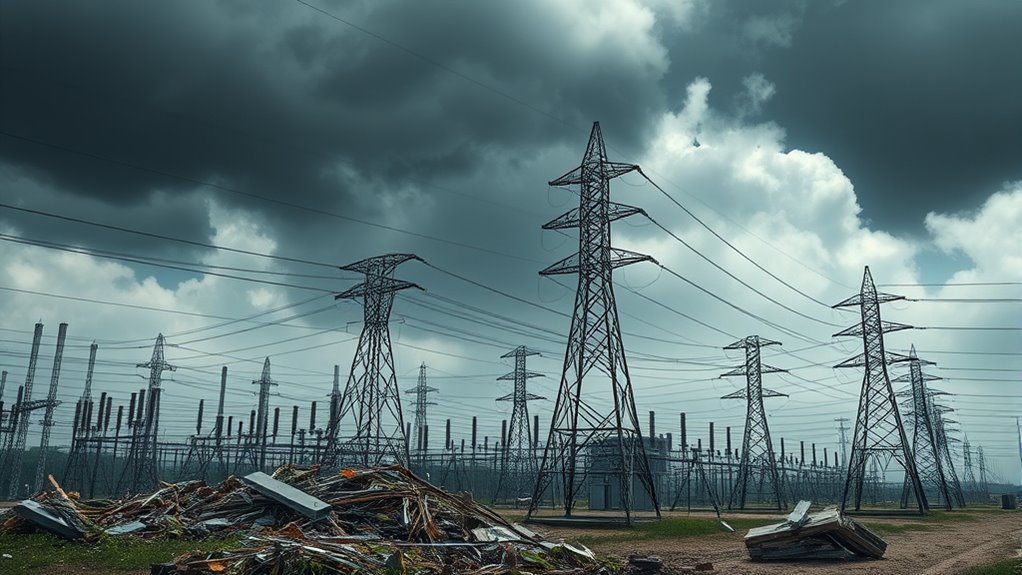
Advancements in wind-resistant power infrastructure are transforming how utilities protect and maintain electrical systems during severe weather. New technologies, such as stronger, more flexible poles and underground cables, reduce vulnerability to high winds. Utilities now deploy smart sensors to monitor line stability and detect potential failures before outages occur. Reinforced insulators and adaptive line routing help prevent damage from gusts exceeding 50 mph. Additionally, the development of modular and surge-resistant substations enhances grid resilience. Wind-resistant designs also include strategic tree trimming and vegetation management, minimizing branch interference during storms. These innovations enable faster restoration and decrease outage durations, especially in areas prone to high-wind events. Overall, such advancements markedly improve the grid’s ability to withstand and recover from powerful wind storms.
Frequently Asked Questions
How Do Older Power Infrastructure Systems Influence Outage Severity During High Winds?
Older power infrastructure systems make outages worse during high winds because their poles and lines are more fragile and less resilient. When winds exceed 50 mph, these systems are more likely to snap, topple, or suffer damage, causing widespread blackouts. You’ll find that with aging infrastructure, repairs take longer and outages last longer, leaving communities without power during storms that could be less disruptive if the system were newer and better maintained.
Are There Specific Regions More Prone to Prolonged Outages From High Winds?
Irony strikes: regions with older infrastructure and dense tree cover are more prone to prolonged outages from high winds. You’ll find states like Texas, Michigan, and the Southeast hit hardest, as their aging lines and abundant trees easily topple in gusts over 40 mph. These areas lack the modern resilience needed, turning a typical wind event into days or weeks of blackout misery, despite the winds’ seemingly minor threat.
What Technological Innovations Are Most Effective in Preventing Wind-Related Outages?
You can prevent wind-related outages most effectively with smart grid technology, which detects faults and reroutes power instantly, reducing outage duration. Using stronger, wind-resistant materials for poles and lines also helps. Additionally, deploying aerial drones for rapid inspection allows quick damage assessment. Implementing underground cables in critical areas minimizes exposure to wind damage. These innovations work together to keep power flowing during severe wind events.
How Does Vegetation Management Reduce Outage Risks in High-Wind Events?
Imagine a neighborhood where regular trimming keeps trees away from power lines. During a high-wind event, this proactive vegetation management prevents branches from snapping and falling onto lines, reducing outages. You can see how maintaining clear zones around power infrastructure minimizes the risk of trees causing damage or outages. By regularly inspecting and trimming trees near lines, you actively reduce the chance of wind-related disruptions and keep the power flowing during storms.
What Are the Immediate Safety Procedures During a High-Wind Power Outage?
During a high-wind power outage, you should stay away from downed lines and assume they’re live. Avoid touching anything in contact with the lines, including trees or debris. Use a flashlight instead of candles indoors. Stay indoors and keep away from windows. Turn off appliances to prevent surges when power returns. Stay informed via a battery-powered radio or your phone for updates, and wait for official clearance before going outside.
Conclusion
While high winds can cause longer-lasting outages than thunderstorms, preparedness makes a difference. Don’t assume your power will always come back quickly—invest in storm-ready infrastructure and safety plans. Remember, even if outages last longer, your proactive steps can protect you and your loved ones. Facing tough weather might be inevitable, but your readiness ensures you’re not powerless when it matters most. Stay informed, stay safe, and weather the storm confidently.