During tornado season, prioritize packing essentials like bottled water, non-perishable food, flashlights, batteries, and important documents in waterproof containers. Power devices like satellite phones, radios, medical equipment, and backup power sources, but skip luxury items that add clutter. Safely store chargers and batteries in cool, dry places and keep devices fully charged. Managing food, water, and backup power smartly helps keep your family safe; there’s more to take into account for a solid plan.

Get backup power and energy gear delivered free with Prime
- Fast, free delivery on millions of items
- Prime Video, Amazon Music and more included
- Member-only deals all year
Key Takeaways
- Pack essentials like bottled water, non-perishable food, flashlights, batteries, and important documents in waterproof containers.
- Power critical devices such as communication tools, medical equipment, LED flashlights, and backup power sources.
- Skip luxury appliances and non-essential electronics to avoid clutter and focus on safety and survival needs.
- Use solar chargers, power banks, and generators to maintain device power during outages.
- Avoid overloading circuits, and never run generators indoors; prioritize safety when powering devices and managing outages.
waterproof emergency kit backpack
As an affiliate, we earn on qualifying purchases.
As an affiliate, we earn on qualifying purchases.
Essential Emergency Kit Items for Tornado Outages
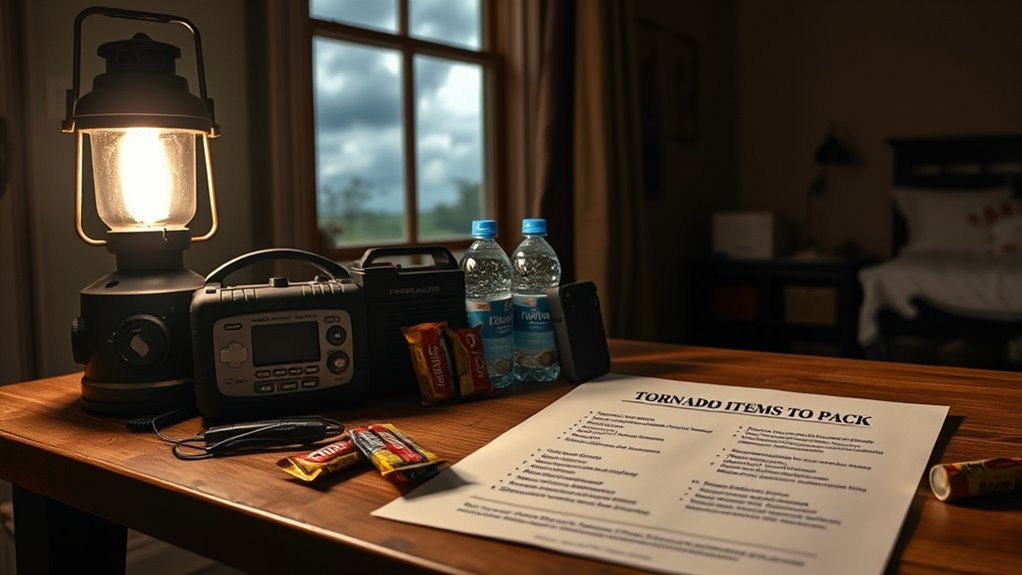
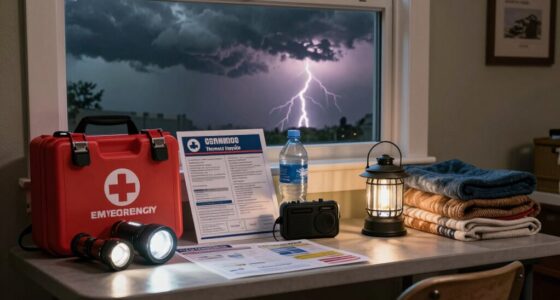
During a tornado outage, having a well-prepared emergency kit can make all the difference. Stay alert to weather alerts on your phone or radio to know when a tornado is approaching. Your kit should include essentials like bottled water, non-perishable food, a flashlight, batteries, a first aid kit, and necessary medications. Keep important documents, such as insurance claims, in a waterproof container, so you can access them quickly if you need to file claims after the storm. Including a portable phone charger ensures you stay connected, and a whistle can help signal for help. Being organized and proactive reduces panic and helps you respond swiftly, making your family safer during power outages caused by tornadoes. Understanding electrical safety can help you better prepare for and respond to such emergencies. Considering whole-house water filtration systems can also ensure you have safe water during extended outages. Additionally, familiarizing yourself with home automation and smart home solutions can provide remote access to important alerts and device controls, increasing safety and convenience during emergencies. Being aware of the layout of your home can help you plan the safest area to take shelter during a tornado. Having knowledge of emergency communication methods can further improve your response plan.
solar power bank for emergencies
As an affiliate, we earn on qualifying purchases.
As an affiliate, we earn on qualifying purchases.
Critical Devices to Keep Powered During a Storm
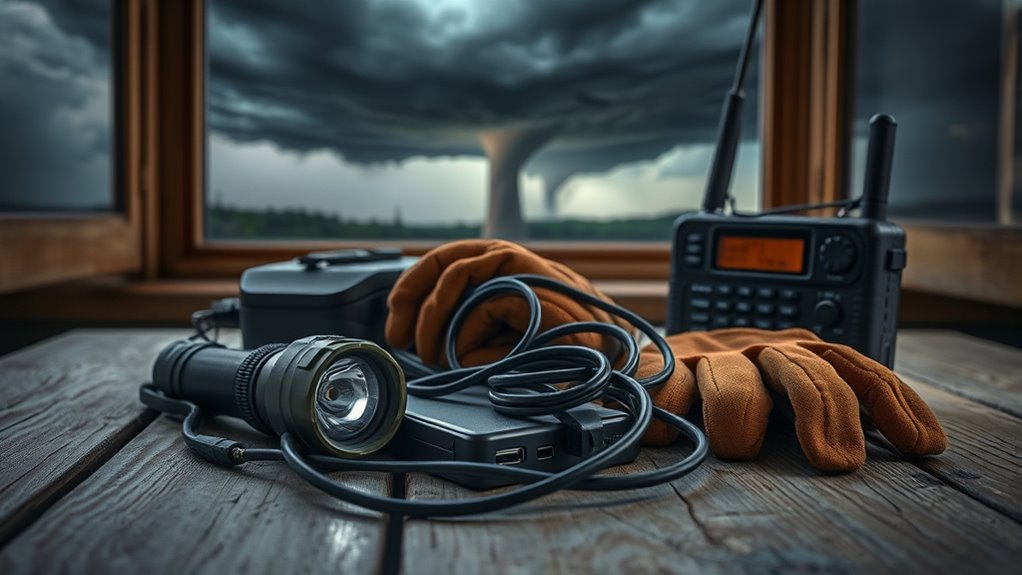
During a storm, keeping certain devices powered can make all the difference. You’ll want to prioritize communication tools, medical equipment, and lighting to stay safe and connected. Ensuring these essentials stay operational helps you respond effectively and maintain your safety. Additionally, understanding ventilation considerations can help prevent indoor air issues during power outages. For example, knowing about Youngster Choice can inform you about the importance of reliable power sources for social media and communication needs. Maintaining safety protocols during outages ensures your home remains secure and reduces potential risks. Being aware of pilot gear and accessories can also assist in preparing backup power solutions for essential aviation-related equipment. Incorporating digital literacy strategies can further prepare your family to navigate online safety and communication during extended outages.
Essential Communication Devices
When a tornado strikes and power outages occur, having essential communication devices ready to keep you connected can make all the difference. A satellite phone guarantees you can reach emergency services even when cell towers are down. Portable radios let you stay informed about weather updates and emergency alerts without relying on electricity. Keep these devices charged and accessible in your storm kit. Consider battery backups or solar chargers to maintain power during prolonged outages. Staying connected helps you coordinate with loved ones and receive critical information. Don’t underestimate the importance of reliable communication; it can be a lifeline when every second counts. Properly managing device washability ensures your equipment remains functional when you need it most. Using power management techniques can extend your device usage during emergencies, ensuring you stay connected longer. Additionally, choosing devices with compact design can help save space and make storage easier in small living environments. Remember to periodically test and update your communication devices to ensure they are fully operational when needed. Incorporating battery preservation strategies can help maximize the lifespan of your device batteries during extended outages.
Medical Equipment Needs
Have you prepared your critical medical devices to stay powered during a storm? Ensuring your equipment functions properly starts with regular medical device maintenance. Check batteries, cords, and settings now, so nothing surprises you during an outage. If you rely on devices like oxygen concentrators, CPAP machines, or insulin pumps, verify they’re in good working order and have backup power sources ready. Proper medication storage is equally essential—store medicines in cool, dry places, and consider portable coolers for temperature-sensitive drugs. Keep extra batteries, chargers, and power banks on hand to maintain device operation. Planning ahead guarantees your critical medical needs are met, even when the power’s out. Additionally, understanding your energy-efficient cloud solutions can help you better prepare for disruptions and ensure seamless data access during emergencies. Being aware of hydrotherapy options might also provide alternative comfort measures if medical devices are temporarily unavailable, supporting your health and well-being. Learning about cybersecurity best practices for medical devices can further protect your sensitive health data from potential breaches during chaotic situations. Knowing how to manage medical emergencies during outages can further enhance your preparedness and peace of mind. Staying proactive reduces health risks and provides peace of mind during tornado season, especially when considering medical device safety and secure backup plans.
Lighting and Safety Gear
Keeping your lighting and safety gear powered is essential for steering a storm safely. Emergency lighting ensures you can see clearly if the power goes out, preventing accidents and helping you navigate safely. Pack portable LED flashlights, headlamps, and extra batteries to stay illuminated during outages. Safety gear such as helmets, sturdy shoes, and gloves provide protection if debris or falling objects pose risks. Consider a battery-powered lantern or glow sticks for additional lighting options. Always keep these devices charged beforehand and store them in an accessible location. Proper lighting and safety gear not only help you maintain visibility but also safeguard your family during dangerous conditions. Staying prepared with reliable lighting and protective gear is a key step in storm readiness. Additionally, familiarize yourself with smartphone safety tips to stay connected and informed during emergencies. Incorporating emergency preparedness practices into your routine can further enhance your safety during severe weather events. Remember that storm safety includes knowing how to operate your devices effectively and having a backup plan in case of equipment failure. Being aware of power outage protocols can help you respond quickly and effectively when the storm hits.
LED flashlight for power outages
As an affiliate, we earn on qualifying purchases.
As an affiliate, we earn on qualifying purchases.
Items to Avoid Packing for Power Outages
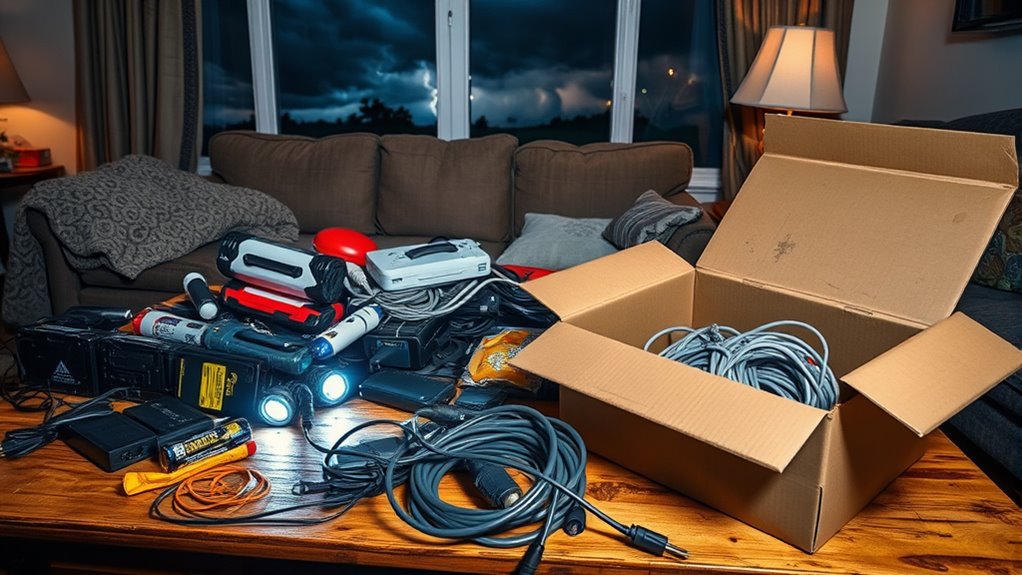
During a power outage caused by a tornado, packing the wrong items can make the situation more difficult. Avoid bringing non-essential entertainment devices like gaming consoles, DVDs, or large speakers, as they drain power and offer little benefit during an outage. Luxury appliances such as wine coolers, high-end coffee machines, or fancy blenders aren’t necessary and can waste valuable resources. These items take up space and may require power sources you don’t have access to. Instead, focus on essentials like flashlights, batteries, and basic supplies. Packing unnecessary items can clutter your emergency kit and distract you from what’s truly important. Keep your kit simple, practical, and focused on safety and survival, not luxury or entertainment.
As an affiliate, we earn on qualifying purchases.
How to Safely Store and Protect Your Chargers and Batteries
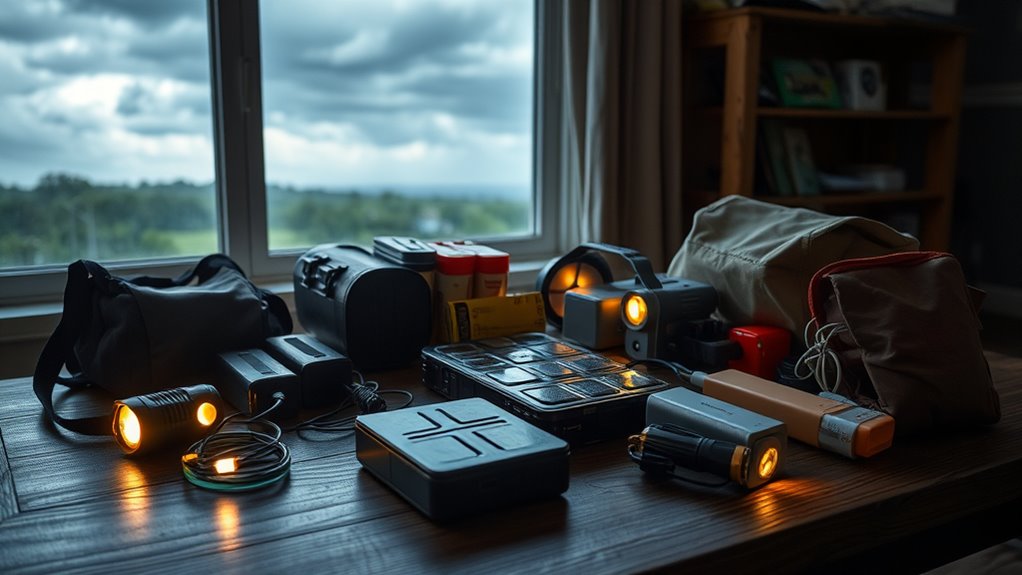
To guarantee your chargers and batteries remain safe and functional during a tornado-related power outage, you should store them properly in a cool, dry place away from direct sunlight and moisture. Charger safety starts with keeping cables organized and protected from damage, preventing short circuits or fires. For battery storage, use fire-resistant containers or cases to minimize fire risk if batteries are damaged or short-circuit. Avoid leaving batteries in extreme temperatures, which can degrade their lifespan and performance. Ensure chargers are fully disconnected and stored separately from power sources. Regularly check stored batteries for signs of damage or corrosion. Proper storage not only prolongs battery life but also reduces safety hazards, ensuring your devices are ready for use when you need them most. Additionally, creating a dedicated workspace can help keep your equipment organized and accessible during emergencies. Maintaining proper battery storage practices is essential for safety and device longevity during emergencies. Incorporating advanced storage solutions can further enhance safety and efficiency. Employing proper labeling and documentation of stored batteries and chargers can also facilitate quick identification and safe handling when needed.
Powering Communication Devices and Staying Connected
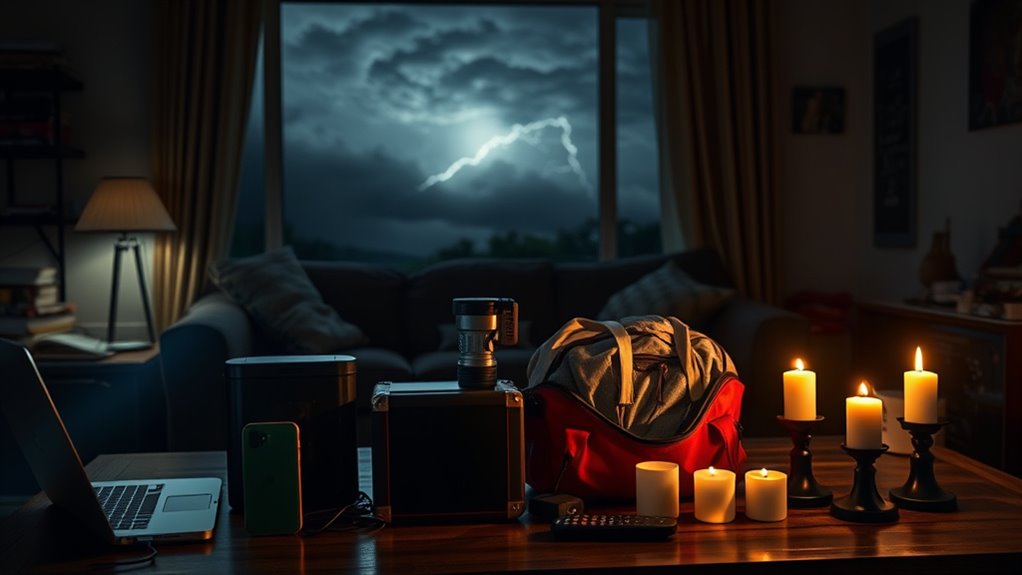
When the power goes out, staying connected is vital. You should have backup charging options and signal boosting devices ready to go. Also, creating an emergency communication plan guarantees you can reach loved ones quickly and safely.
Backup Charging Options
Power outages caused by tornadoes can quickly leave you disconnected when you need communication the most. To stay connected, consider backup charging options like portable generators and portable solar panels. A portable generator can provide reliable power to charge phones, radios, and other essential devices, especially if you have enough fuel on hand. Solar panels offer a silent, eco-friendly way to recharge your devices during the day, reducing reliance on fuel. Both options guarantee your communication devices stay powered so you can receive updates and call for help if needed. Keep in mind that portable solar panels are lightweight and easy to set up, making them a practical addition to your emergency kit. Combining these options ensures you stay connected when tornadoes strike.
Signal Boosting Devices
Even with backup charging options like portable generators and solar panels, maintaining a strong signal is essential during tornado-related power outages. Signal boosters and wireless repeaters can help amplify your existing cellular signals, ensuring you stay connected when infrastructure is compromised. These devices work by capturing weak signals and strengthening them, allowing you to make calls, send texts, or access emergency information more reliably. Portable signal boosters are ideal for home use or small groups, while wireless repeaters can cover larger areas or multiple devices. Investing in these devices before tornado season ensures you’re not left in the dark when communication networks weaken. Staying connected can be a lifesaver, so prioritize signal boosting devices as part of your emergency preparedness kit.
Emergency Communication Plans
Having a solid emergency communication plan is crucial during tornado season, especially when power outages disrupt regular networks. You need clear communication protocols in place to stay connected with family, friends, and emergency services. Establishing emergency contact planning ensures everyone knows how to reach each other if cell towers go down or internet access is interrupted. Keep backup devices like battery-powered radios, portable chargers, and spare batteries ready to maintain contact. Share your plan with loved ones and rehearse it so everyone understands the steps. Consider alternative methods, such as texting or using social media, which may work better during outages. Staying connected during a tornado power outage can make all the difference in keeping everyone safe and informed.
Managing Food and Water Supplies Without Electricity

When the electricity goes out after a tornado, managing your food and water supplies becomes a top priority. Focus on proper food storage by keeping non-perishable items accessible and safe from spoilage. Use coolers with ice packs to preserve perishable foods if you have ice available, but plan to consume these first. For water, don’t rely on tap supplies; instead, implement water purification methods like boiling or using water purification tablets to ensure safety. Store enough bottled water for drinking and cooking, aiming for at least one gallon per person per day. Avoid opening your refrigerator or freezer unnecessarily to maintain cold temperatures longer. Properly managing your food storage and water purification efforts helps prevent foodborne illnesses and dehydration during outages.
Safety Tips for Using Backup Power Sources

Using backup power sources safely is essential to prevent accidents and injuries during a power outage. Always operate generators outdoors in well-ventilated areas to avoid dangerous carbon monoxide buildup. Keep batteries and battery storage systems away from water and direct sunlight to prevent leaks and overheating. Never overload your generator; follow the manufacturer’s guidelines for power limits. Use proper extension cords rated for outdoor use, and avoid running cords under rugs or doors. Regularly inspect your backup systems for damage or corrosion. Remember, generator safety means never refueling while the unit is running, and storing batteries safely to prevent fire hazards. By following these precautions, you reduce risks and ensure your backup power keeps your home safe.
Preparing Your Home to Minimize Power Disruptions
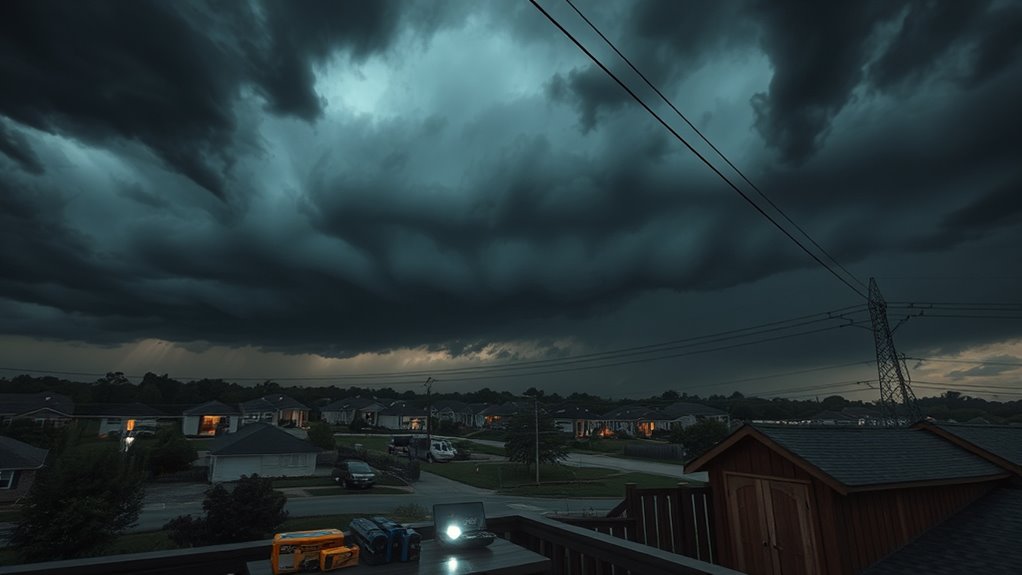
Preparing your home to minimize power disruptions starts with proactive measures that reinforce your electrical system and safeguard your appliances. Installing storm proof windows helps protect your home from high winds and debris, reducing the risk of damage that can cause power outages. Roof reinforcement is equally important; strengthening your roof can prevent structural damage during severe storms, minimizing the chance of disruptions to your electrical connections. Additionally, securing loose outdoor fixtures and trimming trees near power lines can prevent outages caused by falling branches. Consider installing surge protectors to shield your appliances from voltage spikes. These steps create a more resilient home, reducing the likelihood of power disruptions during tornado season. The key is to address vulnerabilities before storms strike, ensuring a safer, more stable power supply.
Post-Storm Checklist: What to Do After the Power Returns
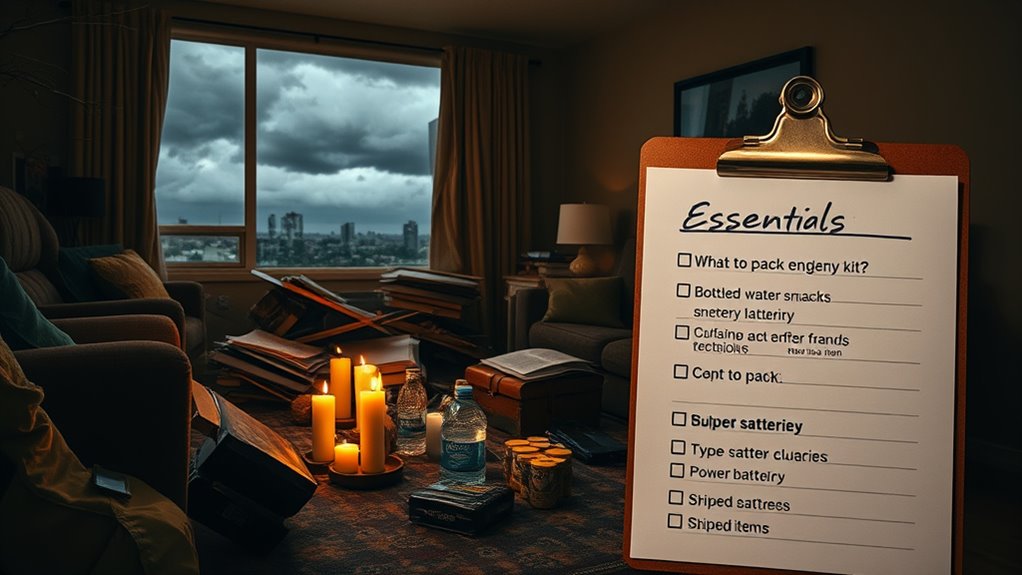
As power is restored after a storm, it’s vital to act quickly to guarantee safety and prevent further damage. First, check your home for hazards, such as downed wires or structural damage. Confirm storm shelter safety by inspecting for leaks or compromised areas before re-entering. Next, prioritize post storm cleanup to clear debris safely and prevent accidents. Turn off appliances and electronics that may have been damaged. Finally, reconnect utilities cautiously, avoiding overloaded circuits. Remember, safety comes first; if you suspect gas leaks or electrical issues, contact the authorities immediately. Taking these steps helps protect your family and property, reducing the risk of injury or additional damage as power is restored. Stay alert and methodical during the post-storm process.
Frequently Asked Questions
How Long Can a Portable Generator Typically Run During a Power Outage?
A portable generator can typically run between 8 to 12 hours during a power outage, depending on its fuel capacity and load. If you have a larger fuel tank, your generator will last longer. To maximize generator duration, avoid overloading it and keep extra fuel nearby. Regular maintenance and choosing a model with a higher fuel capacity can also help guarantee you have power when you need it most.
What Are the Best Practices for Disposing of Used Batteries Safely?
Disposing of used batteries is like handling fragile glass—you must be careful. You should take your batteries to a designated battery recycling center or hazardous waste facility. Never throw them in the trash, as they can leak harmful chemicals. Always tape the terminals to prevent sparks. Proper disposal helps protect the environment and prevents hazards. Stay responsible by following local guidelines for battery recycling and hazardous waste management.
Can Solar Chargers Effectively Power Devices During a Tornado Outage?
Yes, solar chargers can effectively power devices during a tornado outage, especially if you choose models with sufficient battery capacity. Solar panels recharge the built-in batteries, guaranteeing your devices stay powered even when the sun’s out. Keep in mind, the effectiveness depends on the panel size and battery capacity; larger panels and higher-capacity batteries provide more reliable power during extended outages. Always test your setup beforehand to guarantee it works when needed.
How Do I Protect Sensitive Electronics From Power Surges After the Storm?
To safeguard your sensitive electronics after a storm, use surge protectors to guard against voltage spikes. Disconnect devices when not in use, and consider installing whole-house surge protectors. Battery storage can help power essential devices safely, reducing risk during surges. Regularly check your surge protectors for damage and replace them as needed. This approach keeps your electronics safe and ensures you’re prepared for future outages.
Are There Specific Foods That Last Longer Without Refrigeration During Outages?
Think of your pantry as a fortress during outages. Canned foods and dried snacks last for weeks without refrigeration, making them your reliable allies. I once survived a week with just canned beans and trail mix, proving their staying power. Stock up on canned vegetables, tuna, and dried fruits. These foods provide nutrition and comfort when power’s out, ensuring you’re prepared without needing refrigeration.
Conclusion
Just like a lighthouse guiding ships through a storm, your preparedness lights the way when outages strike. Keep your emergency kit ready, power your essentials wisely, and stay connected. Remember, even in chaos, a well-planned approach can keep you safe and afloat. So, weather the tornado season with confidence, knowing that your careful planning is the steady beacon guiding you back to calm waters.
Fall Picks
fall essentials
As an affiliate, we earn on qualifying purchases.