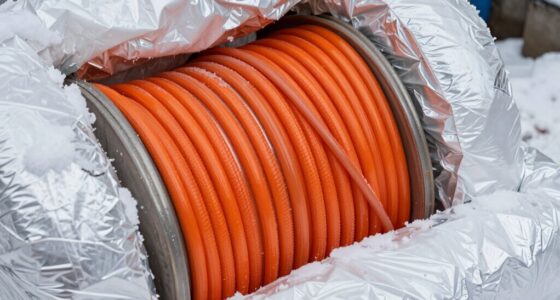
Ice storm outages last so long because ice weakens power lines, damages structures, and causes widespread vegetation failure. Hazardous conditions like icy roads and fallen trees slow repair crews, while limited spare parts and resources further delay restoring power. Damage assessment and safety protocols also take time to make certain repairs are handled properly. To learn more about how to stay safe and prepare, explore the steps you should take first during an outage.

Get backup power and energy gear delivered free with Prime
- Fast, free delivery on millions of items
- Prime Video, Amazon Music and more included
- Member-only deals all year
Key Takeaways
- Ice accumulation weakens infrastructure and causes damage, requiring careful assessment and specialized repairs, which take time.
- Blocked roads and fallen trees delay access for repair crews, prolonging outage durations.
- Limited resources and shortages of critical parts slow down restoration efforts after widespread damage.
- Safety protocols and hazardous conditions extend repair times to prevent accidents and ensure worker safety.
- Prioritizing essential services and thorough damage evaluation are vital, but these steps inherently lengthen outage recovery.
ice storm power line repair tools
As an affiliate, we earn on qualifying purchases.
As an affiliate, we earn on qualifying purchases.
How Ice Accumulation Impacts Power Lines and Infrastructure
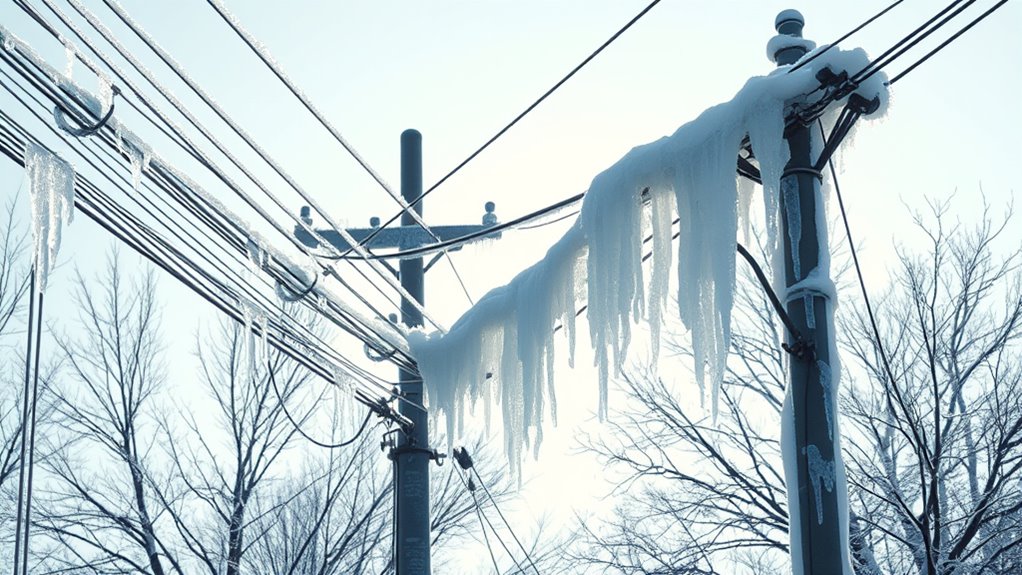
Ice accumulation directly adds weight to power lines and infrastructure, often exceeding their design limits. This extra weight causes lines to sag, increasing tension on poles and hardware, which can lead to mechanical failures. Overloaded lines may snap or break, and poles can topple under the strain, disrupting service. Branches and entire trees covered in ice become heavy and unstable, increasing the risk of falling onto power lines and causing outages. The added weight also stresses transformers and other equipment, making them more prone to damage. As ice builds up, access to damaged sites becomes more difficult, delaying repairs. This can be compounded by infrastructure aging, which reduces the resilience of power systems during ice storms. The combined effects of weight and structural stress considerably prolong restoration times, especially when infrastructure is already aging or compromised. Additionally, appliance maintenance plans can be crucial after outages to ensure that affected electrical equipment is inspected and repaired properly to prevent further issues.
As an affiliate, we earn on qualifying purchases.
The Chain Reaction of Vegetation Damage and Power Outages

When ice coats trees and branches, they become heavy and more likely to collapse onto power lines. This damage can bring down entire sections of the grid, causing widespread outages. As fallen vegetation hits the lines, it often sparks further failures and delays repairs. Additionally, the Free Floating nature of some trees can make them more susceptible to toppling without warning, exacerbating the damage. The presence of trees with high branch density can also amplify the severity of outages during ice storms. Proper vegetation management around power lines can help mitigate some of this damage and reduce outage durations. Implementing regular pruning practices can further decrease the likelihood of branch failure during storms. Promoting native planting in urban and suburban areas can also improve ecosystem resilience and reduce the risk of damage from ice storms.
Iced Vegetation Collapse
How does iced vegetation trigger a cascade of power outages during an ice storm? When ice accumulates on tree branches and whole trees, their weight increases considerably. This added weight causes branches to bend or break and trees to topple, especially if they’re weak or already damaged. As trees fall onto power lines, they can snap conductors or pull down poles, causing immediate outages. The damage often spreads beyond the initial point, knocking out multiple lines and disrupting large areas. Additionally, fallen vegetation blocks access routes for repair crews, delaying restoration. The widespread damage from iced vegetation creates a chain reaction—initial failures lead to further failures—making it harder to quickly restore power and prolonging outages during severe ice storms.
Downed Power Lines
Downed power lines often set off a chain reaction during ice storms, as falling vegetation directly damages electrical infrastructure. When branches or entire trees collapse under ice buildup, they can break power lines, poles, and other equipment. This damage causes outages across large areas, forcing crews to prioritize repairs and navigate hazardous conditions. Downed lines also pose safety hazards, increasing the risk of electrocution. Repairing these lines takes time, especially when access is blocked by ice-covered roads or debris. Heavy equipment and specialized crews are needed to replace damaged poles, transformers, and conductors. Because of limited spare parts and safety protocols, restoration delays extend outages. Recognizing downed lines’ role in outages helps you understand why power restoration can take days during severe ice storms. Proper vegetation management can help reduce the risk of damage and outages during such events. Additionally, emergency response protocols are crucial for safely restoring power and protecting both workers and residents. Implementing vegetation clearance strategies around power lines can significantly decrease the likelihood of damage and improve response times, especially as vegetation management plays a vital role in maintaining the resilience of electrical infrastructure during extreme weather. Understanding the chain reaction caused by vegetation damage emphasizes the importance of proactive maintenance for infrastructure resilience.
As an affiliate, we earn on qualifying purchases.
Why Overhead Lines Are Still the Norm and Their Vulnerabilities
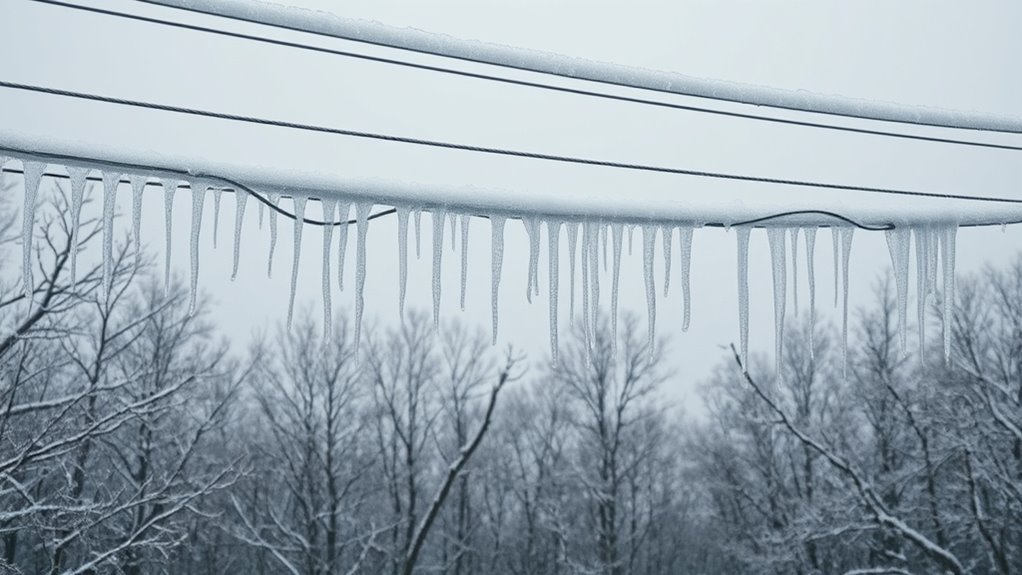
Overhead lines remain common because they’re cheaper to install and easier to access for maintenance. However, their exposure makes them vulnerable to ice accumulation, falling trees, and weather-related damage. Understanding these vulnerabilities helps explain why outages often last longer after ice storms. Additionally, the use of weather-resistant materials in overhead lines can sometimes mitigate damage, but many existing lines lack these features. The durability of overhead lines can be significantly improved with advanced materials, though widespread adoption is still developing. Furthermore, ongoing advancements in material science hold promise for creating more resilient overhead infrastructure in the future. Innovations like composite conductors could offer enhanced strength and ice resistance, further reducing outage durations during severe weather events. Exploring innovative design approaches may also lead to longer-lasting overhead systems capable of better withstanding extreme conditions.
Cost-effective Overhead Design
Despite their vulnerabilities, overhead power lines remain the most cost-effective way to distribute electricity over large areas. They’re easier and cheaper to install than underground systems, especially in rural or expansive regions. Overhead lines require less initial investment, allowing utilities to expand and maintain networks more affordably. Their design simplifies repairs; damaged sections can be replaced quickly, minimizing costs and downtime. Additionally, cost-effective overhead design makes them an attractive option despite weather-related vulnerabilities. However, this overhead setup exposes lines to ice accumulation, falling trees, and severe weather, increasing outage risks. While underground lines offer better protection against ice and falling debris, they come with higher installation and maintenance costs. Overhead designs balance affordability and practicality, making them the go-to choice, even though their vulnerabilities can prolong outages during ice storms. Overhead line vulnerabilities highlight the importance of ongoing infrastructure improvements to mitigate weather-related outages.
Easier Maintenance Access
Maintaining overhead power lines is generally simpler and faster compared to underground systems, which is why they remain the industry standard. Overhead lines are easier to access for inspections, repairs, and upgrades, reducing crew time and equipment needs. You can quickly identify damaged sections through visual inspections, and equipment can be lifted or replaced without digging. This accessibility allows crews to respond faster during outages, especially in emergencies like ice storms. Additionally, water-related issues such as flooding can sometimes impact overhead lines, but their accessibility makes addressing such problems more straightforward. However, this convenience comes with vulnerabilities. Overhead lines are exposed to weather, falling trees, and ice accumulation, increasing the likelihood of damage. The simplicity of access is a double-edged sword, making overhead lines easier to repair but also more susceptible to environmental hazards that prolong outages.
Vulnerability to Weather
Because overhead lines are more accessible and easier to repair, they remain the industry standard despite their exposure to weather hazards. Their vulnerability becomes clear during ice storms when heavy ice accumulation adds weight, causing lines to sag or break, and branches or whole trees to fall, damaging lines and equipment. Overhead systems lack the redundancy of underground cables, so a single damaged pole or line can disrupt large areas. Aging infrastructure and limited spare parts further delay repairs, especially when damaged assets are widespread. Limited visibility into system conditions hampens damage assessment, slowing response times. Weather conditions—icy roads, downed trees, and icy equipment—complicate crew access and safety, prolonging outages and increasing restoration challenges. Additionally, power system design can influence how quickly outages are repaired and how resilient the system is to severe weather events. Improving system resilience through better planning and infrastructure upgrades can help mitigate these prolonged outages during severe weather. Implementing advanced monitoring technology can also enhance damage detection and expedite restoration efforts. Investing in weather-resistant infrastructure can further reduce the duration of outages during ice storms by making systems more durable and easier to repair. A focus on equipment durability and proactive maintenance can also significantly improve response times during severe weather events.
vegetation management tools for trees
As an affiliate, we earn on qualifying purchases.
As an affiliate, we earn on qualifying purchases.
The Challenges of Repairing Damaged Poles, Transformers, and Lines
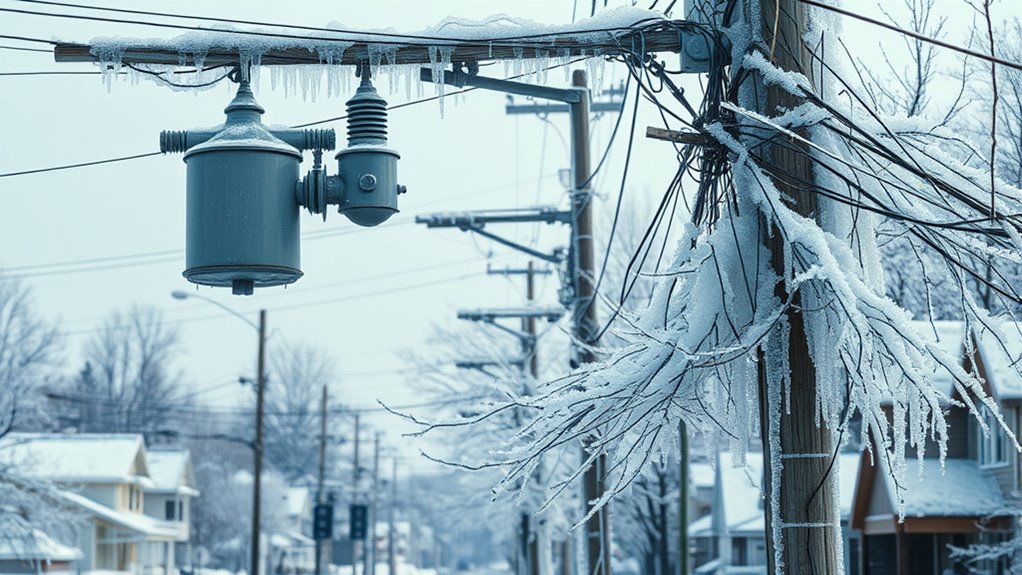
Repairing damaged poles, transformers, and lines during an ice storm presents significant challenges because the ice accumulation weakens infrastructure and complicates access. Ice-covered poles become brittle and more prone to collapse, while transformers and lines are weighed down, increasing the risk of failure. Crews face hazardous conditions, such as icy roads and downed trees blocking routes, slowing their response. Heavy equipment and specialized crews are needed to replace broken poles, swap out transformers, or repair sagging lines, but limited local resources and spare parts delay progress. Safety protocols also slow work; crews must de-energize sections carefully to avoid live-line hazards. All these factors combine to extend repair times, making it harder to restore power efficiently during severe ice storms.
The Role of Limited Spare Parts and Resources During Widespread Damage
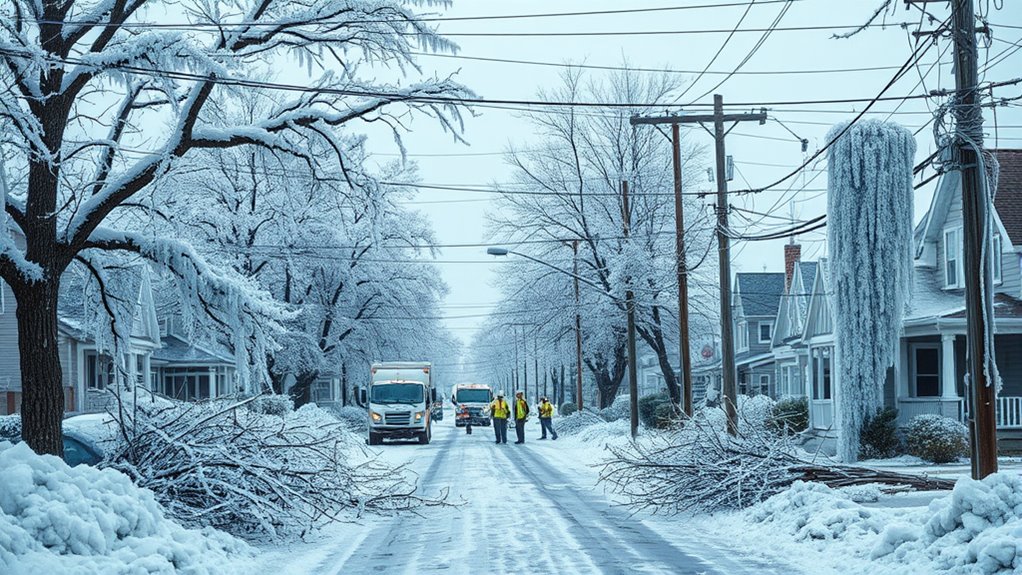
When widespread ice storm damage strikes, your utility may struggle with limited spare parts and supply chain issues, slowing down repairs. Shortages of replacement poles, transformers, and other critical components can cause delays, even after crews arrive on-site. These resource constraints make it harder to restore power quickly, prolonging outages for affected communities.
Limited Spare Inventory
Limited spare inventory considerably hampers recovery efforts during widespread ice storm damage. When multiple components break or get damaged, your utility faces shortages of essential parts, delaying repairs. Limited stockpiles mean crews can’t quickly replace damaged poles, transformers, or crossarms, prolonging outages. To understand the impact:
- Critical parts are in short supply, forcing crews to wait for deliveries.
- Limited specialized equipment slows complex repairs.
- Spare large-pole and transformer inventories are insufficient for widespread failure.
- Lack of immediate resources hampers rapid response, extending outage durations.
This scarcity forces crews to prioritize repairs and often wait for shipments, wasting valuable time. As a result, even after hazards are alleviated, restoring power takes longer, leaving communities in the dark and cold.
Supply Chain Disruptions
Supply chain disruptions considerably hinder recovery efforts during widespread ice storm damage. Limited availability of spare parts and resources slows repairs and prolongs outages. When poles, transformers, and equipment are damaged, you rely on timely deliveries of replacements. If supplies are delayed or scarce, crews face longer waits before restoring power. Shipping bottlenecks, high demand, and damaged transportation routes compound the problem, making it tough to get critical parts where they’re needed most.
| Supply Chain Issue | Impact on Restoration |
|---|---|
| Spare parts shortages | Delays in replacing damaged equipment |
| Transportation disruptions | Slower delivery of essential supplies |
| Limited inventory | Reduced immediate repair capacity |
| Prioritization challenges | Longer waits for less critical repairs |
Delayed Replacement Parts
During widespread ice storm damage, the availability of replacement parts and resources becomes a critical bottleneck that hampers restoration efforts. Limited spare inventory and supply chain delays mean crews often wait days or weeks for essential components. This slows repairs and prolongs outages. To understand the impact:
- Critical transformers and poles are often backordered, delaying repairs for large-scale damage.
- Limited stock of specialized parts forces crews to improvise or reuse damaged components temporarily.
- Transportation delays hinder timely delivery to remote or heavily affected areas.
- Resource constraints reduce the number of available repair crews and equipment, extending outage durations.
Without quick access to parts, crews can’t perform necessary repairs efficiently, forcing communities to wait longer for restored power and increased vulnerability to ongoing hazards.
How Access Difficulties Delay Restoration Efforts
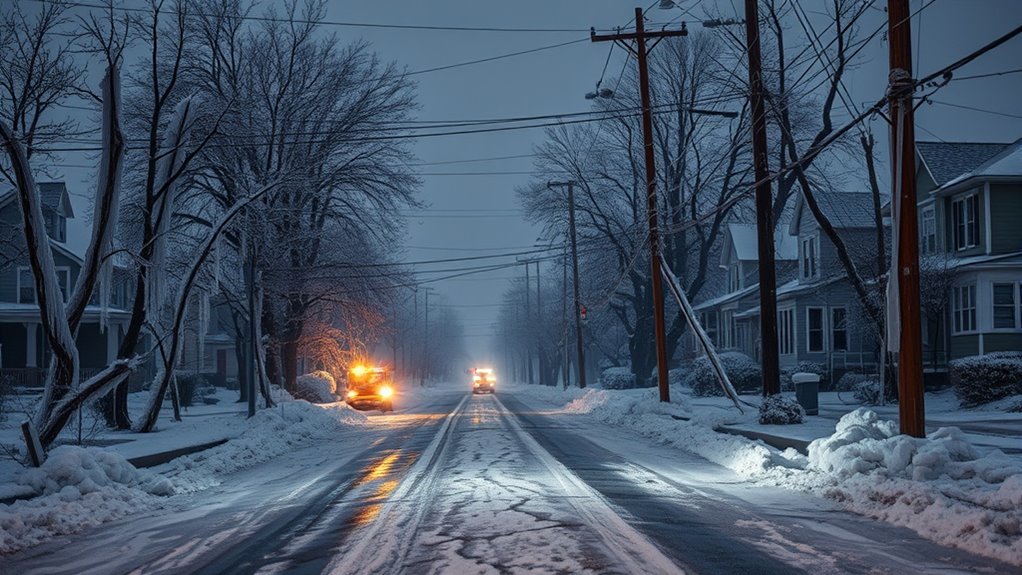
Access difficulties considerably slow down restoration efforts after ice storms because impassable roads, fallen trees, and downed lines block crews from reaching damaged sites quickly. Icy conditions make driving hazardous, causing road closures and delays. Fallen trees and debris often block access routes, requiring specialized equipment to clear before repairs can begin. Downed power lines may be tangled or hidden beneath ice, posing safety risks and requiring careful inspection and de-energizing. Limited access forces crews to reroute, often increasing travel time and delaying critical repairs. In some cases, damaged infrastructure is unreachable until weather conditions improve or additional equipment arrives. These barriers prolong outage durations, making it harder for crews to restore power swiftly and safely.
Why Restoring Power Is a Complex, Multi-Step Process

Restoring power after an ice storm involves more than simply flipping a switch. The process is complex, requiring multiple steps to guarantee safety and reliability. First, crews must assess damage, which can be delayed by inaccessible roads and hidden faults. Second, priority is given to life-saving facilities and critical infrastructure before residential areas. Third, repairs involve specialized equipment, spare parts, and coordinated efforts across multiple teams. Fourth, safety protocols slow progress, as work must be done carefully to avoid live-line hazards and further damage. This layered approach ensures that repairs are thorough and safe, but it also extends outage durations. Understanding these steps helps you appreciate why restoring power takes time, especially during widespread ice storm damage.
The Importance of Situational Awareness and Damage Assessment

Effective situational awareness is essential for efficient power restoration because it provides the detailed understanding needed to prioritize repairs and allocate resources. Without accurate info on damage extent, crews waste time searching for issues and risk missing critical failures. You need a clear picture of damaged poles, downed lines, and blocked access routes. This often involves gathering data from multiple sources—visual inspections, sensors, and reports from field crews. Quickly evaluating damage helps determine which areas to restore first, especially those affecting hospitals or emergency services. It also guides safety decisions, like avoiding live wires or unstable structures. Maintaining up-to-date situational awareness ensures that repair efforts are focused, coordinated, and effective, ultimately reducing outage durations and safeguarding everyone involved.
Health and Safety Risks Associated With Prolonged Outages

Prolonged power outages pose serious health and safety risks that can escalate quickly if not properly managed. Cold temperatures increase the risk of hypothermia and frostbite, especially for vulnerable populations. Without heat or proper shelter, you might face dehydration or respiratory issues. Here are key risks to watch for:
- Exposure to cold—leading to hypothermia or frostbite.
- Food and water contamination—due to spoiled supplies or unsafe water sources.
- Carbon monoxide poisoning—from improper generator use or fuel-burning devices indoors.
- Accidents and injuries—from downed power lines, slippery surfaces, or unsafe repairs.
Staying aware and prepared helps you reduce these dangers. Prioritize safety, monitor health symptoms, and seek medical help if needed.
Immediate Steps Households Can Take to Stay Safe and Prepared
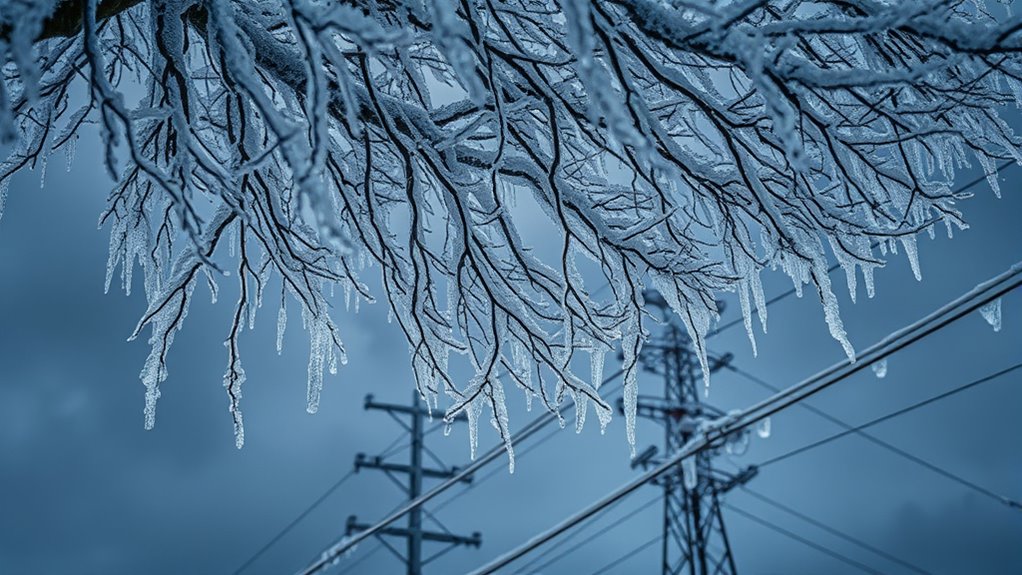
During a power outage caused by an ice storm, taking immediate steps can considerably enhance your safety and preparedness. First, review your household emergency plan, ensuring everyone knows how to stay warm safely and where emergency supplies are stored. Check that your generator, if you have one, is used in a well-ventilated area and that fuel is readily available. Limit opening your fridge and freezer to preserve food, and transfer essential medicines to portable coolers if needed. Conserve phone and device batteries by activating low-power modes, and keep a charged power bank nearby. Report outages to your utility promptly with precise location details. Follow official advisories on travel and avoid downed lines, treating all as energized until authorities confirm safety.
Frequently Asked Questions
How Does Ice Loading Cause Long-Term Damage to Power Infrastructure?
Ice loading causes long-term damage to power infrastructure by increasing weight on conductors and poles, leading to sagging, mechanical failure, and broken components. The added ice makes trees and branches heavier, which can fall onto lines and cause additional damage. Over time, repeated ice accumulation weakens aging infrastructure, causes corrosion, and accelerates deterioration of poles, transformers, and lines. This ongoing stress results in more frequent repairs and longer restoration times.
Why Do Utility Crews Often Require Days to Fully Restore Power?
You might think crews could fix outages quickly, but heavy ice loads cause widespread damage that takes days to repair. Damaged poles, fallen trees, and broken transformers pile up, exceeding local resources. Access is often blocked by icy roads, slowing arrival. Complex repairs require specialized equipment and safety precautions, and coordinating out-of-area crews adds delay. While essential, these efforts are meticulous, making full restoration a process that simply can’t rush.
What Factors Influence the Duration of Outages During Extreme Ice Storms?
Several factors influence how long outages last during extreme ice storms. Heavy ice accumulation weakens lines and causes equipment damage, while fallen trees and debris block access for repair crews. Widespread asset damage and limited spare parts delay repairs. Unsafe conditions, road blockages, and complex repairs also slow restoration. Additionally, prioritization of critical infrastructure and the mobilization of out-of-area crews contribute to longer outage durations.
How Do Inaccessible Roads Impact Repair and Restoration Timelines?
Inaccessible roads considerably delay repair and restoration efforts during ice storms. You might think local crews can quickly access damaged areas, but icy roads and blocked streets slow down equipment and personnel arrival. This impedes damage assessment, delays necessary repairs, and extends outage durations. Even with mutual assistance, travel challenges mean crews spend extra time maneuvering hazardous conditions, ultimately prolonging restoration and leaving communities without power longer than they otherwise would be.
What Role Does the Availability of Spare Parts Play in Outage Duration?
You need spare parts quickly to reduce outage duration. When parts like transformers or poles are damaged, delays happen if supplies aren’t readily available because repairs can’t proceed without them. Limited inventory, especially during widespread storms, forces crews to wait for replacements, prolonging outages. Having a well-stocked inventory helps restore power faster, minimizing inconvenience and safety risks for affected communities.
Conclusion
While ice storms can cast a long shadow over your home, understanding the process behind restoration helps you stay a step ahead. Patience and preparedness are your best allies as crews work through the delicate dance of repairs. By staying informed and cautious, you can navigate these moments more smoothly. Remember, brighter days are ahead—sometimes, it just takes a little time and a touch of hope to see the light again.
Evergreen bestsellers Picks
bestsellers
As an affiliate, we earn on qualifying purchases.