
To use portable lighting safely, always follow manufacturer guidelines and inspect equipment regularly for damage. Position lights to reduce glare, shadows, and heat buildup near flammable materials. Keep batteries in a cool, dry place, and dispose of leaks or swollen cells properly. Make certain lights are stable and secure to prevent falls or accidents. Additionally, get trained on proper setup and safety practices. Continuing with these tips will help you minimize risks and guarantee safe, effective lighting.

Get backup power and energy gear delivered free with Prime
- Fast, free delivery on millions of items
- Prime Video, Amazon Music and more included
- Member-only deals all year
Key Takeaways
- Regularly inspect and maintain lighting equipment to detect potential hazards early.
- Position lights securely, away from flammable materials and direct eye exposure.
- Use recommended batteries and avoid mixing old and new to prevent leaks or overheating.
- Keep lights at a safe distance from your body and surroundings to prevent heat buildup.
- Follow proper safety training and guidelines for setup, operation, and emergency procedures.
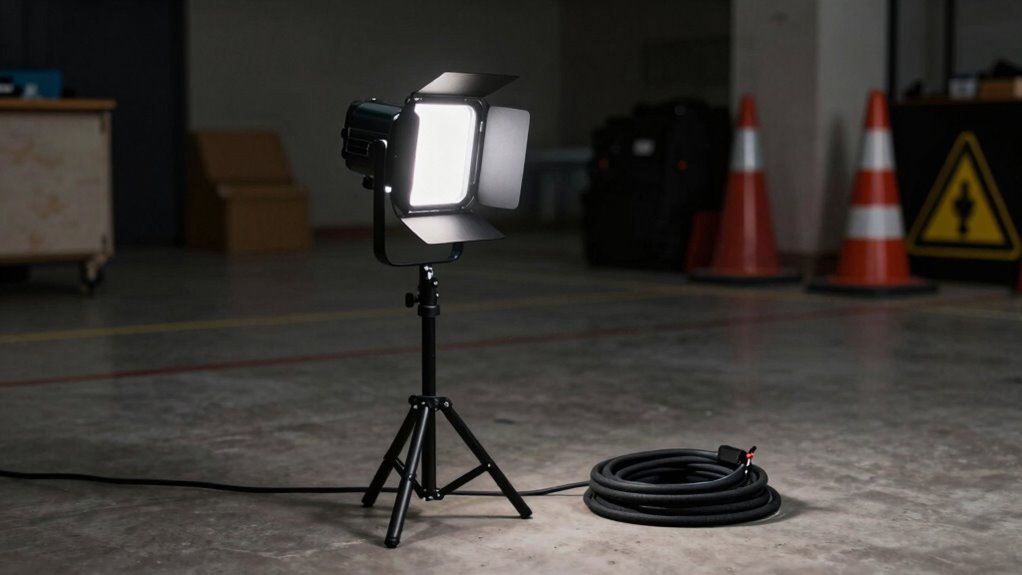
Portable lighting offers convenience and flexibility, but if not used carefully, it can introduce new safety risks. When you’re handling portable lights, especially those powered by batteries, prioritizing battery safety is essential. Always use the recommended batteries and avoid mixing old and new ones, as inconsistent power can lead to overheating or leaks. Keep batteries away from extreme heat or moisture, and never puncture or disassemble them. Properly storing batteries in a cool, dry place helps prevent corrosion and reduces the chance of electrical faults. If you notice any swelling, leaks, or unusual smells from a battery, dispose of it immediately according to local regulations to avoid potential hazards. battery safety should always be a top priority to prevent accidents. Proper lighting placement also plays a crucial role in maintaining a safe environment and maximizing efficiency. Ensuring your lighting equipment is in good condition minimizes the risk of malfunctions or electrical issues that could compromise safety. Regular inspection and maintenance of your lighting gear help identify potential issues before they become hazards. Light positioning plays an indispensable role in both safety and effectiveness. When setting up your portable light, aim to position it so that it illuminates your workspace without causing glare or shadows that could lead to accidents. Keep the light at a safe distance from your body and any flammable materials to prevent heat buildup or fire hazards. Be mindful of the direction you point the light—avoid aiming it directly into your eyes or others’ to prevent temporary blindness or discomfort. Also, make sure the light’s placement is stable and secure; a poorly balanced light can topple, causing damage or injury. Using a sturdy stand or mounting system minimizes the risk of accidents and guarantees consistent illumination where you need it. Additionally, understanding the lighting safety principles can help you avoid potential hazards and ensure a safe environment. Proper training on portable lighting operation and safety procedures can further reduce risks and promote best practices in any setting.
portable LED work light with stand
As an affiliate, we earn on qualifying purchases.
As an affiliate, we earn on qualifying purchases.
Frequently Asked Questions
Are There Specific Safety Certifications for Portable Lighting Devices?
Yes, there are specific safety certifications for portable lighting devices. You should look for certification standards like UL, CE, or CSA, which guarantee the product meets safety regulations. These certifications verify the device has been tested for electrical safety, durability, and proper insulation. Always check for these labels before purchasing or using portable lighting to confirm it complies with safety standards and reduces risks of electrical hazards or malfunctions.
How Often Should Portable Lighting Equipment Be Inspected for Safety?
You should inspect your portable lighting equipment at least monthly to guarantee safety. Regular inspection frequency helps catch issues early, reducing risks. Focus on battery maintenance during each check—ensure batteries are charged correctly and free from corrosion. Proper maintenance prevents malfunctions. Since improperly maintained equipment can fail unexpectedly, staying vigilant with routine inspections and battery care keeps your lighting safe and reliable, preventing accidents and prolonging device lifespan.
Can Portable Lights Be Used Outdoors in All Weather Conditions?
Yes, you can use portable lights outdoors in all weather conditions if they have a weatherproof design. Make sure your lights are rated for the specific environment, like rain or snow, to prevent damage. Also, check the battery performance regularly, especially in cold weather, as it can decrease efficiency. Using weatherproof portable lights with reliable batteries helps you stay safe and effective during outdoor tasks regardless of weather conditions.
What Are the Environmental Impacts of Portable Lighting Batteries?
You should know that portable lighting batteries contribute considerably to environmental waste—about 50,000 tons of lithium-ion batteries end up in landfills annually. These batteries contain harmful chemicals that can leak into soil and water. By practicing proper battery recycling and following environmental regulations, you help reduce pollution. Proper disposal prevents hazardous substances from harming ecosystems and conserves resources through recycling, making your portable lighting use more sustainable.
How Do I Prevent Theft or Misuse of Portable Lighting Equipment?
To prevent theft or misuse of your portable lighting equipment, you should implement strong security measures like locking devices and secure storage. Always keep an eye on your gear and limit access to authorized personnel. Use theft prevention techniques such as tagging equipment and recording serial numbers. Additionally, consider installing security cameras in storage areas. These steps help safeguard your equipment and deter potential theft or misuse effectively.
battery operated safety flashlight
As an affiliate, we earn on qualifying purchases.
As an affiliate, we earn on qualifying purchases.
Conclusion
By following these safety tips, you’ll find that portable lighting can brighten your space without adding new dangers. Sometimes, it’s the little precautions—like checking batteries or secure placement—that make all the difference. And as luck would have it, a simple reminder to stay alert can turn a potential hazard into a safe, reliable source of light. So, enjoy your illuminated adventures, knowing you’ve taken steps to keep risks at bay and your environment secure.
portable floodlight with safety certification
As an affiliate, we earn on qualifying purchases.
As an affiliate, we earn on qualifying purchases.
As an affiliate, we earn on qualifying purchases.
Halloween Picks
halloween
As an affiliate, we earn on qualifying purchases.