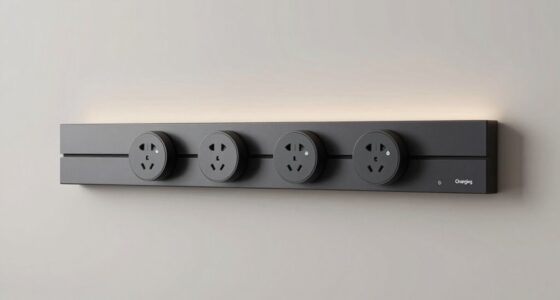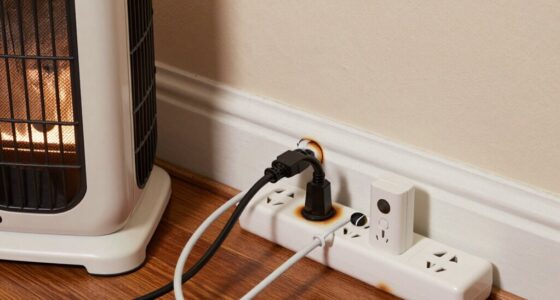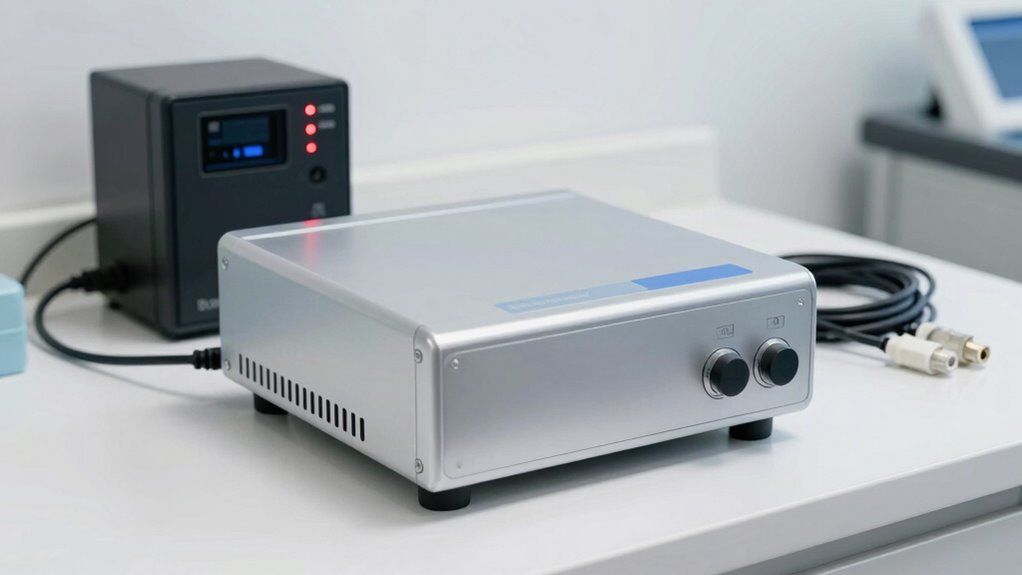
When ensuring backup power for non-medical devices, ask about compatible, certified power sources like UPS units or portable batteries that meet safety standards such as UL 60601-1 and IEC 62133. Verify that your backup systems are fully charged, tested regularly, and can activate immediately during outages. Check alarm and notification systems and confirm circuits are clearly labeled for critical devices. Continuing with these questions will help you better safeguard your equipment and maintain operational reliability.

Get backup power and energy gear delivered free with Prime
- Fast, free delivery on millions of items
- Prime Video, Amazon Music and more included
- Member-only deals all year
Key Takeaways
- Verify backup power sources meet safety standards like IEC 60601-1, UL 60601-1, and IEC 62133.
- Regularly test and maintain emergency systems, including alarms and transfer switches, for immediate response.
- Ensure critical device circuits are clearly labeled and protected from accidental shutdowns during outages.
- Confirm device settings are correct and understand reset procedures for quick recovery after power loss.
- Schedule routine inspections and annual testing of backup power systems to ensure reliability during emergencies.
UL 60601-1 certified UPS backup power
As an affiliate, we earn on qualifying purchases.
As an affiliate, we earn on qualifying purchases.
Understanding Your Backup Power Options for Non-Medical Devices
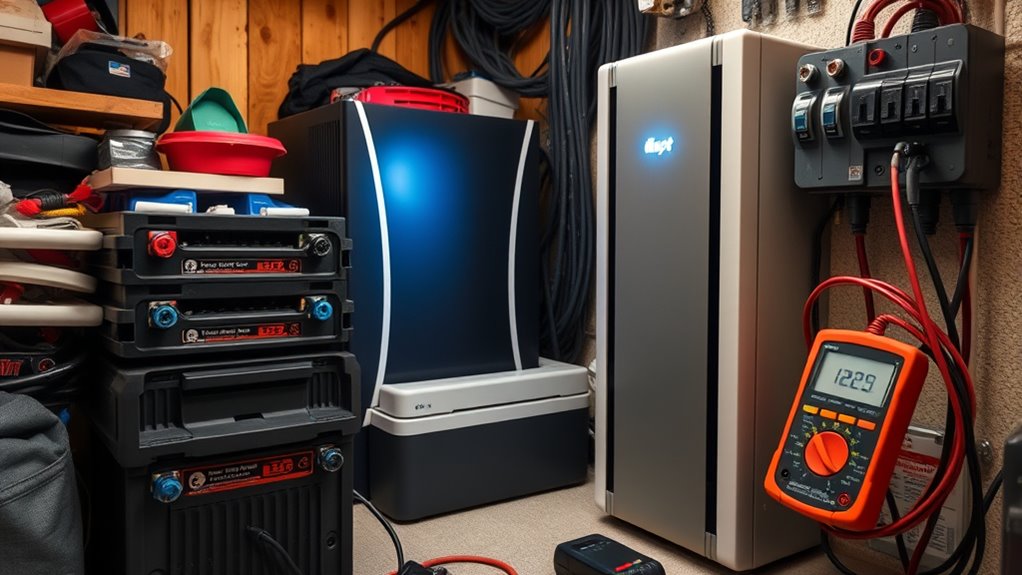
When power outages occur, having reliable backup options for your non-medical devices is essential to maintain comfort and safety. You can use battery backups or portable power stations to keep devices like phones, tablets, or Wi-Fi routers running. External batteries or car adapters are effective for nebulizers, CPAP, or BiPAP machines, ensuring continuous operation. Portable power stations provide hours of energy and are easy to recharge, making them a versatile choice. Keep extra batteries on hand for battery-operated devices, especially if they’re critical. Always verify the runtime of your backup power sources and confirm they are fully charged before an outage. Sizing and load‑planning tools are crucial to ensure your backup power system can handle your essential devices reliably, especially when considering power capacity and device energy requirements. Proper energy management is vital for optimizing backup power performance and avoiding overloads during outages. Additionally, understanding the reliability of backup systems helps ensure your devices remain functional when you need them most. Incorporating backup system testing into your routine can help identify potential issues before an emergency occurs.
portable power station for medical devices
As an affiliate, we earn on qualifying purchases.
As an affiliate, we earn on qualifying purchases.
Ensuring Compatibility and Safety of Power Sources
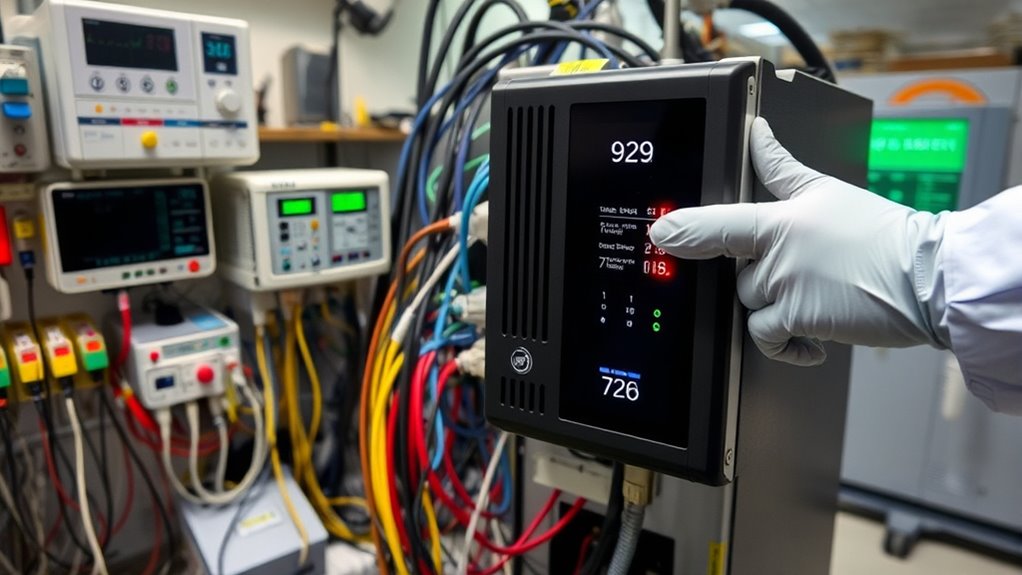
To guarantee your backup power sources are both compatible and safe, you need to verify that they meet relevant safety standards and are suitable for your specific medical equipment. Check that your power sources adhere to IEC 60601-1 for electrical safety and performance, and look for UL 60601-1 certification for insulation, grounding, and shock protection. If using rechargeable batteries, ensure they meet IEC 62133 standards to prevent overcharging and thermal issues. Confirm that your generators comply with NFPA 99 and NFPA 110 standards for essential electrical systems and emergency power. Also, verify that the output type, voltage, and current match your device requirements. Proper certification and compliance ensure safe, reliable operation and minimize risks during power outages. Electrical safety standards are essential to ensure your backup power systems operate correctly and safely. Additionally, inspecting the power source compatibility with your medical devices can prevent potential malfunctions or hazards, and understanding electrical load management can help optimize safety and performance during outages.
external rechargeable batteries for medical equipment
As an affiliate, we earn on qualifying purchases.
As an affiliate, we earn on qualifying purchases.
Verifying Power Source Readiness and Activation
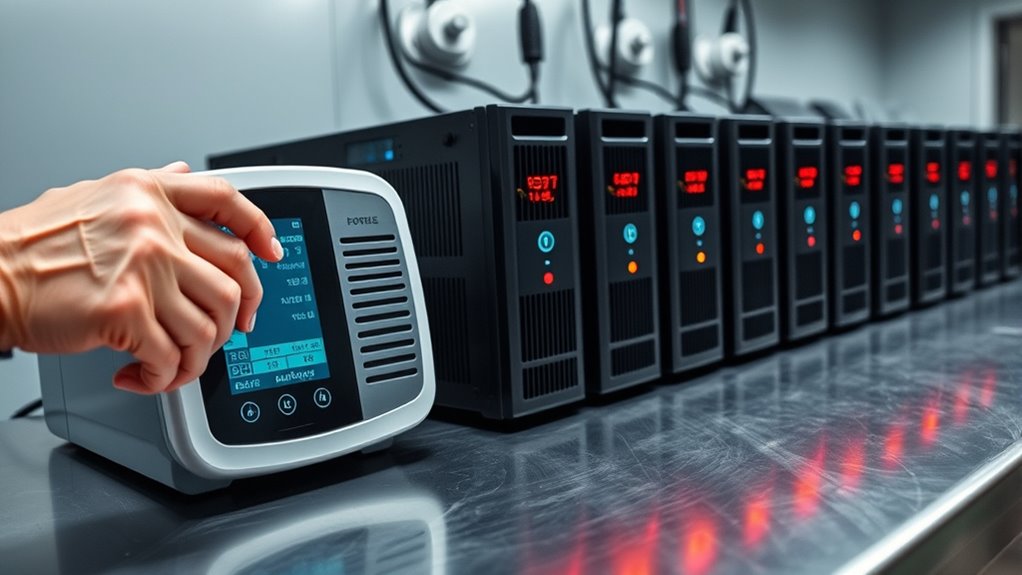
Ensuring your backup power sources are ready to activate promptly during an outage is vital for maintaining patient safety. You need to verify that your systems are fully prepared to respond immediately when power fails. Regular testing and maintenance are essential to confirm activation times align with safety standards. It’s important to check that automatic transfer switches function correctly and that backup systems start without delay. Confirm that alarms alert you to power failures and that the backup power supplies are fully charged and operational. Additionally, understanding filtration and airflow in backup systems can help prevent issues caused by dust or contaminants that might impair performance. Conducting system diagnostics and routine inspections can further enhance the reliability of your backup power setup, ensuring readiness when it’s needed most. Maintaining proper navigation and mapping of your backup power setup can ensure efficient and reliable response during emergencies. Incorporating scheduled testing protocols into your maintenance routine can further improve system reliability and readiness. Moreover, familiarizing yourself with power management systems can help optimize backup performance and ensure seamless operation during critical moments.
As an affiliate, we earn on qualifying purchases.
Assessing Alarm and Notification Systems for Power Failures
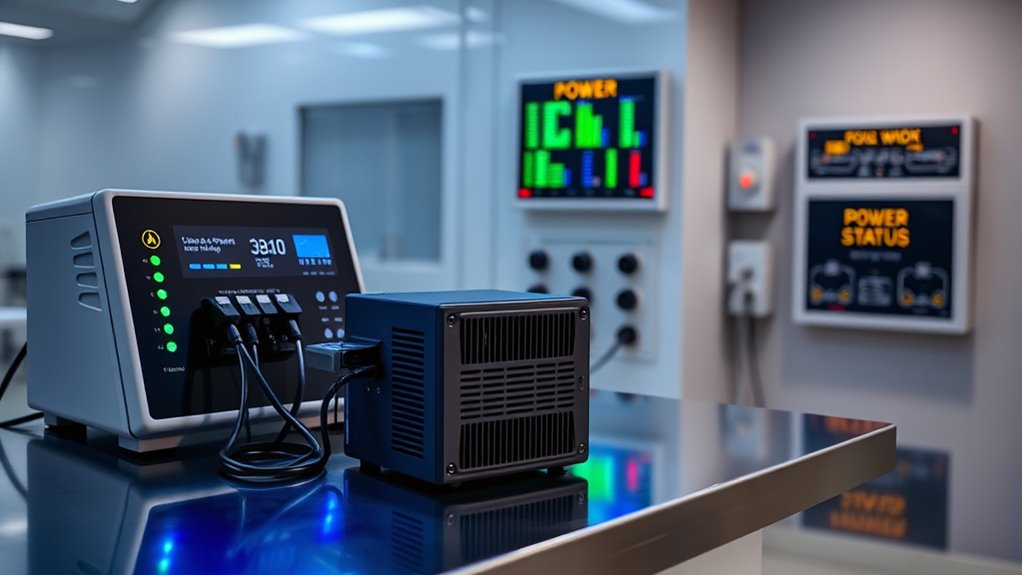
Effective alarm and notification systems are critical for promptly alerting staff to power failures, enabling swift response to protect patient safety. You should verify that alarms activate immediately when power is lost and that notifications reach designated personnel without delay. Test the system regularly to confirm audible and visual alerts function correctly. Ensure backup power sources support alarm operations during outages. Consider integrating multiple alert methods, such as audible alarms, flashing lights, and digital alerts, to enhance visibility. Use the following table to evaluate alarm system features:
| Feature | Importance |
|---|---|
| Immediate activation | Ensures prompt staff notification |
| Multiple alert channels | Increases alert visibility |
| Battery backup support | Keeps alarms operational during outages |
| Clear, distinguishable sounds | Prevents alarm confusion |
| Regular testing and maintenance | Maintains reliable performance |
| Compatibility with backup power | Ensures alarms remain functional during outages |
This compatibility with backup power is essential to guarantee continuous alarm operation during power failures. Additionally, regularly reviewing alarm system performance can help identify potential issues before they impact safety. Keeping detailed records of system tests can further improve reliability and compliance, and incorporating redundant alert systems can provide added assurance during critical situations. Regular system maintenance also plays a vital role in ensuring alarm functionality.
Confirming Proper Device Settings and Reset Procedures
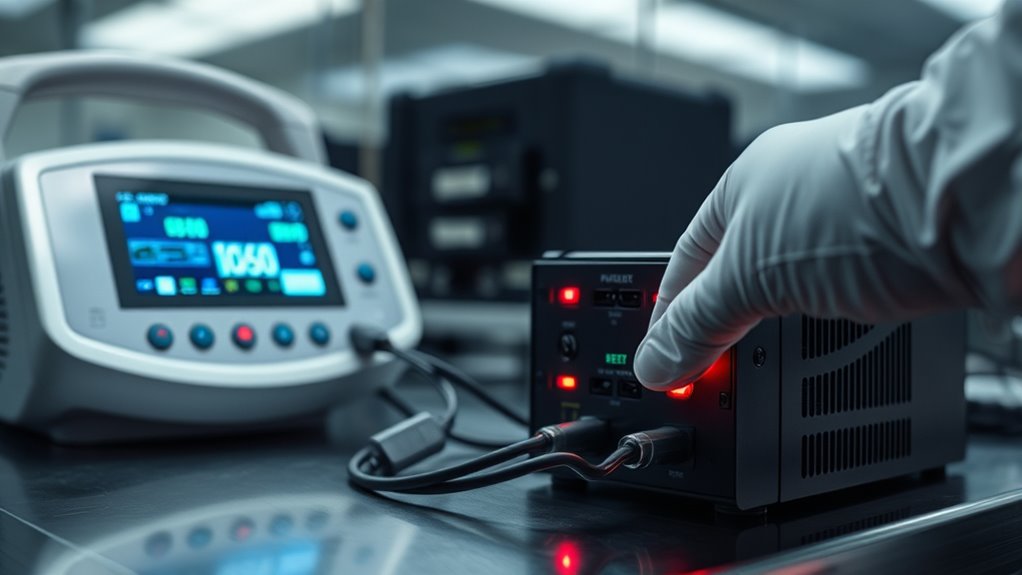
Verifying that medical devices are set correctly and that reset procedures are understood is essential for maintaining patient safety during power disruptions. Properly configured devices ensure they function as intended when power is restored, preventing errors or malfunctions. Reset procedures must be clear, so you can quickly restore devices without confusion or delay. Familiarize yourself with device-specific reset steps, including any safety checks needed before restarting. Confirm that settings such as alarm thresholds, modes, and operational parameters are accurate and intact after power loss. Regularly review manufacturer instructions and perform routine tests to ensure readiness. Incorporating industry trends and best practices can further enhance safety protocols.
Identifying and Marking Dedicated Circuits for Critical Devices
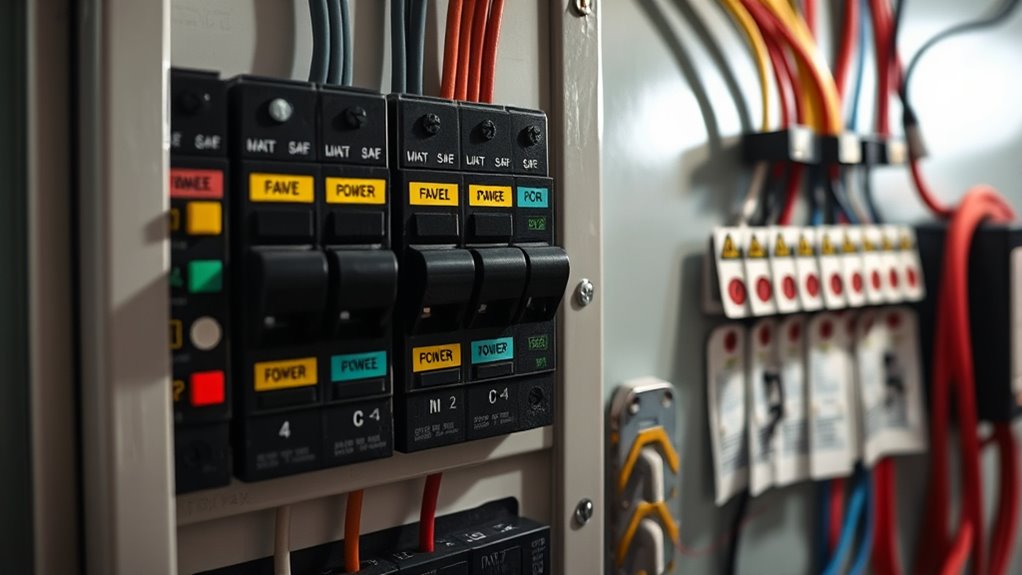
To maintain reliable power to critical devices, you need to identify and clearly mark dedicated circuits in your facility. Start by working with your electrician to locate circuits supplying essential equipment like ventilators, infusion pumps, and monitors. Once identified, label these circuits with durable, easy-to-read tags or color-coded markers to prevent accidental disconnection or switching. Use clear signage near circuit panels to indicate which circuits serve critical devices. This helps staff quickly recognize and avoid turning off these circuits during maintenance or emergency procedures. Regularly review and update markings to ensure accuracy. Proper identification minimizes the risk of power interruptions to life-sustaining equipment, ensuring they remain operational during outages or system testing. Implementing simple, organized systems can further improve safety and reduce confusion during emergencies.
Evaluating Battery Safety and Certification Standards
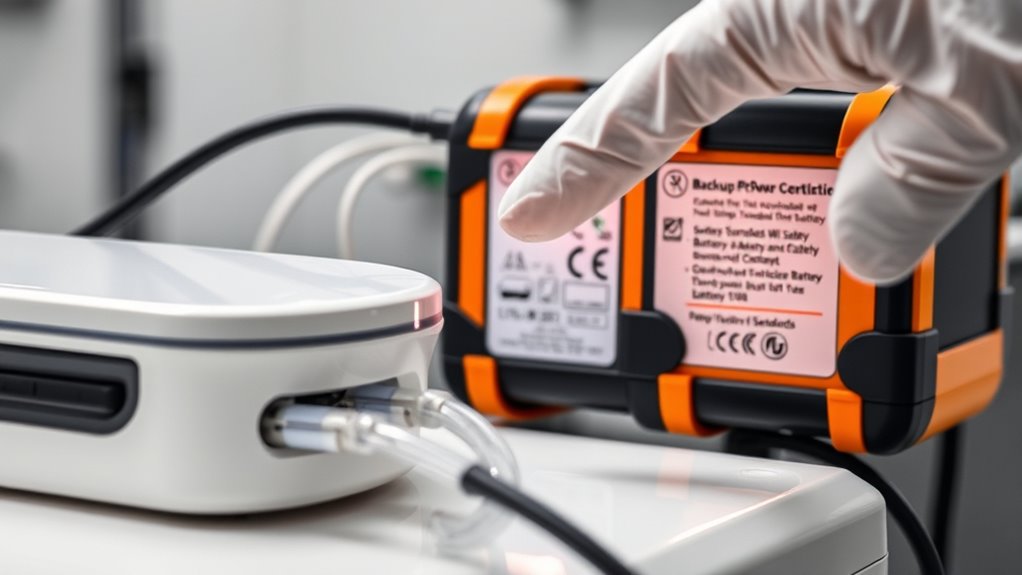
After properly identifying and marking circuits for critical devices, ensuring the safety of backup power sources becomes a top priority. You need to verify that batteries meet strict safety and performance standards. Look for certifications like UL 2054, which tests for fire safety and enclosure integrity, and ISO 13485 for quality management. Make sure batteries are certified for electrical, mechanical, and chemical safety to prevent hazards like overheating or leaks. Additionally, check that rechargeable cells comply with IEC 62133, addressing risks like thermal runaway. By focusing on these standards, you reduce the risk of failure or safety issues during outages. Ensure that certification labels are current and clearly visible to confirm compliance with necessary safety standards. Understanding battery safety standards helps prevent potential hazards and ensures reliable backup power during emergencies, especially when manufacturers adhere to industry-specific safety protocols. A thorough review of safety testing procedures can provide extra assurance of a battery’s reliability and safety.
Planning for Extended Power Outages and Backup Duration

To guarantee your medical devices stay operational during extended outages, you need to accurately assess your backup time requirements. Choosing reliable power sources is vital, especially when supply shortages could occur. Planning ahead helps you maintain critical functions without interruption, no matter the circumstances. Additionally, understanding the reliability of your power sources can help you select the best backup options and ensure continuous operation during emergencies.
Assessing Backup Time Needs
Have you ever considered how long your backup power sources need to sustain critical medical devices during an extended outage? Knowing this guarantees you’re prepared for days without grid power. First, evaluate the power consumption of each device—some may draw more energy than others. Next, estimate the total runtime required, factoring in potential delays in power restoration. Consider how long your backup systems, like UPS units or generators, can operate effectively. Additionally, account for any devices that need continuous power or have specific runtime requirements. Planning ahead prevents surprises and ensures safety.
- Determine the power draw of each device and total load.
- Assess the capacity of your backup systems.
- Identify critical devices needing extended backup.
- Plan for potential delays in power restoration.
Selecting Reliable Power Sources
Planning for extended power outages requires selecting dependable backup sources that can sustain your critical medical devices over time. You need options that match your power needs and offer enough runtime. Consider the following choices:
| Power Source | Runtime | Best Use |
|---|---|---|
| Uninterruptible Power Supply (UPS) | Short-term, instant switch | Protects sensitive devices during brief outages |
| Portable Generator | Hours to days | Suitable for prolonged outages, outdoor use |
| External Battery Packs | Several hours | For mobility and minimal setup |
Ensure your backup source is rated appropriately, easy to maintain, and compliant with safety standards. Test regularly to confirm reliability, and always have a plan for switching to backup power seamlessly.
Planning for Supply Shortages
Preparing for extended power outages requires carefully evaluating your backup capacity to guarantee critical medical devices remain operational. You need to plan for how long your backup systems can sustain essential equipment during prolonged outages. Consider the following:
- Assess the total power requirements and backup duration needed for your devices.
- Calculate fuel or battery reserves necessary for at least 96 hours of operation.
- Confirm that backup generators or batteries meet safety standards like UL 60601-1 and IEC 62133.
- Regularly test your backup systems to verify their readiness and capacity to handle extended outages.
Maintaining and Testing Backup Systems Regularly
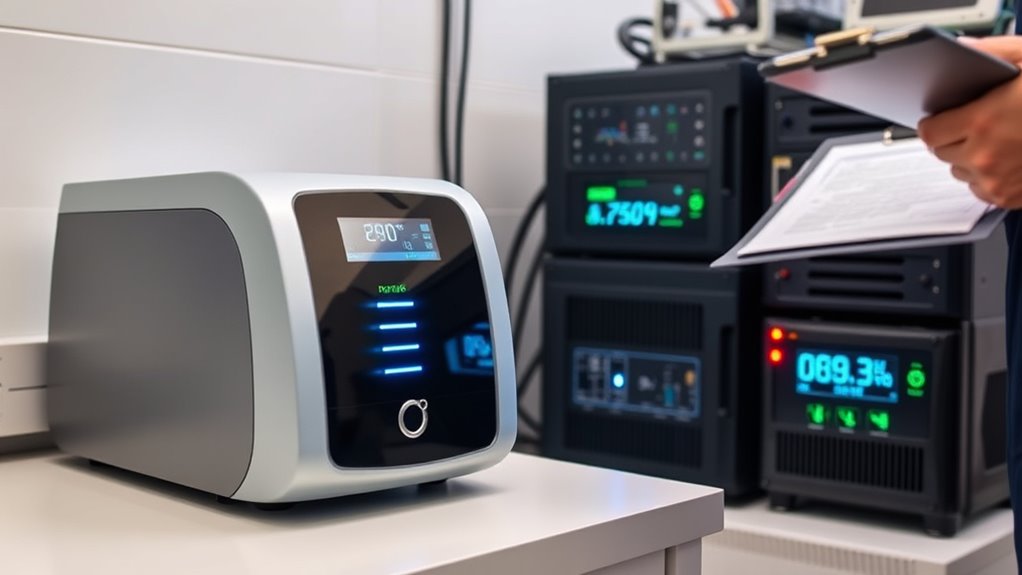
Regular maintenance and testing of backup systems are essential to guarantee they perform reliably when needed. Schedule monthly inspections to check connections, batteries, and switches. Conduct functional tests to ensure systems activate promptly during power outages. Record all maintenance activities for compliance and troubleshooting. Use the table below to understand key testing components:
| Component | Test Frequency | Purpose |
|---|---|---|
| Battery | Monthly | Verify charge and capacity |
| Transfer Switch | Quarterly | Ensure automatic operation |
| Backup Power | Annually | Confirm readiness and runtime |
This process minimizes failure risks, maintains safety, and guarantees your systems support critical devices seamlessly during emergencies.
Frequently Asked Questions
How Often Should I Test My Backup Power System?
You should test your backup power system at least monthly to guarantee it’s ready when needed. Regular testing helps identify potential issues early, so you can address them before an emergency. During each test, verify that the generator starts automatically, all connections are secure, and critical devices receive power without interruption. Keep records of these tests to track performance over time and maintain compliance with safety standards.
Are Portable Batteries Suitable for Long-Term Backup Needs?
While some might think portable batteries aren’t ideal for long-term backup, they can be suitable if you choose high-capacity models and maintain them properly. Look for batteries with extended runtimes, proper charging cycles, and safety certifications. Keep extra batteries on hand, and make sure they’re fully charged before emergencies. Regularly test and store them correctly to ensure reliable power when you need it most.
What Safety Precautions Are Needed When Handling Backup Batteries?
When handling backup batteries, you need to follow safety precautions to prevent accidents. Always wear protective gear like gloves and goggles, handle batteries in well-ventilated areas, and avoid exposing them to heat or open flames. Do not puncture or crush batteries, and keep them away from water. Follow manufacturer instructions for charging and disposal, and regularly inspect for damage or leaks. Proper handling minimizes risks of fire, chemical exposure, and electrical hazards.
Can Non-Medical Backup Devices Interfere With Medical Equipment?
Non-medical backup devices can be like thunderclaps disrupting a calm lake, causing electrical noise or surges that interfere with sensitive medical equipment. To prevent this, guarantee proper grounding, use surge protectors, and keep non-medical devices separate from medical circuits. Regularly inspect and maintain these devices, and follow manufacturer guidelines to minimize risks. Staying vigilant helps protect your critical medical equipment from unintended electrical disturbances.
How Do I Ensure Backup Power Remains Reliable During Emergencies?
To guarantee your backup power stays reliable during emergencies, you should regularly test and maintain your systems, like generators and UPS units. Confirm they activate instantly when needed, and keep fuel and batteries fully charged. Follow manufacturer instructions for setup, and verify compliance with safety standards such as NFPA and UL. Additionally, mark dedicated circuits for critical devices and perform routine drills to confirm everything functions smoothly under stress.
Conclusion
Did you know that over 70% of backup power failures happen due to overlooked maintenance or improper setup? Regularly testing and verifying your backup systems guarantees your devices stay safe and reliable during outages. By understanding your options and following safety checks, you can prevent potential hazards and keep everything running smoothly. Stay proactive—your safety depends on it. Proper planning now can save you from costly surprises later.
Halloween Picks
halloween
As an affiliate, we earn on qualifying purchases.