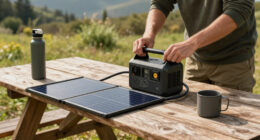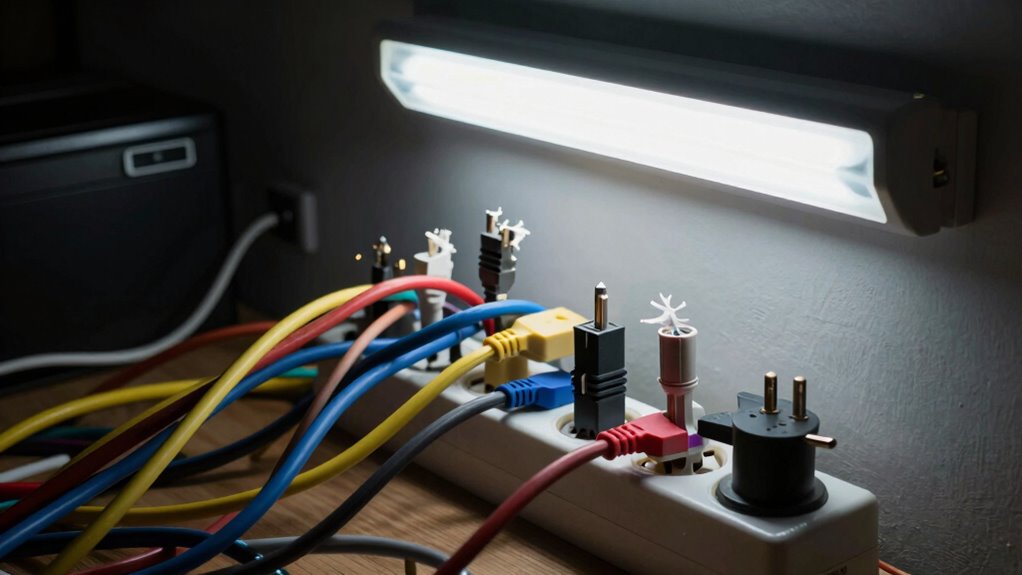

During an outage, your plug layout becomes critical for safety and efficiency. Proper organization helps prevent overloads, reduces fire risks, and guarantees essential devices stay powered. Knowing your circuit capacity and prioritizing critical gadgets like lights and communication tools keep your home functioning smoothly. Using surge protectors and spreading devices across outlets minimizes damage risks. A smart layout keeps your system resilient and safe. Continue exploring to discover how to maximize your setup for any outage scenario.

Get backup power and energy gear delivered free — and shop member deals
- Fast, free delivery on millions of items
- Access to Prime Big Deal Days deals on October 6–7
- Prime Video, Amazon Music and more included
Key Takeaways
- Proper plug layout prevents overloads and electrical fires during power outages.
- Strategic placement ensures critical devices remain operational when power is limited.
- Organized wiring reduces the risk of short circuits and electrical faults.
- Effective load distribution maintains system safety and device protection during outages.
- Regularly tested and maintained plug setup ensures reliability in emergency situations.
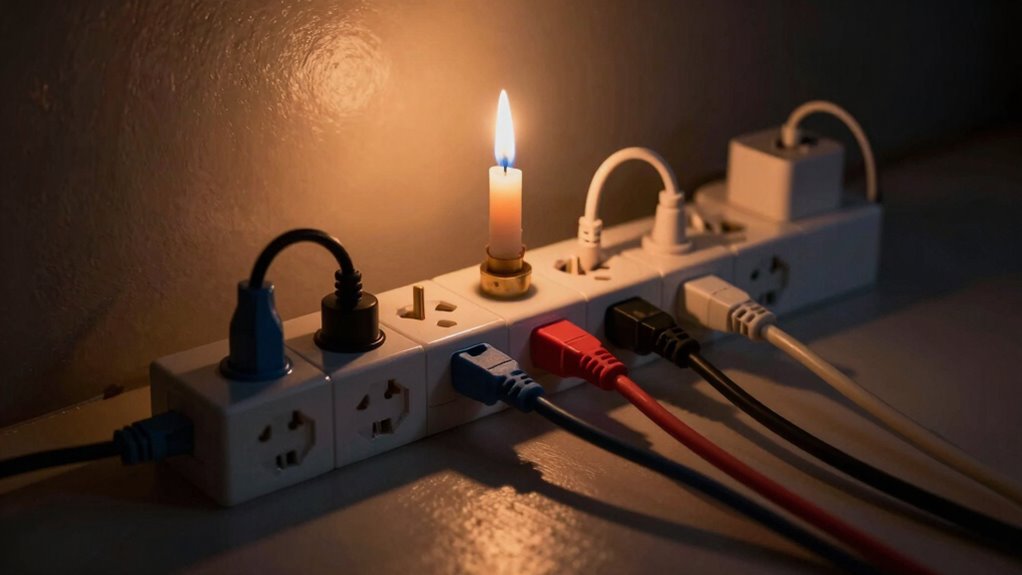
During power outages, having a well-planned plug layout guarantees your devices stay protected and functional. When the power goes out unexpectedly, chaos can quickly follow if your electrical setup isn’t organized. A strategic plug layout ensures you prioritize essential devices, reduce the risk of overloads, and maintain circuit protection. This planning is an essential part of emergency preparedness because it helps you respond swiftly and safely during stressful situations. Knowing which outlets to use and how to distribute your power load minimizes the chance of tripping circuit breakers or causing electrical fires.
A key aspect of an effective plug layout is understanding your electrical capacity. You need to be aware of the total load your circuits can handle and avoid plugging everything into a single outlet or circuit. Overloading can damage your devices, trip circuit protection devices like circuit breakers, and even result in dangerous electrical issues. By spreading out your devices across multiple outlets, you prevent overloads and ensure that each circuit remains within safe limits. This approach not only protects your equipment but also reduces the risk of power outages worsening due to electrical faults. Having a comprehensive understanding of electrical capacity is crucial for safe and effective load management during emergencies.
In addition to load management, your plug layout should prioritize critical devices during outages. Think about what you need immediately—such as lights, a refrigerator, or emergency communication devices—and plan to connect these first. Using power strips with surge protectors can help guard against voltage spikes that sometimes occur when power is restored. Properly positioning outlets for easy access to essential devices minimizes the time you spend fumbling in the dark or trying to access hard-to-reach sockets. This efficiency can be indispensable in emergency situations, where every second counts.
Your preparedness strategy should also include regularly testing your plug setup to identify potential issues before an outage occurs. Check that all cords and outlets are in good condition, and ensure your surge protectors and extension cords are rated for your intended load. This proactive approach keeps your electrical system resilient and ready to handle unexpected power disruptions. Proper circuit protection measures, like circuit breakers and surge protectors, act as safety nets, preventing electrical damage and keeping you safe. Additionally, understanding your electrical capacity helps you make informed decisions about device placement and load distribution, ensuring your setup remains safe and effective during emergencies.
As an affiliate, we earn on qualifying purchases.
Frequently Asked Questions
How Can I Test My Plug Layout Before an Outage?
To test your plug layout before an outage, start by conducting electrical safety checks, guaranteeing all connections are secure and properly labeled. Use connection troubleshooting tools like a multimeter to verify each plug’s continuity and correct wiring. Run a detailed test in a controlled environment, simulating outage conditions to identify potential issues. This proactive approach ensures your plug layout is reliable, reducing risks and improving safety during an actual outage.
What Tools Are Best for Inspecting Plug Connections?
You should use reliable inspection tools like a multimeter or a thermal camera to check your plug connection. A multimeter helps you test for proper voltage and continuity, ensuring each connection is solid. Thermal cameras can detect heat variations indicating loose or faulty connections. Regularly inspecting with these tools allows you to catch issues early, minimizing outage risks and maintaining system safety and performance during critical times.
How Often Should Plug Layouts Be Inspected and Maintained?
Think of your plug layout as the backbone of electrical safety—neglect it, and risks multiply. You should inspect and maintain your plugs at least once a year, especially before peak usage seasons. Regular preventive maintenance guarantees connections stay secure, preventing potential hazards. Staying vigilant with inspections keeps electrical safety top priority, reduces outages, and prolongs equipment life, making your system reliable and safe when it matters most.
Can Improper Plug Layout Cause Equipment Damage?
Yes, improper plug layout can cause equipment damage by disrupting equipment safety and compromising power reliability. When plugs aren’t properly positioned, it can lead to short circuits, overloads, or electrical faults, risking damage or failure of connected devices. Ensuring a correct plug layout maintains proper electrical flow, protects equipment, and guarantees reliable power delivery, especially during outages when stability and safety are most critical.
What Should I Do if I Find Faulty Connections During an Outage?
First, fix faulty connections promptly to prevent further damage. Prioritize electrical safety by shutting off power before troubleshooting. Use troubleshooting tips like inspecting for loose or damaged plugs, and avoid forcing connections. If you’re unsure, don’t hesitate to seek professional help. Remember, safety always comes first, so handle faulty connections carefully during an outage to avoid accidents or equipment harm. Proper precautions protect both you and your equipment.
outlet extension cord with surge protection
As an affiliate, we earn on qualifying purchases.
As an affiliate, we earn on qualifying purchases.
Conclusion
So, next time the power goes out, remember that your plug layout isn’t just about convenience—it could be your safety net. Some experts believe that a well-planned layout minimizes the risk of overloads and electrical fires during outages. While this theory isn’t universally proven, it’s worth considering. Properly organizing your plugs might just make the difference between a quick, safe recovery and a costly mishap. Don’t overlook the power of smart planning during those critical moments.
As an affiliate, we earn on qualifying purchases.
emergency power strip for outages
As an affiliate, we earn on qualifying purchases.
As an affiliate, we earn on qualifying purchases.
Fall Picks
fall essentials
As an affiliate, we earn on qualifying purchases.