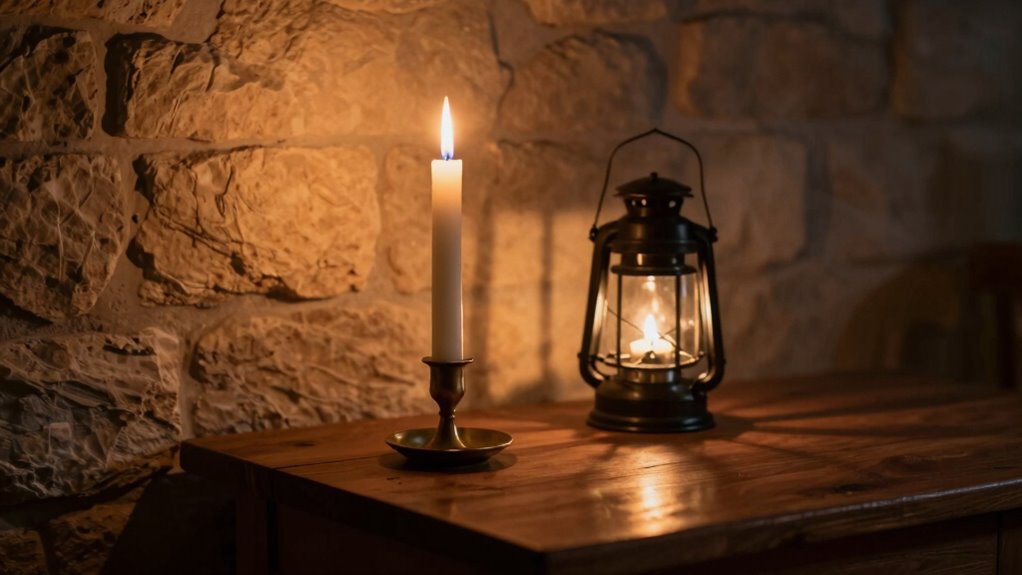

During outages, candles can be used safely if you follow strict guidelines—place them on stable, heat-resistant surfaces, keep them away from flammable materials, and never leave them unattended or when sleep is near. However, if you have children, pets, or residents with special needs, it’s safest to avoid candles altogether and opt for battery-powered lights. Proper placement and aware behaviors greatly reduce fire risks, and understanding these precautions helps protect your household; learn more to keep everyone safe.

Get backup power and energy gear delivered free with Prime
- Fast, free delivery on millions of items
- Prime Video, Amazon Music and more included
- Member-only deals all year
Key Takeaways
- Candles are unsafe in homes with infants, children, or cognitively impaired individuals due to increased fire risk.
- Never use candles in homes with medical oxygen or around drafts, open windows, or curtains.
- Candles should only be used if placed on stable, heat-resistant surfaces and kept at least 12 inches from combustibles.
- Avoid leaving candles unattended, especially during sleep or absence; use battery-powered lighting instead.
- In emergencies, opt for flashlights, rechargeable lanterns, or flameless LED candles for safer illumination.
Recognizing High-Risk Household Situations
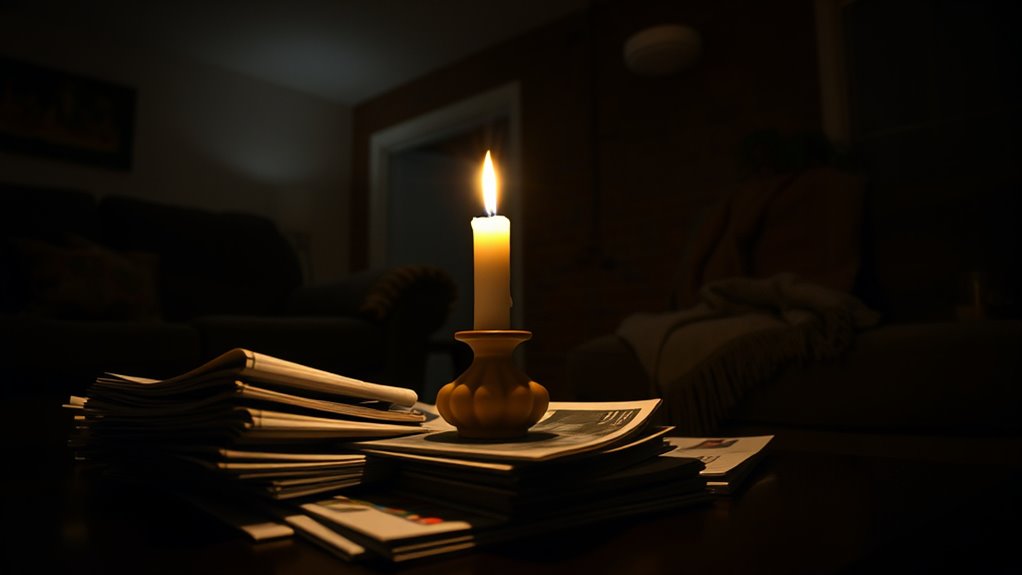
Certain household situations considerably increase the risk of candle fires during outages. If you have infants, young children, or cognitively impaired residents, using candles becomes highly dangerous because of the risk of tipping, burns, or ingestion. Medical oxygen at home creates an explosive environment, so candles are a strict no-go. Drafty areas, ceiling fans, or unsecured curtains within 12 inches of a candle substantially raise the chance of flames igniting nearby materials. If you can’t supervise an open flame continuously—like when sleeping or leaving the room—candles shouldn’t be used. Homes filled with loose combustibles such as paper stacks, bedding, or decorations also increase fire risk. Recognizing these situations helps you avoid dangerous candle use and prioritize safer lighting options during outages. Additionally, reliance on cloud services like Office 365 or Azure during outages can impact emergency communication and coordination, so having alternative communication methods is advisable. Being aware of your household’s fire safety risks and understanding piercing care and hygiene can help you make more informed decisions during power outages and ensure safety for everyone in your home. It is also important to have fire extinguishing tools readily available to quickly respond to any accidental fires.
Safer Lighting Alternatives During Power Outages
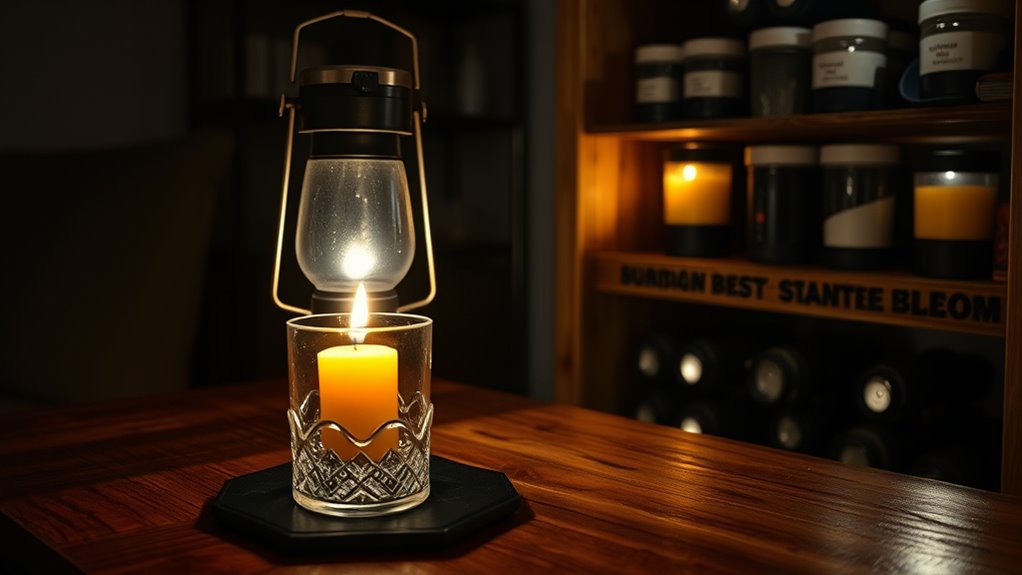
During power outages, relying on candles can pose significant safety risks, especially in households with vulnerable residents or conditions that increase fire hazards. Safer lighting alternatives include flashlights and battery-powered lanterns, which provide reliable illumination without fire risks. LED rechargeable lanterns and headlamps allow hands-free use for cooking, navigation, or first aid, reducing trip hazards. Glow sticks and chemical light sticks offer low-intensity, portable light for children or confined spaces when batteries run low. Battery-powered “flameless” LED candles mimic candlelight ambiance without combustion, eliminating soot and tip-over dangers. Solar-charged or hand-crank radios combined with lanterns extend communication and lighting during prolonged outages. Incorporating emergency preparedness into your plan can further improve safety during extended outages. Understanding lighting safety measures helps prevent accidental fires and ensures proper visibility in emergency situations. These alternatives help you stay safe, reduce fire risk, and ensure visibility without the hazards associated with open flames. Additionally, choosing energy-efficient lighting options can help conserve battery life and reduce the need for frequent replacements during extended outages. Proper storage of batteries and fuel can also prevent leaks or fires that might occur with improper handling, and keeping these supplies in a cool, dry place further enhances their safety and longevity.
Proper Candle Placement and Engineering Controls
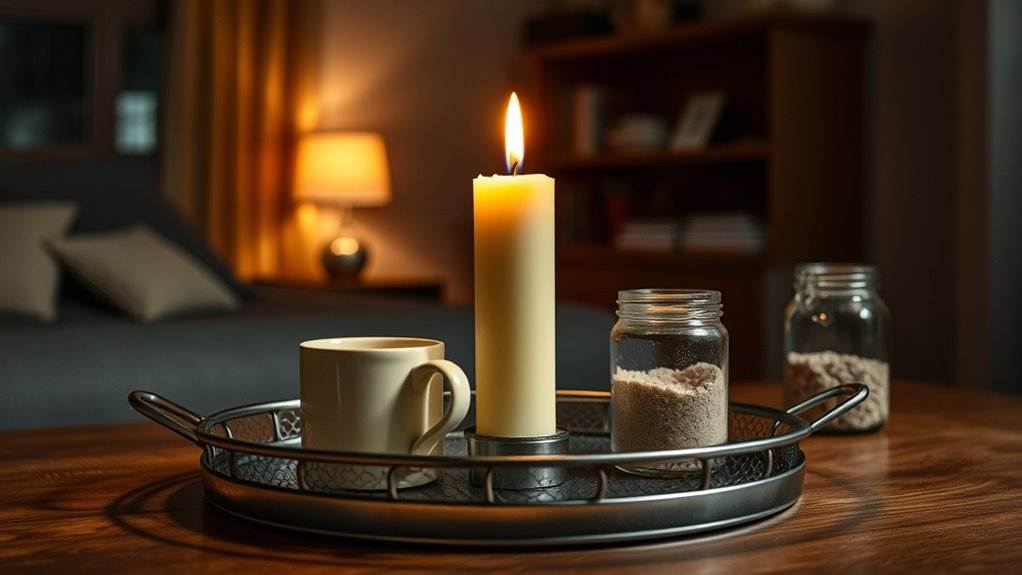
To minimize fire risks when using candles during outages, you must carefully consider placement and engineering controls. Always choose broad-based pillar or container candles on stable, heat-resistant surfaces like metal trays or ceramic plates to prevent tip-overs and contain drips. Enclose candles in certified glass hurricane globes or chimneys to shield flames from drafts and reduce ember escape. Keep candles at least 12 inches away from combustible materials and maintain a minimum of 3 inches between burning candles to prevent heat transfer and improper burning. Position candles out of walkways and high-traffic areas, placing them on elevated, secure surfaces inaccessible to children and pets. Trim wicks to 1/8–1/4 inch before lighting and limit burn time per manufacturer instructions to control flame size and soot. Proper candle placement is essential for reducing accidental fires and ensuring safe use during outages. Additionally, selecting appropriate candle types designed with safety features can further mitigate risk. Being aware of fire safety principles and understanding proper candle engineering controls can also help in preparing a safer environment during power outages. Incorporating ventilation considerations can further reduce the buildup of smoke and fumes in enclosed spaces.
Human Behavior and Rules for Candle Use
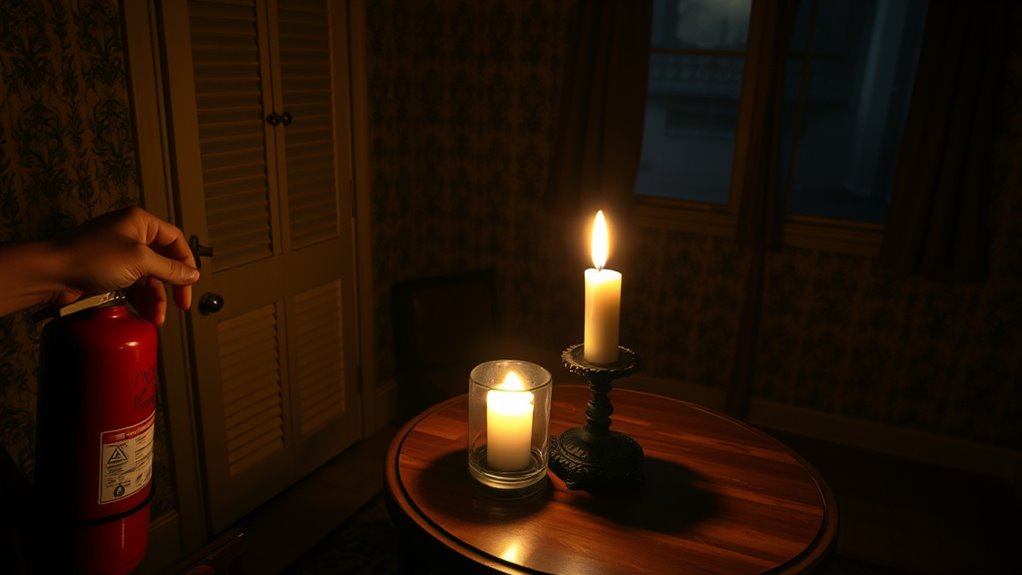
Human behavior plays a critical role in candle safety, as many fires start when flames are left unattended or misused. To stay safe, follow these rules:
- Never leave burning candles unattended; extinguish them before leaving the room or going to sleep.
- Avoid carrying lit candles—use flashlights or headlamps to navigate during outages.
- Extinguish candles immediately if they flicker excessively, smoke, or the flame becomes unstable.
- Keep matches and lighters out of children’s reach and store candles away from flammable items.
- Be aware of affiliate disclosure policies when purchasing candles or accessories online to support safety products.
These habits reduce the risk of accidental fires. Incorporate them into your household outage plan, designating a supervised candle station and battery-powered lighting as primary alternatives. Staying vigilant protects your home and loved ones.
Emergency Supplies and Storage Tips for Candle Safety
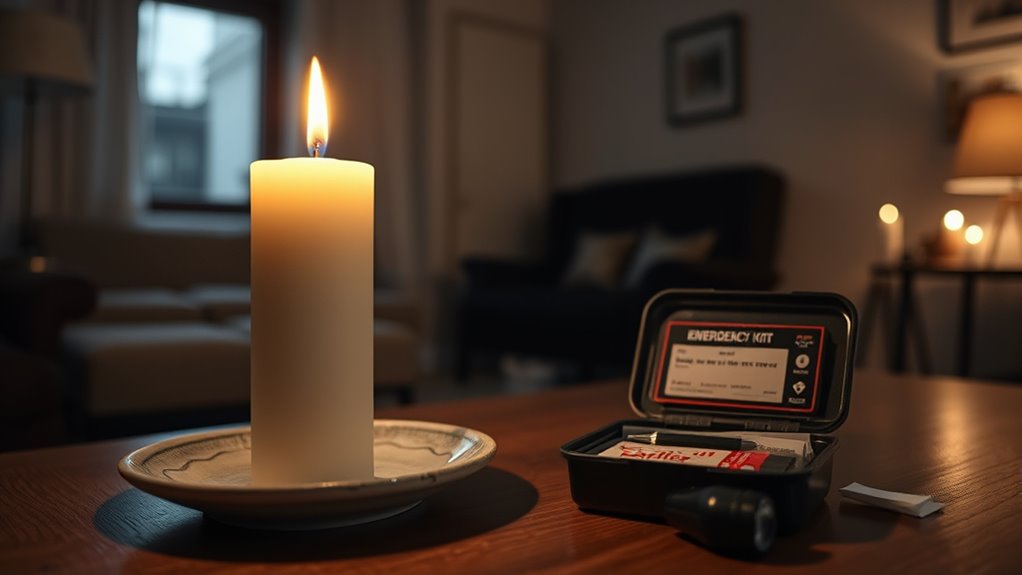
Proper storage of emergency lighting supplies is key to candle safety; keep candles, lighters, and matches in cool, dry places away from sunlight and heat sources. Stock enough long-lasting candles and sturdy holders to last through extended outages, and rotate supplies regularly to guarantee they remain usable. Having reliable, battery-powered lighting options on hand reduces the temptation to rely on candles and minimizes fire risks during outages. Additionally, understanding water safety in the context of outages can help prevent accidents related to water and electrical hazards. Awareness of thermal behavior can help you better manage heat sources and prevent accidental fires during power outages. Incorporating smart home principles, such as integrated emergency lighting systems, can further enhance safety and reduce reliance on candles. Considering fire prevention strategies and proper extinguishing methods is essential in minimizing fire risks. Incorporating sound healing science principles can also be useful in creating a calming environment during stressful outages, reducing panic and promoting safety.
Proper Storage Practices
Storing candles safely is essential to prevent accidental fires and injuries during outages. Proper storage minimizes risks from tip-overs, spills, and unauthorized access. Using fire-resistant containers can further enhance safety by containing any potential mishaps. Keep candles in a cool, dry place away from direct sunlight and heat sources to prevent melting or weakening. Store candles in sturdy, noncombustible containers or boxes, and avoid keeping them near flammable materials like paper or fabric. Secure lighters and matches separately, out of reach of children, and avoid storing candles and ignition sources together. Additionally, choosing appropriate storage materials can help maintain the integrity of your candles over time. Regularly inspecting your candles for wear and damage ensures they remain reliable for emergency use. Rotate your candle supplies regularly, checking for cracks or damage, and make sure they remain fully functional for emergency use. Following these practices reduces hazards, keeps your supplies ready, and helps maintain a safe environment during outages.
Essential Emergency Lighting
Having your emergency lighting supplies well-organized and accessible can make a significant difference during outages. You should store durable flashlights, spare batteries, and rechargeable lanterns in a designated, easy-to-reach spot. Avoid keeping candles as your primary light source, but if you must, select long-burning, broad-based options with sturdy holders. Use clear containers or hurricane globes to shield flames and prevent accidents. Place candles on heat-resistant surfaces, away from drafts and flammable materials. Here’s a quick guide:
| Supplies | Storage Tips |
|---|---|
| Flashlights & batteries | Store in a cool, dry place; check periodically |
| Rechargeable lanterns | Keep charged and ready for use |
| Candles & holders | Keep in accessible, stable containers; rotate regularly |
| Emergency radio | Store with batteries; test periodically |
Proper storage and quick access ensure safe, effective emergency lighting. Additionally, understanding the differences between small appliance safety and proper maintenance can help prevent accidents during emergencies.
Common Causes of Candle-Related Fires and Injuries
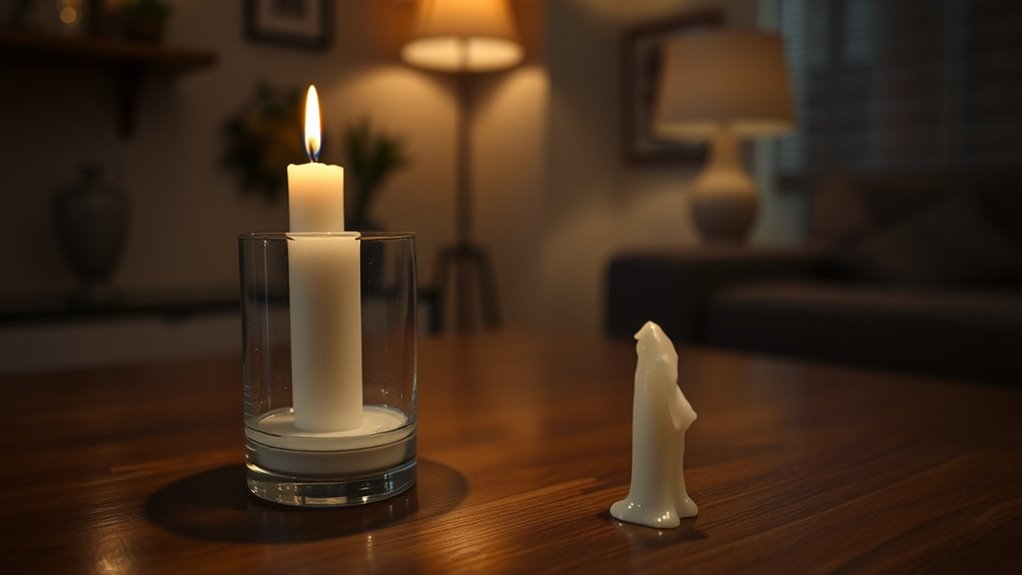
Many candle fires start when flames are left unattended or placed too close to flammable materials. You might accidentally ignite a fire if candles are positioned improperly or knocked over. Staying alert and placing candles safely can help prevent these common hazards.
Unattended Flames Ignite
Unattended flames are a leading cause of candle-related fires and injuries because when you leave a burning candle unsupervised, it can tip over, ignite nearby objects, or flicker uncontrollably. These risks happen quickly and often without warning. To prevent fires, be aware of common causes:
- Leaving candles burning when you sleep or leave the room.
- Placing candles near curtains, paper, or bedding.
- Using candles on unstable or heat-sensitive surfaces.
- Forgetting to extinguish candles after use or before leaving the house.
Always supervise candles while lit, place them on stable surfaces, keep them away from flammable materials, and extinguish them before leaving or sleeping. Proper care minimizes the risk of unattended flames igniting a fire.
Improper Placement Risks
Improper placement of candles substantially increases fire and injury risks during outages. If you place candles near flammable materials like curtains, paper, or bedding, you risk igniting a fire quickly. Setting candles on unstable surfaces or near edges can cause them to tip over, spilling hot wax and starting fires. Keep candles away from drafts, fans, or open windows, which can cause unpredictable flickering or flames. Position candles in secure, heat-resistant holders on stable surfaces, at least 12 inches from combustibles, and out of high-traffic zones. Never place candles where children or pets can reach them, and avoid crowded spaces. Proper placement minimizes accidental tipping, contact with flammable objects, and uncontrolled flames, making your outage safety plan more effective.
When to Avoid Candles Altogether
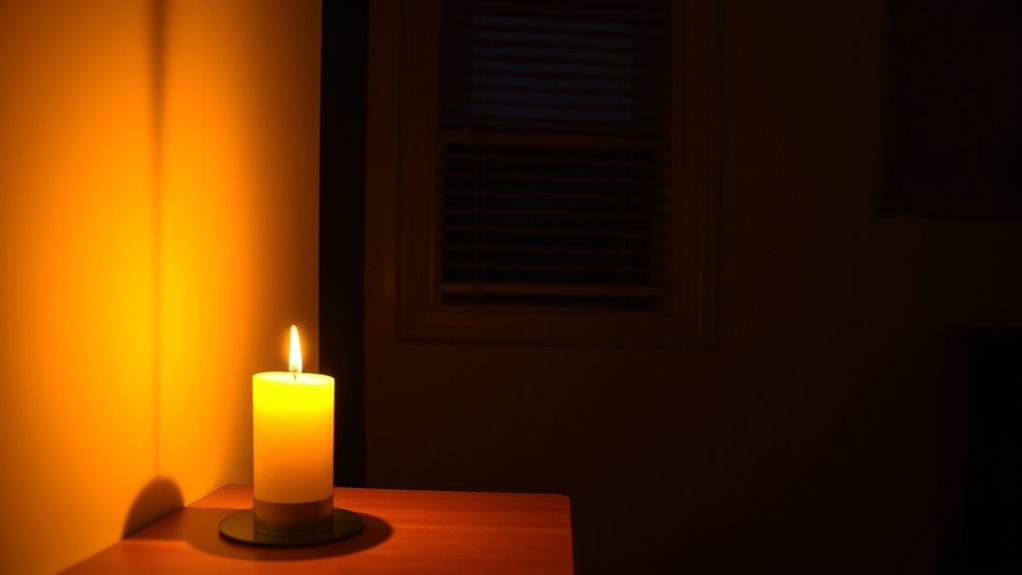
Candles should be avoided entirely whenever there are vulnerable occupants, such as infants, young children, or individuals with cognitive impairments, because their presence considerably increases the risk of accidental tipping, burns, or ingestion. In these situations, the danger of open flames outweighs any benefit. You should also avoid candles if:
Avoid candles around vulnerable individuals to prevent accidents and fire hazards.
- Someone uses medical oxygen at home, creating an explosive environment.
- There are strong drafts, ceiling fans, or unsecured curtains near potential candle placement.
- You can’t continuously supervise the flame, such as when sleeping or leaving the room.
- The environment contains abundant loose combustibles like paper, bedding, or decorations that can ignite easily.
In these cases, safer alternatives like battery-powered lights are essential to prevent fire hazards.
Frequently Asked Questions
How Do I Choose the Safest Candles for Emergencies?
You should choose long-burning, broad-based candles like beeswax or soy in sturdy, noncombustible holders. Opt for candles with minimal scent and soot production, and trim wicks to 1/8–1/4 inch before use. Select candles in containers or enclosed in glass globes to reduce ember escape. Always place them on stable, heat-resistant surfaces, keep them away from flammable materials, and never leave them unattended during emergencies.
What Are the Best Alternative Lighting Options for Children?
You should opt for battery-powered LED candles or glow sticks for children during outages. These options provide safe, flickering light without fire hazards, soot, or tipping risks. Headlamps and rechargeable lanterns also work well, offering hands-free lighting for play or emergencies. Keep flashlights within reach, store all batteries securely, and avoid open flames around children to prevent accidents and guarantee a safer environment during power outages.
How Can I Prevent Candles From Tipping Over Easily?
Preventing candles from tipping over is like anchoring a boat in rough waters. Use broad-based, stable holders crafted for candles, such as sturdy metal or ceramic trays. Place candles on flat, heat-resistant surfaces away from drafts, curtains, or clutter. Enclose them in glass globes or chimneys to shield from gusts. Keep them out of high-traffic areas and secure them elevated where children or pets can’t reach, ensuring safety and stability.
What Should I Do if a Candle Flame Flickers Excessively?
If a candle flame flickers excessively, you should extinguish it immediately. A flickering flame often indicates instability or contamination, which increases fire risk. Carefully use a snuffer or a tool to put out the flame, avoiding blowing on it to prevent embers from escaping. Check the wick and wax for debris or drafts, then trim the wick to 1/8–1/4 inch before relighting if safe. Never leave flickering candles unattended.
Are There Specific Storage Tips to Prolong Candle Safety and Effectiveness?
You should store candles in a cool, dry location away from direct sunlight and heat sources. Keep them in sturdy, nonflammable holders and avoid stacking or overcrowding. Rotate your supplies regularly to guarantee they stay fresh. Store lighters and matches separately, out of children’s reach. Label your candles with burn date if possible, and check for damage or wick issues before use to maximize safety and effectiveness during emergencies.
Conclusion
In a power outage, safety should always come first. Knowing when candles are a risk and exploring safer alternatives can prevent fires and injuries. Are you willing to risk your home and loved ones just for a bit of light? By following proper placement, behavior, and storage tips, you can enjoy emergency lighting responsibly. Remember, sometimes the safest choice is to wait for power or use battery-operated lights instead of candles. Stay safe and stay prepared.
Fall Picks
fall essentials
As an affiliate, we earn on qualifying purchases.