
To safely shut off your main breaker, first locate your electrical panel, usually in the basement, garage, or outside. Wear protective gear like safety glasses and insulated gloves, and clear the area around the panel. Turn off all connected appliances and devices. Carefully switch off the main breaker, ensuring it’s fully off, and verify no power remains with a voltage tester. If you want to learn detailed steps, keep exploring these essential safety measures.

Get backup power and energy gear delivered free — and shop member deals
- Fast, free delivery on millions of items
- Access to Prime Big Deal Days deals on October 6–7
- Prime Video, Amazon Music and more included
Key Takeaways
- Locate your main electrical panel in a accessible, dry area and identify the main breaker at the top.
- Wear safety gear such as insulated gloves, safety glasses, and non-conductive clothing before starting.
- Unplug all connected devices and turn off individual appliances or circuit breakers if possible.
- Firmly switch the main breaker to the “off” position using a dry, insulated hand, ensuring no residual power remains.
- Verify power is disconnected with a voltage tester before working on electrical components or opening the panel.
As an affiliate, we earn on qualifying purchases.
Locate Your Electrical Panel
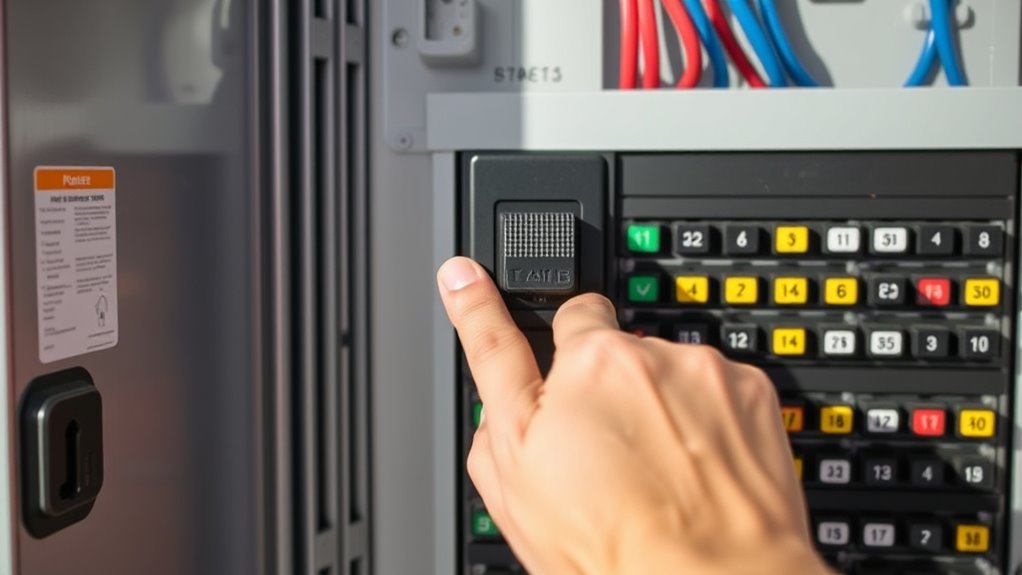
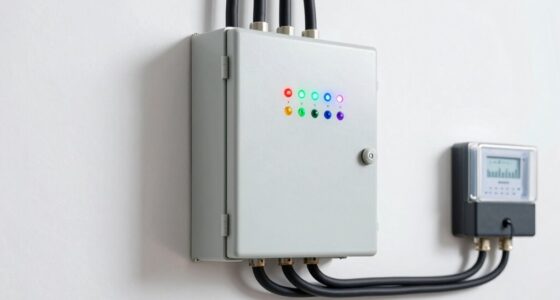
Your main electrical panel is usually located in the basement, garage, utility room, or outside your home. Look for a metal box with a door that houses circuit breakers or fuses. The main breaker, often at the top of the panel, controls power to all circuits. It’s important to identify and label each breaker clearly for easy recognition later. Make sure the area around the panel stays clear and accessible, so you can reach it quickly if needed. If the panel is outside, it might be in a weatherproof box mounted on the exterior wall. Use a flashlight or battery-powered light if visibility is low. Finding your panel beforehand saves time and keeps you safe when you need to shut off power quickly. Additionally, understanding the contrast ratio of your electrical system can help you assess its capacity and ensure safe operation during power shutdowns. Knowing the main breaker location in advance can significantly reduce reaction time during emergencies. It’s also helpful to familiarize yourself with the electrical code requirements to ensure safety and compliance during any maintenance or emergency shutdown. Being aware of your electrical system’s circuit labeling can further streamline the process when shutting off power. Moreover, knowing the capacity of your system can help prevent overloading when restoring power after a shutdown.
voltage tester for electrical panels
As an affiliate, we earn on qualifying purchases.
As an affiliate, we earn on qualifying purchases.
Gather the Necessary Protective Gear
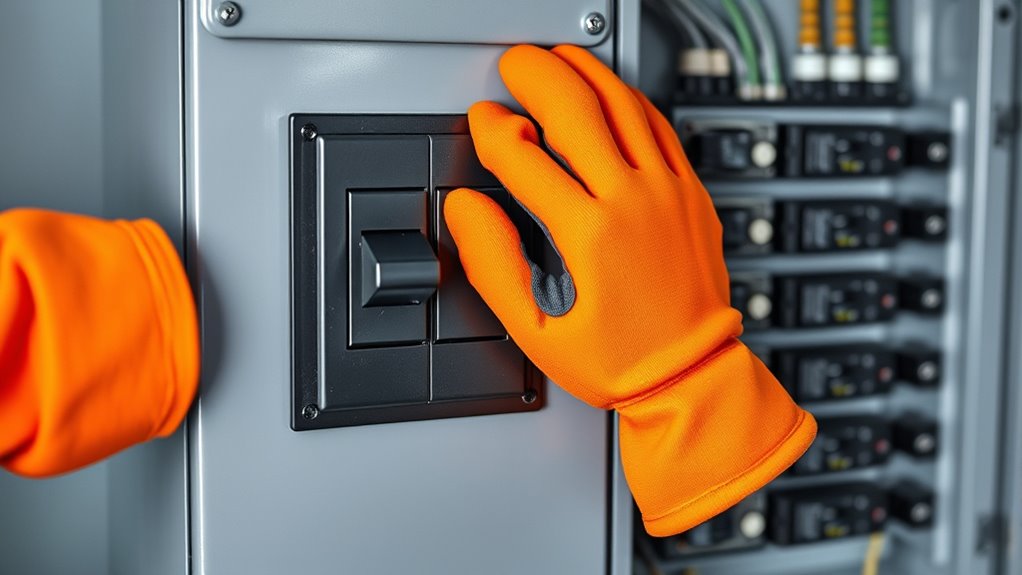
Before you start shutting off the main breaker, gather all the necessary protective gear to guarantee your safety. Wear safety glasses to shield your eyes from sparks or debris. Use insulated gloves rated for electrical work to prevent shocks when handling live components. A face shield or full-body shield adds extra protection against arc flashes. Choose clothing that covers your skin completely, like long sleeves and pants made of non-conductive material. Thick rubber-soled shoes help insulate you from the ground and reduce shock risk. Make sure all your gear is rated for electrical hazards. Having the right personal protective equipment ready minimizes injury risk and keeps you safe during the process. Proper electrical safety measures are essential for avoiding accidents and ensuring your safety. Double-check your gear before approaching the panel, and never skip this essential step. Ensuring your electrical safety gear is properly fitted and in good condition is crucial for preventing accidents.
safety glasses for electrical work
As an affiliate, we earn on qualifying purchases.
As an affiliate, we earn on qualifying purchases.
Prepare the Area Before Turning Off Power
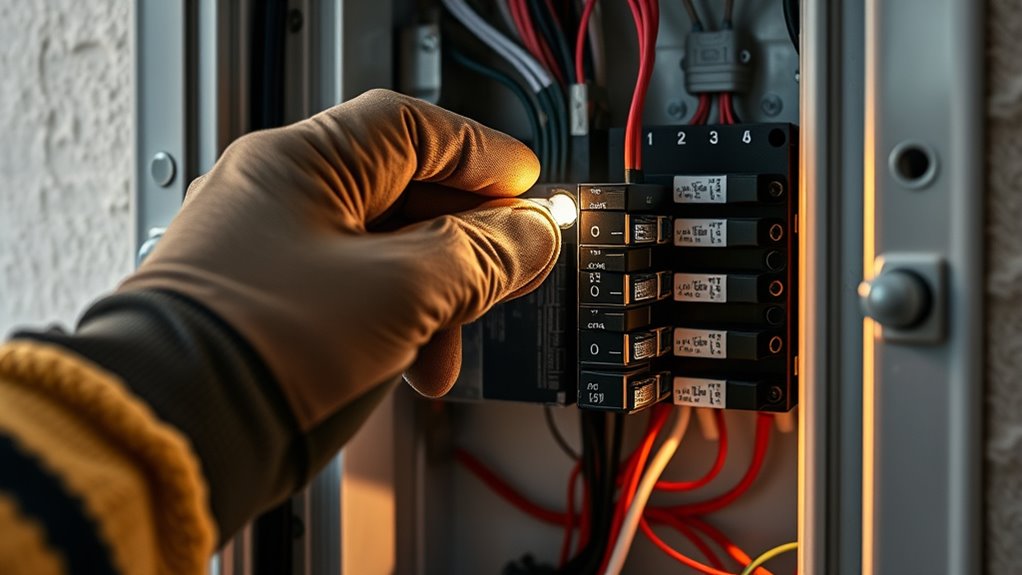
Ensuring the area around the electrical panel is prepared helps prevent accidents and makes the shutdown process safer. Clear the space around the panel, removing any clutter or objects that could interfere. Make sure there’s enough room to work comfortably and avoid tripping hazards. Use a flashlight or battery-powered light to illuminate the panel if lighting is poor. Keep your hands dry and stand on a non-conductive surface like a rubber mat. Additionally, verify that the electrical system is properly grounded to reduce the risk of shock.
main circuit breaker lockout device
As an affiliate, we earn on qualifying purchases.
As an affiliate, we earn on qualifying purchases.
Turn Off All Connected Appliances and Devices
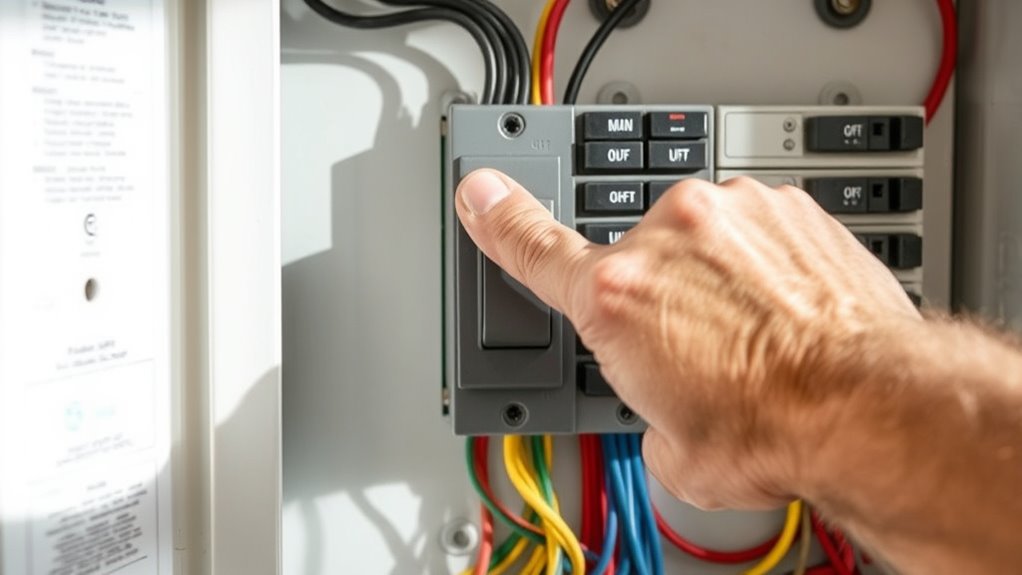
After clearing the area around the panel, the next step is to turn off all connected appliances and devices. Unplug or switch off everything linked to the electrical system, including lamps, computers, and kitchen appliances. This prevents power surges or sparks when you shut off the main breaker. Check outlets and power strips to guarantee no devices remain active. If you have large appliances like washers or dryers, turn their circuit breakers to the off position. Doing this minimizes the risk of electrical accidents or damage during the main power shutoff. Make sure all devices are completely powered down before proceeding. Incorporating smart home automation can help ensure all connected devices are powered down efficiently and safely. Additionally, verifying that connected devices are fully off reduces the risk of unexpected electrical issues. For added safety, consider testing the circuit with a voltage tester to confirm that no current is present before handling the breaker. Understanding electrical safety procedures and following proper steps can significantly reduce potential hazards during this process. Properly disconnecting devices also helps prevent electrical fires caused by overloaded circuits.
Shut Off the Main Breaker or All Individual Breakers
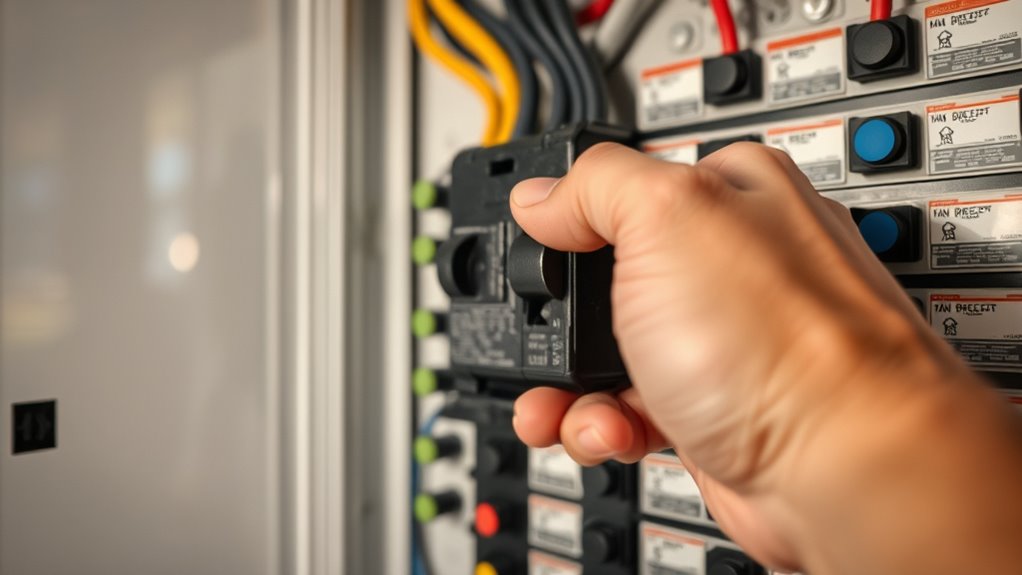
You can shut off the main breaker to disconnect power to your entire panel or turn off individual circuit breakers to isolate specific areas. Understanding how the main breaker operates helps you decide which method works best for your situation. Always make sure power is confirmed off before proceeding with any work or inspections. For added safety, consider knowing the security zone info to stay informed and prepared when working around electrical devices. Being aware of wave and wind conditions can also be beneficial if you are working outdoors or in areas exposed to weather. Additionally, familiarizing yourself with electrical safety procedures can help prevent accidents and ensure a safe working environment.
Main Breaker Operation
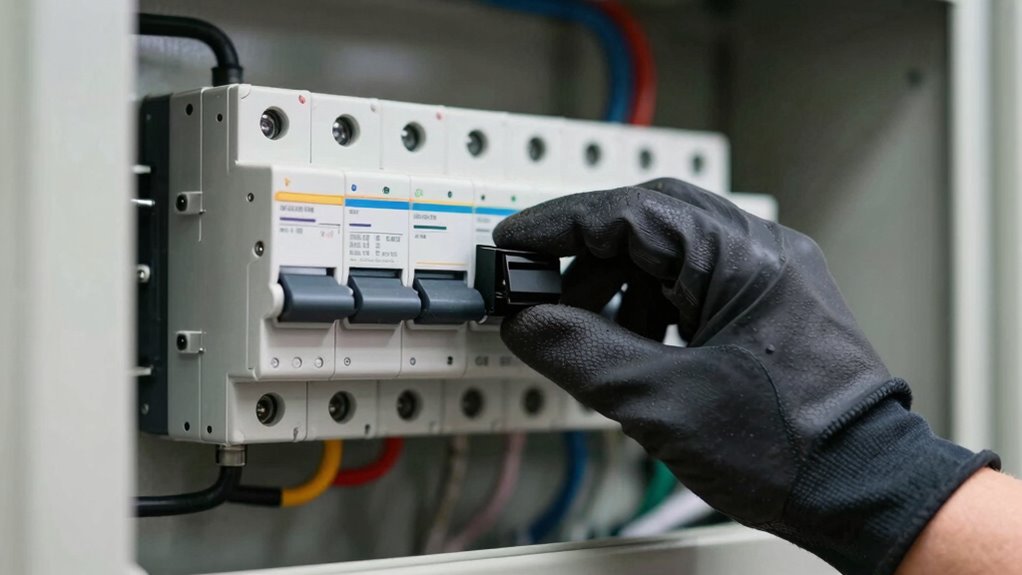
Wondering how to shut off your main breaker? First, locate it at the top of your electrical panel. Before you start, make certain your hands are dry, and wear insulated gloves and safety glasses. To operate the main breaker safely, you should:
- Push the main breaker fully to the off position
- Confirm the switch has fully disengaged
- Use a voltage tester to verify power is off
- Remember that proper electricity safety procedures are essential to prevent hazards. Understanding bank SWIFT/BIC codes can also help ensure secure financial transactions, though not directly related to electrical safety. Additionally, familiarize yourself with circuit breaker operation to better recognize potential issues during shutdowns. Being aware of electrical system components can help you identify the correct breaker more easily.
If your panel lacks a main switch, turn off all individual circuit breakers instead. Always stand on a dry, non-conductive surface and avoid touching other components. Remember, if you’re unsure or uncomfortable, it’s best to call a professional for help. Proper operation ensures safety and prevents electrical hazards.
Turning Off Circuit Breakers
To turn off the circuit breakers, start by identifying the main breaker at the top of your panel. If you need to shut off all power, push the main breaker fully to the off position. If your panel lacks a main breaker, turn off each individual circuit breaker one by one. Use a flashlight if needed to see clearly. Before flipping breakers, make certain all appliances are unplugged and your hands are dry. Stand on a non-conductive surface and wear insulated gloves for safety. After turning off the breakers, verify power is off by testing outlets with a voltage tester. Avoid touching the panel directly if it’s wet or damaged. When in doubt, call a professional for assistance. Rhythm Failure
Verify Power Has Been Successfully Disconnected

After shutting off the main breaker, it is essential to verify that the power is truly disconnected before proceeding further. This step ensures your safety and confirms the breaker is functioning correctly. To do this, use a voltage tester or a multimeter on outlets and fixtures in the area. Check multiple points around your home, especially in the main living spaces and any connected appliances. If the tester shows no voltage, you’ve successfully disconnected the power.
- Test outlets and switches to confirm no voltage is present
- Look for residual power in connected devices or appliances
- Double-check the main breaker position and ensure it’s fully off
Follow Safety Precautions During and After the Process
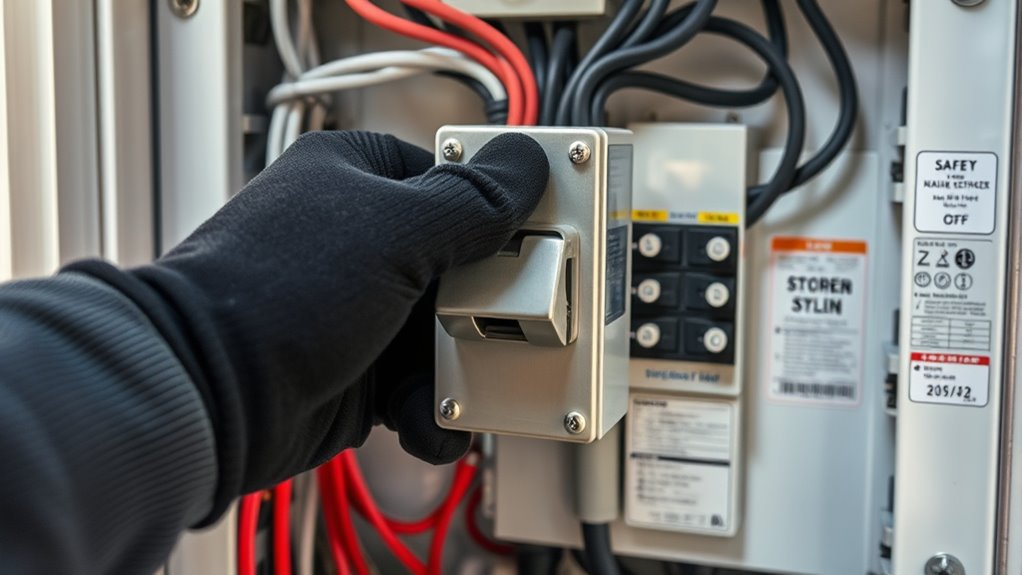
Before you begin and after you finish, always wear protective gear like safety glasses and insulated gloves to guard against shocks and arcs. Make sure the power is truly off by verifying with a voltage tester on outlets and panels. Taking these precautions keeps you safe from electrical hazards during the entire process.
Wear Protective Gear
Ever wonder why wearing protective gear is essential when shutting off your main breaker? It’s vital because electrical work involves risks like shocks, sparks, and arc flashes. Proper gear helps protect you from injury during the process. Make sure to:
- Wear safety glasses to shield your eyes from sparks or debris.
- Use insulated gloves to prevent shocks if you contact live parts.
- Cover your skin with clothing rated for electrical hazards to minimize exposure.
Always choose gear that meets safety standards for electrical work. Don’t skip protective equipment, even if you’re experienced. Your safety depends on it. Being properly equipped reduces the risk of injury and helps you stay safe while working with potentially dangerous electrical components.
Verify Power Off
How can you be sure the power is truly off before working on your electrical panel? First, double-check that the main breaker is fully switched to the off position. Use a voltage tester or multimeter to confirm no voltage is present at outlets or circuit points nearby. Test multiple outlets on different circuits if possible. Be cautious—residual voltage can sometimes linger, so verify carefully. Keep in mind that some appliances or devices might still carry power even after shutting off the main breaker. Avoid touching any wires or components until you’re certain the power is completely shut down. Confirming power off is essential to avoid electrical shock or injury during your work. Always work with safety in mind and follow proper procedures.
Frequently Asked Questions
How Do I Identify the Main Breaker in My Panel?
You identify the main breaker in your panel by looking for the largest switch at the top of the box. It’s usually labeled “Main” or “Main Breaker.” This switch controls power to the entire panel. Sometimes, it’s a double-pole breaker, bigger than the rest. Make sure the panel is well-lit, and use your labels to confirm its position and function before operating it.
Can I Turn off the Main Breaker Without Shutting Individual Circuits?
Yes, you can turn off the main breaker without shutting individual circuits. Think of the main breaker as a master switch in your electrical symphony—you control the entire melody at once. Push the breaker fully to the off position, and all power halts like a pause in music. Just make certain you’re standing on a dry, non-conductive surface, and double-check that the power’s truly off before proceeding.
What Should I Do if the Main Breaker Won’t Turn Off?
If the main breaker won’t turn off, don’t force it, as you might damage the breaker or cause an arc flash. Instead, verify your safety first—wear protective gear and use insulated tools. If it still won’t budge, call a licensed electrician immediately. They have the expertise and equipment to safely handle stuck breakers, ensuring your safety and preventing potential electrical hazards. Never attempt to force a stubborn breaker alone.
How Long Does It Take to Safely Shut off the Main Breaker?
It typically takes a few seconds to turn off the main breaker once you’ve located it. You should push or flip the switch firmly and steadily without rushing. Make sure you’re prepared beforehand—wear protective gear and verify power is off afterward with a voltage tester. Rushing might cause slips or mistakes, so stay focused and deliberate. If it doesn’t turn off easily, don’t force it; call a professional.
Is It Safe to Work Near the Panel After Shutting off the Main Breaker?
Yes, it’s safe to work near the panel after shutting off the main breaker—if you’re feeling brave. Just remember, the main switch stops the power, but residual voltage or unexpected issues might still lurk behind the cover. Always wear protective gear, double-check with a voltage tester, and avoid touching exposed parts. When in doubt, call a professional—because a shocking surprise isn’t part of the plan.
Conclusion
By locating your panel, gathering your gear, preparing the area, turning off appliances, shutting the breaker, verifying power, and following safety precautions, you guarantee a safe process. Stay attentive, stay cautious, and stay prepared at every step. Remember, safety isn’t just a task—it’s a mindset. When you approach each step methodically, you protect yourself, your home, and your peace of mind. Safety starts with awareness, continues with action, and ends with confidence.
Fall Picks
fall essentials
As an affiliate, we earn on qualifying purchases.