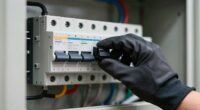
During flooding or outages, always stay far from wet outlets, switches, and electrical panels, as water conducts electricity and risks shocks or fires. Turn off the main power at your breaker box before inspecting or approaching soaked equipment. Use insulated tools and avoid touching waterlogged devices. For safety, contact a licensed electrician to assess and repair any damage. If you want to learn how to protect your home and stay safe, keep exploring these essential precautions.
Key Takeaways
- Turn off the main power immediately to prevent electrocution when flooding occurs near outlets or panels.
- Avoid touching wet outlets, switches, or electrical panels; contact a licensed electrician for inspection and repairs.
- Keep water away from electrical equipment by sealing gaps and elevating outlets in flood-prone areas.
- Never attempt to dry or repair water-damaged electrical components yourself; seek professional assessment.
- Stay clear of downed power lines and report them to utility authorities to prevent electrical hazards.

Anker SOLIX C1000 Gen 2 Portable Power Station, 2,000W (Peak 3,000W) Solar Generator, Full Charge in 49 Min, 1,024Wh LiFePO4 Battery for Home Backup, Power Outages, and Camping (Optional Solar Panel)
49 Min UltraFast Recharging: With upgraded HyperFlash tech, fully recharge at 1,600W—for outage prepping, camping trips, or tailgating...
As an affiliate, we earn on qualifying purchases.
Recognizing Electrical Hazards During Floods
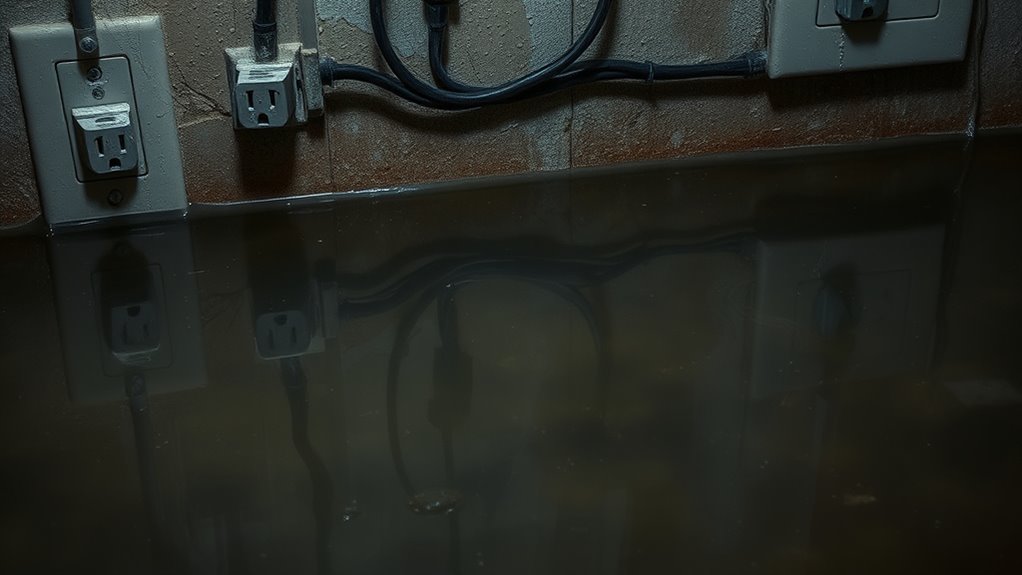
During floods, recognizing electrical hazards is crucial to stay safe. Water and electricity don’t mix, so look out for exposed wires, broken or downed power lines, and damaged electrical equipment. If you see sparks, smoke, or burning smells, turn off the power immediately and stay away. Avoid touching or approaching flooded outlets, switches, or appliances, as they may be energized even if they appear dry. Keep a safe distance from green electrical boxes, meters, and any equipment near water. Waterlogged electrical panels or meters are dangerous; do not attempt to inspect or dry them yourself. Always assume submerged or wet electrical devices are live and dangerous. Staying alert to these hazards helps prevent electrocution and ensures you and your loved ones stay safe during flooding events. Additionally, understanding the contrast ratio of electrical components can help you identify which devices are most likely to pose a risk in damp conditions. It is also important to recognize the electrical safety standards that apply during such emergencies to ensure proper precautions are taken. Recognizing wet electrical outlets and knowing when to call a professional can further prevent accidents.

Jackery Portable Power Station Explorer 300, 293Wh Backup Lithium Battery, Solar Generator for Outdoors Camping Travel Hunting Blackout (Solar Panel Optional)
SPEED UP YOUR RECHARGEABILITY: It takes only 2 hours to recharge 80% battery of the power station through...
As an affiliate, we earn on qualifying purchases.
Immediate Steps to Protect Your Electrical System
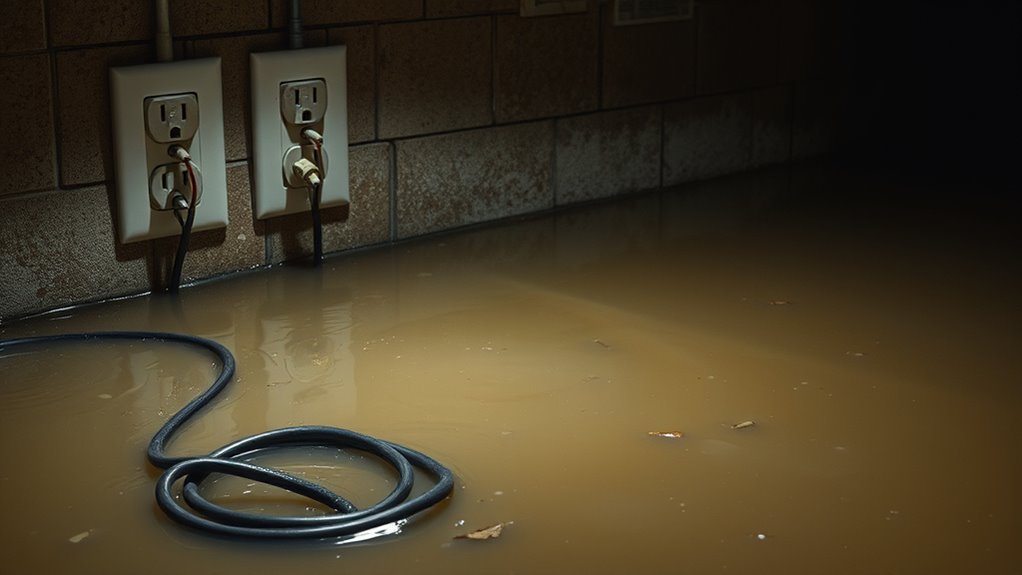
When flooding occurs, you should turn off your main power switch immediately to prevent electrocution or further damage. Next, identify which areas have come into contact with water and avoid using electrical outlets or appliances in those spots. You should also be aware of electrical safety practices when dealing with water intrusion to prevent accidents. Additionally, inspecting your electrical system for damage can help identify potential hazards early. Conducting a comprehensive safety check can further reduce risks before restoring power. Finally, contact a licensed electrician or utility professional right away to inspect and restore your system safely.
Turn Off Power Immediately
If floodwaters threaten your property, turning off the power immediately is vital to prevent electrical hazards. Locate your main breaker or fuse box and shut off the electricity before water reaches electrical outlets or panels. If you can’t access the main switch safely, contact an electrician or utility company for assistance. Do not wade into floodwaters to turn off individual circuits—this risks electrocution. Always prioritize safety and avoid contact with water-covered electrical equipment. Use the following table to identify critical steps:
| Step | Action |
|---|---|
| Locate main breaker | Find your main electrical panel or fuse box. |
| Turn off power | Switch off the main breaker or remove fuses. |
| Confirm shutdown | Ensure no electricity is flowing before approaching water. |
Additionally, smart‑home systems can sometimes be programmed to automatically disconnect power during emergencies, adding an extra layer of safety. Implementing automated safety features can help protect your household even if you’re unable to respond immediately. Being aware of electrical hazards helps you respond more effectively and keeps everyone safer. Understanding the importance of electrical safety during flooding situations can significantly reduce the risk of injury or damage. Recognizing potential electrical hazards early enables quicker, safer responses and minimizes danger. Taking these steps quickly protects you and your property.
Identify Water Contact Areas
Identifying water contact areas in your property is essential to safeguarding your electrical system during flooding. Walk through your home and note where water may reach or contact electrical outlets, switches, and panels. Pay special attention to basements, utility rooms, and outdoor areas prone to flooding. Check for exposed wiring, extension cords, or electrical devices near water sources. Mark these areas clearly to inform yourself and others about potential hazards. Elevate or relocate outlets, switches, and appliances away from flood zones when possible. Seal cracks around electrical boxes and enclosures to prevent water intrusion. Understanding where water can contact electrical components lets you take proactive steps to protect your system and reduce the risk of electrocution or damage during a flood event. Lesser-known spots often have fewer safety measures, making it especially important to identify and secure these areas before flooding occurs. Being aware of vetted safety precautions can further reduce risks during such emergencies. Additionally, consulting electrical safety standards can help ensure your home is properly protected against water damage. Recognizing electrical system vulnerabilities in flood-prone areas can guide more targeted safety measures. Conducting a comprehensive property assessment helps identify less obvious risks that might otherwise be overlooked.
Contact Professionals Promptly
Promptly contacting professionals after a flood guarantees your electrical system is thoroughly inspected and safely restored. Don’t delay calling a licensed electrician or utility company if your main breaker or fuse box has been exposed to water. They have the expertise to assess damage, identify hidden hazards, and ensure everything is safe before re-energizing your system. If water covers your electrical panels or meters, avoid trying to fix or dry them yourself. A professional can determine if components need replacement or repairs. Additionally, if your water heater, furnace, or appliances are flooded, professionals will inspect and service them properly. Prompt action prevents long-term damage, reduces fire risk, and guarantees your household’s safety. Always rely on licensed experts rather than attempting repairs yourself after flooding. Electrical safety protocols are essential to follow when dealing with water-affected electrical systems.

EnginStar Portable Power Station 300W 296Wh Battery Bank with 110V Pure Sine Wave AC Outlet for Outdoors Camping Hunting and Emergency, 80000mAh Backup Battery Power Supply for CPAP
PORTABLE BUT POWERFUL: EnginStar Portable Power Station with ETL Certification, and the portable size of 9 x 5.5...
As an affiliate, we earn on qualifying purchases.
Safe Practices for Handling Wet Appliances and Devices
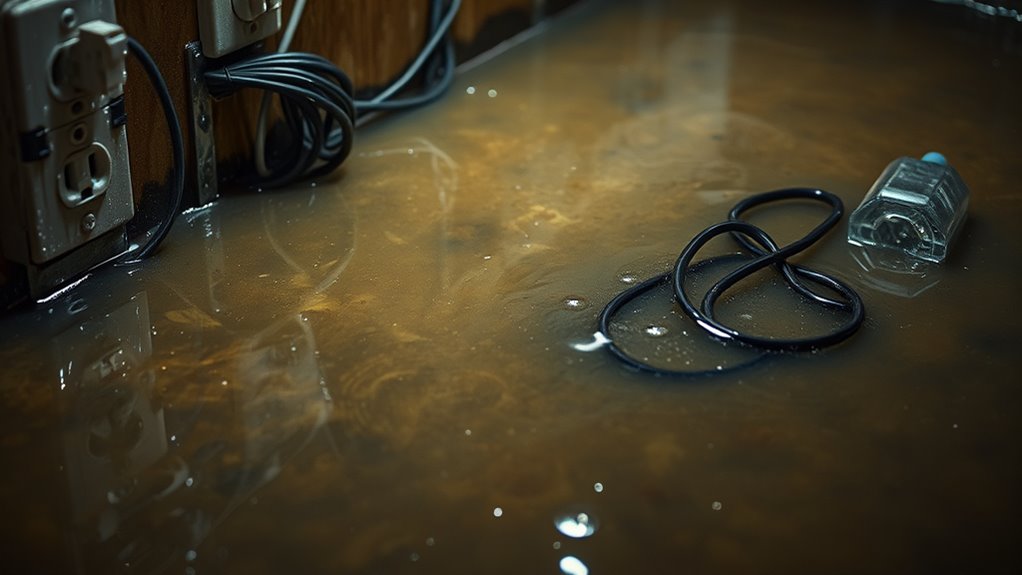
Always unplug wet appliances before touching or moving them to prevent electrical shock. Make sure they’re completely dry and inspected by a professional before attempting to reuse them. Never handle wet devices on your own—consult a qualified electrician for safety. Additionally, power tool safety practices should be followed when inspecting or repairing electrical equipment after flooding. Understanding dark psychology tactics can help you recognize and avoid manipulation or coercion when seeking professional assistance. Properly dry electrical components is crucial to avoid further hazards, and using a whole-house water filtration system can help prevent water damage and related electrical issues in the future. Ensuring proper maintenance and cleaning of electrical devices also helps maintain safety after exposure to water.
Unplug Before Handling
Before handling wet appliances or devices after a flood, you must unplug them first to prevent electrical shock or further damage. Never touch a plugged-in appliance with wet hands or while standing on wet surfaces. Always turn off the power at the main breaker before unplugging. Use a dry, insulated tool if needed, and avoid pulling cords directly. Remember, wet devices are dangerous until thoroughly dried and inspected.
| Precaution | Reason |
|---|---|
| Unplug before touching | Prevents electric shock and equipment damage |
| Turn off power first | Ensures safe handling before unplugging |
| Use insulated tools | Protects against accidental shocks |
Dry Completely First
To guarantee safety when handling wet appliances and devices after a flood, it’s critical to dry them completely before attempting any further use or inspection. Water inside electrical equipment can cause short circuits, corrosion, and wiring damage that aren’t visible to the naked eye. Use a dry cloth or towel to wipe off excess water, and allow appliances to air dry in a warm, dry place. Do not turn appliances on or plug them in until you’re confident they are thoroughly dry. For larger equipment like motors or panels, consult a qualified electrician to ensure proper drying and inspection. Never rush the drying process; moisture can linger and pose serious electrical hazards if not fully eliminated. Proper drying helps prevent electrical faults and reduces the risk of shock or fire. Employing professional-grade drying methods such as desiccants or specialized drying equipment can further ensure complete moisture removal and safety. Additionally, understanding the importance of thorough drying can help prevent hidden damage that could lead to future electrical failures.
Consult Professionals Always
When dealing with wet appliances and devices after a flood, consulting licensed professionals is crucial to guarantee safety. They have the expertise to evaluate water damage, prevent electrical shocks, and ensure proper repairs. Don’t attempt to dry or reuse equipment on your own, as hidden damage can pose ongoing risks. Always hire qualified electricians and licensed technicians for inspections and repairs. They can identify compromised wiring, replace submerged controls, and verify safety before restoring power. Here’s a quick reference:
| Situation | Action | Professional Needed |
|---|---|---|
| Electrical panels or meters submerged | Shut off power and inspect | Licensed electrician |
| Wet appliances or wiring after flood | Unplug and have checked | Qualified electrician |
| Gas appliances exposed to water | Inspect for leaks or damage | Licensed professional |
| Downed power lines near water | Report and avoid, utility contact | Utility personnel |
| Signs of electrical damage | Schedule comprehensive evaluation | Certified electrical contractor |

Jackery Solar Generator 1000 v2 with 200W Solar Panel,1070Wh Portable Power Station LiFePO4 Battery,1500W AC/100W USB-C Output, 1Hr Fast Charge for Outdoor,Off-Grid Living,RV,Emergency
Powerful yet Compact: Boasting a 1,500W AC output and a 3,000W surge peak, the Solar Generator 1000 V2...
As an affiliate, we earn on qualifying purchases.
How to Properly Shut Off Power During Flooding Events
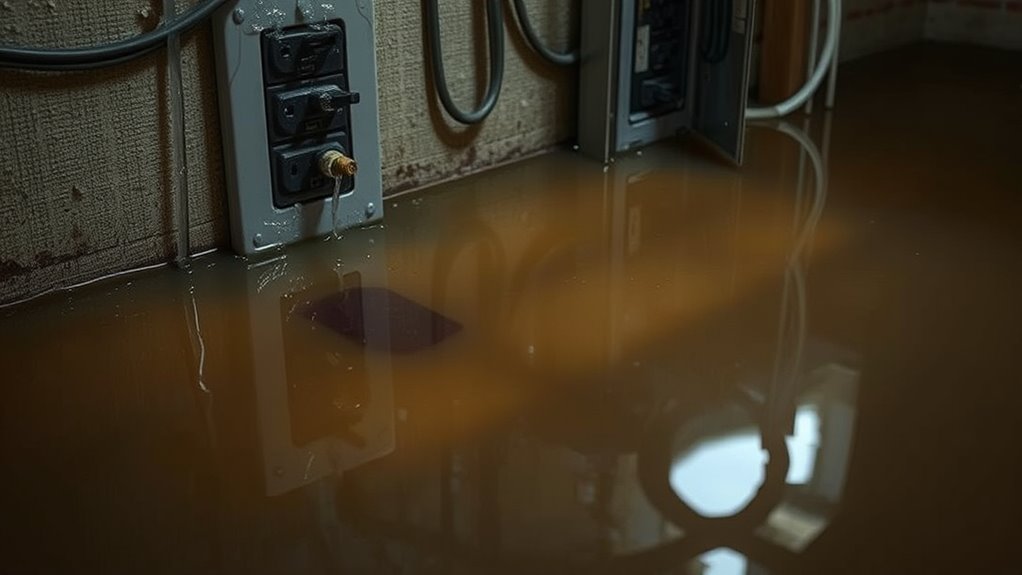
Knowing how to properly shut off power during a flood can prevent electrical hazards and protect your home. First, locate your main breaker or fuse box, which is typically near the electrical panel or utility area. If floodwaters are approaching or have already reached the electrical equipment, turn off the main breaker to cut power to the entire house. Do this only if you’re safe from water contact—never step into water to reach the breaker. Use a dry, insulated tool if needed. If the main breaker is inaccessible or the area is flooded, contact your utility company or a licensed electrician immediately. Never attempt to shut off individual circuits unless you’re trained, as this can cause shock or further damage. Prioritize your safety above all.
Post-Flood Inspection and Repair Procedures
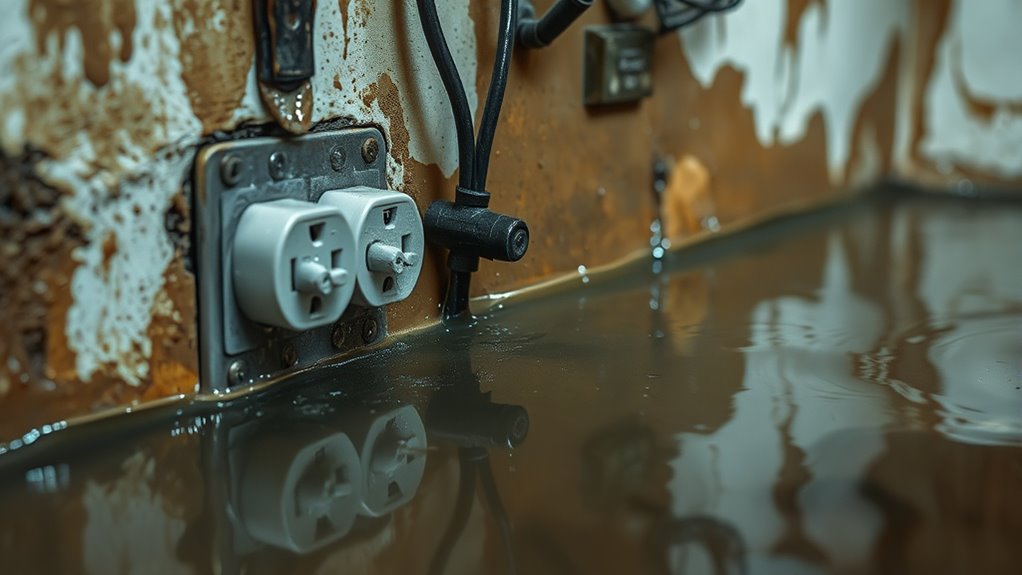
After you’ve safely shut off the power and taken initial steps to prevent further damage, it’s important to thoroughly inspect and assess your electrical system before restoring electricity. Start by examining your electrical panels, outlets, and wiring for visible damage, corrosion, or water intrusion. Do not attempt to dry or repair water-damaged panels yourself; instead, contact a licensed electrician for a professional inspection. Check for signs of rust, mold, or residue, and ensure all components are dry and intact. Inspect appliances and equipment that were submerged, and have them tested or replaced by qualified technicians. Remember, never turn the power back on until an electrician confirms your system is safe. Proper inspection prevents future hazards and guarantees your electrical system is reliable after flooding.
Installing and Maintaining Flood-Resistant Electrical Features
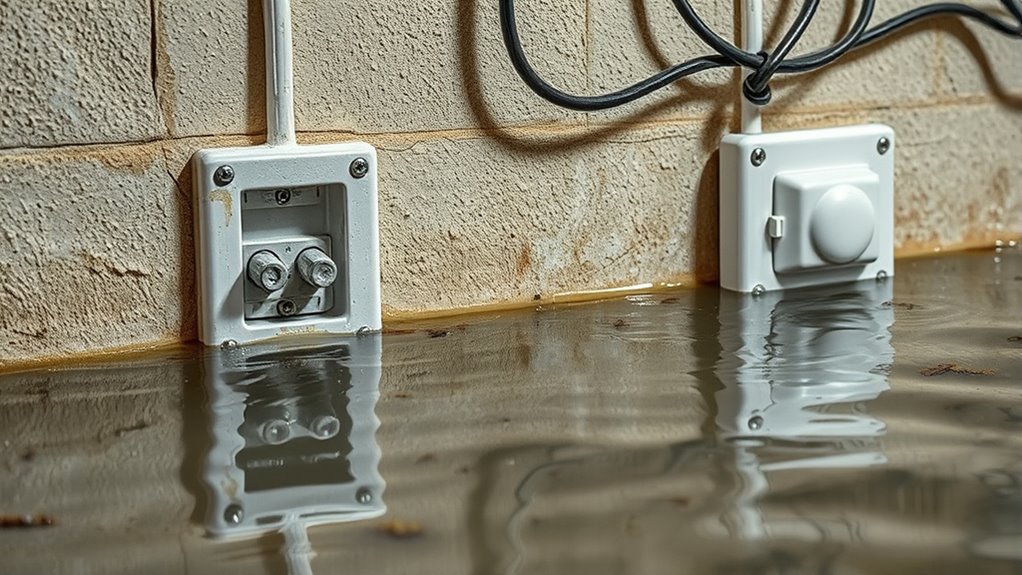
Installing flood-resistant electrical features is vital for protecting your home during floods. Start by elevating key components like the electrical panel, water heater, and furnace above potential flood levels. Use flood barriers or sealant around electrical boxes, outlets, and conduits to prevent water intrusion. Install GFCIs on outdoor and flood-prone indoor outlets to cut power instantly if moisture is detected. Consider using floodproof or waterproof enclosures for essential electrical devices. Make sure all wiring is properly sealed and elevated to reduce contact with water. Regularly inspect and maintain these features, checking for cracks or damage that could compromise their flood resistance. By proactively installing and maintaining these safety measures, you greatly reduce the risk of electrical hazards during flooding events.
The Role of GFCIs and Other Safety Devices in Flood-Prone Areas
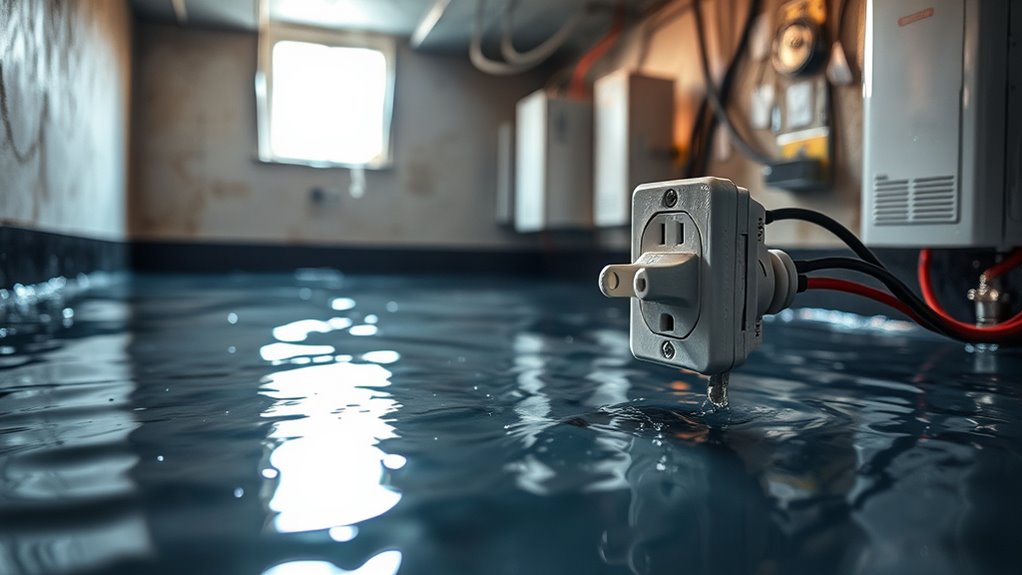
In flood-prone areas, GFCIs (Ground Fault Circuit Interrupters) play a critical role in protecting you from electrical shocks. They detect imbalances in current flow and cut power instantly if a fault occurs, preventing electrocution. You should install GFCIs in areas prone to flooding, such as kitchens, bathrooms, laundry rooms, and basements. These devices are essential because they respond quickly to moisture or water exposure, shutting off electricity before a shock occurs. Other safety devices, like circuit breakers and surge protectors, help prevent electrical fires and damage. Regularly testing GFCIs ensures they function properly. Remember, never bypass or disable safety devices—they’re indispensable for your safety during floods and electrical hazards. Proper installation and maintenance keep you safe when water threatens electrical systems.
Preventive Measures to Minimize Electrical Damage From Flooding
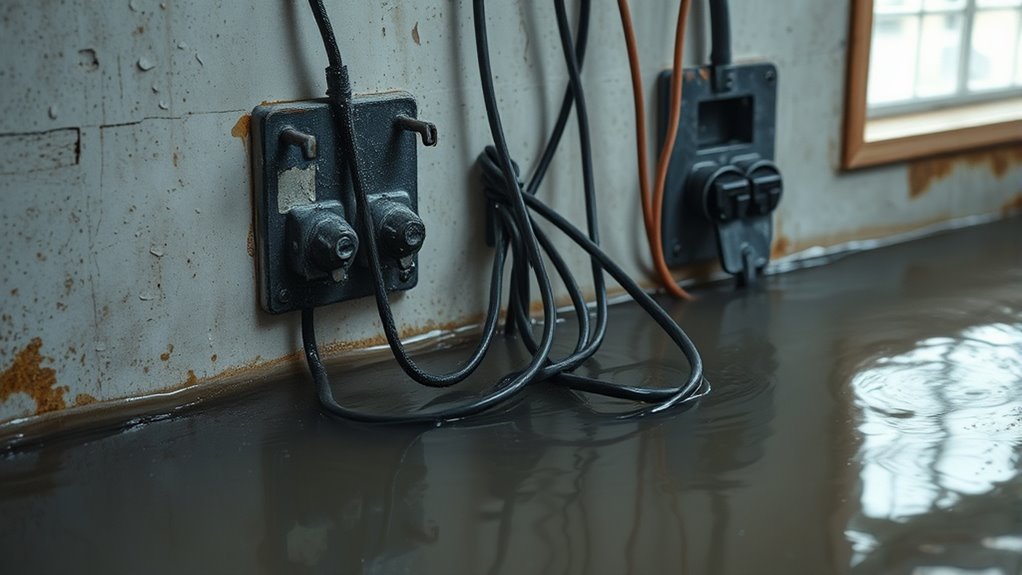
Are you taking steps to protect your electrical system from flood damage? Start by elevating critical components like your water heater, electric panel, and furnace above potential flood levels. Install GFCIs on outdoor outlets and in flood-prone indoor areas to cut power during faults and reduce shock risk. Seal cracks around electrical boxes and panels to prevent water entry. Keep cords and outlets higher in flood-prone spaces, and avoid storing flammable materials near electrical equipment. Clear labeling of circuit breakers allows quick shutdowns if flooding occurs. Regularly inspect and maintain your system, and consider installing a sump pump with a backup battery to alert you to flooding. These proactive measures help minimize electrical damage and ensure safety during floods.
When to Seek Professional Help After Flood-Related Electrical Incidents
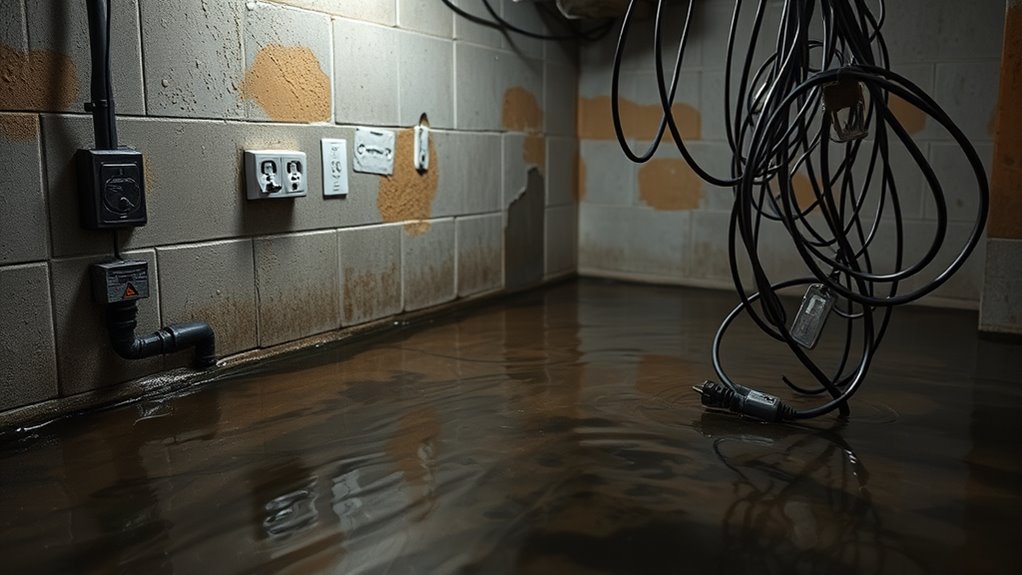
Knowing when to call a professional after a flood-related electrical incident is critical for your safety. You should seek expert help if:
- Your electrical panel or fuse box gets wet or shows signs of water damage.
- You notice persistent flickering lights or outlets that don’t work properly after drying.
- You see corrosion, rust, or water stains inside switches, outlets, or appliances.
- You experience sparks, burning smells, or unusual noises from electrical devices or panels.
Don’t attempt repairs yourself if you’re unsure about the extent of damage. Always turn off power at the main breaker and wait for a licensed electrician to assess and restore your electrical system safely. Your safety depends on professional intervention.
Frequently Asked Questions
How Can I Safely Test Electrical Outlets After a Flood?
To safely test electrical outlets after a flood, first confirm the power is completely off at the main breaker. Use a voltage tester or a multimeter to check for any residual electricity, but only if you’re confident in handling electrical tools safely. If there’s any sign of water damage or you’re unsure, call a licensed electrician to inspect and test the outlets thoroughly before restoring power or using them.
What Are Signs of Hidden Electrical Damage Post-Flood?
You should watch for signs like persistent flickering lights, outlets or switches that feel warm or spark, or a burning smell near electrical fixtures. Discolored or charred areas around outlets, panels, or appliances indicate hidden damage. If you notice water stains on electrical equipment or hear buzzing sounds, avoid using those circuits. Always have a licensed electrician inspect your system thoroughly before restoring power to guarantee safety.
Can I Repair Water-Damaged Wiring Myself?
Did you know that nearly 60% of electrical fires after flooding are caused by improper repairs? You shouldn’t repair water-damaged wiring yourself. Electricity and water are a dangerous mix, and even small mistakes can lead to shocks or fires. Instead, call a licensed electrician to inspect and repair the damage. They have the training and equipment to do the job safely, ensuring your home stays protected and code-compliant.
How Long Should I Wait Before Re-Energizing Electrical Systems?
You should wait at least 24 to 48 hours before re-energizing your electrical system. During this time, guarantee a qualified electrician inspects all wiring, outlets, and panels for water damage or corrosion. Do not attempt to turn on anything yourself until a professional confirms everything is dry, clean, and safe. This waiting period helps prevent electrical fires, shocks, or further damage, keeping you and your home safe.
Are There Specific Flood-Resistant Electrical Products Recommended?
Imagine a floodwaters receding, leaving your home safer. You should opt for flood-resistant electrical products like GFCIs, which cut power instantly during faults, and outdoor-rated outlets with waterproof covers. Install sealed, corrosion-resistant panels, and use surge protectors designed for wet conditions. These choices help prevent electrical hazards, keeping you and your family safe while minimizing damage during future floods.
Conclusion
Stay vigilant like a guardian at the gates, knowing that swift action can prevent disaster. By recognizing hazards, shutting off power promptly, and trusting in safety devices, you protect your home and loved ones. Just as a lighthouse guides ships through stormy seas, your proactive steps illuminate the path to safety amid flooding. Remember, preparedness is your shield—stay informed, stay safe, and weather the storm with confidence.