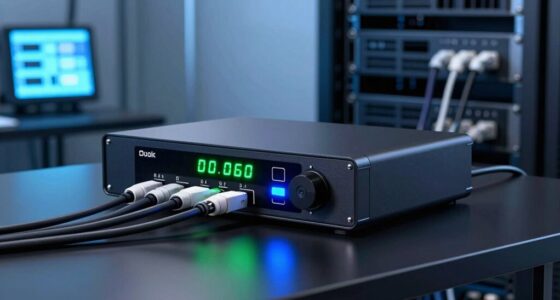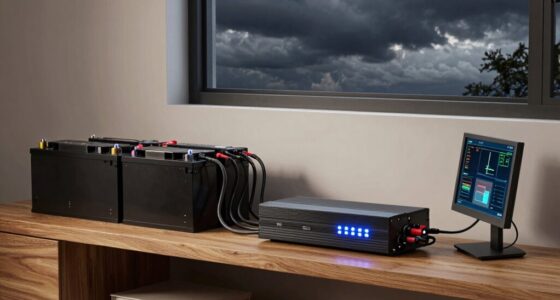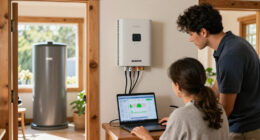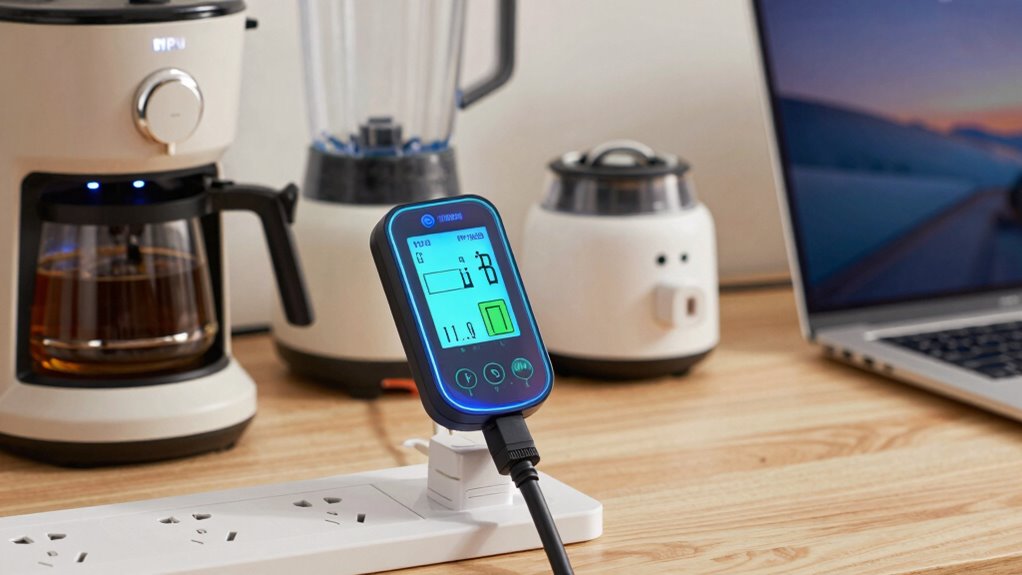

To find out what your appliances really need, plug them into a power meter and turn them on as you normally would. Record the energy consumption over a typical period, focusing on everyday use. Compare the measurements to see which appliances are energy hogs and which are efficient. This data helps you make smarter choices about upgrades or usage adjustments. Keep exploring further to discover how to optimize your household energy use even more.

Get backup power and energy gear delivered free with Prime
- Fast, free delivery on millions of items
- Prime Video, Amazon Music and more included
- Member-only deals all year
Key Takeaways
- Plug appliances into the power meter and record energy consumption during typical use over a set period.
- Compare readings across different appliances to identify energy hogs and efficiency levels.
- Use the data to assess if older appliances consume more energy than newer, more efficient models.
- Schedule high-energy tasks during off-peak hours based on consumption patterns to optimize energy use.
- Regularly monitor appliance performance to detect malfunctions or unexpected energy spikes for better management.
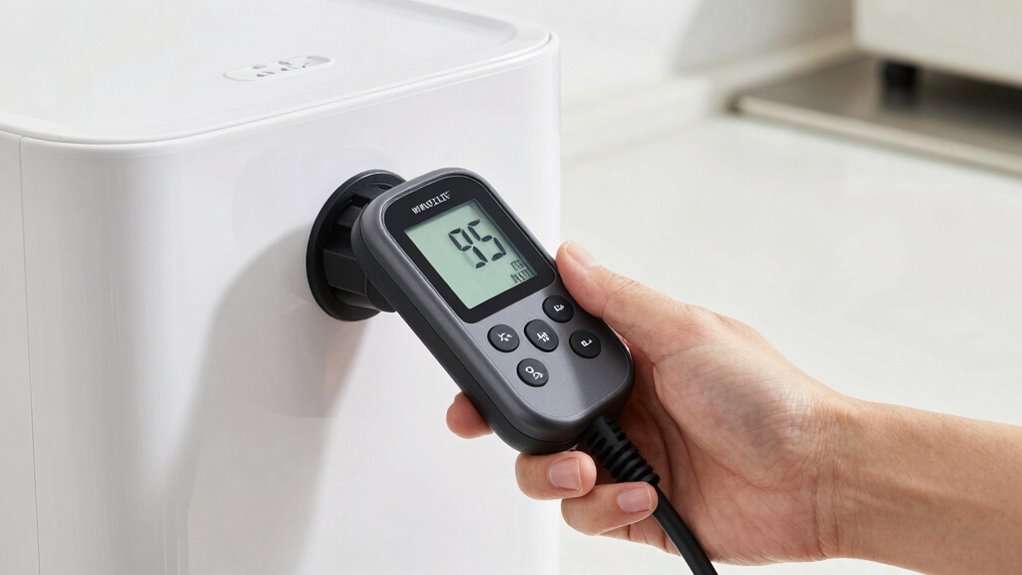
Have you ever wondered how to accurately measure your cycling performance? It’s similar when you want to understand what your appliances really need. Using a power meter isn’t just for cyclists; it can help you gauge the energy efficiency of your household devices. This allows you to compare appliances effectively, making smarter choices that can save you money and reduce unnecessary energy consumption.
Using a power meter helps you understand your appliances’ true energy needs and make smarter, cost-saving choices.
When you start using a power meter to assess appliances, you need to focus on gathering clear, reliable data. The key is to measure how much power each device consumes during typical operation. For example, plug in your fridge, dishwasher, or TV, and run them as you normally would. The meter records their energy use over a period, giving you a detailed picture of their efficiency. This process helps you identify which appliances are energy hogs and which ones operate with minimal power. By comparing these measurements, you get a straightforward view of energy efficiency across your household.
Understanding appliance comparison through a power meter is empowering. Instead of relying on manufacturer labels or vague estimates, you see real data. You might discover that your older washing machine uses significantly more energy than a newer, more efficient model. Or maybe your fridge is running constantly, consuming more power than necessary due to a malfunction or outdated technology. With this information, you can decide whether it’s worth investing in upgrades, or if simply adjusting usage habits could cut your energy costs. Comparing appliances based on actual consumption makes your decisions more precise and tailored to your home’s needs. Additionally, accurate measurement helps you track improvements over time as you implement energy-saving strategies. Regularly monitoring your energy data can also help you recognize patterns and identify opportunities for further savings.
Using a power meter also helps you optimize your energy use. Once you know how much power each appliance consumes, you can schedule high-energy tasks during off-peak hours or limit usage of the most demanding devices. This targeted approach leads to better energy efficiency overall. Plus, it encourages you to be more mindful of your electricity habits, fostering smarter consumption patterns. By regularly monitoring your appliances, you stay informed about their performance and can catch issues early—like a sudden spike in energy use indicating a problem. Additionally, understanding the energy consumption patterns of your devices can help you develop more effective energy-saving strategies. Applying energy efficiency data from your measurements enables you to make smarter decisions that impact your long-term savings and environmental footprint.
Ultimately, employing a power meter to learn what your appliances really need isn’t complicated. It’s a practical way to cut costs, improve energy efficiency, and make smarter appliance comparisons. You gain a clearer understanding of your household’s energy dynamics, empowering you to make informed choices that benefit your budget and the environment. The more you use this tool, the better you’ll get at managing your home’s energy consumption, turning data into actionable insights. Regular use of a power meter can also help you stay updated on the latest energy-efficient technologies, ensuring your household remains optimized for savings and sustainability.
digital power meter for appliances
As an affiliate, we earn on qualifying purchases.
As an affiliate, we earn on qualifying purchases.
Frequently Asked Questions
Can a Power Meter Detect All Types of Appliances Accurately?
A power meter can’t detect all appliances with perfect accuracy due to appliance compatibility issues and varying measurement accuracy. Some devices, like those with electronic or variable power draw, may not be measured precisely. While most basic appliances are compatible, high-tech or complex ones might give less accurate readings. To get the best results, choose a reliable meter and understand its limitations for different appliance types.
How Often Should I Monitor My Appliances With a Power Meter?
You should monitor your appliances with a power meter regularly, ideally once a month or during significant usage changes. This helps you track power consumption patterns, identify inefficient devices, and extend their appliance lifespan. Frequent monitoring allows you to catch issues early and adjust usage habits, saving energy and money. Consistent checks help you understand how your appliances perform over time, ensuring peak efficiency and longevity.
Do Power Meters Work With Smart or Wi-Fi-Enabled Devices?
Yes, power meters work with smart or Wi-Fi-enabled devices. Many models feature smart integration and Wi-Fi compatibility, allowing you to monitor your appliances remotely via smartphone apps. This makes it easy to track energy consumption, set alerts, and analyze data in real-time. Just make certain your power meter supports the specific smart features or Wi-Fi protocols your devices use, like Wi-Fi, Zigbee, or Z-Wave, for seamless connectivity.
Is It Safe to Use a Power Meter on High-Voltage Appliances?
Using a power meter on high-voltage appliances can be safe if you follow proper electrical safety precautions. Make certain the meter is rated for the voltage you’re measuring, checking its voltage compatibility. Always turn off the appliance before connecting the meter, and avoid touching live parts. If you’re unsure about electrical safety, consult an electrician. Properly rated meters and cautious handling help prevent accidents and damage.
Can a Power Meter Help Reduce My Electricity Bill Effectively?
Using a power meter can definitely help you reduce your electricity bill. By monitoring your appliances’ energy consumption, you’ll identify which devices waste energy and optimize their use. This boosts your energy efficiency and leads to cost savings over time. Visualizing your energy patterns makes it easier to make smarter decisions, like unplugging unused gadgets or replacing inefficient appliances, ultimately lowering your expenses and promoting a more sustainable lifestyle.
energy consumption monitor for home
As an affiliate, we earn on qualifying purchases.
As an affiliate, we earn on qualifying purchases.
Conclusion
Using a power meter helps you truly understand your appliances’ energy needs, saving you money and reducing your carbon footprint. By taking the time to measure and analyze, you can make smarter choices about when and how to run your devices. Remember, knowledge is power—literally! Don’t let your appliances drain your wallet or the planet. Stay vigilant, stay informed, and keep your home efficient. In the end, it’s all about working smarter, not harder.
As an affiliate, we earn on qualifying purchases.
household appliance energy tester
As an affiliate, we earn on qualifying purchases.
As an affiliate, we earn on qualifying purchases.
Fall Picks
fall essentials
As an affiliate, we earn on qualifying purchases.