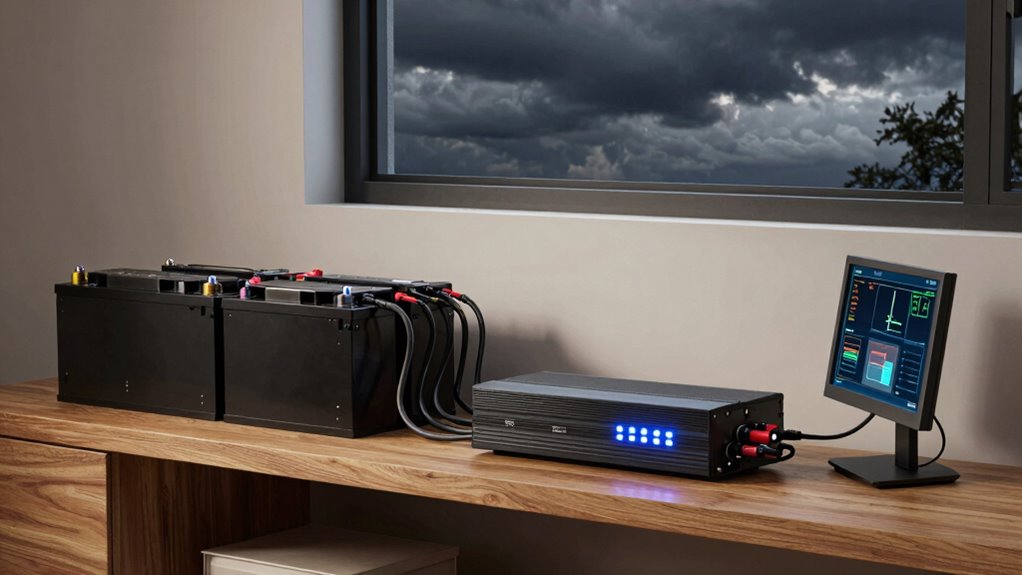
To quickly understand your home backup power capacity, start by listing your essential appliances like your fridge, heating, or medical devices. Find out how many watts each one uses—usually on the label or in the manual. Add up those wattages to get your total power need. Then, match that demand to a generator or battery system that can handle it. For a clearer picture and expert tips, keep exploring further.
Listen free for 30 days with Audible
Thousands of audiobooks and originals — cancel anytime.
As an affiliate, we earn on qualifying purchases.
Key Takeaways
- List all critical appliances and their wattage to determine total power needs quickly.
- Use online calculators or reference appliance labels for fast wattage assessments.
- Match backup system capacity to the total wattage of essential devices for immediate understanding.
- Evaluate response time and capacity to ensure the system can power critical appliances during outages.
- Consider typical outage durations to select a backup that meets both power needs and longevity.
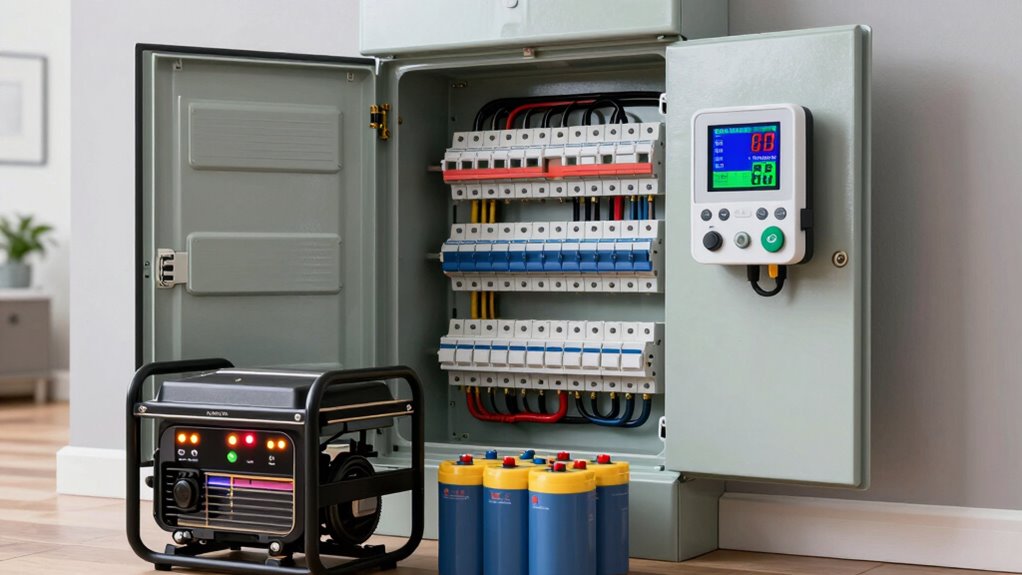
Having reliable backup power is essential to keep your home running smoothly during outages. When the power goes out unexpectedly, knowing how much emergency power you need can make all the difference. To understand your home backup power capacity, start by assessing what appliances and systems are most critical—like your refrigerator, heating system, or medical devices. This helps you determine the total wattage you’ll require from your backup system.
Assess critical appliances to determine your essential backup power needs during outages.
Once you have a clear picture of your power needs, you can look into different backup options, such as generators or battery systems. Battery-powered solutions are becoming increasingly popular because they offer a quieter, cleaner, and more immediate source of emergency power. But understanding the battery lifespan is crucial here. Batteries don’t last forever; their lifespan depends on usage, maintenance, and technology. Typically, you might get several years of reliable service from a high-quality battery, but heavy or frequent cycling can shorten that period. Knowing this helps you plan for replacements and ensures your backup system remains dependable when you need it most.
It’s also important to consider how quickly your backup power system can respond. Some systems provide instant emergency power, kicking in the moment the main power goes out. Others may have a brief delay, which could be problematic if sensitive electronics are involved. Your choice depends on your specific needs and the criticality of continuous power for certain devices. Response time is a key factor in choosing the right system for your home. Additionally, understanding the system’s capacity and how it aligns with your household energy demands will help prevent under- or over- sizing your backup solution.
To get a clear sense of your home backup power capacity, you should also think about how long you want the backup to last. For short outages, a smaller, more affordable system might suffice. But if outages are frequent or prolonged, investing in a larger capacity system makes sense. Keep in mind that larger systems, especially those relying on batteries, may require more frequent maintenance and can impact battery lifespan over time. Additionally, understanding the emergency power response time of your system is vital to ensure it meets your needs during unexpected outages. Properly assessing these factors can help you choose a system that balances capacity with battery longevity, ultimately providing peace of mind during power disruptions. Therefore, balancing capacity with longevity and maintenance is key.
Ultimately, understanding your home’s backup power capacity involves balancing your power needs with the capabilities and limitations of your chosen system. You want a reliable source of emergency power that can sustain essential appliances without draining your batteries prematurely. By carefully assessing your energy requirements, considering the lifespan of batteries, and selecting a system that responds quickly, you ensure your home remains functional during outages. This proactive approach saves you stress, money, and inconvenience when the unexpected happens.
As an affiliate, we earn on qualifying purchases.
Frequently Asked Questions
How Do I Calculate My Home’s Total Power Needs Accurately?
To accurately calculate your home’s total power needs, list all appliances and devices you want during an outage. Check their wattage, then add a safety margin for energy efficiency. Focus on load balancing by prioritizing essential items first. This way, you guarantee your backup power system is sufficient, preventing overloads and maximizing efficiency. Regularly update your calculations as appliances change or improve in energy efficiency.
What Factors Affect the Size of a Backup Power System?
Several factors influence the size of your backup power system. Battery lifespan determines how long your system can provide power before needing replacement, so choose a reliable battery. Power surges can damage equipment, so your system should handle sudden increases in demand. Additionally, consider your home’s total power needs, appliances’ startup wattage, and future expansion plans to guarantee your backup system is adequately sized for all scenarios.
How Long Can a Backup System Run During an Outage?
During an outage, your backup system can run anywhere from a few hours to several days, depending on its size and fuel or battery capacity. Regular generator maintenance guarantees it operates efficiently, while understanding your battery lifespan helps you plan for replacements before outages occur. Keep an eye on your system’s fuel levels or battery condition, so you’re prepared to keep your home powered when you need it most.
What Are the Most Cost-Effective Backup Power Options?
You can save money by choosing solar panels paired with a battery storage system, which harness sunlight and reduce reliance on fuel. Alternatively, investing in a generator with regular maintenance guarantees reliable backup power without high ongoing costs. Both options strike a balance between affordability and efficiency, helping you keep essential devices running during outages while minimizing long-term expenses. Regular generator maintenance is key to ensuring it operates smoothly when needed.
How Often Should I Test My Home Backup Power System?
You should test your home backup power system at least once a month to guarantee it’s ready when needed. During testing, verify the power source’s functionality and listen for any unusual sounds. Keep in mind that frequent testing can affect your battery lifespan, so don’t overdo it. Regular tests help you identify issues early, maintaining your system’s reliability and making sure your backup power is always ready to support your home.
As an affiliate, we earn on qualifying purchases.
Conclusion
Understanding your home backup power capacity is like having a reliable compass in a storm—it guides you through the chaos with confidence. When you grasp what your system can handle, you’re not just prepared; you’re steering your ship safely through unpredictable waters. With this knowledge, you hold the map to peace of mind, knowing you’ve got the strength to weather any blackout. Empower yourself—your home’s resilience depends on it.
As an affiliate, we earn on qualifying purchases.
As an affiliate, we earn on qualifying purchases.
NFL season / tailgating Picks
team gear
As an affiliate, we earn on qualifying purchases.