
To accurately calculate how long your home essentials can run on backup power, start by identifying each device’s wattage from labels or manuals, then multiply the wattage by the hours you plan to run them to find total watt-hours. Add up these energy needs and compare the sum to your battery’s capacity, factoring in efficiency losses. Staying organized and updating your calculations helps improve your backup strategy—keep exploring to master the details.
Key Takeaways
- Determine each device’s wattage from labels or manuals, then calculate energy use over time (Wh).
- Sum the watt-hours of all essential devices to find total energy consumption.
- Compare total watt-hours to your backup system’s capacity, accounting for efficiency losses.
- Prioritize critical devices and plan runtime based on available backup capacity.
- Regularly update calculations as device use or backup capacity changes for accurate planning.
Understanding how long your home essentials will run is crucial for managing energy use and avoiding unexpected outages. When you know the power consumption of your appliances and devices, you can better estimate their runtime during power outages or when using backup power sources. Calculating this accurately helps you optimize energy efficiency, reduce unnecessary energy waste, and ensure you have power when you need it most.
To start, you need to identify the power consumption of each essential device. This information is usually found on labels or in user manuals and is expressed in watts (W). If the power usage is listed in amperes (A) and voltage (V), you can calculate the watts by multiplying these values: watts = volts × amps. Once you have the wattage, you’ll want to determine how much energy each device consumes over time, which is measured in watt-hours (Wh). For example, a device rated at 100W running for 3 hours uses 300Wh.
Next, consider your backup power source, such as a generator or battery system. Knowing its capacity in watt-hours allows you to estimate how many devices it can support simultaneously and for how long. For instance, if your battery capacity is 2,400Wh, and your essential device consumes 100W, it could theoretically run for about 24 hours before depleting the battery. However, always account for efficiency losses, which can range from 10% to 20%, meaning actual runtime might be slightly less. It’s also important to regularly check the performance of your backup system to ensure it remains reliable during emergencies. Incorporating energy-efficient devices can further extend your backup power life and reduce strain on your system.
In addition to power consumption, thinking about energy efficiency helps extend your backup power. Devices with Energy Star ratings or those designed to be energy efficient typically use less power to perform the same tasks. Replacing older, energy-hungry appliances with more efficient models can considerably increase runtime during outages and reduce overall energy costs. When calculating runtime, include only the essential devices you need to keep running, as running unnecessary appliances will drain your backup power faster.
Finally, to get a precise estimate, add up the watt-hours of all your essential devices and compare that total to your backup power capacity. This approach helps you create a realistic plan for outages, prevents overloading your system, and ensures you can prioritize what’s most important. Regularly reviewing and updating these calculations keeps your energy management sharp and your home prepared for any unexpected power interruptions. Additionally, understanding power management strategies can help optimize your backup system’s efficiency and reliability.
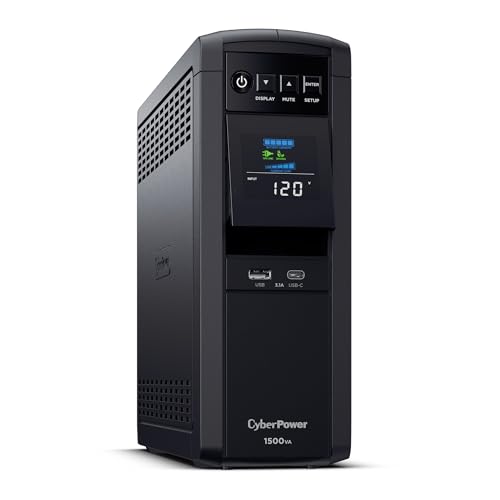
CyberPower CP1500PFCLCD PFC Sinewave UPS Battery Backup and Surge Protector, 1500VA/1000W, 12 Outlets, AVR, Mini Tower, UL Certified
1500VA/1000W PFC Sine Wave Battery Backup Uninterruptible Power Supply (UPS) System designed to support active PFC and conventional…
As an affiliate, we earn on qualifying purchases.
As an affiliate, we earn on qualifying purchases.
Frequently Asked Questions
How Often Should I Recalibrate My Appliance’s Runtime Calculations?
You should recalibrate your appliance’s runtime calculations every 3 to 6 months to maintain accuracy. Regular appliance calibration guarantees your device’s runtime remains precise, helping you save energy and avoid unexpected breakdowns. If you notice inconsistent performance or unusual energy use, recalibrate sooner. Consistent calibration directly improves runtime accuracy, so keep an eye on your appliance’s performance and adjust calibration schedules accordingly for peak operation.
Do Different Brands Have Varying Runtime Estimation Methods?
Yes, different brands often use varying estimation techniques for calculating runtime. When you compare brands, you’ll notice differences in how they estimate, often based on factors like power consumption, cycle duration, or sensor data. These variations mean your appliance’s runtime might not be directly comparable across brands. To get the most accurate estimate, consider reviewing each brand’s specific calculation methods and calibration guidelines.
How Does Altitude Affect the Runtime of Home Appliances?
Altitude adjustment greatly influences your home appliances’ runtime because higher elevations can cause power variability. As you ascend, reduced oxygen levels can lead to less efficient combustion in appliances like furnaces or stoves, shortening their runtime. You might think they work the same everywhere, but altitude affects performance. To guarantee peak operation, consider altitude adjustments or specialized equipment designed for high-altitude use, maintaining consistent appliance performance regardless of elevation.
Can Usage Patterns Impact the Accuracy of Runtime Estimates?
Yes, your usage patterns can impact the accuracy of runtime estimates. If you’re inconsistent with how often or how long you use appliances, it introduces variability that makes predictions less reliable. Appliance variability, such as differences in model efficiency or age, also affects runtime. To get the most accurate estimate, maintain usage consistency whenever possible and consider the specific characteristics of your appliances.
Are There Specific Tools to Monitor Real-Time Appliance Runtime?
Yes, you can use appliance sensors and smart home devices to monitor real-time appliance runtime. These tools act like a heartbeat monitor for your appliances, providing live data. Runtime algorithms process this information, giving you accurate insights into usage patterns. With these tools, you stay in control, easily identifying energy hogs and optimizing your home’s efficiency without guesswork. They’re your personal energy detectives, working silently behind the scenes.

Solar Powered Generator 200W Peak/100W Rated, Portable Solar Generator Power Station with Solar Panels 40W Included, 146Wh Solar Power Bank with AC Outlet 110V for Home Use Camping Outdoor Adventure
SOLAR POWERED GENERATOR WITH PANELS INCLUDED: Apowking portable solar panels 40W performances better even under the condition of…
As an affiliate, we earn on qualifying purchases.
As an affiliate, we earn on qualifying purchases.
Conclusion
Now that you know how to calculate runtime for your home essentials, you’re better equipped to keep everything running smoothly. Think of it as your secret recipe for peace of mind—balancing power and efficiency like a seasoned chef. With these simple steps, you’ll avoid unexpected outages and keep your home humming. So, embrace this newfound knowledge, and turn your home into a well-oiled machine—because, after all, isn’t a smoothly running home the heart of comfort?

Upgraded Watt Meter Power Meter Plug Home Energy Monitor Electricity Usage Monitor, Electrical Usage Monitor, Energy Voltage Amps Meter Tester with Backlight, Overload Protection, 8 Display Modes
Multi-function power monitor: Our electric usage monitor can monitor the power (W), electricity(kWh), voltage(V), frequency(Hz), current(A), power factor(PF),…
As an affiliate, we earn on qualifying purchases.
As an affiliate, we earn on qualifying purchases.
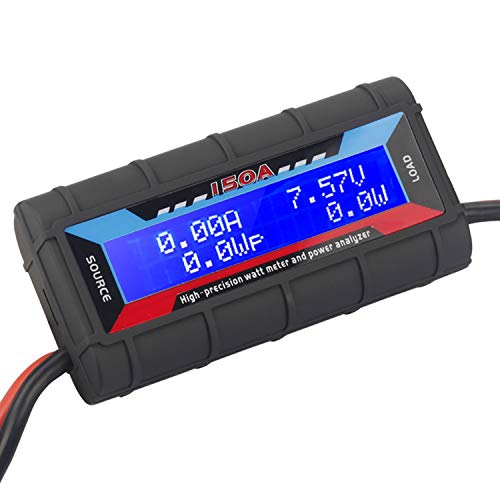
150A High Precision Power Analyzer Multi Meter for Measuring Power Watt (W) Voltage (V) Current (A) Charge (Ah) Energy (Wh)
Bright blue backlit LCD display, easy reading. 12 gauge wire take higher volt and current. It is indispensable…
As an affiliate, we earn on qualifying purchases.
As an affiliate, we earn on qualifying purchases.