
During a power outage, focus on safe, nutritious feeding by choosing ready-to-feed formula or carefully prepared breast milk with skin-to-skin contact and proper hygiene. Keep your baby warm with layered clothing, blankets, and skin-to-skin contact, avoiding drafts. Maintain sanitation by using sterile supplies, storing formulas properly, and cleaning feeding tools with safe water. For more tips on keeping your newborn safe during outages, explore essential strategies to ensure comfort and health.
Prime for Young Adults — start your free trial
Fast free delivery, streaming and member deals for eligible 18–24 year olds.
As an affiliate, we earn on qualifying purchases.
Key Takeaways
- Prioritize breastfeeding with skin-to-skin contact to ensure infant warmth and maintain milk supply during outages.
- Use ready-to-feed formula or sterilized cups for powdered formula with safe water, avoiding dilution and contamination.
- Dress infants in layered, natural fabrics and use blankets or swaddles to keep warm without electricity.
- Practice strict hygiene by cleaning feeding supplies with safe water and storing them in dry, sealed containers.
- Create a cozy, draft-free environment and use safe physical warmth sources like wrapped heated stones to maintain body temperature.
Ensuring Safe and Nutritious Feeding During Power Outages

During power outages, guaranteeing safe and nutritious feeding for infants requires careful planning and resourcefulness. If you’re breastfeeding, skin-to-skin contact helps maintain your baby’s warmth and supports milk supply. For non-breastfed infants, ready-to-feed (RTF) formula is safest since it needs no water or mixing, reducing contamination risks. If using powdered formula, guarantee you have access to safe water, measure precisely, and avoid dilution to prevent dehydration. When clean bottles and sterilization aren’t possible, use disposable cups or sterilized containers for feeding. Expressed breast milk can be fed via disposable cup if bottle cleaning isn’t feasible. Keep supplies stored in a cool, dry place, and prioritize hygiene to protect your baby’s health during outages.
Maintaining Infant Body Temperature and Comfort Without Electricity

Keeping your infant warm without electricity relies on simple, effective strategies like skin-to-skin contact, which helps regulate body temperature and strengthens bonding. You can hold your baby close to your chest, ensuring skin contact, especially in cool environments. Dressing your infant in layered, warm clothing and using soft, natural fabrics like wool or cotton helps insulate them. Use swaddles or blankets to cover your baby, but avoid loose bedding that could pose a suffocation risk. Keep the baby’s head covered with a hat to prevent heat loss. If your home is cold, create a cozy space away from drafts, and use physical warmth sources like heated stones wrapped in cloth, placed safely away from the baby. Always monitor your infant’s temperature for signs of hypothermia or overheating.
Hygiene and Sanitation Practices for Baby Care in Emergency Settings
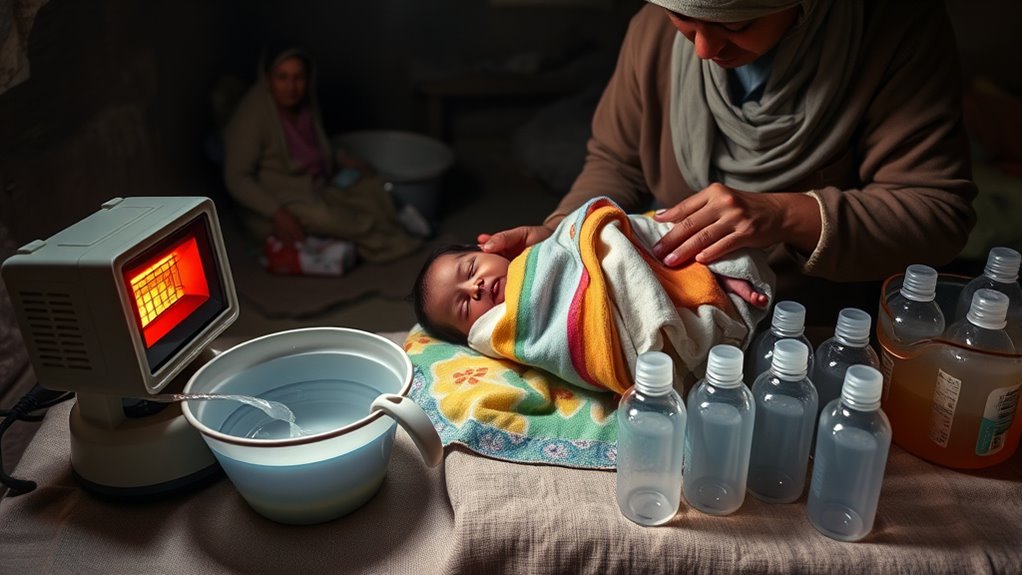
Ensuring proper hygiene and sanitation in emergency settings is vital for protecting your baby from infections and illnesses. You must clean all feeding supplies with safe water after each use. Store powdered formula in a cool, dry place with a tight lid to prevent contamination. When hot water isn’t available, use disposable cups for feeding, and sterilize them after each use. Avoid bottles, teats, or breast pumps without access to unlimited hot water. Use a table to visualize your options:
| Feeding Supplies | Cleaning & Storage |
|---|---|
| Bottles & nipples | Wash with safe water |
| Disposable cups | Sterilize after use |
| Formula storage | Keep dry and sealed |
| Feeding tools | Discard if contaminated |
Prioritize hygiene to keep your baby safe and healthy amidst challenging conditions.
Choosing and Preparing Appropriate Infant Formulas Safely
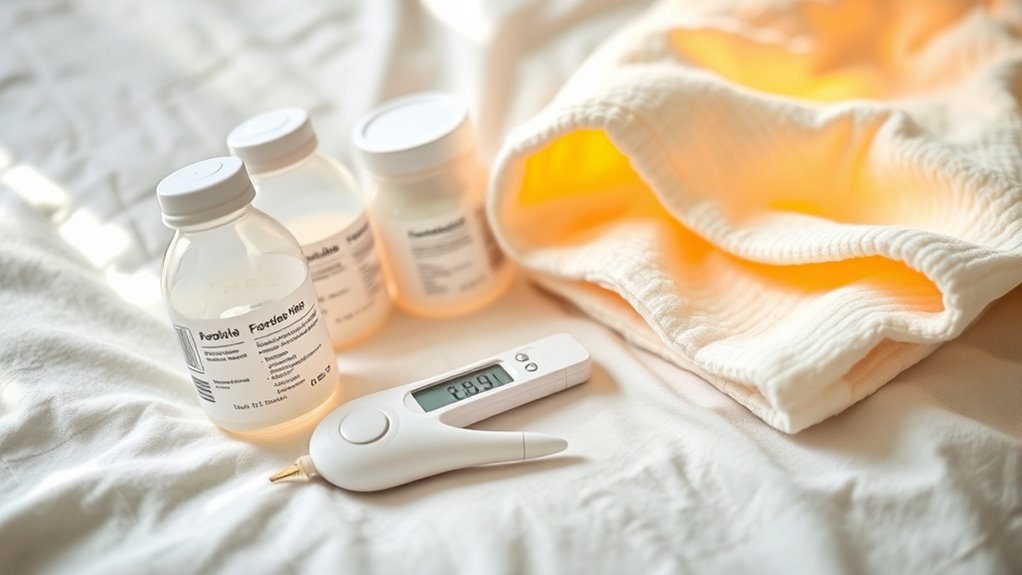
Choosing the right infant formula is essential for your baby’s health, especially in emergency settings where safety standards vary. Ready-to-feed (RTF) formula is safest because it requires no mixing or water, reducing contamination risk. If you use powdered formula, ensure you have access to safe, clean water and measure precisely according to the instructions; avoid diluting it. Always sterilize bottles and utensils to prevent infections. Store powdered formula in a cool, dry place with a tightly sealed lid to prevent contamination. When hot water isn’t available, use disposable cups for feeding. Avoid donations without proper assessment, and prioritize feeding vulnerable infants first. Proper formula preparation, combined with safe handling, ensures your baby receives the necessary nutrition without health risks.
Supporting Breastfeeding and Milk Expressing When Facilities Are Limited

When facilities are limited, supporting breastfeeding and milk expressing becomes essential to meeting infants’ nutritional needs and maintaining their bond with caregivers. Focus on skin-to-skin contact whenever possible, as it helps regulate the baby’s temperature and promotes milk supply. Encourage frequent suckling, ideally every two hours, to stimulate milk production and provide warmth. If bottle-feeding isn’t feasible, use cups or spoons to give expressed milk, ensuring cleanliness with disposable or sterilized equipment. When cleaning options are scarce, hand expression is a safe alternative to pump use. Providing private spaces for mothers to nurse or express milk helps preserve privacy and comfort. Ensure lactation support from trained counselors, both antenatally and postpartum, to address challenges and sustain breastfeeding success despite resource limitations. Utilizing at-home breast pumps and other personal devices can also support milk expression when traditional facilities are unavailable.
Frequently Asked Questions
How Can I Identify Signs of Dehydration in Infants During Emergencies?
You should watch for signs like dry mouth, sunken eyes, and fewer wet diapers, which indicate dehydration. Also, notice if your infant becomes unusually sleepy, irritable, or has a sunken soft spot on their head. Keep track of feeding frequency and make certain they’re nursing or taking formula often. If you see these signs, increase feeding and seek medical help immediately to prevent worsening dehydration.
What Are Alternative Methods to Sterilize Feeding Equipment Without Hot Water?
Would you want to risk contamination by using unsterilized equipment? You can use boiling water if available, or soak bottles and cups in a solution of water and bleach (1:100 ratio) for at least 2 minutes, then rinse thoroughly with safe water. Alternatively, use disposable cups and utensils, or sterilize with chemical disinfectants approved for infant feeding. Always guarantee equipment is dry before use to prevent bacteria growth.
How Do I Safely Store Expressed Breast Milk in Limited-Resource Settings?
You should store expressed breast milk in clean, airtight containers or sterile disposable cups, placed in a cool, dry, and shaded area. Keep the milk at the lowest possible temperature, ideally in a refrigerator if available, or in a cool, shaded spot if not. Label each container with the date and time of expression, using the oldest milk first. Avoid contamination by washing hands before handling and using clean storage containers.
What Are the Best Practices for Relactation Support in Disaster Zones?
To support relactation in disaster zones, encourage frequent breastfeeding or nipple stimulation to boost milk production. Offer emotional support, privacy, and a calm environment to help mothers relax. Provide lactation counseling, educate about hand expression, and explore options like relactation techniques or donor milk if needed. guarantee mothers stay well-nourished, hydrated, and rested, and coordinate with health teams for ongoing support and reassurance throughout the process.
How Can I Ensure Proper Nutrition for Preterm or Vulnerable Infants Without Power?
You can guarantee proper nutrition for preterm or vulnerable infants without power by using ready-to-feed (RTF) formula, which needs no preparation or sterile water. If using powdered formula, make sure to use safe, clean water and measure precisely. Rely on expressed breast milk via disposable cup, and avoid bottles if sterilization isn’t possible. Prioritize frequent skin-to-skin contact and breastfeeding support to maintain their warmth and nutrition.
Conclusion
Even in a power outage, your baby’s safety isn’t just about fancy gadgets or perfect conditions—it’s about staying calm and prepared. Ironically, the simplest solutions, like keeping your baby warm with layers or ensuring clean hands, often matter most. So, next time the lights go out, remember: your resourcefulness and love are the best tools to keep your little one safe and happy, even when everything else seems to be on pause.
Fall Picks
fall essentials
As an affiliate, we earn on qualifying purchases.