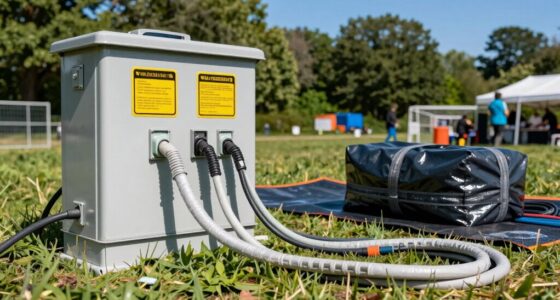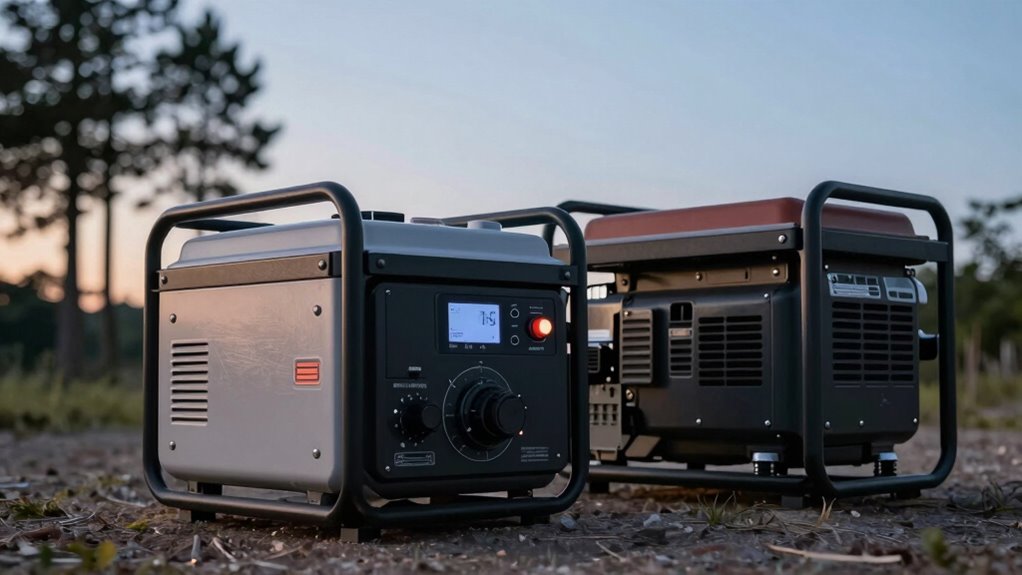
Inverter generators are much quieter than conventional models because they adjust engine speed based on your power needs, reducing noise and vibrations. They also run more efficiently, saving fuel and lowering emissions, making them ideal for outdoor activities and sensitive environments. While they may cost more upfront, their benefits include better portability, cleaner power, and less noise disturbance. If you want to discover how these factors impact your choice, explore further to find the perfect fit.

Get backup power and energy gear delivered free with Prime
- Fast, free delivery on millions of items
- Prime Video, Amazon Music and more included
- Member-only deals all year
Key Takeaways
- Inverter generators operate more quietly by adjusting engine speed, producing significantly less noise than conventional models.
- Advanced electronics in inverters ensure smoother, cleaner power, reducing noise and vibration during operation.
- Conventional generators run at constant full throttle, resulting in louder operation and more noise pollution.
- Inverter generators are ideal for noise-sensitive environments like camping, outdoor events, and emergency setups.
- Their quieter operation, combined with portability features, makes inverter generators a preferred choice for outdoor and low-noise needs.
quiet inverter generator for camping
As an affiliate, we earn on qualifying purchases.
As an affiliate, we earn on qualifying purchases.
Understanding How Inverter and Conventional Generators Work
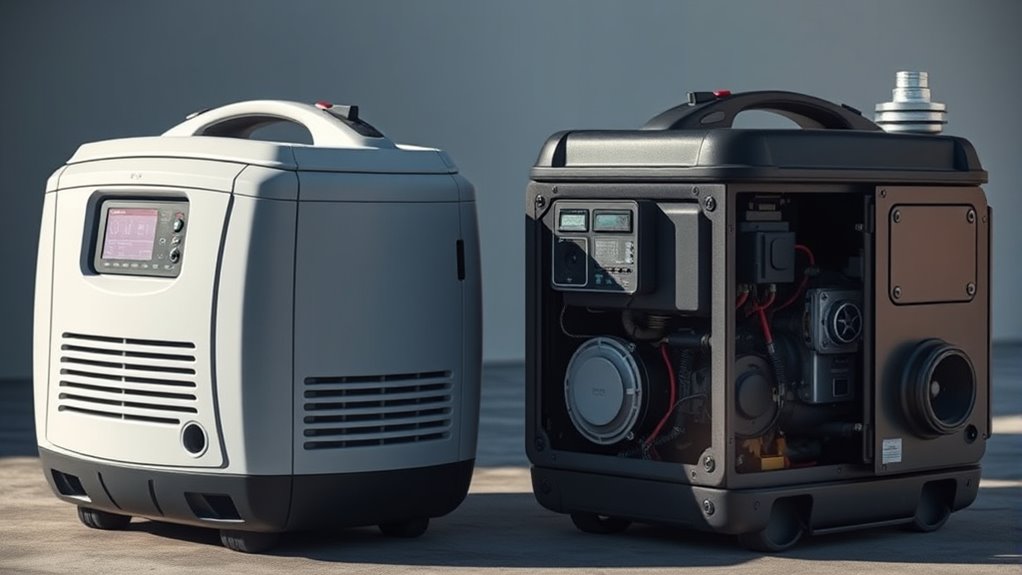
While both inverter and conventional generators produce electricity to power your devices, they do so through different mechanisms. Conventional generators run at a constant speed, producing steady power, but this often leads to higher fuel consumption and greater environmental impact. In contrast, inverter generators adjust their engine speed based on the load, resulting in improved fuel efficiency and lower emissions. This load-management capability allows inverter generators to operate more efficiently and quietly. Additionally, the ability to modulate power output reduces unnecessary energy waste, making inverter generators a more sustainable option. Furthermore, inverter generators typically incorporate advanced electronics that help regulate power output more precisely. This means you’ll use less fuel over time, which is better for the environment. Modern inverter generators also feature smart technology that enhances overall performance and user convenience. The inverter’s ability to modulate power also reduces waste, making it a more sustainable choice. Moreover, innovative power regulation systems in inverter generators contribute to a smoother and more reliable power supply, further supporting their efficiency. Overall, understanding these operational differences helps you choose a generator that’s not only efficient but also minimizes your ecological footprint.
portable inverter generator with low noise
As an affiliate, we earn on qualifying purchases.
As an affiliate, we earn on qualifying purchases.
Comparing Noise Levels and Portability
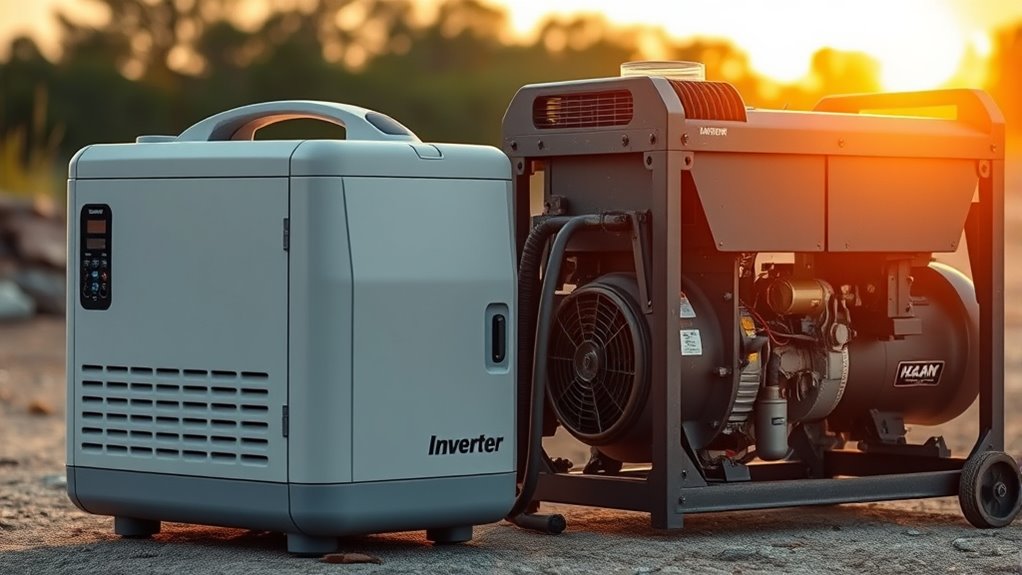
When choosing between generators, noise levels and portability are key factors to contemplate. Inverter generators tend to run quieter and are easier to carry around, making them ideal for outdoor activities. Additionally, inverter generators can be integrated into a connected home fitness setup, allowing for seamless power supply to smart fitness equipment during outdoor workouts. Proper size selection and understanding of noise ratings can help ensure you pick the right generator for your needs. Moreover, selecting a generator with appropriate power output ensures compatibility with your specific appliances and devices, preventing overloads and maximizing efficiency. Considering market reputation and customer reviews can also guide you to a reliable and efficient choice. As the market evolves, innovations in sustainable materials and design can further influence your decision-making process.
Noise Output Differences
Inverter generators generally produce considerably less noise than conventional generators, making them more suitable for environments where quiet operation matters. Their sound insulation design minimizes noise levels, helping you stay within noise regulation limits easily. Unlike conventional models, inverter generators adapt their engine speed to load demands, reducing unnecessary noise. This means you’ll experience quieter operation even during high power output. Additionally, their compact size often contributes to less noise transmission, enhancing portability and discreet operation. Noise reduction technology further enhances their ability to operate quietly and comfortably in various settings. Because of their engine design, inverter generators typically generate less vibration, which also contributes to their quieter operation. Overall, if low noise output is a priority, inverter generators excel by combining quieter performance with compliance to noise regulation standards.
Ease of Transportation
Ease of transportation is a key advantage of inverter generators because their lightweight and compact design make them easier to carry and move around. This portability means you can quickly set up your power source wherever needed, whether camping, outdoor events, or backup for emergencies. Inverter generators often have built-in handles and wheels, further simplifying transport. Their fuel efficiency ensures longer operation on less fuel, reducing the need for frequent refueling during outings. Additionally, their smaller size and lower emissions contribute to a reduced environmental impact, making them a responsible choice for environmentally conscious users. Their natural integration into outdoor settings allows for seamless use in various environments. Thanks to their compact design, inverter generators are generally easier to store when not in use and take up less space in your vehicle or storage area. Their low noise levels also enhance outdoor comfort and safety, making them more convenient for recreational activities. In addition, their quiet operation minimizes disturbance to wildlife and neighbors, further supporting outdoor use. Their fuel efficiency not only extends run times but also reduces overall operating costs, which is a significant benefit for users concerned with budget and sustainability. Compared to conventional generators, inverter models are more convenient to transport, helping you stay powered up without sacrificing ease or eco-friendliness.
best inverter generator for outdoor activities
As an affiliate, we earn on qualifying purchases.
As an affiliate, we earn on qualifying purchases.
Assessing Power Output and Efficiency
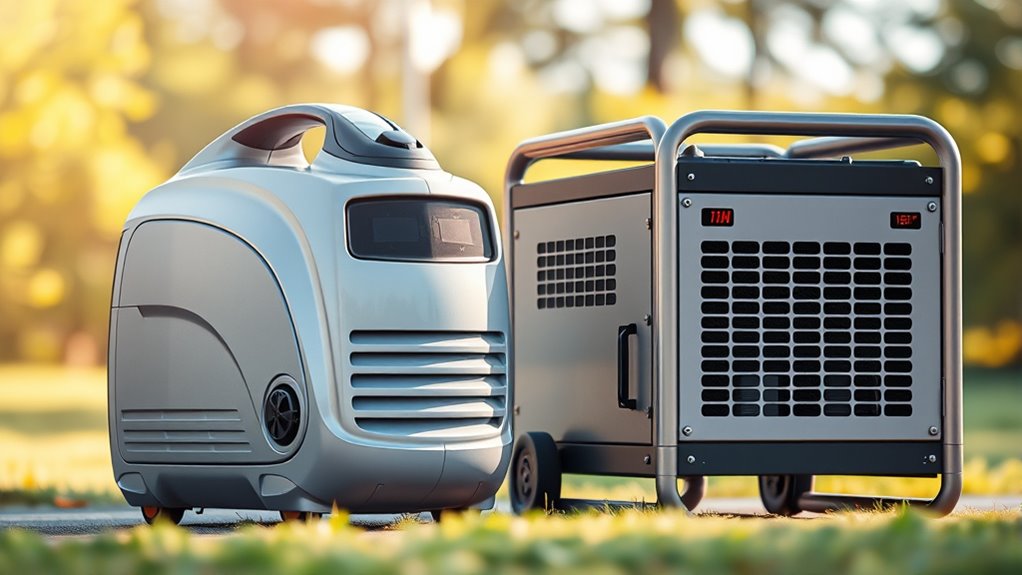
To determine which generator offers better power output and efficiency, you need to look beyond their basic specifications and consider how they perform under real-world conditions. Inverter generators typically provide a stable power supply that adjusts to your load, optimizing fuel efficiency and reducing waste. Conventional generators, while capable of higher raw power, often run at full throttle regardless of demand, which can waste fuel and increase environmental impact. Evaluating their efficiency involves observing how well each unit manages fuel consumption during typical use. An inverter’s ability to modulate power output not only conserves fuel but also minimizes emissions. Additionally, field‑of‑view considerations in generator placement can influence performance and noise levels. Proper placement and airflow management can further optimize efficiency and reduce noise pollution. Regular maintenance and cooling systems play a crucial role in sustaining optimal performance and longevity of both generator types. Moreover, understanding the thermal management techniques employed by each type can help in assessing their overall durability and efficiency. Furthermore, the use of advanced cooling methods can significantly enhance a generator’s operational lifespan and reliability. Ultimately, understanding their performance in actual conditions helps you choose a generator that balances power needs with eco-friendliness and efficiency.
compact inverter generator for camping trips
As an affiliate, we earn on qualifying purchases.
As an affiliate, we earn on qualifying purchases.
Evaluating Cost and Maintenance Considerations
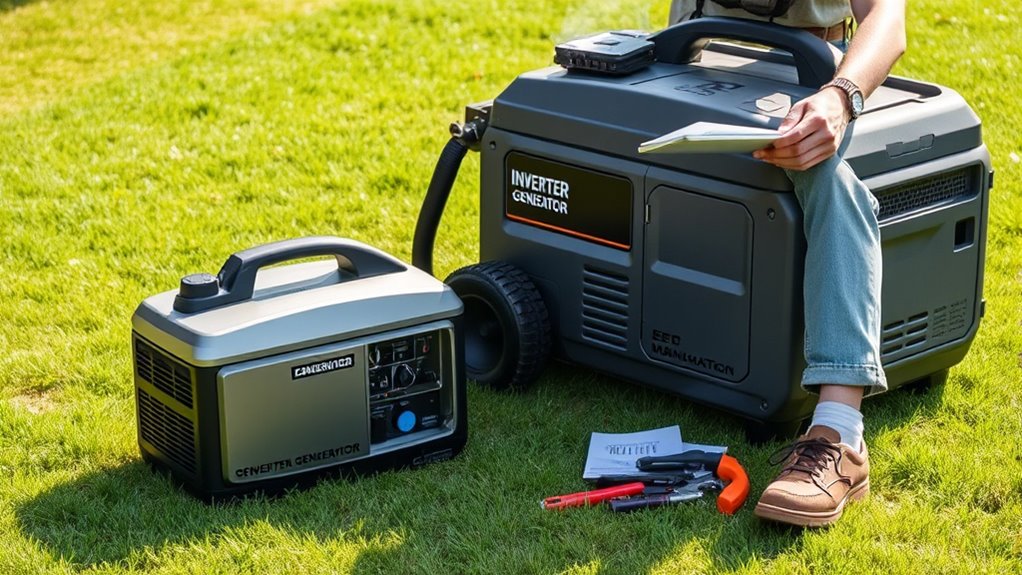
When comparing inverter and conventional generators, you’ll want to contemplate their long-term costs and upkeep. Inverter models often have higher initial prices but can save you money through better fuel efficiency and lower maintenance needs. Understanding these factors helps you choose the option that’s more cost-effective over time. Additionally, considering the holistic SEO approach to researching your generator options can help you access comprehensive reviews and expert insights that inform a more informed decision. Evaluating the total cost of ownership—including installation, operating expenses, and maintenance—can provide a clearer picture of which generator type offers better value in the long run. Incorporating proper maintenance practices can extend the lifespan of your generator and optimize its performance over the years. Moreover, understanding the technical specifications can guide you in selecting a generator that meets your power needs efficiently. Recognizing the importance of ethical standards in product manufacturing can also influence the durability and reliability of your equipment.
Cost Efficiency Over Time
While initial purchase prices differ, inverter generators often prove more cost-effective over time due to their lower fuel consumption and quieter operation. Their superior fuel efficiency means you use less gas, reducing ongoing expenses and increasing long term savings. Additionally, their quiet operation minimizes noise-related costs, such as needing soundproofing or restrictions on use. Curiosity about energy efficiency and technological advances has driven innovations that improve generator performance and lifespan. Although inverter generators may cost more upfront, their efficiency translates into lower fuel costs over months and years. This makes them a smarter investment if you plan to use your generator frequently or for extended periods. Over time, the reduced fuel consumption and less frequent operation help offset the higher initial price, making inverter generators a more economical choice when considering overall cost efficiency.
Maintenance Requirements and Costs
Although inverter generators may have higher upfront costs, they typically require less maintenance and incur lower ongoing expenses. Their advanced technology results in more efficient fuel consumption, helping you save money over time. Inverter generators often feature longer-lasting components and cleaner operation, which reduces wear and tear. This means fewer repairs and less frequent maintenance. Additionally, their warranty coverage tends to be more extensive, providing peace of mind and reducing unexpected costs. Conventional generators, while initially cheaper, usually need more frequent oil changes, filter replacements, and other maintenance tasks. Over time, these added expenses can outweigh the initial savings. Overall, the reduced maintenance requirements of inverter generators make them a cost-effective choice for long-term use.
Suitable Uses and Practical Benefits
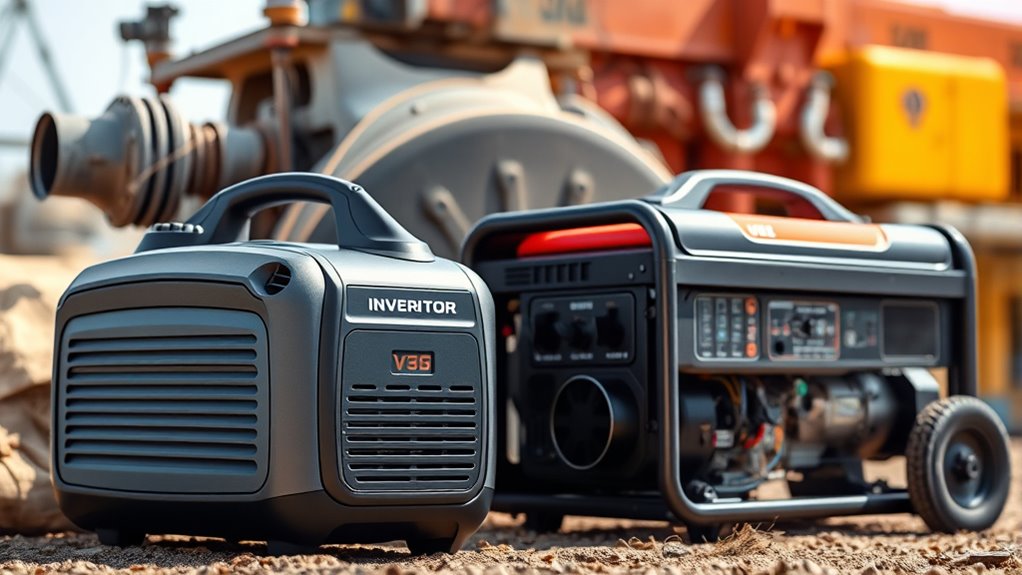
Inverter generators are highly versatile and ideal for a range of applications where clean, stable power is essential. If you’re into emergency preparedness, their quiet operation and portability make them perfect for powering critical devices during outages. They’re also great as camping essentials, providing reliable electricity without disturbing the peace or draining your fuel. Unlike conventional generators, inverter models adapt their engine speed to match your power needs, making them more efficient and less noisy. This means you can run sensitive electronics like laptops, smartphones, and medical devices safely. Whether you’re preparing for emergencies or enjoying outdoor adventures, inverter generators offer practical benefits that enhance safety, convenience, and comfort in a variety of situations.
Making an Informed Choice Based on Your Needs
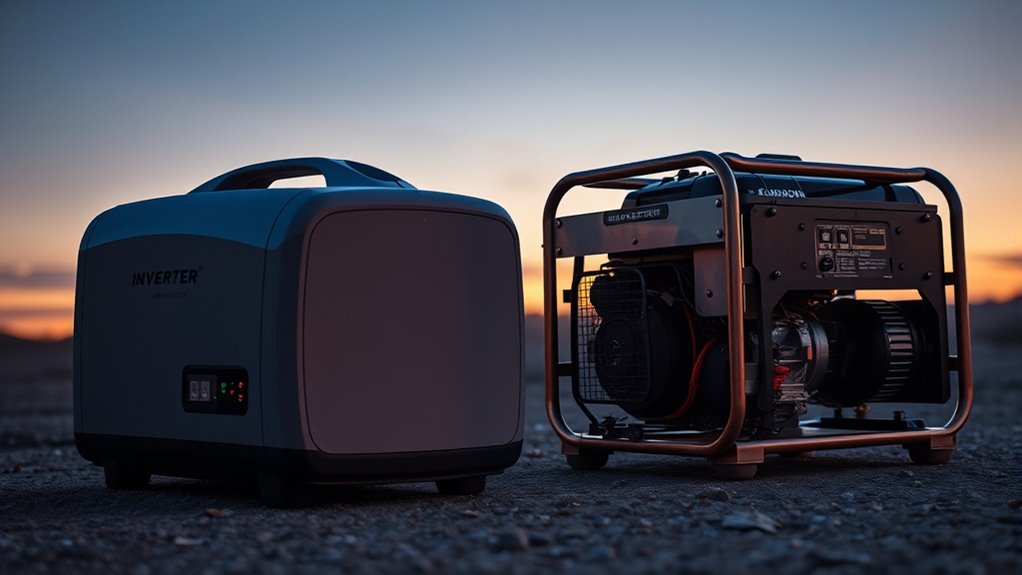
Choosing the right generator depends on understanding your specific power needs and priorities. Consider factors like fuel efficiency, environmental impact, noise levels, and portability. If you need quiet operation and low emissions, an inverter generator is ideal. For heavy-duty tasks, a conventional generator might be more suitable. To help decide, review this comparison:
| Feature | Inverter Generator | Conventional Generator |
|---|---|---|
| Fuel Efficiency | High, saves fuel over time | Lower, consumes more fuel |
| Environmental Impact | Produces fewer emissions | Higher emissions |
| Noise Level | Quieter, suitable for camping | Louder, better for job sites |
Assess your priorities to choose wisely, balancing environmental concerns, operational costs, and power needs.
Frequently Asked Questions
How Do Inverter Generators Impact Fuel Consumption Compared to Conventional Models?
Inverter generators improve your fuel efficiency compared to conventional models because they adjust power regulation based on your actual needs. This means you use only the fuel necessary for the current load, reducing waste. As a result, you get longer run times and save money on fuel. By smoothly regulating power, inverter generators optimize performance without sacrificing efficiency, making them a smarter choice for energy-conscious users.
Are Inverter Generators More Environmentally Friendly Than Traditional Generators?
You’re likely to find inverter generators more eco-friendly than traditional ones. They incorporate eco-friendly technology that reduces emissions by up to 30% compared to conventional models. This means less air pollution and a smaller carbon footprint. Their efficient fuel use also contributes to emission reduction, making them a smarter choice for environmentally conscious users. So, if you’re aiming to minimize environmental impact, inverter generators clearly lead the way.
What Are the Long-Term Durability Differences Between Inverter and Conventional Generators?
You’ll find that inverter generators generally have better long-term durability because of their advanced durability factors like quality components and efficient cooling systems. They often require less maintenance due to smoother operation and fewer wear parts. Conventional generators, while robust, may need more frequent repairs and upkeep over time. Your choice depends on how much you prioritize longevity, ease of maintenance, and overall durability in your generator.
Can Inverter Generators Handle Heavy-Duty or Industrial Power Requirements?
You might think inverter generators can’t handle heavy-duty or industrial power needs, but many are designed for industrial capacity and provide excellent power stability. They can manage demanding tools and equipment, especially high-quality models. While they excel in efficiency and quiet operation, it’s essential to choose an inverter generator rated for your specific power requirements. With the right unit, you’ll enjoy reliable, stable power even in industrial settings.
How Do Inverter Generators Affect the Lifespan of Electronic Devices Connected to Them?
Inverter generators safeguard your electronic devices by providing voltage stability and noise reduction, which helps extend their lifespan. They deliver clean, consistent power that prevents surges or fluctuations, reducing wear and tear. Plus, their quieter operation minimizes stress on sensitive electronics. By choosing an inverter generator, you guarantee your devices stay safe, operate smoothly, and last longer, making them a smart investment for both everyday use and delicate equipment.
Conclusion
As you weigh your options, it’s no coincidence that quieter, more portable inverter generators often surprise users with their efficiency and ease. Whether you’re camping, tailgating, or needing backup power, choosing the right generator can make all the difference. Think about your specific needs—you might find that the perfect balance of quiet operation and reliable power is closer than you imagined. Sometimes, the best choice just happens when you least expect it.
Halloween Picks
halloween
As an affiliate, we earn on qualifying purchases.